
1. Search Result
Search Result
Results for "

influenza A strains

" in MedChemExpress (MCE) Product Catalog:

38

Inhibitors & Agonists

2

Screening Libraries

3

Peptides

2

Inhibitory Antibodies

3

Natural
Products

Targets Recommended:
Cat. No. Product Name Target Research Areas Chemical Structure
  • HY-N7922
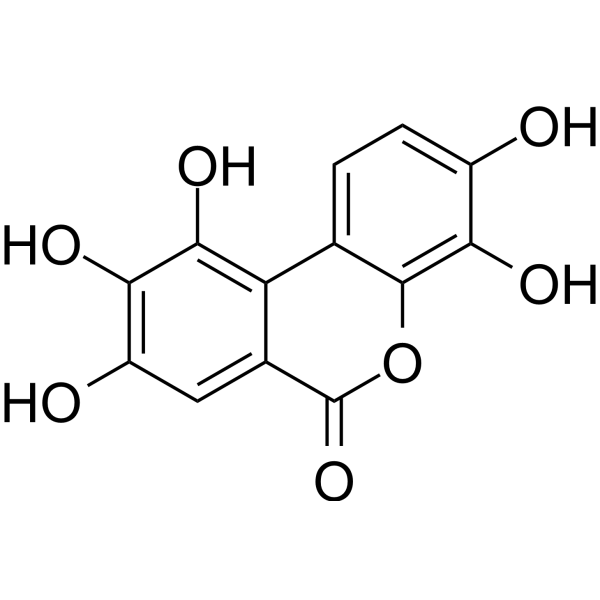
    Urolithin M5
    1 Publications Verification

    Decarboxyellagic acid

    Influenza Virus p38 MAPK EGFR Akt Reactive Oxygen Species (ROS) Apoptosis Infection Neurological Disease
    Urolithin M5 (Decarboxyellagic acid) is an orally active influenza virus neuraminidase inhibitor and neuroprotective agent, with IC50 values of 174.8 μM (HK68), 191.5 μM (pdm09), 243.2 μM (WSN) and 257.1 μM (PR8) against four influenza virus neuraminidases, respectively. Urolithin M5 inhibits viral neuraminidase activity, thereby blocking influenza virus replication (including oseltamivir (HY-13317)-resistant strains), protecting infected mammals from death and improving pulmonary edema. Urolithin M5 forms a hydrogen-bond stabilized complex with IGF1R, and binds to MAPK14, AKT1, NFKB1 and EGFR. Urolithin M5 reduces reactive oxygen species production, inhibits neuronal apoptosis, restores mitochondrial transmembrane potential, and promotes neurite outgrowth of damaged neuronal cells. Urolithin M5 can be used in research related to influenza virus infection and Alzheimer's disease .
    Urolithin M5
  • HY-W011518
    2′-Deoxy-2′-fluoroguanosine
    1 Publications Verification

    Nucleoside Antimetabolite/Analog Influenza Virus Infection
    2′-Deoxy-2′-fluoroguanosine is a nucleoside analog and potent influenza virus inhibitor with an EC90 value of <0.35 μM against influenza A and B viruses. 2′-Deoxy-2′-fluoroguanosine inhibits influenza virus replication in the upper respiratory tract, thereby ameliorating fever and nasal inflammation .
    2′-Deoxy-2′-fluoroguanosine
  • HY-14837

    Enisamium iodide

    Influenza Virus SARS-CoV Infection
    Amizon is an orally effective antiviral and anti-inflammatory agent. Amizon inhibits influenza virus replication and restricts viral RNA synthesis. Amizon reduces the mRNA expression of COX-1, COX-2, NF-κB, TGF1β, IL-1 and IL-6, and stimulates the secretion and mRNA expression of IL-10. Amizon inhibits the oxidative activity of macrophages and possesses antioxidant and free radical-scavenging activities. Amizon is applicable to research related to influenza and acute respiratory viral infections .
    Amizon
  • HY-164390

    Neu5Acα2-6Galβ1-4GlcNAc

    Endogenous Metabolite Infection Cancer
    6′SLN is a cancer-related extracellular vesicle (EVs) surface glycan that serves as a key form of protein glycosylation in EVs. 6′SLN is also a sialic acid derivative that can interact with hemagglutinins (HAs) from human and avian influenza virus strains, making it useful for research into anti-influenza drugs .
    6′SLN
  • HY-121473

    Antibiotic Bacterial Fungal Parasite Infection
    Aklavin is a structural analog of Aclacinomycin A (HY-N2306) produced by Streptomyces strain A 1165. Aklavin possesses Z-DNA-inducing and stabilizing activities, along with antibiotic, anti-phage and broad-spectrum antimicrobial activities. Aklavin inhibits the proliferation of various viruses (such as influenza virus and poliovirus) and interferes with their nucleoprotein synthesis, while also exhibiting inhibitory effects on staphylococci, mycobacteria and specific fungi. Aklavin blocks phage-induced bacterial lysis by regulating host-parasite interactions. Aklavin shows specific toxicity to fertilized eggs and mice, and does not alter the splicing of the SMN2 gene .
    Aklavin
  • HY-P1788

    Influenza Virus Infection
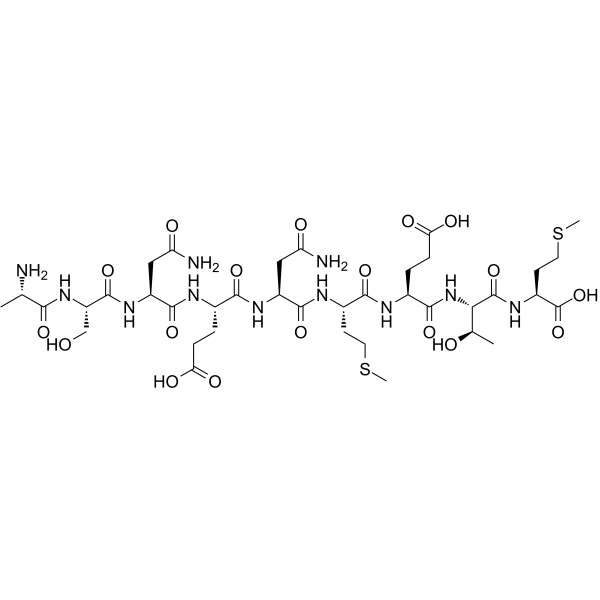
    Influenza A NP(366-374) Strain A/PR/8/35 is an H2-Db-restricted epitope from Influenza A/PR/8/35 nucleoprotein .
    Influenza A NP(366-374) Strain A/PR/8/35
  • HY-P1837

    Influenza Virus HSV Infection
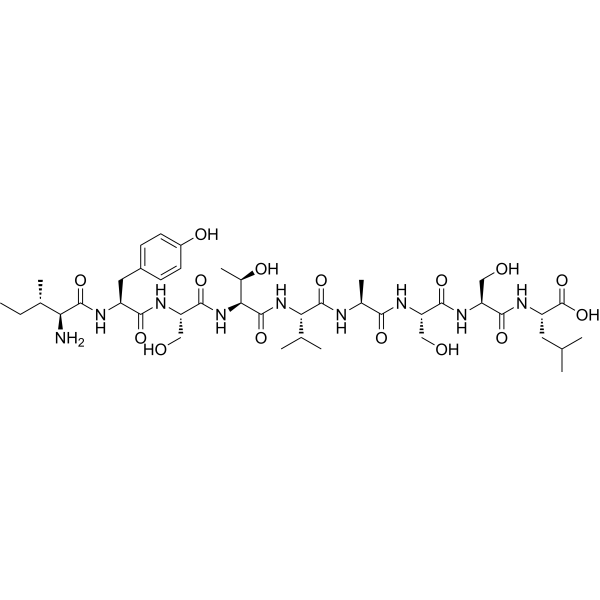
    Influenza HA (518-526) is an H-2d-restricted CTL epitope derived from influenza virus hemagglutinin. Influenza HA (518-526) is highly conserved across various H5N1, some H9N2, and H1N1 strains. Influenza HA (518-526) binds to the mouse MHC class I allele K d to form a complex, which is then recognized by specific CD8 + T cells. Influenza HA (518-526) is an immunodominant epitope in influenza-infected BALB/c mice, and it stimulates CD8 + T cells to secrete IFN-γ to induce a robust immune response. Currently, Influenza HA (518-526) is widely used in research related to respiratory syncytial virus (RSV), influenza virus, and H5N1 influenza .
    Influenza HA (518-526)
  • HY-130178

    Endogenous Metabolite Infection
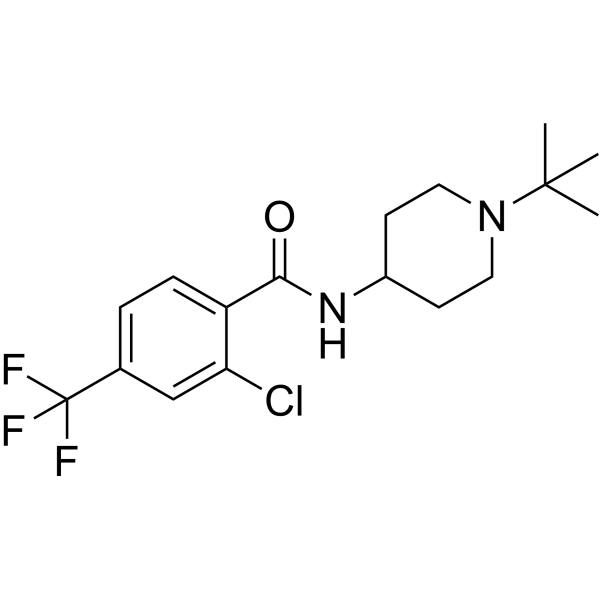
    CL-385319 is an N-substituted piperidine compound with inhibitory activity against H5N1 avian influenza A virus infection. CL-385319 exhibited an IC50 of 27.03±2.54 μM against infection of highly pathogenic H5N1 virus in Madin-Darby canine kidney cells (MDCK). CL-385319 had low cytotoxicity with a CC50 of 1.48 mM and was able to inhibit the entry of pseudoviruses carrying H5N1 strains from different sources, but had no inhibitory effect on the entry of VSV-G pseudotyped particles. Pseudoviruses with the M24A mutation in HA1 or the F110S mutation in HA2 were resistant to CL-385319, indicating that these two residues in the cavity region may be critical for the binding of CL-385319 .
    CL-385319
  • HY-P1783A
    M2e, human TFA
    1 Publications Verification

    Influenza Virus Infection
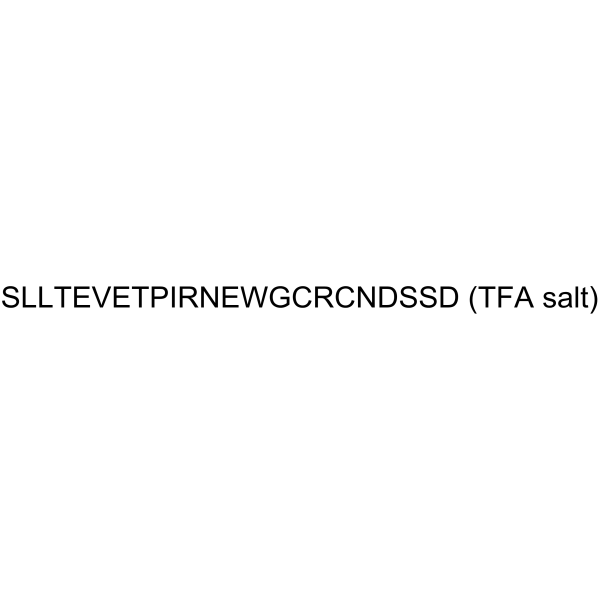
    M2e, human TFA, consisting of the 23 extracellular residues of M2 (the third integral membrane protein of influenza A), has been remarkably conserved in all human influenza A. M2e, human TFA is a valid and versatile vaccine candidate to protect against any strain of human influenza A .
    M2e, human TFA
  • HY-148309

    Influenza Virus Infection
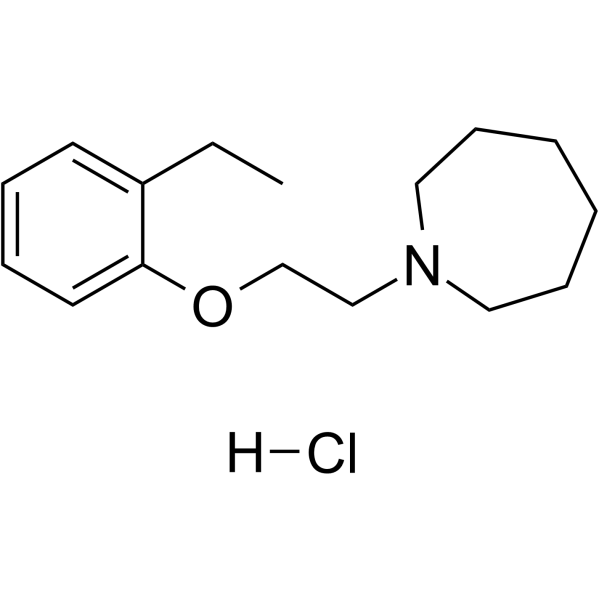
    Anti-Influenza agent 4 is a potent and selective influenza virus inhibitor with EC50s of 150 nM and 62 nM for strains A/Roma and A/Parma, respectively .
    Anti-Influenza agent 4
  • HY-131069A

    Influenza Virus Infection
    MBX2329, a potent influenza virus inhibitor, specifically inhibits hemagglutinin (HA)-mediated viral entry with HIV/HA(H5) displaying IC90 of 8.6 μM. MBX2329 inhibits a wide spectrum of influenza A viruses, which includes the 2009 pandemic influenza virus A/H1N1/2009, highly pathogenic avian influenza (HPAI) virus A/H5N1, and oseltamivir-resistant A/H1N1 strains .
    MBX2329
  • HY-P991054

    Influenza Virus Infection
    CR-8020 is a human IgG1 antibody that targets influenza A virus H3N2. CR-8020 binds to hemagglutinin (HA) of H3N2 strains with IC50s of 3.36 nM and 0.06 nM for A/Brisbane/10/2007 and A/Wyoming/3/2003, respectively. The isotype control for CR-8020 can refer to Human IgG1 kappa, Isotype Control (HY-P99001) .
    CR-8020
  • HY-134931

    Influenza Virus Infection
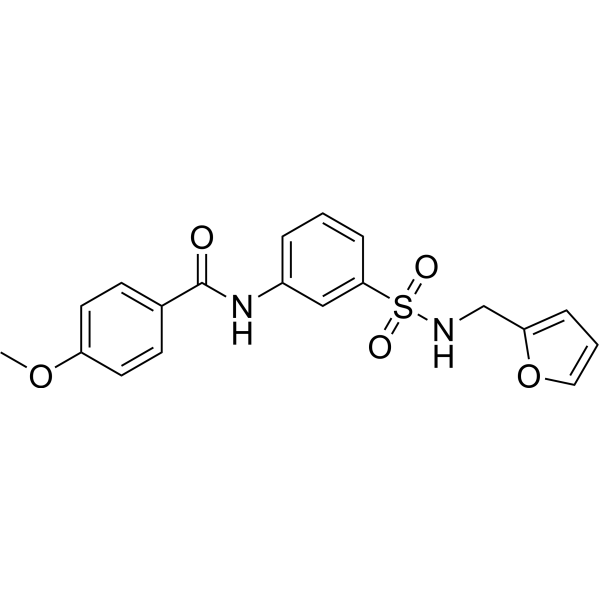
    M090 is the inhibitor for the hemagglutinin of influenza A Virus, that inhibits various influenza strains with EC50 of micromolar levels .
    M090
  • HY-156288

    Influenza Virus Infection
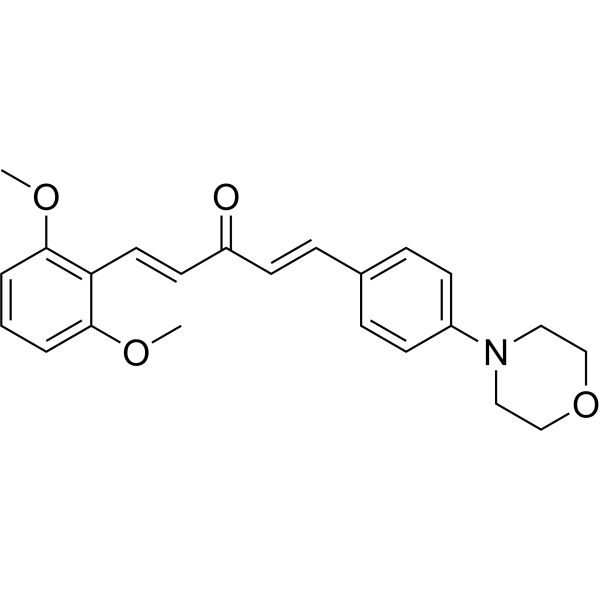
    Anti-Influenza agent 5 (Compound IIB-2), chalcone-like derivative, is an influenza nuclear export inhibitor. Anti-Influenza agent 5 has inhibitory effects on oseltamivir-resistant strains. Anti-Influenza agent 5 can impede virus proliferation by blocking the export of influenza virus nucleoprotein .
    Anti-Influenza agent 5
  • HY-P1783

    Influenza Virus Infection
    M2e, human, consisting of the 23 extracellular residues of M2 (the third integral membrane protein of influenza A), has been remarkably conserved in all human influenza A, which is a valid and versatile vaccine candidate to protect against any strain of human influenza A .
    M2e, human
  • HY-155476

    Influenza Virus Infection
    Influenza virus-IN-8 (compound A4) is an inhibitor of influenza virus (Influenza Virus) that induces viral nucleoprotein (NP) aggregation and prevents its nuclear accumulation. Influenza virus-IN-8 has broad-spectrum anti-influenza activity and can inhibit the replication and transcription of influenza A virus. Influenza virus-IN-8 also inhibits Oseltamivir (HY-13317)-resistant H1N1/pdm09 strains .
    Influenza virus-IN-8
  • HY-162680

    Influenza Virus Infection
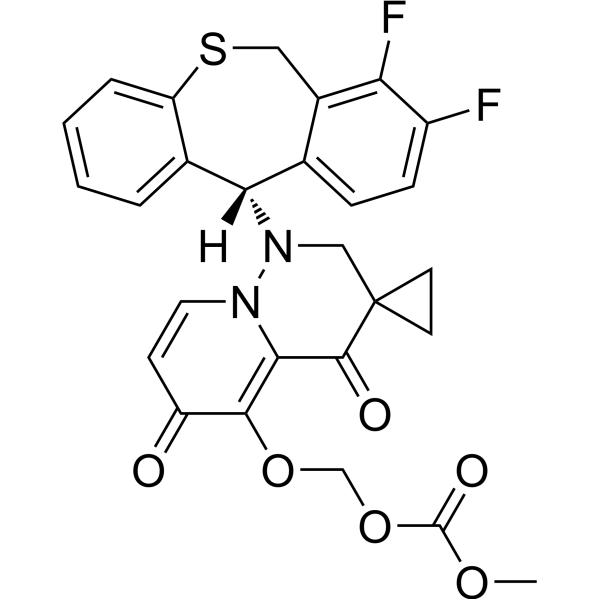
    OSC-GCDI(P) is a broad-spectrum orally active anti-influenza virus agent that exhibits significant inhibitory effects against both wild-type and Oseltamivir (HY-13317) resistant (H275Y) influenza virus strains in mouse infection models. OSC-GCDI(P) is capable of preventing not only wild-type influenza viruses but also OS-resistant variants with NA(H275Y) .
    OSC-GCDI(P)
  • HY-162801

    Influenza Virus Infection
    Neuraminidase-IN-21 (Compound 6d) is an influenza H1N1 virus Neuraminidase inhibitor, with IC50s of 0.30 µM for Neuraminidase, and 30.01 µM for H1N1 strain of influenza. Neuraminidase-IN-21 formsg three hydrogen bonds with Arg292, Arg371, and Tyr406 of Neuraminidase .
    Neuraminidase-IN-21
  • HY-147881

    Influenza Virus Infection
    Anti-Influenza agent 3 (compound 11h) is a potent anti-influenza agent with EC50 values of 3.29, 2.45 µM for A/HK/68 (H3N2, M2-WT), A/WSN/33 (H1N1, M2-S31N) strain, respectively. Anti-Influenza agent 3 shows low cytotoxicity for MDCK epithelial cells. Anti-Influenza agent 3 inhibits the M2 WT and S31N ion channel conductivity .
    Anti-Influenza agent 3
  • HY-143781

    Influenza Virus Infection
    Cap-dependent endonuclease-IN-26 is a cap-dependent endonuclease (CEN) inhibitor with an IC50 of 286 nM. Cap-dependent endonuclease-IN-26 shows antiviral activity against many influenza A and B strains .
    Cap-dependent endonuclease-IN-26
  • HY-157249

    Influenza Virus Infection
    Antiviral agent 43 (compound 16) is a potent and orally active influenza A viruses entry inhibitor. Antiviral agent 43 inhibits replications of influenza A strains VH04-H5N1 and PR8-H1N1 with EC50s of 240 nM and 72 nM, respectively .
    Antiviral agent 43
  • HY-N2264

    Influenza Virus Infection
    Wulignan A1 is isolated from the stems of Schisandra henryi. Wulignan A1 exhibits anti-influenza virus H1N1 and H1N1-TR (a Tamiflu agent resistant virus strain) activities .
    Wulignan A1
  • HY-174431

    Endonuclease Influenza Virus Infection
    PAN endonuclease-IN-3 is a potent PAN endonuclease inhibitor that against influenza virus polymerase complexes with an IC50 of 17.4 nM. PAN endonuclease-IN-3 demonstrates potent inhibitory activities against PAN endonuclease. PAN endonuclease-IN-3 demonstrates robust antiviral activities against multiple current and different influenza virus strains while showing minimal cytotoxicity in MDCK cells. PAN endonuclease-IN-3 significantly suppresses viral replication in an A/WSN/33 infected mouse model.
    PAN endonuclease-IN-3
  • HY-151967

    Influenza Virus Infection
    Anti-IAV agent 1 (Compound (R)-1a) is an orally active anti-influenza A virus (IAV) agent with IC50s of 0.03 and 0.06 μM against IAV H1N1 and Oseltamivir-resistant IAV H1N1 strains, respectively .
    Anti-IAV agent 1
  • HY-144668

    DNA/RNA Synthesis Influenza Virus Infection
    RdRP-IN-4 (compound 11q), an aryl benzoyl hydrazide analog, is an orally active influenza A virus RNA-dependent RNA polymerase (RdRp) inhibitor by interacting with the PB1 subunit. RdRP-IN-4 exhibits potent inhibitory activity against the avian H5N1 flu strain with an EC50 of 18 nM in MDCK cells. RdRP-IN-4 displays excellent potency against the the H1N1 (A/PR/8/34) Flu A strain and Flu B strain (B/Lee/1940) with EC50 values of 53 nM and 20 nM, respectively. RdRP-IN-4 significantly inhibits the expression level of viral nucleoprotein (NP) in a dose-dependent manner. RdRP-IN-4 exhibits significant antiviral activity in infected mice .
    RdRP-IN-4
  • HY-124305

    Endogenous Metabolite Infection
    ML395 is a potent and selective allosteric inhibitor of phospholipase D2 with antiviral activity. The cellular PLD1 IC50 value of ML395 exceeds 30,000 nM, while its cellular PLD2 IC50 value is 360 nM. ML395 shows excellent pharmacokinetic characteristics in vitro and physiochemical properties superior to other reported phospholipase inhibitors. ML395 shows interesting antiviral activity in cell-based assays against multiple influenza virus strains (H1, H3, H5, and H7) .
    ML395
  • HY-175808

    Influenza Virus Infection
    VF-57a (Compound 23) is an Influenza A virus (IAV) fusion inhibitor. VF-57 has potent antiviral activities against authentic A/H1N1 virus with EC50s of 0.92 and 0.31 μM for the A/H1N1 PR8 and A/H1N1 Virg09 strains, respectively. VF-57 significantly inhibits HA-mediated cell entry of A/H1N1- and A/H5N1-pseudoviruses, prevents the HA refolding at pH 5.2. VF-57a can be used for IAV infections research .
    VF-57a
  • HY-180525

    Influenza Virus Infection
    PB2-IN-2 is an orally active PB2 inhibitor with RNA-dependent RNA Polymerase (RNP) IC50 = 0.2 nM, LRA (Ligand Receptor Assay) EC50 = 0.8 nM, Cytopathic Effect (CPE) EC50 = 0.1 nM. PB2-IN-2 exhibits broad-spectrum, nanomolar antiviral potency against a panel of influenza A strains (including H1N1pdm09, Lyon/1337/2007/H1N1, Tex12-Like/H3N2, PR/8/34/H1N1, WSN/1933/H1N1, rPR8(H1N1)/H7N9 with EC50 = 1.5, 3.6, 3.7, 13.8, 2.9 and 9.8 nM and all the CC50 values > 2 μM. PB2-IN-2 possesses an excellent pharmacokinetic profile and metabolic stability. PB2-IN-2 can be used for anti-influenza research .
    PB2-IN-2
  • HY-178455

    Influenza Virus Infection
    Influenza virus-IN-10 is a dual-target antiviral agents for influenza that targets both PAC (KD = 8.9 μM) and NP (KD = 52.5 μM) simultaneously. Influenza virus-IN-10 exhibits an EC50 values of 1.64 μM) against influenza A virus (H1N1, A/WSN/33) and broad-spectrum activity against other influenza strains, including influenza B virus and multiple subtypes of influenza A .
    Influenza virus-IN-10
  • HY-124184

    DNA/RNA Synthesis Influenza Virus Infection
    D715-2441 is an influenza virus RNA polymerase inhibitor (IC50=1.7-4.4 μM). D715-2441 exhibits broad-spectrum antiviral activity against multiple influenza A strains. D715-2441 is promising for research of seasonal influenza and influenza viruses .
    D715-2441
  • HY-P992482

    Drug Derivative Influenza Virus Fc Receptor (FcR) Complement System Infection
    VIR-2482 is a monoclonal antibody targeting influenza A hemagglutinin (HA). VIR-2482 is generated by introducing LS mutations (M428L/N434S) into the Fc region of MEDI8852 (HY-P991446). VIR-2482 binds to the conserved HA stem epitope across all 18 influenza A HA subtypes, neutralizes a broad spectrum of H1N1 and H3N2 strains, binds to FcγRIIIa, FcγRIIa and C1q, and induces antibody-dependent cellular cytotoxicity and complement-dependent cytotoxicity. VIR-2482 reduces morbidity and mortality caused by seasonal influenza A strains and provides prophylactic protection in mice. VIR-2482 can be used in research related to influenza A disease .
    VIR-2482
  • HY-181915

    Influenza Virus Infection
    PB2-IN-3 (Compound 11) is a PB2 inhibitor. PB2-IN-3 exhibits antiviral activity against Influenza A H1N1 and H3N2 strains. PB2-IN-3 can be used in studies related to influenza A virus infection .
    PB2-IN-3
  • HY-180269

    Influenza Virus DNA/RNA Synthesis Infection
    Anti-Influenza agent 10 (Compound 41) is an influenza A virus RNA-dependent RNA polymerase (RdRp) inhibitor. Anti-Influenza agent 10 exhibits potent antiviral activity against A/PR/8/34(H1N1) with an IC50 of 0.29μM and a KD of 4.11 μM. Anti-Influenza agent 10 can inhibit the assembly of the viral RdRp complex by disrupting the protein interaction between PA and PB1 subunits, thereby blocking the transcription and replication of the viral genome. Anti-Influenza agent 10 shows significant broad-spectrum effects on multiple influenza virus strains, such as H3N2, H3N8 and H9N2 with IC50 values of 3.96, 1.91 and 1.45 μM. Anti-Influenza agent 10 can be used for the research of influenza A Virus Infection .
    Anti-Influenza agent 10
  • HY-181785

    Influenza Virus Infection
    Influenza A virus-IN-18 (Compound C2e) is an orally active inhibitor of Influenza A virus (IC50: 2.5 μM against PR8/H1N1; 6.42 μM against H3N2). Influenza A virus-IN-18 binds directly to the H1N1/PR8 HA protein with high affinity, with a KD of 0.25 μM. Influenza A virus-IN-18 is applicable to research related to Influenza A virus infection .
    Influenza A virus-IN-18
  • HY-Z3651

    Influenza Virus Infection
    Oseltamivir impurity-1 (Page 2, Row 4, Column 3), a carboxylic acid derivative, is an impurity of Oseltamivir (HY-13317). Oseltamivir impurity-1 shows antiviral effect on multiple influenza virus strains .
    Oseltamivir impurity-1
  • HY-N17963

    Glutathione S-transferase Influenza Virus Interleukin Related IFNAR STAT Infection
    Cappariloside A is a larvicide that exhibits larvicidal activity against Aedes aegypti larvae and reduces larval glutathione-S-transferase activity. Cappariloside A also possesses antiviral activity, decreases the level of phosphorylated STAT1 in cells, inhibits the replication of influenza viruses H1N1, H3N2, PIV3 and ADV, and downregulates the expression of IL-6, IP-10, MIG, RANTES/CCL-5, IFN-β and IL-29. Cappariloside A suppresses the inflammatory response induced by mouse lung-adapted influenza virus strains. Cappariloside A can be used in studies related to larvicidal applications and influenza virus infection .
    Cappariloside A
  • HY-182895

    Influenza Virus Infection
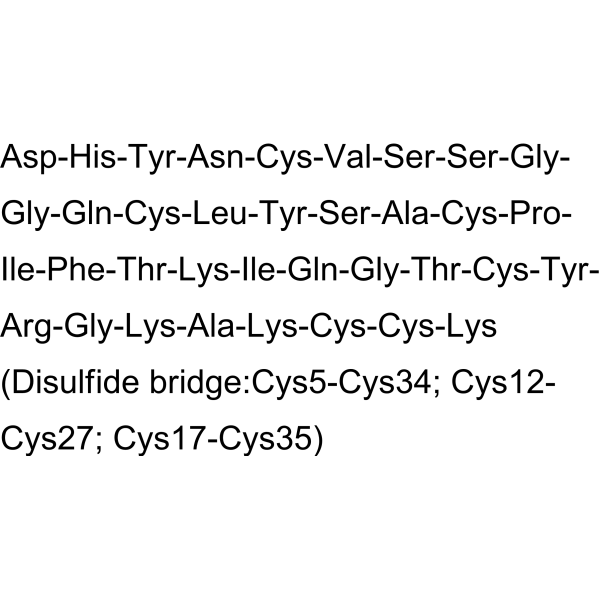
    Influenza A virus-IN-19 (Compound (S)-63) is an orally active, selective Influenza A virus inhibitor with an EC50 of 0.44 μM. Influenza A virus-IN-19 exhibits moderate binding affinity to Hemagglutinin, with a Kd of 5.66 μM. Influenza A virus-IN-19 inhibits trypsin-mediated cleavage of HA0, blocks the early viral entry process, and suppresses the replication of Influenza A virus. Influenza A virus-IN-19 improves the survival rate of mice in lethal influenza models. Influenza A virus-IN-19 can be used in studies related to Influenza A virus infection .
    Influenza A virus-IN-19
  • HY-180145

    Furin Influenza Virus Infection
    Furin-IN-3 (Compound 9) is a potent and selective proprotein convertase furin inhibitor with a Ki of 12.4 nM. Furin-IN-3 shows a Ki of 278 nM for PC7. Furin-IN-3 shows a significant antiviral effect on the Furin-dependent H7N7 influenza A virus strain SC35M. Furin-IN-3 can inhibit the cleavage and activation of the viral hemagglutinin (HA), prevent the fusion of the viral membrane with the host cell membrane, and thereby inhibit viral replication and proliferation. Furin-IN-3 can be used for the research of infection, such as influenza virus infection .
    Furin-IN-3

Inquiry Online

Your information is safe with us. * Required Fields.

Salutation


Country or Region *

Applicant Name *


Organization Name *

Department *


Email Address *


Product Name *

Cat. No.


Requested quantity *

Phone Number *


Remarks

Inquiry Online

Inquiry Information

Product Name:
Cat. No.:
Quantity:
MCE Japan Authorized Agent:

