1. Search Result
Search Result
Results for "

inhibits transcription

" in MedChemExpress (MCE) Product Catalog:

861

Inhibitors & Agonists

4

Screening Libraries

7

Fluorescent Dyes

10

Biochemical Assay Reagents

30

Peptides

2

Inhibitory Antibodies

110

Natural
Products

46

Isotope-Labeled Compounds

2

Click Chemistry

15

Oligonucleotides

4

GMP Molecules

Cat. No. Product Name Target Research Areas Chemical Structure
  • HY-10431
    SB-431542
    Maximum Cited Publications
    294 Publications Verification

    Organoid TGF-β Receptor Apoptosis Cancer
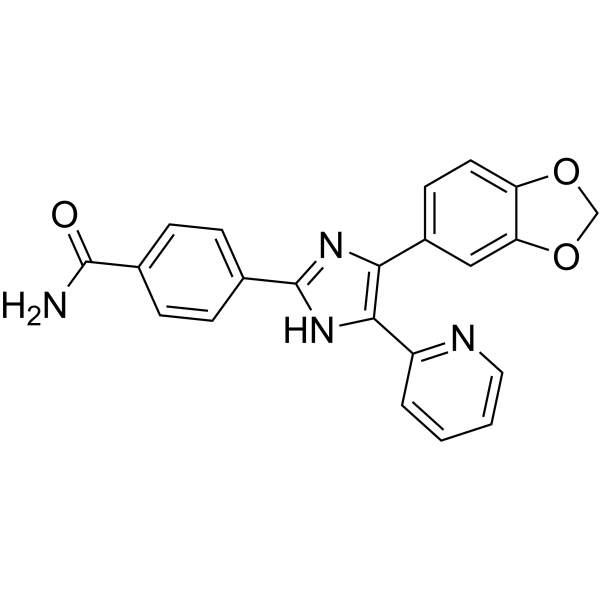
    SB-431542 is a TGF-β receptor kinase inhibitor (TRKI). SB-431542 has inhibitory activity for ALK4, ALK5 and ALK7 with IC50 values of 1 μM, 0.75 μM and 2 μM, respectively. SB-431542 also inhibits TGF-β-induced transcription, gene expression, apoptosis, and growth suppression. SB-431542 can be used for the research of cancer and signal transduction pathways .
    SB-431542
  • HY-17393
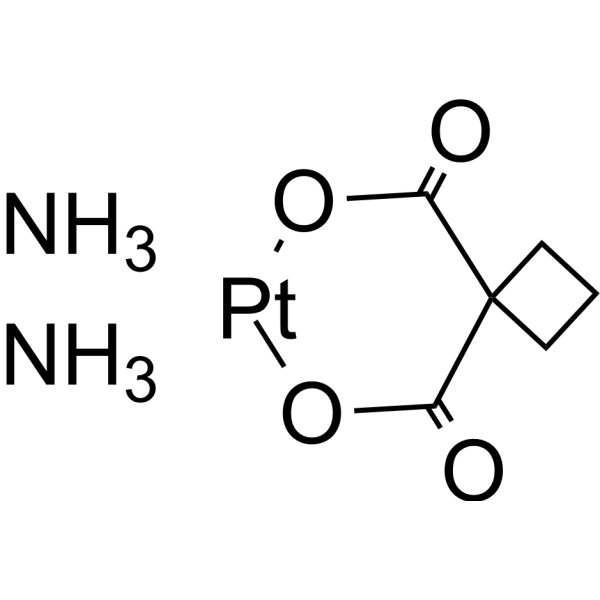
    Carboplatin
    85+ Cited Publications

    NSC 241240

    DNA Alkylator/Crosslinker Autophagy DNA/RNA Synthesis Cancer
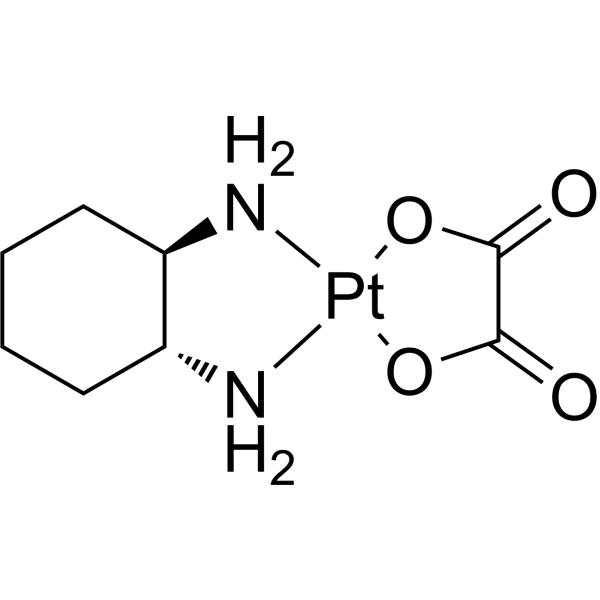
    Carboplatin (NSC 241240) is a DNA synthesis inhibitor which binds to DNA, inhibits replication and transcription and induces cell death. Carboplatin (NSC 241240) is a derivative of CDDP and a potent anti-cancer agent.
    Carboplatin
  • HY-12270
    T-5224
    95+ Cited Publications

    AP-1 MMP Neurological Disease Inflammation/Immunology Cancer
    T-5224 is a transcription factor c-Fos/activator protein (AP)-1 inhibitor with anti-inflammatory effects, which specifically inhibits the DNA binding activity of c-Fos/c-Jun without affecting other transcription factors. T-5224 inhibits the IL-1β-induced up-regulation of Mmp-3, Mmp-13 and Adamts-5 transcription .
    T-5224
  • HY-16985
    Darolutamide
    5+ Cited Publications

    ODM-201; BAY-1841788

    Androgen Receptor Cancer
    Darolutamide (ODM-201) is an orally active competitive androgen receptor (AR) antagonist. Darolutamide has a Ki of 11 nM for rat wild-type AR (wtAR) and IC50 of 26 nM for human wild-type AR (hAR)-mediated transcriptional activation . Darolutamide inhibits testosterone-induced AR nuclear translocation and transcriptional activation . Darolutamide exerts selective effects on AR-positive cells by inhibiting AR-dependent signaling pathways, and its active metabolite retains full antagonistic activity against AR mutants . Darolutamide can be used for the research of prostate cancer, including androgen receptor-dependent prostate cancer .
    Darolutamide
  • HY-15870
    SR 11302
    20+ Cited Publications

    AP-1 Inflammation/Immunology Cancer
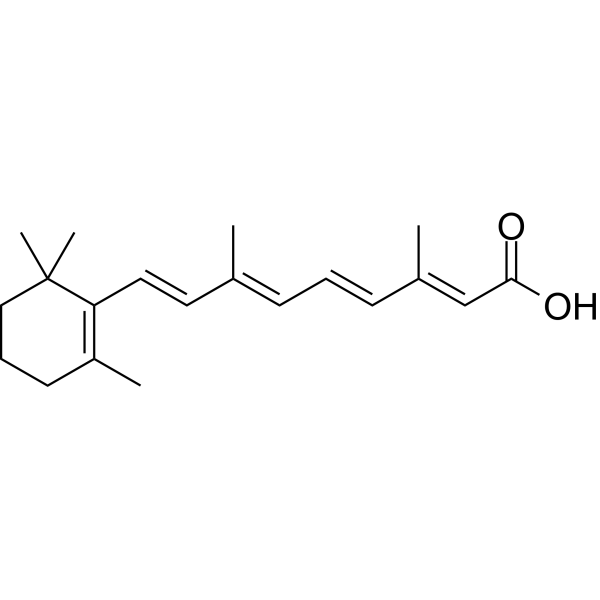
    SR 11302 is an activator protein-1 (AP-1) transcription factor inhibitor. SR 11302 is a retinoid that specifically inhibits AP-1 activity without activating the transcription of retinoic acid response element (RARE) .
    SR 11302
  • HY-P10925

    FOG-001; I-66

    β-catenin Cancer
    Zolucatetide (FOG-001;I-66) is a potent β-catenin inhibitor with an IC50 of <50 nM. Zolucatetide can inhibits β-catenin and T-cell factor (TCF) transcription factor interaction. Zolucatetide inhibits cell proliferation and induces cell cycle arrest in target cells. Zolucatetide exhibits anti-tumor efficacy in mice bearing COLO320DM colon cancer cell (with APC, TP53 mutations) xenografts. Zolucatetide can be used for the study of colon cancer .
    Zolucatetide
  • HY-17381
    Idarubicin hydrochloride
    15+ Cited Publications

    4-Demethoxydaunorubicin hydrochloride

    Topoisomerase Bacterial Fungal Autophagy Antibiotic DNA/RNA Synthesis c-Myc Infection Cancer
    Idarubicin hydrochloride is an anthracycline antileukemic agent. It inhibits the topoisomerase II interfering with the replication of DNA and RNA transcription. Idarubicin hydrochloride inhibits the growth of bacteria and yeasts.
    Idarubicin hydrochloride
  • HY-16665
    iCRT 14
    15+ Cited Publications

    Wnt Cancer
    iCRT 14 is a novel potent inhibitor of β-catenin-responsive transcription (CRT), with IC50 of 40.3 nM against Wnt responsive STF16 luciferase.
    iCRT 14
  • HY-100431
    IMR-1
    5+ Cited Publications

    Notch Cancer
    IMR-1 is a novel class of Notch inhibitor targeting the transcriptional activation with an IC50 of 26 μM. IMR-1 prevents the recruitment of Mastermind-like 1 (Maml1) to the Notch Ternary Complex (NTC) on chromatin, inhibits Notch target gene transcription and dramatically inhibits tumor growth .
    IMR-1
  • HY-103705
    iCRT3
    10+ Cited Publications

    Wnt Apoptosis Cancer
    iCRT3 is an inhibitor of both Wnt and β-catenin-responsive transcription.
    iCRT3
  • HY-100493
    BP-1-102
    10+ Cited Publications

    STAT Cancer
    BP-1-102 is an orally available, small-molecule inhibitor of transcription factor Stat3, with an IC50 of 6.8 μM.
    BP-1-102
  • HY-15681
    Senexin A
    5+ Cited Publications

    CDK Cancer
    Senexin A is an inhibitor of CDK8/19 (IC50: 280 nM, CDK8) and an inhibitor downstream of p21 transcription. It only inhibits p21-induced transcription but does not inhibit other biological effects of p21. Senexin A inhibits CMV-GFP induction as well as the p21 stimulatory activity of the consensus NF-κB-dependent promoters .
    Senexin A
  • HY-10447

    EM-1421

    Survivin COX TNF Receptor Apoptosis Infection Inflammation/Immunology Cancer
    Terameprocol is an inhibitor targeting the Sp1 transcription factor, which can selectively inhibit the transcription of Sp1-dependent genes. Terameprocol exerts its effects by inhibiting Sp1-mediated gene transcription, such as reducing the expression of genes like CDC2, survivin and HMGB1, thereby arresting the cell cycle, inducing apoptosis, and suppressing the inflammatory response. Terameprocol exhibits anti-proliferative, pro-apoptotic, and anti-inflammatory activities and is currently mainly used in the research of diseases such as cancer and pulmonary arterial hypertension[1][2][3].
    Terameprocol
  • HY-153347
    JY-2
    2 Publications Verification

    FOXO Metabolic Disease
    JY-2 is a moderately selective and orally active Forkhead transcription factor forkhead box O1 (FoxO1) inhibitor that inhibits FoxO1 transcriptional activity with an IC50 of 22 μM. JY-2 shows moderate inhibition against FoxO3a and FoxO4. JY-2 shows anti-diabetic activity .
    JY-2
  • HY-101464
    ML329
    5+ Cited Publications

    Microphthalmia Associated Transcription Factor (MITF) Others
    ML329 is a micropthalmia-associated transcription factor (MITF) inhibitor, which inhibits TRPM-1 promoter activity with an IC50 of 1.2 μM.
    ML329
  • HY-N6747

    c-Myc Autophagy Cancer
    Stauprimide is a staurosporine analog that promotes embryonic stem cell (ESC) differentiation. Stauprimide is a non-broad spectrum inhibitor that binds to the MYC transcription factor NME2 and blocks its nuclear localization in ESCs, which results in down-regulation of MYC transcription .
    Stauprimide
  • HY-10072

    NF-κB AP-1 Inflammation/Immunology
    SPC 839 (compound 10) is an orally active inhibitor of AP-1 and NF-kB mediated transcriptional activation with IC50 of 0.008 μM .
    SPC 839
  • HY-115672
    KS15
    3 Publications Verification

    Cryptochrome Cancer
    KS15 is an inhibitor of the interactions between cryptochromes (CRYs: CRY1 and CRY2) and the CLOCK:BMAL1 heterodimer. KS15 impairs the feedback actions of CRYs on E-box-dependent transcription (EC50=4.9 μM) by CLOCK:BMAL1 heterodimer, an indispensable transcriptional regulator of the mammalian circadian clock. Anti-proliferative activity .
    KS15
  • HY-10431R

    Apoptosis TGF-β Receptor Organoid Reference Standards Cancer
    SB-431542 (Standard) is the analytical standard of SB-431542. SB-431542 is a TGF-β receptor kinase inhibitor (TRKI). SB-431542 has inhibitory activity for ALK4, ALK5 and ALK7 with IC50 values of 1 μM, 0.75 μM and 2 μM, respectively. SB-431542 also inhibits TGF-β-induced transcription, gene expression, apoptosis, and growth suppression. SB-431542 can be used for the research of cancer and signal transduction pathways .
    SB-431542 (Standard)
  • HY-120855
    CCG-100602
    2 Publications Verification

    Ras Cardiovascular Disease
    CCG-100602 is a specific inhibitor of myocardin-related transcription factor A/serum response factor (MRTF-A/SRF) signaling. CCG-100602 specifically block MRTF-A nuclear localization and thus inhibit the fibrogenic transcription factor SRF .
    CCG-100602
  • HY-100602
    HJC0152
    3 Publications Verification

    STAT Apoptosis Cancer
    HJC0152 is a signal transducers and activators of transcription 3 (STAT3) inhibitor.
    HJC0152
  • HY-122657

    RUNX Cancer
    AI-10-104 is an inhibitor for runt-related transcription factor (RUNX), which enhances the cytotoxicity in myeloma cells .
    AI-10-104
  • HY-103692
    STX-0119
    2 Publications Verification

    STAT Cancer
    STX-0119 is a selective, orally active STAT3 dimerization inhibitor. STX-0119 inhibits STAT3 transcription with an IC50 of 74 μM .
    STX-0119
  • HY-108638
    NSC 146109 hydrochloride
    2 Publications Verification

    XI-011 hydrochloride

    MDM-2/p53 Apoptosis PARP Cancer
    NSC 146109 hydrochloride (XI-011 hydrochloride) is a p53 activator and MDMX inhibitor. NSC 146109 hydrochloride inhibits MDMX gene transcription, downregulates MDMX mRNA and protein levels, stabilizes p53 and activates the transcriptional activity of p53. NSC 146109 hydrochloride induces cancer cell apoptosis (apoptosis) and inhibits the growth of transformed cells. NSC 146109 hydrochloride inhibits the growth of xenograft tumors. NSC 146109 hydrochloride can be used in research related to breast cancer and cervical cancer .
    NSC 146109 hydrochloride
  • HY-111411
    IZCZ-3
    2 Publications Verification

    c-Myc Autophagy Cancer
    IZCZ-3 is a potent c-MYC transcription inhibitor with antitumor activity .
    IZCZ-3
  • HY-13282
    GANT 58
    5+ Cited Publications

    NSC 75503

    MOFs Gli Cancer
    GANT 58 (NSC 75503) is a potent GLI antagonist that inhibits GLI1-induced transcription with IC50 of 5 μM .
    GANT 58
  • HY-133987
    AP-1/NF-κB activation inhibitor 1
    3 Publications Verification

    NF-κB Inflammation/Immunology
    AP-1/NF-κB activation inhibitor 1 is a potent AP-1 and NF-κB mediated transcriptional activation inhibitor (IC50=1 μM), without blocking basal transcription driven by the β-actin promoter. AP-1/NF-κB activation inhibitor 1 has a similar inhibitory effect on the production of IL-2 and IL-8 levels in stimulated cells .
    AP-1/NF-κB activation inhibitor 1
  • HY-141567A

    Pseudo-UTP trisodium solution (100 mM)

    DNA/RNA Synthesis Infection
    Pseudouridine 5'-triphosphate (Pseudo-UTP) trisodium solution (100 mM) is a modified ribonucleoside triphosphate and uracil base-modified UTP derivative. Pseudouridine 5'-triphosphate trisodium solution (100 mM) enhances translational properties and stability of mRNA, reduces innate immune responses in mammalian cells, and inhibits signal-dependent transcription termination of vaccinia virus early gene transcription while supporting transcription elongation. Pseudouridine 5'-triphosphate trisodium solution (100 mM) can be used for the research of vaccinia virus infection .
    Pseudouridine 5'-triphosphate trisodium solution (100 mM)
  • HY-124639

    CDK Cancer
    CDK9 inhibitor HH1 is a potent and selectively CDK9 inhibitor. CDK9 inhibitor HH1 inhibits the transcription of CDK. CDK9 inhibitor HH1 can be used in research of cancer .
    CDK9 inhibitor HH1
  • HY-122234

    DNA/RNA Synthesis Cancer
    VPC-18005 inhibits ERG-induced transcription and interacts directly with the ERG-ETS domain, and disrupts the ERG binding to DNA. VPC-18005 is a potent inhibitor of luciferase activity .
    VPC-18005
  • HY-126037
    (±)-ML 209
    1 Publications Verification

    ROR Inflammation/Immunology
    (±)-ML 209 (compound 4n), a diphenylpropanamide, is a retinoic acid-related orphan receptor RORγ antagonist with an IC50 of 1.1 μM. (±)-ML 209 inhibits RORγt transcriptional activity with an IC50 of 300 nM in HEK293t cells. (±)-ML 209 inhibits the transcriptional activity of RORγt, but not RORα in cells. (±)-ML 209 selectively inhibits murine Th17 cell differentiation without affecting the differentiation of naïve CD4 + T cells into other lineages, including Th1 and regulatory T cells .
    (±)-ML 209
  • HY-111630
    PluriSIn #2
    3 Publications Verification

    Topoisomerase Cancer
    PluriSIn #2 is a selective transcriptional inhibitor of topoisomerase II α (TOP2A). PluriSIn #2 is a compound that selectively eliminates undifferentiated human pluripotent stem cells (hPSCs) .
    PluriSIn #2
  • HY-N7310

    Nuclear Factor of activated T Cells (NFAT) Others
    Gomisin E, a dibenzocyclooctadiene lignan isolated from the fruits of Schizandra chinensis, inhibits NFAT transcription with an IC50 of 4.73 μM .
    Gomisin E
  • HY-142682

    Phosphatase Neurological Disease Cancer
    SCP1-IN-1 is a Small CTD Phosphatase 1 (SCP1) inhibitor with a human IC50 of 10 μM. SCP1-IN-1 inactivates SCP1, promotes REST transcription factor degradation, and reduces REST transcriptional activity. SCP1-IN-1 can be used for the research of glioblastoma multiforme .
    SCP1-IN-1
  • HY-N4182
    Licochalcone E
    4 Publications Verification

    Akt p38 MAPK Autophagy Inflammation/Immunology
    Licochalcone E, a flavonoid compound isolated from Glycyrrhiza uralensis, inhibits NF-κB and AP-1 transcriptional activity through the inhibition of AKT and MAPK activation .
    Licochalcone E
  • HY-104067

    NASTRp

    Epigenetic Reader Domain Cancer
    Naphthol AS-MX phosphate (NASTRp) is a small molecule inhibitor of the CREB (cyclic adenosine phosphate reaction element binding protein)-CBP (CREB binding protein) transcription factor complex. Naphthol AS-MX phosphate shows antitumor activity against lung cancer cells, inhibiting tumor cell proliferation (IC50=3.701 μmol/L), colony formation, and anchored independent growth in soft AGAR. Naphthol AS-MX phosphate can be used in the study of KRAS mutated lung cancer, especially for KRAS mutated lung cancer with poor chemotherapy resistance and prognosis .
    Naphthol AS-MX phosphate
  • HY-44062

    Histone Methyltransferase Inflammation/Immunology Cancer
    G9a-IN-1 (Compound 113) is a G9a protein inhibitor. G9A/EHMT2 is a nuclear histone lysine methyltransferase that catalyzes histone H3 lysine 9 dimethylation (H3K9me2), which is a reversible modification generally associated with transcriptional gene silencing. G9a-IN-1 can be used for the research of autoimmune disorders or cancer .
    G9a-IN-1
  • HY-16985S

    ODM-201-d4; BAY-1841788-d4

    Isotope-Labeled Compounds Androgen Receptor Cancer
    Darolutamide-d4 (ODM-201-d4) is deuterium labeled Darolutamide (HY-16985). Darolutamide (ODM-201) is an orally active competitive androgen receptor (AR) antagonist, with a Ki of 11 nM for rat wild-type AR (wtAR) and an IC50 of 26 nM for human wild-type AR (hAR)-mediated transcriptional activation . Darolutamide inhibits testosterone-induced AR nuclear translocation and transcriptional activation . Darolutamide exerts selective effects on AR-positive cells by inhibiting AR-dependent signaling pathways, and its active metabolite retains full antagonistic activity against AR mutants . Darolutamide can be used for the research of prostate cancer, including androgen receptor-dependent prostate cancer .
    Darolutamide-d4
  • HY-127041

    Bacterial Infection
    Virstatin inhibits the pili system synthesis and prevents A. baumannii biofilm formation. Virstatin also inhibits dimerization of the transcriptional activator ToxT .
    Virstatin
  • HY-141567

    Pseudo-UTP

    DNA/RNA Synthesis Infection
    Pseudouridine 5'-triphosphate (Pseudo-UTP) is a modified ribonucleoside triphosphate and uracil base-modified UTP derivative. Pseudouridine 5'-triphosphate enhances translational properties and stability of mRNA, reduces innate immune responses in mammalian cells, and inhibits signal-dependent transcription termination of vaccinia virus early gene transcription while supporting transcription elongation. Pseudouridine 5'-triphosphate can be used for the research of vaccinia virus infection .
    Pseudouridine 5'-triphosphate
  • HY-14645A
    (+)-DHMEQ
    2 Publications Verification

    (1R,2R,6R)-Dehydroxymethylepoxyquinomicin; (1R,2R,6R)-DHMEQ

    Keap1-Nrf2 Inflammation/Immunology
    (+)-DHMEQ is an activator of antioxidant transcription factor Nrf2. (+)-DHMEQ is the enantiomer of (-)-DHMEQ. (-)-DHMEQ inhibits NF-kB than its enantiomer (+)-DHMEQ.
    (+)-DHMEQ
  • HY-126030
    (+)-Syringaresinol
    1 Publications Verification

    Nuclear Factor of activated T Cells (NFAT) Cancer
    (+)-Syringaresinol, a lignan, is a NFAT transcription factor inhibitor, with an IC50 of 329.4 μM. (+)-Syringaresinol also can be used for the research of lymphocytic leukemia .
    (+)-Syringaresinol
  • HY-163173

    YAP Cancer
    TEAD-IN-8 is a novel TEAD inhibitor, which potently and specifically inhibits TEAD-YAP transcriptional activities. TM2, alone or in combination with MEK inhibitors, exhibits potent antiproliferative effects in YAP-dependent cancer cells .
    TEAD-IN-8
  • HY-W012037
    8-Hydroxyquinoline hemisulfate
    1 Publications Verification

    8-Quinolinol hemisulfate

    Environmental Pollutants Antibiotic Bacterial Infection
    8-Hydroxyquinoline hemisulfate (8-Quinolinol hemisulfate) is a monoprotic bidentate chelating agent, exhibits antiseptic, disinfectant, and pesticide properties, functioning as a transcription inhibitor.
    8-Hydroxyquinoline hemisulfate
  • HY-16985R

    ODM-201 (Standard); BAY-1841788 (Standard)

    Reference Standards Androgen Receptor Cancer
    Darolutamide (Standard) is the analytical standard of Darolutamide (HY-16985). This product is intended for research and analytical applications. Darolutamide (ODM-201) is an orally active competitive androgen receptor (AR) antagonist, with a Ki of 11 nM for rat wild-type AR (wtAR) and an IC50 of 26 nM for human wild-type AR (hAR)-mediated transcriptional activation . Darolutamide inhibits testosterone-induced AR nuclear translocation and transcriptional activation . Darolutamide exerts selective effects on AR-positive cells by inhibiting AR-dependent signaling pathways, and its active metabolite retains full antagonistic activity against AR mutants . Darolutamide can be used for the research of prostate cancer, including androgen receptor-dependent prostate cancer .
    Darolutamide (Standard)
  • HY-15870A

    AP-1 Inflammation/Immunology Cancer
    (6E)-SR 11302 is a E-isomer of SR 11302. SR 11302 is an activator protein-1 (AP-1) transcription factor inhibitor. SR 11302 is a retinoid that specifically inhibits AP-1 activity without activating the transcription of retinoic acid response element (RARE) .
    (6E)-SR 11302
  • HY-116863

    Bacterial Infection
    KKL-40 is a small molecule inhibitor that targets the trans-transcription process and is effective against methicillin-sensitive and -resistant Staphylococcus aureus (S. aureus) as well as other Gram-positive pathogens including vancomycin-resistant Enterococcus faecium, Bacillus subtilis, and Streptococcus pyogenes. KKL-40 synergizes with the human antimicrobial peptide LL-37 to inhibit S. aureus, but does not synergize with other antibiotics such as daptomycin, kanamycin, or erythromycin. Trans-transcription is an extreme form of recoding, and KKL-40 inhibits trans-transcription but is nontoxic to HeLa cells .
    KKL-40
  • HY-126299

    Epigenetic Reader Domain Others
    NVS-BPTF-1, a chemical probe, is a selective inhibitor for bromodomain and PHD finger containing transcription factor (BPTF), with KD of 71 nM .
    NVS-BPTF-1
  • HY-W004924

    Endogenous Metabolite Others
    5-Hydroxymethyluracil is a product of oxidative DNA damage. 5-Hydroxymethyluracil can be used as a potential epigenetic mark enhancing or inhibiting transcription with bacterial RNA polymerase.
    5-Hydroxymethyluracil
  • HY-122041
    Ethacridine
    2 Publications Verification

    Apoptosis Poly(ADP-ribose) Glycohydrolase (PARG) Cancer
    Ethacridine is a poly(ADP-ribose) glycohydrolase (PARG) inhibitor and an activator of the transcriptional coactivator. Ethacridine induces thyroid cancer cells apoptosis and promotes differentiation in thyroid follicular cells .
    Ethacridine

Inquiry Online

Your information is safe with us. * Required Fields.

Salutation


Country or Region *

Applicant Name *


Organization Name *

Department *


Email Address *


Product Name *

Cat. No.


Requested quantity *

Phone Number *


Remarks

Inquiry Online

Inquiry Information

Product Name:
Cat. No.:
Quantity:
MCE Japan Authorized Agent:

