
Search Result
Results for "
japonicas
" in MedChemExpress (MCE) Product Catalog:
1
Isotope-Labeled Compounds
| Cat. No. |
Product Name |
Target |
Research Areas |
Chemical Structure |
-
- HY-Y1310
-
|
|
Environmental Pollutants
|
Others
Cancer
|
|
Sodium alginate is the sodium salt of alginic acid. Sodium alginate can be extracted and purified from brown seaweed Laminaria japonica. Sodium alginate can be used in food additives and pharmaceuticals, adsorb heavy metal ions, and has mucosal-protective and hemostatic effects .
|
-
-
- HY-N0423
-
|
|
Others
|
Inflammation/Immunology
Cancer
|
|
Sophoricoside is an isoflavone glycoside isolated from Sophora japonica and has anti-inflammatory, anti-cancer and immunosuppressive effects.
|
-
-
- HY-N2369
-
|
|
Apoptosis
Influenza Virus
|
Infection
Neurological Disease
Inflammation/Immunology
Cancer
|
|
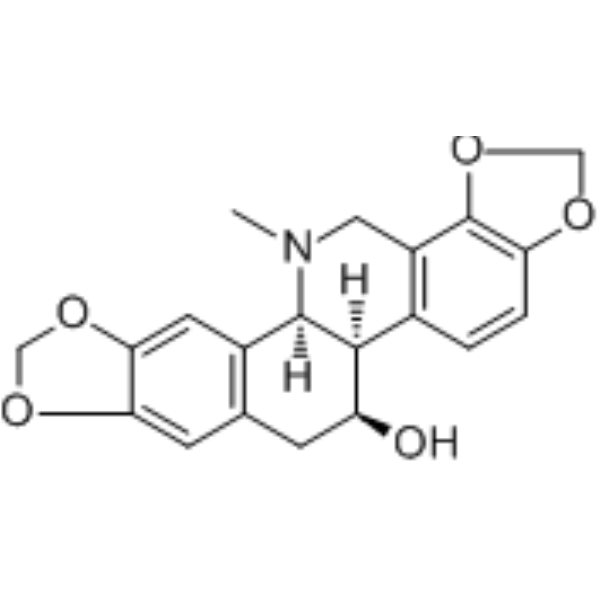
Chelidonine, an isoquinoline alkaloid, can be isolated from Chelidonium majus L.. Chelidonine causes G2/M arrest and induces caspase-dependent and caspase-independent apoptosis, and prevents cell cycle progression of stem cells in Dugesia japonica. Chelidonine has cytotoxic activity against melanoma cell lines. with anticancer and antiviral activity .
|
-
-
- HY-N5135
-
|
Nolinospiroside F
|
Others
|
Others
|
|
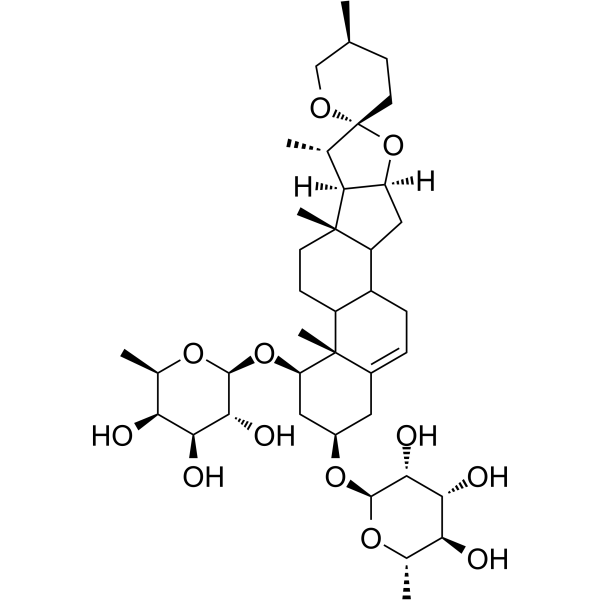
Liriopesides B (Nolinospiroside F) is a steroidal saponin isolated from Ophiopogon japonicas. Liriopesides B has anti-oxidative and anti-aging effects .
|
-
-
- HY-N2437
-
|
|
Others
|
Inflammation/Immunology
|
|
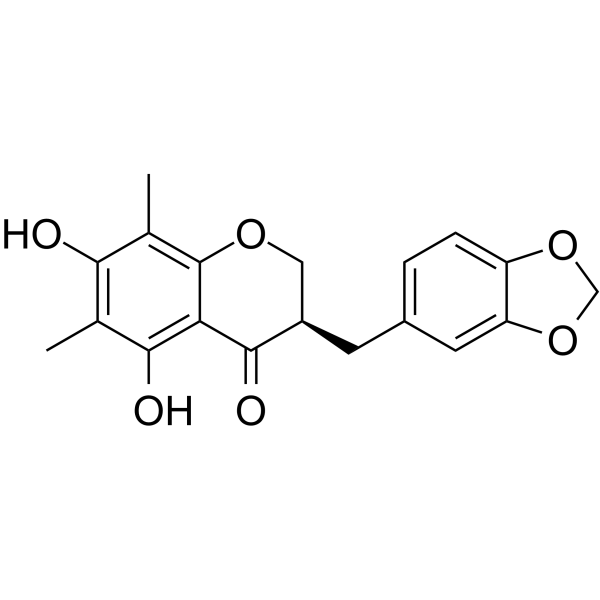
Methylophiopogonanone A, a major homoisoflavonoid in Ophiopogon japonicas, has both anti-oxidative and anti-inflammatory properties .
|
-
-
- HY-E70396
-
|
|
Biochemical Assay Reagents
|
Others
|
|
Pectolyase Y-23, A. japonicus is an enzyme derived from Aspergillus japonicas. Pectolyase Y-23, A. japonicus can be used in combination with cellulase to isolate bioactive protoplasts .
|
-
-
- HY-N4168
-
|
|
HBV
|
Infection
Cancer
|
|
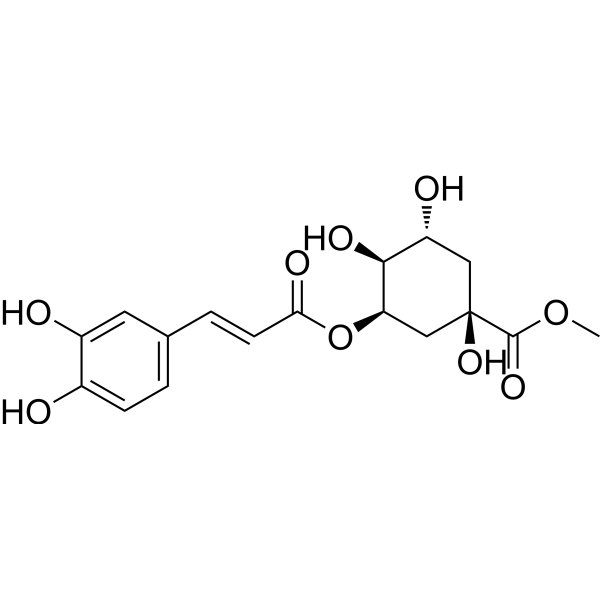
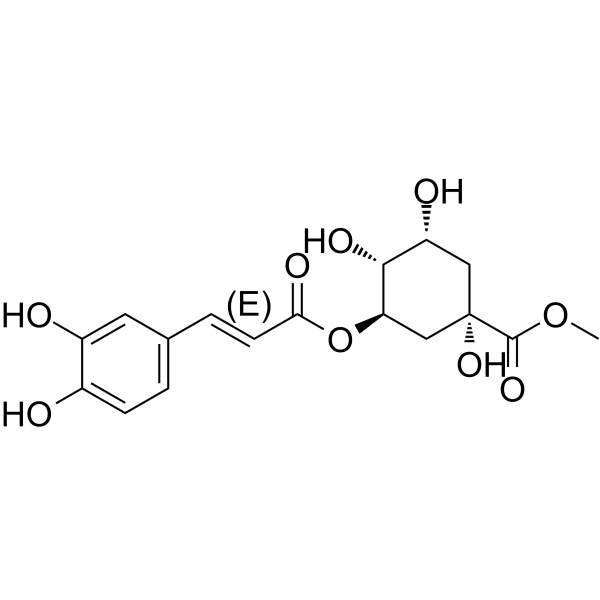
3-O-Caffeoylquinic acid methyl ester is a monocaffeoylquinic acid derivative and phenolic acid component, which can be found in the whole plant of Pyrrosia calvata (Backer) Ching and the flower buds of Lonicera japonica Thunb .
|
-
-
- HY-N2441
-
|
|
Others
|
Inflammation/Immunology
|
|
Methylophiopogonone A, a homoisoflavonoid isolated from the tuberous roots of Ophiopogon japonicas, shows anti-inflammatory activity .
|
-
-
- HY-N2169
-
|
|
Bacterial
|
Inflammation/Immunology
|
|
Polygalasaponin V is a triterpenoid saponin isolated from the aerial parts of Polygala japonica. Polygala japonica has been a folk medicine herb used as expectorant, anti-inflammatory, antibacterial and antidepressant agents in the south of China .
|
-
-
- HY-N4300
-
|
|
Others
|
Inflammation/Immunology
|
|
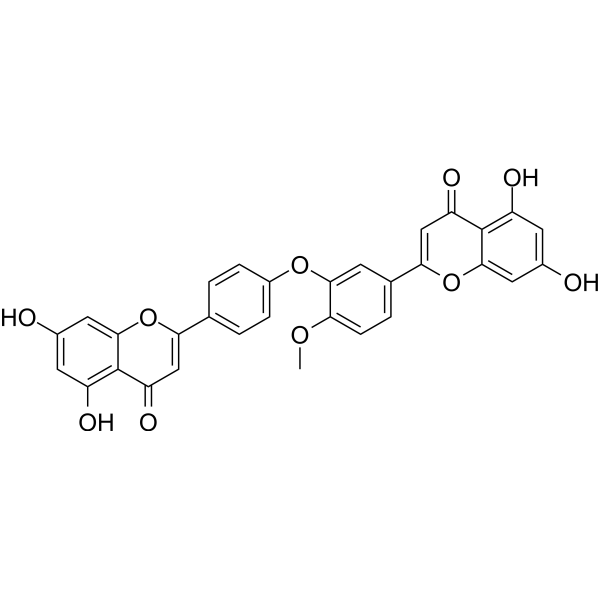
4'-O-Methylochnaflavone is a biflavonoid isolated from Lonicera japonica, suppresses mouse lymphocyte proliferation .
|
-
-
- HY-N10182
-
|
|
Histamine Receptor
|
Inflammation/Immunology
|
|
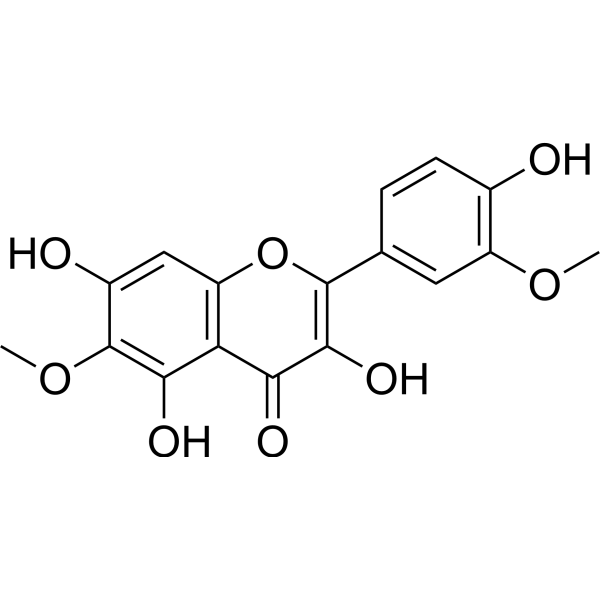
Spinacetin is a natural product that can be isolated from Inula japonica. Spinacetin inhibits the release of histamine. Spinacetin has anti-inflammatory activity .
|
-
-
- HY-N0050
-
|
(+)-Allomatrine
|
Others
|
Neurological Disease
|
|
Allomatrine ((+)-Allomatrine) is an alkaloid from the bark of Sophora japonica. Allomatrine has antinociceptive properties mediated mainly through the activation ofκ-opioid receptors .
|
-
-
- HY-N5096
-
|
|
Others
|
Others
|
|
Sophorabioside is a flavonoid-glycoside isolated from Sophora japonica .
|
-
-
- HY-N7292
-
-
-
- HY-N8126
-
|
Glucoemodin
|
Others
|
Metabolic Disease
Inflammation/Immunology
|
|
Emodin-6-O-β-D-glucoside (Glucoemodin) is an active compound from Reynoutria japonica. Emodin-6-O-β-D-glucoside shows potent anti-inflammatory and barrier protective effects. Emodin-6-O-β-D-glucoside can be used for the research of diabetic complications and atherosclerosis .
|
-
-
- HY-N16545
-
|
|
Others
|
Others
|
|
Spiratisanin B is an atisane diterpenoid from Spiraea japonica .
|
-
-
- HY-N10834
-
|
|
Bacterial
|
Infection
|
|
(6E,12E)-Tetradecadiene-8,10-diyne-1,3-diol is an antibacterial compound. (6E,12E)-Tetradecadiene-8,10-diyne-1,3-diol can be isolated from the roots of Atractylodes japonica. (6E,12E)-Tetradecadiene-8,10-diyne-1,3-diol has anti-methicillin-resistant Staphylococcus aureus (MRSA) activity with MIC values of 4-32 μg/mL. (6E,12E)-Tetradecadiene-8,10-diyne-1,3-diol can be used for the research of bacterial infection . (6E,12E)-Tetradecadiene-8,10-diyne-1,3-diol is a click chemistry reagent, it contains an Alkyne group and can undergo copper-catalyzed azide-alkyne cycloaddition (CuAAc) with molecules containing Azide groups.
|
-
-
- HY-N7644
-
|
|
Others
|
Others
|
|
Comanthoside A is a plant derived natural flavonoid glycoside isolated from the leaves of Comanthosphace japonica. Comanthoside A also serves as a key intermediate for the synthesis of Comanthoside B and Linaroside .
|
-
-
- HY-N12791
-
|
|
Others
|
Others
|
|
Heteroclitin F is a C19 homolignan and can be isolated from Kadsura japonica .
|
-
-
- HY-N8934
-
|
|
Others
|
Cancer
|
|
6β-Hydroxytomentosin, a sesquiterpenoid, can be found in flowers of Inula japonica. 6β-Hydroxytomentosin exhibits weak cytotoxicities against A549, SK-OV-3, HepG-2 and HT-29 cell lines .
|
-
-
- HY-N2369R
-
|
|
Reference Standards
Apoptosis
Influenza Virus
|
Infection
Cancer
|
|
Chelidonine (Standard) is the analytical standard of Chelidonine. This product is intended for research and analytical applications. Chelidonine, an isoquinoline alkaloid, can be isolated from Chelidonium majus L.. Chelidonine causes G2/M arrest and induces caspase-dependent and caspase-independent apoptosis, and prevents cell cycle progression of stem cells in Dugesia japonica. Chelidonine has cytotoxic activity against melanoma cell lines. with anticancer and antiviral activity .
|
-
-
- HY-N16534
-
|
|
Others
|
Others
|
|
Tetraketide is a bicyclic tetraketone natural product found in the leaves of Euscaphis japonica .
|
-
-
- HY-N2220
-
|
|
Others
|
Inflammation/Immunology
|
|
6-Formyl-isoophiopogonanone A is a homoisoflavonoidal extracted from Ophiopogon japonicas, with antioxidant activity .
|
-
-
- HY-W612293
-
|
|
Others
|
Others
|
|
2-Ethoxypropan-1-ol is a volatile oil found in Ardisia japonica .
|
-
-
- HY-N9667
-
|
|
Others
|
Others
|
|
Stilbostemin N can be isolated from ated from the rhizomes of D. japonica .
|
-
-
- HY-N3321
-
|
|
Others
|
Others
|
|
Maoyerabdosin is a compound isolated from the leaves of Isodon japonica .
|
-
-
- HY-N1962
-
|
|
Others
|
Others
|
|
Ophiopojaponin C is a naturally occurring C29 steroidal glycoside isolated from the tubers of O. japonicas .
|
-
-
- HY-N3133
-
|
(R)-Ophiopogonanone C; 8-Formylophiopogonanone A
|
Others
|
Others
|
|
Ophiopogonanone C is a homoisoflavonoidal compound isolated as a constitutent from the tuber of Ophiopogon japonicas .
|
-
-
- HY-N9150
-
|
|
Others
|
Others
|
|
Shizukaol A is an sesquiterpene dimer that can be isolated from Chloranthus japonicas .
|
-
-
- HY-N3043
-
|
|
Others
|
Others
|
|
Platyphyllenone is a narutal product that can be isolated from Alnus japonica .
|
-
-
- HY-N12578
-
|
|
Others
|
Others
|
|
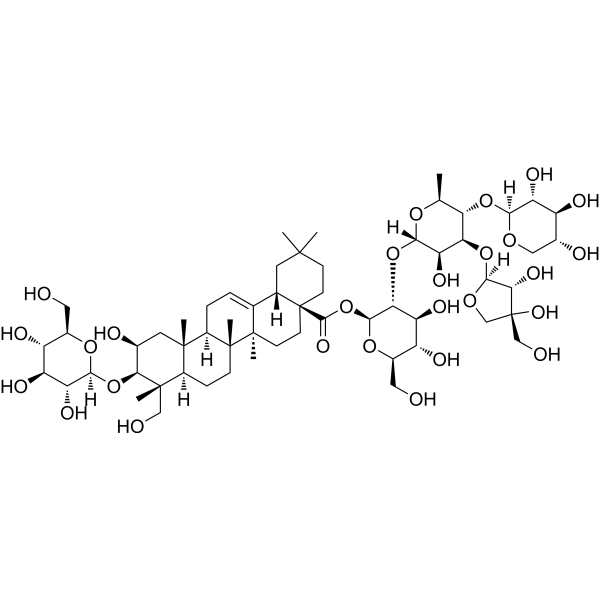
Polygalasaponin XXVIII is a triterpenoid saponin that can be isolated from Polygala japonica Houtt. .
|
-
-
- HY-N7806
-
|
|
Others
|
Others
|
|
7,3'-Di-O-Methylorobol is a flavone that can be isolated from Sophora japonica .
|
-
-
- HY-N3009R
-
|
|
Reference Standards
Others
|
Cardiovascular Disease
|
|
Secoxyloganin (Standard) is the analytical standard of Secoxyloganin. This product is intended for research and analytical applications. Secoxyloganin, isolated from Lonicera japonica Thunb, inhibits the blood flow (BF) decrease. Secoxyloganin has allergy-preventive activity .
|
-
-
- HY-N10877
-
|
|
Others
|
Cancer
|
|
Chlorajapolide F is a nature product that could be isolated from the aerial part of Chloranthus japonicas. Chlorajapolide F has low cytotoxic activity against NCI-H460 and SMMC-7721 cell lines .
|
-
-
- HY-124874
-
|
(rel)-Aspergillimide; (rel)-VM55598
|
nAChR
|
Neurological Disease
|
|
(rel)-Asperparaline A ((rel)-Aspergillimide), an anthelmintic metabolite, is isolated from okara that has been fermented with Aspergillus japonicas JV-23. (rel)-Asperparaline A is also a potent and selective antagonist of nAChR. (rel)-Asperparaline A exhibits paralytic activity in silk worms .
|
-
-
- HY-N2369A
-
|
|
Apoptosis
Influenza Virus
|
Infection
Cancer
|
|
Chelidonine (hydrochloride) is the hydrochloride form of Chelidonine (HY-N2369).Chelidonine, an isoquinoline alkaloid, can be isolated from Chelidonium majus L. Chelidonine causes G2/M arrest and induces caspase-dependent and caspase-independent apoptosis, and prevents cell cycle progression of stem cells in Dugesia japonica. Chelidonine has cytotoxic activity against melanoma cell lines. with anticancer and antiviral activity .
|
-
-
- HY-N4101
-
|
|
Others
|
Cancer
|
|
Styraxlignolide F is a natural compoundisolated from Styrax japonica.
|
-
-
- HY-N9223
-
|
|
Others
|
Others
|
|
Ketohakonanol is a Triterpenoids product that can be isolated from the herbs of Woodwardia japonica .
|
-
-
- HY-N3836
-
|
|
Others
|
Others
|
|
Epistephamiersine is a Alkaloids product that can be isolated from the roots of Stephania japonica .
|
-
-
- HY-N9299
-
|
|
Others
|
Others
|
|
Alnusone is a Phenols product that can be isolated from the barks of Alnus japonica .
|
-
-
- HY-N2418
-
|
|
Others
|
Others
|
|
Homoarbutin is a phenolic glycoside isolated from the whole plants of Pyrola japonica .
|
-
-
- HY-N2823
-
|
|
Others
|
Others
|
|
Agatharesinol is a Lignans product that can be isolated from the barks of Cryptomeria japonica .
|
-
-
- HY-N1545
-
|
|
Others
|
Others
|
|
Prostephanaberrine is an alkaloid. Prostephanaberrine can be isolated from the fresh fruit of Stephania japonica .
|
-
-
- HY-122447
-
|
|
Antibiotic
|
Infection
|
|
Saroaspidin C (Compound 3) is an antibiotic that can be isolated from Sarothra japonica .
|
-
-
- HY-N1574
-
|
|
Others
|
Others
|
|
Puerol A is a Phenols product that can be isolated from the stem barks of Sophora japonica. .
|
-
-
- HY-N1281
-
|
|
Others
|
Others
|
|
Sendanolactone is a new tetracyclic triterpenoid from the bark of M. azedarach L. var. japonica Makino .
|
-
-
- HY-N3150
-
|
|
Others
|
Others
|
|
Ohchinin acetate is a limonoid, that can be isolated from the fruit of M. azedarach Linn. var. japonica Makino .
|
-
-
- HY-N5146
-
|
|
Others
|
Cancer
|
|
Ophiopogonside A, a natural conpound that could be isolated from ophiopogon japonicas, possesses anti-cancer activity .
|
-
-
- HY-N2849
-
|
(+)-Onocerin; α-Onocerin
|
Others
|
Others
|
|
alpha-Onocerol ((+)-Onocerin) is a Alkaloids product that can be isolated from the roots of Stephania japonica. .
|
-
-
- HY-N8112
-
|
|
Others
|
Others
|
|
Polygalasaponin LII is a triterpenoid saponin that ca n be isolated from the roots of Polygala japonica Houtt .
|
-
- HY-N3507
-
|
|
Others
|
Others
|
|
Euojaponine D is a sesquiterpene alkaloids from Euonymus japonica (Celastraceae). Celastraceae has potent insecticidal activity .
|
-
- HY-N8899
-
|
|
Others
|
Others
|
|
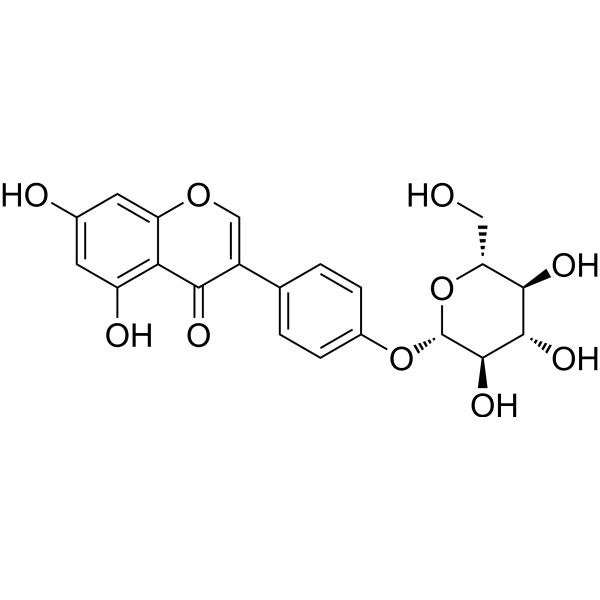
Daidzein-4'-glucoside is a Flavonoids product that can be isolated from the fruits of Sophora japonica L. .
|
-
- HY-N3839
-
|
7-epi-Vogeloside; Nervoside; Epivogeloside
|
Others
|
Others
|
|
epi-Vogeloside is a secoiridoid glycoside and a iridoid glucoside, which can be isolated from Lonicera japonica Thunb .
|
-
- HY-N9114
-
|
1,5,6-Trihydroxyxanthone
|
Others
|
Others
|
|
Mesuaxanthone B (1,5,6-Trihydroxyxanthone) is a Sesquiterpenoids product that can be isolated from the fruits of Torilis japonica. .
|
-
- HY-N2601
-
|
|
Others
|
Inflammation/Immunology
|
|
Bayogenin 3-O-β-D-glucopyranoside, a triterpenoid saponin isolated from Polygala japonica, possesses anti-inflammatory activities .
|
-
- HY-N3042
-
|
Platyphyllone
|
Others
|
Cancer
|
|
Platyphyllonol (Platyphyllone) can be isolated from A. japonica. Platyphyllonol shows cytotoxic effects on MCF-7 cells with IC50 values of 46.9 μg/mL .
|
-
- HY-N14180
-
|
|
Antibiotic
|
Infection
Cancer
|
|
6-Deoxyilludin M is an antitumor antibiotic possessing antileukemic activity. 6-Deoxyilludin M can be isolated from the culture broth of the Basidiomycota Pleurotus japonicas .
|
-
- HY-N2437R
-
|
|
Reference Standards
Others
|
Inflammation/Immunology
|
|
Methylophiopogonanone A (Standard) is the analytical standard of Methylophiopogonanone A. This product is intended for research and analytical applications. Methylophiopogonanone A, a major homoisoflavonoid in Ophiopogon japonicas, has both anti-oxidative and anti-inflammatory properties .
|
-
- HY-N2441R
-
|
|
Reference Standards
Others
|
Inflammation/Immunology
|
|
Methylophiopogonone A (Standard) is the analytical standard of Methylophiopogonone A. This product is intended for research and analytical applications. Methylophiopogonone A, a homoisoflavonoid isolated from the tuberous roots of Ophiopogon japonicas, shows anti-inflammatory activity .
|
-
- HY-N1283
-
|
|
Others
|
Metabolic Disease
|
|
Seneciphyllinine, a pyrrolizidine alkaloid, is isolated from the roots of Gynura japonica. Pyrrolizidine alkaloids are highly hepatotoxic natural chemicals that produce irreversible chronic and acute hepatotoxic effects on human beings .
|
-
- HY-N0423R
-
|
|
Reference Standards
Others
|
Inflammation/Immunology
Cancer
|
|
Sophoricoside (Standard) is the analytical standard of Sophoricoside. This product is intended for research and analytical applications. Sophoricoside is an isoflavone glycoside isolated from Sophora japonica and has anti-inflammatory, anti-cancer and immunosuppressive effects.
|
-
- HY-N17306
-
|
|
Others
|
Metabolic Disease
|
|
Loquatifolin A is a sesquiterpene glycoside identified in the leaves of loquat (Eriobotrya japonica). Loquatifolin A is applicable to the research of diseases such as non-alcoholic fatty liver disease .
|
-
- HY-N17526
-
|
|
Others
|
Others
|
|
Gallic acid 3-O-(6′-O-galloyl)-β-D-glucopyranoside is a polyphenol that can be found in the fruits of Camellia japonica L. .
|
-
- HY-N17724
-
|
|
Drug Isomer
|
Others
|
|
Cimicifugic acid N is the cis-isomer of Cimicifugic acid G, can be found in the aerial parts of Cimicifuga simplex and Cimicifuga japonica .
|
-
- HY-W925920
-
|
|
Others
|
Others
|
|
9,16-Dioxo-10,12,14-octadecatrienoic acid (Compound 6) is an anthraquinone compound found in the rhizomes of Osmunda japonica Thunb .
|
-
- HY-N17877
-
|
|
Drug Derivative
|
Others
|
|
Loniceroside A is a triterpenoid saponin found in the aerial parts of Lonicera japonica .
|
-
- HY-N17722
-
|
|
Others
|
Others
|
|
Cimicifugic acid L is a Cimicifugic acid. Cimicifugic acid L can be isolated from the aerial parts of Cimicifuga simplex and Cimicifuga japonica .
|
-
- HY-N17377
-
|
|
Others
|
Others
|
|
(3β)-3-Hydroxyoleana-11,13(18)-dien-28-oic acid (Compound 4) is a triterpenoid found in the callus tissues of Paeonia japonica and Paeonia suffruticosa .
|
-
- HY-N18082
-
|
|
Drug Derivative
|
Others
|
|
Croomine is a tuberostemospironine-type alkaloid. Croomine can be found in Stemona tuberosa, Croomia heterosepala, and Croomia japonica .
|
-
- HY-N16950
-
|
|
Drug Derivative
|
Others
|
|
(6E,12E)-Tetradecadiene-8,10-diyne-1,3-diol diacetate is a polyacetylene that can be found in the rhizomes of Atractylodes chinensis, Atractylodes koreana, and Atractylodes japonica .
|
-
- HY-N17540
-
|
|
NO Synthase
|
Inflammation/Immunology
|
|
8-Epiasterolide is a sesquiterpenoid compound isolated from the rhizomes of Atractylodes japonica Koidzumi. 8-Epiasterolide inhibits NO production in LPS (HY-D1056)-treated RAW 264.7 cells. 8-Epiasterolide can be used in the study of inflammatory diseases .
|
-
- HY-N17437
-
|
|
Drug Derivative
|
Others
|
|
(20S,24S)-20,24-Dihydroxy-3,4-secodammara-4(28),25-dien-3-oic acid is a secodammarane-type triterpenic acid that can be found in the male flowers of Alnus japonica .
|
-
- HY-N18059
-
|
6-Hydroxyhetisan-11-one
|
Others
|
Neurological Disease
Inflammation/Immunology
|
|
Spiradine A (6-Hydroxyhetisan-11-one) is a C20 diterpenoid alkaloid present in the roots of Thalictrum sessile (Ranunculaceae), and is originally isolated from Spiraea japonica (Rosaceae). Spiradine A may possess anti-inflammatory and analgesic activities .
|
-
- HY-N18018
-
|
|
Drug Derivative
|
Metabolic Disease
Inflammation/Immunology
|
|
Tetrahydroswertianolin (Compound 1) is a tetrahydroxyxanthone glycoside that can be isolated from the whole plant of Swertia japonica Makino. Tetrahydroswertianolin reduces the elevated blood ALT levels in mice with immune-induced liver injury and exhibits protective activity against liver injury. Tetrahydroswertianolin can be used in studies related to anthelmintic, antipyretic and immune-induced liver injury .
|
-
- HY-N9199
-
|
|
Others
|
Others
|
|
6β,19-Dihydroxyurs-12-en-3-oxo-28-oic acid (Compound 14) is an osteoclast inhibitor with anti-osteoclastogenic activity. 6β,19-Dihydroxyurs-12-en-3-oxo-28-oic acid can be obtained from Eriobotrya japonica leaves. 6β,19-Dihydroxyurs-12-en-3-oxo-28-oic acid can be used in osteoporosis research .
|
-
- HY-N18264
-
|
|
Others
|
Others
|
|
3-O-trans-Feruloyl euscaphic acid is a triterpene ester. 3-O-trans-Feruloyl euscaphic acid can be isolated from Eriobotrya japonica and Docynia delavayi (Franch) .
|
-
- HY-N17509
-
|
|
Drug Metabolite
|
Others
|
|
3β-Hydroxy-oleana-11,13 (18)-dien-28-oic acid (compound 3) is a triterpenoid compound present in Paeonia japonica and peony calli. 3β-Hydroxy-oleana-11,13 (18)-dien-28-oic acid is also a biotransformation product of oleanolic acid .
|
-
- HY-N13841
-
|
|
FGFR
Raf
|
Cancer
|
|
2,4,3',4',6'-Penta-O-(3-methylbutanoyl)sucrose is an FGFR3 and BRAF binder, and is an isovaleryl sucrose ester that can be found in Atractylodes japonica. 2,4,3',4',6'-Penta-O-(3-methylbutanoyl)sucrose shows low cytotoxicity against cancer cells .
|
-
- HY-N20628
-
-
- HY-N17396
-
-
- HY-N17258
-
|
|
Insecticide
|
Infection
|
|
Quercetin 3-O-(2G-β-D-xylopyranosylrutinoside) is an oviposition inhibitory factor. Quercetin 3-O-(2G-β-D-xylopyranosylrutinoside) can be isolated from the leaves of Orixa japonica. When presented together with the oviposition stimulant from Citrus unshiu (Satsuma mandarin), Quercetin 3-O-(2G-β-D-xylopyranosylrutinoside) inhibits oviposition by gravid female Papilio xuthus (Asian swallowtail) .
|
-
- HY-N1298
-
|
|
Others
|
Others
|
|
Sessilifoline A is a Alkaloids product that can be isolated from the roots of Stemona japonica .
|
-
- HY-N13513
-
|
|
Others
|
Others
|
|
Illiciumlignan D is a phenol product that can be isolated from Liparis japonica .
|
-
- HY-133164
-
|
|
Others
|
Others
|
|
Asebotin is a Chalcones product that can be isolated from the leaves of Pieris japonica. .
|
-
- HY-N1544
-
|
|
Others
|
Others
|
|
Prometaphanine is a Alkaloids product that can be isolated from the roots of Stephania japonica. .
|
-
- HY-N3751
-
|
|
Others
|
Others
|
|
Dihydrooxoepistephamiersine is a Alkaloids product that can be isolated from the roots of Stephania japonica. .
|
-
- HY-N0965
-
|
|
Others
|
Others
|
|
(E)-Aldosecologanin is a Iridoids product that can be isolated from the herbs of Lonicera japonica .
|
-
- HY-N18734
-
-
- HY-N1288
-
|
|
Others
|
Others
|
|
Sequirin C is a Lignans product that can be isolated from the herbs of Cryptomeria japonica .
|
-
- HY-N13729
-
|
|
NO Synthase
|
Cardiovascular Disease
Neurological Disease
|
|
Stephalonine P is a hasubanan-type alkaloid anti-inflammatory agent with neuroprotective effects against neuroinflammation. Stephalonine P regulates post-ischemic inflammatory responses by inhibiting NO production in LPS-activated BV2 microglia (IC50=34.01 μM), thereby reducing microglial activation and neuronal damage. Stephalonine P can be isolated from the whole plant of Stephania japonica. Stephalonine P can be used in research on stroke and other neuroinflammation-related diseases .
|
-
- HY-N9024
-
-
- HY-N17947
-
|
|
Others
|
Others
|
|
7-Epi-loganin is an iridoid glucoside found in the flower buds of Lonicera japonica .
|
-
- HY-N3746
-
|
|
Others
|
Others
|
|
Dihydroepistephamiersine 6-acetate is a Alkaloids product that can be isolated from the roots of Stephania japonica .
|
-
- HY-N16808
-
|
|
Others
|
Others
|
|
Euscapholide is a tetraketone compound that can be naturally extracted from the leaves of Euscaphis japonica (Thunb.) Kanitz .
|
-
- HY-N1617
-
|
|
Others
|
Others
|
|
1beta-Hydroxytorilin is a Sesquiterpenoids product that can be isolated from the fruits of Torilis japonica. .
|
-
- HY-N3545
-
|
|
Others
|
Cancer
|
|
Casegravo can be isolated from Boenninghausenia japonica. Casegravo has anti-cell proliferation activity and can be used in cancer research .
|
-
- HY-N13153
-
|
|
Others
|
Inflammation/Immunology
|
|
Antioxidant agent-19 (compound 12) is an arylbutyl glycoside with antioxidant activity that can be isolated from the bark of B. platyphylla vat. Japonica .
|
-
- HY-N5096R
-
|
|
Others
Reference Standards
|
Others
|
|
Sophorabioside (Standard) is the analytical standard of Sophorabioside (HY-N5096). This product is intended for research and analytical applications. Sophorabioside is a flavonoid-glycoside isolated from Sophora japonica .
|
-
- HY-N16825
-
-
- HY-N16826
-
-
- HY-N4289
-
|
|
Cathepsin
|
Cancer
|
|
3-Epiursolic Acid is a triterpenoid that can be isolated from Eriobotrya japonica, acts as a competitive inhibitor of cathepsin L (IC50, 6.5 μM; Ki, 19.5 μM), with no obvious effect on cathepsin B .
|
-
- HY-N16119
-
|
|
Others
|
Metabolic Disease
|
|
Phytyl palmitate is a phytyl ester. Phytyl palmitate can be isolated from the leaves Fatsia japonica. Phytyl palmitate can be used for inherited disorder of the lipid metabolism like Refsum’s disease research .
|
-
- HY-N12344
-
|
|
JNK
|
Inflammation/Immunology
|
|
n-Butyl α-D-fructofuranoside, isolated from the root barks of Ulmus davidiana var. japonica, enhances Nrf2 activity through activation of JNK and has antiinflammation activity .
|
-
- HY-N6601
-
|
Randialic acid A
|
Apoptosis
|
Cancer
|
|
Randialic acid A (Pomolic acid) is a pentacyclic triterpene isolated from?Euscaphis japonica?(Tunb.). Randialic acid A (Pomolic acid) inhibits tumor cells growth and induces cell apoptosis. Randialic acid A (Pomolic acid) has a potential for the treatment of prostate cancer (PC) .
|
-
- HY-180408
-
|
|
Influenza Virus
|
Infection
|
|
Platyphylloside is an anti-virus agent that can be isolated from the bark of Alnus japonica. Platyphylloside exhibits activity against H9N2 avian influenza virus. Platyphylloside can be used for the research of influenza .
|
-
- HY-N13488
-
|
|
Others
|
Others
|
|
5,7-Dihydroxy-4H-chromen-4-one 3-O-β-D-xylopyranoside is a natural product that can be isolated from Eurya japonica .
|
-
- HY-N1111
-
|
6β,19α-Dihydroxyursolic acid
|
HIV
|
Infection
|
|
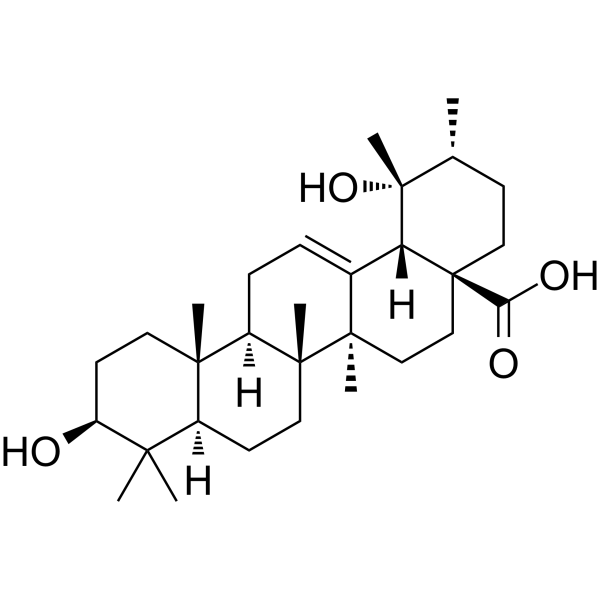
Uncaric acid (6β,19α-Dihydroxyursolic acid) (compound 6) is a triterpene that can be found in Eriobotrya japonica. Uncaric acid shows anti HIV-1, HRV 1B, SNV activity .
|
-
- HY-N2113
-
|
|
Autophagy
|
Cancer
|
|
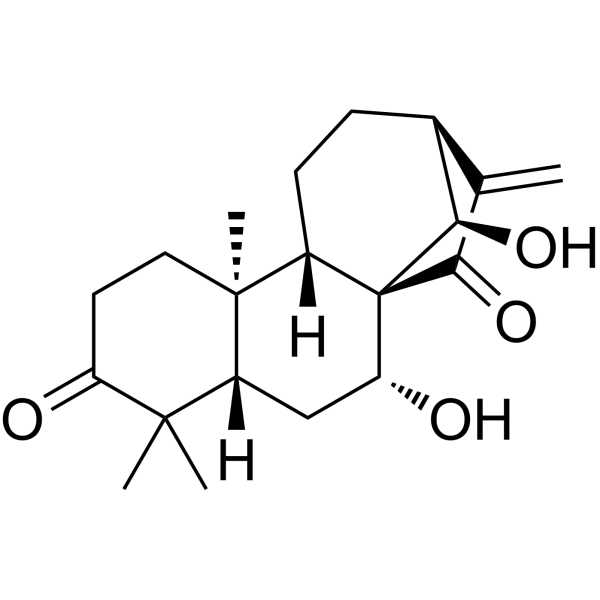
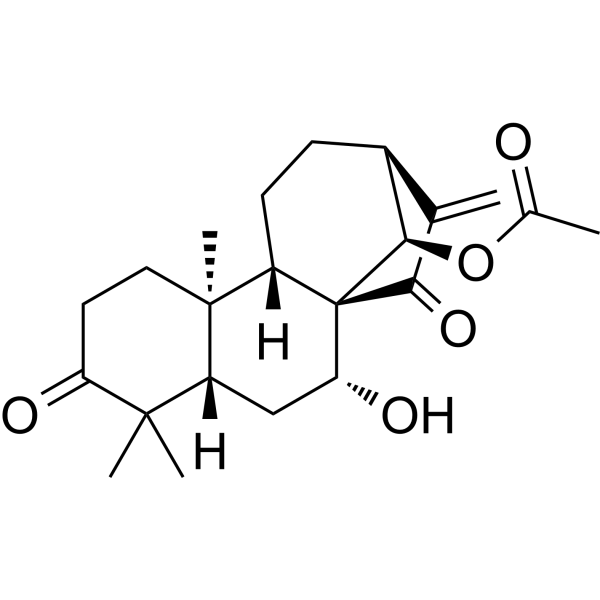
Glaucocalyxin B is an ent kaurane diterpenoid isolated from the Chinese traditional medicine Rabdosia japonica with anticancer and antitumor activity; decreases the growth of HL-60 cells with an IC50 of approximately 5.86 μM at 24 h.
|
-
- HY-171398
-
|
|
Nucleoside Antimetabolite/Analog
|
Others
|
|
5′-O-Phosphonocytidylyl-(3′→5′)-adenosine is a diribonucleotide. 5′-O-Phosphonocytidylyl-(3′→5′)-adenosine can be isolated from embryos of the copepod Euchaeta japonica Marukawa .
|
-
- HY-N7205
-
|
|
Others
|
Cancer
|
|
Glaucocalyxin D is a ent-kauranoid-type diterpenoid that can be isolated from Rabdosia japonica. Glaucocalyxin D shows cytotoxicity against various human tumor cell lines. Glaucocalyxin D can be used for cancer research .
|
-
- HY-N5129
-
|
|
Others
|
Others
|
|
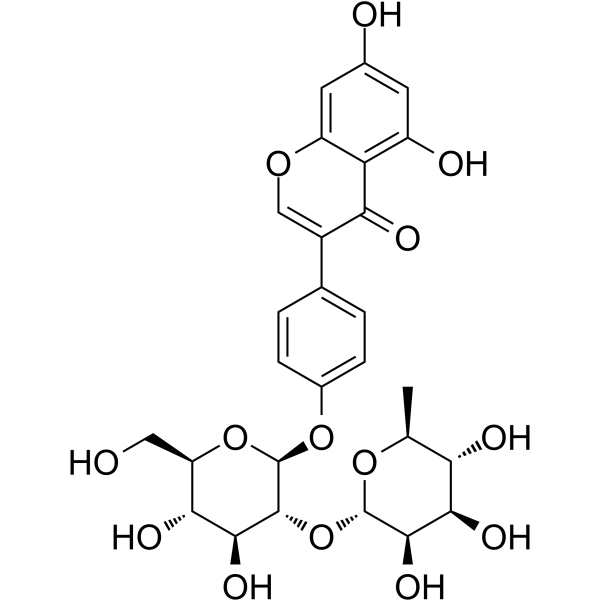
Genistein 7-O-β-D-glucopyranoside-4'-O-[α-L-rhamnopyranosyl-(1→2)-β-D-glucopyranoside] is an isoflavone triglycoside that could be isolated from Sophora japonica .
|
-
- HY-P11557
-
|
|
Biochemical Assay Reagents
|
Others
|
|
EALQPIHDLADEAISR, derived from egg yolk proteins, is an egg peptide found in both hen eggs and Coturnix japonica eggs. EALQPIHDLADEAISR can be used as a marker peptide for the detection of egg allergens using UHPLC-MS/MS .
|
-
- HY-N9023
-
-
- HY-N12161
-
|
|
Others
|
Metabolic Disease
|
|
3-Acetyl-11-keto-ursolic acid (Compound 18) is a triterpenoid compound derived from Eriobotrya japonicaleaves. 3-Acetyl-11-keto-ursolic acid has 11B-hydroxysteroid dehydrogenase 1 (11b-HSD1) inhibitory activity. 3-Acetyl-11-keto-ursolic acid can be used for anti-diabetes research .
|
-
- HY-N0055
-
|
3-O-Caffeoylquinic acid; Heriguard; NSC-407296
|
HIF/HIF Prolyl-Hydroxylase
Reactive Oxygen Species (ROS)
Bacterial
Influenza Virus
Endogenous Metabolite
|
Infection
Cardiovascular Disease
Inflammation/Immunology
Cancer
|
|
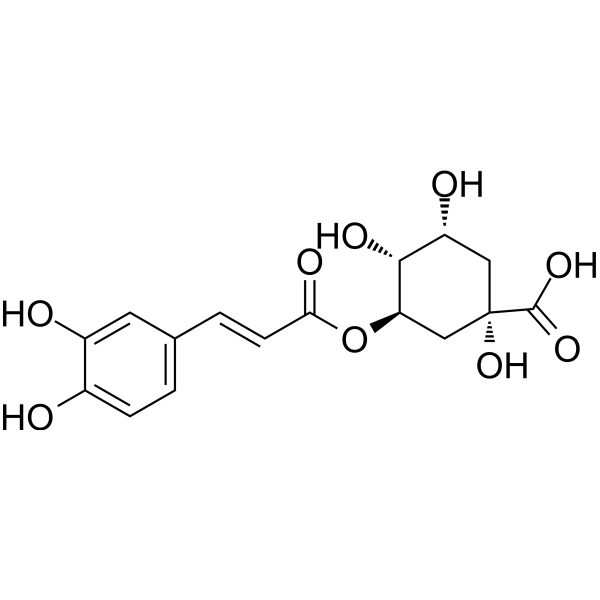
Chlorogenic acid is a major phenolic compound in Lonicera japonica Thunb. It is an orally active antioxidant activity, antibacterial, hepatoprotective, cardioprotective, anti-inflammatory, antipyretic, neuroprotective, anti-obesity, antiviral, anti-microbial, anti-hypertension compound .
|
-
- HY-N0120A
-
|
Piceid
|
Autophagy
Apoptosis
Mitophagy
|
Inflammation/Immunology
Cancer
|
|
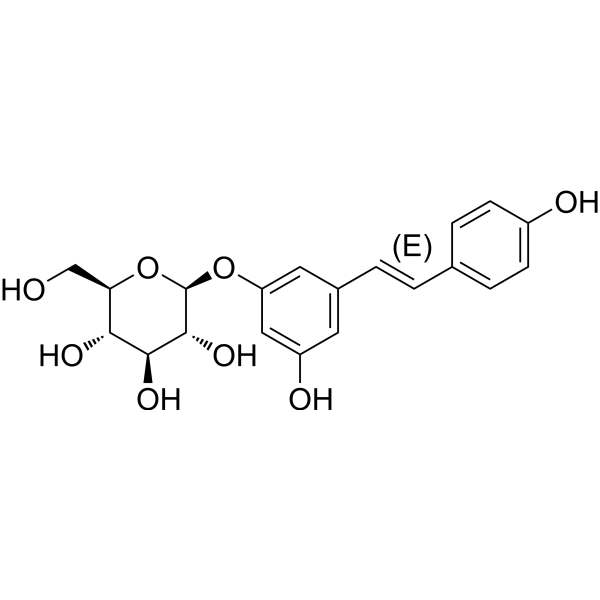
Polydatin (Piceid), extracted from the roots of Reynoutria japonica, a widely used traditional Chinese remedies, possesses anti-inflammatory activity in several experimental models. Polydatin (Piceid) inhibits G6PD and induces oxidative and ER stresses.
|
-
- HY-N5135R
-
|
Nolinospiroside F (Standard)
|
Reference Standards
Others
|
Others
|
|
Liriopesides B (Standard) is the analytical standard of Liriopesides B. This product is intended for research and analytical applications. Liriopesides B (Nolinospiroside F) is a steroidal saponin isolated from Ophiopogon japonicas. Liriopesides B has anti-oxidative and anti-aging effects .
|
-
- HY-N7377
-
|
|
Glycosidase
|
Metabolic Disease
|
|
Butyl isobutyl phthalate is isolated from the rhizoid of Laminaria japonica. Butyl isobutyl phthalate is a non-competitive α-glucosidase inhibitor with an IC50 value of 38 μM. Butyl isobutyl phthalate shows a hypoglycemic effect and has the potential for diabetes treatment .
|
-
- HY-E71316A
-
|
|
Glycosidase
|
Others
|
|
β-Mannanase 26A, Celvibrio japonicas is an enzyme with system name 4-beta-D-mannan mannanohydrolase. This enzyme catalyses the following chemical reaction: Random hydrolysis of (1->4)-beta-D-mannosidic linkages in mannans, galactomannans and glucomannans.
|
-
- HY-N10166
-
|
|
Others
|
Others
|
|
Antioxidant agent-12 is an antioxidant active ingredient that can be isolated from Chuan-maidong .
|
-
- HY-N1282R
-
|
|
Reference Standards
Glutathione S-transferase
Cytochrome P450
|
Cancer
|
|
Seneciphylline (Standard) is the analytical standard of Seneciphylline. This product is intended for research and analytical applications. Seneciphylline is a toxic pyrrolizidine alkaloid in Gynura japonica . Seneciphylline significantly increases the activities of epoxide hydrase and glutathione-S-transferase but causes reduction of cytochrome P-450 and related monooxygenase activities .
|
-
- HY-110398
-
|
Baicalein trimethyl ether
|
NF-κB
AP-1
STAT
HSV
CMV
Enterovirus
|
Infection
Inflammation/Immunology
|
|
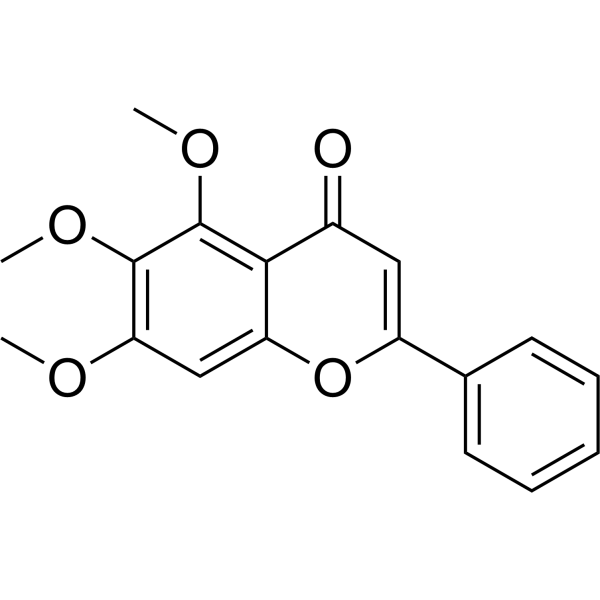
5,6,7-Trimethoxyflavone is a flavonoid compound that can be isolated from plants Callicarpa japonica. 5,6,7-Trimethoxyflavone exhibits antiviral and anti-inflammatory activities through inhibition of NF-κB/AP-1/STAT signaling pathway .
|
-
- HY-N4130
-
|
|
Others
|
Inflammation/Immunology
|
|
25S-Inokosterone is a phytoecdysone in the roots of two same species of A. bidentata Blume and A. japonica Nakai, and two different species of C. capitata Moq and C. officinalis Kuan. 25S-Inokosterone has the potential for the LPS-induced acute kidney injury research .
|
-
- HY-D0988
-
|
R-PE
|
Fluorescent Dye
Apoptosis
|
Cancer
|
|
R-Phycoerythrin is found in Heterosiphonia japonica. R-Phycoerythrin is an orange-red fluorescent probe with α, β, and γ subunits. R-Phycoerythrin can be used in photodynamic therapy (PDT) to induce apoptosis in tumor cells. R-Phycoerythrin can be used in fluorescence microscopy, flow cytometry, and immunofluorescence analysis (Ex: 495 nm).
|
-
- HY-N2112
-
|
|
PI3K
Akt
Apoptosis
|
Cancer
|
|
Glaucocalyxin A, an ent-kauranoid diterpene from Rabdosia japonica var., induces apoptosis in osteosarcoma by inhibiting nuclear translocation of Five-zinc finger Glis 1 (GLI1) via regulating PI3K/Akt signaling pathway. Glaucocalyxin A has antitumor effect .
|
-
- HY-N0055R
-
|
3-O-Caffeoylquinic acid (Standard); Heriguard (Standard); NSC-407296 (Standard)
|
Reference Standards
HIF/HIF Prolyl-Hydroxylase
Reactive Oxygen Species (ROS)
Bacterial
Influenza Virus
Endogenous Metabolite
|
Infection
Inflammation/Immunology
Cancer
|
|
Chlorogenic acid (Standard) is the analytical standard of Chlorogenic acid. This product is intended for research and analytical applications. Chlorogenic acid is a major phenolic compound in Lonicera japonica Thunb. It is an orally active antioxidant activity, antibacterial, hepatoprotective, cardioprotective, anti-inflammatory, antipyretic, neuroprotective, anti-obesity, antiviral, anti-microbial, anti-hypertension compound .
|
-
- HY-N0120AR
-
|
Piceid (Standard)
|
Reference Standards
Autophagy
Apoptosis
Mitophagy
|
Inflammation/Immunology
Cancer
|
|
Polydatin (Standard) is the analytical standard of Polydatin. This product is intended for research and analytical applications. Polydatin (Piceid), extracted from the roots of Reynoutria japonica, a widely used traditional Chinese remedies, possesses anti-inflammatory activity in several experimental models. Polydatin (Piceid) inhibits G6PD and induces oxidative and ER stresses.
|
-
- HY-N16123
-
|
|
Parasite
|
Infection
|
|
Chloranthalactone C (Compound 43), a lindenane-type sesquiterpenoid, is an antimalarial agent. Chloranthalactone C can be isolated from plant Chloranthus japonicas Sieb. Chloranthalactone C inhibits Chloroquine (HY-17589A)-resistant Plasmodium falciparum strain Dd2 growth. Chloranthalactone C can be used for parasitic infections research .
|
-
- HY-N16827
-
-
- HY-N1853
-
-
- HY-N18019
-
|
|
Drug Metabolite
|
Metabolic Disease
|
|
Tetrahydro bellidifolin (Compound 1a) is the aglycone obtained from the hydrolysis of Tetrahydroswertianolin (HY-N18018) by β-glucosidase. Tetrahydro bellidifolin exhibits significant hepatoprotective activity and reduce serum ALT levels. Tetrahydro bellidifolin can be used for the research of liver injury .
|
-
- HY-N2133
-
|
|
Others
|
Others
|
|
Fallaxsaponin A (compound 5) is a natural product isolated from Polygala root .
|
-
- HY-N6052
-
|
|
Estrogen Receptor/ERR
|
Cancer
|
|
(+)-Medicarpin, a pterocarpan, is a type of isoflavonoid isolated from several medicinal plant species with various biological effects, including Sophora japonica, Zollernia paraensis and Platymiscium yucatamun, Machaerium aristulatum, Platymiscium floribundum, and so on. (+)-Medicarpin potently inhibits osteoclastogenesis and promotes bone healing and increases bone mass by osteoblast differentiation with estrogen receptor (ER) β-mediated osteogenic action .
|
-
- HY-N17763
-
|
|
Others
|
Inflammation/Immunology
|
|
Styraxlignolide G is a furanofuran-type lignan compound that can be isolated from the stem bark of Styrax japonica. Styraxlignolide G exhibits very weak DPPH free radical scavenging activity, while its hydrolyzed aglycone molecule possesses antioxidant activity (IC50=186.7 μM) and is involved in antioxidant-related regulation in the body. Styraxlignolide G can be used in the study of inflammatory diseases.
|
-
- HY-N0664R
-
|
|
Reference Standards
Bacterial
|
Infection
Neurological Disease
Inflammation/Immunology
Cancer
|
|
Aucubin (Standard) is the analytical standard of Aucubin. This product is intended for research and analytical applications. Aucubin, an iridoid glucoside, is isolated from Plantago asiatica, Eucommia ulmoides, the leaves of Aucuba japonica and more recently from butterfly larva. Aucubin has many biological activities, such as antioxidant, anti-aging, anti-inflammatory, antimicrobial, anti-fibrotic, anti-cancer, hepatoprotective, neuroprotective and osteoprotective effects .
|
-
- HY-N3009
-
|
|
Drug Derivative
Apoptosis
Bcl-2 Family
|
Cardiovascular Disease
Inflammation/Immunology
Cancer
|
|
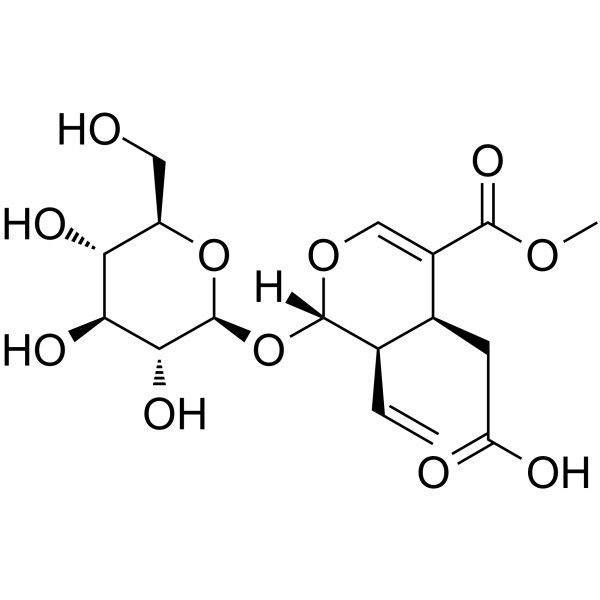
Secoxyloganin is an orally effective iridoid derivative. Secoxyloganin can be isolated from the flower buds of L. japonica. Secoxyloganin induces Apoptosis by inhibiting the expression of Bcl-2. Secoxyloganin potently inhibits the proliferation of breast cancer cells, while exerting weak activity against normal mammary epithelial cells. Secoxyloganin inhibits the decrease in tail vein blood flow associated with allergic reactions .
|
-
- HY-N3286
-
|
|
Influenza Virus
|
Others
|
|
Methyl 4-O-feruloylquinate (4-O-Feruloylquinic acid methyl ester) is a natural product. Methyl 4-O-feruloylquinate can be purified from Stemona Japonica by preparative high-performance liquid chromatography. Methyl 4-O-feruloylquinate has anti-H5N1 activity with a 3% protective rate at 5 μM in MDCK cells .
|
-
- HY-N1614
-
|
|
Others
|
Others
|
|
1 α-hydroxytorilin (compound 3) is a sesquiterpenoid. 1 α-hydroxytorilin can be isolated from Torilis japonica. 1α-hydroxytorilin has cytotoxicity against human A549, SK-OV-3, SK-MEL-2, and HCT15 tumor cells with ED50 values of 20.52, 18.24, 17.48, 42.54 μg/mL, respectively .
|
-
- HY-D0988A
-
|
R-PE (concentrated solution)
|
Fluorescent Dye
Apoptosis
|
Others
|
|
R-Phycoerythrin (R-PE) (concentrated solution) is found in Heterosiphonia japonica. R-Phycoerythrin (concentrated solution) is an orange-red fluorescent probe with α, β, and γ subunits. R-Phycoerythrin (concentrated solution) can be used in photodynamic therapy (PDT) to induce apoptosis in tumor cells. R-Phycoerythrin (concentrated solution) can be used in fluorescence microscopy, flow cytometry, and immunofluorescence analysis (Ex/Em = 496/578 nm) .
|
-
- HY-N16457
-
|
|
Endogenous Metabolite
Influenza Virus
|
Infection
|
|
5,6-Dihydro-6-hydroxypenicillic acid (Compound 6) is a microbial secondary metabolite. 5,6-Dihydro-6-hydroxypenicillic acid can be isolated from the endophytic fungus Talaromyces sp. CPCC 400783 of Reynoutria japonica Houtt. 5,6-Dihydro-6-hydroxypenicillic acid has antiviral activity against influenza A virus with an IC50 of 65.45 μM .
|
-
- HY-D0988B
-
|
R-PE ammonium sulfate precipitate
|
Fluorescent Dye
Apoptosis
|
Others
|
|
R-Phycoerythrin (R-PE) (ammonium sulfate precipitate) is found in Heterosiphonia japonica. R-Phycoerythrin (ammonium sulfate precipitate) is an orange-red fluorescent probe with α, β, and γ subunits. R-Phycoerythrin (concentrated solution) can be used in photodynamic therapy (PDT) to induce apoptosis in tumor cells. R-Phycoerythrin (ammonium sulfate precipitate) can be used in fluorescence microscopy, flow cytometry, and immunofluorescence analysis (Ex/Em = 496/578 nm) .
|
-
- HY-N0055S
-
|
3-O-Caffeoylquinic acid-13C3; Heriguard-13C3; NSC-407296-13C3
|
Isotope-Labeled Compounds
|
Cancer
|
|
Chlorogenic acid- 13C3 (Heriguard- 13C3; NSC-407296- 13C3) is 13C- and 15N-labeled Chlorogenic acid (HY-N0055). Chlorogenic acid is a major phenolic compound in Lonicera japonica Thunb.. It plays several important and therapeutic roles such as antioxidant activity, antibacterial, hepatoprotective, cardioprotective, anti-inflammatory, antipyretic, neuroprotective, anti-obesity, antiviral, anti-microbial, anti-hypertension .
|
-
- HY-N17366
-
|
|
Others
|
Others
|
|
2,5-Dihydroxy-4-methylacetophenone (compound 39) is a phenolic compound that can be found in the essential oil of Flos Sophorae Immaturus .
|
-
- HY-N15536
-
|
|
Reactive Oxygen Species (ROS)
|
Cardiovascular Disease
Neurological Disease
|
|
N-trans-Feruloyltyramine 4′-O-β-D-glucopyranoside is a phenolic amide glycoside compound found in Suaeda japonica. N-trans-Feruloyltyramine 4′-O-β-D-glucopyranoside exhibits antioxidant activity, capable of effectively scavenging DPPH free radicals and reducing the production of ROS induced by H2O2 in cells, thus protecting cells from oxidative stress damage. N-trans-Feruloyltyramine 4′-O-β-D-glucopyranoside is promising for research of cardiovascular diseases and neurodegenerative diseases .
|
-
- HY-W714137
-
|
Lesquerellin; 6-Methylthiohexyl isothiocyanate
|
Bacterial
|
Infection
|
|
(6-Isothiocyanatohexyl)(methyl)sulfane (Lesquerellin; 6-Methylthiohexyl isothiocyanate) is an isothiocyanate found in wasabi (W. japonica) and has various biological activities. (6-Isothiocyanatohexyl)(methyl)sulfane is active against the bacterium Bacillus subtilis and the fungus T. mentagrophytes (MIC=25 μg/mL). (6-Isothiocyanatohexyl)(methyl)sulfane also has anthelmintic activity against blue mussel (M. edulis). (6-Isothiocyanatohexyl)(methyl)sulfane has antifouling activity when applied to polyvinyl chloride (PVC) panels at a concentration of 50 μmol/cm2 in a conventional immersion test.
|
-
- HY-N4168A
-
|
5-O-Caffeoylquinic acid methyl ester
|
Quinone Reductase
HBV
|
Infection
Cancer
|
|
Neochlorogenic acid (5-O-Caffeoylquinic) methyl ester is a selective quinone reductase inducer (EC50 = 6.7 μM) and also exhibits hydroxyl radical scavenging activity (EC50 = 0.81 μM). Neochlorogenic acid methyl ester scavenges hydroxyl radicals by donating electrons or hydrogen atoms, while simultaneously inducing quinone reductase expression to enhance carcinogen detoxification, thus exerting antioxidant and cancer chemopreventive activities. Neochlorogenic acid methyl ester is used in research on antioxidant damage and promoting detoxification metabolism, primarily in the fields of cancer chemotherapy and antioxidant-related diseases. Neochlorogenic acid methyl ester is also an HBV inhibitor and can be isolated from the flower buds of *L. japonica* .
|
-
- HY-N10116A
-
|
|
Interleukin Related
IFNAR
Calcium Channel
Bacterial
CCR
|
Infection
Cancer
|
|
Calamenene is a sesquiterpene compound . Calamenene promotes dendritic cell maturation, upregulates CD1a, CD80, CD83, CD86, HLA-DR and CCR7 on the cell surface, reduces endocytic activity, enhances T cell-stimulating capacity, drives Th1 polarization through the secretion of IL-12, induces IFN-γ production, decreases IL-4 generation, and triggers intracellular Ca 2+ mobilization as well as dendritic cell migration towards MIP-3β. Calamenene exerts bacteriostatic and bactericidal growth-inhibitory effects against pathogenic *Vibrio harveyi*. Calamenene can be used in studies related to cancer and bacterial infections .
|
-
| Cat. No. |
Product Name |
Type |
-
- HY-D0988
-
|
R-PE
|
Fluorescent Dyes
|
|
R-Phycoerythrin is found in Heterosiphonia japonica. R-Phycoerythrin is an orange-red fluorescent probe with α, β, and γ subunits. R-Phycoerythrin can be used in photodynamic therapy (PDT) to induce apoptosis in tumor cells. R-Phycoerythrin can be used in fluorescence microscopy, flow cytometry, and immunofluorescence analysis (Ex: 495 nm).
|
-
- HY-D0988A
-
|
R-PE (concentrated solution)
|
Fluorescent Dyes
|
|
R-Phycoerythrin (R-PE) (concentrated solution) is found in Heterosiphonia japonica. R-Phycoerythrin (concentrated solution) is an orange-red fluorescent probe with α, β, and γ subunits. R-Phycoerythrin (concentrated solution) can be used in photodynamic therapy (PDT) to induce apoptosis in tumor cells. R-Phycoerythrin (concentrated solution) can be used in fluorescence microscopy, flow cytometry, and immunofluorescence analysis (Ex/Em = 496/578 nm) .
|
-
- HY-D0988B
-
|
R-PE ammonium sulfate precipitate
|
Fluorescent Dyes
|
|
R-Phycoerythrin (R-PE) (ammonium sulfate precipitate) is found in Heterosiphonia japonica. R-Phycoerythrin (ammonium sulfate precipitate) is an orange-red fluorescent probe with α, β, and γ subunits. R-Phycoerythrin (concentrated solution) can be used in photodynamic therapy (PDT) to induce apoptosis in tumor cells. R-Phycoerythrin (ammonium sulfate precipitate) can be used in fluorescence microscopy, flow cytometry, and immunofluorescence analysis (Ex/Em = 496/578 nm) .
|
| Cat. No. |
Product Name |
Target |
Research Area |
-
- HY-P11557
-
|
|
Biochemical Assay Reagents
|
Others
|
|
EALQPIHDLADEAISR, derived from egg yolk proteins, is an egg peptide found in both hen eggs and Coturnix japonica eggs. EALQPIHDLADEAISR can be used as a marker peptide for the detection of egg allergens using UHPLC-MS/MS .
|
| Cat. No. |
Product Name |
Category |
Target |
Chemical Structure |
-
- HY-Y1310
-
|
|
Marine natural products
Source Classification
|
Environmental Pollutants
|
|
Sodium alginate is the sodium salt of alginic acid. Sodium alginate can be extracted and purified from brown seaweed Laminaria japonica. Sodium alginate can be used in food additives and pharmaceuticals, adsorb heavy metal ions, and has mucosal-protective and hemostatic effects .
|
-
-
- HY-N0423
-
-
-
- HY-N2369
-
-
-
- HY-N5135
-
-
-
- HY-N2437
-
-
-
- HY-N4289
-
-
-
- HY-N4168
-
-
-
- HY-N2441
-
-
-
- HY-N2169
-
-
-
- HY-N4300
-
-
-
- HY-N10182
-
-
-
- HY-N0050
-
-
-
- HY-N16119
-
-
-
- HY-N5096
-
-
-
- HY-N7292
-
-
-
- HY-N8126
-
-
-
- HY-N16545
-
-
-
- HY-N10834
-
|
|
Natural Products
Plants
Compositae
Source Classification
Erythrina sigmoidea Hua
|
Bacterial
|
|
(6E,12E)-Tetradecadiene-8,10-diyne-1,3-diol is an antibacterial compound. (6E,12E)-Tetradecadiene-8,10-diyne-1,3-diol can be isolated from the roots of Atractylodes japonica. (6E,12E)-Tetradecadiene-8,10-diyne-1,3-diol has anti-methicillin-resistant Staphylococcus aureus (MRSA) activity with MIC values of 4-32 μg/mL. (6E,12E)-Tetradecadiene-8,10-diyne-1,3-diol can be used for the research of bacterial infection . (6E,12E)-Tetradecadiene-8,10-diyne-1,3-diol is a click chemistry reagent, it contains an Alkyne group and can undergo copper-catalyzed azide-alkyne cycloaddition (CuAAc) with molecules containing Azide groups.
|
-
-
- HY-N7644
-
-
-
- HY-N12791
-
-
-
- HY-N8934
-
-
-
- HY-N2369R
-
-
-
- HY-N16534
-
-
-
- HY-N2220
-
-
-
- HY-W612293
-
-
-
- HY-N9667
-
-
-
- HY-N3321
-
-
-
- HY-N1962
-
-
-
- HY-N3133
-
-
-
- HY-N9150
-
-
-
- HY-N3043
-
-
-
- HY-N12578
-
-
-
- HY-N7806
-
-
-
- HY-N3009R
-
-
-
- HY-N10877
-
-
-
- HY-124874
-
|
(rel)-Aspergillimide; (rel)-VM55598
|
Alkaloids
Microorganisms
Pyrrole Alkaloids
Source Classification
|
nAChR
|
|
(rel)-Asperparaline A ((rel)-Aspergillimide), an anthelmintic metabolite, is isolated from okara that has been fermented with Aspergillus japonicas JV-23. (rel)-Asperparaline A is also a potent and selective antagonist of nAChR. (rel)-Asperparaline A exhibits paralytic activity in silk worms .
|
-
-
- HY-N4101
-
-
-
- HY-N9223
-
-
-
- HY-N3836
-
-
-
- HY-N9299
-
-
-
- HY-N2418
-
-
-
- HY-N2823
-
-
-
- HY-N1545
-
-
-
- HY-122447
-
-
-
- HY-N1574
-
-
-
- HY-N1281
-
-
-
- HY-N3150
-
-
-
- HY-N5146
-
-
-
- HY-N2849
-
-
-
- HY-N8112
-
-
- HY-N3507
-
-
- HY-N8899
-
-
- HY-N3839
-
-
- HY-N9114
-
-
- HY-N2601
-
-
- HY-N3042
-
-
- HY-N14180
-
-
- HY-N2437R
-
-
- HY-N2441R
-
-
- HY-N1283
-
-
- HY-N0423R
-
-
- HY-N17306
-
-
- HY-N17526
-
-
- HY-N17724
-
-
- HY-W925920
-
-
- HY-N17877
-
-
- HY-N17722
-
-
- HY-N17377
-
-
- HY-N18082
-
-
- HY-N16950
-
-
- HY-N17540
-
-
- HY-N17437
-
-
- HY-N18059
-
-
- HY-N18018
-
-
- HY-N9199
-
-
- HY-N18264
-
-
- HY-N17509
-
-
- HY-N13841
-
-
- HY-N20628
-
-
- HY-N17396
-
-
- HY-N17258
-
-
- HY-N1298
-
-
- HY-N13513
-
-
- HY-133164
-
-
- HY-N1544
-
-
- HY-N3751
-
-
- HY-N0965
-
-
- HY-N18734
-
-
- HY-N1288
-
-
- HY-N13729
-
-
- HY-N9024
-
-
- HY-N17947
-
-
- HY-N3746
-
-
- HY-N16808
-
-
- HY-N1617
-
-
- HY-N3545
-
-
- HY-N13153
-
-
- HY-N5096R
-
-
- HY-N16825
-
-
- HY-N16826
-
-
- HY-N12344
-
-
- HY-N6601
-
-
- HY-N13488
-
-
- HY-N1111
-
-
- HY-N2113
-
-
- HY-N7205
-
-
- HY-N5129
-
-
- HY-N9023
-
-
- HY-N12161
-
-
- HY-N0055
-
|
3-O-Caffeoylquinic acid; Heriguard; NSC-407296
|
Caprifoliaceae
Classification of Application Fields
Lonicera japonica Thunb.
Anti-aging
Plants
Endogenous metabolite
Infection
Human Gut Microbiota Metabolites
Microorganisms
Simple Phenylpropanols
Phenols
Polyphenols
Phenylpropanoids
Inflammation/Immunology
Disease Research Fields
Source Classification
Cancer
|
HIF/HIF Prolyl-Hydroxylase
Reactive Oxygen Species (ROS)
Bacterial
Influenza Virus
Endogenous Metabolite
|
|
Chlorogenic acid is a major phenolic compound in Lonicera japonica Thunb. It is an orally active antioxidant activity, antibacterial, hepatoprotective, cardioprotective, anti-inflammatory, antipyretic, neuroprotective, anti-obesity, antiviral, anti-microbial, anti-hypertension compound .
|
-
- HY-N0120A
-
-
- HY-N5135R
-
-
- HY-N7377
-
-
- HY-N10166
-
-
- HY-N1282R
-
-
- HY-110398
-
-
- HY-N4130
-
-
- HY-N2112
-
-
- HY-N0055R
-
|
3-O-Caffeoylquinic acid (Standard); Heriguard (Standard); NSC-407296 (Standard)
|
Structural Classification
Human Gut Microbiota Metabolites
Microorganisms
Caprifoliaceae
Simple Phenylpropanols
Lonicera japonica Thunb.
Phenols
Polyphenols
Phenylpropanoids
Plants
Endogenous metabolite
Source Classification
|
Reference Standards
HIF/HIF Prolyl-Hydroxylase
Reactive Oxygen Species (ROS)
Bacterial
Influenza Virus
Endogenous Metabolite
|
|
Chlorogenic acid (Standard) is the analytical standard of Chlorogenic acid. This product is intended for research and analytical applications. Chlorogenic acid is a major phenolic compound in Lonicera japonica Thunb. It is an orally active antioxidant activity, antibacterial, hepatoprotective, cardioprotective, anti-inflammatory, antipyretic, neuroprotective, anti-obesity, antiviral, anti-microbial, anti-hypertension compound .
|
-
- HY-N0120AR
-
-
- HY-N16123
-
-
- HY-N16827
-
-
- HY-N1853
-
-
- HY-N18019
-
-
- HY-N2133
-
-
- HY-N6052
-
-
- HY-N17763
-
-
- HY-N0664R
-
|
|
Structural Classification
Eucommia ulmoides Oliver
Iridoids
Terpenoids
Eucommiaceae
Plants
Source Classification
|
Reference Standards
Bacterial
|
|
Aucubin (Standard) is the analytical standard of Aucubin. This product is intended for research and analytical applications. Aucubin, an iridoid glucoside, is isolated from Plantago asiatica, Eucommia ulmoides, the leaves of Aucuba japonica and more recently from butterfly larva. Aucubin has many biological activities, such as antioxidant, anti-aging, anti-inflammatory, antimicrobial, anti-fibrotic, anti-cancer, hepatoprotective, neuroprotective and osteoprotective effects .
|
-
- HY-N3009
-
-
- HY-N3286
-
-
- HY-N1614
-
-
- HY-N16457
-
-
- HY-N17366
-
-
- HY-N15536
-
|
|
Piperaceae
Piper crocatum Ruiz & Pav.
Plants
Saccharides
Monosaccharides
Source Classification
|
Reactive Oxygen Species (ROS)
|
|
N-trans-Feruloyltyramine 4′-O-β-D-glucopyranoside is a phenolic amide glycoside compound found in Suaeda japonica. N-trans-Feruloyltyramine 4′-O-β-D-glucopyranoside exhibits antioxidant activity, capable of effectively scavenging DPPH free radicals and reducing the production of ROS induced by H2O2 in cells, thus protecting cells from oxidative stress damage. N-trans-Feruloyltyramine 4′-O-β-D-glucopyranoside is promising for research of cardiovascular diseases and neurodegenerative diseases .
|
-
- HY-N4168A
-
|
5-O-Caffeoylquinic acid methyl ester
|
Structural Classification
Caprifoliaceae
Lonicera japonica Thunb.
Phenols
Polyphenols
Plants
Source Classification
|
Quinone Reductase
HBV
|
|
Neochlorogenic acid (5-O-Caffeoylquinic) methyl ester is a selective quinone reductase inducer (EC50 = 6.7 μM) and also exhibits hydroxyl radical scavenging activity (EC50 = 0.81 μM). Neochlorogenic acid methyl ester scavenges hydroxyl radicals by donating electrons or hydrogen atoms, while simultaneously inducing quinone reductase expression to enhance carcinogen detoxification, thus exerting antioxidant and cancer chemopreventive activities. Neochlorogenic acid methyl ester is used in research on antioxidant damage and promoting detoxification metabolism, primarily in the fields of cancer chemotherapy and antioxidant-related diseases. Neochlorogenic acid methyl ester is also an HBV inhibitor and can be isolated from the flower buds of *L. japonica* .
|
-
- HY-N10116A
-
|
|
Cupressaceae
Cupressus L.
Plants
Source Classification
|
Interleukin Related
IFNAR
Calcium Channel
Bacterial
CCR
|
|
Calamenene is a sesquiterpene compound . Calamenene promotes dendritic cell maturation, upregulates CD1a, CD80, CD83, CD86, HLA-DR and CCR7 on the cell surface, reduces endocytic activity, enhances T cell-stimulating capacity, drives Th1 polarization through the secretion of IL-12, induces IFN-γ production, decreases IL-4 generation, and triggers intracellular Ca 2+ mobilization as well as dendritic cell migration towards MIP-3β. Calamenene exerts bacteriostatic and bactericidal growth-inhibitory effects against pathogenic *Vibrio harveyi*. Calamenene can be used in studies related to cancer and bacterial infections .
|
-
| Cat. No. |
Product Name |
Chemical Structure |
-
- HY-N0055S
-
|
|
|
Chlorogenic acid- 13C3 (Heriguard- 13C3; NSC-407296- 13C3) is 13C- and 15N-labeled Chlorogenic acid (HY-N0055). Chlorogenic acid is a major phenolic compound in Lonicera japonica Thunb.. It plays several important and therapeutic roles such as antioxidant activity, antibacterial, hepatoprotective, cardioprotective, anti-inflammatory, antipyretic, neuroprotective, anti-obesity, antiviral, anti-microbial, anti-hypertension .
|
-
| Cat. No. |
Product Name |
|
Classification |
-
- HY-Y1310
-
|
|
|
Thickeners
Disintegrants
Suspending Agents
|
|
Sodium alginate is the sodium salt of alginic acid. Sodium alginate can be extracted and purified from brown seaweed Laminaria japonica. Sodium alginate can be used in food additives and pharmaceuticals, adsorb heavy metal ions, and has mucosal-protective and hemostatic effects .
|
Your information is safe with us. * Required Fields.
Inquiry Information
- Product Name:
- Cat. No.:
- Quantity:
- MCE Japan Authorized Agent:

