


1. Search Result
Search Result
Results for "

kDa

" in MedChemExpress (MCE) Product Catalog:

287

Inhibitors & Agonists

1

Fluorescent Dye

59

Biochemical Assay Reagents

13

Peptides

6

MCE Kits

324

Inhibitory Antibodies

7

Natural
Products

234

Recombinant Proteins

381

Antibodies

4

Click Chemistry

11

Oligonucleotides

Targets Recommended:
Cat. No. Product Name Target Research Areas Chemical Structure
  • HY-P3152
    Streptavidin
    5 Publications Verification

    Biochemical Assay Reagents Others
    Streptavidin is a ~60 kDa homotetramer. Streptavidin binds four molecules of biotin with the highest affinity. The binding affinity of biotin to streptavidin is one of the highest reported for a non-covalent interaction to date, with a KD ~0.01 pM . Streptavidin has an immunosuppressive role .
    This product is a Streptavidin protein recombinantly expressed in an E. coli expression system.
    Streptavidin
  • HY-114164
    Thrombin (MW 37kDa)
    Maximum Cited Publications
    8 Publications Verification

    Thrombin Neurological Disease
    Thrombin (MW 37kDa) is a Na +-activated, allosteric serine protease that plays opposing functional roles in blood coagulation. Thrombin recognition sequence and can be used to digest GST-tagged proteins.
    Thrombin  (MW 37kDa)
  • HY-P2352
    Fetuin, Fetal Bovine Serum
    5 Publications Verification

    Biochemical Assay Reagents Metabolic Disease
    Fetuin, Fetal Bovine Serum is a liver-secreted 64 kDa plasma glycoprotein isolated from fetal bovine serum. Fetuin, Fetal Bovine Serum inhibits trypsin activity and promote cellular attachment, growth, and differentiation .
    Fetuin, Fetal Bovine Serum
  • HY-17567C
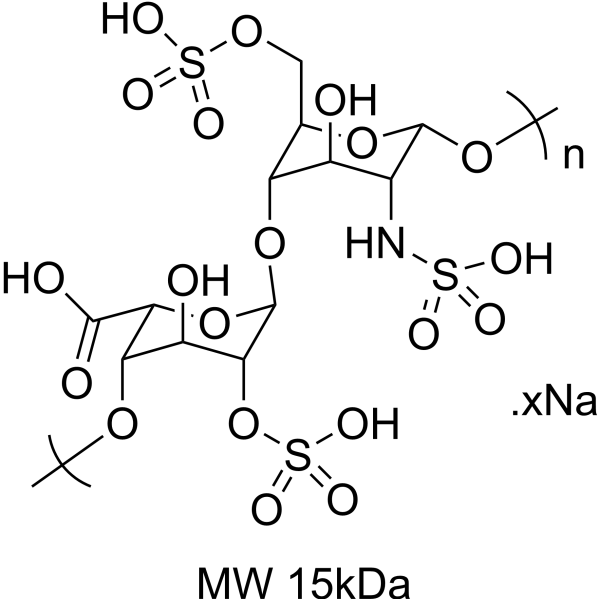
    Heparin sodium salt (MW 15kDa)
    3 Publications Verification

    Sodium heparin (MW 15kDa); Sodium heparinate (MW 15kDa)

    Thrombin Factor Xa Autophagy Cardiovascular Disease
    Heparin sodium salt (MW 15kDa) (Sodium heparin (MW 15kDa)) is a polymer of Heparin with the molecular weight of 15kDa. Heparin sodium salt is an anticoagulant which binds reversibly to antithrombin III (ATIII) and greatly accelerates the rate at which ATIII inactivates coagulation enzymes thrombin factor IIa and factor Xa .
    Heparin sodium salt (MW 15kDa)
  • HY-108611
    AACOCF3
    4 Publications Verification

    Arachidonyl trifluoromethyl ketone

    Phospholipase Cardiovascular Disease
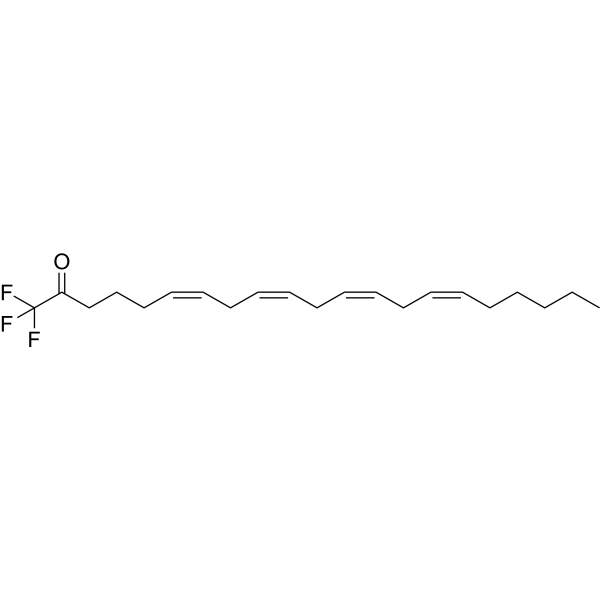
    AACOCF3 (Arachidonyl trifluoromethyl ketone) is a cell-permeant trifluoromethyl ketone analog of arachidonic acid. AACOCF3 is a potent and selective slow binding inhibitor of the 85-kDa cytosolic phospholipase A2 (cPLA2). AACOCF3 blocks production of arachidonate and 12-hydroxyeicosatetraenoic acid by calcium ionophore-challenged platelets. AACOCF3 inhibits glucose-induced insulin secretion from isolated rat islets. AACOCF3 has the potential for the research of cardiovascular disease .
    AACOCF3
  • HY-W145519

    Environmental Pollutants Biochemical Assay Reagents Cardiovascular Disease
    Hydroxyethyl starch (MW170-230 kDa) is a type of hydroxyethyl starch with a molecular weight of 170-230 kDa. A medium-molecular-weight hydroxyethyl starch (HES 200/0.62) exhibits minimal intravascular hydrolysis. The rapidly degradable medium-molecular-weight Hydroxyethyl starch 200/0.5 causes almost no coagulation disorders and improves hemorheological parameters .
    Hydroxyethyl starch (MW170-230 kDa)
  • HY-W145522

    Biochemical Assay Reagents Others
    Pullulan (Pullulan standard 5800) (Mw 362-480 kDa; Mn 100-200 kDa) is a class of orally active and water-soluble linear glucosic polysaccharide. Pullulan can be isolated from the polymorphic fungus Aureobasidium pullulans. Pullulan is composed of maltotriose repeating units linked by α-1,6 linkages and is an amorphous slime matter. Pullulan is widely used in food, environment, pharmaceutical, manufacturing, and electronics .
    Pullulan, Viscosity(10%):15-180mPa.s
  • HY-B0633I

    Endogenous Metabolite Bacterial PI3K Akt Inflammation/Immunology Cancer
    Hyaluronic acid sodium (MW 800kDa) is a biopolymer composed of repeating units of disaccharides with various applications. Hyaluronic acid sodium is a major component of the extracellular matrix (ECM). Hyaluronic acid sodium is synthesized at the plasma membrane. Increased hyaluronic acid sodium levels are associated with tumor cell growth, adhesion, migration, invasion and angiogenesis in digestive cancers. Hyaluronic acid sodium participates in tissue remodeling and rapid cell proliferation in some physiological processes including embryonic morphogenesis and wound-healing. Hyaluronic acid sodium activates the PI3K-Akt signaling. Hyaluronic acid sodium acts as a regulator of cancer-associated lymphangiogenesis. Hyaluronic acid sodium also enhances cell invasion and angiogenesis by promoting proteolytic MMP-9 binding to cell surface or stimulating MMP-9 binding to cell surface. Hyaluronic acid sodium can be used as drug delivery for sodium butyrate to improve the anti-proliferative activity on breast cancer cell line. Hyaluronic acid sodium can be studied in joint diseases, wound healing and cancer .
    Hyaluronic acid sodium (MW 800kDa)
  • HY-125974
    HM03
    4 Publications Verification

    HSP Cancer
    HM03 is a potent and selective HSPA5 (Heat shock 70kDa protein 5, also known as Bip, Grp78) inhibitor. HM03 has anticancer activity .
    HM03
  • HY-P0132
    YIGSR
    1 Publications Verification

    Laminin Fragment 929-933

    NO Synthase Cancer
    YIGSR (Laminin Fragment 929-933) is a polypeptide that inhibits tumor growth and metastasis of leukemia cells. YIGSR specifically binds to the 67kDa laminin receptor and regulates the expression of eNOS in endothelial cells. YIGSR can be used in leukemia-related research .
    YIGSR
  • HY-P99322

    LFG316; Anti-Human C5 Recombinant Antibody

    Complement System Inflammation/Immunology
    Tesidolumab (LFG316) is a fully-human IgG1/λ anti-C5 monoclonal antibody of 143 kDa (without glycosylation). Tesidolumab (LFG316) blocks cleavage of C5 and prevents subsequent formation of the membrane attack complex .
    Tesidolumab
  • HY-148591

    Epigenetic Reader Domain Inflammation/Immunology
    GSK761 is a selective inhibitor of speckled 140 kDa (SP140) with an IC50 value of 77.79 nM. GSK761 reduces monocyte-to-inflammatory macrophage differentiation and lipopolysaccharide (LPS)-induced inflammatory activation. GSK761 induces the production of CD206 + regulatory macrophages by inhibiting SP140 .
    GSK761
  • HY-NP132

    Biochemical Assay Reagents Integrin Autophagy Apoptosis Discoidin Domain Receptor Cancer
    Recombinant Humanized Type III Collagen 28.6kDa is a 28.6 kDa recombinant humanized type III collagen. Recombinant Humanized Type III Collagen possesses a variety of biological functions, such as promoting the regeneration of the skin extracellular matrix and improving the cellular microenvironment. Recombinant Humanized Type III Collagen can also inhibit the proliferation, migration and invasion of breast cancer cells. Recombinant Humanized Type III Collagen plays a role in cell adhesion, migration, proliferation and differentiation by interacting with Integrin .
    Recombinant Humanized Type III Collagen 28.6kDa
  • HY-110148

    Carboxylesterase (CES) Metabolic Disease
    WWL113 is a selective and orally active Ces3 and Ces1f inhibitor, with IC50 values of 120 nM and 100 nM for Ces3 and Ces1f, respectively. WWL113 appears to show excellent selectivity for the 60-kDa serine hydrolase (or hydrolases) .
    WWL113
  • HY-122066

    Others Infection
    NSC47924 is a laminin receptor (LR) inhibitor. NSC47924 affects 37/67 kDa LR cell surface localization and interaction with the cellular prion protein. NSC47924 can be used for testing prion diseases .
    NSC47924
  • HY-P990651

    TREM receptor Inflammation/Immunology
    PY314 is a humanized antibody expressed in CHO, targeting TREM2. PY314 has a huIgG1 heavy chain and a huκ light chain, with a predicted molecular weight (MW) of 145 kDa. The isotype control for PY314 can refer to Human IgG1 kappa, Isotype Control (HY-P99001).
    PY314
  • HY-172163

    Fluorescent Dye Inflammation/Immunology
    FITC-dextran sulfate, 4kDa is a sodium dextran sulfate labeled with FITC, with an average molecular weight of 4 kDa .
    FITC-dextran sulfate (MW 4kDa)
  • HY-140318

    PROTAC Linkers Cancer
    DBCO-mPEG (MW 2kDa) is a PEG-based PROTAC linker that can be used in the synthesis of PROTACs . DBCO-mPEG (MW 2kDa) is a click chemistry reagent, it contains a DBCO group that can undergo strain-promoted alkyne-azide cycloaddition (SPAAC) with molecules containing Azide groups.
    DBCO-mPEG (MW 2kDa)
  • HY-400882

    Drug Derivative Drug Intermediate TSPO Neurological Disease Inflammation/Immunology
    Tosylate-DPA-714 is a GMP-grade precursor for the radiosynthesis of DPA-714 (HY-122607). It crosses the blood-brain barrier and exhibits steroidogenic activity. DPA-714 is a specific ligand for the 18 kDa translocator protein (TSPO) with a Ki of 7.0 nM. Tosylate-DPA-714 is safe and does not bind to central benzodiazepine receptors (benzodiazepine receptor). As a radiolabeling precursor, Tosylate-DPA-714 reacts with 18F via nucleophilic aliphatic substitution to form 18F-DPA-714, enabling specific targeted binding to TSPO. 18F-DPA-714 accurately reflects the level of neuroinflammation mediated by microglial activation, and is used for PET molecular imaging of neurological diseases such as Alzheimer's disease and multiple sclerosis .
    Tosylate-DPA-714
  • HY-W145519A

    Biochemical Assay Reagents Others
    Hydroxyethyl starch (Mw 110-150 kDa) is a biochemical reagent used in drug delivery and other research .
    Hydroxyethyl starch (Mw 110-150 kDa)
  • HY-148775B

    Biochemical Assay Reagents Others
    PLGA-PEG-MAL (20kDA-5.0kDA, LA:GA ratio 40:60) is a kind of poly(lactide-co-glycolide)-block-poly(ethylene glycol) (PLGA-PEG-Mal) nanoparticles. PLGA-PEG-MAL (20kDA-5.0kDA, LA:GA ratio 40:60) has a molecular weight of 20kDA to 5.0kDA and contains a 40:60 ratio of lactic acid (LA) to glycolic acid (GA) molecules .
    PLGA-PEG-MAL (20kDA-5.0kDA, LA:GA ratio 40:60)
  • HY-172163A

    Fluorescent Dye Inflammation/Immunology
    FITC-dextran sulfate, 10kDa is a sodium dextran sulfate labeled with FITC, with an average molecular weight of 10 kDa .
    FITC-dextran sulfate (MW 10kDa)
  • HY-172163B

    Fluorescent Dye Inflammation/Immunology
    FITC-dextran sulfate, 40kDa is a sodium dextran sulfate labeled with FITC, with an average molecular weight of 40 kDa .
    FITC-dextran sulfate (MW 40kDa)
  • HY-172163C

    Fluorescent Dye Inflammation/Immunology
    FITC-dextran sulfate, 500kDa is a sodium dextran sulfate labeled with FITC, with an average molecular weight of 500 kDa .
    FITC-dextran sulfate (MW 500kDa)
  • HY-140319

    PROTAC Linkers Cancer
    DBCO-mPEG (MW 5kDa) is a PEG-based PROTAC linker that can be used in the synthesis of PROTACs . DBCO-mPEG (MW 5kDa) is a click chemistry reagent, it contains a DBCO group that can undergo strain-promoted alkyne-azide cycloaddition (SPAAC) with molecules containing Azide groups.
    DBCO-mPEG (MW 5kDa)
  • HY-158220A

    HAMA (MW 150 kDa)

    Biochemical Assay Reagents Others
    Hyaluronic acid Methacryloyl (HAMA) MW 150 kDa is methacrylated hyaluronic acid that is biocompatible. Hyaluronic acid Methacryloyl is also used as a 3D printing hydrogel ink, which has the characteristics of fast photosensitive response, fast gelation speed and stable hydrogel performance. Hyaluronic acid Methacryloyl can quickly induce gelation with lithium phenyl-2,4,6-trimethylbenzoylphosphinate (LAP) under UV irradiation. The combination of Hyaluronic acid Methacryloyl and tissue-specific extracellular matrix (ECM) materials (such as pancreatic extracellular matrix (pECM)) will become an important source material for organoid culture .
    Hyaluronic acid Methacryloyl (MW 150 kDa)
  • HY-158220

    HAMA (MW 400 kDa)

    Biochemical Assay Reagents Others
    Hyaluronic acid Methacryloyl (HAMA) is methacrylated hyaluronic acid that is biocompatible. Hyaluronic acid Methacryloyl is also used as a 3D printing hydrogel ink, which has the characteristics of fast photosensitive response, fast gelation speed and stable hydrogel performance. Hyaluronic acid Methacryloyl can quickly induce gelation with lithium phenyl-2,4,6-trimethylbenzoylphosphinate (LAP) under UV irradiation. The combination of Hyaluronic acid Methacryloyl and tissue-specific extracellular matrix (ECM) materials (such as pancreatic extracellular matrix (pECM)) will become an important source material for organoid culture .
    Hyaluronic acid Methacryloyl (MW 400 kDa)
  • HY-P990607

    Transmembrane Glycoprotein Inflammation/Immunology
    Indatuximab is a CHO-expressed chimeric antibody that targets Syndecan-1/CD138. The predicted molecular weight (MW) of Indatuximab is 145.5 kDa. The isotype control for Indatuximab can refer to Human IgG4 kappa, Isotype Control (HY-P99003).
    Indatuximab
  • HY-P990571
    Coltuximab
    1 Publications Verification

    CD19 Inflammation/Immunology
    Coltuximab is a CHO-expressed humanized antibody that targets CD19. Coltuximab is composed of huIgG1 heavy chains and huκ light chains, with a molecular weight (MW) of 144.70 kDa. The isotype control for Coltuximab can refer to Human IgG1 kappa, Isotype Control (HY-P99001).
    Coltuximab
  • HY-E70229

    COX-1

    Endogenous Metabolite Metabolic Disease
    Cyclooxygenase 1, sheep (COX-1) is a 71 kDa membrane bound protein predominantly present in endoplasmic reticulum. Cyclooxygenase 1 has three domains, the epidermal growth factor (EGF) like domain, enzymatic and membrane binding domain. Cyclooxygenase 1 mediates prostaglandin synthesis and is modulated by anti-inflammatory nonsteroidal drugs .
    Cyclooxygenase 1, sheep
  • HY-P990587
    FR104
    1 Publications Verification

    CD28 Inflammation/Immunology
    FR104 is a humanized antibody expressed in CHO cells that targets CD28. FR104 comprises a huIgG2 heavy chain and a huκ light chain, with a predicted molecular weight (MW) of 145 kDa. The isotype control for FR104 can be referenced as Human IgG2 kappa, Isotype Control (HY-P99002).
    FR104
  • HY-P990496

    COM701

    Transmembrane Glycoprotein Inflammation/Immunology
    Anti-PVRIG Antibody (COM701) is a CHO-expressed human antibody that targets PVRIG. The predicted molecular weight (MW) of Anti-PVRIG Antibody (COM701) is 145.48 kDa. The isotype control for Anti-PVRIG Antibody (COM701) can be referenced as Human IgG4 kappa, Isotype Control (HY-P99003).
    Anti-PVRIG Antibody (COM701)
  • HY-148776

    Biochemical Assay Reagents Others
    PLGA-PEG-MAL (20kDA-5.0kDA, LA:GA ratio 50:50) is a kind of poly(lactide-co-glycolide)-block-poly(ethylene glycol) (PLGA-PEG-Mal) nanoparticles. PLGA-PEG-MAL (20kDA-5.0kDA, LA:GA ratio 50:50) has a molecular weight of 20kDA to 5.0kDA and contains a 50:50 ratio of lactic acid (LA) to glycolic acid (GA) molecules. The molecular ratio of LA to GA determines the rate of matrix degradation and protein re-release .
    PLGA-PEG-MAL (20kDA-5.0kDA, LA:GA ratio 50:50)
  • HY-NP131

    Discoidin Domain Receptor Apoptosis Autophagy Cancer
    Recombinant Humanized Type III Collagen 10.4kDa is a novel biomaterial that have anticancer effects. Recombinant Humanized Type III Collagen 10.4kDa activates discoidin domain receptor 1 (DDR1), and thus inhibits autophagy, proliferation, and migration of cancer cells, and induces apoptosis .
    Recombinant Humanized Type III Collagen (10.4kDa)
  • HY-172164B

    Fluorescent Dye Others
    FITC-lysine-dextran, 70kDa is a dextran with lysine coupling with a fluorescent group FITC (HY-66019). Lysine-dextran exhibits higher Glu-plasminogen binding ability than dextran alone .
    FITC-lysine-dextran (MW 70kDa)
  • HY-P2956

    D-Fructose dehydrogenase

    Biochemical Assay Reagents Metabolic Disease
    Fructose 5-dehydrogenase (acceptor) (D-Fructose dehydrogenase) is a membrane-bound flavohemo-protein that catalyzes the oxidation of d-fructose to 5-keto-d-fructose. Fructose 5-dehydrogenase (acceptor) consists of three subunits: subunit I (67 kDa), subunit II (51 kDa), and subunit III (20 kDa) .
    Fructose 5-dehydrogenase (acceptor)
  • HY-160047

    PDGFR Cancer
    AX102 sodium is a 34 bp length nucleotide aptamer modified at the 5' end with a 40 kDa polyethylene glycol moiety. AX102 selectively binds platelet-derived growth factor B (PDGF-B) and causes tumor vessel regression .
    AX102 sodium
  • HY-P990572
    DCBY02
    1 Publications Verification

    Transmembrane Glycoprotein Inflammation/Immunology
    DCBY02 is a monoclonal antibody targeting CD93 expressed in CHO cells. DCBY02 has a heavy chain of the mlgG type and a light chain of the mkappa type, with a predicted molecular weight (MW) of 150 kDa. The isotype control for DCBY02 can be referenced as Mouse IgG1 kappa, Isotype Control.
    DCBY02
  • HY-P99436

    ABR-214936

    Transmembrane Glycoprotein Cardiovascular Disease Inflammation/Immunology Cancer
    Anatumomab mafenatox (ABR-214936) is a 73 KDa recombinant protein to recognize the tumor-associated antigen 5T4, which is widely expressing in malignancy. Anatumomab mafenatox is between a modified form of SEA and a murine Fab. The main side effects of Anatumomab mafenatox are reported to include fever, low blood pressure, pain, nausea and drowsiness .
    Anatumomab mafenatox
  • HY-148775

    Biochemical Assay Reagents Others
    PLGA-PEG-MAL (60kDA-3.4kDA, LA:GA ratio 75:25) is a kind of poly(lactide-co-glycolide)-block-poly(ethylene glycol) (PLGA-PEG-Mal) nanoparticles. PLGA-PEG-MAL (60kDA-3.4kDA, LA:GA ratio 75:25) has a molecular weight of 60kDA to 3.4kDA and contains a 75:25 ratio of lactic acid (LA) to glycolic acid (GA) molecules .
    PLGA-PEG-MAL (60kDA-3.4kDA, LA:GA ratio 75:25)
  • HY-141804

    BIBD-239

    Biochemical Assay Reagents Neurological Disease
    ER176 is a next generation PET radioligand for imaging 18 kDa translocator protein (TSPO), a biomarker for neuroinflammation .
    ER176
  • HY-P3911

    Bacterial Infection
    CAP 37 (20-44) is a peptide based on amino acid residues 20 through 44 of CAP37. CAP37, a Cationic antimicrobial protein of 37 kDa, is a multifunctional protein .
    CAP 37 (20-44)
  • HY-105037

    IPP-201101

    Autophagy Inflammation/Immunology
    Forigerimod (IPP-201101) is a CD4 T-cell modulator. Forigerimod is a 21-amino-acid fragment of U1 small nuclear ribonucleoprotein 70 kDa that is phosphorylated at Ser140. Forigerimod can potently inhibit autophagy. Forigerimod can be used for the research of autoimmune disorders, such as systemic lupus erythematosus (SLE) .
    Forigerimod
  • HY-172164

    Fluorescent Dye Others
    FITC-lysine-dextran, 4kDa is a dextran with lysine coupling with a fluorescent group FITC (HY-66019). Lysine-dextran exhibits higher Glu-plasminogen binding ability than dextran alone .
    FITC-lysine-dextran (MW 4kDa)
  • HY-172166A

    Fluorescent Dye Others
    TRITC-lysine-dextran, 10kDa is a dextran with lysine coupling with a fluorescent group TRITC (HY-D0791). Lysine-dextran exhibits higher Glu-plasminogen binding ability than dextran alone .
    TRITC-lysine-dextran (MW 10kDa)
  • HY-P2641

    MMP Cancer
    Peptide 74 is a synthetic peptide containing the prodomain sequence of matrix metalloproteinase (MMP). Peptide 74 inhibits the activated form of the 72-kDa type IV collagenase in vitro .
    Peptide 74
  • HY-E70554A

    Biochemical Assay Reagents Cardiovascular Disease
    Bovine Prothrombin is a glycoprotein with a molecular weight of 70 kDa and is composed of a single polypeptide chain. Prothrombin is activated by factors Va, Xa, and phospholipids to produce the serine protease thrombin .
    Bovine Prothrombin
  • HY-125974A

    HSP Cancer
    HM03 trihydrochloride is a potent and selective HSPA5 (Heat shock 70kDa protein 5, also known as Bip, Grp78) inhibitor. HM03 trihydrochloride has anticancer activity .
    HM03 trihydrochloride
  • HY-153098

    Complement System Cardiovascular Disease Inflammation/Immunology
    ARC186 (sodium) is an unconjugated 40KDa PEG aptamer with a sequence identical to HY-147080 Avacincaptad pegol (ARC1905) sodium. ARC1905 is highly potent complement inhibitors that function by blocking the convertase-catalyzed activation of C5.
    ARC186
  • HY-146420

    HSP Cardiovascular Disease Cancer
    GRP78-IN-2 (Compound FL5) is a GRP78 (Glucose Regulated Protein 78 kDa) inhibitor. GRP78-IN-2 preferentially targeting cell surface GRP78 and shows potent antiangiogenic and anticancer activities without affecting other normal cells .
    GRP78-IN-2

Inquiry Online

Your information is safe with us. * Required Fields.

Salutation


Country or Region *

Applicant Name *


Organization Name *

Department *


Email Address *


Product Name *

Cat. No.


Requested quantity *

Phone Number *


Remarks

Inquiry Online

Inquiry Information

Product Name:
Cat. No.:
Quantity:
MCE Japan Authorized Agent:

