
20 Results for "

light absorption

" in MedChemExpress (MCE) Product Catalog:
Products (20)

20 Results for "light absorption" in MCE Product Catalog:

20
20 Publications Verification
Cat. No.: HY-W854659
CAS No.: 72984-36-2
Synonyms: Ce6 trisodium
Chlorin e6 Ce6 (trisodium) is a water-soluble derivative of chlorophyll, belonging to the chlorin class of photosensitizers with an absorption wavelength range of 600-670 nm. Chlorin e6 trisodium emits characteristic red fluorescence upon light excitation, enabling real-time identification of tumor boundaries and progression. Chlorin e6 trisodium can be used for the study of photodynamic therapy (PDT) of cancers (bladder cancer) and fluorescence diagnosis of neoplastic lesions .
loading...
    loading...
5
5 Cited Publications
Cat. No.: HY-136976
CAS No.: 150849-52-8
Purity:  ≥98.0%
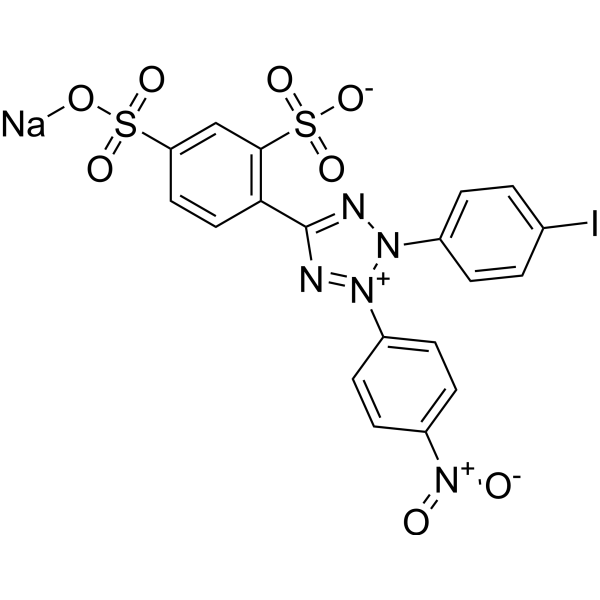
WST-1 is a kind of water-soluble tetrazolium salt. WST induces the intracellular mitochondrial dehydrogenase to conduct NADH-dependent enzyme digestion reaction, releasing the water-soluble methyl benzene product. WST-1 can be used for the detection of cell proliferation and cytotoxicity, via the determination of the light absorption value at 450 nm .
loading...
    loading...
2
2 Cited Publications
Cat. No.: HY-D0925
CAS No.: 442912-55-2
Synonyms: Cyanine5.5 NHS ester
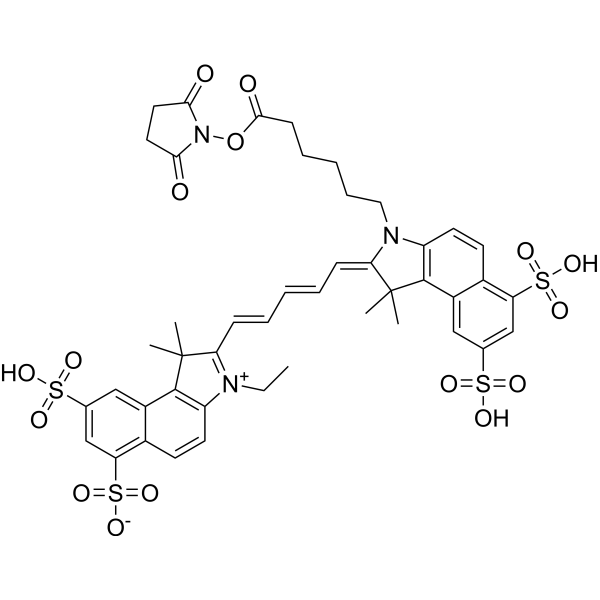
Cy5.5-SE (Cyanine5.5 NHS ester) is a CY dye. CY, short for Cyanine, is a compound consisting of two nitrogen atoms connected by an odd number of methyl units. Cyanine compounds have the characteristics of long wavelength, adjustable absorption and emission, high extinction coefficient, good water solubility and relatively simple synthesis . CY dyes are of en used for the labeling of proteins, antibodies and small molecular compounds. For the labeling of protein antibodies, the combination can be completed through a simple mixing reaction. Below, we introduce the labeling method of protein antibody labeling, which has certain reference significance . Storage: protect from light.
loading...
    loading...
2
2 Cited Publications
Cat. No.: HY-D1617
CAS No.: 144672-74-2
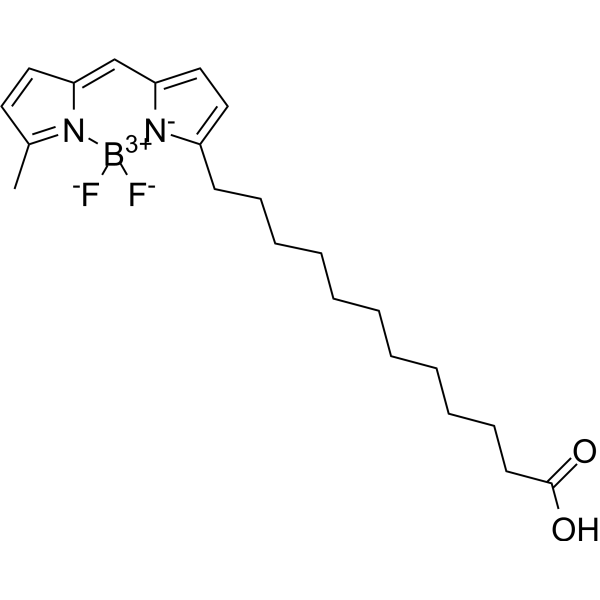
BODIPY 500/510 C1, C12 is a BODIPY dye. BODIPY dye is a small molecule dye with strong ultraviolet absorption ability, its fluorescence peak is relatively sharp, and the quantum yield is high. They are relatively insensitive to the polarity and pH of the environment and are relatively stable under different physiological conditions. Due to its structural asymmetry, BODIPY derives a variety of structural products. BODIPY lipid droplet dyes can well pass through the cell membrane into the cell, and localize the neutral lipids in the cell to specifically stain the lipid droplets, which can be used for labeling of live cells and fixed cells . Maximum excitation/emission wavelength: 500/510 nm . Protect from light, stored at -20°C.
loading...
    loading...
2
2 Cited Publications
Cat. No.: HY-D0925B
Synonyms: Cyanine5.5 NHS ester TEA
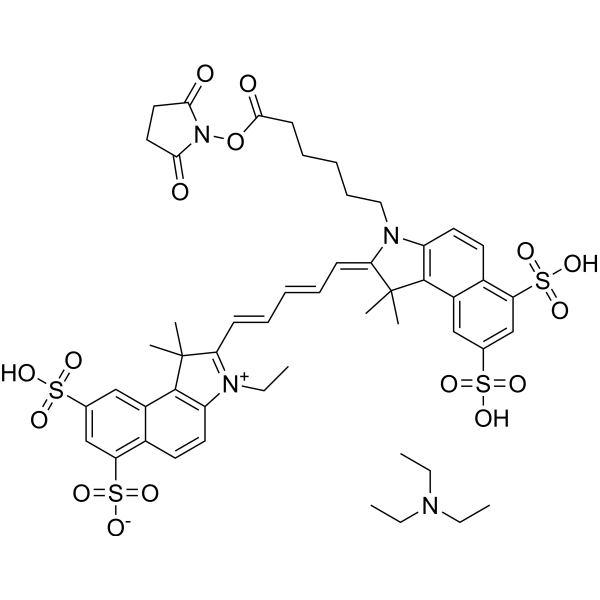
Cy5.5-SE TEA (Cyanine5.5 NHS ester TEA) is a CY dye. CY, short for Cyanine, is a compound consisting of two nitrogen atoms connected by an odd number of methyl units. Cyanine compounds have the characteristics of long wavelength, adjustable absorption and emission, high extinction coefficient, good water solubility and relatively simple synthesis . CY dyes are of en used for the labeling of proteins, antibodies and small molecular compounds. For the labeling of protein antibodies, the combination can be completed through a simple mixing reaction. Below, we introduce the labeling method of protein antibody labeling, which has certain reference significance . Storage: protect from light.
loading...
    loading...
1
1 Cited Publications
Cat. No.: HY-B1398
CAS No.: 83-07-8
Synonyms: 4-Aminophenazone
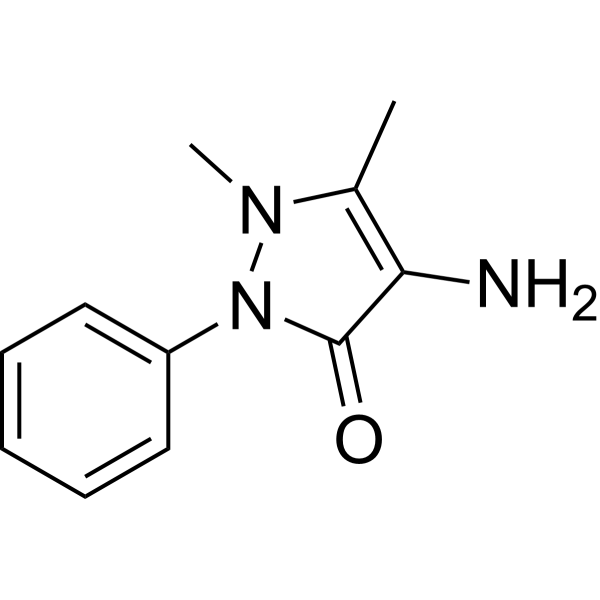
Ampyrone (4-Aminophenazone; 4-Aminoantipyrine) is a reversible and low-damage optical clearing agent and non-selective COX inhibitor based on UV absorption properties. Ampyrone can improve the optical transmittance of mouse skin and other tissues. Ampyrone can induce tissue refractive index matching by enhancing UV absorption, reduce light scattering, and achieve tissue transparency in vivo. Ampyrone reduces the synthesis of prostaglandin PGE2, thereby exerting anti-inflammatory, analgesic and antipyretic effects. Ampyrone inhibits DNA damage, cell apoptosis and immune cell phagocytosis induced by Doxorubicin (HY-15142A) and Cisplatin (HY-17394), etc., and participates in the regulation of toxicity in tumor chemotherapy .
loading...
    loading...
Cat. No.: HY-W051271
CAS No.: 13463-67-7
Synonyms: Titanium dioxide
Titanium(IV) oxide is a photosensitizer and photocatalyst. Titanium(IV) oxide can be used as a pharmaceutical excipient such as a flow aid, coating agent, sunscreen, colorant, etc. Pharmaceutical excipients or pharmaceutical excipients refer to other chemical substances used in the pharmaceutical process other than the drug ingredients. Pharmaceutical excipients generally refer to inactive ingredients in pharmaceutical preparations that can improve the stability, solubility and processability of pharmaceutical preparations. Pharmaceutical excipients also affect the absorption, distribution, metabolism and elimination (ADME) process of co-administered drugs. Titanium(IV) oxide can use light energy to generate electron-hole pairs to degrade pollutants. Photons excite electrons in TiO2 to generate active oxygen species (such as ·OH and ·O2 -), thereby oxidizing and mineralizing pollutants such as organic compounds and heavy metals. TiO2 can be used in the research of environmental remediation fields such as water treatment, air purification and self-cleaning materials .
loading...
    loading...
Cat. No.: HY-137822
CAS No.: 10357-27-4
Purity:  99.68%
Synonyms: 4-Nitrophenyl a-D-mannopyranoside
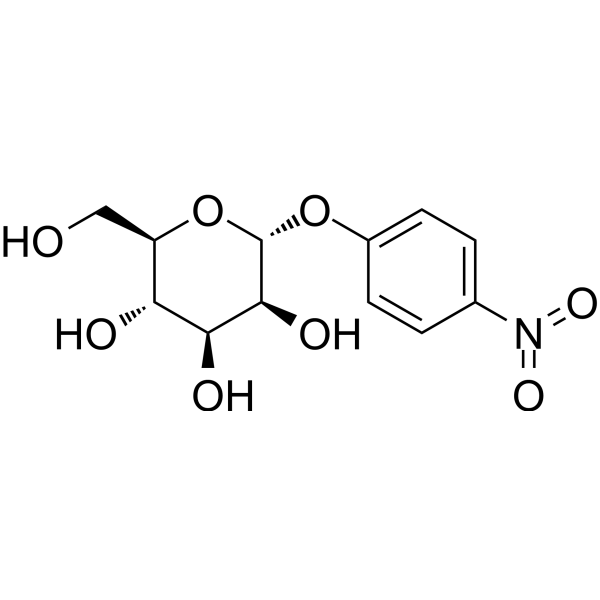
p-Nitrophenyl α-D-mannopyranoside (4-Nitrophenyl α-D-mannopyranoside) is a chromogenic glycosidic ligand. p-Nitrophenyl α-D-mannopyranoside features a sugar moiety (α-D-mannopyranose) with the mannose-characteristic axial hydroxyl group at the C2 position and a ligand portion (p-nitrophenol) that provides ultraviolet-visible light absorption properties. p-Nitrophenyl α-D-mannopyranoside can be used to determine glycosidase activity and characterize the sugar recognition properties of lectins (such as Concanavalin A (HY-P2149)) .
loading...
    loading...
Cat. No.: HY-W800703
CAS No.: 1872449-19-8
Target:  

Fluorescent Dye

Research Areas:  

Others

Alexa Fluor 594 azide is an azide-modified fluorescent dye and also a FRET acceptor reactant. Owing to its negligible direct absorption under 488 nm excitation light, excellent photostability, and the ability of its azide group to participate in the CuAAC reaction, Alexa Fluor 594 azide can be paired with a donor dye for single-molecule imaging via TIRFM, thereby enabling the visual monitoring of CuNP-catalyzed click reactions .
loading...
    loading...
Cat. No.: HY-D2395
Synonyms: B-PE
B-Phycoerythrin (B-PE) is a light-harvesting pigment protein that can be isolated from the red alga Porphyridium cruentum. The absorption spectrum of B-Phycoerythrin peaks at 545 nm and 563 nm, with a shoulder at 498 nm .
loading...
    loading...
Cat. No.: HY-148851
CAS No.: 17499-98-8
Synonyms: BChl a, from Rhodopseudomonas sphaeroides (under argon)
Target:  

Bacterial

Bacteriochlorophyll a, from Rhodopseudomonas sphaeroides (under argon) (BChl a, from Rhodopseudomonas sphaeroides (under argon)) is a chlorophyll analog found in some bacteria that participates in the light absorption and energy transfer processes of photosynthesis .
loading...
    loading...
Cat. No.: HY-B1398R
CAS No.: 83-07-8
Synonyms: 4-Aminophenazone (Standard)
Ampyrone (4-Aminophenazone) (Standard) is the analytical standard of Ampyrone (HY-B1398). This product is intended for research and analytical applications. Ampyrone (4-Aminophenazone; 4-Aminoantipyrine) is a reversible and low-damage optical clearing agent and non-selective COX inhibitor based on UV absorption properties. Ampyrone can improve the optical transmittance of mouse skin and other tissues. Ampyrone can induce tissue refractive index matching by enhancing UV absorption, reduce light scattering, and achieve tissue transparency in vivo. Ampyrone reduces the synthesis of prostaglandin PGE2, thereby exerting anti-inflammatory, analgesic and antipyretic effects. Ampyrone inhibits DNA damage, cell apoptosis and immune cell phagocytosis induced by Doxorubicin (HY-15142A) and Cisplatin (HY-17394), etc., and participates in the regulation of toxicity in tumor chemotherapy .
loading...
    loading...
Cat. No.: HY-163286
CAS No.: 2738333-02-1
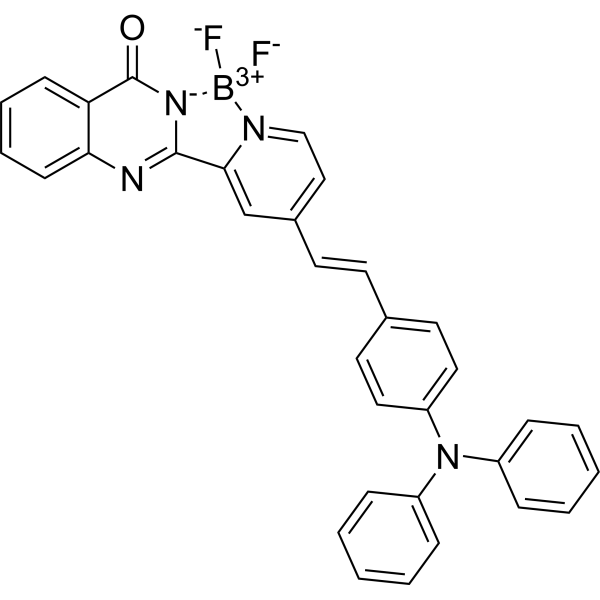
BODIQPy-TPA is a lipophilic probes, which induces ferroptosis in B16 and HepG2 cells upon light irradiation through lipid peroxidation. BODIQPy-TPA reveals a maximum absorption wavelength of 488 nm and a maximum emission wavelength above 640 nm .
loading...
    loading...
Cat. No.: HY-163287
CAS No.: 2738332-94-8
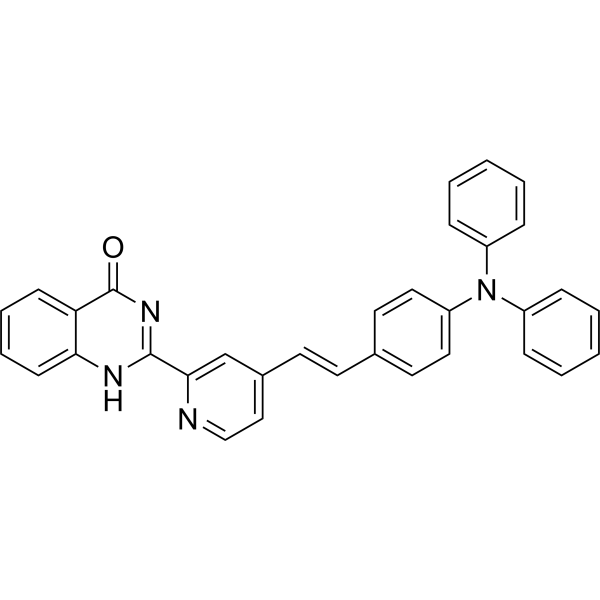
QPy-TPA is a lipopjilc probes, which induces non-ferroptotic cell death and lipid dynamic regularion in B16 and HepG2 cells upon light irradiation. QPy-TPA reveals a maximum absorption wavelength of 400 nm and a maximum emission wavelength of 590 nm .
loading...
    loading...
Cat. No.: HY-B1398S
CAS No.: 1329792-51-9
Synonyms: 4-Aminoantipyrine-d3
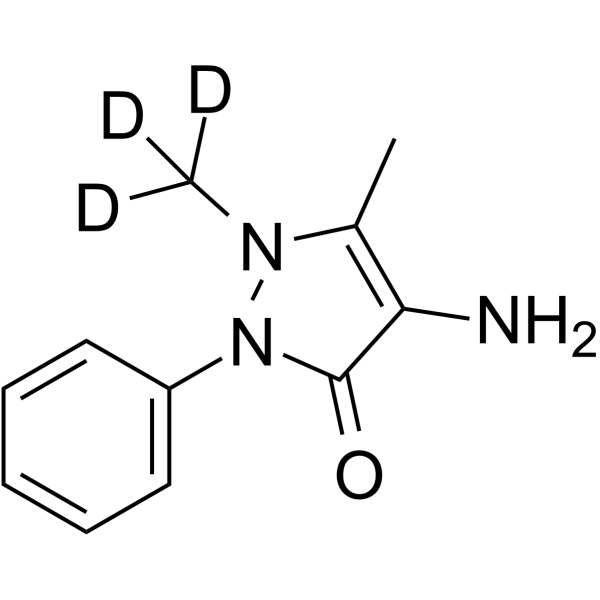
Ampyrone-d3 is the deuterium labeled Ampyrone (HY-B1398). Ampyrone (4-Aminophenazone; 4-Aminoantipyrine) is a reversible and low-damage optical clearing agent and non-selective COX inhibitor based on UV absorption properties. Ampyrone can improve the optical transmittance of mouse skin and other tissues. Ampyrone can induce tissue refractive index matching by enhancing UV absorption, reduce light scattering, and achieve tissue transparency in vivo. Ampyrone reduces the synthesis of prostaglandin PGE2, thereby exerting anti-inflammatory, analgesic and antipyretic effects. Ampyrone inhibits DNA damage, cell apoptosis and immune cell phagocytosis induced by Doxorubicin (HY-15142A) and Cisplatin (HY-17394), etc., and participates in the regulation of toxicity in tumor chemotherapy .
loading...
    loading...
Cat. No.: HY-W251143
CAS No.: 83054-80-2
N,N′-Bis(2,5-di-tert-butylphenyl)-3,4,9,10-perylenedicarboximide is an organic semiconductor material with excellent electron transport activity. N,N′-Bis(2,5-di-tert-butylphenyl)-3,4,9,10-perylenedicarboximide is widely used in organic field effect transistors (OFETs) and organic photovoltaic (OPV) devices due to its high carrier mobility. The chemical structure design of N,N′-Bis(2,5-di-tert-butylphenyl)-3,4,9,10-perylenedicarboximide enables it to perform well in light absorption and photoelectric conversion, thereby improving the efficiency of organic photoelectric devices.
loading...
    loading...
Cat. No.: HY-DY1100
CAS No.: 150849-52-8
WST-1 (solution) is a kind of water-soluble tetrazolium salt. WST induces the intracellular mitochondrial dehydrogenase to conduct NADH-dependent enzyme digestion reaction, releasing the water-soluble methyl benzene product. WST-1 can be used for the detection of cell proliferation and cytotoxicity, via the determination of the light absorption value at 450 nm .
Solvent and concentration: ddH2O: 10 mg/mL
loading...
    loading...
Cat. No.: HY-W251144
CAS No.: 76372-75-3
Synonyms: PTCDI-C5
N,N′-Dipentyl-3,4,9,10-perylenedicarboximide (PTCDI-C5) is an organic semiconductor compound with excellent electron transport activity. N,N′-Dipentyl-3,4,9,10-perylenedicarboximide exhibits high performance in organic field effect transistors (OFETs) and can effectively improve the carrier mobility of the device. The application of N,N′-Dipentyl-3,4,9,10-perylenedicarboximide in organic photovoltaic (OPV) materials enhances the light absorption performance, thereby improving the photoelectric conversion efficiency. N,N′-Dipentyl-3,4,9,10-perylenedicarboximide has also been widely studied for the development of high-performance sensors and fluorescent materials.
loading...
    loading...
Cat. No.: HY-W441531
CAS No.: 28265-17-0
2,3,7,8,12,13,17,18-Octaethyl-21H,23H-porphine manganese(III) chloride is a transition metal compound with excellent catalytic activity. 2,3,7,8,12,13,17,18-Octaethyl-21H,23H-porphine manganese(III) chloride is widely used in photocatalytic reactions to improve reaction efficiency. 2,3,7,8,12,13,17,18-Octaethyl-21H,23H-porphine manganese(III) chloride is also used in the preparation of optical materials, giving the materials excellent light absorption properties. The biological activity of 2,3,7,8,12,13,17,18-Octaethyl-21H,23H-porphine manganese(III) chloride has gradually attracted attention in the research of the medical field.
loading...
    loading...
Cat. No.: HY-W585442
CAS No.: 105528-25-4
5,9,14,18,23,27,32,36-Octabutoxy-2,3-naphthalocyanine is a photosensitive material with excellent light absorption and electron conduction activity. 5,9,14,18,23,27,32,36-Octabutoxy-2,3-naphthalocyanine is widely used in optoelectronic devices and is considered to be an effective photocatalyst. 5,9,14,18,23,27,32,36-Octabutoxy-2,3-naphthalocyanine can be used to improve the performance of solar cells and increase the photoelectric conversion efficiency. 5,9,14,18,23,27,32,36-Octabutoxy-2,3-naphthalocyanine also has potential anti-tumor activity and can inhibit the proliferation of certain cancer cells. 5,9,14,18,23,27,32,36-Octabutoxy-2,3-naphthalocyanine exhibits excellent fluorescence properties in medical imaging, which helps to improve the clarity and accuracy of imaging. 5,9,14,18,23,27,32,36-Octabutoxy-2,3-naphthalocyanine is studied as a component of a novel compound delivery system to improve the targeting and release effect of the compound.
loading...
    loading...
  • 1

