
101 Results for "

lysine residues

" in MedChemExpress (MCE) Product Catalog:
Products (101)

101 Results for "lysine residues" in MCE Product Catalog:

67
67 Publications Verification
Cat. No.: HY-B2227
CAS No.: 50-21-5
Synonyms: DL-Lactic acid; E-270
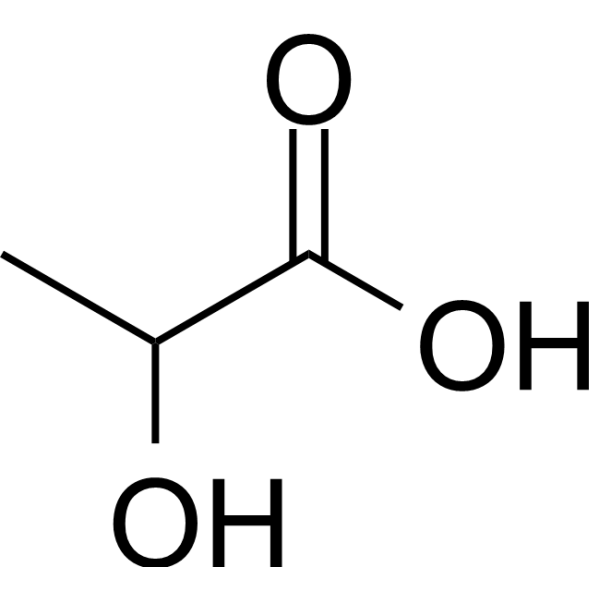
Lactic acid (DL-Lactic acid) is a hydroxycarboxylic acid receptor 1 (HCAR1) activator and an epigenetic modulator inducing lysine residues lactylation. Lactic acid is a glycolysis end-product, bridging the gap between glycolysis and oxidative phosphorylation. Lactic acid is an oncometabolite and has immune protective role of lactate in anti-tumor immunity . Lactic acid also has antimicrobial activity, which can be used as a food preservative .
loading...
    loading...
66
66 Cited Publications
Cat. No.: HY-B2227B
CAS No.: 72-17-3
Synonyms: DL-Lactic acid sodium; E-270 sodium
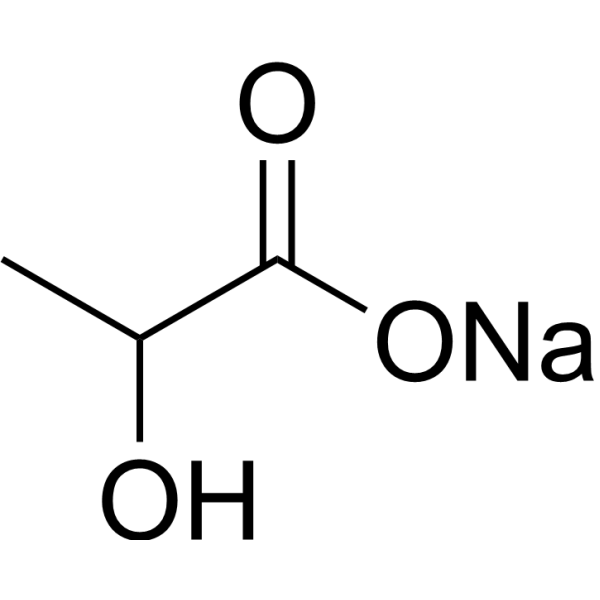
Lactic acid (DL-Lactic acid) sodium (60% w/w in water) is a hydroxycarboxylic acid receptor 1 (HCAR1) activator and an epigenetic modulator inducing lysine residues lactylation. Lactic acid sodium (60% w/w in water) is a glycolysis end-product, bridging the gap between glycolysis and oxidative phosphorylation. Lactic acid sodium (60% w/w in water) is an oncometabolite and has immune protective role of lactate in anti-tumor immunity . Lactic acid sodium (60% w/w in water) also has antimicrobial activity, which can be used as a food preservative .
This product has a content (w/w) of 60%, and 1 mL of the system contains 798 mg of Lactic acid sodium, i.e., a concentration of 798 mg/mL (i.e., 7.12 M).
loading...
    loading...
66
66 Cited Publications
Cat. No.: HY-B2227C
CAS No.: 996-31-6
Synonyms: DL-Lactic acid potassium; E-270 potassium
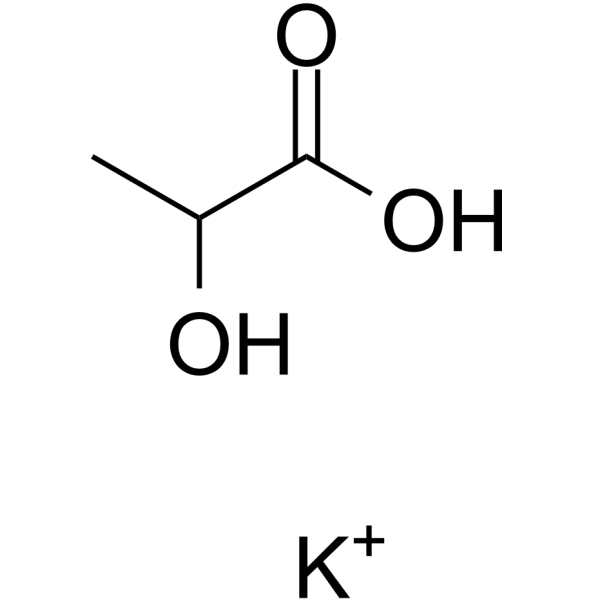
Lactic acid (DL-Lactic acid) potassium is a hydroxycarboxylic acid receptor 1 (HCAR1) activator and an epigenetic modulator inducing lysine residues lactylation. Lactic acid potassium is a glycolysis end-product, bridging the gap between glycolysis and oxidative phosphorylation. Lactic acid potassium is an oncometabolite and has immune protective role of lactate in anti-tumor immunity . Lactic acid also potassium has antimicrobial activity, which can be used as a food preservative .
loading...
    loading...
66
66 Cited Publications
Cat. No.: HY-B2227A
CAS No.: 814-80-2
Synonyms: DL-Lactic acid calcium; E-270 calcium
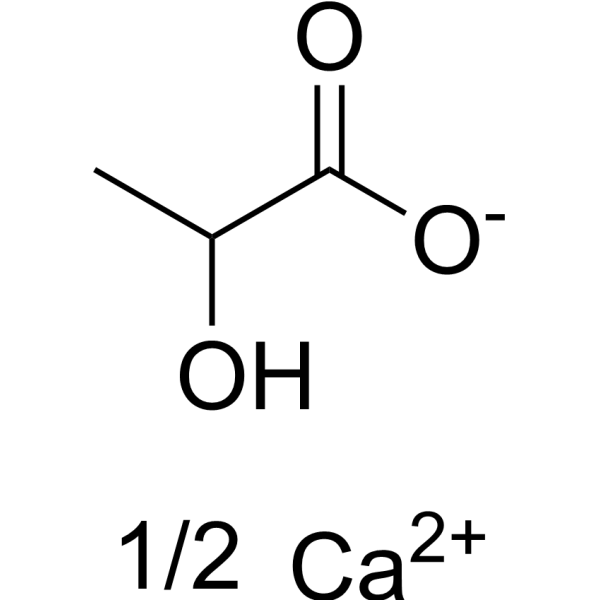
Lactic acid (DL-Lactic acid) calcium is a hydroxycarboxylic acid receptor 1 (HCAR1) activator and an epigenetic modulator inducing lysine residues lactylation. Lactic acid calcium is a glycolysis end-product, bridging the gap between glycolysis and oxidative phosphorylation. Lactic acid calcium is an oncometabolite and has immune protective role of lactate in anti-tumor immunity . Lactic acid calcium also has antimicrobial activity, which can be used as a food preservative .
loading...
    loading...
27
27 Cited Publications
Cat. No.: HY-10587
CAS No.: 935693-62-2
Purity:  98.44%
Research Areas:  

Cancer

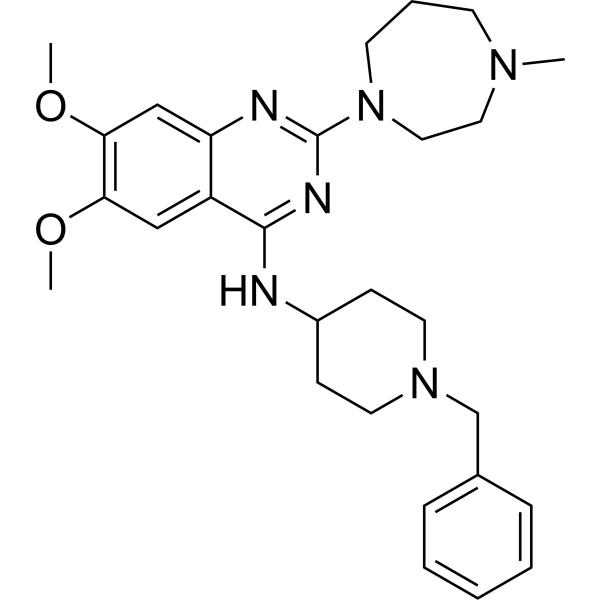
BIX-01294 is a reversible and highly selective G9a and GLP Histone Methyltransferase inhibitor, with IC50s of of 1.7 μM and 0.9 μM, respectively. BIX-01294 inhibits G9a/GLP by competing for binding with the amino acids N-terminal of the substrate lysine residue. BIX-01294, a (1H-1,4-diazepin-1-yl)-quinazolin-4-yl amine derivative, induces necroptosis and autophagy. BIX-01294 has antitumor activity in recurrent tumor cells .
loading...
    loading...
27
27 Cited Publications
Cat. No.: HY-129047E
CAS No.: 9002-07-7
Target:  

Ser/Thr Protease

Research Areas:  

Others

Trypsin, porcine pancreas (Cell culture grade) is a serine protease that hydrolyzes proteins at the carboxyl side of lysine or arginine residues. Trypsin, porcine pancreas (Cell culture grade) exhibits excellent protein digestibility for α-lactalbumin and β-casein. Trypsin, porcine pancreas (Cell culture grade) removes cellular components while preserving extracellular matrix structures to achieve uniform decellularization of porcine pancreas .
loading...
    loading...
27
27 Cited Publications
Cat. No.: HY-108239
CAS No.: 1392399-03-9
Research Areas:  

Cancer

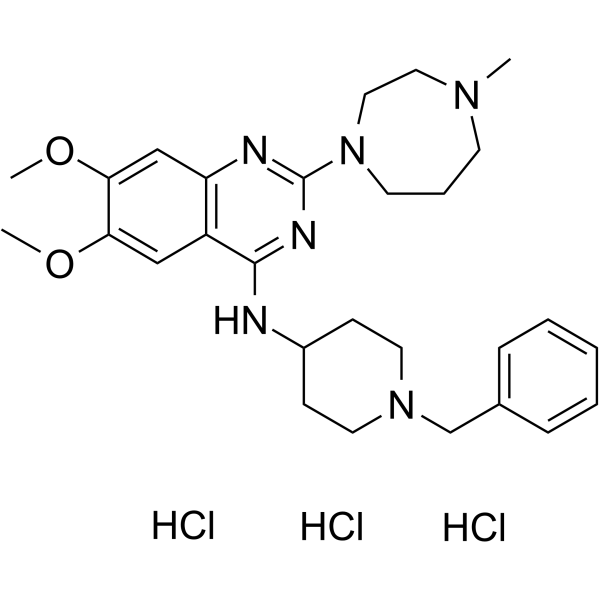
BIX-01294 trihydrochloride is a reversible and highly selective G9a and GLP Histone Methyltransferase inhibitor, with IC50s of of 1.7 μM and 0.9 μM, respectively. BIX-01294 trihydrochloride inhibits G9a/GLP by competing for binding with the amino acids N-terminal of the substrate lysine residue. BIX-01294 trihydrochloride, a (1H-1,4-diazepin-1-yl)-quinazolin-4-yl amine derivative, induces necroptosis and autophagy. BIX-01294 trihydrochloride has antitumor activity in recurrent tumor cells .
loading...
    loading...
20
20 Cited Publications
Cat. No.: HY-B2227D
CAS No.: 5743-47-5
Calcium 2-hydroxypropanoate (pentahydrate) is a hydroxycarboxylic acid receptor 1 (HCAR1) activator and an epigenetic modulator inducing lysine residues lactylation. Calcium 2-hydroxypropanoate (pentahydrate) is a glycolysis end-product, bridging the gap between glycolysis and oxidative phosphorylation. Calcium 2-hydroxypropanoate (pentahydrate) is an oncometabolite and has immune protective role of lactate in anti-tumor immunity .
loading...
    loading...
4
4 Cited Publications
Cat. No.: HY-B0236
CAS No.: 60-32-2
Synonyms: EACA; Epsilon-Amino-n-caproic Acid; 6-Aminohexanoic acid
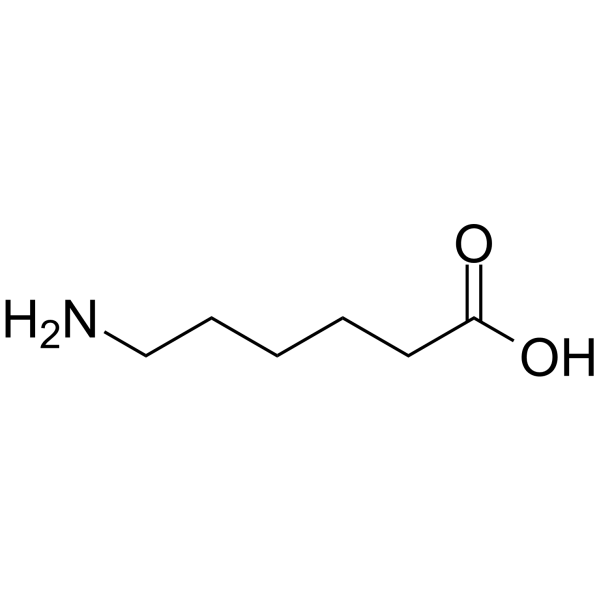
6-Aminocaproic acid (EACA), a monoamino carboxylic acid, is a potent and orally active inhibitor of plasmin and plasminogen. 6-Aminocaproic acid is a potent antifibrinolytic agent. 6-Aminocaproic acid prevents clot lysis through the competitive binding of lysine residues on plasminogen, inhibiting plasmin formation and reducing fibrinolysis. 6-Aminocaproic acid can be used for the research of bleeding disorders .
loading...
    loading...
3
3 Cited Publications
Cat. No.: HY-P0046
CAS No.: 49557-75-7
Synonyms: GHK; Tripeptide-1
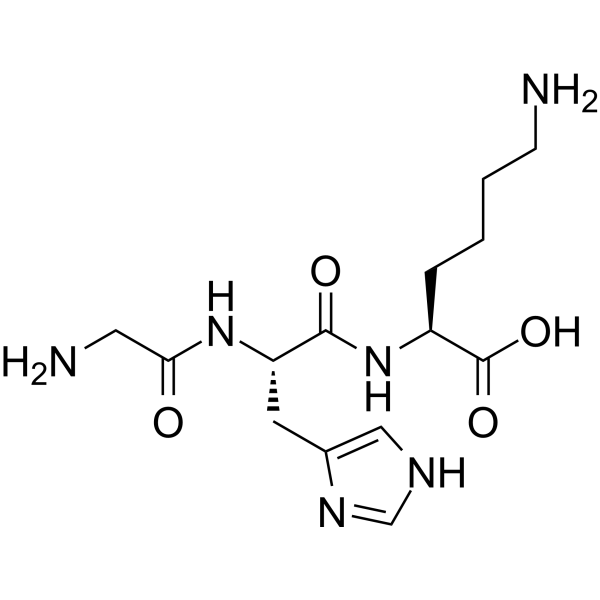
Glycyl-L-histidyl-L-lysine is a tripeptide consisting of glycine, L-histidine and L-lysine residues joined in sequence. Glycyl-L-histidyl-L-lysine is a hepatotropic immunosuppressor and shows anxiolytic effect. Glycyl-L-histidyl-L-lysine and its copper complexes show good skin tolerance .
loading...
    loading...
2
2 Cited Publications
Cat. No.: HY-P3208
CAS No.: 72561-05-8
Research Areas:  

Others

Endoproteinase Lys-C is a protease that cleaves proteins on the C-terminal side of lysine residues and is commonly used for protein sequencing .
loading...
    loading...
1
1 Cited Publications
Cat. No.: HY-B2228
CAS No.: 9001-92-7
Proteinase, Aspergillus oryzae is a serine protease that hydrolyzes peptide bonds in protein substrates, preferring alkaline conditions (optimal pH 10.5). It efficiently degrades casein, poly-L-glutamic acid, and poly-L-lysine, with activity irreversibly inhibited by diisopropylfluorophosphate (DFP) and potato inhibitor. This enzyme catalyzes proteolysis via serine residues in its active site, finding applications in food processing (e.g., soy sauce fermentation), detergents, and leather industries due to its high yield in solid-state fermentation and cost-effective production.
loading...
    loading...
1
1 Cited Publications
Cat. No.: HY-P3208A
CAS No.: 72561-05-8
Research Areas:  

Others

Endoproteinase Lys-C (Tag-free) is a protease that cleaves proteins on the C-terminal side of lysine residues and is commonly used for protein sequencing .
loading...
    loading...
1
1 Cited Publications
Cat. No.: HY-48999A
CAS No.: 3033987-42-4
Target:  

EGFR

Research Areas:  

Cancer

FSK hydrochloride is fluorosulfonyloxybenzoyl-L-lysine, which features a long, flexible aryl fluorosulfate-containing side chain that can reach protein sites inaccessible to covalent conjugation. FSK hydrochloride modifies nanomolecules to target epidermal growth factor receptor (EGFR), resulting in irreversibly bound covalent interactions. Through genetically encoded chemical crosslinking, FSK hydrochloride captures unknown enzyme-substrate interactions in living cells, targets residues other than Cys, and mediates crosslinking at the binding periphery. FSK hydrochloride enables the construction of a bioreactive SuFEx system for generating covalent bonds in various proteins both in vitro and in vivo .
loading...
    loading...
Cat. No.: HY-151835
CAS No.: 2765066-38-2
Purity:  95.25%
Target:  

ADC Linkers

Research Areas:  

Others

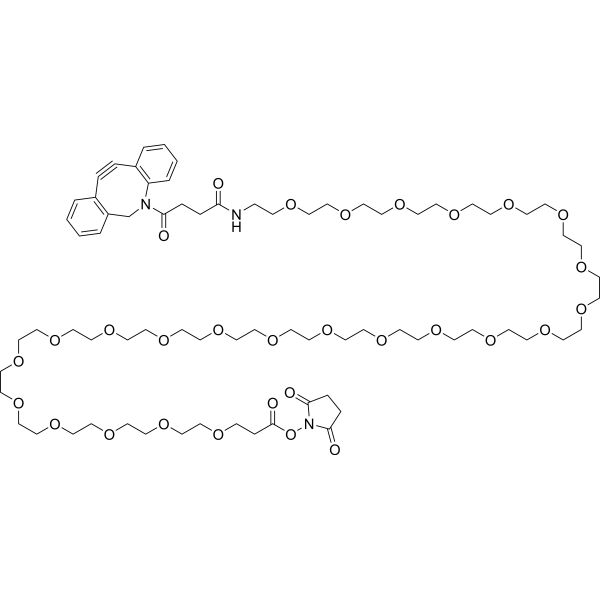
DBCO-PEG24-NHS ester is a click chemistry reagent. DBCO-PEG24-NHS ester is a click chemistry PEG reagent containing NHS ester that is able to react specifically and efficiently with primary amines (e.g. the side chain of lysine residues or aminosilane-coated surfaces) at neutral or slightly basic condition to form a covalent bond. The hydrophilic PEG spacer arm improves water solubility and provides a long and flexible connection that minimizes steric hindrance involved with ligation. DBCO is commonly used for copper-free Click Chemistry reactions. Reagent grade, for research use only .
loading...
    loading...
Cat. No.: HY-W035129
CAS No.: 1426827-79-3
Research Areas:  

Others

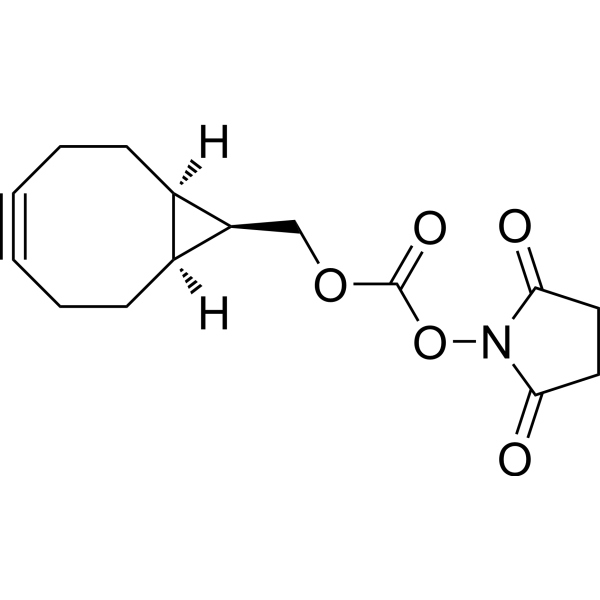
endo-BCN-NHS carbonate is an elastin-like protein (ELP) modification reagent. endo-BCN-NHS carbonate can react with lysine residues in ELP to make ELP carry BCN groups, and then cross-link ELP through strain-promoted azide-alkyne cycloaddition (SPAAC) reaction. endo-BCN-NHS carbonate promotes hydrogel formation. endo-BCN-NHS carbonate is mainly used in cell encapsulation related research .
loading...
    loading...
Cat. No.: HY-159607
CAS No.: 2755761-78-3
Target:  

PROTACs SWI/SNF Complex

Research Areas:  

Cancer

PRT3789 is a selective SMARCA2 PROTAC degrader (DC50 in HeLa cell: 0.72 nM for SMARCA2, 14 nM for SMARCA4). PRT3789 forms a stable ternary complex with Von Hippel-Lindau (VHL) E3 ligase, induces polyubiquitination at SMARCA2-specific lysine residues, and drives proteasome-dependent SMARCA2 degradation. PRT3789 disrupts SWI/SNF chromatin remodeling complex integrity, induces dissociation of specific subunits, suppresses oncogenic gene expression, reduces chromatin accessibility, and upregulates antigen processing/presentation-related gene expression. PRT3789 induces synthetic lethality, inhibits proliferation and colony formation, and drives tumor growth inhibition and regression in SMARCA4-deficient contexts. PRT3789 can be used for the research of SMARCA4-mutated solid tumors, non-small cell lung cancer, endometrial cancer, colorectal cancer, bladder cancer, esophageal cancer, ovarian cancer, and gastric cancer .
loading...
    loading...
Cat. No.: HY-126436A
CAS No.: 27378-49-0
Synonyms: L-Ornithine homopolymer hydrobromide (MW 30000-70000)
Poly-L-ornithine hydrobromide (MW 30000-70000) is a poly-lysine derivative with a molecular weight of 30000-70000. Poly-L-ornithine hydrobromide (MW 30000-70000) binds to the surface of cell culture vessels through positively charged amino acid residues to form a coating that promotes cell adhesion and provides cells with a matrix environment required for growth. Poly-L-ornithine hydrobromide (MW 30000-70000) is used as a coating agent in cell culture and can be used for the study of primary culture of neurons (such as dopaminergic neurons and oligodendrocytes) .
loading...
    loading...
Cat. No.: HY-157414
CAS No.: 1704097-02-8
Purity:  ≥95.0%
Research Areas:  

Others

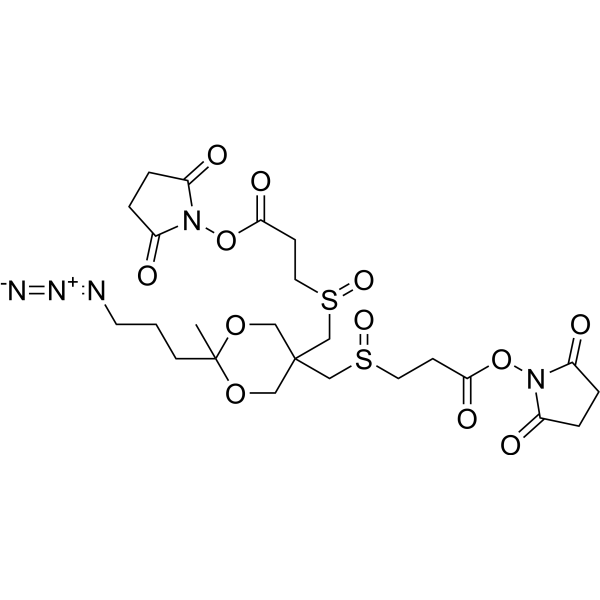
Azide-A-DSBSO crosslinker is a mass spectrometry (MS) cleavable, membrane permeable, homobifunctional, azide-labeled, acid-cleavable crosslinking peptide. Azide-A-DSBSO crosslinker crosslinks proteins via NHS ester reaction with lysine residues. Azide-A-DSBSO crosslinker can be used to study protein-protein interactions by cross-linking mass spectrometry (XL-MS) [1] .
loading...
    loading...
Cat. No.: HY-P2746
CAS No.: 9025-24-5
Synonyms: EC 3.4.2.2
Target:  

Endogenous Metabolite

Research Areas:  

Metabolic Disease

Carboxypeptidase B, Porcine pancreas (EC 3.4.2.2) is a peptide exonuclease that can specifically degrade peptide chains. Carboxypeptidase B is progressively degraded from the C-terminal to release free amino acids. Carboxypeptidase B hydrolyzes only peptide bonds with basic amino acids (such as arginine and lysine) as C-terminal residues .
loading...
    loading...

