From 11:00 pm to 12:00 pm EST ( 8:00 pm to 9:00 pm PST ) on January 6th, the website will be under maintenance. We are sorry for the inconvenience. Please arrange your schedule properly.
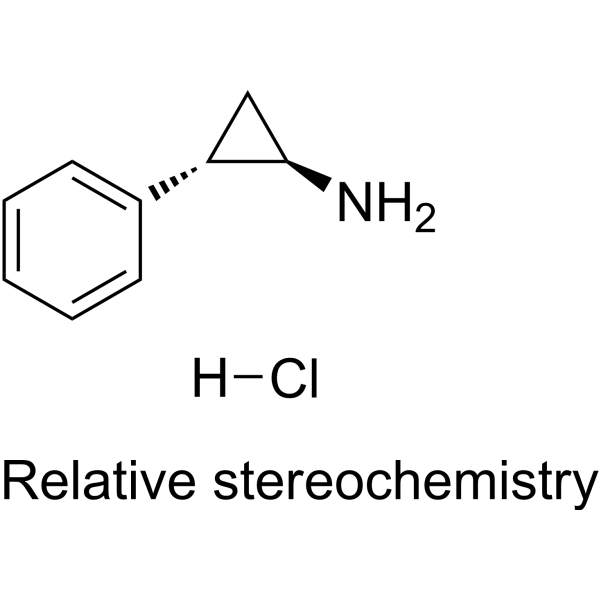
Tranylcypromine hydrochloride (SKF 385 hydrochloride) is an irreversible inhibitor of lysine-specific demethylase 1 (LSD1/BHC110) and monoamine oxidase (MAO). Tranylcypromine hydrochloride inhibits LSD1, MAO A and MAO B with IC50s of 20.7, 2.3 and 0.95 μM, respectively. Tranylcypromine hydrochloride can be used for the research of depression .
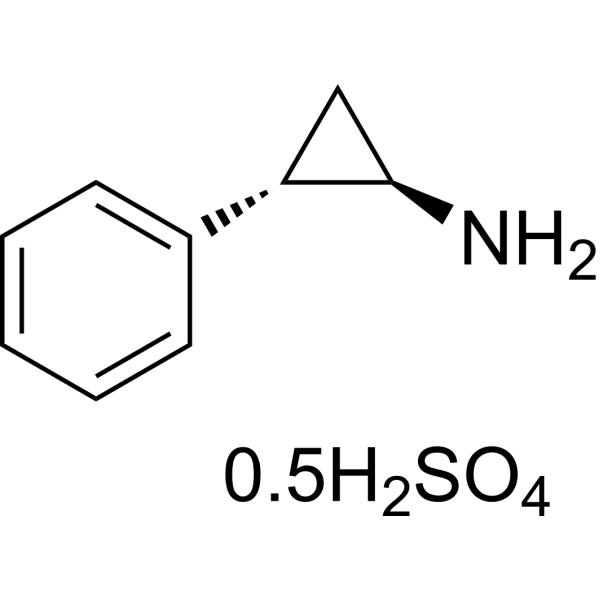
Tranylcypromine (SKF 385) hemisulfate is an irreversible, nonselective monoamine oxidase (MAO) inhibitor used in the treatment of depression. Tranylcypromine hemisulfate is also a lysine-specific demethylase 1 (LSD1) inhibitor, suppresses lesion growth and improves generalized hyperalgesia in mouse with induced endometriosis. Tranylcypromine has antidepressant effects .
GSK2879552 an orally active, selective and irreversible inhibitor of lysine specific demethylase 1 (LSD1/ KDM1A), with potential antineoplastic activity .
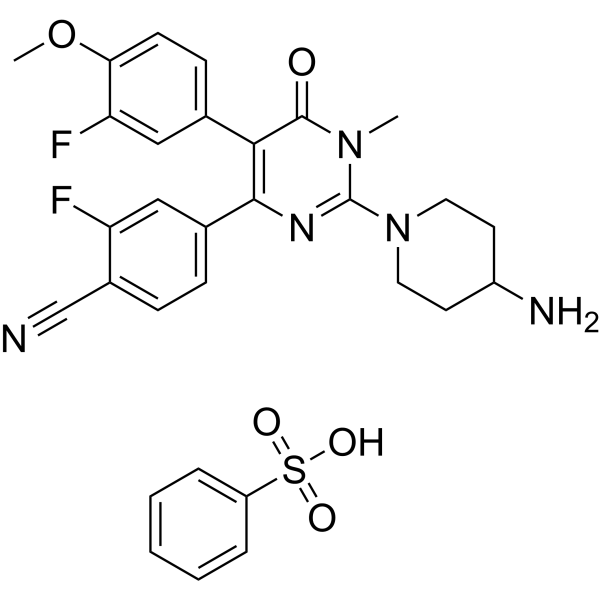
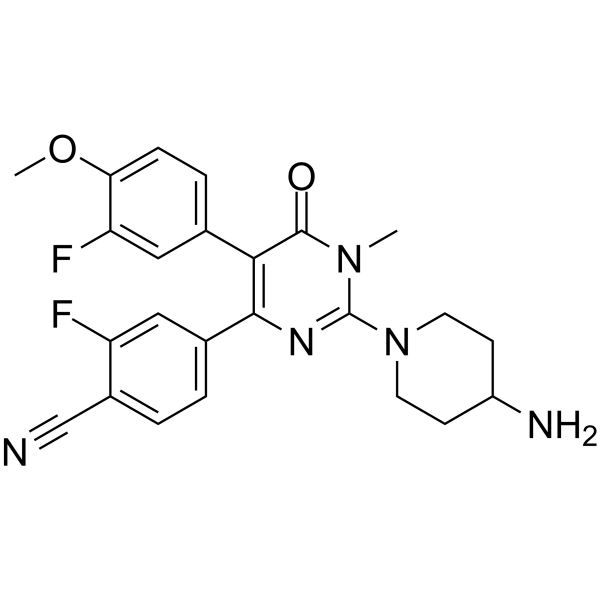
Pulrodemstat (CC-90011) benzenesulfonate is a potent, selective, reversible and orally active inhibitor of lysine specific demethylase-1 (LSD1) with an IC50 of 0.25 nM. Pulrodemstat benzenesulfonate is less enzymatic inhibition against LSD2, MAO-A, and MAO-B. Pulrodemstat benzenesulfonate induces acute myeloid leukemia (AML) and small cell lung cancer (SCLC) cells differentiation and has potent anticancer activity .
Bomedemstat (IMG-7289) is an orally active and irreversible lysine-specific demethylase 1 (LSD1) inhibitor. Bomedemstat can increase H3K4 and H3K9 methylation, and then alter gene expression. Bomedemstat shows anti-cancer activities, inhibits cancer cell proliferation and induces apoptosis .
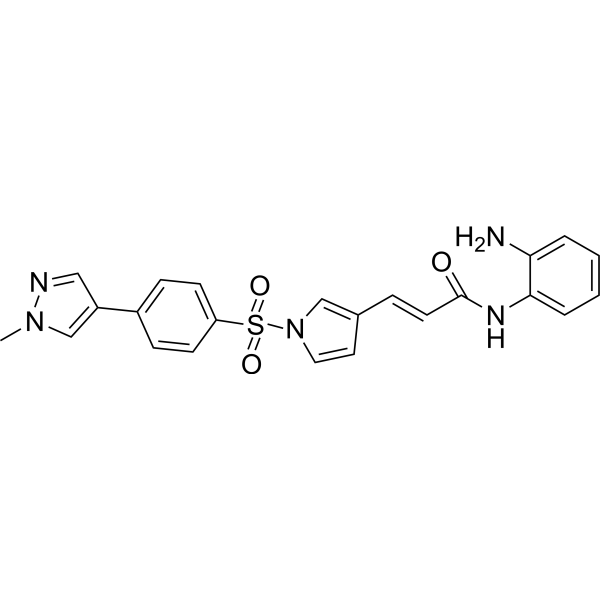
Domatinostat (4SC-202 free base) is a selective class I HDAC inhibitor with IC50 of 1.20 μM, 1.12 μM, and 0.57 μM for HDAC1, HDAC2, and HDAC3, respectively. It also displays inhibitory activity against Lysine specific demethylase 1 (LSD1).
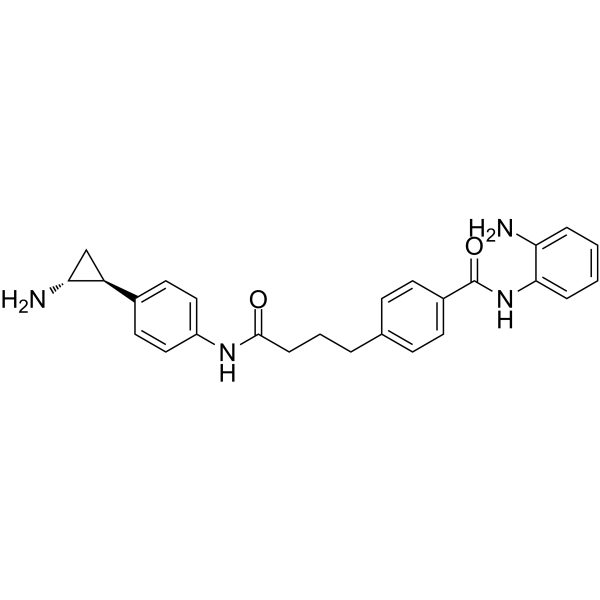
Corin is a dual inhibitor of histone lysine specific demethylase (LSD1) and histone deacetylase (HDAC), with a Ki(inact) of 110 nM for LSD1 and an IC50 of 147 nM for HDAC1.
GSK2879552 dihydrochloride an orally active, selective and irreversible inhibitor of lysine specific demethylase 1 (LSD1/KDM1A), with potential antineoplastic activity .
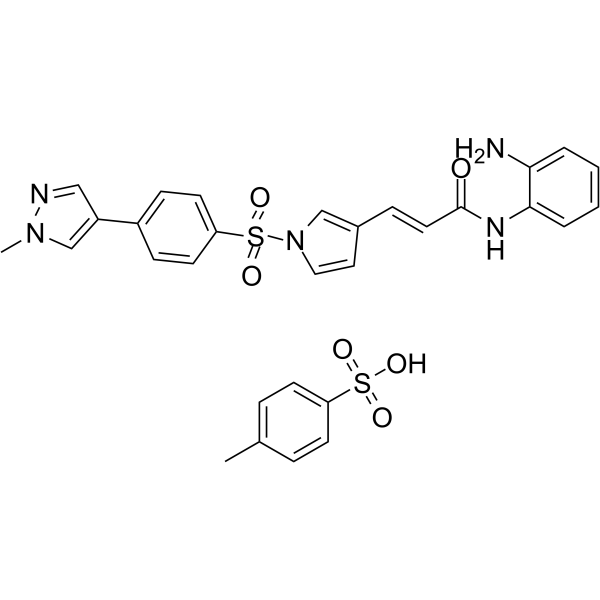
Domatinostat tosylate (4SC-202) is a selective class I HDAC inhibitor with IC50 of 1.20 μM, 1.12 μM, and 0.57 μM for HDAC1, HDAC2, and HDAC3, respectively. It also displays inhibitory activity against Lysine specific demethylase 1 (LSD1).
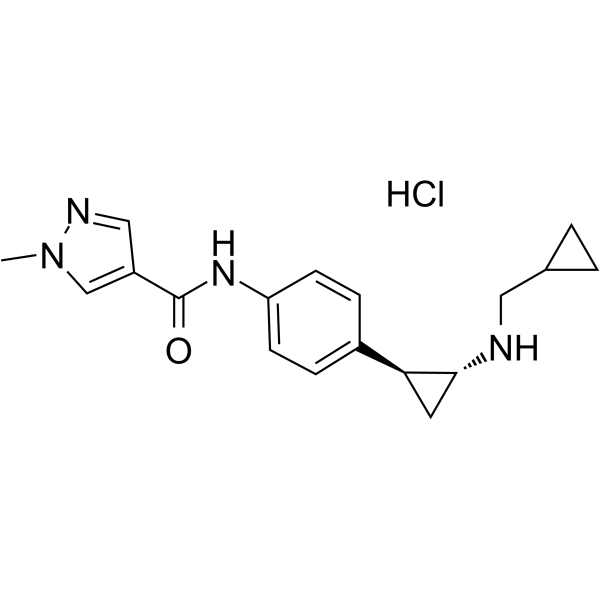
INCB059872 is a potent, orally active, selective and irreversible Lysine-Specific Demethylase 1 (LSD1) inhibitor that achieves inhibitory activity through the formation of covalent FAD-adducts. INCB059872 can inhibit cell proliferation and induce cell differentiation by upregulating the expression of myeloid differentiation markers CD86 and CD11b. INCB059872 can be used for the research of myeloid leukemia .
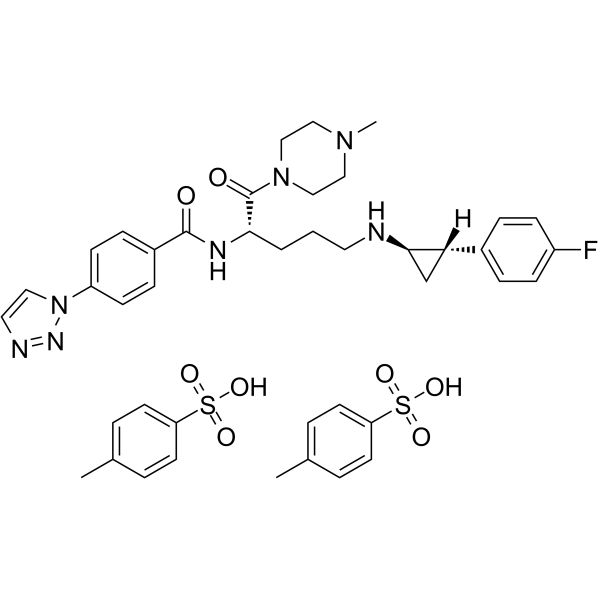
Bomedemstat (IMG-7289) ditosylate is an orally active and irreversible lysine-specific demethylase 1 (LSD1) inhibitor. Bomedemstat ditosylate can increase H3K4 and H3K9 methylation, and then alter gene expression. Bomedemstat ditosylate shows anti-cancer activities, inhibits cancer cell proliferation and induces apoptosis .
T-448 is a specific, orally active, CNS-penetrant and irreversible inhibitor of lysine-specific demethylase 1 (LSD1, an H3K4 demethylase), with an IC50 of 22 nM. T-448 enhances H3K4 methylation in primary cultured rat neurons .
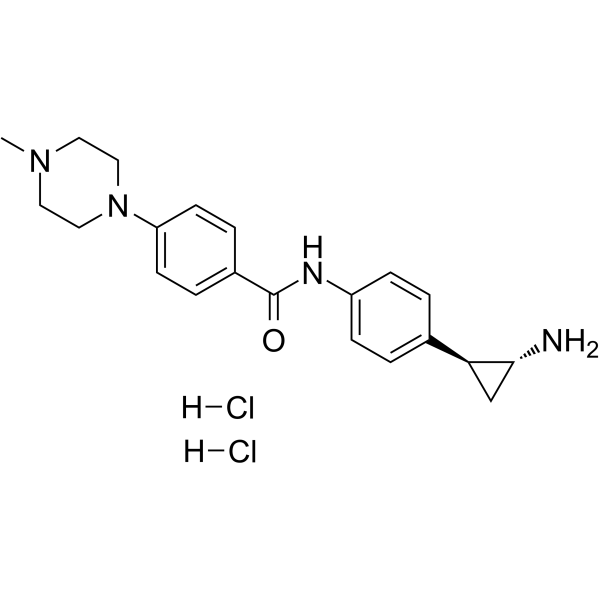
RN-1 dihydrochloride is a potent, brain-penetrant, irreversible and selective lysine-specific demethylase 1 (LSD1) inhibitor with an IC50 of 70 nM. RN-1 dihydrochloride exhibits selectivity for LSD1 over MAO-A and MAO-B with IC50 values of 0.51 μM and 2.785 μM respectively .
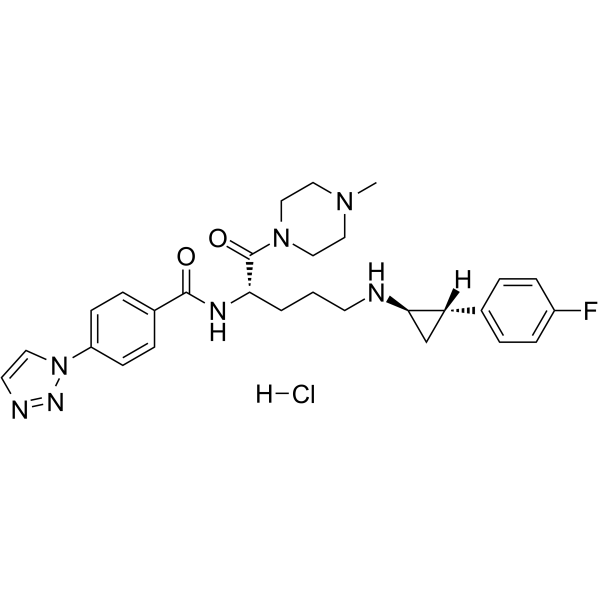
Bomedemstat (IMG-7289) hydrochloride is an orally active and irreversible lysine-specific demethylase 1 (LSD1) inhibitor. Bomedemstat hydrochloride can increase H3K4 and H3K9 methylation, and then alter gene expression. Bomedemstat hydrochloride shows anti-cancer activities, inhibits cancer cell proliferation and induces apoptosis .
Geranylgeranoic acid (Compound 5) is inhibits lysine-specific demethylase 1 (LSD1) with an IC50 value of 46.97 µM. Geranylgeranoic acid induces apoptosis via loss of the mitochondrial membrane potential and activation of interleukin-1β-converting enzyme (ICE) and cysteine protease precursor 32 (CPP32) in Huh7 and PLC/PRF/5 human hepatoma cells and MLE-10 transformed mouse hepatocytes. Geranylgeranoic acid an isoprenoid with anticancer activity, which is found in S. chinensis .
GT-653 is a PROTAC degrader for lysine-specific demethylase 5B (KDM5B). GT-653 degrades 68.35% KDM5B at 10 μM in a ubiquitin proteasome-dependent manner, upregulates H3K4me3 levels, and activates the type-I interferon signaling pathway in prostate cancer cells 22RV1. (Pink: KDM5B ligand (HY-158433); Black: Linker (HY-W004896); Blue: E3 ligase ligand (HY-103596))
INCB059872 dihydrochloride is a potent, orally active, selective and irreversible Lysine-Specific Demethylase 1 (LSD1) inhibitor that achieves inhibitory activity through the formation of covalent FAD-adducts. INCB059872 dihydrochloride can inhibit cell proliferation and induce cell differentiation by upregulating the expression of myeloid differentiation markers CD86 and CD11b. INCB059872 dihydrochloride can be used for the research of myeloid leukemia .
Pulrodemstat (CC-90011) is a potent, selective, reversible and orally active inhibitor of lysine specific demethylase-1 (LSD1) with an IC50 of 0.25 nM. Pulrodemstat is less enzymatic inhibition against LSD2, MAO-A, and MAO-B. Pulrodemstat induces acute myeloid leukemia (AML) and small cell lung cancer (SCLC) cells differentiation and has potent anticancer activity .
LD-110 is a highly efficient and effective LSD1 PROTAC degrader (DC50 = 0.44 μM). LD-110 promotes LSD1 degradation and increases the level of H3K4 dimethylation in a ubiquitin-proteasome-dependent manner. LD-110 inhibits the growth and survival of multiple esophagus squamous cancer cell (ESCC) lines by inducing apoptosis. LD-110 can be used for the study of esophagus squamous cancer .
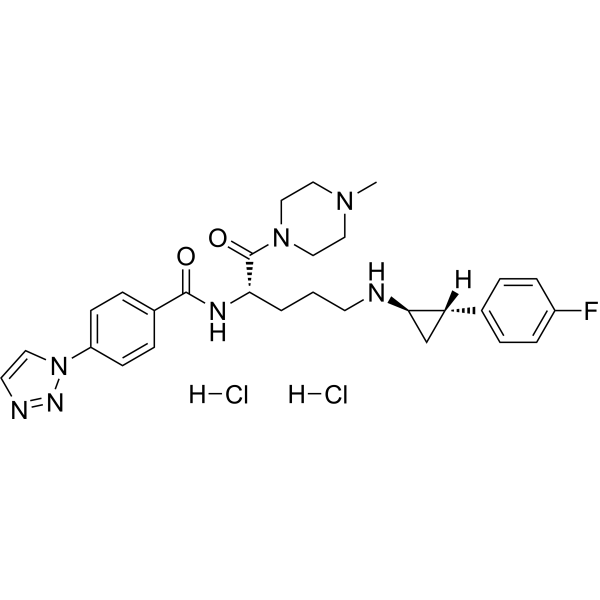
Bomedemstat (IMG-7289) dihydrochloride is an orally active and irreversible lysine-specific demethylase 1 (LSD1) inhibitor. Bomedemstat dihydrochloride can increase H3K4 and H3K9 methylation, and then alter gene expression. Bomedemstat dihydrochloride shows anti-cancer activities, inhibits cancer cell proliferation and induces apoptosis .
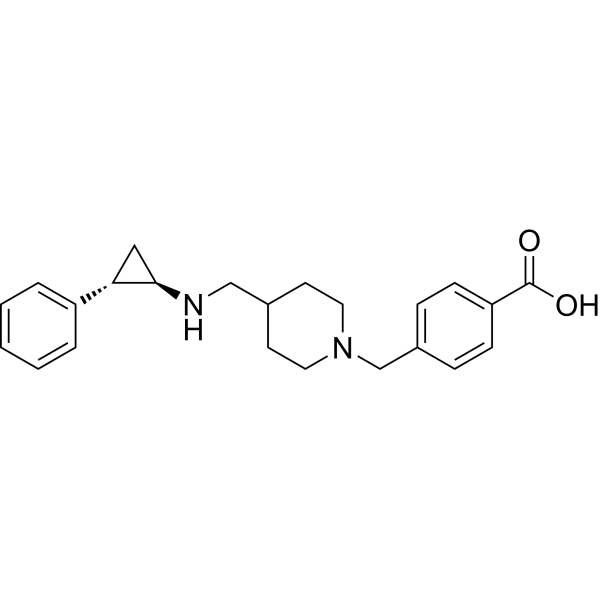
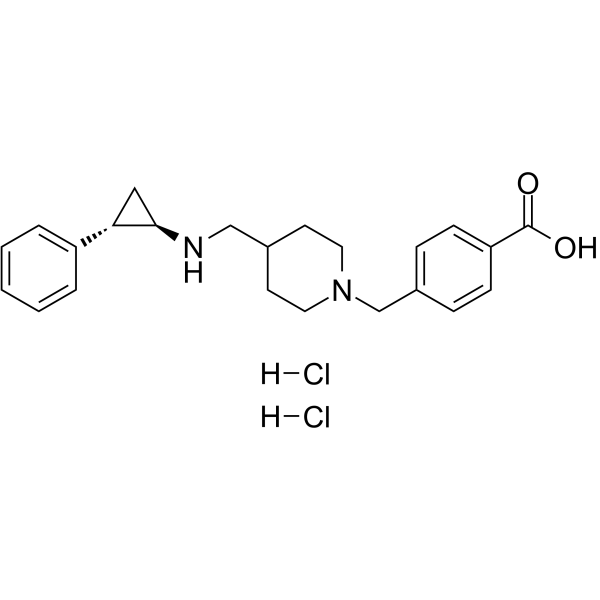
S2116, a N-alkylated tranylcypromine (TCP) derivative, is a potent lysine-specific demethylase 1 (LSD1) inhibitor. S2116 increases H3K9 methylation and reciprocal H3K27 deacetylation at super-enhancer regions. S2116 induces apoptosis in TCP-resistant T-cell acute lymphoblastic leukemia (T-ALL) cells by repressing transcription of the NOTCH3 and TAL1 genes. S2116 significantly retardes the growth of T-ALL cells in xenotransplanted mice .
LSD1-IN-5 (Compound 4e) is a potent and reversible inhibitor of lysine-specific demethylase 1 (LSD1), with an IC50 of 121 nM. LSD1-IN-5 increases dimethylated Lys4 of histone H3, shows no effect on expression of LSD1 .
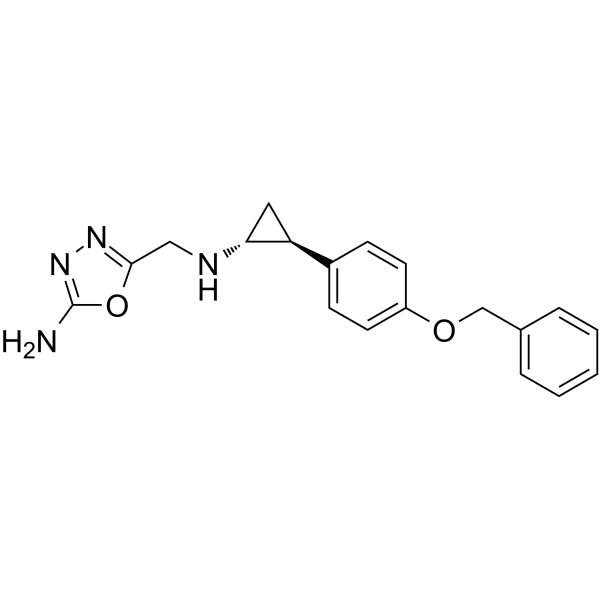
LSD1/2-IN-4, a PCPA derivative, is an inhibitor of lysine-specific demethylase 1 (LSD1) and lysine-specific demethylase 2 (LSD2). LSD1/2-IN-4 inhibits LSD1 and LSD2 with Ki values of 0.11 μM and 130 μM, respectively. LSD1/2-IN-4 can be used for the research of several cancers including T-cell acute lymphoblastic leukemia (TALL) .
Ticagrelor acetonide (Isopropylidene ticagrelor) (Compound 7) is a drug intermediate that can be used for the synthesis of lysine-specific demethylase (LSD1) inhibitors .
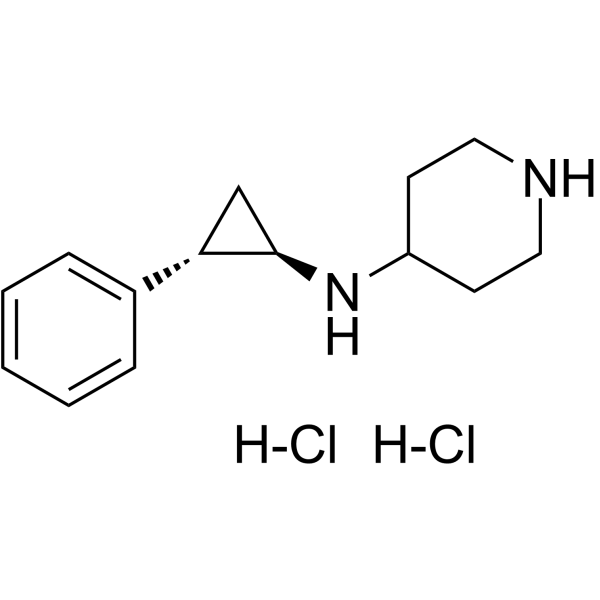
NCL1 is a phenylcyclopropylamine (PCPA)-based Lysine-specific demethylase 1 (LSD1) inhibitor. NCL1 selectively inhibits LSD1 in preference to LSD2, with IC50 values of 2.5 and 26 μM for LSD1 and LSD2, respectively .
S2157, a N-alkylated tranylcypromine (TCP) derivative, is a potent lysine-specific demethylase 1 (LSD1) inhibitor. S2157 increases H3K9 methylation and reciprocal H3K27 deacetylation at super-enhancer regions. S2157 induces apoptosis in TCP-resistant T-cell acute lymphoblastic leukemia (T-ALL) cells by repressing transcription of the NOTCH3 and TAL1 genes. S2157 efficiently pass through the blood-brain barrier and can almost completely eradicate CNS leukemia in mice transplanted with T-ALL cells .
LSD1-IN-6 (Compound 4m) is a potent and reversible inhibitor of lysine-specific demethylase 1 (LSD1), with an IC50 of 123 nM. LSD1-IN-6 increases dimethylated Lys4 of histone H3, shows no effect on expression of LSD1 .
LSD1-IN-46 is a potent and orally active Lysine-specific demethylase 1 (LSD1) inhibitor with an IC50 of 0.082 μM. LSD1-IN-46 interrupts the β-catenin-mediated transcriptional program, thereby suppressing the stemness of gastric cancer cells. LSD1-IN-46 exhibits strong anti-tumor activity. LSD1-IN-46 can be used for the research of gastric cancer .
Pulrodemstat (CC-90011) hydrochloride is a potent, selective, reversible and orally active inhibitor of lysine specific demethylase-1 (LSD1) with an IC50 value of 0.25 nM. Pulrodemstat hydrochloride is less enzymatic inhibition against LSD2, MAO-A, and MAO-B. Pulrodemstat hydrochloride induces acute myeloid leukemia (AML) and small cell lung cancer (SCLC) cells differentiation and has potent anticancer activity .
Namoline, a γ-pyrone, is a selective and reversible Lysine-specific demethylase 1 (LSD1) inhibitor with an IC50 of 51 μM in a HRP-coupled enzymatic assay. Namoline impairs LSD1 demethylase activity and blocks cell proliferation. Namoline has the potential for androgen-dependent prostate cancer research .
INCB059872 tosylate is a potent, orally active, selective and irreversible Lysine-Specific Demethylase 1 (LSD1) inhibitor that achieves inhibitory activity through the formation of covalent FAD-adducts. INCB059872 tosylate can inhibit cell proliferation and induce cell differentiation by upregulating the expression of myeloid differentiation markers CD86 and CD11b. INCB059872 tosylate can be used for the research of myeloid leukemia .
Fenoldopam (mesylate) (Standard) is the analytical standard of Fenoldopam (mesylate). This product is intended for research and analytical applications. Fenoldopam mesylate (SKF-82526) is a D1 receptor agonist and a novel lysine-specific demethylase 1 (LSD1) inhibitor (IC50=0.8974 μM). Fenoldopam mesylate shows anti-hypertensive effects, anti-cancer cell proliferation activity and can induce cells apoptosis .
LSD1-IN-22 is a potent Lysine-specific demethylase 1 (LSD1) inhibitor with a Ki value of 98 nM. LSD1-IN-22 has anti-proliferative activity against certain cancer cells .
Tranylcypromine-d5 (hydrochloride) is a deuterium labeled (rel)-Tranylcypromine hydrochloride. Tranylcypromine hydrochloride is an irreversible, nonselective monoamine oxidase (MAO) inhibitor used in the treatment of depression. Tranylcypromine hydrochloride is also a lysine-specific demethylase 1 (LSD1) inhibitor, suppresses lesion growth and improves generalized hyperalgesia in mouse with induced endometriosis .
T-448 free base is a specific, orally active, CNS-penetrant and irreversible inhibitor of lysine-specific demethylase 1 (LSD1, an H3K4 demethylase), with an IC50 of 22 nM. T-448 free base enhances H3K4 methylation in primary cultured rat neurons .
LSD1/2-IN-3 is a selective inhibitor of lysine-specific demethylase 1 (LSD1), with a Ki value of 11 nM instead of 7 μM for LSD2. There is aberrant expression of LSD1 in cancer stem cells, LSD1/2-IN-1 inhibits LSD1 cell proliferation .
LSD1-IN-37 (Compound 5g) is a lysine-specific demethylase 1 (LSD1) inhibitor constructed using an efficient synthesis strategy incorporating hexafluoroisopropyl groups. This metal-free method exhibits excellent reaction stability and adaptability. LSD1-IN-37 demonstrated outstanding LSD1 inhibitory activity and holds potential for further research .
Tranylcypromine (hemisulfate) (Standard) is the analytical standard of Tranylcypromine (hemisulfate). This product is intended for research and analytical applications. Tranylcypromine (SKF 385) hemisulfate is an irreversible, nonselective monoamine oxidase (MAO) inhibitor used in the treatment of depression. Tranylcypromine hemisulfate is also a lysine-specific demethylase 1 (LSD1) inhibitor, suppresses lesion growth and improves generalized hyperalgesia in mouse with induced endometriosis. Tranylcypromine has antidepressant effects .
LSD1/HDAC6-IN-1 is an orally active dual inhibitor of lysine specific demethylase 1(LSD1)/Histone deacetylase 6 (HDAC6), with anti-tumor activity. LSD1/HDAC6-IN-1 can be used for the research of multiple myeloma (MM) .
(1S,2R)-Tranylcypromine-d5 (hydrochloride) is the deuterium labeled Tranylcypromine hydrochloride . Tranylcypromine hydrochloride (SKF 385 hydrochloride) is an irreversible inhibitor of lysine-specific demethylase 1 (LSD1/BHC110) and monoamine oxidase (MAO). Tranylcypromine hydrochloride inhibits LSD1, MAO A and MAO B with IC50s of 20.7, 2.3 and 0.95 μM, respectively. Tranylcypromine hydrochloride can be used for the research of depression .
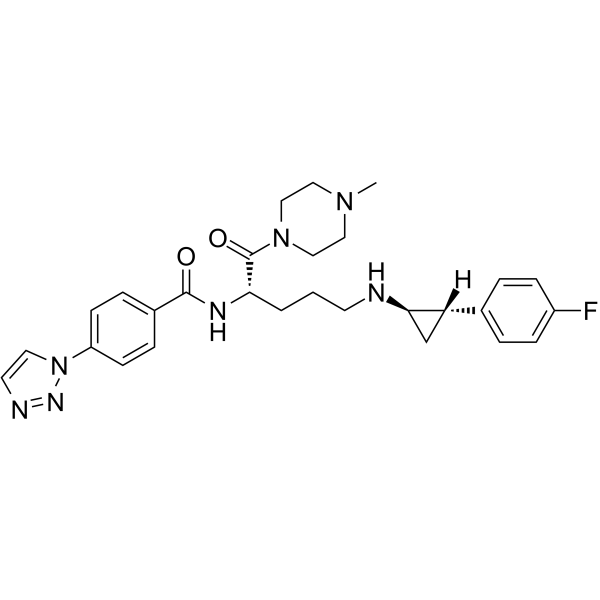
(S,S)-TAK-418 is a potent inhibitor of lysine-specific demethylase 1 (LSD1), demonstrating significant normalization of aberrant gene expression in neurodevelopmental disorders. (S,S)-TAK-418 also ameliorates ASD-like behaviors in rodent models affected by maternal exposure to valproate or poly I:C. (S,S)-TAK-418 modulates gene expression differently across various models and ages, indicating its potential as a therapeutic agent for conditions like autism spectrum disorder and schizophrenia.
cis-4-Br-2,5-F2-PCPA (S1024) is a selective inhibitor of lysine-specific demethylase 1 (LSD1), with a Ki value of 94 nM instead of 8.4 μM for LSD2. There is aberrant expression of LSD1 in cancer stem cells, cis-4-Br-2,5-F2-PCPA inhibits LSD1 cell proliferation and by increasing the level of dimethylated histone H3 at K4 (H3K4) in CCRF-CEM cells .
LSD1-IN-34 (Compound 7d) is the orally active inhibitor for Lysine-specific demethylase (LSD) and monoamine oxidase (MAO), with IC50 of 4.51 and 18.46 nM, for LSD1 and MAO A. LSD1-IN-34 inhibits the Ang II-induced neonatal rat myocardial fibroblasts (NRCFs) activation, without significant toxicity (20 μM). LSD1-IN-34 inhibits TGFβ/Smad signaling pathway, and ameliorates heart failure in mice. LSD1-IN-34 exhibits good pharmacokinetic characteristics in rats .
S9-CMC1 TFA is a covalent peptide lysine-specific demethylase 1 (LSD1) inhibitor with an IC50 value of 2.53 μM. S9-CMC1 TFA specifically recognizes Cys360 in the enzyme-active region. S9-CMC1 TFA inhibits LSD1 activity, increasing H3K4me1 and H3K4me2 levels, leading to G1 cell cycle arrest and apoptosis and inhibiting cell proliferation. S9-CMC1 TFA significantly inhibits tumor growth in A549 xenograft animal models .
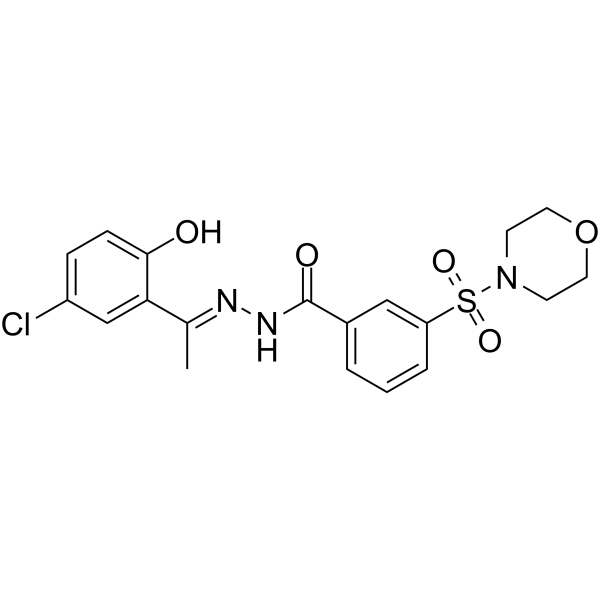
LSD1-IN-23 is a competitive/non-competitive mixed inhibitor of lysine specific demethylase 1 (LSD1). LSD1-IN-23 has LSD1 inhibitory activity with an IC50 value of 0.58 μM. LSD1-IN-23 can be used for the research of neuroblastoma (NB) .
KDM5B-IN-3 (Compound 5) is a histone lysine specific demethylase 5B (KDM5B/JARID1B) inhibitor with an IC50 of 9.32 μM. KDM5B-IN-3 can be used for the research of gastric cancer .
LSD1-IN-21 (compound 5a) is a potent and BBB-penetrated LSD1 (Lysine specific demethylase-1) inhibitor, with an IC50 of 0.956 µM. LSD1-IN-21 significantly reduces the pro-inflammatory cytokine TNF-α. LSD1-IN-21 shows good anticancer and anti-inflammatory activity .
Pulrodemstat (CC-90011) Methylbenzenesulfonate is a potent, selective, reversible and orally active inhibitor of lysine specific demethylase-1 (LSD1) with an IC50 of 0.25 nM. Pulrodemstat Methylbenzenesulfonate is less enzymatic inhibition against LSD2, MAO-A, and MAO-B. Pulrodemstat Methylbenzenesulfonate induces acute myeloid leukemia (AML) and small cell lung cancer (SCLC) cells differentiation and has potent anticancer activity .
LSD1-IN-38 (Compound 23e) is a reversible, orally active inhibitor for lysine specific demethylase 1 (LSD1) with an IC50 of 1.2 nM. LSD1-IN-38 inhibits the proliferation of cancer cells MV4-11, Kasumi-1 and NCI-H526, with IC50 of 5, 4 and 11 nM, respectively. LSD1-IN-38 activates CD86 expression with an EC50 of 0.034 μM, and induces differentiation in MV4−11 cell. LSD1-IN-38 exhibits antitumor efficacy in mouse models .
LSD1/ER-IN-1 (compound 11g) is a potent ER and LSD1 inhibitor, with an IC50 of 1.55 μM (LSD1). LSD1/ER-IN-1 has high affinity selectivity for ERα protein, with α/β ratio of 7.11. LSD1/ER-IN-1 shows good antiproliferative activity against MCF-7 breast cancer cells, with an IC50 of 8.79 μM .
LSD1-IN-17 (compound 5b) is a potent LSD1 inhibitor. LSD1-IN-17 can inhibit LSD1-CoREST, MAO-A and MAO-B, with IC50 values of 0.005, 0.028, and 0.820 μM, respectively. LSD1-IN-17 displays cell growth arrest in prostate cancer LNCaP cells, with an IC50 of 17.2 μM .
LSD1-IN-15 (compound 1b) is a potent LSD1 inhibitor. LSD1-IN-15 can inhibit LSD1-CoREST, MAO-A and MAO-B, with IC50 values of 0.149, 0.028, and 0.327 μM, respectively. LSD1-IN-15 displays cell growth arrest in prostate cancer LNCaP cells, with an IC50 of 9.9 μM .
LSD1-IN-16 (compound 4b) is a potent LSD1 inhibitor. LSD1-IN-16 can inhibit LSD1-CoREST, MAO-A and MAO-B, with IC50 values of 0.015, 0.024, and 0.366 μM, respectively. LSD1-IN-16 displays cell growth arrest in prostate cancer LNCaP cells, with an IC50 of 15.2 μM .
LSD1-IN-20 (compound 1) is a potent dual non-covalent LSD1/G9a inhibitor, with Ki values of 0.44 and 0.68 μM, respectively. LSD1-IN-20 shows antiproliferative activity in THP-1 leukemia cells and MDA-MB-231 breast cancer cells, with IC50 (72 h) of 0.51 and 1.60 μM, respectively .
LSD1-IN-18 (compound 7) is a potent, non-covalent and selective LSD1 inhibitor, with Ki of 0.156 μM and KD of 0.075 μM, respectively. LSD1-IN-18 shows antiproliferative activity in THP-1 leukemia cells and MDA-MB-231 breast cancer cells, with IC50 (72 h) of 0.16 and 0.21 μM, respectively .
LSD1-IN-19 (compound 29) is a potent, non-covalent and selective LSD1 inhibitor, with Ki of 0.108 μM and KD of 0.068 μM, respectively. LSD1-IN-19 shows antiproliferative activity in THP-1 leukemia cells and MDA-MB-231 breast cancer cells, with IC50 (72 h) of 0.17 and 0.40 μM, respectively .
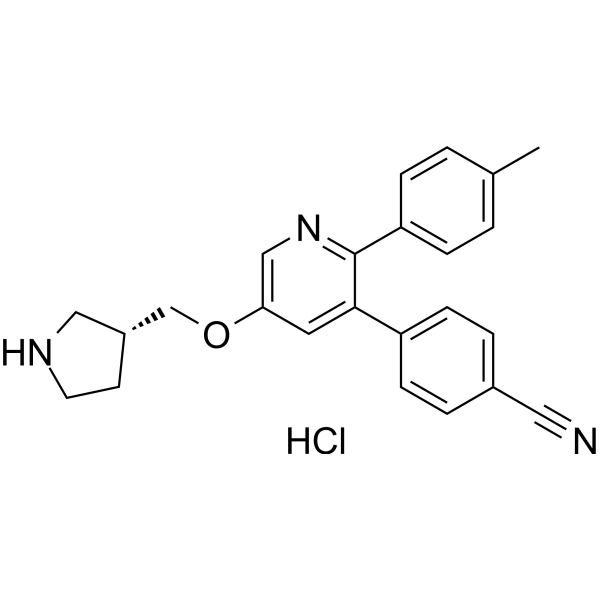
LPE-1 is a lysine-specific demethylase 1 (LSD1) inhibitor with an IC50 of 0.65 μM. LPE-1 inhibits the proliferation of gastric cancer, liver cancer and prostate cancer cells, and shows no activity against a subset of gastric cancer cells. LPE-1 is applicable for the research of gastric cancer, liver cancer and prostate cancer .
NCD38 is a Lysine-specific demethylase 1 (LSD1) inhibitor with a target IC50 of 0.59 μM. NCD38 selectively disrupts LSD1-GFI1B interactions, dissociates LSD1 and CoREST from the ERG super-enhancer. NCD38 increases apoptosis-related protein levels, induces apoptosis and reduces SOX2 and Oct4 levels. NCD38 can be used for the research of acute myeloid leukemia .
T-3775440 hydrochloride (Standard) is the analytical standard of T-3775440 hydrochloride (HY-103085). This product is intended for research and analytical applications. T-3775440 (hydrochloride) is an irreversible lysine-specific histone demethylase (LSD1) inhibitor with an IC50 value of 2.1 nM.
LSD1-IN-49 is a Lysine-specific demethylase 1 (LSD1/KDM1A) inhibitor with a human IC50 of 29 nM. LSD1-IN-49 irreversibly inhibits LSD1 enzyme activity by forming an adduct with the flavin adenine dinucleotide (FAD) cofactor of LSD1. LSD1-IN-49 can be used as a lead compound for the development of LSD1-targeted PET imaging agents for the brain .
INCB059872 TFA is a potent, orally active, selective and irreversible Lysine-Specific Demethylase 1 (LSD1) inhibitor that achieves inhibitory activity through the formation of covalent FAD-adducts. INCB059872 TFA can inhibit cell proliferation and induce cell differentiation by upregulating the expression of myeloid differentiation markers CD86 and CD11b. INCB059872 TFA can be used for the research of myeloid leukemia .
GSK-LSD1 (dihydrochloride) (Standard) is the analytical standard of GSK-LSD1 (dihydrochloride) (HY-100546A). This product is intended for research and analytical applications. GSK-LSD1 dihydrochloride is a potent, selective and irreversible lysine specific demethylase 1 (LSD1) inhibitor with an IC50 of 16 nM.
LD-110 trihydrochloride is a highly efficient and effective LSD1 PROTAC degrader (DC50 = 0.44 μM). LD-110 trihydrochloride promotes LSD1 degradation and increases the level of H3K4 dimethylation in a ubiquitin-proteasome-dependent manner. LD-110 trihydrochloride inhibits the growth and survival of multiple esophagus squamous cancer cell (ESCC) lines by inducing apoptosis. LD-110 trihydrochloride can be used for the study of esophagus squamous cancer .
LSD1-IN-49 hydrochloride (Compound (±) 1) is an irreversible LSD1/KDM1A inhibitor with an IC50 of 29 nM against hLSD1. LSD1-IN-49 hydrochloride irreversibly inhibits the enzymatic activity of LSD1 by forming an adduct with flavin adenine dinucleotide (FAD) in the binding pocket of LSD1. LSD1-IN-49 hydrochloride is applicable to research related to schizophrenia, autism spectrum disorder and Huntington's disease .
TAS1440 benzoate is an orally active LSD1/KDM1A inhibitor with a human IC50 of 4.8 nM. TAS1440 benzoate non-covalently binds to the histone H3-binding pocket of LSD1, inhibiting demethylase activity and disrupting repressive complexes with INSM1 and SMAD2. TAS1440 benzoate activates tumor-suppressive TGF-β and NOTCH signaling pathways via transcriptional reprogramming. TAS1440 benzoate can be used for the research of small cell lung cancer, specifically the SCLC-A subtype .
TAS1440 is an orally active LSD1/KDM1A inhibitor with a human IC50 of 4.8 nM. TAS1440 non-covalently binds to the histone H3-binding pocket of LSD1, inhibiting demethylase activity and disrupting repressive complexes with INSM1 and SMAD2. TAS1440 activates tumor-suppressive TGF-β and NOTCH signaling pathways via transcriptional reprogramming. TAS1440 can be used for the research of small cell lung cancer, specifically the SCLC-A subtype .
S9-CMC1 TFA is a covalent peptide lysine-specific demethylase 1 (LSD1) inhibitor with an IC50 value of 2.53 μM. S9-CMC1 TFA specifically recognizes Cys360 in the enzyme-active region. S9-CMC1 TFA inhibits LSD1 activity, increasing H3K4me1 and H3K4me2 levels, leading to G1 cell cycle arrest and apoptosis and inhibiting cell proliferation. S9-CMC1 TFA significantly inhibits tumor growth in A549 xenograft animal models .
The LSD1 protein is a histone demethylase that modifies histone H3 by demethylating “Lys-4” (H3K4me) and “Lys-9” (H3K9me).It acts as a coactivator or corepressor, oxidizing substrates via FAD to generate imines that are subsequently hydrolyzed.LSD1 Protein, Human (sf9, His-GST) is the recombinant human-derived LSD1 protein, expressed by Sf9 insect cells , with N-His, N-GST labeled tag.
KDM6B protein is a histone demethylase targeting "Lys-27" of histone H3, which mainly affects the histone code. Demethylates H3 "Lys-27" to shape the epigenetic landscape. KDM6B Protein, Human (sf9) is the recombinant human-derived KDM6B protein, expressed by sf9 insect cells , with tag free.
KDM6B protein is a histone demethylase targeting "Lys-27" of histone H3, which mainly affects the histone code. Demethylates H3 "Lys-27" to shape the epigenetic landscape. KDM6B Protein, Human (sf9, His) is the recombinant human-derived KDM6B protein, expressed by sf9 insect cells , with N-8*His labeled tag.
The JMJD2A protein is a central histone demethylase in the histone code that specifically targets "Lys-9" and "Lys-36" of histone H3. It excludes demethylation of H3 "Lys-4", "Lys-27" and H4 "Lys-20". JMJD2A Protein, Human is the recombinant human-derived JMJD2A protein, expressed by E. coli , with tag free.
KDM2A; lysine-specific demethylase 2A; CXXC-type zinc finger protein 8; F-box and leucine-rich repeat protein 11; F-box protein FBL7; F-box protein Lilina; F-box/LRR-repeat protein 11; JmjC domain-containing histone demethylation protein 1A; [Histone-H3]-lysine-36 demethylase 1A
The KDM2A protein is a histone demethylase targeting "Lys-36" of histone H3. It plays a key role in the histone code, especially the demethylation of dimethylated H3 "Lys-36". Methylation. In addition to histone demethylation, KDM2A also recognizes and binds phosphorylated proteins, promoting their ubiquitination and degradation. KDM2A Protein, Human is the recombinant human-derived KDM2A protein, expressed by E. coli , with tag free.
KDM2A; lysine-specific demethylase 2A; CXXC-type zinc finger protein 8; F-box and leucine-rich repeat protein 11; F-box protein FBL7; F-box protein Lilina; F-box/LRR-repeat protein 11; JmjC domain-containing histone demethylation protein 1A; [Histone-H3]-lysine-36 demethylase 1A
The KDM2A protein is a histone demethylase targeting "Lys-36" of histone H3. It plays a key role in the histone code, especially the demethylation of dimethylated H3 "Lys-36". Methylation. In addition to histone demethylation, KDM2A also recognizes and binds phosphorylated proteins, promoting their ubiquitination and degradation. KDM2A Protein, Human (His) is the recombinant human-derived KDM2A protein, expressed by E. coli , with N-6*His labeled tag.
KDM3B protein is a histone demethylase that mainly targets "Lys-9" of histone H3, catalyzes demethylation and produces formaldehyde and succinic acid by-products. In addition to histone modifications, KDM3B has been implicated in tumor suppressor activity, indicating its importance in cellular processes, gene expression regulation, and epigenetic modifications. KDM3B Protein, Human (Myc, His-SUMO) is the recombinant human-derived KDM3B protein, expressed by E. coli , with C-Myc, N-SUMO, N-His labeled tag.
Tranylcypromine-d5 (hydrochloride) is a deuterium labeled (rel)-Tranylcypromine hydrochloride. Tranylcypromine hydrochloride is an irreversible, nonselective monoamine oxidase (MAO) inhibitor used in the treatment of depression. Tranylcypromine hydrochloride is also a lysine-specific demethylase 1 (LSD1) inhibitor, suppresses lesion growth and improves generalized hyperalgesia in mouse with induced endometriosis .
(1S,2R)-Tranylcypromine-d5 (hydrochloride) is the deuterium labeled Tranylcypromine hydrochloride . Tranylcypromine hydrochloride (SKF 385 hydrochloride) is an irreversible inhibitor of lysine-specific demethylase 1 (LSD1/BHC110) and monoamine oxidase (MAO). Tranylcypromine hydrochloride inhibits LSD1, MAO A and MAO B with IC50s of 20.7, 2.3 and 0.95 μM, respectively. Tranylcypromine hydrochloride can be used for the research of depression .
Western blot analysis of extracts from THP-1(lane 2(20μg), Jurkat (lane 3(20μg) and NIH3T3(lane 4(20μg) using FOXO1A (HY-P80132) Rabbit mAb. Proteins were transferred
to a PVDF membrane and blocked with 5% non-fat milk in TBST for 2 hour at room temperature. The primary antibody (1/1000) and Loading control antibody (Beta Actin, HY-P80438, 1/10000) was
used in 5% non-fat milk in TBST at 4°C overnight. Goat Anti-Mouse/Rabbit IgG-HRP Secondary Antibody (1/10000) was used for 1 hour at room temperature.
Western blot analysis of extracts from THP-1(lane 2(20μg), Jurkat (lane 3(20μg) and NIH3T3(lane 4(20μg) using FOXO1A (HY-P80132) Rabbit mAb. Proteins were transferred
to a PVDF membrane and blocked with 5% non-fat milk in TBST for 2 hour at room temperature. The primary antibody (1/1000) and Loading control antibody (Beta Actin, HY-P80438, 1/10000) was
used in 5% non-fat milk in TBST at 4°C overnight. Goat Anti-Mouse/Rabbit IgG-HRP Secondary Antibody (1/10000) was used for 1 hour at room temperature.
Western blot analysis of extracts from THP-1(lane 2(20μg), Jurkat (lane 3(20μg) and NIH3T3(lane 4(20μg) using FOXO1A (HY-P80132) Rabbit mAb. Proteins were transferred
to a PVDF membrane and blocked with 5% non-fat milk in TBST for 2 hour at room temperature. The primary antibody (1/1000) and Loading control antibody (Beta Actin, HY-P80438, 1/10000) was
used in 5% non-fat milk in TBST at 4°C overnight. Goat Anti-Mouse/Rabbit IgG-HRP Secondary Antibody (1/10000) was used for 1 hour at room temperature.
Western blot analysis of extracts from THP-1(lane 2(20μg), Jurkat (lane 3(20μg) and NIH3T3(lane 4(20μg) using FOXO1A (HY-P80132) Rabbit mAb. Proteins were transferred
to a PVDF membrane and blocked with 5% non-fat milk in TBST for 2 hour at room temperature. The primary antibody (1/1000) and Loading control antibody (Beta Actin, HY-P80438, 1/10000) was
MedchemExpress Validation 03
Western blot analysis of extracts from THP-1(lane 2(20μg), Jurkat (lane 3(20μg) and NIH3T3(lane 4(20μg) using FOXO1A (HY-P80132) Rabbit mAb. Proteins were transferred
MedchemExpress Validation 04
Western blot analysis of extracts from THP-1(lane 2(20μg), Jurkat (lane 3(20μg) and NIH3T3(lane 4(20μg) using FOXO1A (HY-P80132) Rabbit mAb. Proteins were transferred
to a PVDF membrane and blocked with 5% non-fat milk in TBST for 2 hour at room temperature. The primary antibody (1/1000) and Loading control antibody (Beta Actin, HY-P80438, 1/10000) was
used in 5% non-fat milk in TBST at 4°C overnight. Goat Anti-Mouse/Rabbit IgG-HRP Secondary Antibody (1/10000) was used for 1 hour at room temperature.
MedchemExpress Validation
Western blot analysis of extracts from THP-1(lane 2(20μg), Jurkat (lane 3(20μg) and NIH3T3(lane 4(20μg) using FOXO1A (HY-P80132) Rabbit mAb. Proteins were transferred
to a PVDF membrane and blocked with 5% non-fat milk in TBST for 2 hour at room temperature. The primary antibody (1/1000) and Loading control antibody (Beta Actin, HY-P80438, 1/10000) was
used in 5% non-fat milk in TBST at 4°C overnight. Goat Anti-Mouse/Rabbit IgG-HRP Secondary Antibody (1/10000) was used for 1 hour at room temperature.
Western blot analysis of extracts from THP-1(lane 2(20μg), Jurkat (lane 3(20μg) and NIH3T3(lane 4(20μg) using FOXO1A (HY-P80132) Rabbit mAb. Proteins were transferred
to a PVDF membrane and blocked with 5% non-fat milk in TBST for 2 hour at room temperature. The primary antibody (1/1000) and Loading control antibody (Beta Actin, HY-P80438, 1/10000) was
used in 5% non-fat milk in TBST at 4°C overnight. Goat Anti-Mouse/Rabbit IgG-HRP Secondary Antibody (1/10000) was used for 1 hour at room temperature.
MedchemExpress Validation
Western blot analysis of extracts from THP-1(lane 2(20μg), Jurkat (lane 3(20μg) and NIH3T3(lane 4(20μg) using FOXO1A (HY-P80132) Rabbit mAb. Proteins were transferred
to a PVDF membrane and blocked with 5% non-fat milk in TBST for 2 hour at room temperature. The primary antibody (1/1000) and Loading control antibody (Beta Actin, HY-P80438, 1/10000) was
used in 5% non-fat milk in TBST at 4°C overnight. Goat Anti-Mouse/Rabbit IgG-HRP Secondary Antibody (1/10000) was used for 1 hour at room temperature.
MedchemExpress Validation
Western blot analysis of extracts from THP-1(lane 2(20μg), Jurkat (lane 3(20μg) and NIH3T3(lane 4(20μg) using FOXO1A (HY-P80132) Rabbit mAb. Proteins were transferred
to a PVDF membrane and blocked with 5% non-fat milk in TBST for 2 hour at room temperature. The primary antibody (1/1000) and Loading control antibody (Beta Actin, HY-P80438, 1/10000) was
used in 5% non-fat milk in TBST at 4°C overnight. Goat Anti-Mouse/Rabbit IgG-HRP Secondary Antibody (1/10000) was used for 1 hour at room temperature.
MedchemExpress Validation
Western blot analysis of extracts from THP-1(lane 2(20μg), Jurkat (lane 3(20μg) and NIH3T3(lane 4(20μg) using FOXO1A (HY-P80132) Rabbit mAb. Proteins were transferred
to a PVDF membrane and blocked with 5% non-fat milk in TBST for 2 hour at room temperature. The primary antibody (1/1000) and Loading control antibody (Beta Actin, HY-P80438, 1/10000) was
used in 5% non-fat milk in TBST at 4°C overnight. Goat Anti-Mouse/Rabbit IgG-HRP Secondary Antibody (1/10000) was used for 1 hour at room temperature.
MedchemExpress Validation
Western blot analysis of extracts from THP-1(lane 2(20μg), Jurkat (lane 3(20μg) and NIH3T3(lane 4(20μg) using FOXO1A (HY-P80132) Rabbit mAb. Proteins were transferred
to a PVDF membrane and blocked with 5% non-fat milk in TBST for 2 hour at room temperature. The primary antibody (1/1000) and Loading control antibody (Beta Actin, HY-P80438, 1/10000) was
used in 5% non-fat milk in TBST at 4°C overnight. Goat Anti-Mouse/Rabbit IgG-HRP Secondary Antibody (1/10000) was used for 1 hour at room temperature.
MedchemExpress Validation
Western blot analysis of extracts from THP-1(lane 2(20μg), Jurkat (lane 3(20μg) and NIH3T3(lane 4(20μg) using FOXO1A (HY-P80132) Rabbit mAb. Proteins were transferred
to a PVDF membrane and blocked with 5% non-fat milk in TBST for 2 hour at room temperature. The primary antibody (1/1000) and Loading control antibody (Beta Actin, HY-P80438, 1/10000) was
used in 5% non-fat milk in TBST at 4°C overnight. Goat Anti-Mouse/Rabbit IgG-HRP Secondary Antibody (1/10000) was used for 1 hour at room temperature.
MedchemExpress Validation
Western blot analysis of extracts from THP-1(lane 2(20μg), Jurkat (lane 3(20μg) and NIH3T3(lane 4(20μg) using FOXO1A (HY-P80132) Rabbit mAb. Proteins were transferred
to a PVDF membrane and blocked with 5% non-fat milk in TBST for 2 hour at room temperature. The primary antibody (1/1000) and Loading control antibody (Beta Actin, HY-P80438, 1/10000) was
used in 5% non-fat milk in TBST at 4°C overnight. Goat Anti-Mouse/Rabbit IgG-HRP Secondary Antibody (1/10000) was used for 1 hour at room temperature.
MedChemExpress values your privacy and your trust is important to us. We use cookies to enhance your website experience. Some cookies are necessary to run the website.
Privacy and Cookie Policy

