



1. Search Result
Search Result
Results for "

macromolecules

" in MedChemExpress (MCE) Product Catalog:

54

Inhibitors & Agonists

3

Screening Libraries

3

Fluorescent Dyes

9

Biochemical Assay Reagents

11

Peptides

1

MCE Kits

7

Natural
Products

4

Isotope-Labeled Compounds

1

Click Chemistry

2

Oligonucleotides

Cat. No. Product Name Target Research Areas Chemical Structure
  • HY-114299
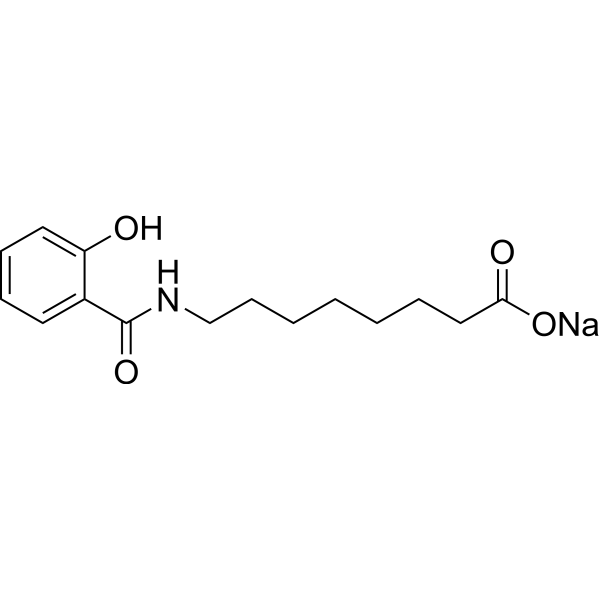
    Salcaprozate sodium
    4 Publications Verification

    SNAC

    Biochemical Assay Reagents Others
    Salcaprozate sodium (SNAC), an oral absorption promoter, and has the potential as a delivery agent for oral forms of heparin and insulin. Salcaprozate sodium could increase passive transcellular permeation across small intestinal epithelia based on increased lipophilicity arising from non-covalent macromolecule complexation .
    Salcaprozate sodium
  • HY-W250110

    Environmental Pollutants Biochemical Assay Reagents Infection Others
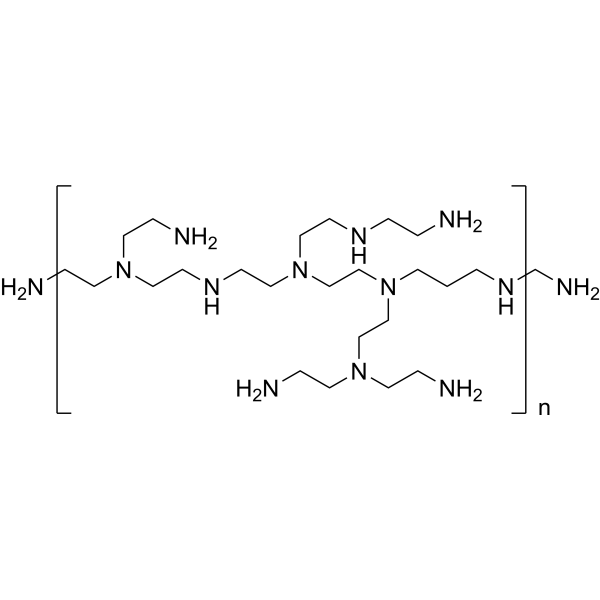
    Polyethylenimine (branched) (30% in water) is a organic macromolecule with high cationic-charge-density potential. Polyethylenimine (branched) (30% in water) can ensnare DNA as well as attach to cell membrane. Polyethylenimine (branched) (30% in water) also retains a substantial buffering capacity at virtually any pH. Polyethylenimine (branched) (30% in water) is widely used as transfection reagent .
    Polyethylenimine (branched) (30% in water)
  • HY-105129
    Pimonidazole hydrochloride
    Maximum Cited Publications
    9 Publications Verification

    Biochemical Assay Reagents Cancer
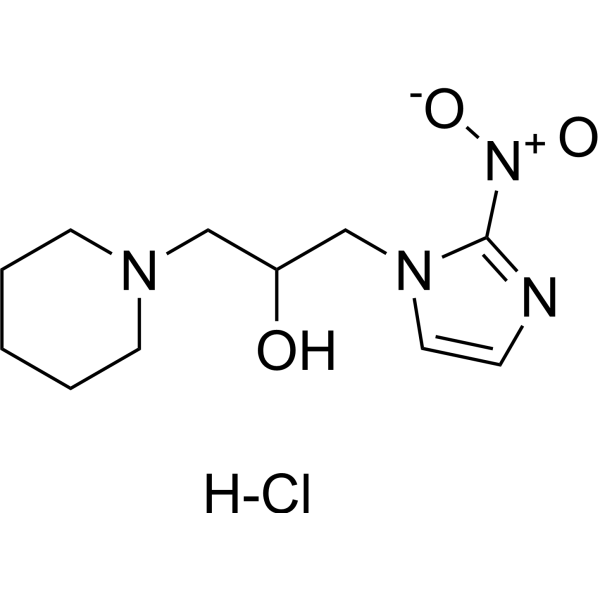
    Pimonidazole is a novel hypoxia marker for complementary study of tumor hypoxia and cell proliferation in tumor . Pimonidazole accumulates in hypoxic cells via covalent binding with macromolecules or by forming reductive metabolites after reduction of its nitro group, it can be used for qualitative and quantitative assessment of tumor hypoxia .
    Pimonidazole hydrochloride
  • HY-B2247A
    PLGA (75:25)
    5+ Cited Publications

    poly(lactic-co-glycolic acid) (75:25)

    Biochemical Assay Reagents Others
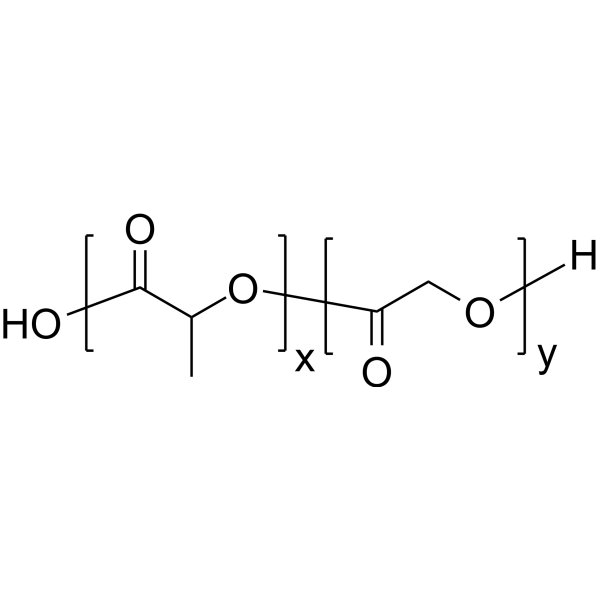
    PLGA (75:25) is a low toxicity, biocompatible and biodegradable controlled drug delivery carrier, can achieve slow release in the organism. PLGA (75:25) is a copolymer of 75% poly lactic acid (PLA) and 25% poly glycolic acid (PGA). PLGA (75:25) has been extensively studied as delivery vehicles for agents, proteins and various other macromolecules such as DNA, RNA and peptides .
    PLGA (75:25)
  • HY-105129A
    Pimonidazole
    Maximum Cited Publications
    9 Publications Verification

    Biochemical Assay Reagents Cancer
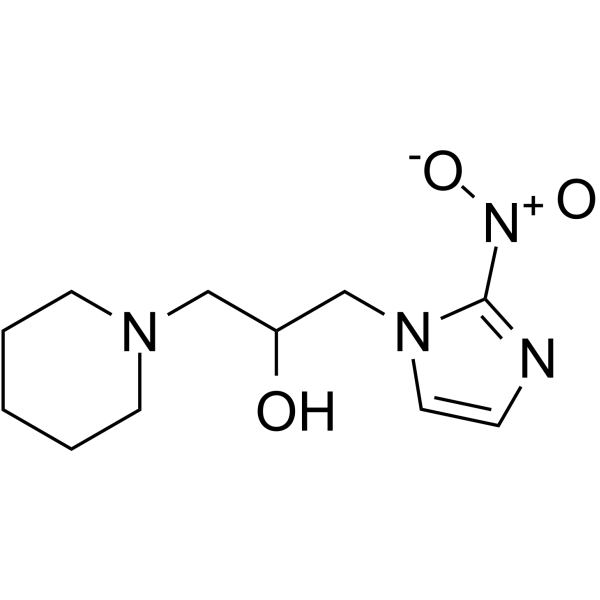
    Pimonidazole is a novel hypoxia marker for complementary study of tumor hypoxia and cell proliferation in tumor . Pimonidazole accumulates in hypoxic cells via covalent binding with macromolecules or by forming reductive metabolites after reduction of its nitro group, it can be used for qualitative and quantitative assessment of tumor hypoxia .
    Pimonidazole
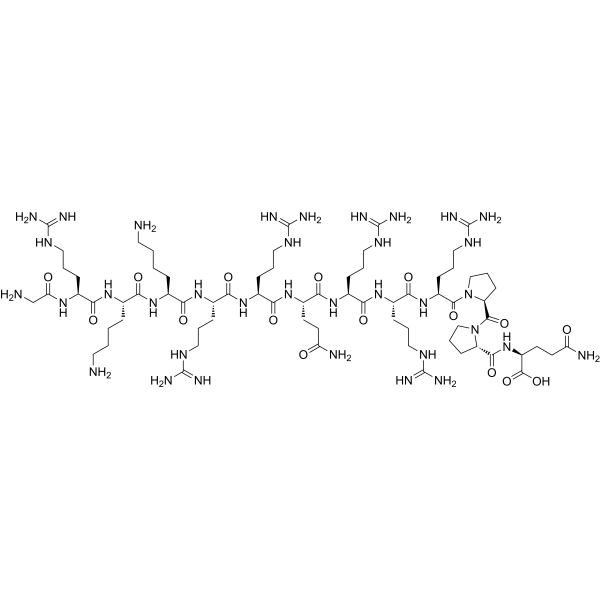
  • HY-P4108

    Influenza Virus Infection
    TAT-HA2 Fusion Peptide is a peptide-based delivery agent that combines the pH-sensitive HA2 fusion peptide from Influenza and the cell-penetrating peptide TAT from HIV. TAT-HA2 Fusion Peptide is a transactivator of transcription and hemaglutanin for endosomal release. TAT-HA2 Fusion Peptide enhances cellular uptake of macromolecules .
    TAT-HA2 Fusion Peptide
  • HY-33878

    Potassium Channel Proton Pump Neurological Disease
    2-PPA is a lysosomal potassium and proton channel TMEM175 pore blocker. 2-PPA binds at a TMEM175 pore site to occlude potassium and proton ion permeation pathways. 2-PPA increases lysosomal macromolecule catabolism, accelerates macropinocytosis. 2-PPA binds to hepatic protein in covalent. 2-PPA can be used for the research of Parkinson's disease .
    2-PPA
  • HY-P5423

    Exosomes Liposome Cancer
    GALA is a pH-responsive amphipathic peptide consisting of 30 amino acids, which acts as a lung endothelium-targeting ligand. GALA undergoes a conformational transition from random coil to α-helix in an acidic environment at pH 5.0, thereby inducing endosomal membrane destabilization and fusion. GALA-modified liposomes traverse lung endothelial cells via clathrin-dependent endocytosis and transcytosis, and specifically accumulate in the lungs after intravenous injection. GALA significantly promotes the cytosolic release of cargos carried by exosomes, plasmids and liposomes, effectively enhances gene transfection efficiency, and drives gene knockdown of functional macromolecules (such as siRNA) in alveolar epithelial cells (with no significant cytotoxicity at effective concentrations). GALA serves as a critical tool for studies on lung cancer metastasis (e.g., melanoma lung metastasis) and lung-targeted drug delivery systems .
    GALA
  • HY-P4121

    Potassium Channel Inflammation/Immunology Cancer
    L17E is an attenuated cationic amphiphilic lytic (ACAL) peptide that can be used to deliver a variety of macromolecules, including proteins, antibodies, and DNA nanostructures. L17E inserts and cleaves the membrane structure through electrostatic interaction, enabling intracellular escape. The efficiency of L17E-mediated delivery is strongly correlated with the expression level of KCNN4 (the gene encoding the calcium-activated potassium channel KCa3.1). L17E also promotes the cellular uptake of macromolecules by inducing micropinocytosis. L17E can be further optimized and improved through dimerization strategies and in combination with other delivery systems, such as nuclear localization signal peptides and cell membrane-coated nanoparticles .
    L17E
  • HY-D0215

    Safranine T

    Fluorescent Dye Bacterial Infection Metabolic Disease
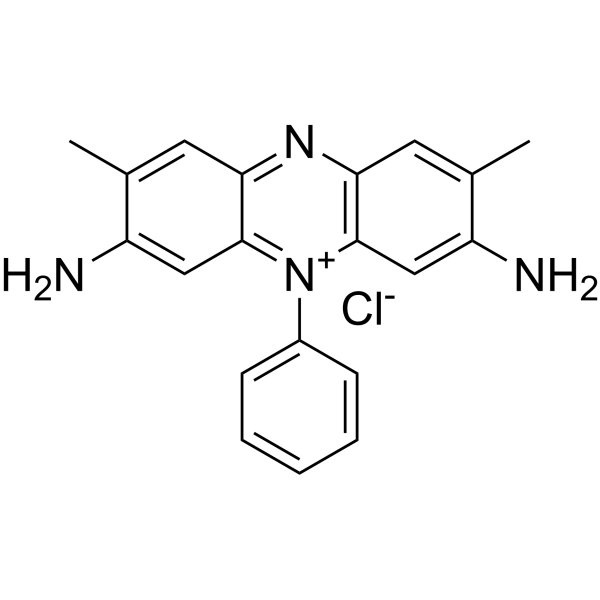
    Safranin (Safranin T) is an important and classical phenazinium dye. Safranin has been extensively used in the academic field as a spectroscopic probe and indicator. Safranin possesses a planar structure and cationic charge. Safranin can readily intercalate into biological macromolecules, including DNA and proteins. Safranin has antibacterial effects against gram-positive bacteria (S. aureus). Safranin can be used as a redox indicator in the determination of metal ion concentration .
    Safranin
  • HY-134620

    Fluorescent Dye Others
    Cyanine 5 NHS ester tetrafluoroborate (Compound Cy5) is a cyanine dye that is used to in fluorescence detection of macromolecules. Cyanine 5 NHS ester tetrafluoroborate exhibits an excitation wavelength of 638 nm .
    Cyanine 5 NHS ester tetrafluoroborate
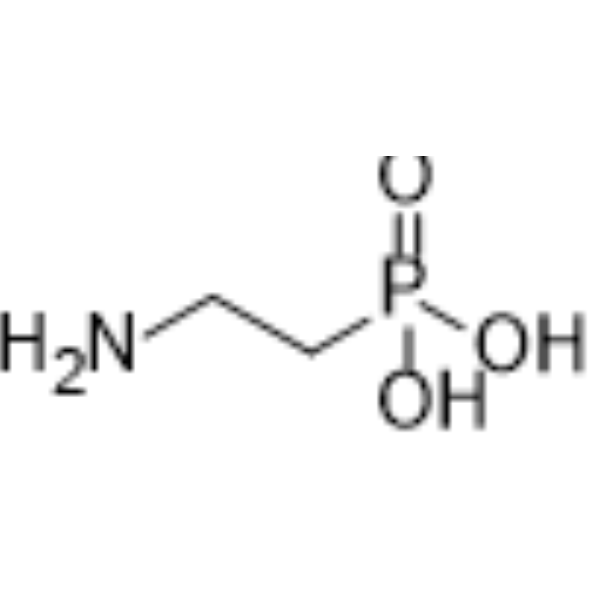
  • HY-W006371

    Endogenous Metabolite Drug Intermediate Metabolic Disease
    (2-Aminoethyl)phosphonic acid is an endogenous metabolite and amino acid analog. (2-Aminoethyl)phosphonic acid can be used for the synthesis of biological macromolecules and the preparation of hydrogels .
    (2-Aminoethyl)phosphonic acid
  • HY-141452

    Malondialdehyde

    Endogenous Metabolite Neurological Disease
    Propanedial (Malondialdehyde) (13.88 mM in water) is one of the final products of lipid peroxidation. Propanedial causes protein inactivation, DNA damage and cross-linking by forming stable covalent adducts with biological macromolecules, which is the main mechanism for its cytotoxicity and genotoxicity. Propanedial production increases with the elevation of free radicals. Propanedial is a key biomarker for evaluating the level of cellular oxidative stress [1][2][3].
    Propanedial (13.88 mM in water)
  • HY-141667

    7-(p-Methoxybenzylamino)-4-nitrobenz-2,1,3-oxadiazole

    Fluorescent Dye Others
    MBD (7-(p-Methoxybenzylamino)-4-nitrobenz-2,1,3-oxadiazole), a new fluorescent probe for protein and nucleoprotein conformation, is applied to bacterial ribosomes and to bovine trypsinogen and trypsin. MBD is strongly fluorescent upon binding to a hydrophobic area of a macromolecule .
    MBD
  • HY-140741
    DSPE-PEG2000-OH
    1 Publications Verification

    Biochemical Assay Reagents Inflammation/Immunology
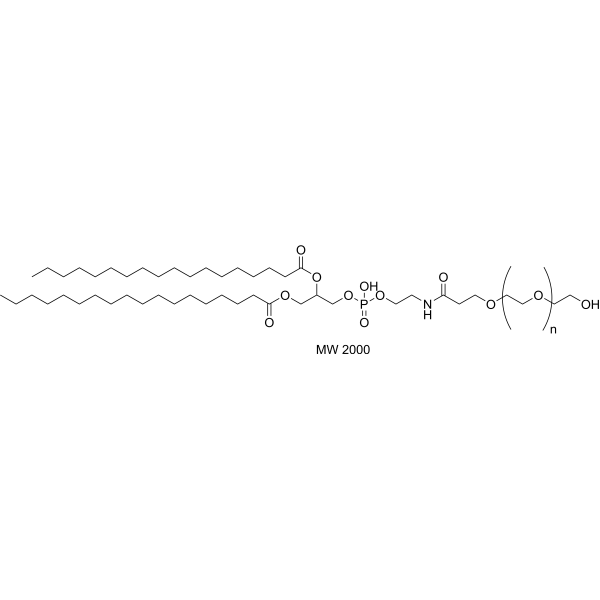
    DSPE-PEG2000-OH is an absorption enhancer. DSPE-PEG2000-OH reduces the expression levels of ZO-1 and Occludin. DSPE-PEG2000-OH enhances the pulmonary absorption of poorly absorbable macromolecules via the paracellular pathway without altering pulmonary membrane fluidity .
    DSPE-PEG2000-OH
  • HY-P1491

    HIV Infection
    HIV-1 TAT (48-60) is a cell-penetrating peptide derived from the human immunodeficient virus (HIV)-1 Tat protein residue 48-60. It has been used to deliver exogenous macromolecules into cells in a non-disruptive way.
    HIV-1 TAT (48-60)
  • HY-W010514

    Endogenous Metabolite Metabolic Disease
    trans-Cyclohexane-1,2-diol (TCHD) is a transient dilator of the nuclear pore complex (NPC). By interacting with the hydrophobic core (FG nucleoporin) of the NPC, trans-Cyclohexane-1,2-diol can disrupt the NPC structure and reversibly increase the permeability of the nuclear pore, allowing macromolecules larger than 40 kDa (such as plasmid DNA) to enter the cell nucleus by passive diffusion, thereby enhancing the nuclear import efficiency of non-viral vectors. trans-Cyclohexane-1,2-diol can improve the efficiency of in vitro electrotransfection or lipid-mediated gene transfection, especially significantly increasing gene expression in differentiated airway epithelial cells .
    trans-Cyclohexane-1,2-diol
  • HY-137295

    PKC Apoptosis Inflammation/Immunology
    Ingenol 3,20-dibenzoate is a potent protein kinase C (PKC) isoform-selective agonist. Ingenol 3,20-dibenzoate induces selective translocation of nPKC-delta, -epsilon, and -theta and PKC-mu from the cytosolic fraction to the particulate fraction and induces morphologically typical apoptosis through de novo synthesis of macromolecules. Ingenol 3,20-dibenzoate increases the IFN-γ production and degranulation by NK cells, especially when NK cells are stimulated by NSCLC cells .
    Ingenol 3,20-dibenzoate
  • HY-W014125
    Undecanedioic acid
    1 Publications Verification

    Endogenous Metabolite Metabolic Disease
    Undecanedioic acid is an oral activie nndogenous metabolite. Undecanedioic acid is associated with intercellular matrix macromolecules and specifically with elastin .
    Undecanedioic acid
  • HY-114299S

    SNAC-d4 sodium

    Isotope-Labeled Compounds Others
    Salcaprozate-d4 (sodium) is a deuterated labeled Salcaprozate (sodium) . Salcaprozate sodium (SNAC), an oral absorption promoter, and has the potential as a delivery agent for oral forms of heparin and insulin. Salcaprozate sodium could increase passive transcellular permeation across small intestinal epithelia based on increased lipophilicity arising from non-covalent macromolecule complexation .
    Salcaprozate-d4 sodium
  • HY-114299R

    SNAC (Standard)

    Biochemical Assay Reagents Reference Standards Others
    Salcaprozate (sodium) (Standard) is the analytical standard of Salcaprozate (sodium). This product is intended for research and analytical applications. Salcaprozate sodium (SNAC), an oral absorption promoter, and has the potential as a delivery agent for oral forms of heparin and insulin. Salcaprozate sodium could increase passive transcellular permeation across small intestinal epithelia based on increased lipophilicity arising from non-covalent macromolecule complexation .
    Salcaprozate sodium (Standard)
  • HY-156045B

    Biochemical Assay Reagents Others
    Cross-linked dextran G 150 is a hydrophilic gel based on molecular size exclusion and targeted for the separation of macromolecules. Cross-linked dextran G 150 functions through the gel permeation mechanism, where the cross-linked structure forms a three-dimensional network with specific pore diameters, achieving separation based on the molecular volumetric flow. Cross-linked dextran G 150 can be used to regulate the distribution coefficient of permeating solutes and maintain the permeation balance, such as in gel filtration chromatography for the purification and analysis of biological macromolecules like proteins and nucleic acids. Cross-linked dextran G 150 can also be used as a gel filtration filler (particle size range: 40-120 μm; spherical protein separation range: 5-300 kDa) .
    Cross-linked dextran G 150
  • HY-P1565

    TD 1 Disulfide(peptide)

    Na+/K+ ATPase Inflammation/Immunology
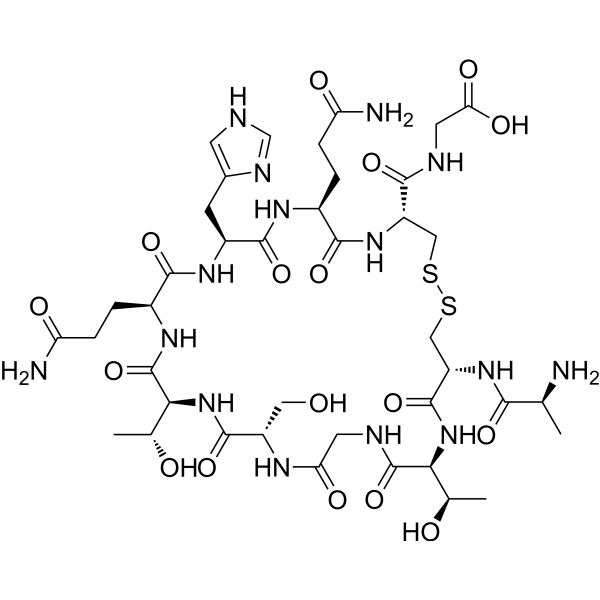
    Transdermal Peptide Disulfide (TD 1 Disulfide(peptide)) is a 11-amino acid peptide, binds toNa +/K +-ATPase beta-subunit (ATP1B1), and mainly interacts with the C-terminus of ATP1B1. Transdermal Peptide Disulfide can enhance the transdermal delivery of many macromolecules .
    Transdermal Peptide Disulfide
  • HY-P1565A

    TD 1 Disulfide(peptide) TFA

    Na+/K+ ATPase Others
    Transdermal Peptide Disulfide TFA (TD 1 Disulfide(peptide) TFA) is a 11-amino acid peptide, binds to Na +/K +-ATPase beta-subunit (ATP1B1), and mainly interacts with the C-terminus of ATP1B1. Transdermal Peptide Disulfide TFA can enhance the transdermal delivery of many macromolecules .
    Transdermal Peptide Disulfide TFA
  • HY-176206H

    Biochemical Assay Reagents Others
    Biotin-PEG40000-COOH is a linear heterobifunctional PEG compound with biotin and carboxylic acid functional groups. Biotin can bind to avidin and streptavidin with high specificity and affinity. Biotin-PEG40000-COOH can be used to biotin-label antibodies, proteins and other macromolecules containing primary amines in the presence of a condensing agent .
    Biotin-PEG40000-COOH
  • HY-151769

    ADC Linker Others
    TCO-PEG2-Sulfo-NHS ester-EDC Urea is a click chemistry reagent containing an azide group. TCO-PEG2-Sulfo-NHS ester is a PEG linker containing a TCO moiety and a sulfo-NHS ester moiety. The sulfo group makes this molecule soluble in waqueous buffer. This reagent can be used to label antibodies, proteins and other primary amine-containing macromolecules with TCO moiety. Reagent grade, for research use only . TCO-PEG2-Sulfo-NHS ester-EDC Urea is a click chemistry reagent, it contains a TCO group that can undergo an inverse electron demand Diels-Alder reaction (iEDDA) with molecules containing Tetrazine groups.
    TCO-PEG2-Sulfo-NHS ester-EDC Urea
  • HY-W077242

    DNA/RNA Synthesis Cancer
    1,4-Anthraquinone is a potent anticancer agent. 1,4-Anthraquinone blocks nucleoside transport, inhibits macromolecule synthesis, induces DNA fragmentation, and decreases the growth and viability of cancer cells. 1,4-Anthraquinone can be used to research anti-leukemia .
    1,4-Anthraquinone
  • HY-P11000

    Biochemical Assay Reagents Others
    INF7TAT is an amphipathic peptide containing the influenza HA2 sequence and the TAT peptide (HY-P0281). INF7TAT can associate with other macromolecules through non-covalent associations. INF7TAT can be used for non-toxic delivery of siRNAs .
    INF7TAT
  • HY-W923132

    Acryloyloxy fluorescein

    Fluorescent Dye Endogenous Metabolite Others
    Fluorescein O-acrylate (Acryloyloxy fluorescein) is a highly efficient fluorescent monomer that exhibits strong quantum yield in aqueous solutions, with its excitation and emission wavelengths situated within the visible light spectrum. This versatile monomer can be copolymerized with various compounds, including styrene, and acrylamide, enhancing its ability to bond with macromolecules.
    Fluorescein O-acrylate
  • HY-157236

    Biochemical Assay Reagents Others
    AEX Anion-exchange resin 1 is a strong anion exchange chromatography resin, based on monodisperse polystyrene/divinylbenzene (PS-DVB), with a particle size of 50 μm and an ionic ligand of –CH2N + (CH3)3. AEX Anion-exchange resin 1 can be used for the separation and purification of biological macromolecules such as proteins, antibodies, and viral vaccines.
    AEX Anion-exchange resin 1
  • HY-133954

    19-Hydroxyheptatriacontane

    Biochemical Assay Reagents Others
    19-Heptatriacontanol is used to combine macromolecules and small molecules.
    19-Heptatriacontanol
  • HY-W014125R

    Reference Standards Endogenous Metabolite Metabolic Disease
    Undecanedioic acid (Standard) is the analytical standard of Undecanedioic acid (HY-W014125). Undecanedioic acid is an oral activie nndogenous metabolite. Undecanedioic acid is associated with intercellular matrix macromolecules and specifically with elastin .
    Undecanedioic acid (Standard)
  • HY-B1843

    BAY 33172; Furidazole

    Environmental Pollutants Fungal Infection
    Fuberidazole (BAY 33172; Furidazole) is a fungicide. Fuberidazole shows a synergistic effect with cucurbituril (CB) macromolecules, such as CB7 and CB8. Studies have shown that, CB8 induces pKa shifts on Fuberidazole. Fuberidazole significantly inhibits the growth of B. cinerea .
    Fuberidazole
  • HY-129214

    Reactive Oxygen Species (ROS) Inflammation/Immunology
    (2S,3R)-DEPMPO-Biotin is a spin trapping agent consists of DEPMPO (HY-120976) and Biotin (HY-B0511). (2S,3R)-DEPMPO-Biotin captures macromolecule free radicals in lesions .
    (2S,3R)-DEPMPO-Biotin
  • HY-W006371R

    Reference Standards Endogenous Metabolite Drug Intermediate Metabolic Disease
    (2-Aminoethyl)phosphonic acid (Standard) is the analytical standard of (2-Aminoethyl)phosphonic acid (HY-W006371). This product is intended for research and analytical applications. (2-Aminoethyl)phosphonic acid is an endogenous metabolite and amino acid analog. (2-Aminoethyl)phosphonic acid can be used for the synthesis of biological macromolecules and the preparation of hydrogels.
    (2-Aminoethyl)phosphonic acid (Standard)
  • HY-P5334A

    Tau Protein Neurological Disease
    AADvac 1 TFA is an active tau peptide vaccine for Alzheimer's disease research. AADvac 1 TFA is composed of a regulatory peptide 294KDNIKHVPGGGS 305 that drives tau oligomerization conjugated to Aplysia hemocyanin (KLH) and formulated with aluminum hydroxide .
    AADvac 1 TFA
  • HY-176206D

    Biochemical Assay Reagents Others
    Biotin-PEG10000-COOH is a linear heterobifunctional PEG compound with biotin and carboxylic acid functional groups. Biotin can bind to avidin and streptavidin with high specificity and affinity. Biotin-PEG10000-COOH can be used to biotin-label antibodies, proteins and other macromolecules containing primary amines in the presence of a condensing agent .
    Biotin-PEG10000-COOH
  • HY-B1843R

    BAY 33172 (Standard); Furidazole (Standard)

    Reference Standards Fungal Infection
    Fuberidazole (Standard) is the analytical standard of Fuberidazole. This product is intended for research and analytical applications. Fuberidazole (BAY 33172; Furidazole) is a fungicide. Fuberidazole shows a synergistic effect with cucurbituril (CB) macromolecules, such as CB7 and CB8. Studies have shown that, CB8 induces pKa shifts on Fuberidazole. Fuberidazole significantly inhibits the growth of B. cinerea .
    Fuberidazole (Standard)
  • HY-176206A

    Biochemical Assay Reagents Others
    Biotin-PEG2000-COOH is a linear heterobifunctional PEG compound with biotin and carboxylic acid functional groups. Biotin can bind to avidin and streptavidin with high specificity and affinity. Biotin-PEG2000-COOH can be used to biotin-label antibodies, proteins and other macromolecules containing primary amines in the presence of a condensing agent .
    Biotin-PEG2000-COOH
  • HY-105129AS

    Isotope-Labeled Compounds Cancer
    Pimonidazole-d10 is the deuterium labeled Pimonidazole. Pimonidazole is a novel hypoxia marker for complementary study of tumor hypoxia and cell proliferation in tumor . Pimonidazole accumulates in hypoxic cells via covalent binding with macromolecules or by forming reductive metabolites after reduction of its nitro group, it can be used for qualitative and quantitative assessment of tumor hypoxia .
    Pimonidazole-d10
  • HY-105129R

    Reference Standards Others Cancer
    Pimonidazole (hydrochloride) (Standard) is the analytical standard of Pimonidazole (hydrochloride). This product is intended for research and analytical applications. Pimonidazole is a novel hypoxia marker for complementary study of tumor hypoxia and cell proliferation in tumor . Pimonidazole accumulates in hypoxic cells via covalent binding with macromolecules or by forming reductive metabolites after reduction of its nitro group, it can be used for qualitative and quantitative assessment of tumor hypoxia .
    Pimonidazole hydrochloride (Standard)
  • HY-105129AR

    Reference Standards Others Cancer
    Pimonidazole (Standard) is the analytical standard of Pimonidazole. This product is intended for research and analytical applications. Pimonidazole is a novel hypoxia marker for complementary study of tumor hypoxia and cell proliferation in tumor . Pimonidazole accumulates in hypoxic cells via covalent binding with macromolecules or by forming reductive metabolites after reduction of its nitro group, it can be used for qualitative and quantitative assessment of tumor hypoxia .
    Pimonidazole (Standard)
  • HY-W738478

    Fluorescent Dye Others
    AOI 987 is an oxazine dye and fluorescent molecule. AOI 987 can bind to biological macromolecules .
    AOI 987
  • HY-W590564

    Biochemical Assay Reagents Others
    Bis-PEG3-biotin is a biotinylation reagent with two terminal biotin groups. PEG attached to the biotin gives an extended spacer arm that permits the biotin to reach into the binding pocket of the protein or macromolecule.
    Bis-PEG3-biotin
  • HY-W014125S

    Isotope-Labeled Compounds Endogenous Metabolite Metabolic Disease
    Undecanedioic acid-d18 is the deuterium labeled Undecanedioic acid (HY-W014125). Undecanedioic acid is an oral activie nndogenous metabolite. Undecanedioic acid is associated with intercellular matrix macromolecules and specifically with elastin .
    Undecanedioic acid-d18
  • HY-119869

    DNA/RNA Synthesis Cancer
    Anaxirone is an anti-tumor agent. The epoxy group in its structure can interfere with the proliferation of tumor cells by alkylating biological macromolecules such as DNA. Anaxirone has dose-limiting toxicity (DLT) and gastrointestinal toxicity. Anaxirone can be used for research on solid tumors such as non-small cell lung cancer (NSCLC) .
    Anaxirone
  • HY-182477

    Antibiotic Bacterial Fungal Infection
    Siccayne, found in the marine basidiomycete Halocyphina villosa and deuteromycete Helminthosporium siccans, is an antibiotic. Siccayne interferes with nucleotide incorporation into DNA and RNA, precursor transport enzymatic reactions, and essential macromolecule synthesis. Siccayne inhibits Gram-positive bacteria and some fungi. Siccayne can be used for research on infections caused by bacteria and fungi .
    Siccayne
  • HY-P11301

    Biochemical Assay Reagents Neurological Disease Cancer
    C16-pHD108 is a pH-responsive nanopore-forming peptide. C16-pHD108 functions as a macromolecule delivery carrier via endosomal membrane nanoporation. C16-pHD108 is promising for research of cancers and neurodegenerative diseases .
    C16-pHD108
  • HY-W006371S

    Isotope-Labeled Compounds Endogenous Metabolite Drug Intermediate Metabolic Disease
    (2-Aminoethyl)phosphonic acid-d4 is the deuterium labeled (2-Aminoethyl)phosphonic acid (HY-W006371). (2-Aminoethyl)phosphonic acid is an endogenous metabolite and amino acid analog. (2-Aminoethyl)phosphonic acid can be used for the synthesis of biological macromolecules and the preparation of hydrogels .
    (2-Aminoethyl)phosphonic acid-d4
  • HY-176206E

    Biochemical Assay Reagents Others
    Biotin-PEG20000-COOH is a linear heterobifunctional PEG compound with biotin and carboxylic acid functional groups. Biotin can bind to avidin and streptavidin with high specificity and affinity. Biotin-PEG20000-COOH can be used to biotin-label antibodies, proteins and other macromolecules containing primary amines in the presence of a condensing agent .
    Biotin-PEG20000-COOH

Inquiry Online

Your information is safe with us. * Required Fields.

Salutation


Country or Region *

Applicant Name *


Organization Name *

Department *


Email Address *


Product Name *

Cat. No.


Requested quantity *

Phone Number *


Remarks

Inquiry Online

Inquiry Information

Product Name:
Cat. No.:
Quantity:
MCE Japan Authorized Agent:

