
1292 Results for "

malignancies

" in MedChemExpress (MCE) Product Catalog:
Products (1292)

1292 Results for "malignancies" in MCE Product Catalog:

158
158 Publications Verification
Art. -Nr.: HY-10087A1
CAS. Nr.: 1093851-28-5
Synonyms: ABT-263 dihydrochloride
Navitoclax dihydrochloride (ABT-263 dihydrochloride) is an orally active BH3 mimetic and an inhibitor of Bcl-2, Bcl-xL, and Bcl-w, with a Ki value of <1 nM for each target. Navitoclax dihydrochloride triggers endogenous Apoptosis and downregulates the expression of Survivin and TGFβ2. Navitoclax dihydrochloride alleviates fibrosis and induces thrombocytopenia. Navitoclax dihydrochloride exhibits anticancer activity against a variety of tumors and enhances the efficacy of chemotherapy and radiotherapy. Navitoclax dihydrochloride can be used in the research of acute lymphoblastic leukemia, ovarian cancer, and fibrotic diseases .
loading...
    loading...
111
111 Cited Publications
Art. -Nr.: HY-B0069
CAS. Nr.: 21679-14-1
Synonyms: F-ara-A; NSC 118218
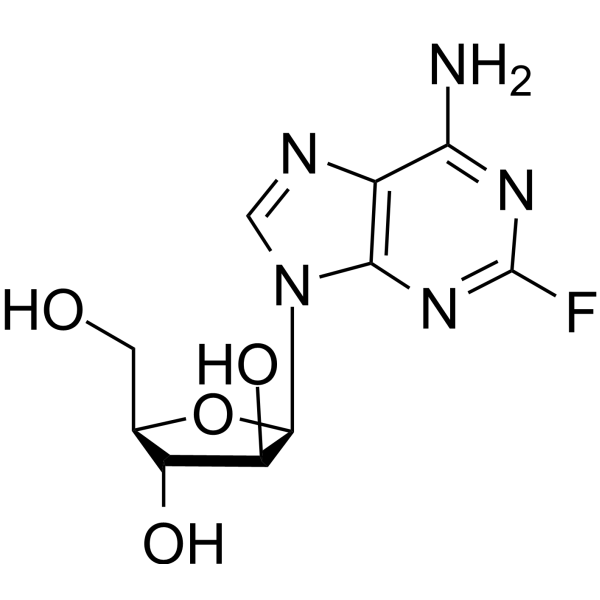
Fludarabine (NSC 118218) is a DNA synthesis inhibitor and a fluorinated purine analogue with antineoplastic activity in lymphoproliferative malignancies. Fludarabine inhibits the cytokine-induced activation of STAT1 and STAT1-dependent gene transcription in normal resting or activated lymphocytes .
loading...
    loading...
18
18 Cited Publications
Art. -Nr.: HY-15433
CAS. Nr.: 875320-29-9
Reinheit:  99.71%
Synonyms: JNJ-26481585
Target:  

HDAC Autophagy

Forschungsgebiete:  

Inflammation/Immunology Cancer

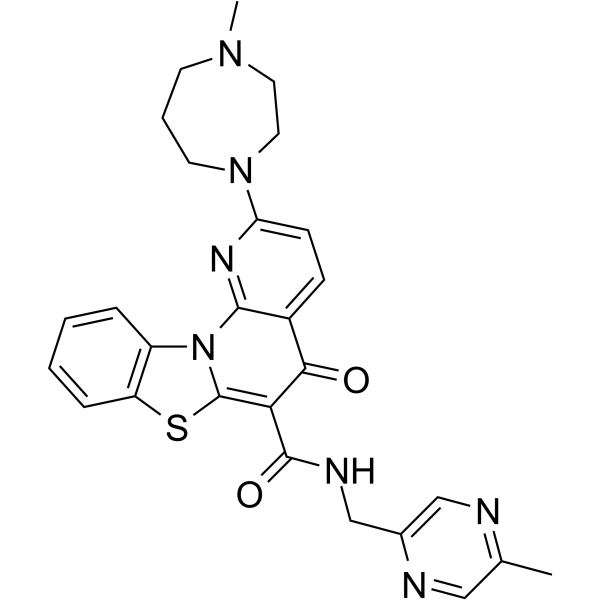
Quisinostat (JNJ-26481585) is a potent and orally active pan-HDAC inhibitor (HDACi), with IC50 values ranging from 0.11 nM to 0.64 nM for HDAC1, HDAC2, HDAC4, HDAC10 and HDAC11. Quisinostat has a broad spectrum antitumoral activity . Quisinostat can induce autophagy in neuroblastoma cells .
loading...
    loading...
18
18 Cited Publications
Art. -Nr.: HY-15433A
CAS. Nr.: 875320-31-3
Reinheit:  99.05%
Synonyms: JNJ-26481585 dihydrochloride
Target:  

HDAC Autophagy

Forschungsgebiete:  

Inflammation/Immunology Cancer

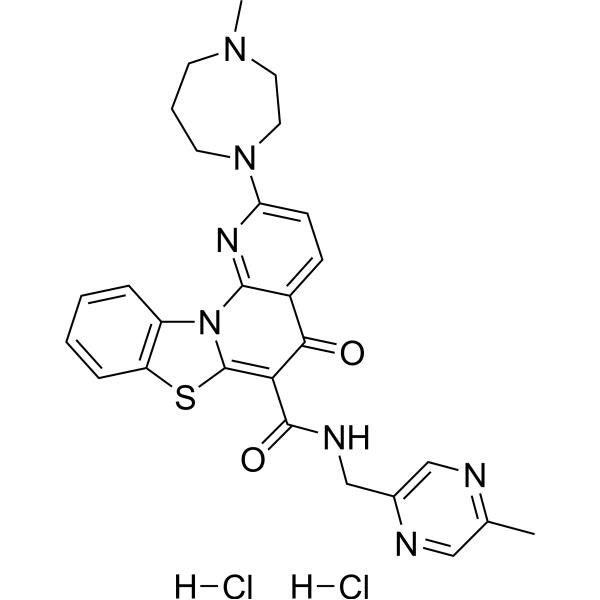
Quisinostat dihydrochloride (JNJ-26481585 dihydrochloride) is an orally active, potent pan-HDAC inhibitor with IC50s of 0.11 nM, 0.33 nM, 0.64 nM, 0.46 nM, and 0.37 nM for HDAC1, HDAC2, HDAC4, HDAC10 and HDAC11, respectively. Quisinostat dihydrochloride has a broad spectrum antitumoral activity. Quisinostat dihydrochloride can induce autophagy in neuroblastoma cells .
loading...
    loading...
14
14 Cited Publications
Art. -Nr.: HY-112088
CAS. Nr.: 2057509-72-3
Reinheit:  99.98%
Target:  

CDK

Forschungsgebiete:  

Cancer

AZD4573 is a potent and highly selective CDK9 inhibitor (IC50 of <4 nM) that enables transient target engagement for the treatment of hematologic malignancies .
loading...
    loading...
12
12 Cited Publications
Art. -Nr.: HY-112645
CAS. Nr.: 2225819-06-5
Reinheit:  99.88%
Forschungsgebiete:  

Cancer

BAY-2402234 is a selective dihydroorotate dehydrogenase (DHODH) inhibitor for the treatment of myeloid malignancies.
loading...
    loading...
10
10 Cited Publications
Art. -Nr.: HY-13599
CAS. Nr.: 4291-63-8
Reinheit:  99.97%
Synonyms: 2-Chloro-2′-deoxyadenosine; CldAdo; 2CdA
Forschungsgebiete:  

Cardiovascular Disease Cancer

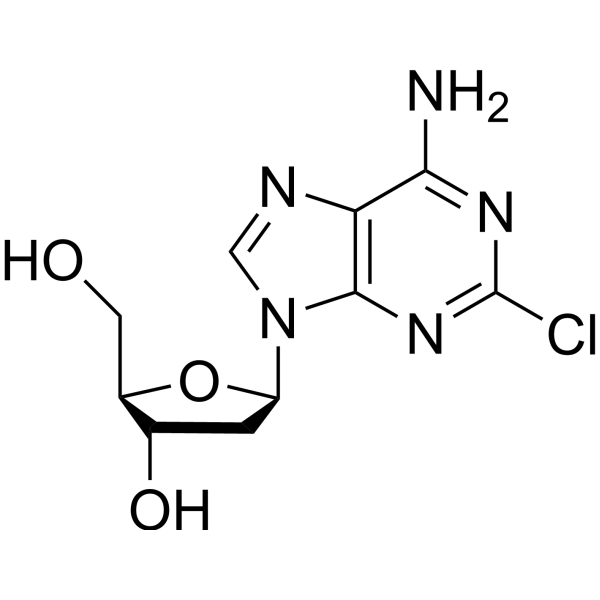
Cladribine (2-Chloro-2′-deoxyadenosine), a purine nucleoside analog, is an orally active adenosine deaminase inhibitor. Cladribine functions as an inhibitor of DNA synthesis to block the repair of the damaged DNA. Cladribine can inhibit DNA methylation. Cladribine has anti-lymphoma activity. Cladribine can be used for the research of several hematologic malignancies and multiple sclerosis .
loading...
    loading...
10
10 Cited Publications
Art. -Nr.: HY-128586
CAS. Nr.: 1848959-10-3
Reinheit:  99.52%
Forschungsgebiete:  

Cancer

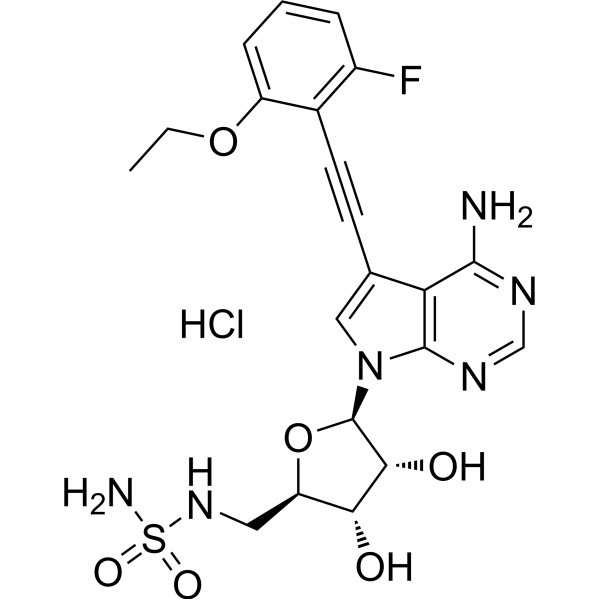
TAS4464 is a long-acting, highly selective covalent inhibitor targeting NEDD8-activating enzyme (NAE) (IC50=0.955 nM), and also inhibits CAII with an IC50 of 0.73 μM, which is less potent than MLN4924 (HY-70062). The IC50 values of TAS4464 against other E1 enzymes UAE and SAE are 449 nM and 1280 nM, respectively. TAS4464 targets NEDD8 in an ATP-dependent manner to inhibit NAE, blocks the neddylation pathway, causes accumulation of CRL ubiquitin ligase substrates (such as CDT1, p27, phosphorylated IκBα), and further induces tumor cell apoptosis. TAS4464 exhibits antiproliferative and cytotoxic effects, and has broad-spectrum antitumor activity against various hematologic and solid tumor cell lines as well as patient-derived tumor cells. TAS4464 has a wide selcetive window, without obvious toxicity. TAS4464 can be used in the research of hematologic malignancies (leukemia, lymphoma, multiple myeloma, etc.) and solid tumors (small cell lung cancer, colorectal cancer, sarcoma, endometrial cancer, ovarian cancer, etc.) .
loading...
    loading...
10
10 Cited Publications
Art. -Nr.: HY-128586A
CAS. Nr.: 1848959-11-4
Reinheit:  98.91%
Forschungsgebiete:  

Cancer

TAS4464 hydrochloride is a long-acting, highly selective covalent inhibitor targeting NEDD8-activating enzyme (NAE) (IC50=0.955 nM), and also inhibits CAII with an IC50 of 0.73 μM, which is less potent than MLN4924 (HY-70062). The IC50 values of TAS4464 hydrochloride against other E1 enzymes UAE and SAE are 449 nM and 1280 nM, respectively. TAS4464 hydrochloride targets NEDD8 in an ATP-dependent manner to inhibit NAE, blocks the neddylation pathway, causes accumulation of CRL ubiquitin ligase substrates (such as CDT1, p27, phosphorylated IκBα), and further induces tumor cell apoptosis. TAS4464 hydrochloride exhibits antiproliferative and cytotoxic effects, and has broad-spectrum antitumor activity against various hematologic and solid tumor cell lines as well as patient-derived tumor cells. TAS4464 hydrochloride has a wide therapeutic window, without obvious toxicity. TAS4464 hydrochloride can be used in the research of hematologic malignancies (leukemia, lymphoma, multiple myeloma, etc.) and solid tumors (small cell lung cancer, colorectal cancer, sarcoma, endometrial cancer, ovarian cancer, etc.) .
loading...
    loading...
8
8 Cited Publications
Art. -Nr.: HY-15999A
CAS. Nr.: 1369761-01-2
Synonyms: PRT062070 hydrochloride; PRT2070 hydrochloride
Target:  

Syk JAK

Forschungsgebiete:  

Cancer

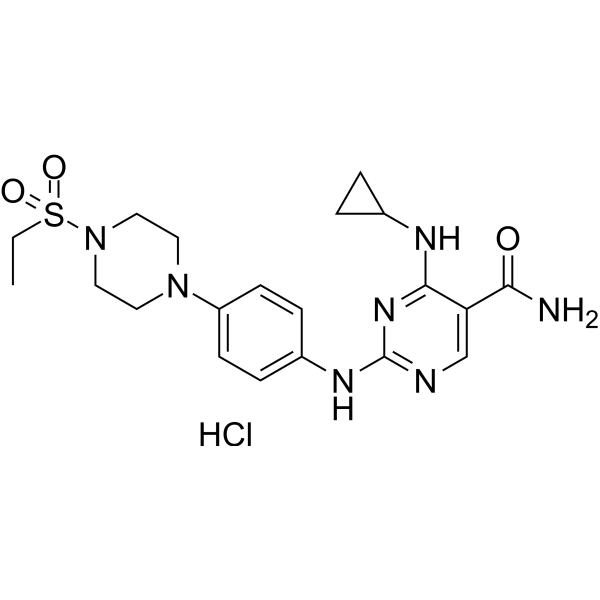
Cerdulatinib hydrochloride (PRT062070) is a selective, oral active and reversible ATP-competitive inhibitor of dual SYK and JAK, with IC50s of 32 nM, 0.5 nM, 12 nM, 6 nM and 8 nM for SYK and Tyk2, JAK1, 2, 3, respectively. Cerdulatinib hydrochloride could be used to research autoimmune disease and B-cell malignancies .
loading...
    loading...
8
8 Cited Publications
Art. -Nr.: HY-15771
CAS. Nr.: 1351636-18-4
Reinheit:  99.71%
Synonyms: ONO-4059; GS-4059
Target:  

Btk Apoptosis

Forschungsgebiete:  

Inflammation/Immunology Cancer

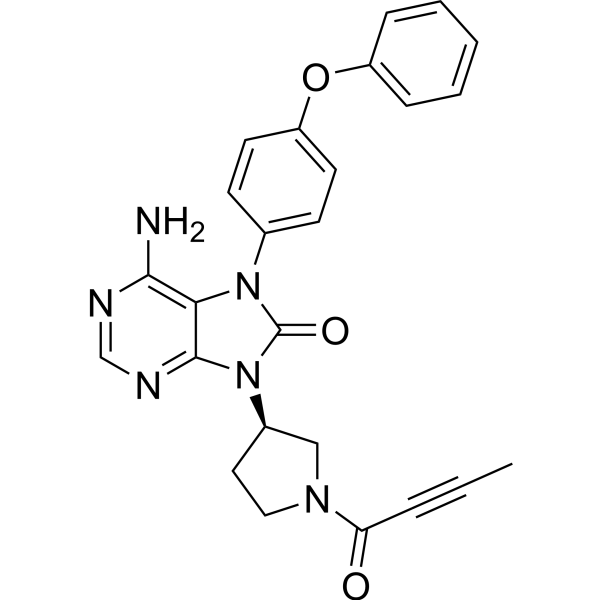
Tirabrutinib (ONO-4059) is an orally active Bruton’s Tyrosine Kinase (BTK) inhibitor (can cross the blood-brain barrier (BBB)), with an IC50 of 6.8 nM. Tirabrutinib irreversibly and covalently binds to BTK and inhibits aberrant B cell receptor signaling. Tirabrutinib can be used in studies of autoimmune diseases and hematological malignancies .
loading...
    loading...
8
8 Cited Publications
Art. -Nr.: HY-15771A
CAS. Nr.: 1439901-97-9
Reinheit:  99.66%
Synonyms: ONO-4059 hydrochloride; GS-4059 hydrochloride
Target:  

Btk Apoptosis

Forschungsgebiete:  

Inflammation/Immunology Cancer

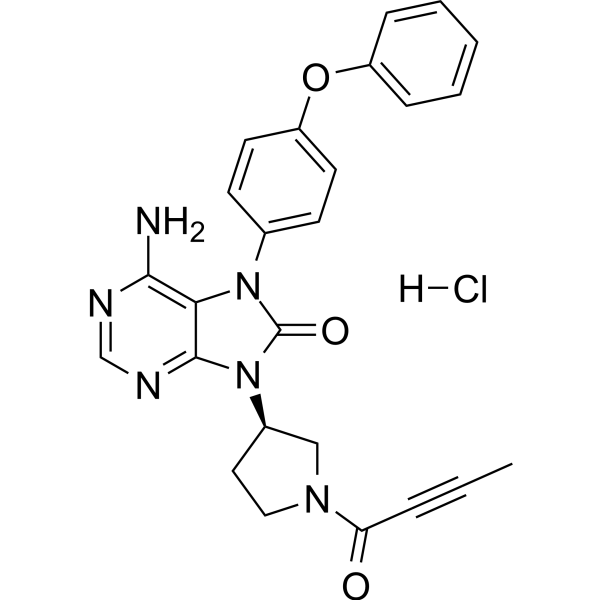
Tirabrutinib (ONO-4059) hydrochloride is an orally active Bruton’s Tyrosine Kinase (BTK) inhibitor (can cross the blood-brain barrier (BBB)), with an IC50 of 6.8 nM. Tirabrutinib hydrochloride irreversibly and covalently binds to BTK and inhibits aberrant B cell receptor signaling. Tirabrutinib hydrochloride can be used in studies of autoimmune diseases and hematological malignancies .
loading...
    loading...
8
8 Cited Publications
Art. -Nr.: HY-19322
CAS. Nr.: 1210608-43-7
Synonyms: LGH447
Target:  

Pim Apoptosis

Forschungsgebiete:  

Cancer

PIM447 (LGH447) is a potent, orally available, and selective pan-PIM kinase inhibitor, with Ki values of 6, 18, and 9 pM for PIM1, PIM2, and PIM3, respectively. PIM447 displays dual antimyeloma and bone-protective effects. PIM447 induces apoptosis .
loading...
    loading...
7
7 Cited Publications
Art. -Nr.: HY-136173
CAS. Nr.: 1801765-04-7
Reinheit:  99.41%
Synonyms: TNO155
Target:  

SHP2 Phosphatase

Forschungsgebiete:  

Cancer

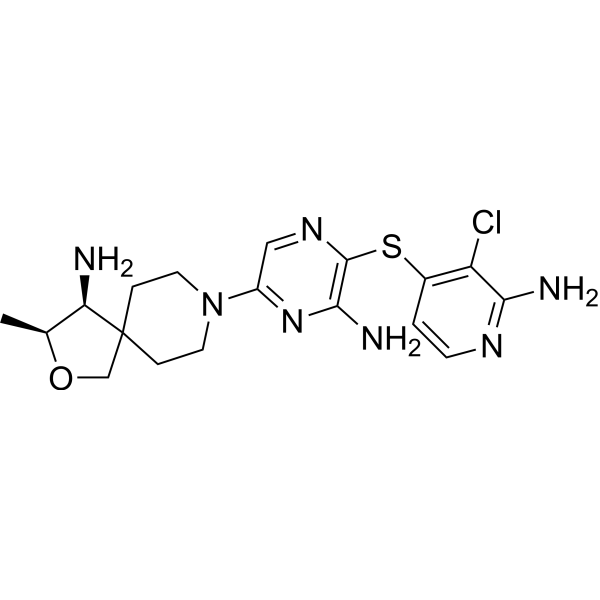
Batoprotafib (TNO155) is a potent selective and orally active allosteric inhibitor of wild-type SHP2 (IC50=0.011 µM). Batoprotafib has the potential for the study of RTK-dependent malignancies, especially advanced solid tumors .
loading...
    loading...
7
7 Cited Publications
Art. -Nr.: HY-10452
CAS. Nr.: 1239908-20-3
Reinheit:  99.87%
Synonyms: MLN9708
Target:  

Proteasome Autophagy

Forschungsgebiete:  

Cancer

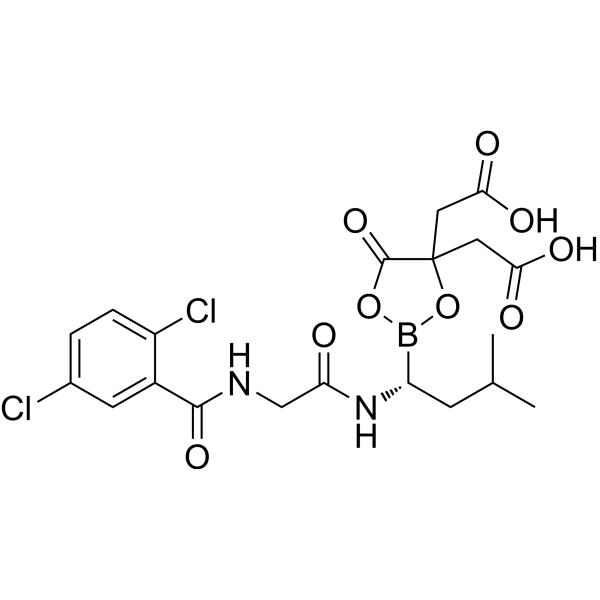
Ixazomib citrate (MLN9708) is a selective, orally active, second-generation proteasome inhibitor. Ixazomib citrate can be used for the study of a broad range of human malignancies .
loading...
    loading...
5
5 Cited Publications
Art. -Nr.: HY-124593
CAS. Nr.: 1256565-36-2
Reinheit:  99.89%
Synonyms: Emvododstat
Forschungsgebiete:  

Cancer

PTC299 is an orally active inhibitor of VEGFA mRNA translation that selectively inhibits VEGF protein synthesis at the post-transcriptional level. PTC299 is also a potent inhibitor of dihydroorotate dehydrogenase (DHODH). PTC299 shows good oral bioavailability and lack of off-target kinase inhibition and myelosuppression. PTC299 can be useful for the research of hematologic malignancies .
loading...
    loading...
5
5 Cited Publications
Art. -Nr.: HY-P9952
CAS. Nr.: 356547-88-1
Synonyms: LymphoStat B

Target:  

TNF Receptor CD20

Forschungsgebiete:  

Inflammation/Immunology Cancer

Belimumab (LymphoStat B) is a humanized IgG1λ monoclonal antibody against B-lymphocyte stimulator (BLyS) protein. Belimumab antagonizes BLyS activity in autoimmune diseases and B-lymphocyte malignancies. Belimumab can be used for systemic lupus erythematosus (SLE) research . The component ratio of this product is Active ingredient: Excipients = 1:1.0-1:1.2.
loading...
    loading...
5
5 Cited Publications
Art. -Nr.: HY-12279
CAS. Nr.: 1532533-67-7
Reinheit:  98.94%
Synonyms: TGR-1202; RP5264
Target:  

PI3K Casein Kinase

Forschungsgebiete:  

Cancer

Umbralisib (TGR-1202) is an orally active, potent and selective dual PI3Kδ and casein kinase-1-ε (CK1ε) inhibitor, with EC50 of 22.2 nM and 6.0 μM, respectively. Umbralisib exhibits unique immunomodulatory effects on chronic lymphocytic leukemia (CLL) T cells. Umbralisib can be used for haematological malignancies reseach .
loading...
    loading...
5
5 Cited Publications
Art. -Nr.: HY-12279C
CAS. Nr.: 1532533-78-0
Reinheit:  99.04%
Synonyms: TGR-1202 hydrochloride; RP5264 hydrochloride
Target:  

PI3K Casein Kinase

Forschungsgebiete:  

Cancer

Umbralisib (TGR-1202) hydrochloride is an orally active, potent and selective dual PI3Kδ and casein kinase-1-ε (CK1ε) inhibitor, with EC50 of 22.2 nM and 6.0 μM, respectively. Umbralisib hydrochloride exhibits unique immunomodulatory effects on chronic lymphocytic leukemia (CLL) T cells. Umbralisib hydrochloride can be used for haematological malignancies reseach .
loading...
    loading...
5
5 Cited Publications
Art. -Nr.: HY-16050
CAS. Nr.: 137219-37-5
Synonyms: Aplidine; PM90001
Plitidepsin (Aplidine) is a potent anti-cancer agent by targeting eEF1A2 ( KD=80 nM) . Plitidepsin possesses antiviral activity and is against SARS-CoV-2 with an IC90 of 0.88 nM. Plitidepsin is usually used for multiple myeloma and advanced cancer research, and has the potential for COVID-19 research .
loading...
    loading...

