1. Search Result
Search Result
Results for "

metal salt

" in MedChemExpress (MCE) Product Catalog:

3458

Inhibitors & Agonists

1

Screening Libraries

33

Fluorescent Dyes

167

Biochemical Assay Reagents

29

Peptides

2

MCE Kits

55

Natural
Products

10

Recombinant Proteins

35

Isotope-Labeled Compounds

10

Antibodies

12

Click Chemistry

7

Oligonucleotides

1

GMP Molecules

Cat. No. Product Name Target Research Areas Chemical Structure
  • HY-B1335
    Pentetic acid
    3 Publications Verification

    Diethylenetriaminepentaacetic acid; DTPA

    Environmental Pollutants Biochemical Assay Reagents Others
    Pentetic acid (Diethylenetriaminepentaacetic acid) is an orally active compound with biodegradability used to construct magnetic adsorbent, which can simultaneously remove heavy metal and dye from complex wastewater. Pentetic acid can form strong metal complexes, which prevents metal ions from catalysing the decomposition of peroxygen chemicals, especially hydrogen peroxide .
    Pentetic acid
  • HY-B1306
    4-Aminohippuric acid
    4 Publications Verification

    p-Aminohippuric acid

    Others Neurological Disease Metabolic Disease
    4-Aminohippuric acid (p-Aminohippuric acid) is a coordination ligand for metal ions (such as Cu 2+, Fe 3+, Hg 2+) and a functionalization reagent for nanomaterials. 4-Aminohippuric acid can coordinate with metal ions or modify the surface of materials such as carbon nanotubes and gold nanoparticles through amino and carboxyl groups. 4-Aminohippuric acid can form stable complexes with metal ions or participate in the synthesis of nanomaterials as a reducing agent/stabilizer, enriching metal ions or giving nanoparticles peroxidase-mimicking activity. 4-Aminohippuric acid can be used to construct highly sensitive electrochemical sensors or colorimetric sensors to detect and quantitatively analyze heavy metal ions such as copper, iron, and mercury in environmental water samples and biological samples. 4-Aminohippuric acid may also be a biomarker for attention-deficit/hyperactivity disorder (ADHD) .
    4-Aminohippuric acid
  • HY-Y0682S

    EDTA-d12

    Isotope-Labeled Compounds Neurological Disease
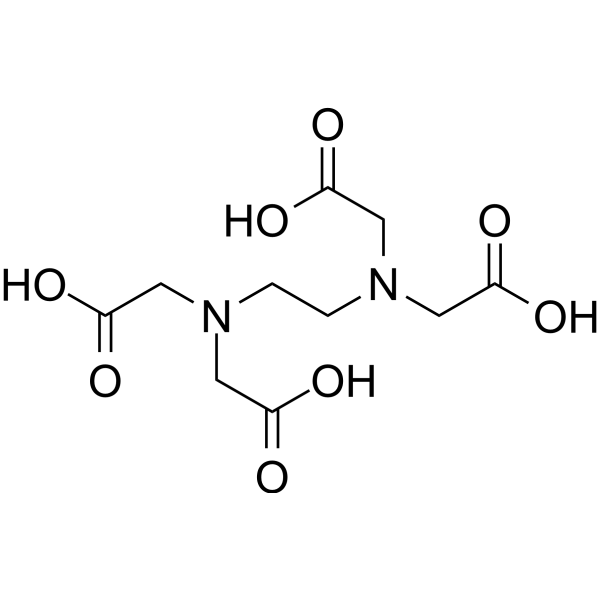
    Ethylenediaminetetraacetic acid-d12 is the deuterium labeled Ethylenediaminetetraacetic acid . Ethylenediaminetetraacetic acid (EDTA) is a metal chelators (binds to metal divalent and trivalent cations including calcium), which shows activities of anticoagulant and anti-hypercalcemic. Ethylenediaminetetraacetic acid decreases the metal ion-catalyzed oxidative damage to proteins, and allows maintenance of reducing environment during protein purification. Ethylenediaminetetraacetic acid can also decrease the formation of disulfide bonds .
    Ethylenediaminetetraacetic acid-d12
  • HY-D0836
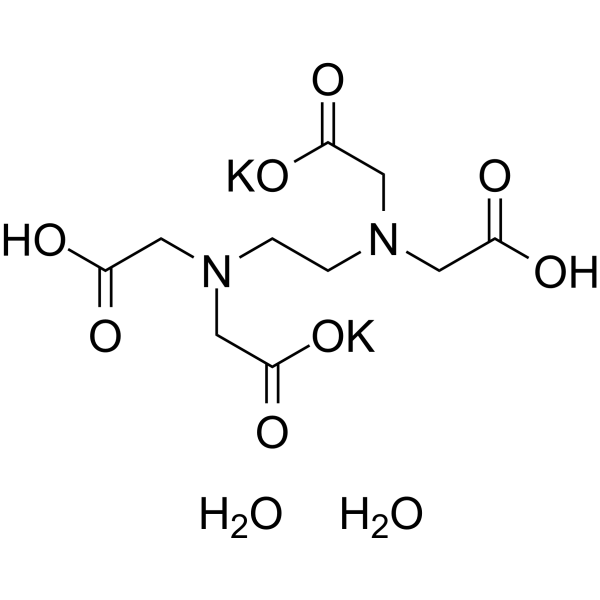
    EDTA dipotassium dihydrate
    25+ Cited Publications

    Ethylenediaminetetraacetic acid dipotassium dihydrate

    DNA/RNA Synthesis Others
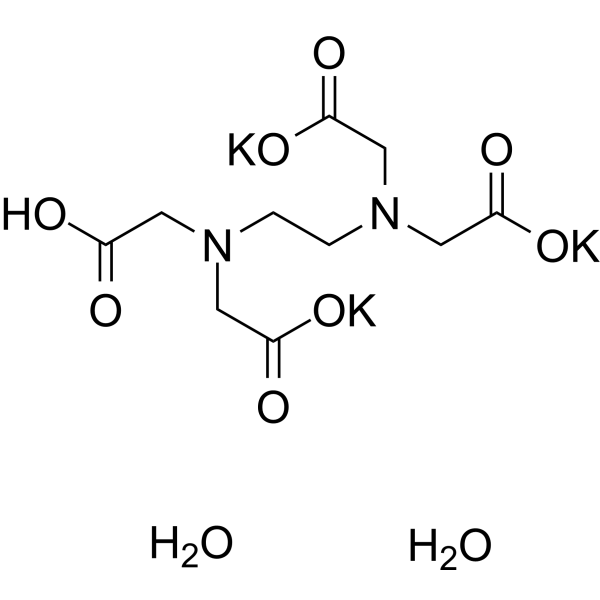
    EDTA dipotassium dihydrate is a metal ion chelator that forms stable and water-soluble chelates with a variety of metal ions. EDTA dipotassium is commonly used as a blood anticoagulant, which can effectively prevent blood coagulation and maintain the morphology and function of cells in blood samples. In the industrial field, EDTA dipotassium can be used to remove the adverse effects of metal ions and prevent oxidation and deterioration caused by metal ions .
    EDTA dipotassium dihydrate
  • HY-W115738

    Biochemical Assay Reagents Others
    PAR is an azo dye widely used as a colorimetric reagent for metal ions. PAR forms stable chelates with different metal ions. PAR can also complex with heavy metal ions in polar organic solvents, such as ethanol .
    PAR
  • HY-Y0537C

    Potassium chloride, suitable for the extraction and solubilization of proteins

    Environmental Pollutants Biochemical Assay Reagents Others
    Potassium chloride, ≥99.99% trace metals basis (Potassium chloride, suitable for the extraction and solubilization of proteins), is an inorganic salt used in the preparation of phosphate buffers. With very low metal impurity content, it is suitable for protein extraction and dissolution.
    Potassium chloride, ≥99.99% trace metals basis
  • HY-B1817A

    Zinc(II) acetate, 99.99% trace metals basis

    CDK Heme Oxygenase (HO) Apoptosis Others
    Zinc (Zinc (II)) acetate, 99.99% trace metals basis is a heme oxygenase 1 (HO-1) activator and apoptosis inducer with cytotoxic and anticancer activities. Zinc acetate, 99.99% trace metals basis enhances HO-1 expression, alters the microRNA profile, and increases the level of caspase-cleaved cytokeratin 18. Zinc acetate, 99.99% trace metals basis also regulates the expression of Cdk2/cyclin E and interferes with cell cycle progression. Zinc acetate, 99.99% trace metals basis effectively inhibits cancer cell proliferation and induces their rapid death, with no significant cytotoxicity to non-tumor tissues. Zinc acetate, 99.99% trace metals basis has been widely used in studies related to hepatocellular carcinoma, prostate cancer, and other conditions .
    Zinc acetate, 99.99% trace metals basis
  • HY-W012683

    Biochemical Assay Reagents Cancer
    Iminodiacetic acid is a metal ion chelator targeting Cr 6+, Cd 2+, Ni 2+, and Pb 2+. Iminodiacetic acid selectively and irreversibly binds metal ions through the coordination of carboxyl and imino groups, reduces the toxicity of metal ions and promotes their adsorption and separation. Iminodiacetic acid has the functions of heavy metal ion removal and coordination complex stabilization. Iminodiacetic acid is often used in environmental pollution control (such as heavy metal adsorption in water) and coordination chemistry (such as metal ion detection and separation) research .
    Iminodiacetic acid
  • HY-D0179

    Biochemical Assay Reagents Infection Cardiovascular Disease
    Cyclam is a metal chelator that forms metal complexes with a variety of metal ions. Cyclam metal complexes exhibits anti-HIV (such as AMD3100), nitric oxide (NO) releasing and scavenging (such as Zn(II)-Cyclam and Ru(II)-Cyclam), and SOD mimetic (such as Mn(III)-Cyclam and Zn(II)-Cyclam) activities .
    Cyclam
  • HY-Y1102A

    Environmental Pollutants Biochemical Assay Reagents Others
    Copper(II) acetate, 99.99% trace metals basis is a dinuclear metal complex that can be used a source of copper and oxidizing agent in inorganic synthesis, and as a catalyst in organic synthesis .
    Copper(II) acetate, 99.99% trace metals basis
  • HY-W111522

    di-Sodium hydrogen phosphite, 98%

    Biochemical Assay Reagents Others
    Sodium phosphite dibasic pentahydrate, 98% (di-Sodium hydrogen phosphite, 98%) is an inorganic phosphorus source and an alkali metal salt of phosphorous acid. Sodium phosphite dibasic pentahydrate, 98% acts as a catalyst for the butanetetracarboxylic acid-based crosslinking reaction of cotton cellulose .
    Sodium phosphite dibasic pentahydrate, 98%
  • HY-P3322

    PC 5

    Biochemical Assay Reagents Others
    Phytochelatin 5 is metal-binding compound produced by plants. Phytochelatin 5 may reduce bioavailability of dietary toxic metals such as cadmium .
    Phytochelatin 5
  • HY-109560

    Zn-DTPA trisodium

    Biochemical Assay Reagents Others
    Pentetate zinc trisodium (Zn-DTPA trisodium) forms stable chelates with metal ions by exchanging zinc for a metal of greater binding capacity .
    Pentetate zinc trisodium
  • HY-P3320

    PC 3

    Biochemical Assay Reagents Others
    Phytochelatin 3 (PC 3) is the small metal chelating peptide that can be used for chelating heavy metals. Phytochelatin 3 is a short metal detoxification peptide made from the sulfur-rich molecule glutathione. Phytochelatin 3 can be found in different sources including plant, fungal, algal, and bacterial species, as a detoxification mechanism in response to heavy metal exposure. Phytochelatin 3 plays an important metabolic role in plants .
    Phytochelatin 3
  • HY-W129975

    Boron trioxide,99.98% trace metals basis

    Environmental Pollutants Biochemical Assay Reagents
    Boric anhydride,99.98% trace metals basis (Boron trioxide,99.98% trace metals basis) is a kind of biochemical reagent.
    Boric anhydride
  • HY-W116336B

    Biochemical Assay Reagents Fungal Bacterial Infection Cancer
    Zinc oxide, 99.99% metals basis is a versatile wide-bandgap semiconductor with superior comprehensive properties. Zinc oxide, 99.99% metals basis serves as raw material for Schottky diodes, functional nanostructures, sensors, energy harvesters and photocatalysts for hydrogen production. Zinc oxide, 99.99% metals basis acts as a non-toxic antibacterial agent and selective cytotoxin against multiple bacteria, fungi and spores. Zinc oxide, 99.99% metals basis induces cancer cell death. Zinc oxide, 99.99% metals basis is applicable to drug delivery, biosensing, bioimaging and researches on cancer, microbial infections and skin diseases .
    Zinc oxide, 99.99% metals basis
  • HY-W105699

    Ethylenediaminetetraacetic acid tetrasodium tetrahydrate

    Environmental Pollutants Biochemical Assay Reagents Others
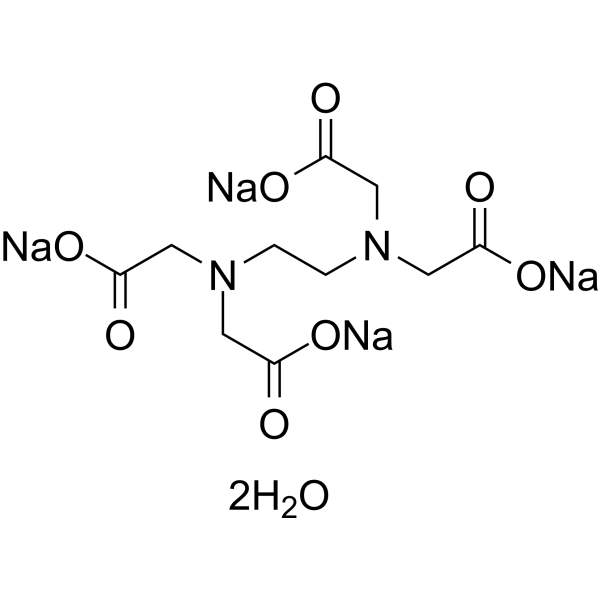
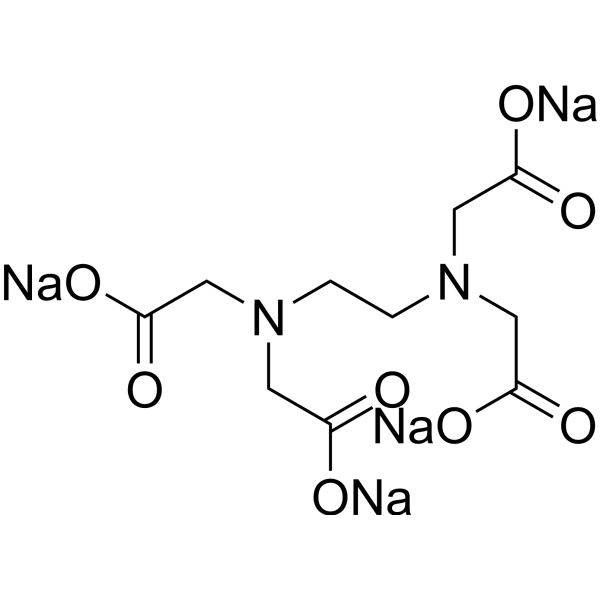
    EDTA tetrasodium tetrahydrate is a metal chelator (binds to metal divalent and trivalent cations including calcium), which shows activities of anticoagulant and anti-hypercalcemic. EDTA tetrasodium tetrahydrate decreases the metal ion-catalyzed oxidative damage to proteins, and allows maintenance of reducing environment during protein purification. EDTA tetrasodium tetrahydrate can also decrease the formation of disulfide bonds .
    EDTA tetrasodium tetrahydrate
  • HY-Y0682S1

    EDTA-d16

    Isotope-Labeled Compounds Neurological Disease
    Ethylenediaminetetraacetic acid-d16 is the deuterium labeled Ethylenediaminetetraacetic acid . Ethylenediaminetetraacetic acid (EDTA) is a metal chelators (binds to metal divalent and trivalent cations including calcium), which shows activities of anticoagulant and anti-hypercalcemic. Ethylenediaminetetraacetic acid decreases the metal ion-catalyzed oxidative damage to proteins, and allows maintenance of reducing environment during protein purification. Ethylenediaminetetraacetic acid can also decrease the formation of disulfide bonds .
    Ethylenediaminetetraacetic acid-d16
  • HY-W111249

    MOFs Others
    5-Iodoisophthalic acid is a metal-organic framework (MOF).
    5-Iodoisophthalic acid
  • HY-W075516

    MOFs Others
    ZIF-14 is a metal-organic framework (MOF).
    ZIF-14
  • HY-108362

    MOFs Others
    Iron(III) mesotetraphenylporphine chloride is a metal-organic framework (MOF).
    Iron(III) mesotetraphenylporphine chloride
  • HY-W012683R

    Biochemical Assay Reagents Reference Standards Cancer
    Iminodiacetic acid is a metal ion chelator targeting Cr6+, Cd2+, Ni2+, and Pb2+. Iminodiacetic acid selectively and irreversibly binds metal ions through the coordination of carboxyl and imino groups, reduces the toxicity of metal ions and promotes their adsorption and separation. Iminodiacetic acid has the functions of heavy metal ion removal and coordination complex stabilization. Iminodiacetic acid is often used in environmental pollution control (such as heavy metal adsorption in water) and coordination chemistry (such as metal ion detection and separation) research .
    Iminodiacetic acid (Standard)
  • HY-Y0449C

    Ammonium rhodanide, 99.99% trace metals basis

    Biochemical Assay Reagents Others
    Ammonium thiocyanate, 99.99% trace metals basis is widely used in titration methods to determine the concentrations of various metal ions (especially iron and silver) by forming distinctly different complexes.
    Ammonium thiocyanate, 99.99% trace metals basis
  • HY-W131302

    N,N-Ethylenediglycine

    Endogenous Metabolite Cancer
    Ethylenediaminediacetic acid (N,N-Ethylenediglycine) is an important ligand that enhances the antiproliferative activity of metal complexes. The complexes formed by ethylenediacetic acid and metal ions exhibited significant antiproliferative properties in MCF-7 cancer cell line. The metal complexes of ethylenediacetic acid were able to interact with DNA and were studied by CD and EPR spectroscopy techniques. Ethylenediaminediacetic acid and its metal complexes were able to induce cell cycle arrest at the G(0)/G(1) phase. The crystal structure analysis of ethylenediacetic acid provided important structural information for understanding its biological activity .
    Ethylenediaminediacetic acid
  • HY-W012012

    2-Bromobenzene-1,4-dicarboxylic acid

    MOFs Others
    2-Bromoterephthalic acid is a metal-organic framework (MOF).
    2-Bromoterephthalic acid
  • HY-W006938

    MOFs Others
    2-Fluoroterephthalic acid is a metal-organic framework (MOF).
    2-Fluoroterephthalic acid
  • HY-176285S

    29Si, metal particles

    Isotope-Labeled Compounds Others
    Silicon-29, metal particles ( 29Si, metal particles) is a 29Si-labeled Silicon, metal particles.
    Silicon-29, metal particles
  • HY-109559

    Ca-DTPA trisodium

    Biochemical Assay Reagents Others
    Pentetate calcium trisodium (Ca-DTPA) forms stable chelates with metal ions by exchanging calcium for a metal of greater binding capacity .
    Pentetate calcium trisodium
  • HY-P3323

    PC 6

    Biochemical Assay Reagents Others
    Phytochelatin 6 is metal-binding compound produced by plants. Phytochelatin 6 may reduce bioavailability of dietary toxic metals such as cadmium .
    Phytochelatin 6
  • HY-P3322A

    PC 5 TFA

    Endogenous Metabolite Others
    Phytochelatin 5 TFA is metal-binding compound produced by plants. Phytochelatin 5 TFA may reduce bioavailability of dietary toxic metals such as cadmium .
    Phytochelatin 5 TFA
  • HY-P3323A

    PC 6 TFA

    Biochemical Assay Reagents Others
    Phytochelatin 6 TFA is metal-binding compound produced by plants. Phytochelatin 6 TFA may reduce bioavailability of dietary toxic metals such as cadmium .
    Phytochelatin 6 TFA
  • HY-149883

    Others Others
    IZS-L is a amino acid-derived corrosion inhibitor. IZS-L exhibits corrosion inhibition performance for metal at longer immersion. IZSs, the series of corrosion inhibitors, inhibit mild steel corrosion through the formation of an inhibitor film on the metal surface .
    IZS-L
  • HY-176285S1

    30Si, metal particles

    Isotope-Labeled Compounds Others
    Silicon-30, metal particles ( 30Si, metal particles) is a 30Si-labeled Silicon, metal particles.
    Silicon-30, metal particles
  • HY-W075796

    Environmental Pollutants Drug Intermediate Others
    Copper (I) thiocyanate is a monovalent copper pseudohalide that exists in two crystalline forms, α and β, both containing bridging thiocyanate groups. Copper (I) thiocyanate can form coordination complexes with ligands such as triphenylphosphine and pyridine .
    Copper(I) thiocyanate
  • HY-W268106

    Biochemical Assay Reagents Others
    Decylphosphonic acid is a metal oxide surface modifier and corrosion inhibitor. Decylphosphonic acid is promising for research of metal protection, anti-corrosion coatings, and emulsion polymerization .
    Decylphosphonic acid
  • HY-W722245

    Endogenous Metabolite Bacterial Infection
    Pyochelin is a salicylate-based nonribosomal peptide siderophore produced by Pseudomonas aeruginosa. Pyochelin chelates Fe 3+ and transports it back into bacterial cells, providing the iron essential for bacterial survival. Pyochelin can also chelate other metals such as Zn 2+, Co 2+, and Ni 2+, which helps bacteria maintain intracellular metal ion homeostasis by chelating and excreting excess metals in response to toxic metal stress. Pyochelin can be used in studies related to Pseudomonas aeruginosa infection .
    Pyochelin
  • HY-Y1853

    MOFs Others
    Diphenic acid is a metal-organic framework (MOF).
    Diphenic acid
  • HY-W856281

    MOFs Others
    Benzenehexathiol is a metal-organic framework (MOF).
    Benzenehexathiol
  • HY-W998840

    MOFs Others
    Tetradecahydrophenazine is a metal-organic framework (MOF).
    Tetradecahydrophenazine
  • HY-W112815

    MOFs Others
    Potassium cyamelurate trihydrate is a metal-organic framework (MOF).
    Potassium cyamelurate trihydrate
  • HY-W075680

    MOFs Others
    UiO 66 is a metal-organic framework (MOF).
    UiO 66
  • HY-W249603

    MOFs Others
    PCN 224 is a metal-organic framework (MOF).
    PCN 224
  • HY-W856276

    MOFs Others
    Al-PMOF is a metal-organic framework (MOF).
    Al-PMOF
  • HY-W249581

    MOFs Others
    NU 1000 is a metal-organic framework (MOF).
    NU 1000
  • HY-W249556

    MOFs Others
    Cu-HHB is a metal-organic framework (MOF).
    Cu-HHB
  • HY-W1049953

    MOFs Others
    CHA4583 is a metal-organic framework (MOF).
    CHA4583
  • HY-W112144

    Benzenehexacarboxylic Acid

    MOFs Others
    Mellitic acid (Benzenehexacarboxylic Acid) is a metal-organic framework (MOF).
    Mellitic acid
  • HY-W249586

    MOFs Others
    UIO 68 is a metal-organic framework (MOF).
    UIO 68
  • HY-W1049765

    MOFs Others
    Co-BTC is a metal-organic framework (MOF).
    Co-BTC
  • HY-W075638

    MOFs Others
    MIL 125 is a metal-organic framework (MOF).
    MIL 125

Inquiry Online

Your information is safe with us. * Required Fields.

Salutation


Country or Region *

Applicant Name *


Organization Name *

Department *


Email Address *


Product Name *

Cat. No.


Requested quantity *

Phone Number *


Remarks

Inquiry Online

Inquiry Information

Product Name:
Cat. No.:
Quantity:
MCE Japan Authorized Agent:

