1. Search Result
Search Result
Results for "

native compound

" in MedChemExpress (MCE) Product Catalog:

11

Inhibitors & Agonists

2

Fluorescent Dyes

1

Biochemical Assay Reagents

1

Peptides

5

Natural
Products

Cat. No. Product Name Target Research Areas Chemical Structure
  • HY-D0877

    Biochemical Assay Reagents Connexin Others
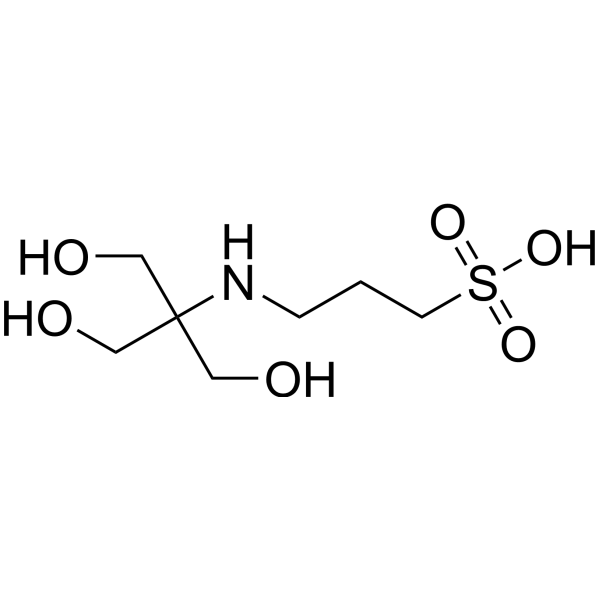
    TAPS is an aminosulfonate-based lysozyme stabilizer and connexin channel inhibitor. TAPS maintains the native structure of lysozyme in aqueous solution at pH 7.0 and significantly protects it from heat-induced denaturation. TAPS directly inhibits the activity of heteromeric connexin 32/connexin 26 channels (Cx32/Cx26) via its protonated form, and this inhibitory effect is dependent on the presence of connexin 26. TAPS reduces connexin channel-mediated solute exchange in a recombinant liposome system, resulting in a decreased degree of liposome density shift in transport-specific separation assays. TAPS is a critical compound for investigating the structure and function of connexin channels .
    TAPS
  • HY-Y0543
    5-Methylfurfural
    1 Publications Verification

    Biochemical Assay Reagents COX Inflammation/Immunology Cancer
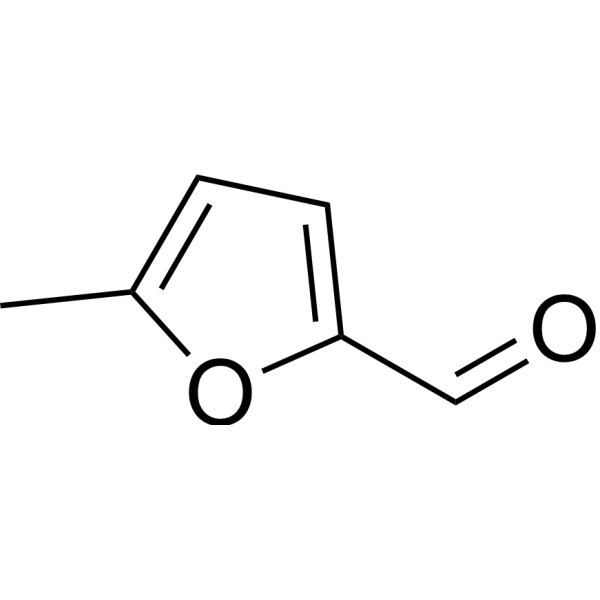
    5-Methylfurfural is a chemical that can be utilized as food additive, intermediate in the production of agrochemicals, and precursor of certain anti-cancer natural products. 5-Methylfurfural is formed during the photoexposition of ranitidine hydrochloride. 5-Methylfurfural is an organic compound. 5-Methylfurfural has a strong tendency to be further hydrogenated to 2,5-dimethylfuran (DMF). 5-Methylfurfural can predominantly evoke skin inflammation and barrier disintegration. 5-Methylfurfural degrades native DNA through the formation of single-strand breaks .
    5-Methylfurfural
  • HY-D1594
    BODIPY TR Cadaverine
    3 Publications Verification

    Fluorescent Dye Others
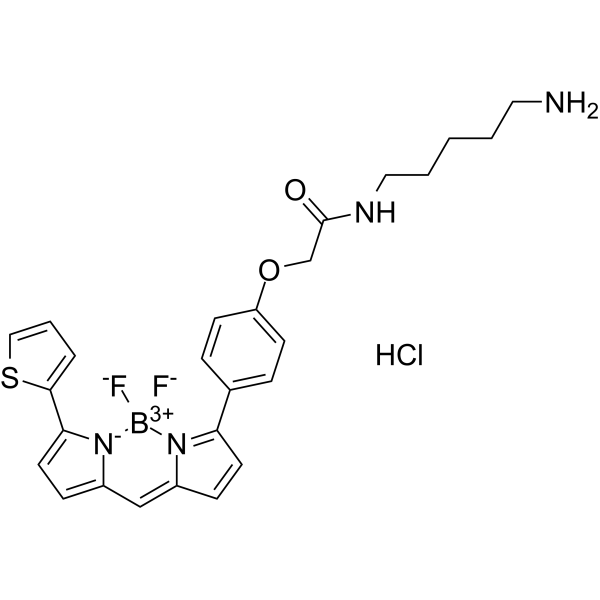
    BODIPY TR Cadaverine, a cadaverine derivative, is a red fluorescent dye. BODIPY TR Cadaverine can be used in a a highly sensitive and robust fluorescent displacement assay, which binds to native LPS strongly, specifically recognizing lipid A, and is competitively displaced by compounds displaying an affinity for lipid A .
    BODIPY TR Cadaverine
  • HY-DY1076

    Fluorescent Dye Others
    BODIPY TR Cadaverine (solution) , a cadaverine derivative, is a red fluorescent dye. BODIPY TR Cadaverine can be used in a a highly sensitive and robust fluorescent displacement assay, which binds to native LPS strongly, specifically recognizing lipid A, and is competitively displaced by compounds displaying an affinity for lipid A .
    Solvent and concentration: DMSO: 2 mM
    BODIPY TR Cadaverine (solution)
  • HY-P5444

    Bacterial Others
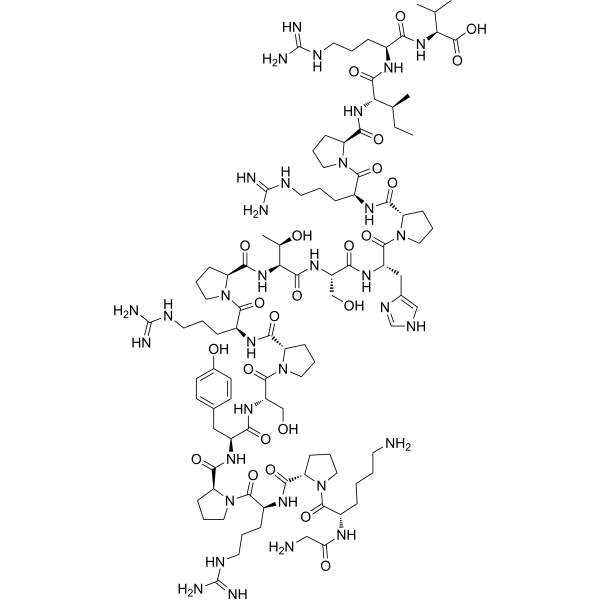
    Drosocin is a biological active peptide. (Drosocin is a 19-mer cationic antimicrobial peptide from Drosophila melanogaster. In Drosophila native drosocin carries a disaccharide moiety attached to a threonine residue in mid-chain position. This synthetic drosocin peptide of identical amino acid sequence without the disaccharide has an activity several times lower than the native compound.)
    Drosocin
  • HY-138145

    Fungal Bacterial Infection
    8-Acetyl-7-hydroxycoumarin is a coumarin-like compound found in Mexican patchouli (Tagetes lucida) that has anti-bacterial and anti-fungal activities .
    8-Acetyl-7-hydroxycoumarin
  • HY-161401

    Protease Activated Receptor (PAR) Cardiovascular Disease
    PAR4 antagonist 2 (Compound 31) is a protease activated receptor 4 (PAR4) antagonist, with IC50 values of 95 nM and 367 nM for human PAR4 and mouse PAR4. PAR4 antagonist 2 is active against PAR4 activation by the native protease thrombin cleavage but not the synthetic PAR4 agonist peptide AYPGKF .
    PAR4 antagonist 2
  • HY-Y0543R

    Biochemical Assay Reagents Reference Standards COX Inflammation/Immunology Cancer
    5-Methylfurfural (Standard) is the analytical standard of 5-Methylfurfural. This product is intended for research and analytical applications. 5-Methylfurfural is a chemical that can be utilized as food additive, intermediate in the production of agrochemicals, and precursor of certain anti-cancer natural products. 5-Methylfurfural is formed during the photoexposition of ranitidine hydrochloride. 5-Methylfurfural is an organic compound. 5-Methylfurfural has a strong tendency to be further hydrogenated to 2,5-dimethylfuran (DMF). 5-Methylfurfural can predominantly evoke skin inflammation and barrier disintegration. 5-Methylfurfural degrades native DNA through the formation of single-strand breaks .
    5-Methylfurfural (Standard)
  • HY-183750

    Cholinesterase (ChE) Metabolic Disease
    BChE reactivator-1 is a human butyrylcholinesterase (BChE) activator and antidote, with a Ki value of 0.52 μM against human BChE. BChE reactivator-1 activates BChE inhibited by organophosphorus compounds, binds reversibly to native BChE, and restores cholinesterase activity in human whole blood. BChE reactivator-1 is applicable to research related to organophosphorus poisoning .
    BChE reactivator-1
  • HY-N19069

    Bacterial Infection Metabolic Disease Inflammation/Immunology
    Eugenia jambolana extract, commonly known as jamun or black plum, is derived from the fruit of the Eugenia jambolana tree, native to South Asia. The active compounds in jamun extract include anthocyanins, flavonoids, alkaloids, and tannins, which contribute to its antioxidant, anti-inflammatory, and antimicrobial properties. Jamun extract is most known for its blood sugar-lowering effects, making it popular in traditional medicine for managing diabetes. It is commonly used in supplements, traditional remedies, and skincare products due to its wide range of health benefits.
    Eugenia jambolana extract
  • HY-N19083

    Bacterial Inflammation/Immunology
    Tecomella undulata Extract, also known as Rohida extract, is a valuable botanical extract derived from the bark and leaves of the Tecomella undulata plant native to the Indian Thar Desert and is rich in bioactive compounds such as flavonoids, quinones, triterpenoids, and other phytochemicals that contribute to its diverse therapeutic properties. This extract is widely recognized for its hepatoprotective effects demonstrated through its ability to protect against liver damage induced by toxins such as paracetamol and carbon tetrachloride by normalizing elevated liver enzyme levels reducing oxidative stress and improving liver function. Additionally, it exhibits significant anti-inflammatory activity comparable to standard drugs like indomethacin and has been used to treat conditions like ascites and hepatosplenomegaly while also showing immunomodulatory effects by enhancing both humoral and cell-mediated immune responses and possessing antimicrobial properties that make it effective against various pathogens. Recent research suggests that Tecomella undulata may have potential in managing nonalcoholic steatohepatitis (NASH) by reducing body weight insulin resistance and improving liver function markers making it a versatile natural remedy with significant applications in hepatoprotection anti-inflammation and immune support.
    Tecomella undulata extract

Inquiry Online

Your information is safe with us. * Required Fields.

Salutation


Country or Region *

Applicant Name *


Organization Name *

Department *


Email Address *


Product Name *

Cat. No.


Requested quantity *

Phone Number *


Remarks

Inquiry Online

Inquiry Information

Product Name:
Cat. No.:
Quantity:
MCE Japan Authorized Agent:

