1. Search Result
Search Result
Results for "

negatively affects

" in MedChemExpress (MCE) Product Catalog:

13

Inhibitors & Agonists

1

Biochemical Assay Reagents

3

Peptides

1

Natural
Products

1

Oligonucleotides

Cat. No. Product Name Target Research Areas Chemical Structure
  • HY-130463

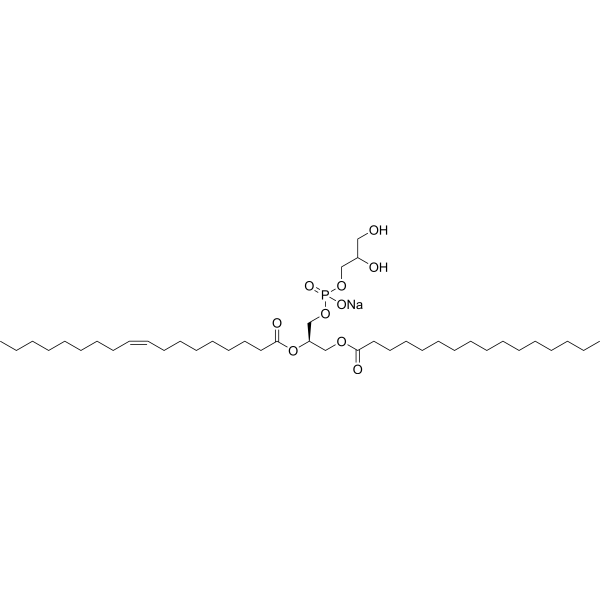
    PG(16:0/18:1); 1-Palmitoyl-2-oleoyl-sn-glycero-3-phospho-(1'-rac-glycerol)

    Liposome Biochemical Assay Reagents Neurotensin Receptor Neurological Disease
    POPG sodium salt is a negatively charged phospholipid. POPG sodium salt affects the interactions of membrane proteins with other molecules by changing the charge characteristics of the lipid environment. POPG sodium salt increases the apparent affinity of Gαq and 1γ1 for activated NTS1. POPG sodium salt can interact with the positive charge of peptides. POPG sodium salt can be used in Parkinson's disease research .
    POPG sodium salt
  • HY-133685

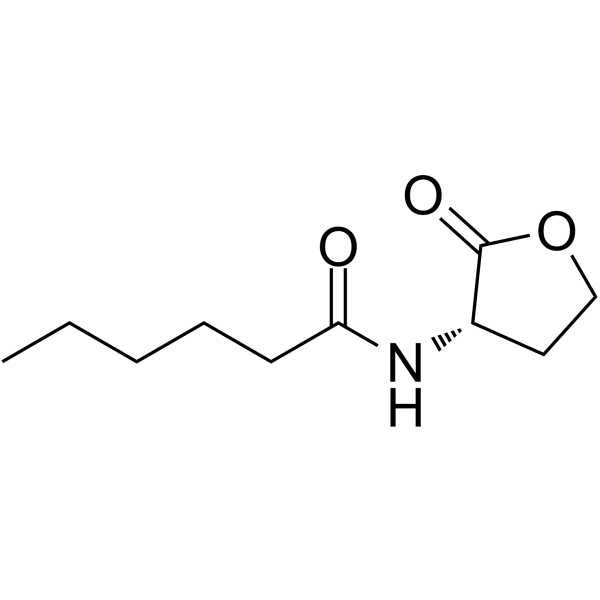
    C6-HSL

    Bacterial Infection Metabolic Disease
    N-Hexanoyl-L-homoserine lactone is a short-chained N-acyl homoserine lactone (AHL). N-hexanoyl-L-homoserine lactone is also a mediator of bacterial quorum-sensing regulation. N-hexanoyl-L-homoserine lactone promotes lipid accumulation in algae. AHL is an intercellular communication signal molecule in the quorum sensing system of Gram-negative bacteria and a medium for mediating information exchange between eukaryotic plants and prokaryotic bacteria. AHL can affect bacteria activities, such as biofilm formation, pigment synthesis, and antibiotic synthesis .
    N-Hexanoyl-L-homoserine lactone
  • HY-Y1329

    Environmental Pollutants Biochemical Assay Reagents Bacterial Infection
    Trisodium phosphate is a food additive. Trisodium phosphate affects the growth parameters (lag phase, maximum growth rate) of Listeria monocytogenes and increases the sensitivity of Gram-negative bacteria to Lysozyme (HY-P1068) and Nisin (HY-P1607) .
    Trisodium phosphate
  • HY-W141774

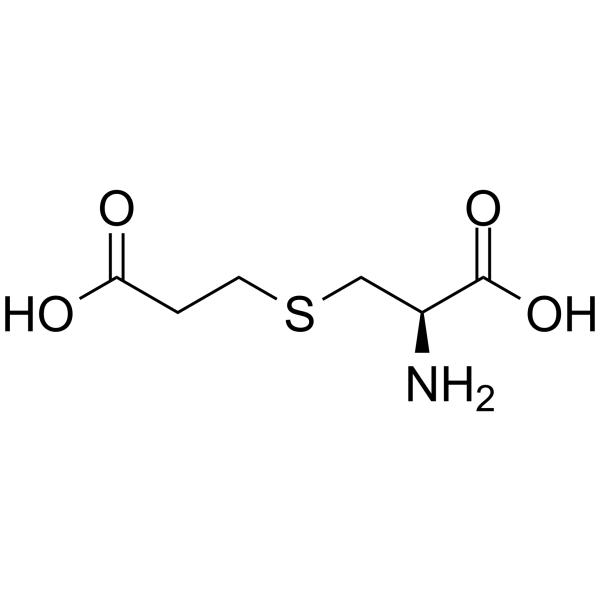
    S-Carboxyethylcysteine

    Amino Acid Derivatives Metabolic Disease
    S-(2-Carboxyethyl)-L-cysteine (S-Carboxyethylcysteine) is a non-protein (modified) sulfur amino acid. S-(2-Carboxyethyl)-L-cysteine is present in Acacia seed. S-(2-Carboxyethyl)-L-cysteine can affect the seed’s protein use in rats. S-(2-Carboxyethyl)-L-cysteine suppresses the methionine-induced growth rate, and has a negative effect on the plasma amino acid levels in rats .
    S-(2-Carboxyethyl)-L-cysteine
  • HY-W107409

    Others Cancer
    Meridianin C is a marine natural product with anticancer activity. Meridianin C has significant inhibitory effects on four different human tongue cancer cells (YD-8, YD-10B, YD-38 and HSC-3). Meridianin C most strongly reduced the growth of YD-10B cells, the most aggressive and tumorigenic of the cell lines tested. Meridianin C also induced significant accumulation of large vesicles in YD-10B cells, validating its function through macrophagocytosis. Meridianin C reduces cellular levels of Dickkopf-related protein-3 (DKK-3), a known negative regulator of macrophagy. Meridianin C affects macrophagocytosis by downregulating DKK-3, thereby affecting cell proliferation .
    Meridianin C
  • HY-P3269

    Calcium Channel Cardiovascular Disease
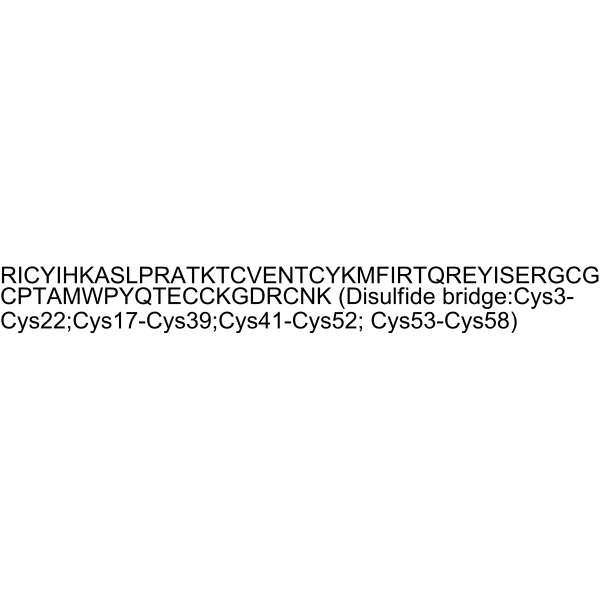
    Calciseptine is a natural polypeptide toxin found in the venom of the black mamba snake (Dendroaspis p. polylepis). Calciseptine is a highly effective and selective blocker of the L-type channel of the Cav1.2 subtype, with an IC50 value of 92 nM. Calciseptine has no effect on Cav3.1, Cav2.2, Cav2.1, Cav1.1, voltage-sensitive sodium channels and potassium channels. Calciseptine exhibits negative inotropic and negative relaxant effects on mice, and does not affect heart rate or the action potential of sinoatrial node pacemaker cells. Calciseptine can be used for research on cardiovascular diseases[1].
    Calciseptine
  • HY-133685R

    C6-HSL (Standard)

    Reference Standards Bacterial Infection Metabolic Disease
    N-Hexanoyl-L-homoserine lactone (Standard) is the analytical standard of N-Hexanoyl-L-homoserine lactone (HY-133685). This product is intended for research and analytical applications. N-Hexanoyl-L-homoserine lactone is a short-chained N-acyl homoserine lactone (AHL). N-hexanoyl-L-homoserine lactone is also a mediator of bacterial quorum-sensing regulation. N-hexanoyl-L-homoserine lactone promotes lipid accumulation in algae. AHL is an intercellular communication signal molecule in the quorum sensing system of Gram-negative bacteria and a medium for mediating information exchange between eukaryotic plants and prokaryotic bacteria. AHL can affect bacteria activities, such as biofilm formation, pigment synthesis, and antibiotic synthesis.
    N-Hexanoyl-L-homoserine lactone (Standard)
  • HY-147559

    Cannabinoid Receptor Others
    CB1R Allosteric modulator 2 (compound 18) is a potent CB1R allosteric modulator. CB1R Allosteric modulator 2 shows negatively affects the functional activity of orthosteric ligands (NAM) at CB1Rs .
    CB1R Allosteric modulator 2
  • HY-147558

    Cannabinoid Receptor Others
    CB1R Allosteric modulator 1 (compound 11) is a potent CB1R allosteric modulator. CB1R Allosteric modulator 1 shows negatively affects the functional activity of orthosteric ligands (NAM) at CB1Rs .
    CB1R Allosteric modulator 1
  • HY-117542

    Histone Methyltransferase Neurological Disease
    D595 is a phenylethylamine calcium channel blocker with potent negative inotropic activity. D595 has shown significant efficacy in its corresponding pharmacological studies, especially in inhibiting the uptake of monoamine neurotransmitters. D595 has high affinity in binding to the dopamine transporter (DAT), serotonin transporter (SERT), and norepinephrine transporter (NET). Structural adjustments of D595, especially changes in the hydroxyl stereochemistry, significantly affect its interaction with the transporters, showing a specific preference for stereoisomers .
    D595
  • HY-179044

    p38 MAPK JNK Caspase Apoptosis Cancer
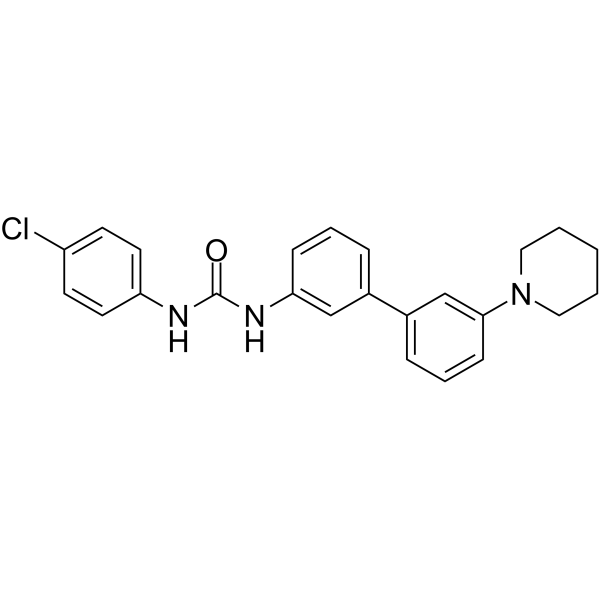
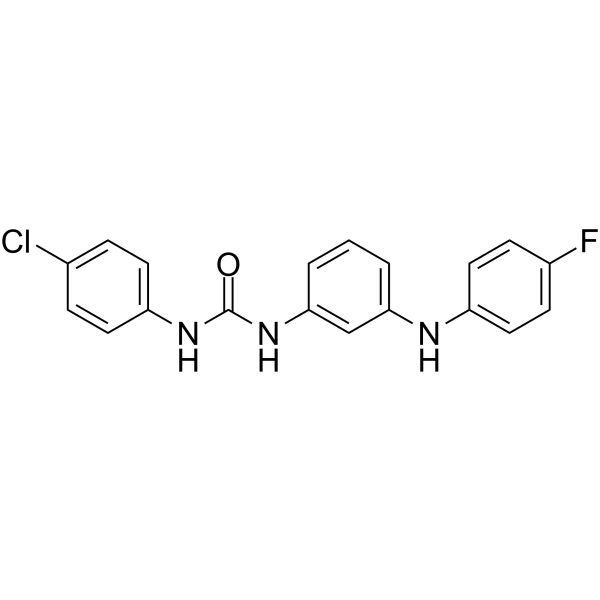
    MKK7-JNK activator 1 (Compound 10) is a MKK7-JNK pathway activator. MKK7-JNK activator 1 effectively inhibits the proliferation and migration of MDA-MB-468 cells, induces G2/M phase arrest and caspase -dependent apoptosis (independent of ROS production). MKK7-JNK activator 1 significantly increases the levels of p-MKK7 and p-JNK, but does not affect p-ERK or p-p38. MKK7-JNK activator 1 can be used for the study of triple-negative breast cancer (TNBC) .
    MKK7-JNK activator 1
  • HY-124396

    Potassium Channel Metabolic Disease
    Lanceotoxin A is a potent potassium channel inhibitor with activity in regulating cell membrane potential. Lanceotoxin A showed a significant negative correlation with extracellular metabolites in patients after metabolic surgery. The presence of lanceotoxin A may affect the composition of intestinal microorganisms and its association with insulin resistance. Lanceotoxin A may play an important role in the improvement of metabolic syndrome and diabetes .
    Lanceotoxin A
  • HY-P3269A

    Calcium Channel Cardiovascular Disease
    Calciseptine TFA, a polypeptide found in black mamba venom, is a selcetive Cav1.2 L-type calcium channel inhibitor with an IC50 of 92 nM. Calciseptine TFA binds to the pore domain shoulder at repeats III and IV of Cav1.2, stabilizing an inactivated conformation. Calciseptine TFA exhibits negative inotropic and negative relaxant effects on mice, and does not affect heart rate or the action potential of sinoatrial node pacemaker cells. Calciseptine TFA can be used for the research of cardiovascular diseases .
    Calciseptine TFA

Inquiry Online

Your information is safe with us. * Required Fields.

Salutation


Country or Region *

Applicant Name *


Organization Name *

Department *


Email Address *


Product Name *

Cat. No.


Requested quantity *

Phone Number *


Remarks

Inquiry Online

Inquiry Information

Product Name:
Cat. No.:
Quantity:
MCE Japan Authorized Agent:

