
18 Results for "

nucleotide incorporation

" in MedChemExpress (MCE) Product Catalog:
Products (18)

18 Results for "nucleotide incorporation" in MCE Product Catalog:

33
33 Cited Publications
Cat. No.: HY-101966
CAS No.: 1916571-90-8
Purity:  99.69%
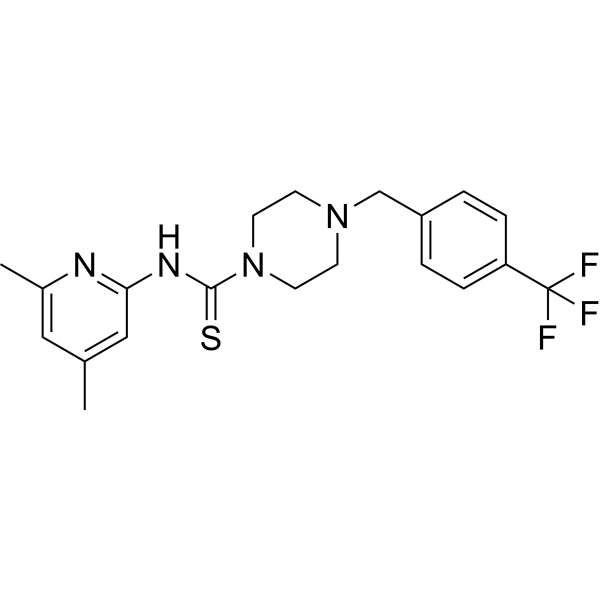
NCT-503 is a blood-brain barrier-permeable, non-competitive PHGDH inhibitor with an IC50 of 2.5 μM against human PHGDH. NCT-503 reduces glucose-derived serine production and the incorporation of one-carbon units into nucleotides without decreasing PHGDH protein expression. NCT-503 prevents high selenium-induced insulin resistance in mice by regulating blood glucose and insulin levels and improving glucose tolerance, and also inhibits the growth of tumors overexpressing PHGDH. NCT-503 can be used in research related to insulin resistance and breast cancer .
loading...
    loading...
Cat. No.: HY-142104
CAS No.: 934816-82-7
Synonyms: 2-Chlorotrityl Chloride Resin (100-200 mesh,1% DVB,0.4-3.0mmol/g)
Target:  

Drug Intermediate

Research Areas:  

Cancer

2-CTC Resin (100-200 mesh,1% DVB,0.4-3.0mmol/g) is a solid-phase synthesis carrier that has been used to study metabolic disorders in prostate cancer cells. 2-CTC Resin (100-200 mesh,1% DVB,0.4-3.0mmol/g) can be used as a reaction solution of terminal residues and adenine nucleotides to form cyclic peptides. 2-CTC Resin (100-200 mesh,1% DVB,0.4-3.0mmol/g) can prevent racemization during the incorporation of the first protected amino acid and minimized diketopiperazine formation. 2-CTC Resin (100-200 mesh,1% DVB,0.4-3.0mmol/g) is one of the most commonly used and versatile resins available for large-scale production of peptides .
loading...
    loading...
Cat. No.: HY-W406070
CAS No.: 207131-16-6
Synonyms: LNA-G
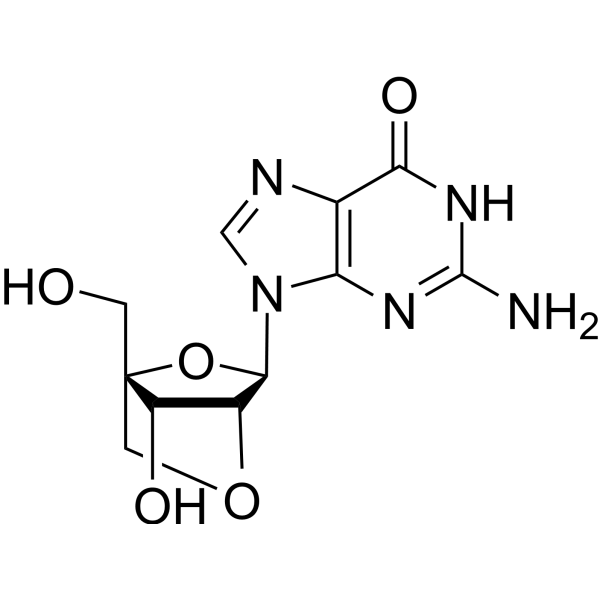
2′-O,4′-C-Methyleneguanosine (LNA-G) is a reverse guanine analog, where LNA (locked nucleic acid) is a nucleic acid analog. LNA modification can be widely used in various fields, such as effective binding affinity with complementary sequences and stronger nuclease resistance than natural nucleotides, providing great potential for application in disease diagnosis and research. 2'-O,4'-C-Methyleneguanosine is a substrate for KOD DNA polymerase, which incorporates LNA-G nucleotides into growing DNA strands, including consecutive incorporations , to generate full-length extension products .
loading...
    loading...
Cat. No.: HY-16398
CAS No.: 54-91-1
Research Areas:  

Cancer

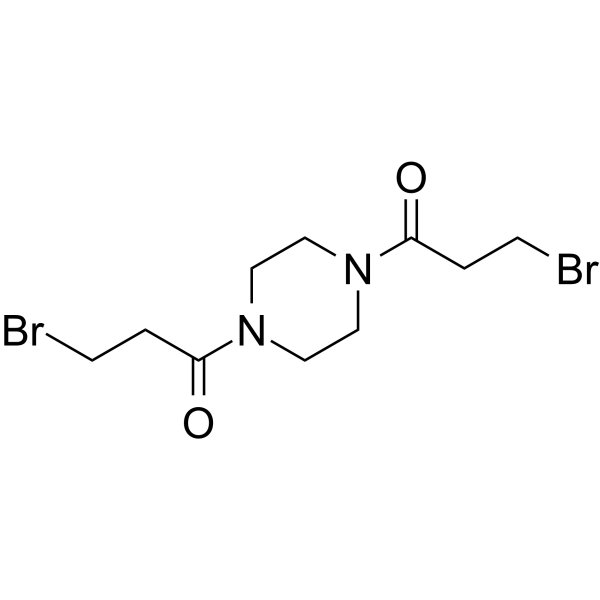
Pipobroman is a bromide derivative of piperazine and acts as an alkylating agent. Pipobroman plays its role by inhibiting DNA and RNA polymerase or by reducing pyrimidine nucleotide incorporation into DNA. Pipobroman can be used for the cancer research, including polycythemia vera, myeloproliferative neoplasm, and AML et.al .
loading...
    loading...
Cat. No.: HY-135780A
Purity:  99.69%
Synonyms: 3'-dUTP trisodium
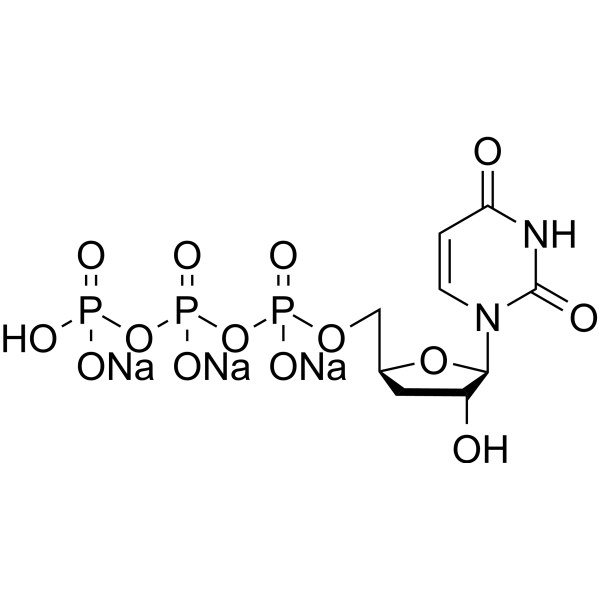
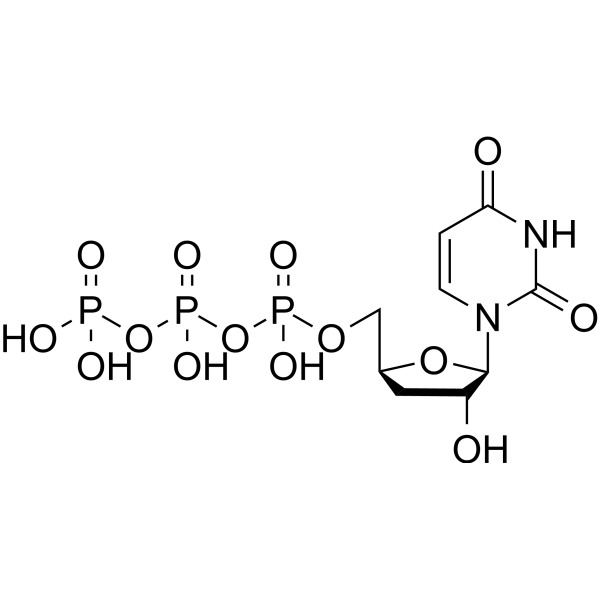
3'-Deoxyuridine-5'-triphosphate trisodium (3'-dUTP trisodium) is a nucleotide analogue that inhibits DNA-dependent RNA polymerases I and II. 3'-Deoxyuridine-5'-triphosphate trisodium strongly and competitively inhibits the incorporations of UTP into RNA with a Ki value of 2.0 μM .
loading...
    loading...
Cat. No.: HY-W042357
CAS No.: 121058-88-6
Research Areas:  

Others

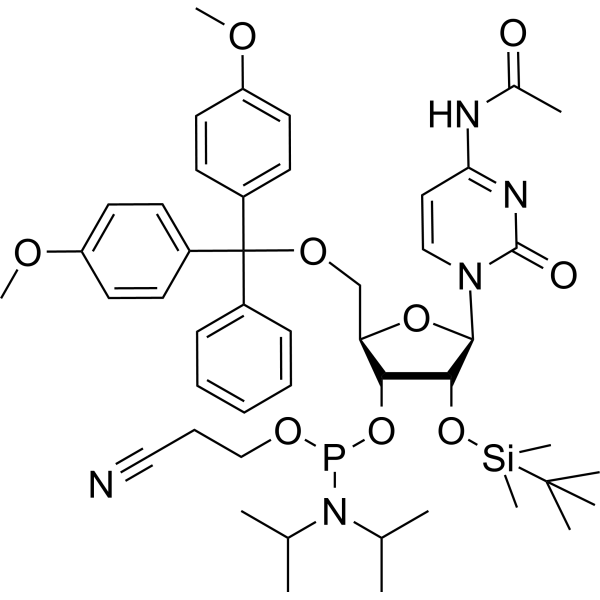
Ac-rC Phosphoramidite is a cytosine phosphoramidite used in the chemical synthesis of RNA oligonucleotides. Ac-rC Phosphoramidite enables the incorporation of cytidine nucleotides into synthetic RNA strands, and its unique protecting groups ensure the structural integrity of the molecule throughout complex synthetic processes .
loading...
    loading...
Cat. No.: HY-135780
CAS No.: 69199-40-2
Synonyms: 3'-dUTP
3'-Deoxyuridine-5'-triphosphate (3'-dUTP) is a nucleotide analogue that inhibits DNA-dependent RNA polymerases I and II. 3'-Deoxyuridine-5'-triphosphate strongly and competitively inhibits the incorporations of UTP into RNA with a Ki value of 2.0 μM .
loading...
    loading...
Cat. No.: HY-155995
CAS No.: 2762209-68-5
Synonyms: MK-905
Research Areas:  

Cancer

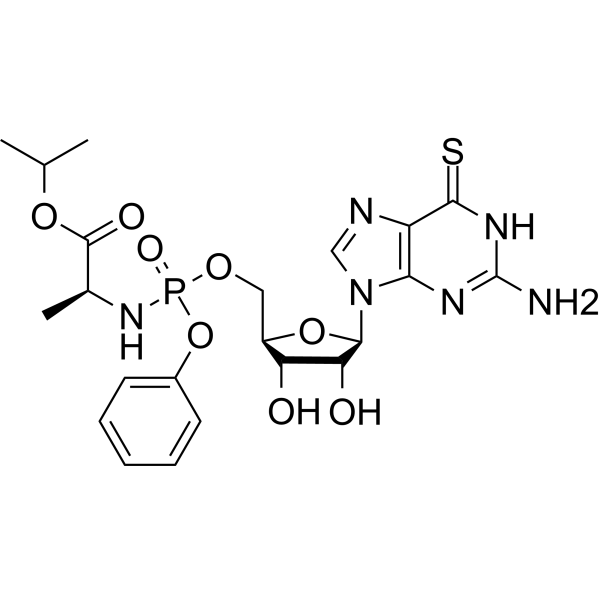
Pro-905 is a phosphite peptide with antitumor activity. Pro-905 delivers the active nucleotide antimetabolite thioguanosine monophosphate (TGMP) to the tumor. Pro-905 effectively prevents incorporation of purine salvage substrates into nucleic acids and inhibits colony formation in human malignant peripheral nerve sheath tumors (MPNST) cells. Pro-905 inhibits purine salvage incorporation to nucleic acids and prevents cell growth. Pro-905 inhibits the growth of MPNST and enhances the anti-tumor efficacy of JHU395 (HY-124778) .
loading...
    loading...
Cat. No.: HY-16398R
CAS No.: 54-91-1
Pipobroman (Standard) is the analytical standard of Pipobroman. This product is intended for research and analytical applications. Pipobroman is a bromide derivative of piperazine and acts as an alkylating agent. Pipobroman plays its role by inhibiting DNA and RNA polymerase or by reducing pyrimidine nucleotide incorporation into DNA. Pipobroman can be used for the cancer research, including polycythemia vera, myeloproliferative neoplasm, and AML et.al .
loading...
    loading...
Cat. No.: HY-188058
CAS No.: 208403-22-9
Research Areas:  

Others

Biotin-14-CTP is a modified cytidine triphosphate analog, as well as a non-terminating, non-processable nucleotide analog and labeling reagent. Biotin-14-CTP incorporates into nascent RNA strands during transcription elongation, enabling immunolabeling-based visualization of transcription sites. The incorporation of Biotin-14-CTP is inhibited by α-Amanitin (HY-19610), indicating that it can be utilized by RNA polymerase II .
loading...
    loading...
Cat. No.: HY-D3310
CAS No.: 936107-90-3
Fluorescein-12-dGTP is a fluorescein-labeled deoxyguanosine triphosphate. Fluorescein-12-dGTP incorporates into complementary allele-specific primers at SNP sites, enabling FRET with cationic conjugated polymer PFP via DNA-PFP electrostatic interactions. Fluorescein-12-dGTP incorporates into G-allele-specific primers for homozygous G/G SNP genotypes to enable genotype discrimination. Fluorescein-12-dGTP serves as a fluorescently labeled nucleotide for homogeneous solution-based SNP and FRET genotyping assays (Ex/Em = 498/517 nm) .
loading...
    loading...
Cat. No.: HY-185899
CAS No.: 72052-96-1
Synonyms: 5-Aza-2'-deoxycytidine-5′-triphosphate
Research Areas:  

Infection Cancer

5-Aza-dCTP (5-Aza-2'-deoxycytidine-5′-triphosphate) is a nucleotide analog that acts as a substrate for mammalian DNA polymerase α (Km = 3.0 μM) and a weak competitive inhibitor of this enzyme (Ki = 4.3 μM). 5-Aza-dCTP inhibits DNA polymerase α via incorporation into DNA through Watson-Crick base pairing, inhibits DNA methyltransferases via incorporation into hemimethylated DNA, and induces mutations in HIV-1 via incorporation into viral DNA during synthesis. 5-Aza-dCTP reverses the inhibitory effect of dTTP on dCMP deaminase, and allosterically activates dCMP deamination to the same extent as dCTP. 5-Aza-dCTP is applicable to research related to leukemia and type 1 human immunodeficiency virus infection .
loading...
    loading...
Cat. No.: HY-182477
CAS No.: 22944-03-2
Research Areas:  

Infection

Siccayne, found in the marine basidiomycete Halocyphina villosa and deuteromycete Helminthosporium siccans, is an antibiotic. Siccayne interferes with nucleotide incorporation into DNA and RNA, precursor transport enzymatic reactions, and essential macromolecule synthesis. Siccayne inhibits Gram-positive bacteria and some fungi. Siccayne can be used for research on infections caused by bacteria and fungi .
loading...
    loading...
Cat. No.: HY-L044
593 compounds

Nucleoside and nucleotide analogues are synthetic, chemically modified compounds that have been developed to mimic their physiological counterparts in order to exploit cellular metabolism and subsequently be incorporated into DNA and RNA to inhibit cellular division and viral replication. In addition to their incorporation into nucleic acids, nucleoside and nucleotide analogues can interact with and inhibit essential enzymes such as human and viral polymerases (that is, DNA-dependent DNA polymerases, RNA-dependent DNA polymerases or RNA-dependent RNA polymerases), kinases, ribonucleotide reductase, DNA methyltransferases, purine and pyrimidine nucleoside phosphorylase and thymidylate synthase. These actions of nucleoside and nucleotide analogues have potential therapeutic benefits — for example, in the inhibition of cancer cell growth, the inhibition of viral replication as well as other indications.

MCE offers a unique collection of 593 nucleotide compounds including nucleotide, nucleoside and their structural analogues. MCE Nucleotide Compound Library is a useful tool to discover anti-cancer and antiviral drugs for high throughput screening (HTS) and high content screening (HCS).

Cat. No.: HY-123599
CAS No.: 1884209-98-6
Target:  

DNA/RNA Synthesis

Research Areas:  

Cancer

IACS-4619 (compound 4) is a highly selective 2-aminopyrimidine-based MTH1 (MutT homolog 1) inhibitor (IC50=0.2 nM). IACS-4619 inhibits MTH1 by blocking its hydrolysis of oxidized purine nucleotides such as 8-oxo-dGTP, thereby preventing MTH1 from inhibiting the incorporation of oxidized nucleotides into DNA. IACS-4619 significantly inhibits endogenous MTH1 activity in MTH1-overexpressing U2OS cells, but without antiproliferative or cytotoxic effects on various human cancer and normal cell lines. IACS-4619 can be used in oncology research related to the MTH1 target .
loading...
    loading...
Cat. No.: HY-123113
CAS No.: 65886-71-7
Synonyms: Kymarabine; Ara-AC; NSC 281272
Target:  

DNA/RNA Synthesis

Research Areas:  

Cancer

Fazarabine (Kymarabine; Ara-AC; NSC 281272) is an orally active, blood-brain barrier permeable DNA polymerase inhibitor and antitumor agent. Fazarabine interferes with DNA synthesis via intracellular activation into a triphosphate nucleotide that directly incorporates into DNA, inducing cytotoxicity, myelosuppression, as well as moderate nausea and vomiting. Fazarabine is resistant to deamination by cytidine-deoxycytidine deaminase and undergoes spontaneous aqueous degradation. Fazarabine exerts time-dependent, broad-spectrum activity against leukemia and solid tumors. Fazarabine can be used in research related to refractory malignancies, acute leukemia, and blast-phase chronic myeloid leukemia .
loading...
    loading...
Cat. No.: HY-187616
CAS No.: 163435-77-6
R-95845 is a non-nucleoside HIV-1 reverse transcriptase (RT) inhibitor. R-95845 is specific to HIV-1 RT and acts as a functionally non-competitive inhibitor with respect to nucleotide incorporation. R-95845 binds to the non-nucleoside inhibitor binding pocket of HIV-1 RT in a butterfly-like conformation, forms hydrogen bonds with Tyr 188 and Val 189, and engages in hydrophobic interactions with surrounding residues. R-95845 can be used in studies related to HIV-1 infection and acquired immunodeficiency syndrome .
loading...
    loading...
Cat. No.: HY-101966R
CAS No.: 1916571-90-8
NCT-503 (Standard) is the analytical standard of NCT-503 (HY-101966). This product is intended for research and analytical applications. NCT-503 is a blood-brain barrier-permeable, non-competitive PHGDH inhibitor with an IC50 of 2.5 μM against human PHGDH. NCT-503 reduces glucose-derived serine production and the incorporation of one-carbon units into nucleotides without decreasing PHGDH protein expression. NCT-503 prevents high selenium-induced insulin resistance in mice by regulating blood glucose and insulin levels and improving glucose tolerance, and also inhibits the growth of tumors overexpressing PHGDH. NCT-503 can be used in research related to insulin resistance and breast cancer .
loading...
    loading...
  • 1

