13 Results for "

ovarian dysfunction

" in MedChemExpress (MCE) Product Catalog:
Products (13)

13 Results for "ovarian dysfunction" in MCE Product Catalog:

5
5 Cited Publications
Cat. No.: HY-118861
CAS No.: 15690-57-0
Synonyms: (E)-Clomiphene; trans-Clomiphene; Enclomifene
Target:  

Estrogen Receptor/ERR

Research Areas:  

Metabolic Disease Endocrinology

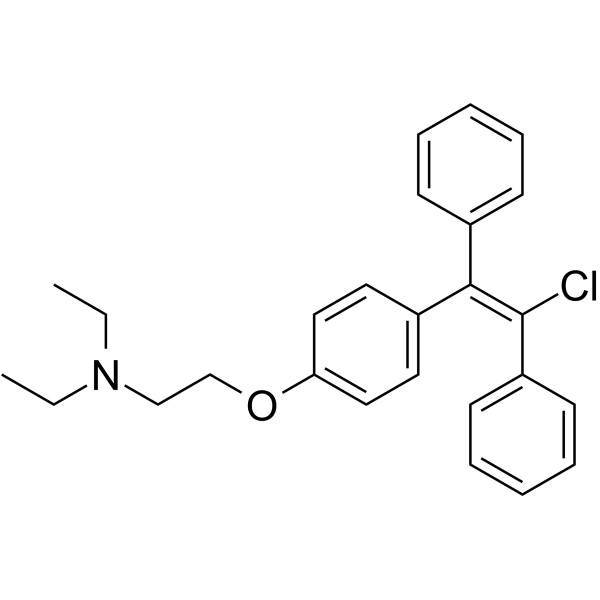
Enclomiphene ((E)-Clomiphene) is a potent and orally active non-steroidal estrogen receptor antagonist, with antioestrogenic property. Enclomiphene can be used for the research of ovarian dysfunction, testosterone deficiency, male hypogonadism and type 2 diabetes .
loading...
    loading...
1
1 Cited Publications
Cat. No.: HY-118861A
CAS No.: 7599-79-3
Purity:  99.96%
Synonyms: (E)-Clomiphene citrate; trans-Clomiphene citrate; Enclomifene citrate
Target:  

Estrogen Receptor/ERR

Research Areas:  

Metabolic Disease Endocrinology

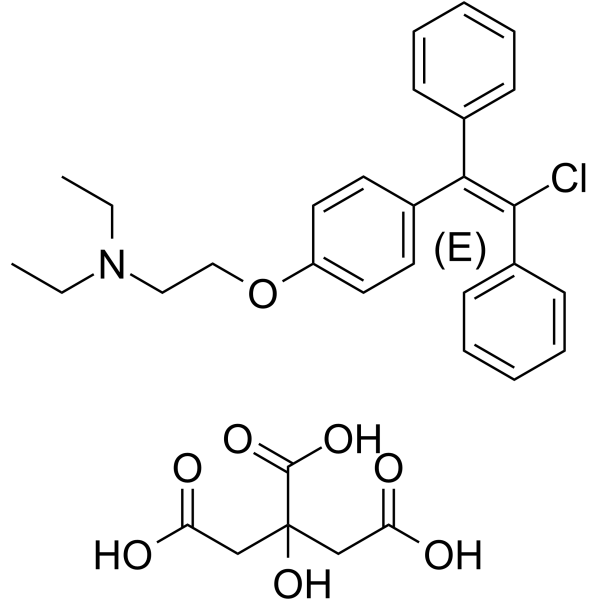
Enclomiphene ((E)-Clomiphene) citrate is a potent and orally active non-steroidal estrogen receptor antagonist, with antioestrogenic property. Enclomiphene citrate can be used for the research of ovarian dysfunction, testosterone deficiency, male hypogonadism and type 2 diabetes .
loading...
    loading...
1
1 Cited Publications
Cat. No.: HY-112234
CAS No.: 17094-01-8
Synonyms: Sepiapterin
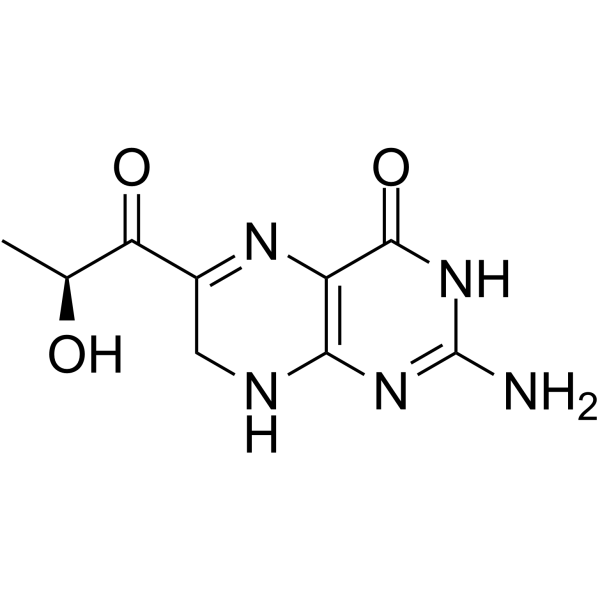
L-Sepiapterin (Sepiapterin), is a phenylalanine hydroxylase activator, is a precursor of the endothelial nitric oxide synthase (eNOS) cofactor tetrahydrobiopterin (BH4). L-Sepiapterin improves endothelial dysfunction in small mesenteric arteries from db/db mice, and induces angiogenesis. L-Sepiapterin inhibits cell proliferation and migration of ovarian cancer cells via down-regulation of p70 S6K-dependent VEGFR-2 expression. L-Sepiapterin can be used for the study of hyperphenylalaninemia .
loading...
    loading...
1
1 Cited Publications
Cat. No.: HY-N7106
CAS No.: 131-11-3
Synonyms: DMP
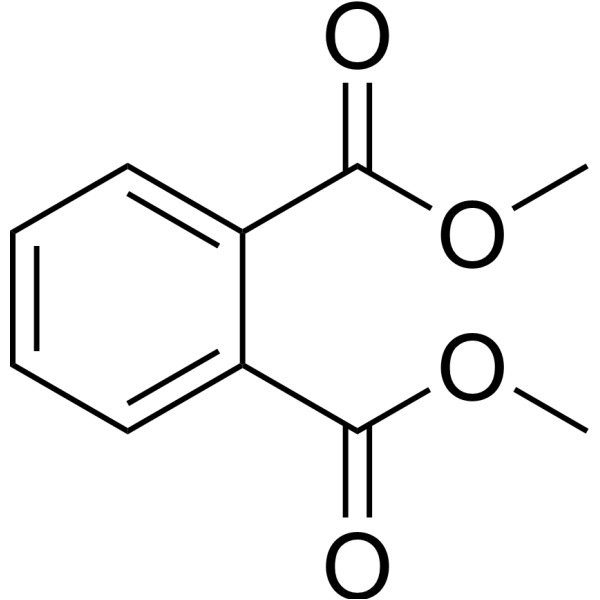
Dimethyl phthalate (DMP) can be used as a plasticizer to impart flexibility to rigid polyvinyl chloride (PVC) resin. Additionally, Dimethyl phthalate is an oral active endocrine disruptor that can cause ovarian dysfunction in mice. Dimethyl phthalate can also induce oxidative stress and apoptosis in cells, thereby affecting blood and red blood cell function in rats .
loading...
    loading...
Cat. No.: HY-W142432
CAS No.: 2058-94-8
Perfluoroundecanoic acid is a perfluoroalkyl substance (PFAS). Perfluoroundecanoic acid is an orally active oxidative stress inducer. Perfluoroundecanoic acid promotes macrophage M2 polarization, activates Wnt/β-catenin signaling and enhances β-catenin nuclear accumulation. Perfluoroundecanoic acid -induced M2 phenotype macrophage accelerates tumor progression in vitro and in vivo. Perfluoroundecanoic acid induces DNA damage, reproductive and pathophysiological dysfunctions via oxidative stress in male Swiss mice. Perfluoroundecanoic acid inhibits Leydig cell development in pubertal male rats via inducing oxidative stress and autophagy. Perfluoroundecanoic acid accelerates insulitis development in a mouse model of type 1 diabetes. Perfluoroundecanoic acid can be used for the study of ovarian cancer, type 1 diabetes and inflammation .
loading...
    loading...
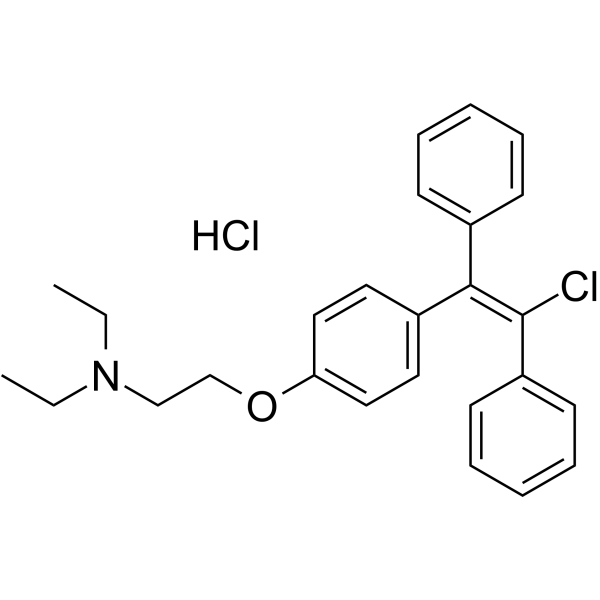
Cat. No.: HY-118861B
CAS No.: 14158-65-7
Synonyms: (E)-Clomiphene hydrochloride; trans-Clomiphene hydrochloride; Enclomifene hydrochloride
Target:  

Estrogen Receptor/ERR

Research Areas:  

Metabolic Disease Endocrinology

Enclomiphene ((E)-Clomiphene) hydrochloride is a potent and orally active non-steroidal estrogen receptor antagonist, with antioestrogenic property. Enclomiphene hydrochloride can be used for the research of ovarian dysfunction, testosterone deficiency, male hypogonadism and type 2 diabetes .
loading...
    loading...
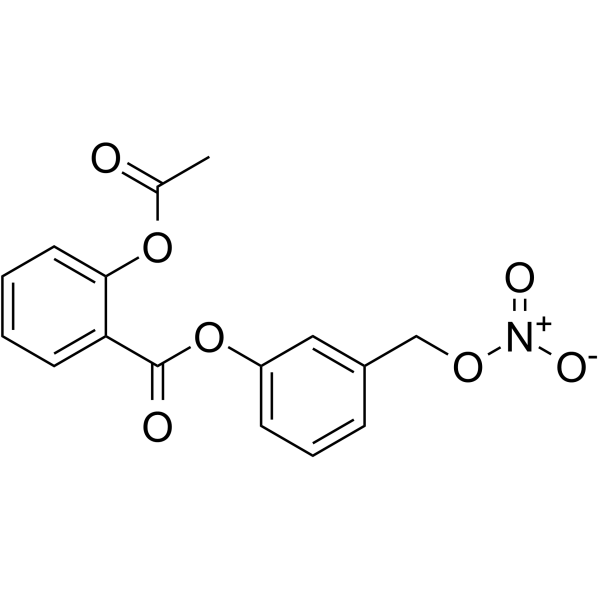
Cat. No.: HY-123823
CAS No.: 175033-36-0
Purity:  98.57%
Synonyms: NCX 4016
Target:  

NO Synthase Apoptosis STAT

Research Areas:  

Inflammation/Immunology Cancer

Nitroaspirin (NCX 4016) is an orally active inhibitor of ARG1 and NOS2. Nitroaspirin reduces ARG1 enzymatic activity via the STAT6-mediated signaling pathway, and feedback-inhibits the catalytic activity of NOS2 in a NO-releasing group-dependent manner. Nitroaspirin continuously releases intracellular NO, inducing redox-dependent loss of cell viability. Nitroaspirin also exerts anti-angiogenic effects by causing endothelial barrier dysfunction, and effectively inhibits the proliferation of Cisplatin (HY-17394)-resistant human ovarian cancer cells . Nitroaspirin can be used in research related to colon cancer, breast cancer and Cisplatin-resistant human ovarian cancer .
loading...
    loading...
Cat. No.: HY-175257
Theophylline-platinum(IV) prodrug-1 is a PARP-1 inhibitor. Theophylline-platinum(IV) prodrug-1 enhances DNA damage, ROS production, mitochondrial dysfunction, apoptosis and S-phase arrest, along with reducing invasion and metastasis in cells. Theophylline-platinum(IV) prodrug-1 exhibits superior antitumor activity in the xenograft SKOV3-BRCA1-KD tumor model. Theophylline-platinum(IV) prodrug-1 can be used for the study of ovarian cancer .
loading...
    loading...
Cat. No.: HY-N7106S3
Synonyms: DMP-13C6
Dimethyl phthalate- 13C6 (DMP- 13C6) is the 13C-labeled Dimethyl phthalate (HY-N7106). Dimethyl phthalate (DMP) can be used as a plasticizer to impart flexibility to rigid polyvinyl chloride (PVC) resin. Additionally, Dimethyl phthalate is an oral active endocrine disruptor that can cause ovarian dysfunction in mice. Dimethyl phthalate can also induce oxidative stress and apoptosis in cells, thereby affecting blood and red blood cell function in rats .
loading...
    loading...
Cat. No.: HY-W778335
CAS No.: 1346598-73-9
Synonyms: DMP-13C2
Dimethyl Phthalate- 13C2 (DMP- 13C2) is the 13C-labeled Dimethyl phthalate (HY-N7106). Dimethyl phthalate (DMP) can be used as a plasticizer to impart flexibility to rigid polyvinyl chloride (PVC) resin. Additionally, Dimethyl phthalate is an oral active endocrine disruptor that can cause ovarian dysfunction in mice. Dimethyl phthalate can also induce oxidative stress and apoptosis in cells, thereby affecting blood and red blood cell function in rats .
loading...
    loading...
Cat. No.: HY-N7106S2
Synonyms: DMP-13C6,d4
Dimethyl phthalate- 13C6,d4 (DMP- 13C6,d4) is the deuterium labeled and 13C-labeled Dimethyl phthalate (HY-N7106). Dimethyl phthalate (DMP) can be used as a plasticizer to impart flexibility to rigid polyvinyl chloride (PVC) resin. Additionally, Dimethyl phthalate is an oral active endocrine disruptor that can cause ovarian dysfunction in mice. Dimethyl phthalate can also induce oxidative stress and apoptosis in cells, thereby affecting blood and red blood cell function in rats .
loading...
    loading...
Cat. No.: HY-183456
CAS No.: 71308-35-5
Tyrphostin AG17 is an orally active CDK2 inhibitor and EGFR tyrosine kinase antagonist. Tyrphostin AG17 reduces the levels of p21 and p16. Tyrphostin AG17 induces G1 phase cell cycle arrest, Apoptosis, mitochondrial dysfunction, decreased ATP levels, and inhibits DNA, RNA and protein synthesis, adipogenesis, and lipid synthesis. Tyrphostin AG17 inhibits fat accumulation, white adipose tissue hypertrophy, and alterations of glycogen and lipid inclusions in hepatocytes in obese mice without changing their serum biochemical parameters. Tyrphostin AG17 exhibits anticancer effects. Tyrphostin AG17 can be used in research related to immunoblastic lymphoma, leukemia, ovarian cancer, glioblastoma, colon cancer, breast cancer, melanoma, obesity and hepatic steatosis .
loading...
    loading...
Cat. No.: HY-W142432S
Perfluoroundecanoic acid- 13C7 is the 13C-labeled Perfluoroundecanoic acid (HY-W142432). Perfluoroundecanoic acid is a perfluoroalkyl substance (PFAS). Perfluoroundecanoic acid is an orally active oxidative stress inducer. Perfluoroundecanoic acid promotes macrophage M2 polarization, activates Wnt/β-catenin signaling and enhances β-catenin nuclear accumulation. Perfluoroundecanoic acid -induced M2 phenotype macrophage accelerates tumor progression in vitro and in vivo. Perfluoroundecanoic acid induces DNA damage, reproductive and pathophysiological dysfunctions via oxidative stress in male Swiss mice. Perfluoroundecanoic acid inhibits Leydig cell development in pubertal male rats via inducing oxidative stress and autophagy. Perfluoroundecanoic acid accelerates insulitis development in a mouse model of type 1 diabetes. Perfluoroundecanoic acid can be used for the study of ovarian cancer, type 1 diabetes and inflammation .
loading...
    loading...
  • 1

