
100 Results for "

pH probes

" in MedChemExpress (MCE) Product Catalog:
Products (100)

100 Results for "pH probes" in MCE Product Catalog:

25
25 Publications Verification
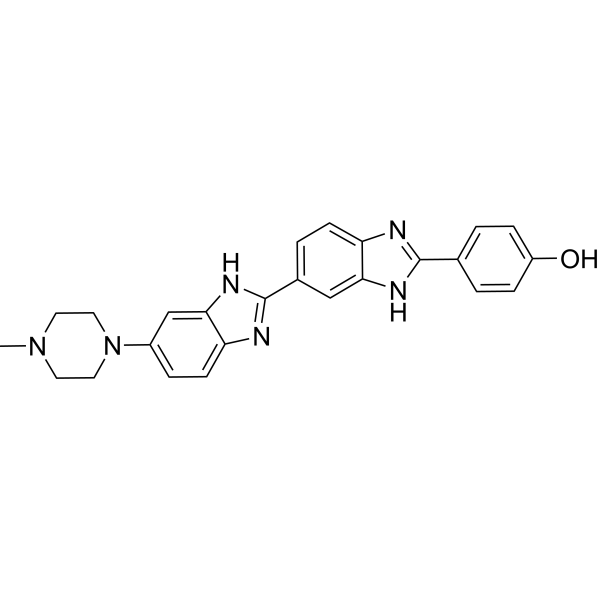
Cat. No.: HY-15558
CAS No.: 23491-44-3
Purity:  99.11%
Synonyms: bisBenzimide H 33258; H 33258
Hoechst 33258 is a blue to blue-green fluorescent live cell dye that can label DNA. Hoechst 33258 can specifically bind to the minor groove of DNA (and tends to bind to A/T-rich DNA), resulting in a significant increase in fluorescence intensity. Hoechst 33258 can cross the cell membrane and cause changes in DNA structure, such as G2/M phase arrest. Hoechst 33258 can bind to live or fixed cells, and the fluorescence intensity increases with increasing solution pH. As a DNA-specific probe, Hoechst 33258 can be used to detect DNA content, analyze cell cycle, etc. The excitation wavelength of Hoechst 33258 is 350-365 nm, and the emission wavelength is 460-490 nm .
loading...
    loading...
6
6 Cited Publications
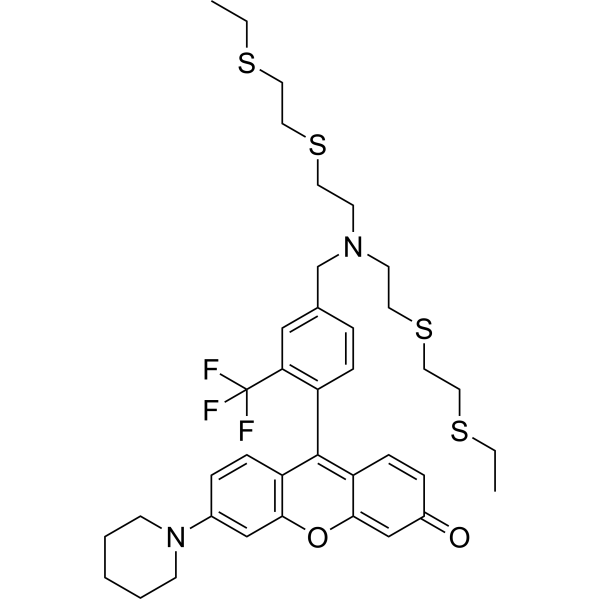
Cat. No.: HY-150086
CAS No.: 2365532-64-3
Purity:  98.44%
Synonyms: CF4
Copper Fluor-4 (CF4) is a Cu +-specific fluorescent probe based on a rhodol dye scaffold. Copper Fluor-4 has high copper selectivity with a Kd value of 2.9×10 −13 M, particularly over zinc and iron, as well as abundant cellular alkali and alkaline earth metals. Copper Fluor-4 is stable in a physiologically relevant pH regime between 6 and 8 (wavelengths of 415 nm for excitation and 660 nm for emission) .
loading...
    loading...
5
5 Cited Publications
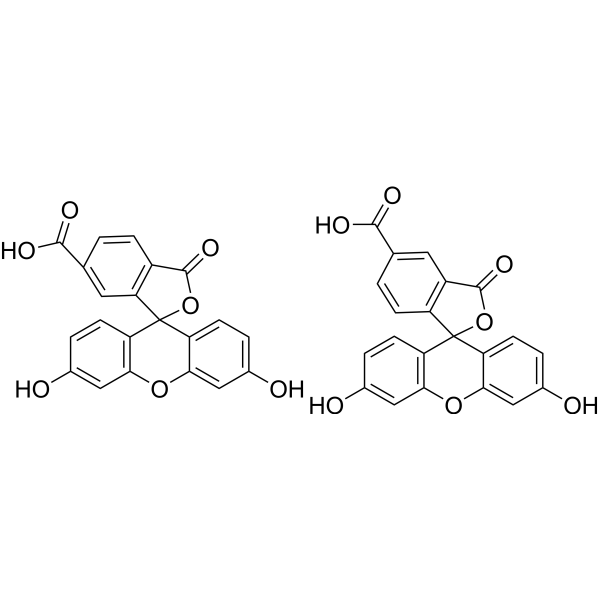
Cat. No.: HY-15940
CAS No.: 72088-94-9
Synonyms: 5(6)-FAM; 5-(and-6)-Carboxyfluorescein mixed isomers
5(6)-Carboxyfluorescein (5(6)-FAM) is an amine-reactive pH-sensitive green fluorescent probe. 5(6)-Carboxyfluorescein (5(6)-FAM) can be used to label proteins, peptides and nucleotides. 5(6)-Carboxyfluorescein can be used for the detection of tumour areas in vivo .
loading...
    loading...
4
4 Cited Publications
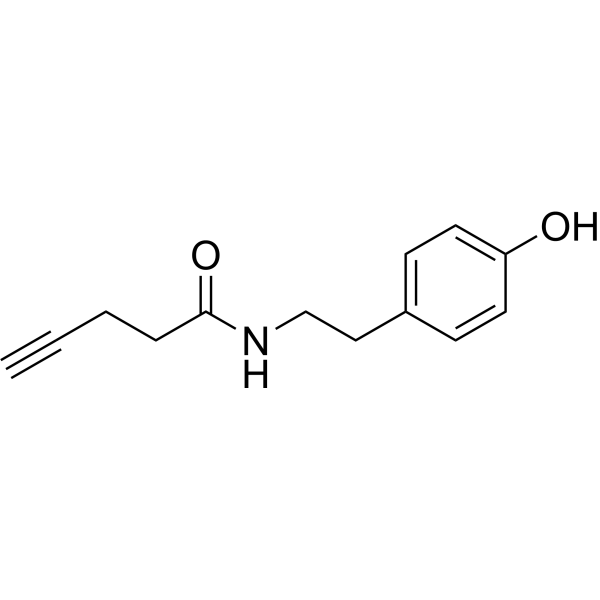
Cat. No.: HY-131442
CAS No.: 1694495-59-4
Purity:  99.72%
Synonyms: Alkyne tyramide; Alk-pH
Research Areas:  

Others

Alkyne-phenol (Alk-Ph) is a clickable ascorbate peroxidase 2 (APEX2) probe. Alkyne-phenol substantially improves APEX-labeling efficiency in intact yeast cells, as it is more cell wall-permeant than APEX2 substrate biotin-phenol (BP). Alkyne-phenol also facilitates the identification of APEX-labeling sites, allowing the unambiguous assignment of membrane topology of mitochondrial proteins . Alkyne-phenol is a click chemistry reagent, it contains an Alkyne group and can undergo copper-catalyzed azide-alkyne cycloaddition (CuAAc) with molecules containing Azide groups.
loading...
    loading...
4
4 Cited Publications
Cat. No.: HY-B1422
CAS No.: 90-45-9
Synonyms: Aminacrine
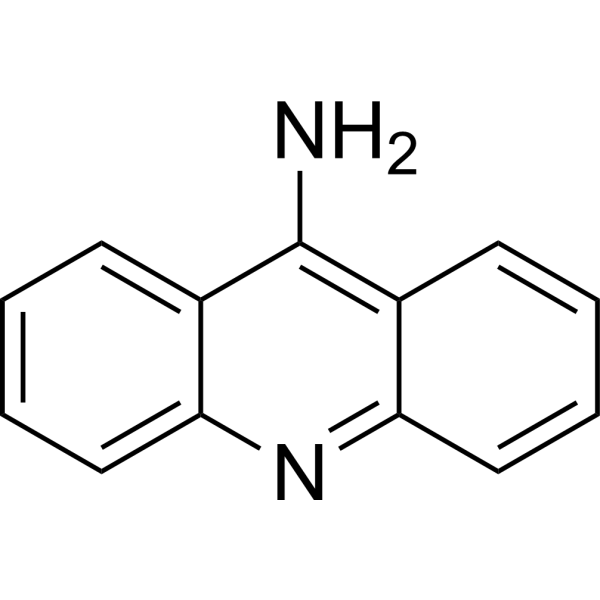
9-Aminoacridine, a fluorescent probe, acts as an indicator of pH for quantitative determination of transmembrane pH gradients (inside acidic). 9-Aminoacridine is an antimicrobial. 9-Aminoacridine exerts its antimicrobial activity by interacting with specific bacterial DNA and disrupting the proton motive force in K. pneumoniae. 9-Aminoacridine is a HIV-1 inhibitor and inhibits HIV LTR transcription highly dependent on the presence and location of the amino moiety. 9-Aminoacridine inhibits virus replication in HIV-1 infected cell lines. 9-Aminoacridine is used as a Rifampin (RIF; HY-B0272) adjuvant for the multidrug-resistant K. pneumoniae infections .
loading...
    loading...
4
4 Cited Publications
Cat. No.: HY-18071
CAS No.: 1204329-34-9
Research Areas:  

Cardiovascular Disease

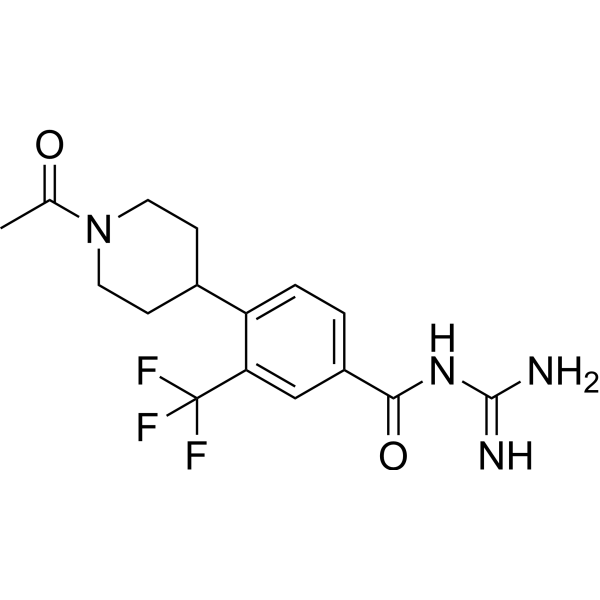
BI-9627, a chemical probe, is a potent sodium-hydrogen exchanger isoform 1 (NHE1) inhibitor (IC50 = 6 and 31 nM in intracellular pH recovery (pHi) and human platelet swelling assays). BI-9627 displays >30-fold selectivity against NHE2 and with no measurable inhibitory activity against the NHE3 isoform. BI-9627 decreases autophagy in HTR-8/SVneo cells. BI-9627 can significantly reduce the pHi of human sperm and partially reverse the effect of DMA. BI-9627 prolongs Ca 2+ recovery time in KO hiPSC-CMs. BI-9627 shows low DDI (agent-agent interaction) potential, excellent pharmacokinetics in rat and dog, and remarkably potent activity in the isolated heart model of ischemia-reperfusion injury .
loading...
    loading...
3
3 Cited Publications
Cat. No.: HY-15942
CAS No.: 91809-66-4
Target:  

Fluorescent Dye

Research Areas:  

Others

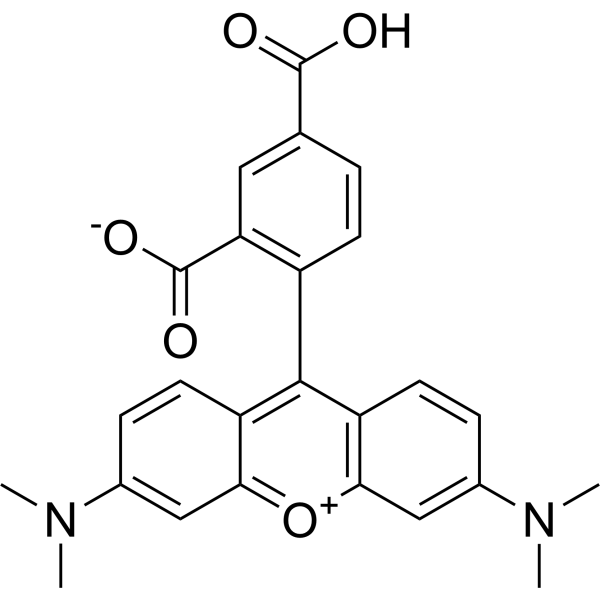
5-TAMRA can produce bright, pH-insensitive orange-red fluorescence (excitation and emission extremes of 546/579) and has good photostability. 5-TAMRA is mainly used as a fluorescent marker for the synthesis and study of specific oligonucleotide probes .
loading...
    loading...
3
3 Cited Publications
Cat. No.: HY-118155
CAS No.: 3548-09-2
Purity:  99.56%
Synonyms: ACMA
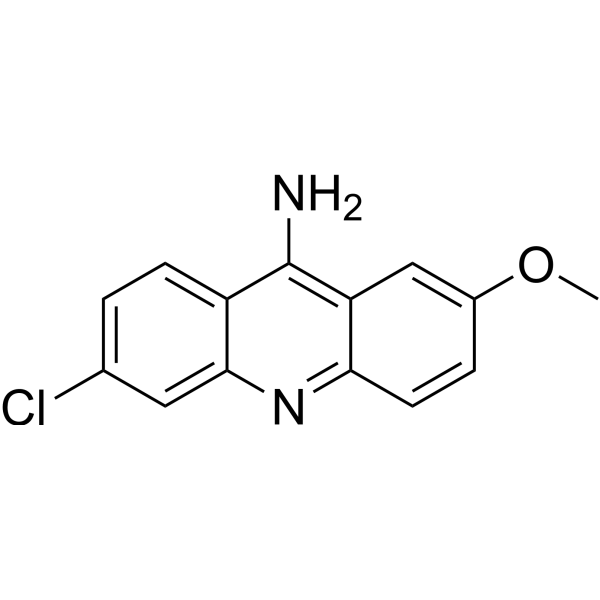
9-Amino-6-chloro-2-methoxyacridine is a pH sensitive fluorescent probe. 9-Amino-6-chloro-2-methoxyacridine has been frequently used to measure changes in vacuolar pH when a specific substrate crosses the tonoplast through a putative H +/solute antiport system .
loading...
    loading...
3
3 Cited Publications
Cat. No.: HY-D2119
CAS No.: 2089438-23-1
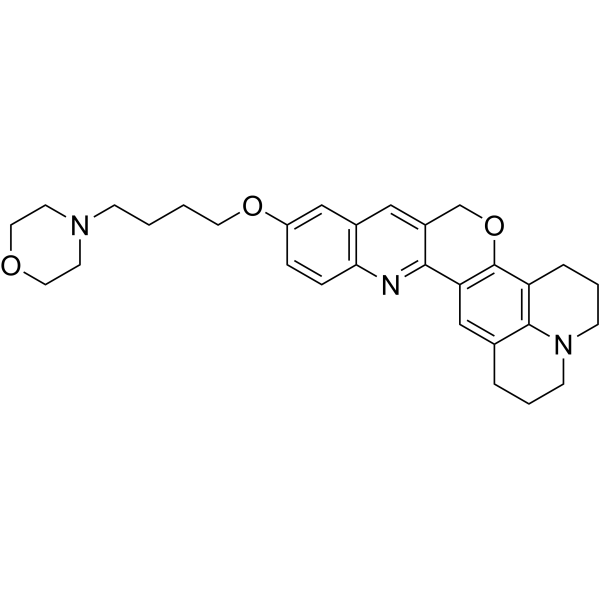
CQ-Lyso is a lysosome-targeting chromenoquinoline. CQ-Lyso is a fluorescent probe for measuring the pH of lysosomes in living cells using only single wavelength excitation. CQ-Lyso can visualize the dynamic pH changes in lysosomes .
loading...
    loading...
2
2 Cited Publications
Cat. No.: HY-D1094
CAS No.: 126208-12-6
Synonyms: SNARF 1
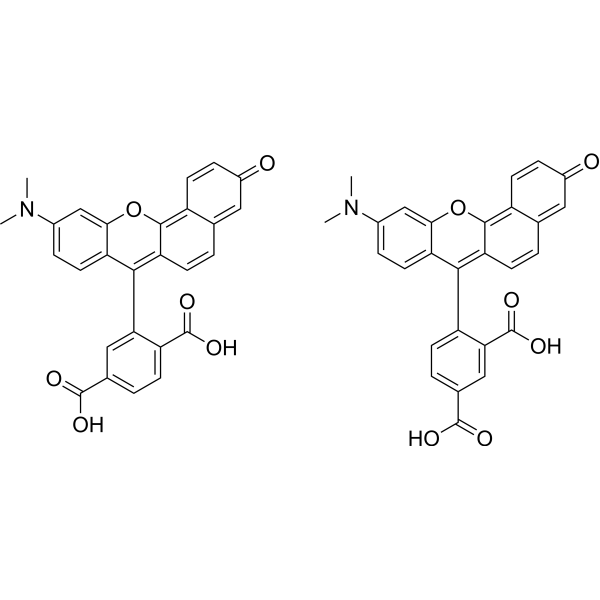
Carboxy-SNARF 1 (5/6-mixture) (SNARF 1) is a fluorescent probe that is sensitive to pH (Ex: 488 nm). Carboxy-SNARF 1 (5/6-mixture) can be used for measurement pH. Carboxy-SNARF 1 (5/6-mixture) exhibits a significant emission shift from yellow-orange (Em: 580 nm) to deep red fluorescence (Em: 640 nm) under acidic and basic conditions (pH=7-8), respectively .
loading...
    loading...
2
2 Cited Publications
Cat. No.: HY-D1156A
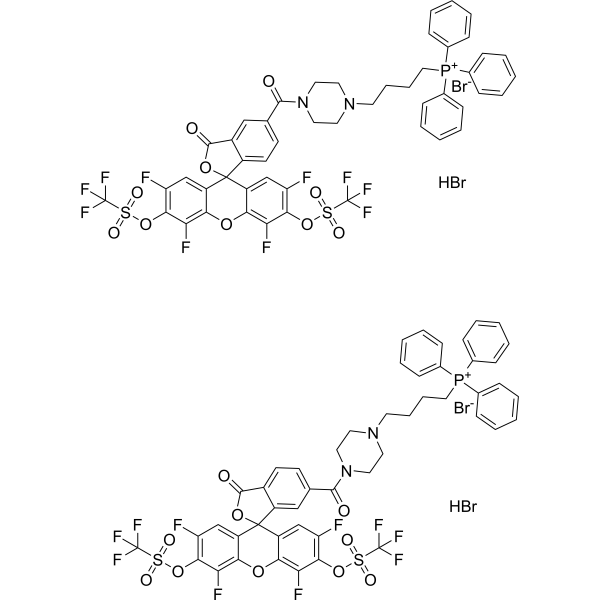
HKSOX-1m (5/6-mixture) hydrobromide is a O2 fluorescent probe for mitochondria-targeting (Ex/Em=509/534nm; green), exhibiting excellent selectivity and sensitivity toward O2 over a broad range of pH, strong oxidants, and abundant reductants found in cells .
loading...
    loading...
2
2 Cited Publications
Cat. No.: HY-130027
CAS No.: 2031170-85-9
Purity:  95.05%
Synonyms: BXY2142
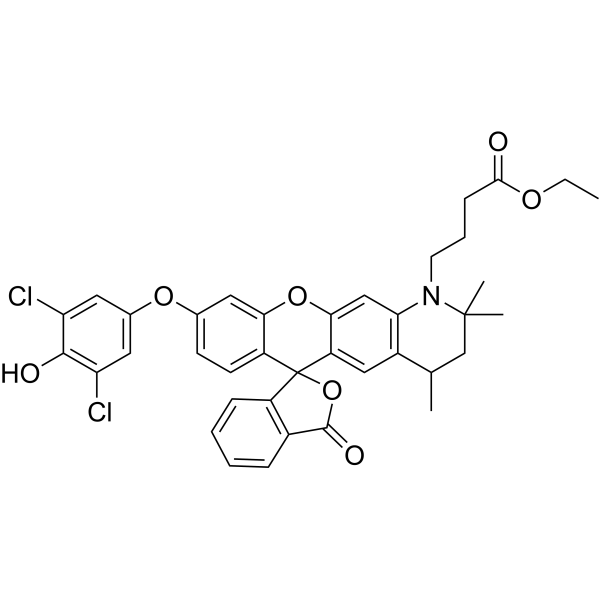
HKOCl-4 (BXY2142) is a rhodol-based yellow fluorescent probe for the detection of hypochlorous acid with excellent sensitivity and selectivity . HKOCl-4 has longer absorption wavelength and better pH stability compared with fluorescein-based probes. Ex: 530 nm; Em 557 nm.
loading...
    loading...
1
1 Cited Publications
Cat. No.: HY-D1563
CAS No.: 312961-83-4
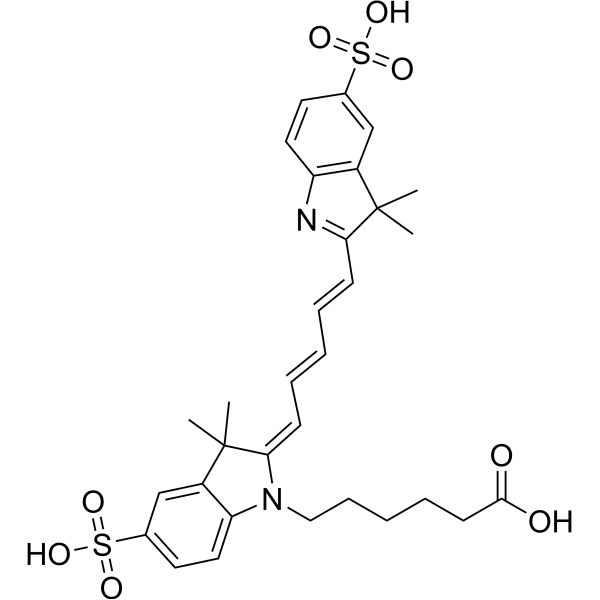
pH Receptor Probe is a pH-sensitive cyanine derivative and a environmental sensitive fluorophore. pH Receptor Probe has a pH-sensitive maximal absorption at 644 nm and emission at 664 nm. pH Receptor Probe has been used as a pH sensor of lysosomal compartments .
loading...
    loading...
1
1 Cited Publications
Cat. No.: HY-D1694
CAS No.: 1064123-31-4
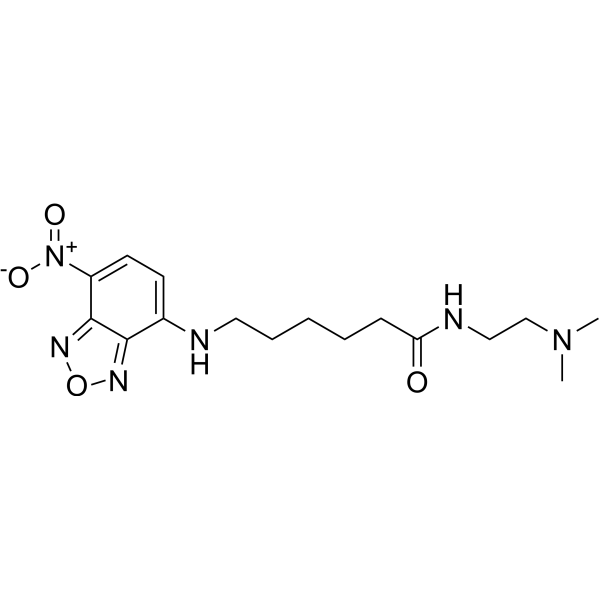
LysoTracker Yellow HCK 123 is a potent yellow membrane-permeable fluorescent probe. LysoTracker Yellow HCK 123 is a weakly basic amine that selectively accumulates in cellular compartments with low luminal pH .
loading...
    loading...
Cat. No.: HY-110210
CAS No.: 146616-66-2
Purity:  99.80%
Synonyms: BODIPY FL,SE
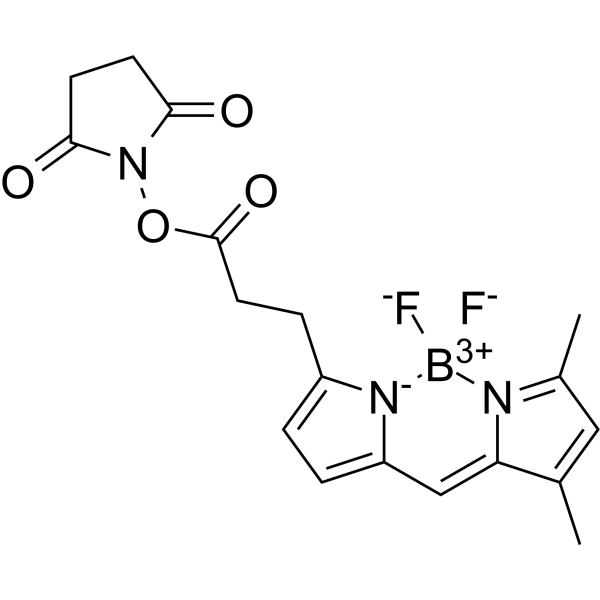
BODIPY FL NHS ester (BODIPY FL, SE) is a cell membranes-penatrable amine-reactive fluorescent probe. The maximum excitation/emission wavelength of the BODIPY-FL NHS ester are 502/511 nm, respectively. BODIPY-FL NHS ester has high stability and is insensitive to the polarity, pH and type of solvent, and can maintain stable fluorescence properties under different environmental conditions. BODIPY-FL NHS ester can be used for the synthesis of protease substrates, live cell imaging, protein labeling and immunoassay .
loading...
    loading...
Cat. No.: HY-P10152
CAS No.: 185462-59-3
Research Areas:  

Infection

INF7 is a derivative of the N-terminal domain of the HA2 protein and is sensitive to pH. INF7 disrupts the stability of endosomal membranes through a mechanism independent of membrane fusion. INF7 can be used to enhance the endosome escape of complex or liposome-encapsulated proteins. Co-encapsulation of INF7 and molecular imaging probes in liposomes can enhance intracellular signaling and probe retention .
loading...
    loading...
Cat. No.: HY-173176
CAS No.: 74447-34-0
Research Areas:  

Others

4-(2-Azidoethyl)phenol (Ph_N3) is a clickable APEX2 probe. 4-(2-Azidoethyl)phenol (Ph_N3) exhibits reliable labeling ability and enabled two biotinylation routes for downstream analysis .
loading...
    loading...
Cat. No.: HY-D0077
CAS No.: 195136-58-4
Synonyms: Oregon green 488
Target:  

Fluorescent Dye

Research Areas:  

Others

2',7'-Difluorofluorescein (Oregon green 488) is a fluorescein derivative and a pH-sensitive fluorescent probe (pKa ~4.7). Upon excitation at 488 nm, 2',7'-Difluorofluorescein exhibits pH-sensitive fluorescence intensity through the formation of dianions, while its pH sensitivity decreases under excitation at 450 nm, allowing its use in ratiometric pH analysis. 2',7'-Difluorofluorescein can be used for the quantitative analysis of pH values in the range of 2-7 in submicron aerosol particles. 2',7'-Difluorofluorescein undergoes buffer-mediated and buffer-free excited-state proton transfer between different protonated forms, and its cationic form undergoes rapid excited-state deprotonation. 2',7'-Difluorofluorescein is resistant to photodegradation, maintains stable absorption and fluorescence properties within the physiological pH range, and serves as a fluorescent protein label, a component of Ca 2+ indicators, a fluorescent imaging agent, and an anisotropy probe .
loading...
    loading...
Cat. No.: HY-D1602
CAS No.: 217075-07-5
Target:  

Fluorescent Dye

Research Areas:  

Others

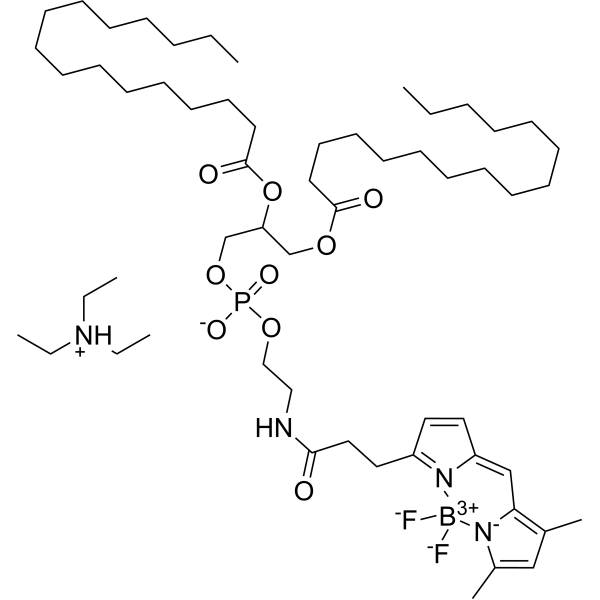
BODIPY FL-DHPE is a fluorescent lipid probe composed of phosphatidylethanolamine (DHPE) labeled with a BODIPY FL fluorophore, which is used for fluorescent labeling of cell membranes, differentiation between liposome membrane fusion and endocytic pathways, and studies of membrane dynamics. The two C16 alkyl chains of BODIPY FL-DHPE insert into the lipid bilayer of membranes, and its fluorescence exhibits concentration dependence: it exists as monomers and emits green fluorescence at low mole fractions; it forms dimers with a red-shifted emission peak at high mole fractions; this spectral change is independent of enzymes, pH, and membrane potential. When liposomes enter the plasma membrane via membrane fusion, the dye is diluted, leading to attenuation of the dimer peak and enhancement of the monomer peak; when entry occurs via endocytosis, the dye remains in endosomes at high concentration with no change in the dimer peak, allowing differentiation between the two uptake pathways. Ex = 488 nm; monomer Em = 515 nm, dimer Em ≈ 620 nm .
loading...
    loading...
Cat. No.: HY-124473
CAS No.: 61419-02-1
Purity:  99.52%
Synonyms: NapHthafluorescein
Research Areas:  

Cancer

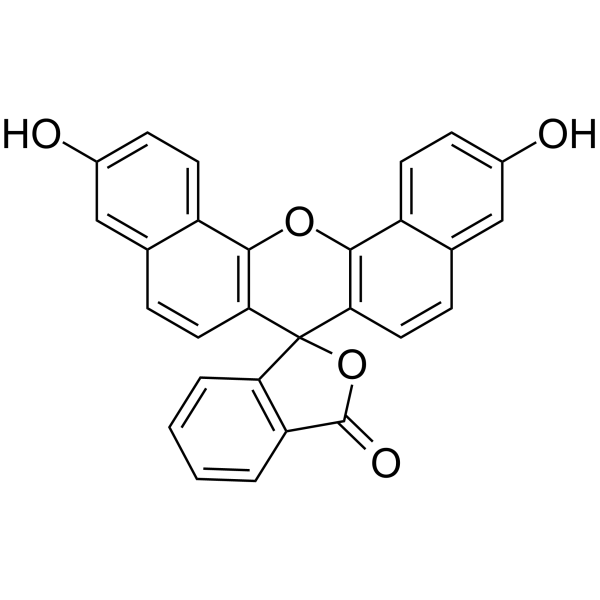
Naphthofluorescein inhibits the interaction between HIF-1 and Mint3. Naphthofluorescein suppresses Mint3-dependent HIF-1 activity and glycolysis in cancer cells and macrophages without cytotoxicity in vitro and adverse effect in vivo . Naphthofluorescein is also a fluorescent pH-sensitive probe that can be used for functional Cerenkov imaging .
loading...
    loading...

