49 Results for "

parkinson's disease (PD)

" in MedChemExpress (MCE) Product Catalog:
Products (49)

49 Results for "parkinson's disease (PD)" in MCE Product Catalog:

50
50 Publications Verification
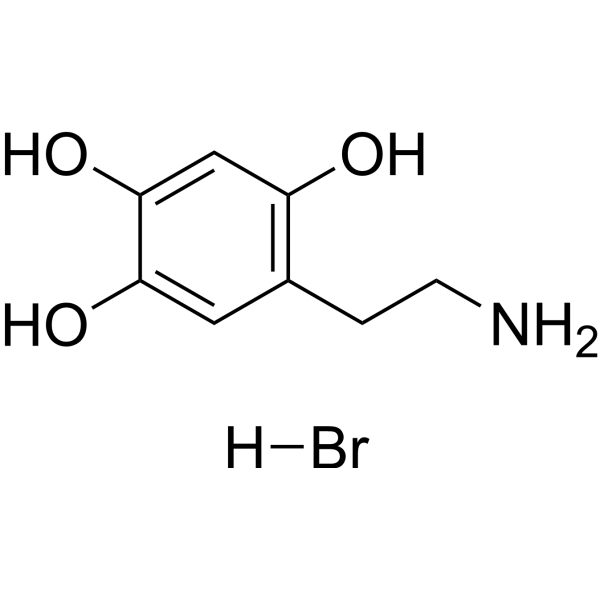
Cat. No.: HY-B1081A
CAS No.: 636-00-0
Synonyms: 6-Hydroxydopamine hydrobromide; 6-OHDA hydrobromide
Oxidopamine (6-OHDA) hydrobromide is an antagonist of the neurotransmitter dopamine. Oxidopamine hydrobromide is a widely used neurotoxin and selectively destroys dopaminergic neurons. Oxidopamine hydrobromide promotes COX-2 activation, leading to PGE2 synthesis and pro-inflammatory cytokine IL-1β secretion. Oxidopamine hydrobromide can be used for the research of Parkinson’s disease (PD), attention-deficit hyperactivity disorder (ADHD), and Lesch-Nyhan syndrome .
loading...
    loading...
50
50 Publications Verification
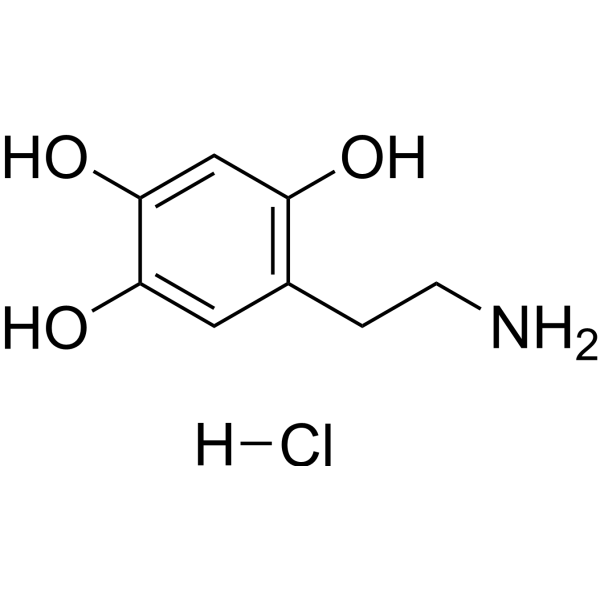
Cat. No.: HY-B1081
CAS No.: 28094-15-7
Synonyms: 6-Hydroxydopamine Hydrochloride
Oxidopamine (6-OHDA) hydrochloride is an antagonist of the neurotransmitter dopamine. Oxidopamine hydrochloride is a widely used neurotoxin and selectively destroys dopaminergic neurons. Oxidopamine hydrochloride promotes COX-2 activation, leading to PGE2 synthesis and pro-inflammatory cytokine IL-1β secretion. Oxidopamine hydrochloride can be used for the research of Parkinson’s disease (PD), attention-deficit hyperactivity disorder (ADHD), and Lesch-Nyhan syndrome .
loading...
    loading...
4
4 Cited Publications
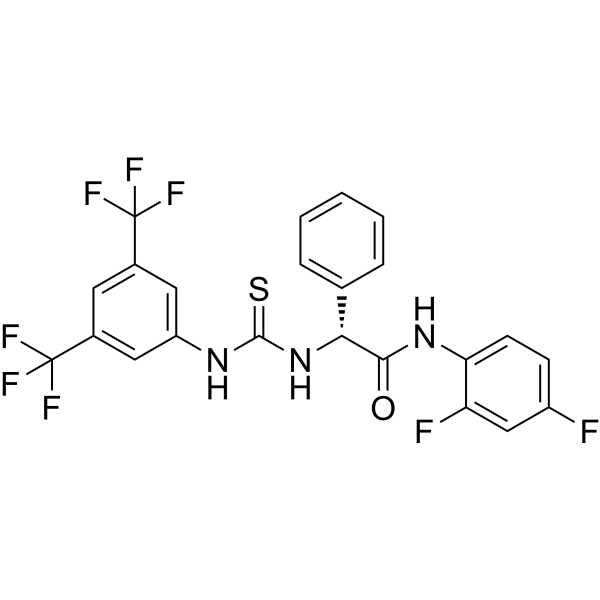
Cat. No.: HY-124729
CAS No.: 2101517-69-3
Purity:  99.72%
Target:  

ULK Autophagy

Research Areas:  

Neurological Disease

BL-918 is an orally active UNC-51-like kinase 1 (ULK1) activator with an EC50 of 24.14 nM. BL-918 exerts its cytoprotective autophagic effect by targeting ULK complex. BL-918 has the potential for Parkinson’s disease (PD) treatment .
loading...
    loading...
3
3 Cited Publications
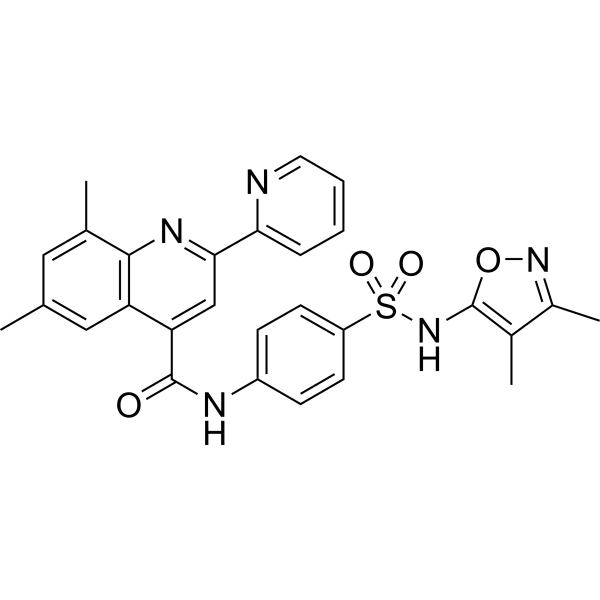
Cat. No.: HY-110125
CAS No.: 713121-80-3
Purity:  99.82%
Synonyms: CID 1261822
Target:  

GPR55

Research Areas:  

Neurological Disease

ML-193 (CID 1261822) is a potent and selective antagonist of GPR55, with an IC50 of 221 nM. ML-193 shows more than 27-fold selectivity for GPR55 over GPR35, CB1 and CB2. ML-193 can improve the motor and the sensorimotor deficits of Parkinson’s disease (PD) rats .
loading...
    loading...
2
2 Cited Publications
Cat. No.: HY-120475
CAS No.: 1232841-78-9
Synonyms: ATH434
Target:  

α-synuclein

Research Areas:  

Neurological Disease

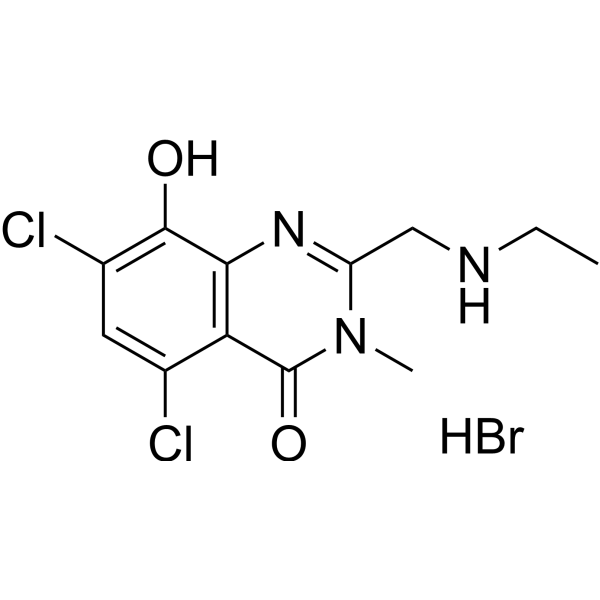
PBT434 is a potent, orally active and cross the blood-brain barrier α-synuclein aggregation inhibitor. PBT434 can be used as a iron chelator and modulates transcellular iron trafficking. PBT434 inhibits iron-mediated redox activity and iron-mediated aggregation of α-synuclein. PBT434 prevents the loss of substantia nigra pars compacta neurons (SNpc). PBT434 has the potential for the research of Parkinson’s disease (PD) .
loading...
    loading...
2
2 Cited Publications
Cat. No.: HY-120475A
CAS No.: 2387898-69-1
Purity:  99.92%
Synonyms: ATH434 mesylate
Target:  

α-synuclein

Research Areas:  

Neurological Disease

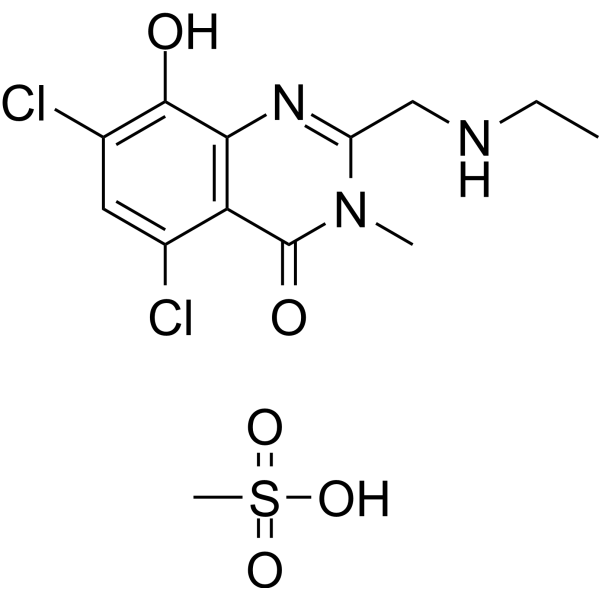
PBT434 methanesulfonate is a potent, orally active and cross the blood-brain barrier α-synuclein aggregation inhibitor. PBT434 methanesulfonate can be used as a iron chelator and modulates transcellular iron trafficking. PBT434 methanesulfonate inhibits iron-mediated redox activity and iron-mediated aggregation of α-synuclein. PBT434 methanesulfonate prevents the loss of substantia nigra pars compacta neurons (SNpc). PBT434 methanesulfonate has the potential for the research of Parkinson’s disease (PD) .
loading...
    loading...
1
1 Cited Publications
Cat. No.: HY-13488
CAS No.: 1351758-81-0
Purity:  99.55%
Target:  

LRRK2 MNK

Research Areas:  

Neurological Disease

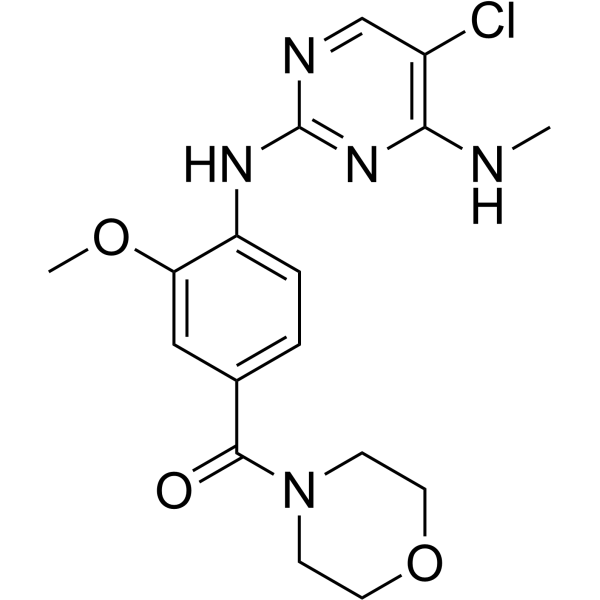
HG-10-102-01 is a highly potent, selective, and brain-penetrable LRRK2 inhibitor, with IC50 values of 20.3 and 3.2 nM against wild-type LRRK2 and LRRK2[G2019S], respectively. HG-10-102-01 also inhibits MNK2 and MLK1, with IC50 values of 0.6 and 2.1 μM. HG-10-102-01 can be used for Parkinson's disease (PD) research .
loading...
    loading...
1
1 Cited Publications
Cat. No.: HY-144634
CAS No.: 2254004-96-9
Purity:  99.83%
Target:  

Keap1-Nrf2

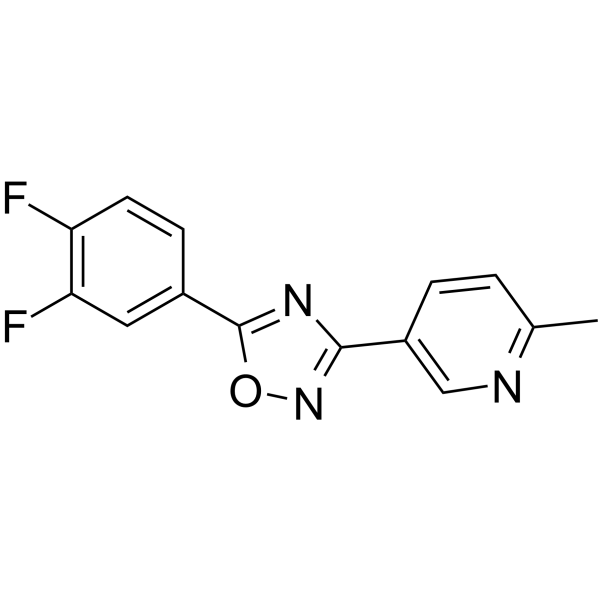
DDO-7263, a 1,2,4-Oxadiazole derivative, is a potent Nrf2-ARE activator. DDO-7263 upregulates Nrf2 through binding to Rpn6 to block the assembly of 26S proteasome and the subsequent degradation of ubiquitinated Nrf2. DDO-7263 induces Nrf2 translocation into the nucleus. DDO-7263 inhibits of NLRP3 inflammasome activation. DDO-7263 exerts anti-inflammatory activity and has the potential for neurodegenerative diseases research, such as Parkinson's disease (PD) .
loading...
    loading...
Cat. No.: HY-147976
CAS No.: 2279945-76-3
Target:  

Glycosidase

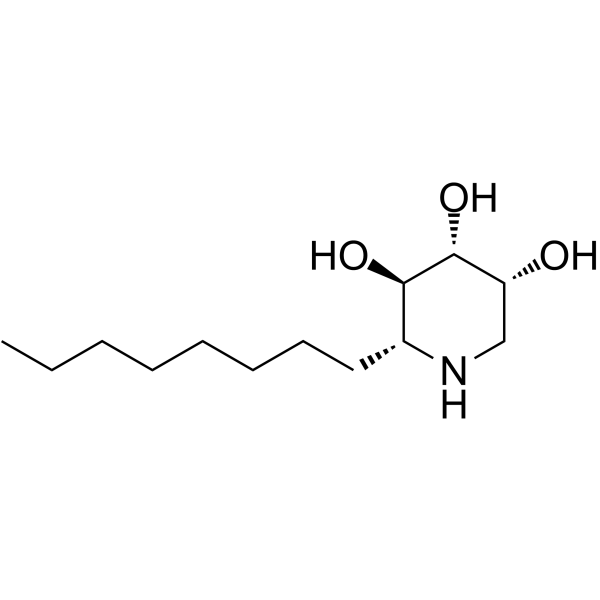
Glucocerebrosidase-IN-1 (compound 11a) is a potent and selective GCase (glucocerebrosidase) inhibitor, with an IC50 of 29.3 μM and a Ki of 18.5 μM. Glucocerebrosidase-IN-1 can be used for the research of Gaucher disease (GD) and Parkinson’s disease (PD) .
loading...
    loading...
Cat. No.: HY-148794
CAS No.: 2031185-00-7
Purity:  98.42%
Synonyms: IkT-148009
Target:  

c-Met/HGFR Bcr-Abl

Research Areas:  

Neurological Disease Cancer

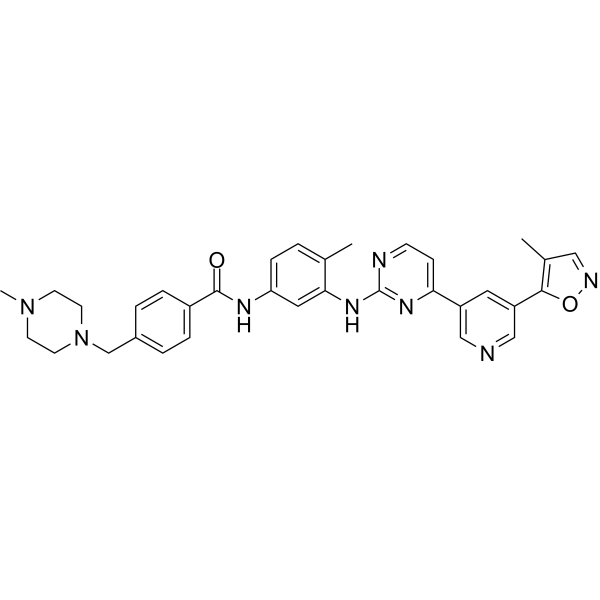
Risvodetinib (IkT-148009) is an orally active, selective and brain-penetrant protein tyrosine kinase inhibitor, displaying excellent target efficacy against c-Abl1, c-Abl2/Arg with IC50 values of 33 nM, 14 nM, respectively. Risvodetinib suppresses c-Abl activation and substantially protects dopaminergic neurons from degeneration in mouse models of both inherited and sporadic Parkinson’s disease (PD), which is promising for research in the field of PD .
loading...
    loading...
Cat. No.: HY-157839
CAS No.: 3032208-24-2
Purity:  99.28%
Research Areas:  

Neurological Disease

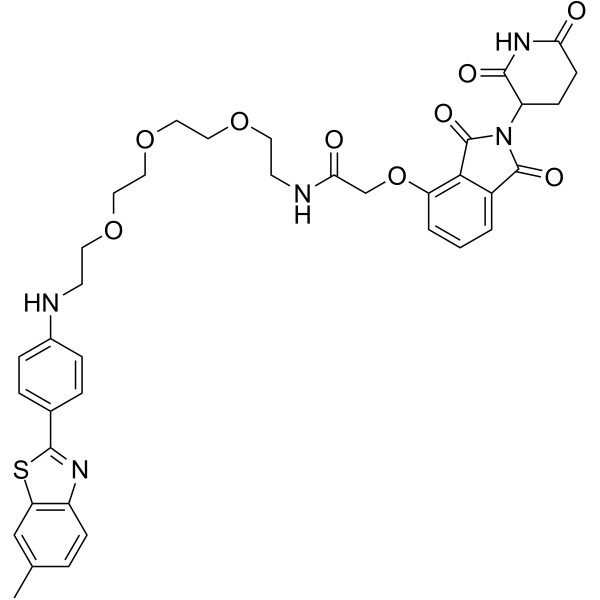
PROTAC α-Synuclein/Tau degrader 1 is a blood-brain barrier-penetrant dual PROTAC degrader of α-synuclein (α-Syn) and tau, with DC50 of 1.57 μM and 4.09 μM, respectively. PROTAC α-Synuclein/Tau degrader 1 binds to α-Syn and tau PFF, with KDs of 0.47 and 2.78 μM, respectively. PROTAC α-Synuclein/Tau degrader 1 exhibits degradation effect mediated by the ubiquitin-proteasome system (UPS). PROTAC α-Synuclein/Tau degrader 6 can be used for the study of Parkinson’s disease (PD) (Pink: α-Synuclein/Tau ligand (HY-151035); Blue: CRBN ligase ligand (HY-14658); Black: Linker (HY-128803)) .
loading...
    loading...
Cat. No.: HY-148867
CAS No.: 2258608-78-3
Purity:  99.61%
Target:  

Dopamine Receptor

Research Areas:  

Neurological Disease

UCM-1306 is a potent and orally active human dopamine D1 receptor allosteric modulator (PAM). UCM-1306 increases the endogenous dopamine (DA) maximal effect both in human and mouse D1 receptors. UCM-1306 is not only for improving motor symptoms but also for addressing the key comorbid cognitive impairment associated with long-term Parkinson’s disease (PD) .
loading...
    loading...
Cat. No.: HY-150058
CAS No.: 32906-88-0
Purity:  ≥95.0%
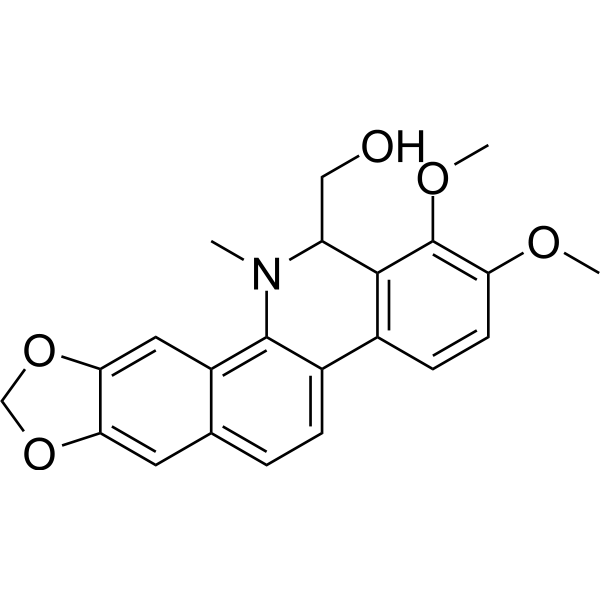
Bocconoline is a potent early endosome antigen 1 (EEA1) inhibitor. Bocconoline can be isolated from Macleaya cordata. Bocconoline can be used for the research of Parkinson’s disease (PD) .
loading...
    loading...
Cat. No.: HY-14417
CAS No.: 1093757-42-6
Purity:  99.10%
Target:  

mGluR

Research Areas:  

Neurological Disease

VU0155041 is a potent, selective positive allosteric modulator (PAM) of mGluR4, with EC50s of 798 nM and 693 nM for human and rat mGluR4, respectively. VU0155041 has potential for the research of Parkinson's disease (PD) .
loading...
    loading...
Cat. No.: HY-175352
Nurr1 agonist 14 (Compound 32) is a Nurr1 agonist with an EC50 of 0.09  μM for Nurr1. Nurr1 agonist 14 has significant neuroprotective activity with no influence of residual DHODH inhibition. Nurr1 agonist 14 upregulates neuroprotective genes including SOD2, SESN3, BIRC5, XIAP, FLRT2 and CRMP4 in dopaminergic neurons. Nurr1 agonist 14 can be used for neurodegenerative diseases such as Alzheimer′s disease (AD), Parkinson′s disease (PD) and multiple sclerosis (MS) research .
loading...
    loading...
Cat. No.: HY-P4704A
Target:  

α-synuclein

Research Areas:  

Neurological Disease

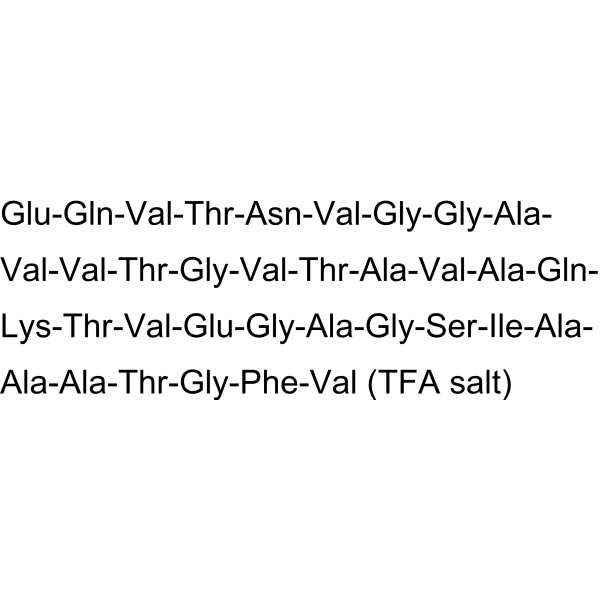
α-Synuclein (61-95) (human) TFA is the hydrophobic core region of α-synuclein, and induces neuronal cell death. α-Synuclein (61-95) (human) TFA can be used for research of neurodegenerative diseases, including Alzheimer’s disease (AD) and Parkinson’s disease (PD) .
loading...
    loading...
Cat. No.: HY-D2871
CAS No.: 1866495-46-6
DAyne is a Dopamine (DA)-mimetic probe. DAyne covalently binds to proteins modified by dopamine oxidation products (e.g., dopaquinone, DQ) to form adducts. DAyne is promising for research of Parkinson’s disease (PD), particularly neurotoxicity, protein modification, and related pathways (e.g., endoplasmic reticulum stress, cytoskeletal instability) caused by dopamine dysregulation .
loading...
    loading...
Cat. No.: HY-112855
CAS No.: 1527473-30-8
Purity:  99.91%
Target:  

LRRK2

Research Areas:  

Neurological Disease

PF-06447475 is a highly potent, selective, brain penetrant LRRK2 kinase inhibitor with IC50 values of 3 nM and 11 nM for WT LRRK and G2019S LRRK2, respectively. PF-06447475 can be used for parkinson's disease (PD) research .
loading...
    loading...
Cat. No.: HY-147976A
CAS No.: 2279945-77-4
Target:  

Glycosidase

Research Areas:  

Neurological Disease

Glucocerebrosidase-IN-1 (compound 11a) hydrochloride is a potent and selective GCase (glucocerebrosidase) inhibitor, with an IC50 of 29.3 μM and a Ki of 18.5 μM. Glucocerebrosidase-IN-1 hydrochloride can be used for the research of Gaucher disease (GD) and Parkinson’s disease (PD) .
loading...
    loading...
Cat. No.: HY-151388
CAS No.: 254974-70-4
Purity:  98.04%
Target:  

Monoamine Oxidase COMT

Research Areas:  

Neurological Disease

hMAO-B/MB-COMT-IN-1 is a dual MAO-B/MB-COMT inhibitor (IC50s: 2.5 μΜ for hMAO-B, 3.84 μΜ for MB-COMT). hMAO-B/MB-COMT-IN-1 protects cells against oxidative damage. hMAO-B/MB-COMT-IN-1 can be used in the research of neurodegeneration disease, such as Parkinson’s Disease (PD) .
loading...
    loading...

