
1. Search Result
Search Result
Results for "

prion

" in MedChemExpress (MCE) Product Catalog:

37

Inhibitors & Agonists

5

Peptides

2

Inhibitory Antibodies

4

Recombinant Proteins

1

Isotope-Labeled Compounds

2

Antibodies

2

Oligonucleotides

Targets Recommended:
Cat. No. Product Name Target Research Areas Chemical Structure
  • HY-101855

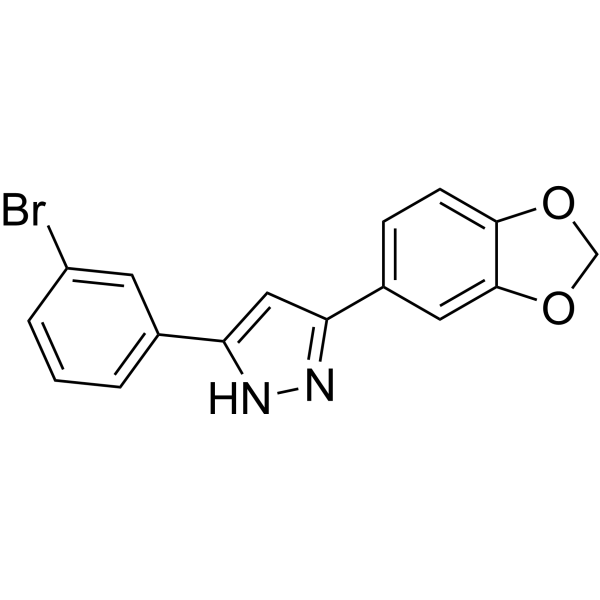
    Anle138b

    Amyloid-β Neurological Disease
    Emrusolmin (Anle138b), an oligomeric aggregation inhibitor, blocks the formation of pathological aggregates of prion protein (PrPSc) and of α-synuclein (α-syn). Emrusolmin strongly inhibits oligomer accumulation, neuronal degeneration, and disease progression in vivo. Emrusolmin has low toxicity and an excellent oral bioavailability and blood-brain-barrier penetration. Emrusolmin blocks Aβ channels and rescues disease phenotypes in a mouse model for amyloid pathology .
    Emrusolmin
  • HY-15728
    Radotinib
    1 Publications Verification

    IY-5511

    Bcr-Abl Apoptosis STAT JAK Prion Protein Infection Neurological Disease Cancer
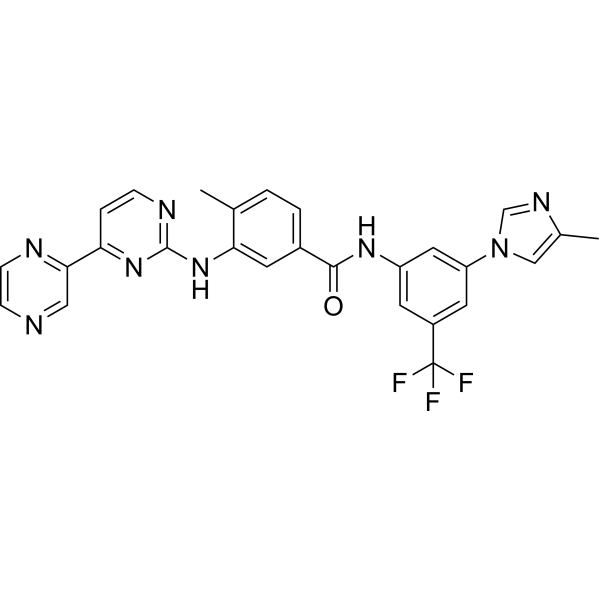
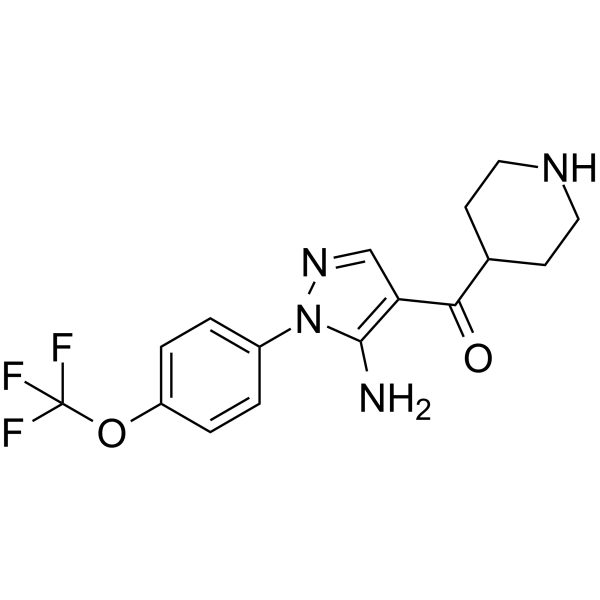
    Radotinib (IY-5511) is an orally active and BBB-permeable selective tyrosine kinase Bcr-Abl1 inhibitor with an IC50 of 34 nM. Radotinib has anti-prion and anti-tumor activities. Radotinib can inhibit the proliferation, induce cell cycle arrest and apoptosis of tumor cells . Radotinib can be used in the research of cancer such as chronic myeloid leukemia and multiple myeloma, as well as neurodegenerative diseases such as prion diseases .
    Radotinib
  • HY-111022
    Icerguastat
    3 Publications Verification

    Sephin1; IFB-088

    Phosphatase Infection Inflammation/Immunology
    Icerguastat (Sephin1), a derivative of Guanabenz lacking the α2-adrenergic activity, is a selective inhibitor of the phosphatase regulatory subunit PPP1R15A (R15A). Icerguastat inhibits eIF2α dephosphorylation, thereby prolonging the protective response. Anti-prion effect .
    Icerguastat
  • HY-114621
    DB772
    1 Publications Verification

    Flavivirus Infection
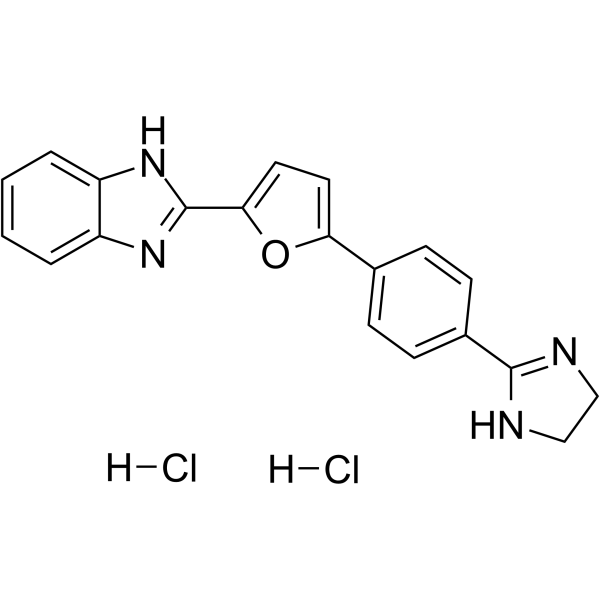
    DB772 hydrate is a bovine viral diarrhoea virus (BVDV) inhibitor. DB772 also has anti-prion activity .
    DB772
  • HY-112747

    LPI; PE (soy)

    Phospholipase Infection
    Soy PE (LPI) is the most abundant phospholipid in prokaryotes and the second most abundant found in the membrane of mammalian, plant, and yeast cells, comprising approximately 25% of total mammalian phospholipids. In the brain, phosphatidylethanolamine comprises almost half of the total phospholipids. It is synthesized mainly through the cytidine diphosphate-ethanolamine and phosphatidylserine decarboxylation pathways, which occur in the endoplasmic reticulum (ER) and mitochondrial membranes, respectively. It is a precursor in the synthesis of phosphatidylcholine and arachidonoyl ethanolamide and is a source of ethanolamine used in various cellular functions. In E.coli, phosphatidylethanolamine deficiency prevents proper assembly of lactose permease, suggesting a role as a lipid chaperone. It is a cofactor in the propagation of prions in vitro and can convert recombinant mammalian proteins into infectious molecules even in the absence of RNA. This product contains phosphatidylethanolamine molecular species with variable fatty acyl chain lengths at the sn-1 and sn-2 positions .
    Soy PE
  • HY-122066

    Others Infection
    NSC47924 is a laminin receptor (LR) inhibitor. NSC47924 affects 37/67 kDa LR cell surface localization and interaction with the cellular prion protein. NSC47924 can be used for testing prion diseases .
    NSC47924
  • HY-114621A
    DB772 hydrate
    1 Publications Verification

    Flavivirus Infection
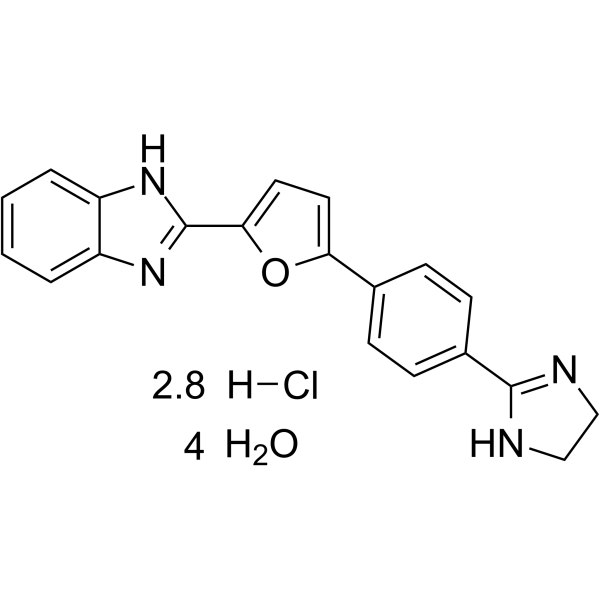
    DB772 hydrate is a bovine viral diarrhoea virus (BVDV) inhibitor. DB772 also has anti-prion activity .
    DB772 hydrate
  • HY-P0305

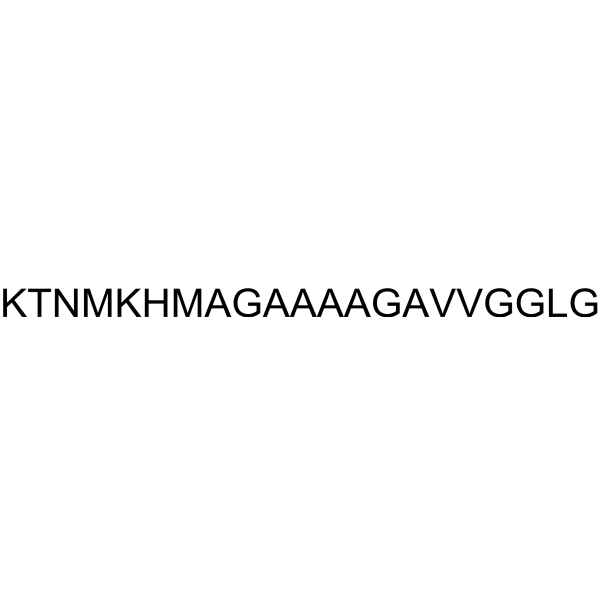
    prion protein (106-126)

    Prion Protein Infection
    PrP (106-126) is a peptide corresponding to the prion protein (PrP) amyloidogenic region, and its biochemical properties resemble the infectious form of prion protein.
    PrP (106-126)
  • HY-150514

    Prion Protein Infection
    ARN1468 (compound 5) is an orally active and potent SerpinA3n inhibitor. ARN1468 can inhibit serpins activity would set the protease free to further reduce prion accumulation. ARN1468 shows anti-prion effect in ScGT1 RML, ScGT1 22L, ScN2a RML, and ScN2a 22L cell lines, with EC50 values of 8.64, 19.3, 11.2, and 6.27 μM .
    ARN1468
  • HY-160831
    PQQ-trimethylester
    1 Publications Verification

    PQQ-TME

    α-synuclein Neurological Disease
    PQQ-trimethylester (PQQ-TME) is a synthetic compound that is a trimethylester derivative of pyrroloquinoline quinone (PQQ). PQQ-trimethylester has twice the blood-brain barrier permeability of PQQ (HY-100196) in vitro. In addition, PQQ-trimethylester shows strong inhibitory activity against α-synuclein, amyloid β1-42 (Aβ1-42) and prion protein fibrillation. PQQ-trimethylester can be used in the study of neurodegenerative diseases .
    PQQ-trimethylester
  • HY-150286

    Prion Protein Neurological Disease
    SM875 is a cellular prion protein (PrP) degrader (IC50: 7.87 μM). SM875 targets PrP folding intermediates and promotes its degradation through the autophagy-lysosomal pathway. SM875 only acts on nascent, immature PrP molecules and has no effect on mature PrP before synthesis. SM875 can inhibit prion replication and has potential in the study of neurodegenerative diseases (i.e., prion diseases) .
    SM875
  • HY-153427

    Tau Protein Neurological Disease
    Tau protein aggregation-IN-1 (Compound 0c) is a Tau protein aggregation inhibitor. Tau protein aggregation-IN-1 can be used in the study of protein folding disorders such as Alzheimer's disease, dementia, Parkinson's disease, Huntington's disease and prion-based spongiform encephalopathies .
    Tau protein aggregation-IN-1
  • HY-177630

    ION 717

    Prion Protein Infection
    Erisonersen, an antisense oligonucleotide, is a prion protein synthesis reducer. It is used for the study of Prion disease.
    Erisonersen
  • HY-132927B

    Reactive Oxygen Species (ROS) Inflammation/Immunology
    Salpyran dihydrochloride is a Cu(II) selective chelator with therapeutic potential. Salpyran dihydrochloride prevents the formation of reactive oxygen species from the binary Cu(II)/H2O2 system .
    Salpyran dihydrochloride
  • HY-P990167

    Prion Protein Tau Protein Neurological Disease
    Anti-Mouse/Human PrP/prion protein Antibody (TW1) is a mouse-derived IgG2a type antibody inhibitor, targeting to mouse/human PrP/prion protein. Anti-Mouse/Human PrP/prion protein Antibody (TW1) binds to both PrPc (cellular prion protein) and PrPSc (Scrapie Prion Protein) and blocks the interaction of prion protein with tau protein. Anti-Mouse/Human PrP/prion protein Antibody (TW1) can be used for the researches of Alzheimer’s disease (AD) .
    Anti-Mouse/Human PrP/prion protein Antibody (TW1)
  • HY-107662

    Apoptosis Infection Cancer
    TCS PrP Inhibitor 13, an antiprion agent, is a cellular prion protein (PrP C) inhibitor. TCS PrP Inhibitor 13, as a protease-resistant form of prion protein (PrP-res) accumulation inhibitor, shows an IC50 value of 3 nM in both ScN2a and F3 cell lines. TCS PrP Inhibitor 13 induces Schwannoma cells apoptosis .
    TCS PrP Inhibitor 13
  • HY-138865

    Prion Protein Infection
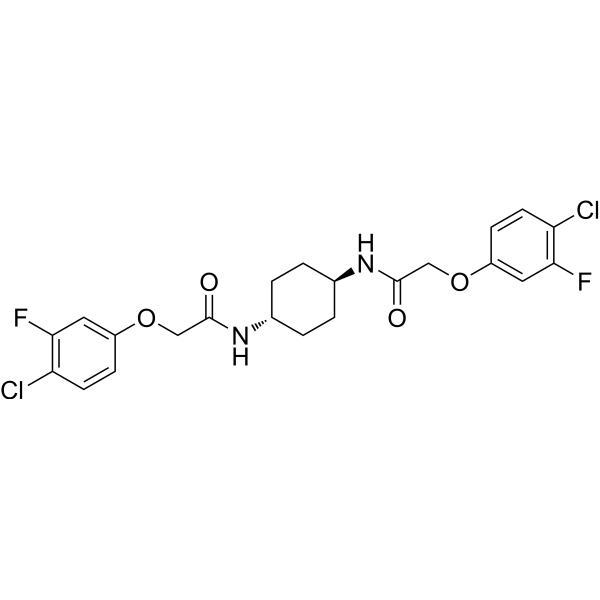
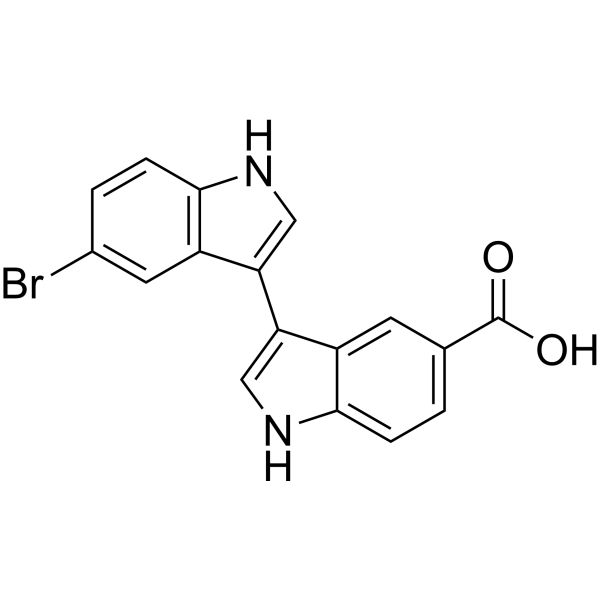
    BiCAPPA is the first bivalent antiprion ligand. BiCAPPA can decrease infectious conformational form of prion protein (PrP Sc) from scrapie-infected cells, with an EC50 of 0.32 μM .
    BiCAPPA
  • HY-150286A

    Prion Protein Infection
    (R)-SM875 is a degrader targeting the intermediate folding form of prion protein (PrP). (R)-SM875 significantly reduces the PrP level, with an IC50 of 3 μM. (R)-SM875 can be used for the study of prion diseases .
    (R)-SM875
  • HY-110365

    Sephin1 Carbonate; IFB-088 Carbonate

    Phosphatase Infection
    Icerguastat (Sephin1) Carbonate, a derivative of Guanabenz lacking the α2-adrenergic activity, is a selective inhibitor of the phosphatase regulatory subunit PPP1R15A (R15A). Icerguastat Carbonate inhibits eIF2α dephosphorylation, thereby prolonging the protective response. Anti-prion effect .
    Icerguastat Carbonate
  • HY-147702

    Prion Protein Infection Neurological Disease
    BB 0305179 (compound 59) is a potent anti-prion agent, with an IC50 of 4.7 μM. BB 0305179 inhibits the toxicity of a specific PrP mutant carrying a deletion in the hydrophobic domain . BB 0305179 is a click chemistry reagent, it contains an Alkyne group and can undergo copper-catalyzed azide-alkyne cycloaddition (CuAAc) with molecules containing Azide groups.
    BB 0305179
  • HY-P10534

    Prion Protein Infection Neurological Disease
    CCβ is a simple 17-amino acid peptide designed in research. CCβ is able to mimic the conformational transition of proteins from α-helix to β-sheet, which is a key step in the aggregation of proteins associated with many diseases, such as Alzheimer's disease and prion disease. CCβ can be used to study diseases related to protein aggregation .
    ccβ
  • HY-177630A

    ION 717 sodium

    Prion Protein Infection
    Erisonersen sodium, an antisense oligonucleotide, is a prion protein synthesis reducer. It is used for the study of Prion disease.
    Erisonersen sodium
  • HY-18956A

    (E/Z)-Sephin1 hydrochloride; (E/Z)-IFB-088 hydrochloride

    Phosphatase Neurological Disease
    (E/Z)-Icerguastat hydrochloride ((E/Z)-Sephin1 hydrochloride) is a selective inhibitor with activity that prolongs the phosphorylation effects of eIF2α. (E/Z)-Icerguastat hydrochloride protects cells from defects in proteostasis. (E/Z)-Icerguastat hydrochloride was shown to significantly extend the survival of infected prion mice in a mouse model. (E/Z)-Icerguastat hydrochloride effectively reduces PrPSc expression and prion sequence activity in various neuronal cell lines persistently infected with different prion strains .
    (E/Z)-Icerguastat hydrochloride
  • HY-115360

    Prion Protein Others
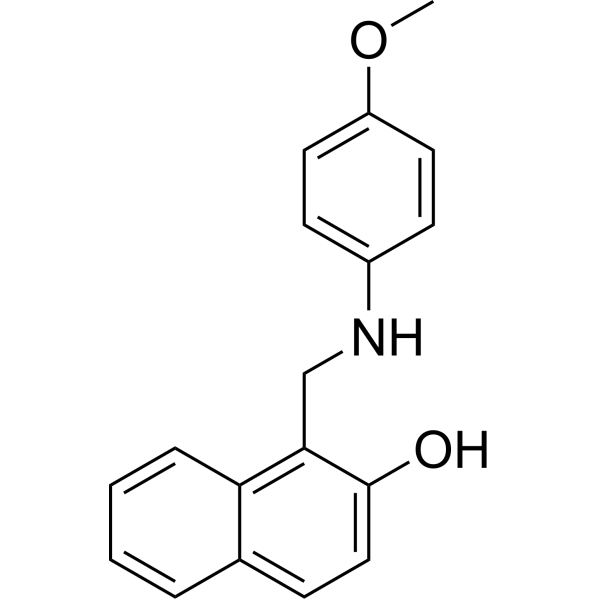
    IND45193 is a compound used to inhibit prion disease, with activity in reducing PrP(Sc) levels. In cells infected with prions, IND45193 can reduce PrP(Sc) levels, and its activity was determined through screening of multiple cell types and concentration-effect relationship studies.
    IND45193
  • HY-114621B

    Flavivirus Infection
    DB772 free base is a bovine viral diarrhoea virus (BVDV) inhibitor. DB772 free base also has anti-prion activity .
    DB772 free base
  • HY-100857

    Fluorescent Dye Neurological Disease
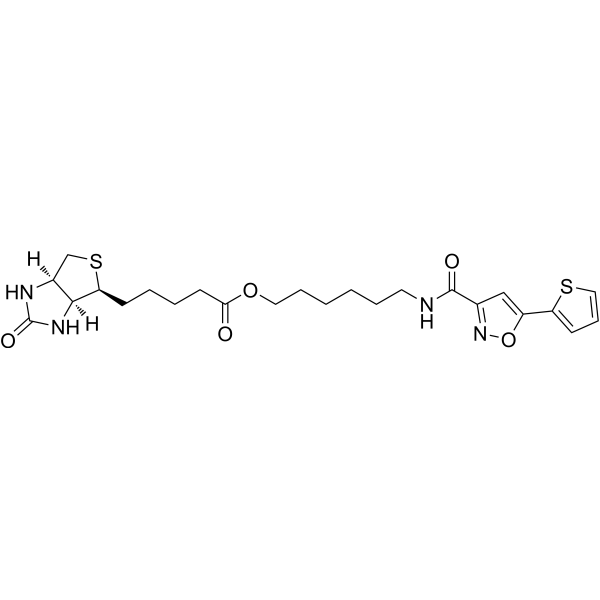
    PrPSc-IN-1 is a fluorescent probe, binds to the misfolded protein PrP Sc, inhibits its accumulation, with an IC50 of 1.6 μM. Anti-prion activity .
    PrPSc-IN-1
  • HY-15728S

    IY-5511-d6

    Isotope-Labeled Compounds Bcr-Abl Apoptosis STAT JAK Prion Protein Infection Neurological Disease Cancer
    Radotinib-d6 is deuterium labeled Radotinib (HY-15728). Radotinib (IY-5511) is an orally active and BBB-permeable selective tyrosine kinase Bcr-Abl1 inhibitor with an IC50 of 34 nM. Radotinib has anti-prion and anti-tumor activities. Radotinib can inhibit the proliferation, induce cell cycle arrest and apoptosis of tumor cells . Radotinib can be used in the research of cancer such as chronic myeloid leukemia and multiple myeloma, as well as neurodegenerative diseases such as prion diseases .
    Radotinib-d6
  • HY-124375

    Prion Protein Infection
    IND81 is an orally active antiprion with IC50 value of 1.95 μM. IND81 reduces abnormal, misfolded, disease-causing forms of benign prion proteins that are normally present on or within cells .
    IND81
  • HY-117856

    Prion Protein Infection
    IND24 is a potent antiprion agent with an EC50 value of 1.27 µM. IND24 decreases abnormal, misfolded, pathogenic forms of benign normally occurring prion protein on the cell surface or inside the cell .
    IND24
  • HY-175136

    GAh acetate

    Adrenergic Receptor Infection Neurological Disease
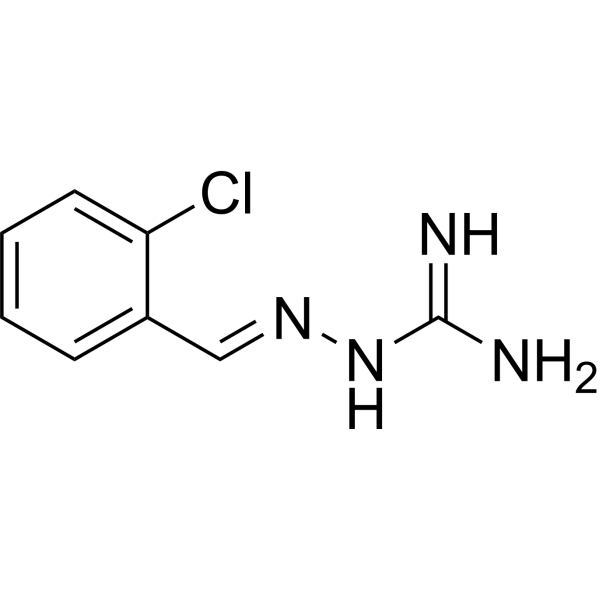
    Chloroguanabenz (acetate) is an antiprion agent and a derivative of the α2-adrenergic receptor agonist guanabenz. Chloroguanabenz (acetate) can inhibit the formation of prion in yeast and mammalian in vitro assays. Chloroguanabenz (acetate) can reduce the levels of truncated Huntingtin derivative Htt48 in HEK293T cells. Chloroguanabenz (acetate) can be studied in research on Huntington’s disease .
    Chloroguanabenz acetate
  • HY-132927A

    Biochemical Assay Reagents Others
    Salpyran is a Cu(II) selective chelator with therapeutic potential .
    Salpyran hydrochloride
  • HY-P11409

    Apoptosis Caspase Neurological Disease
    Prion Protein (118-135), human is the 118-135 fragment of human prion protein. Prion Protein (118-135), human induces Apoptosis. Prion Protein (118-135), human stimulates caspase-3 and -9 activities. Prion Protein (118-135), human is cytotoxic to retinal neurons. Prion Protein (118-135), human exerts neurotoxic effects .
    Prion Protein (118-135), human
  • HY-147371

    Parasite Infection Neurological Disease
    Quinoprazine is a potent inhibitor of Vaccinia virus DNA synthesis with an IC50 value of 10 μM. Quinoprazine has antimalarial activity against Plasmodium berghei and also displays antiprion potency, significantly decreases PrP S c levels - .
    Quinoprazine
  • HY-107662R

    Reference Standards Apoptosis Infection Cancer
    TCS PrP Inhibitor 13 (Standard) is the analytical standard of TCS PrP Inhibitor 13 (HY-107662). This product is intended for research and analytical applications. TCS PrP Inhibitor 13, an antiprion agent, is a cellular prion protein (PrPC) inhibitor. TCS PrP Inhibitor 13, as a protease-resistant form of prion protein (PrP-res) accumulation inhibitor, shows an IC50 value of 3 nM in both ScN2a and F3 cell lines. TCS PrP Inhibitor 13 induces Schwannoma cells apoptosis .
    TCS PrP Inhibitor 13 (Standard)
  • HY-P991957

    Prion Protein Neurological Disease
    PRN100 is a fully humanized monoclonal antibody against cellular prion protein (PrPᶜ), belonging to the IgG isotype. By binding to and stabilizing cellular prion protein, PRN100 is designed to prevent cellular prion protein from being recruited and converted into pathogenic, self-propagating prion (PrPˢᶜ) aggregates. PRN100 can be used for the study of Creutzfeldt-Jakob disease.
    PRN100
  • HY-179460

    IY-5511 dihydrochloride

    Bcr-Abl Apoptosis STAT JAK Prion Protein Neurological Disease Cancer
    Radotinib (IY-5511) dihydrochloride is an orally active and BBB-permeable selective tyrosine kinase Bcr-Abl1 inhibitor with an IC50 of 34 nM. Radotinib dihydrochloride has anti-prion and anti-tumor activities. Radotinib dihydrochloride can inhibit the proliferation, induce cell cycle arrest and apoptosis of tumor cells . Radotinib dihydrochloride can be used in the research of cancer such as chronic myeloid leukemia and multiple myeloma, as well as neurodegenerative diseases such as prion diseases .
    Radotinib dihydrochloride
  • HY-101855R

    Anle138b (Standard)

    Reference Standards Amyloid-β Neurological Disease
    Emrusolmin (Standard) (Anle138b (Standard)) is the analytical standard of Emrusolmin (HY-101855). This product is intended for research and analytical applications. Emrusolmin (Anle138b), an oligomeric aggregation inhibitor, blocks the formation of pathological aggregates of prion protein (PrPSc) and of α-synuclein (α-syn). Emrusolmin strongly inhibits oligomer accumulation, neuronal degeneration, and disease progression in vivo. Emrusolmin has low toxicity and an excellent oral bioavailability and blood-brain-barrier penetration. Emrusolmin blocks Aβ channels and rescues disease phenotypes in a mouse model for amyloid pathology .
    Emrusolmin (Standard)

Inquiry Online

Your information is safe with us. * Required Fields.

Salutation


Country or Region *

Applicant Name *


Organization Name *

Department *


Email Address *


Product Name *

Cat. No.


Requested quantity *

Phone Number *


Remarks

Inquiry Online

Inquiry Information

Product Name:
Cat. No.:
Quantity:
MCE Japan Authorized Agent:

