58 Results for "

proteasomal pathway

" in MedChemExpress (MCE) Product Catalog:
Products (58)

58 Results for "proteasomal pathway" in MCE Product Catalog:

484
484 Publications Verification
Cat. No.: HY-10358
CAS No.: 1032350-13-2
Purity:  99.94%
Synonyms: MK-2206 (2HCl)
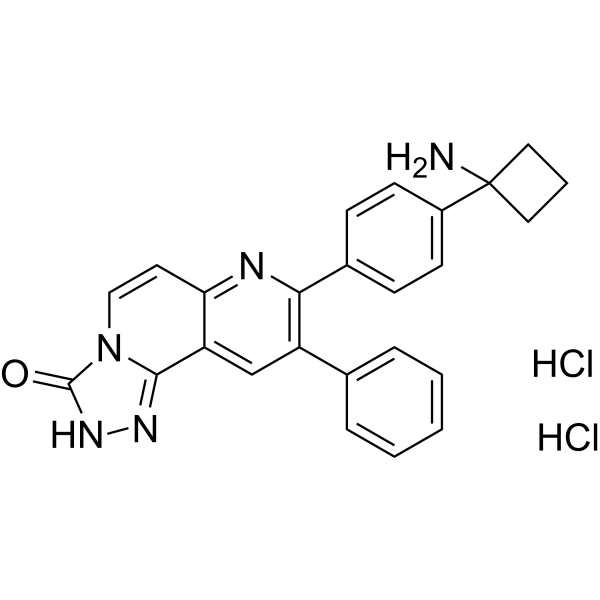
MK-2206 dihydrochloride (MK-2206 2HCl) is an orally active pan-AKT inhibitor, with IC50 values of 8 nM, 12 nM and 65 nM against AKT1, AKT2 and AKT3, respectively. MK-2206 dihydrochloride inhibits the Akt/mTOR signaling pathway and reduces the levels of downstream GSK3β and Mcl-1 via proteasomal degradation. MK-2206 dihydrochloride induces G1-phase cell cycle arrest, apoptosis, epithelial-mesenchymal transition, fibroblast activation and extracellular matrix deposition. MK-2206 dihydrochloride causes transient hyperglycemia and hyperinsulinemia in animals. MK-2206 dihydrochloride can be used in research related to solid tumors, renal fibrosis and hypercholesterolemia .
loading...
    loading...
484
484 Publications Verification
Cat. No.: HY-108232
CAS No.: 1032349-77-1
Purity:  99.72%
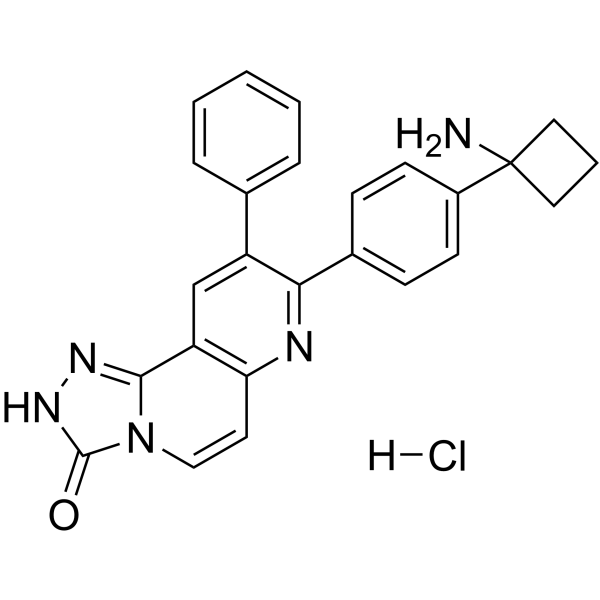
MK-2206 is an orally active pan-AKT inhibitor, with IC50 values of 8 nM, 12 nM and 65 nM against AKT1, AKT2 and AKT3, respectively. MK-2206 inhibits the Akt/mTOR signaling pathway and reduces the levels of downstream GSK3β and Mcl-1 via proteasomal degradation. MK-2206 induces G1-phase cell cycle arrest, apoptosis, epithelial-mesenchymal transition, fibroblast activation and extracellular matrix deposition. MK-2206 causes transient hyperglycemia and hyperinsulinemia in animals. MK-2206 can be used in research related to solid tumors, renal fibrosis and hypercholesterolemia .
loading...
    loading...
2
2 Cited Publications
Cat. No.: HY-145765
CAS No.: 2417097-18-6
Purity:  98.24%
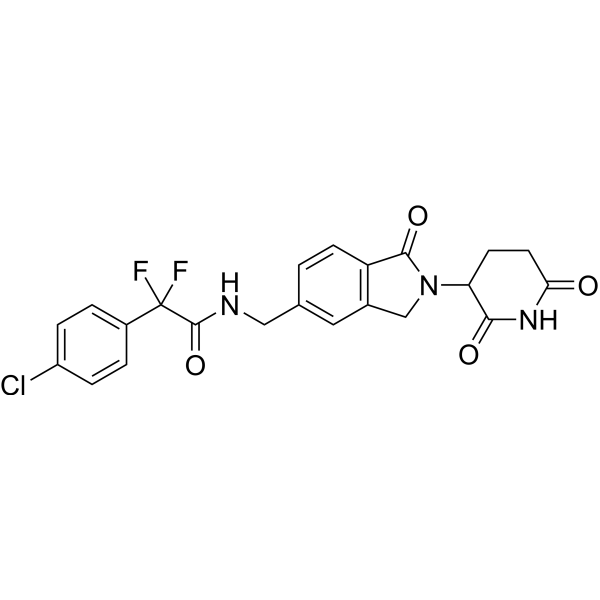
JQAD1 is a EP300 PROTAC degrader. JQAD1 selectively targets EP300 and induces its degradation via the CRBN-dependent proteasomal pathway. JQAD1 reduces the levels of H3K27ac and the expression of MYCN. JQAD1 induces apoptosis (apoptosis) and inhibits cancer cell growth. JQAD1 exerts anti-neuroblastoma effects in vivo in a CRBN-dependent manner. JQAD1 can be used for the research of neuroblastoma .
loading...
    loading...
1
1 Cited Publications
Cat. No.: HY-N10549
CAS No.: 83088-28-2
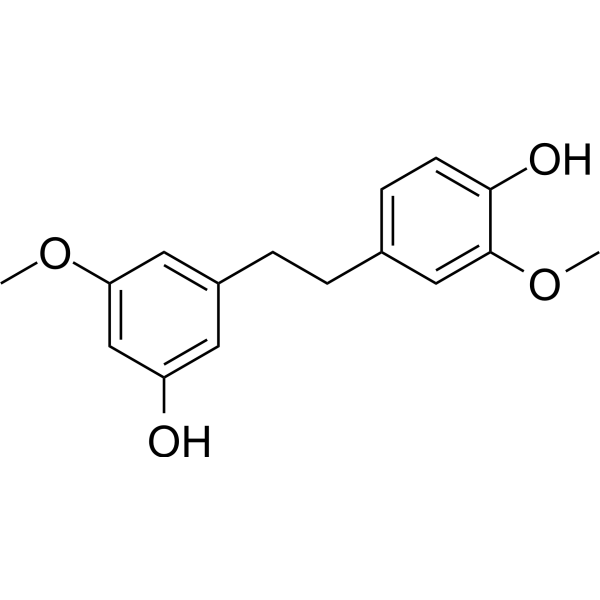
Gigantol is an orally active bibenzyl compound. Gigantol targets MYC to promote its ubiquitin-proteasomal degradation and inhibit the growth of lung cancer cells. Gigantol exerts anti-lung cancer activity by inducing ferroptosis (Ferroptosis) via the SLC7A11-GPX4 axis. Gigantol restores the sensitivity of mcr-harboring multidrug-resistant bacteria to colistin. Gigantol ameliorates carbon tetrachloride-induced liver injury by inhibiting the activation of the JNK/cPLA2/12-LOX inflammatory pathway. Gigantol promotes cholesterol metabolism and progesterone biosynthesis in Leydig cells. Gigantol can be used in studies related to diseases such as lung cancer, multidrug-resistant Gram-negative bacterial infections, and acute liver injury .
loading...
    loading...
1
1 Cited Publications
Cat. No.: HY-145816A
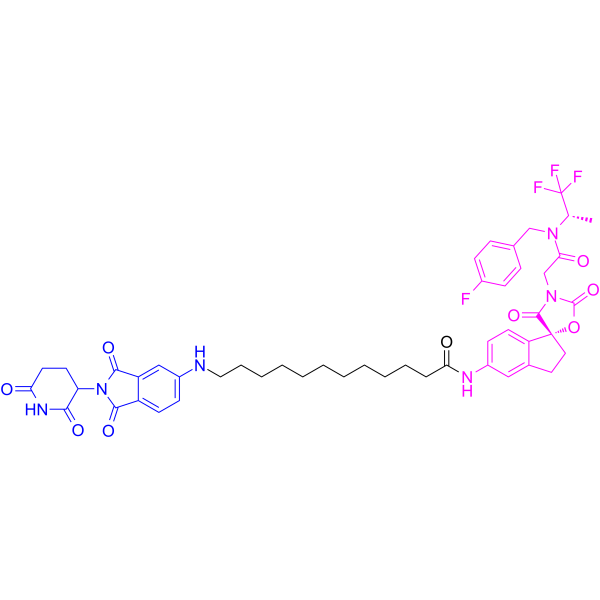
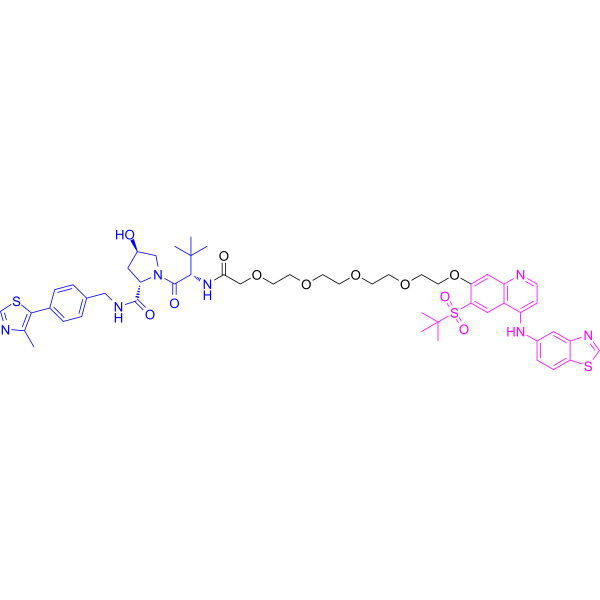
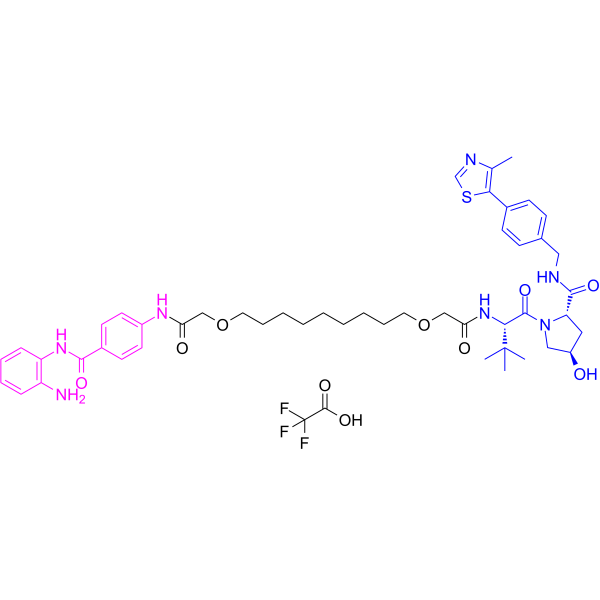
JPS016 TFA is a class I histone deacetylase (HDAC) PROTAC inhibitor. JPS016 TFA recruits the VHL E3 ligase (Ligands for E3 Ligase) to mediate the ubiquitination and proteasomal degradation of HDAC1, HDAC2 and HDAC3. JPS016 TFA reduces the viability of colon cancer cells and induces Apoptosis. JPS016 TFA activates the PINK1/Parkin mitochondrial Autophagy pathway, enhances cardiomyocyte viability, alleviates mitochondrial damage, and reduces mitochondrial ROS production in cells. JPS016 TFA is applicable to research related to colon cancer and sepsis cardiomyopathy .
loading...
    loading...
Cat. No.: HY-153357
CAS No.: 2416130-57-7
Purity:  98.16%
Target:  

PROTACs Btk c-Myc NF-κB

Research Areas:  

Inflammation/Immunology Cancer

NRX-0492 is an orally active BTK PROTAC degrader, with a binding IC50 of 1.2 nM for both wild-type BTK and BTK T474I, and 2.7 nM for BTK C481S, and exhibits cellular DC50 values of 0.1 nM and 0.2 nM against wild-type BTK and BTK C481S, respectively. NRX-0492 catalyzes the ubiquitination and proteasomal degradation of wild-type and drug-resistant mutant BTK by recruiting the CRBN E3 ubiquitin ligase complex. NRX-0492 inhibits the BCR signaling pathway and its downstream NF-κB/MYC transcriptional program, achieves rapid and sustained degradation in primary CLL cells, and exhibits extremely low cytotoxicity. NRX-0492 degrades BTK, inhibits tumor cell proliferation and activation, and significantly suppresses tumor growth in xenograft models. NRX-0492 can be used in research related to chronic lymphocytic leukemia and diffuse large B-cell lymphoma .
loading...
    loading...
Cat. No.: HY-119264
CAS No.: 903499-49-0
PRLX-93936 is a molecular Glues that binds to and reprograms the TRIM21 ubiquitin ligase to degrade nuclear pore complexes. PRLX-93936 binds to TRIM21, forms a ternary complex with TRIM21 and NUP98, and mediates the ubiquitination and proteasomal degradation of NUP98 and other nuclear pore complex proteins. PRLX-93936 induces the loss of short-lived cytoplasmic mRNA transcripts, triggers cancer cell apoptosis (Apoptosis), and inhibits the activated Ras pathway. PRLX-93936 inhibits HIF-1 under hypoxic conditions (IC50 = 0.09 μM in cell-based reporter gene assay). PRLX-93936 suppresses tumor growth in mouse models and improves survival rates in mouse models of multiple myeloma. PRLX-93936 is applicable to research related to pancreatic cancer and multiple myeloma .
loading...
    loading...
Cat. No.: HY-176134
CAS No.: 3030493-05-8
Target:  

PROTACs Ras

Research Areas:  

Cancer

RP03707 is a PROTAC degrader of KRAS G12D. RP03707 forms a ternary complex with KRAS G12D and the CRBN E3 ligase, promoting the ubiquitination and proteasomal degradation of KRAS G12D. RP03707 inhibits the growth of KRAS G12D-positive tumor cells .
loading...
    loading...
Cat. No.: HY-12842
CAS No.: 383392-66-3
Purity:  98.92%
Research Areas:  

Inflammation/Immunology Cancer

UC-112 is a XIAP inhibitor with anticancer activity. UC-112 selectively downregulates and degrades survivin via the ubiquitin-mediated proteasomal degradation pathway. UC-112 reduces XIAP levels in in vivo tumor models. UC-112 activates caspase-3/7 and caspase-9, and induces cancer cell apoptosis. UC-112 is applicable to studies on melanoma, prostate cancer and cancer-related research .
loading...
    loading...
Cat. No.: HY-153873
CAS No.: 1629160-83-3
Purity:  99.52%
Research Areas:  

Cancer

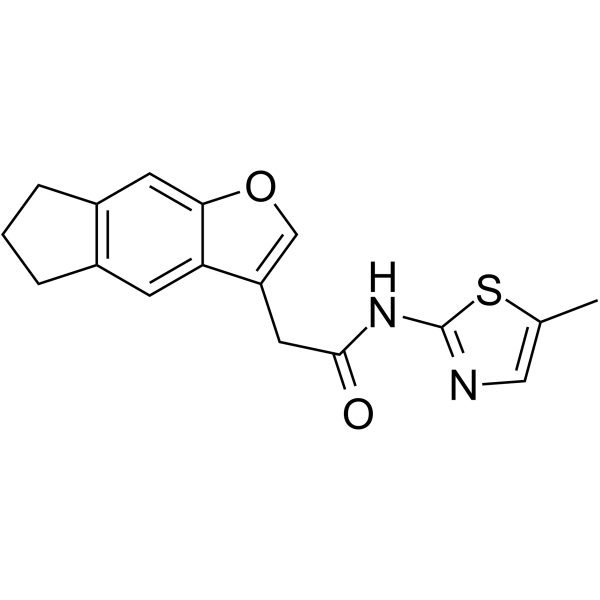
MSU38225 is a selective Nrf2 inhibitor. MSU38225 increases ROS levels by inhibiting antioxidant production. MSU38225 arrests cells at the G2/M phase, enhances cellular sensitivity to chemotherapeutic agents, and exerts synergistic effects with Carboplatin (HY-17393) and 5-fluorouracil (HY-90006). MSU38225 exhibits anticancer activity against lung cancer. MSU38225 can be used in research related to non-small cell lung cancer .
loading...
    loading...
Cat. No.: HY-129610
CAS No.: 2384184-40-9
Purity:  99.25%
Target:  

PROTACs FKBP

Research Areas:  

Cancer

KB02-SLF is a nuclear FKBP12 covalent PROTAC degrader. KB02-SLF covalently modifies cysteine residues in DCAF16, forms a ternary complex with nuclear FKBP12, and mediates degradation via the CUL4-DDB1 E3 ubiquitin ligase pathway. KB02-SLF promotes polyubiquitination and proteasomal degradation of nucleus-localized FKBP12. KB02-SLF can be used in breast cancer research .
loading...
    loading...
Cat. No.: HY-W181530
CAS No.: 790245-61-3
Research Areas:  

Cancer

NCT02 is a molecular glue degrader based on the E3 ubiquitin ligase DDB1 that targets CDK12 and its binding partner CCNK. NCT02 triggers the ubiquitination and proteasomal degradation of CCNK, thereby downregulating CDK12 protein levels and inhibiting its downstream signaling pathways. NCT02 can induce tumor cell apoptosis, arrest the cell cycle, and selectively inhibit the proliferation of colorectal cancer cells carrying TP53 defects or belonging to the consensus molecular subtype CMS4. NCT02 has the potential to inhibit tumor growth in in vitro and in vivo models .
loading...
    loading...
Cat. No.: HY-119264A
CAS No.: 1094210-96-4
Purity:  99.83%
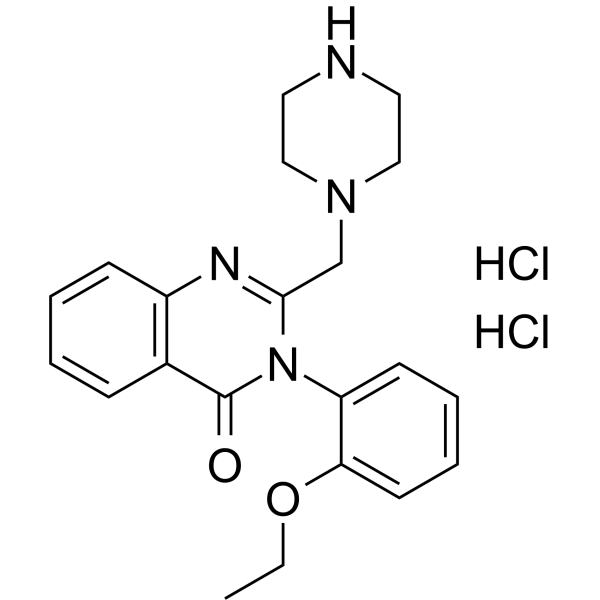
PRLX-93936 dihydrochloride is a molecular Glues that binds to and reprograms the TRIM21 ubiquitin ligase to degrade nuclear pore complexes. PRLX-93936 dihydrochloride binds to TRIM21, forms a ternary complex with TRIM21 and NUP98, and mediates the ubiquitination and proteasomal degradation of NUP98 and other nuclear pore complex proteins. PRLX-93936 dihydrochloride induces the loss of short-lived cytoplasmic mRNA transcripts, triggers cancer cell apoptosis (Apoptosis), and inhibits the activated Ras pathway. PRLX-93936 dihydrochloride inhibits HIF-1 under hypoxic conditions (IC50 = 0.09 μM in cell-based reporter gene assay). PRLX-93936 dihydrochloride suppresses tumor growth in mouse models and improves survival rates in mouse models of multiple myeloma. PRLX-93936 dihydrochloride is applicable to research related to pancreatic cancer and multiple myeloma .
loading...
    loading...
Cat. No.: HY-148369
CAS No.: 3094177-94-0
Purity:  99.68%
U7D-1 is a USP7 PROTAC degrader that induces selective proteasomal degradation of USP7. U7D-1 destabilizes and downregulates the expression of variant PRC1 complex subunits PCGF1, RING1A and PCGF6, and also slightly reduces the protein level of KDM2B. U7D-1 decreases cell viability, arrests neuroblastoma cells at the G0/G1 cell cycle phase, and downregulates the expression of target genes of PAX3::FOXO1 in FP-RMS cells. U7D-1 increases the level of cleaved PARP in FP-RMS cells, induces cell apoptosis (apoptosis), and upregulates the expression of muscle differentiation markers MYH1 and MYF5. U7D-1 inhibits the growth and proliferation of p53 wild-type and mutant cancer cells, and regulates the apoptosis pathway and E2F pathway. U7D-1 is applicable to studies on neuroblastoma, fusion-positive rhabdomyosarcoma, p53-mutant cancers and cancer-related research .
loading...
    loading...
Cat. No.: HY-171705
CAS No.: 1478585-60-2
KMS99220 is an orally active, blood-brain barrier-permeable activator of the Nrf2 inhibitory protein Keap-1. KMS99220 enhances the activity of AMPK, activates the Nrf2 signaling pathway, and reduces the phosphorylation of IκB, nuclear translocation of NFκB, as well as the phosphorylation levels of JNK, IKK and p38 MAPK via HO-1. KMS99220 binds to Keap1 to trigger the nuclear translocation of Nrf2, induces the expression of HO-1, NQO1, GCLC, GCLM and proteasome subunits; enhances proteasomal enzymatic activity; inhibits iNOS expression, nitric oxide production and IL-1β generation; attenuates microglial activation; reduces α-synuclein aggregation; and prevents dopaminergic neuron degeneration and motor dysfunction. KMS99220 prevents the degeneration of dopaminergic neurons in the substantia nigra, induces the expression of Nrf2 downstream target genes, and effectively ameliorates associated motor dysfunction in a mouse model of Parkinson's disease. KMS99220 is applicable to research related to Parkinson's disease .
loading...
    loading...
Cat. No.: HY-145737A
Purity:  99.38%
Target:  

PROTACs SOS1 Ras PERK

Research Areas:  

Cancer

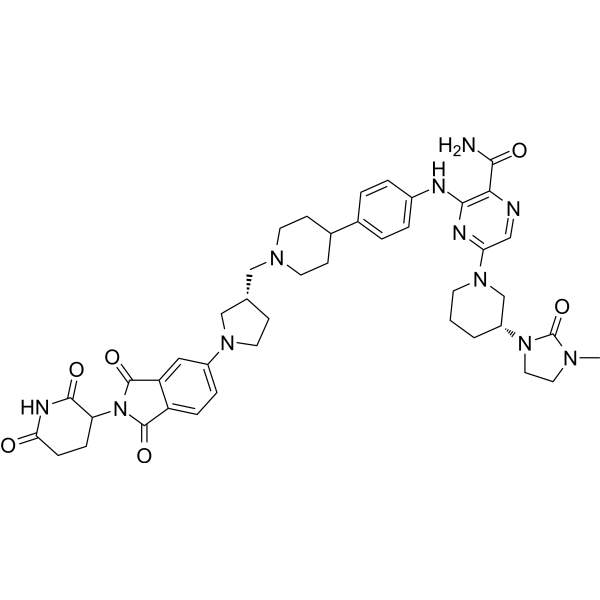
PROTAC SOS1 degrader-1 TFA is a degrader of SOS1 PROTAC, with a DC50 of 98.4 nM and a Kd value of 44 nM. PROTAC SOS1 degrader-1 TFA induces the formation of a ternary complex with SOS1 and the VCB E3 ubiquitin ligase complex, thereby promoting the ubiquitination and proteasomal degradation of SOS1. PROTAC SOS1 degrader-1 TFA reduces KRAS-GTP levels, inhibits the phosphorylation of ERK in the RAS-RAF-MEK-ERK pathway, and suppresses the proliferation of cancer cells carrying KRAS mutations. PROTAC SOS1 degrader-1 TFA inhibits tumor growth in mouse xenograft models. PROTAC SOS1 degrader-1 TFA can be used for the research of KRAS-driven cancers .
loading...
    loading...
Cat. No.: HY-159728
PROTAC PRMT3 degrader 1 is a selective PRMT3 PROTAC degrader with a DC50 of 2.566 μM. PROTAC PRMT3 degrader 1 forms a ternary complex with MDM2 E3 ubiquitin ligase to induce proteasomal and neddylation-dependent degradation of PRMT3. PROTAC PRMT3 degrader 1 activates intrinsic apoptosis, endoplasmic reticulum stress signaling pathways. PROTAC PRMT3 degrader 1 downregulates E2F, MYC, oxidative phosphorylation pathways. PROTAC PRMT3 degrader 1 reduces cellular asymmetric dimethylarginine (ADMA) levels. PROTAC PRMT3 degrader 1 inhibits acute leukemia cell growth. PROTAC PRMT3 degrader 1 acts with glycolysis inhibitor 2-DG to reduce ATP production, induce intrinsic apoptosis, drive synergistic antiproliferative effects. PROTAC PRMT3 degrader 1 can be used for the research of acute leukemia .
loading...
    loading...
Cat. No.: HY-163962
CAS No.: 2451070-32-7
L18I is a Bruton's tyrosine kinase (BTK) PROTAC degrader that targets wild-type and BTK C481, and recruits the cereblon E3 ligase to mediate proteasomal degradation. L18I regulates the BCR, TLR, FcγR and NLRP3 inflammasome signaling pathways, inhibits the phosphorylation of PLCγ-2, ERK1/2 and p38, and reduces the levels of B cell activation markers CD25, CD69 and CD86. L18I downregulates the NF-κB, TNF and TLR signaling pathways, reduces the production of pro-inflammatory cytokines, and decreases immune cell infiltration and immune complex deposition. L18I inhibits the proliferation of BTK-expressing lymphoma cells, induces tumor regression in xenograft models, and exhibits synergistic activity when combined with inhibitors of SYK, PI3K or Lyn. L18I can be used in research related to lupus, diffuse alveolar hemorrhage and B-cell lymphoma .
loading...
    loading...
Cat. No.: HY-168593
CAS No.: 3119090-33-1
Research Areas:  

Cancer

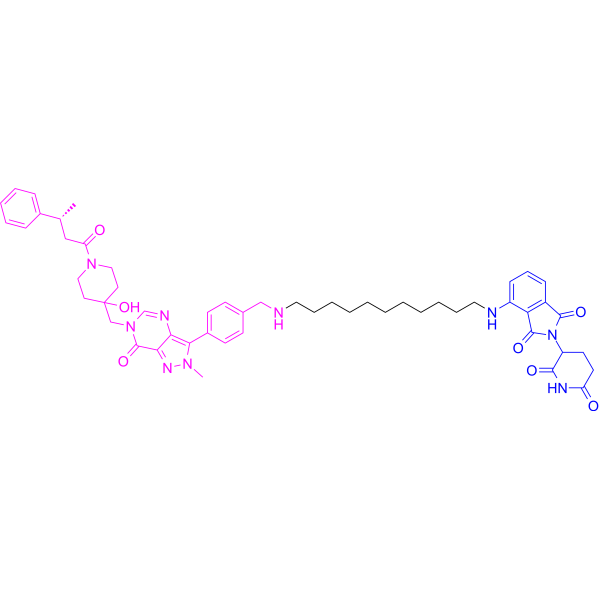
PROTAC KDM3 degrader-1 is a KDM3A/KDM3B PROTAC degrader with DC50 values of 13.73 nM and 172.6 nM in SW480 cells, respectively. PROTAC KDM3 degrader-1 induces cereblon-dependent proteasomal degradation of KDM3A and KDM3B. PROTAC KDM3 degrader-1 inhibits the oncogenic Wnt/β-catenin signaling pathway. PROTAC KDM3 degrader-1 eliminates colorectal cancer stem cells, suppresses their self-renewal, and blocks colony formation of colorectal cancer cells. PROTAC KDM3 degrader-1 inhibits tumor growth in a colorectal cancer xenograft mouse model. PROTAC KDM3 degrader-1 can be used for the research of colorectal cancer .
loading...
    loading...
Cat. No.: HY-172770
CAS No.: 3113750-79-8
Target:  

Molecular Glues

Research Areas:  

Cancer

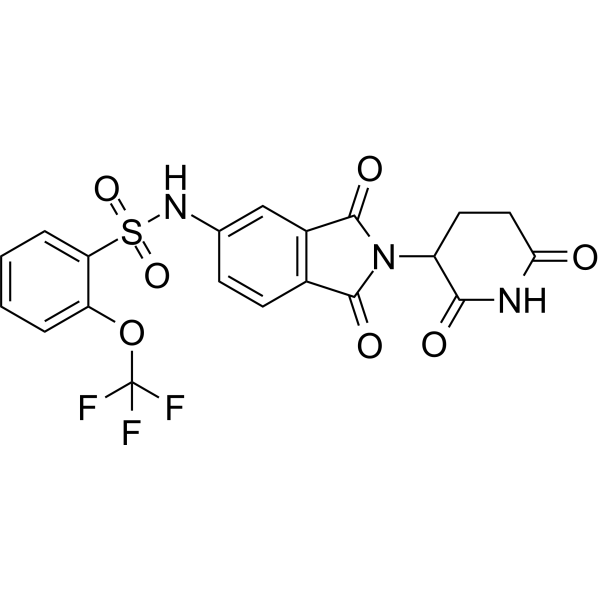
KMG-1068 is a molecular glue degrader that induces proteasomal degradation of GSPT1 and GSPT2 with DC50 values of 126.7 nM and 42.2 nM, respectively. KMG-1068 binds to the C-terminal IMiD-binding site of CRBN, forms ternary complexes with GSPT1 and GSPT2, and mediates proteasomal degradation of target proteins via the CRL4 ubiquitination pathway. KMG-1068 is applicable to research related to acute myeloid leukemia .
loading...
    loading...

