

114 Results for "

proximal convoluted tubule

" in MedChemExpress (MCE) Product Catalog:
Products (114)

114 Results for "proximal convoluted tubule" in MCE Product Catalog:

13
13 Publications Verification
Cat. No.: HY-127105
CAS No.: 1644670-37-0
Purity:  99.93%
Synonyms: LNP023
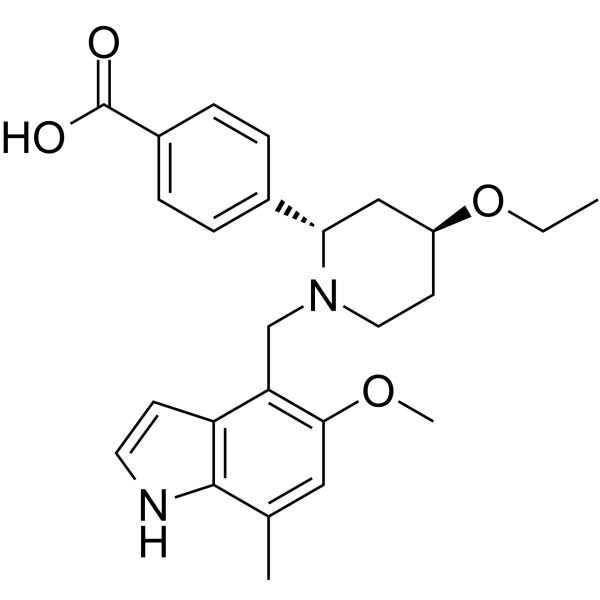
Iptacopan (LNP023) is an effective and orally-active highly selective factor B inhibitor with an IC50 value of 10 nM and KD of 7.9 nM. Iptacopan exerts a proximal effect in the complement cascade reaction, preventing the destruction (hemolysis) of red blood cells in PNH and the damage of renal cells in IgAN and C3G. Iptacopan can be used for the study of complement-mediated diseases, particularly paroxysmal nocturnal hemoglobinuria (PNH), primary immunoglobulin A nephropathy (IgAN), and complement 3 glomerulopathy (C3G) .
loading...
    loading...
13
13 Publications Verification
Cat. No.: HY-127105A
CAS No.: 1646321-63-2
Purity:  99.83%
Synonyms: LNP023 hydrochloride
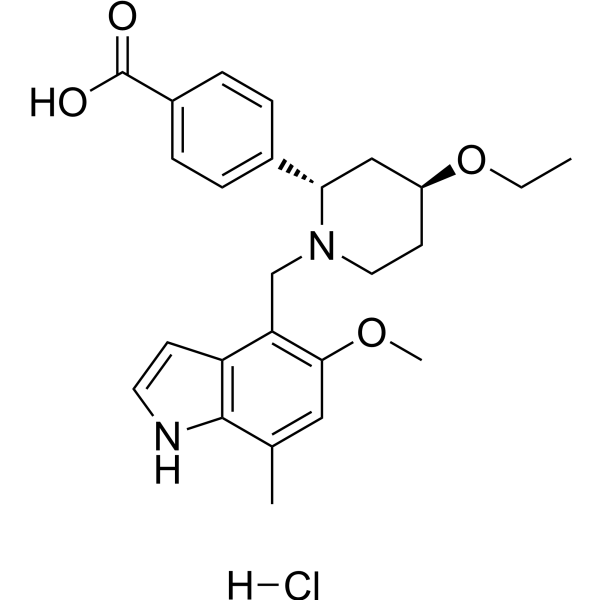
Iptacopan (LNP023) hydrochloride is an effective and orally-active highly selective factor B inhibitor with an IC50 value of 10 nM and KD of 7.9 nM. Iptacopan hydrochloride exerts a proximal effect in the complement cascade reaction, preventing the destruction (hemolysis) of red blood cells in PNH and the damage of renal cells in IgAN and C3G. Iptacopan hydrochloride can be used for the study of complement-mediated diseases, particularly paroxysmal nocturnal hemoglobinuria (PNH), primary immunoglobulin A nephropathy (IgAN), and complement 3 glomerulopathy (C3G) .
loading...
    loading...
13
13 Publications Verification
Cat. No.: HY-P7051A
Purity:  ≥ 95%, as determined by reducing SDS-PAGE.
Synonyms: NOG; Symphalangism 1 (proximal); Prev. SYNS1; SYNS1A; Prev. SYM1; Noggin; Synostoses (Multiple) Syndrome 1
Species:  
Human
Source:  
CHO
loading...
    loading...
13
13 Publications Verification
Cat. No.: HY-P7086
Purity:  ≥ 95%, as determined by reducing SDS-PAGE.
Synonyms: NOG; Symphalangism 1 (proximal); Prev. SYNS1; SYNS1A; Prev. SYM1; Noggin; Synostoses (Multiple) Syndrome 1
Species:  
Mouse
Source:  
CHO
loading...
    loading...
10
10 Cited Publications
Cat. No.: HY-W017018
CAS No.: 3184-13-2
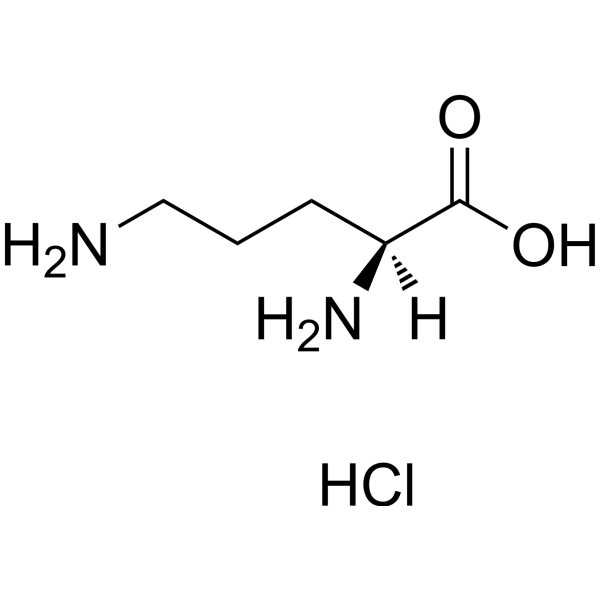
L-Ornithine hydrochloride is an orally active CaSR and p38 activator. L-Ornithine hydrochloride inhibits ROS and supports urea cycle function. L-Ornithine hydrochloride can be used to study kidney diseases involving proximal tubular cell damage caused by oxidative stress or crystallopathy, as well as research related to anxiety disorders .
loading...
    loading...
9
9 Cited Publications
Cat. No.: HY-P70558
Purity:  ≥ 95%, as determined by reducing SDS-PAGE.
Synonyms: NOG; Symphalangism 1 (proximal); Prev. SYNS1; SYNS1A; Prev. SYM1; Noggin; Synostoses (Multiple) Syndrome 1
Species:  
Human
Source:  
HEK293
loading...
    loading...
6
6 Cited Publications
Cat. No.: HY-B0504
CAS No.: 60-27-5
Synonyms: NSC13123
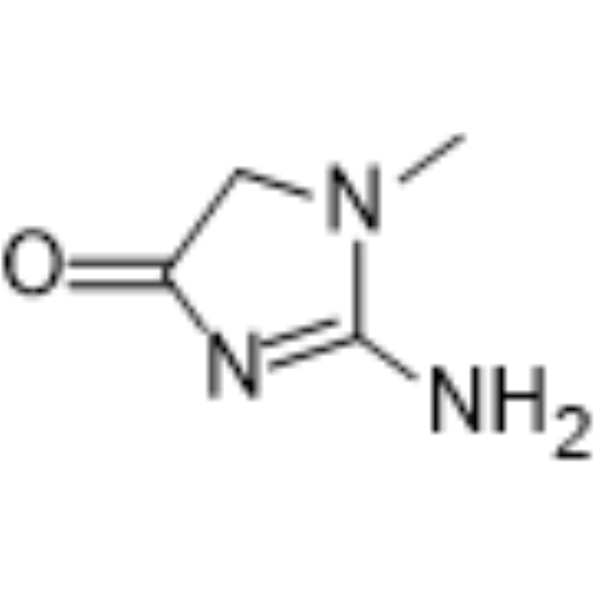
Creatinine (NSC13123) is an orally active, blood-brain barrier-permeable modulator of GABAA and NMDA receptors, with activities of antioxidation and metabolic regulation. Creatinine is generated via non-enzymatic conversion of creatine and phosphocreatine in muscle. Creatinine serum levels correlate with muscle mass, glomerular filtration rate, and extrarenal clearance, serving as an evaluation biomarker for renal function, muscle mass, and clinical outcomes, and used for perioperative renal risk assessment. In addition, Creatinine can induce specific Cryptococcus species to produce creatinine deiminase and act as their nitrogen source, while it can be secreted via renal tubules. Creatinine is widely used in research related to various diseases such as neurodegenerative diseases, psychiatric disorders, acute kidney injury, chronic kidney disease, and renal failure .
loading...
    loading...
5
5 Cited Publications
Cat. No.: HY-B0504S
CAS No.: 143827-20-7
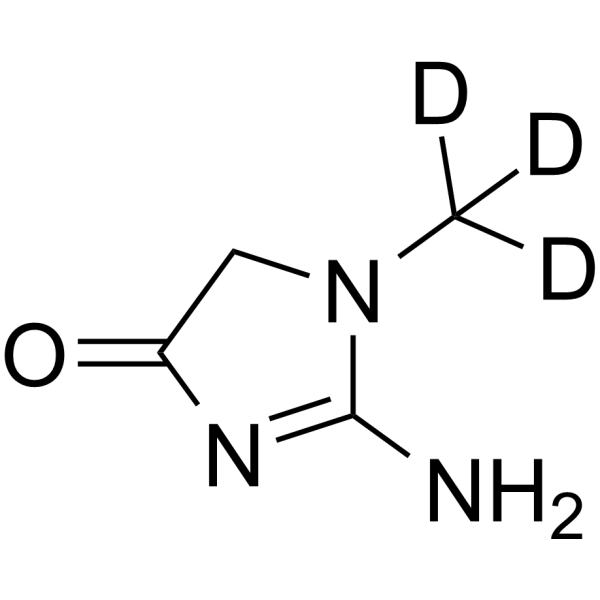
Synonyms: NSC13123-d3
Creatinine-d3 is a deuterium labeled Creatinine. Creatinine (NSC13123) is an orally active, blood-brain barrier-permeable modulator of GABAA and NMDA receptors, with activities of antioxidation and metabolic regulation. Creatinine is generated via non-enzymatic conversion of creatine and phosphocreatine in muscle. Creatinine serum levels correlate with muscle mass, glomerular filtration rate, and extrarenal clearance, serving as an evaluation biomarker for renal function, muscle mass, and clinical outcomes, and used for perioperative renal risk assessment. In addition, Creatinine can induce specific Cryptococcus species to produce creatinine deiminase and act as their nitrogen source, while it can be secreted via renal tubules. Creatinine is widely used in research related to various diseases such as neurodegenerative diseases, psychiatric disorders, acute kidney injury, chronic kidney disease, and renal failure .
loading...
    loading...
4
4 Cited Publications
Cat. No.: HY-P99129

Research Areas:  

Inflammation/Immunology

Anti-Mouse CD8a Antibody (53-6.7) is an anti-mouse CD8a IgG2a antibody inhibitor derived from host Rat. Anti-Mouse CD8a Antibody (53-6.7) binds to CD8αβ stabilizes a conformation with a higher affinity for interaction with MHC class I. Anti-Mouse CD8a Antibody (53-6.7) induces the phosphorylation and activation of TCR proximal signaling pathway components Lck and ZAP70 in polyclonal memory T cells. Anti-Mouse CD8a Antibody (53-6.7) depletes CD8+ T cells and neutralizes cytokine in mice .
loading...
    loading...
2
2 Cited Publications
Cat. No.: HY-P3252A
Target:  

Complement System

Research Areas:  

Inflammation/Immunology

Pegcetacoplan acetate is a pegylated complement C3/C3b inhibitor. Pegcetacoplan acetate acts by specifically binding to and inhibiting C3 and C3b, thereby suppressing the complement cascade at its proximal stage. Pegcetacoplan is not a known inhibitor or inducer of CYP450 isoenzymes. Pegcetacoplan acetate can be used for the research of complement-mediated diseases, including paroxysmal nocturnal hemoglobinuria (PNH) and age-related macular degeneration (AMD) .
loading...
    loading...
2
2 Cited Publications
Cat. No.: HY-B0908
CAS No.: 1084-65-7
Research Areas:  

Cardiovascular Disease

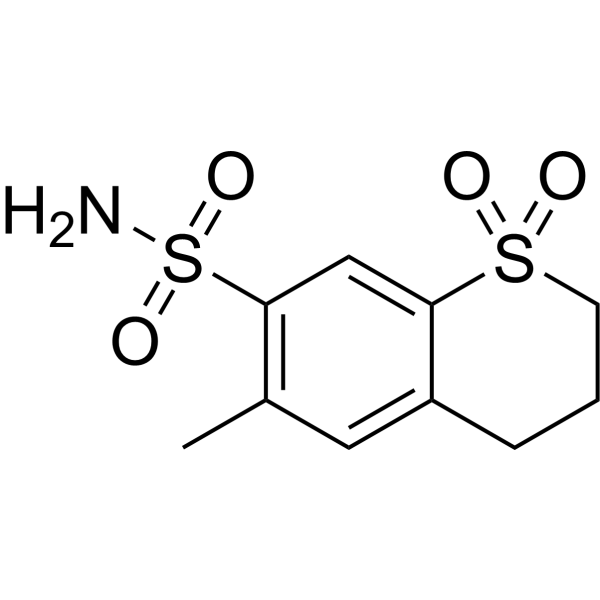
Meticrane is a diuretic. Meticrane inhibits the reabsorption of sodium and chloride ions in the distal convoluted tubule. Meticrane is used to treat essential hypertension.
loading...
    loading...
2
2 Cited Publications
Cat. No.: HY-P70785
Purity:  ≥ 95%, as determined by reducing SDS-PAGE.
Synonyms: NOG; Symphalangism 1 (proximal); Prev. SYNS1; SYNS1A; Prev. SYM1; Noggin; Synostoses (Multiple) Syndrome 1
Species:  
Mouse
Source:  
HEK293
loading...
    loading...
1
1 Cited Publications
Cat. No.: HY-123972
CAS No.: 900308-51-2
Purity:  99.49%
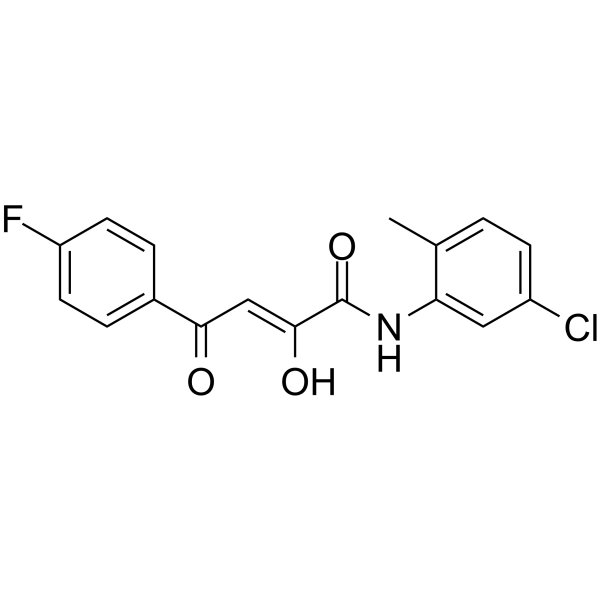
Synonyms: KL-2
Target:  

DNA/RNA Synthesis

Research Areas:  

Cancer

SEC inhibitor KL-2 (KL-2), a peptidomimetic lead compound, is a potent, selective super elongation complex (SEC) inhibitor and disrupts the interaction between the SEC scaffolding protein AFF4 and P-TEFb, resulting in impaired release of Pol II from promoter-proximal pause sites and a reduced average rate of processive transcription elongation. SEC inhibitor KL-2 exhibits an dose-dependent inhibitory effect on AFF4-CCNT1 interaction with a Ki of 1.50 μM .
loading...
    loading...
1
1 Cited Publications
Cat. No.: HY-W017018S4
CAS No.: 2483831-57-6
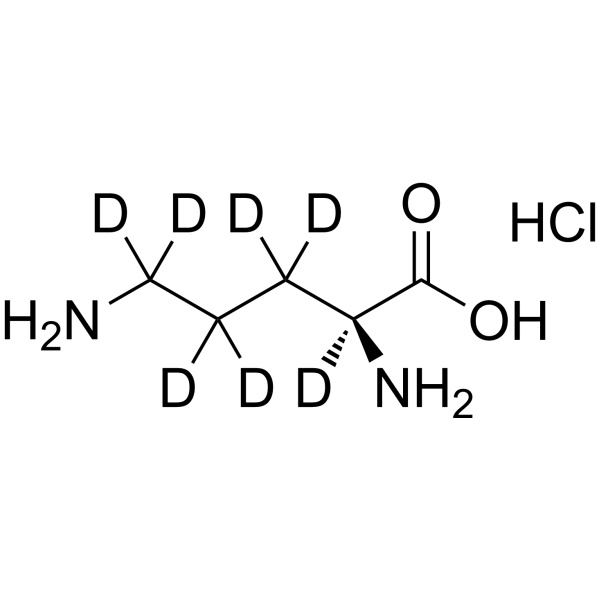
L-Ornithine-d7 hydrochloride is the d7-labeled L-Ornithine hydrochloride (HY-W017018). L-Ornithine hydrochloride is an orally active CaSR and p38 activator. L-Ornithine hydrochloride inhibits ROS and supports urea cycle function. L-Ornithine hydrochloride can be used to study kidney diseases involving proximal tubular cell damage caused by oxidative stress or crystallopathy, as well as research related to anxiety disorders .
loading...
    loading...
1
1 Cited Publications
Cat. No.: HY-P700286
Purity:  ≥ 95%, as determined by reducing SDS-PAGE.
Synonyms: NOG; Symphalangism 1 (proximal); Prev. SYNS1; SYNS1A; Prev. SYM1; Noggin; Synostoses (Multiple) Syndrome 1
Species:  
Mouse
Source:  
HEK293
loading...
    loading...
Cat. No.: HY-P99601
CAS No.: 2249888-53-5
Synonyms: BFCR 4350A; RG 6160; RO 7187797
Target:  

CD3

Research Areas:  

Neurological Disease Cancer

Cevostamab (BFCR4350A; RG6160; RO7187797) is a humanized IgG1-based BsAb that targets membrane-proximal extracellular domain of FcRH5 on multiple myeloma (MM) cells as well as CD3 on T cells. Moreover, Cevostamab facilitates efficient synapse formation, improves killing activity of T cells against MM tumor cells .
loading...
    loading...
Cat. No.: HY-B0504S2
Synonyms: NSC13123-d5
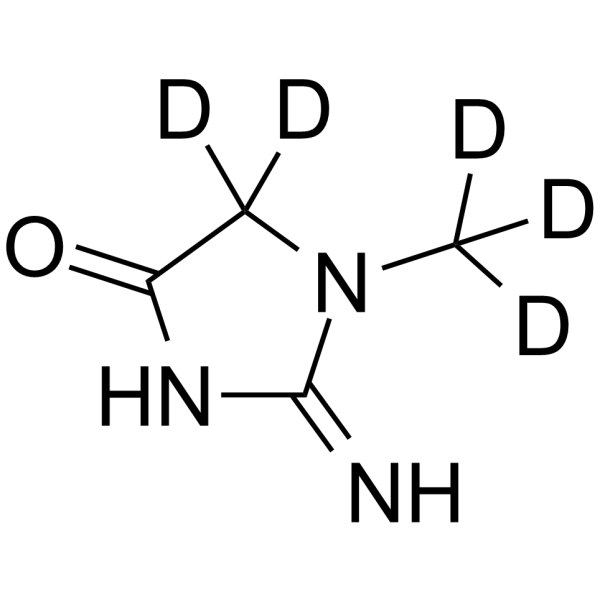
Creatinine-d5 is the deuterium labeled Creatinine. Creatinine (NSC13123) is an orally active, blood-brain barrier-permeable modulator of GABAA and NMDA receptors, with activities of antioxidation and metabolic regulation. Creatinine is generated via non-enzymatic conversion of creatine and phosphocreatine in muscle. Creatinine serum levels correlate with muscle mass, glomerular filtration rate, and extrarenal clearance, serving as an evaluation biomarker for renal function, muscle mass, and clinical outcomes, and used for perioperative renal risk assessment. In addition, Creatinine can induce specific Cryptococcus species to produce creatinine deiminase and act as their nitrogen source, while it can be secreted via renal tubules. Creatinine is widely used in research related to various diseases such as neurodegenerative diseases, psychiatric disorders, acute kidney injury, chronic kidney disease, and renal failure .
loading...
    loading...
Cat. No.: HY-P3954
CAS No.: 73032-94-7
Target:  

Somatostatin Receptor

Research Areas:  

Metabolic Disease

Somatostatin-28 (sheep, human rat mouse) is a biologically active polypeptide, synthesised in the proximal intestinal epithelial cells. Somatostatin-28 (sheep, human rat mouse) suppresses glucose-stimulated insulin secretion without affecting circulating basal insulin concentration. Somatostatin-28 (sheep, human rat mouse) also targets to somatostatin receptor subtype 5 (SSTR5) to regulate GLP-1 secretion .
loading...
    loading...
Cat. No.: HY-B1363
CAS No.: 73-48-3
Synonyms: Bendrofluazide
Target:  

NKCC

Research Areas:  

Cardiovascular Disease

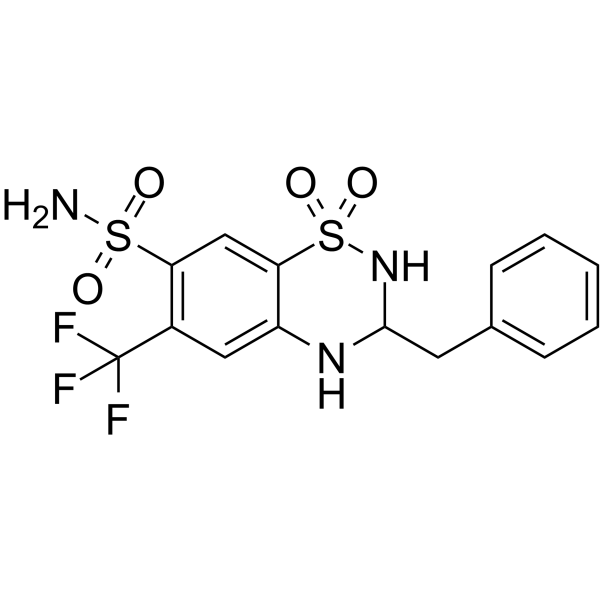
Bendroflumethiazide (Bendrofluazide) is an orally available diuretic. Bendroflumethiazide inhibits the electroneutral sodium-chloride symporter located in the apical membrane of the early segment of the distal convoluted tubule and can effectively lower blood pressure. Bendroflumethiazide is used in the study of hypertension and edema. Bendroflumethiazide has an antidiuretic effect in diabetes insipidus .
loading...
    loading...
Cat. No.: HY-118773
CAS No.: 22816-60-0
Purity:  99.3%
Synonyms: A22 hydrochloride
Target:  

Bacterial

Research Areas:  

Infection

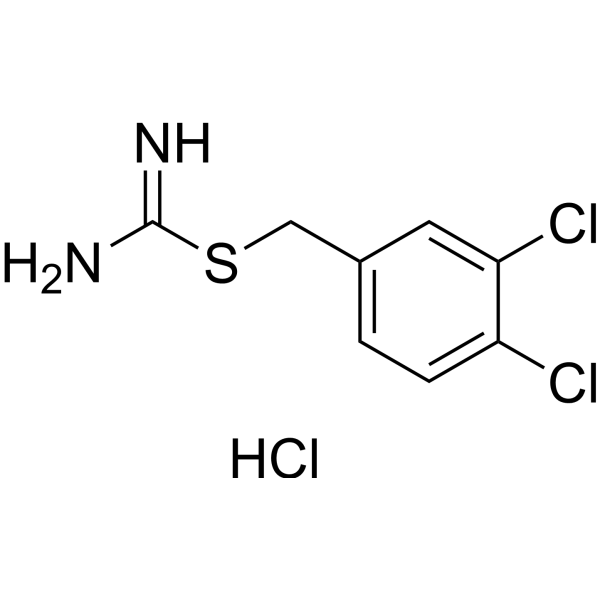
MreB Perturbing Compound A22 hydrochloride (A22 hydrochloride) is a reversible MreB inhibitor and antimicrobial agent that exhibits bacteriostatic activity against Escherichia coli, with low activity against Gram-positive bacteria. MreB Perturbing Compound A22 hydrochloride rapidly and reversally delocalizes MreB from the helical/circular structures in cells, impairs MreB function, and reduces the binding of MreB to the chromosomal region proximal to the replication origin. MreB Perturbing Compound A22 hydrochloride alters the cell morphology of caulobacters to round/lemon-shaped, slows caulobacter growth, blocks their cell division, and induces the formation of spherical morphology, asymmetric division, and anucleate cells in Escherichia coli. MreB Perturbing Compound A22 hydrochloride is used for studies related to bacterial rod-shaped morphology determination, chromosome segregation, and cell division mechanisms .
loading...
    loading...

