
4338 Results for "

purified PvdQ enzyme

" in MedChemExpress (MCE) Product Catalog:
Products (4338)

4338 Results for "purified PvdQ enzyme" in MCE Product Catalog:

245
245 Publications Verification
Cat. No.: HY-15534
CAS No.: 3520-43-2
Purity:  98.71%
Synonyms: CBIC2
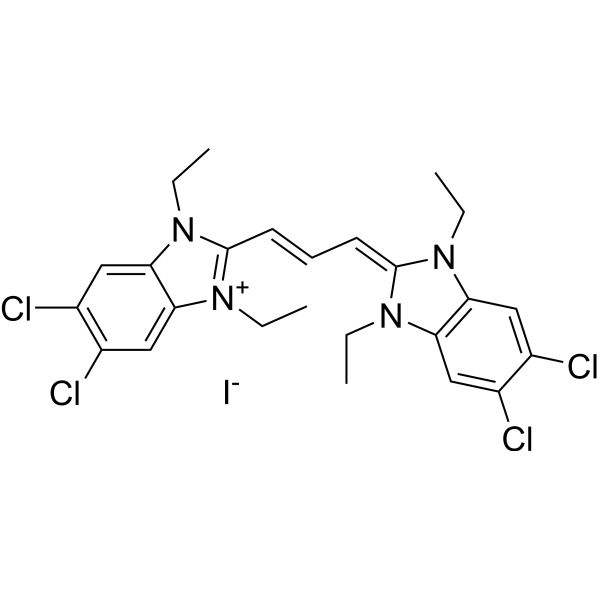
JC-1 (CBIC2) is an ideal fluorescent probe widely used to detect mitochondrial membrane potential. JC-1 accumulates in mitochondria in a potential dependent manner and can be used to detect the membrane potential of cells or purified mitochondria. In normal mitochondria, JC-1 aggregates in the mitochondrial matrix to form a polymer, which emits strong red fluorescence (Ex=585 nm, Em=590 nm); When the mitochondrial membrane potential is low, JC-1 cannot aggregate in the matrix of mitochondria and produce green fluorescence (ex=510 nm, em= 527 nm) .
loading...
    loading...
232
232 Cited Publications
Cat. No.: HY-10484
CAS No.: 1160295-21-5
Purity:  98.58%
Synonyms: MLN4924 hydrochloride
Research Areas:  

Cancer

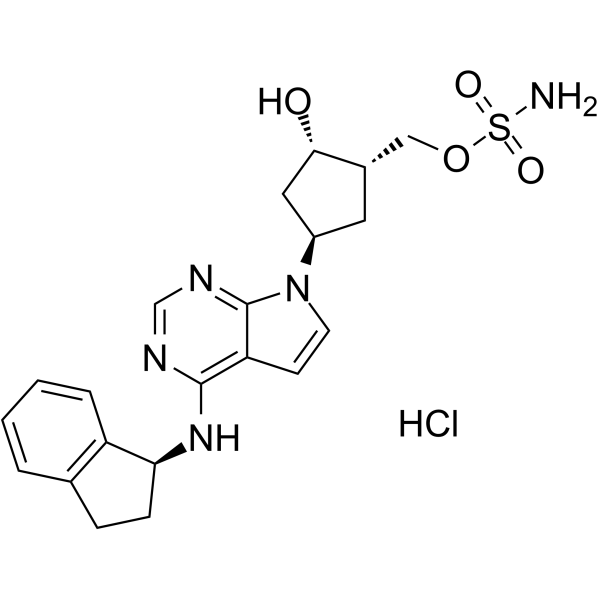
Pevonedistat (MLN4924) hydrochloride is a potent and selective NEDD8-activating enzyme (NAE) inhibitor, with an IC50 of 4.7 nM. Pevonedistat hydrochloride induces the deregulation of S-phase DNA synthesis, thereby disrupting protein turnover mediated by cullin-RING ligase, leading to apoptosis of human tumor cells. Pevonedistat hydrochloride suppresses the growth of human tumour xenografts in mice .
loading...
    loading...
232
232 Cited Publications
Cat. No.: HY-70062
CAS No.: 905579-51-3
Synonyms: MLN4924
Research Areas:  

Cancer

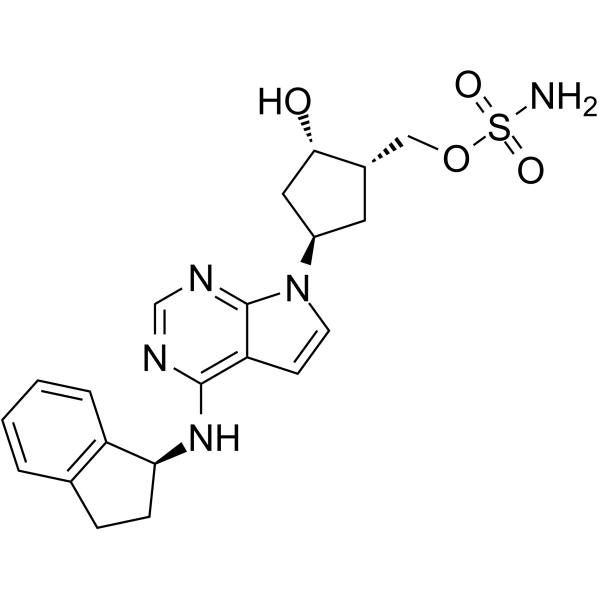
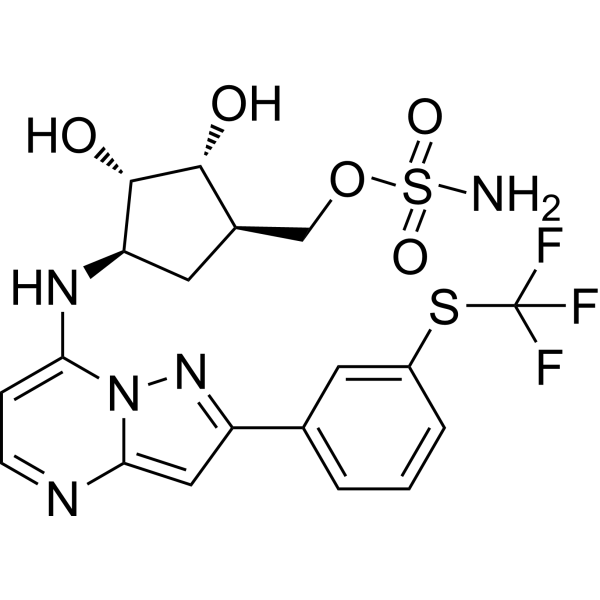
Pevonedistat (MLN4924) is a potent and selective NEDD8-activating enzyme (NAE) inhibitor with an IC50 of 4.7 nM. Pevonedistat induces the deregulation of S-phase DNA synthesis, thereby disrupting protein turnover mediated by cullin-RING ligase, leading to apoptosis of human tumor cells. Pevonedistat suppresses the growth of human tumour xenografts in mice .
loading...
    loading...
183
183 Cited Publications
Cat. No.: HY-A0004
CAS No.: 2353-33-5
Synonyms: 5-Aza-2'-deoxycytidine; 5-AZA-CdR; NSC 127716
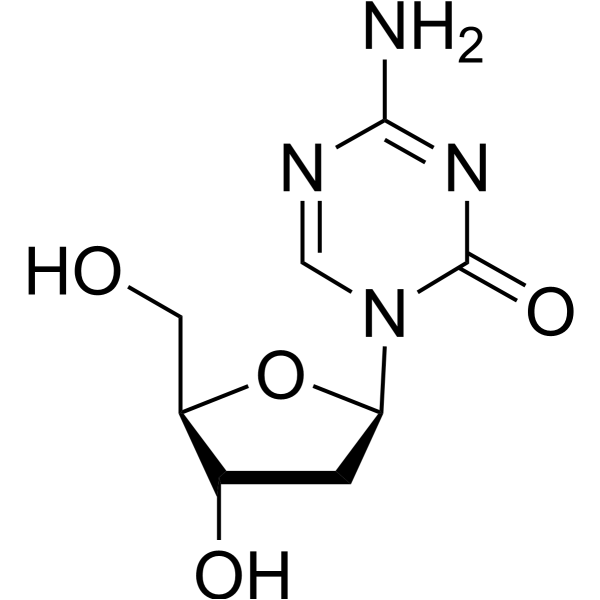
Decitabine (NSC 127716) is an orally active deoxycytidine analogue antimetabolite and DNA methyltransferase inhibitor. Decitabine incorporates into DNA in place of cytosine can covalently trap DNA methyltransferase to DNA causing irreversible inhibition of the enzyme. Decitabine induces cell G2/M arrest and cell Apoptosis. Decitabine has potent anticancer activity .
loading...
    loading...
180
180 Cited Publications
Cat. No.: HY-13205
CAS No.: 273404-37-8
Purity:  99.99%
Synonyms: VX-765
Target:  

Caspase

Research Areas:  

Inflammation/Immunology

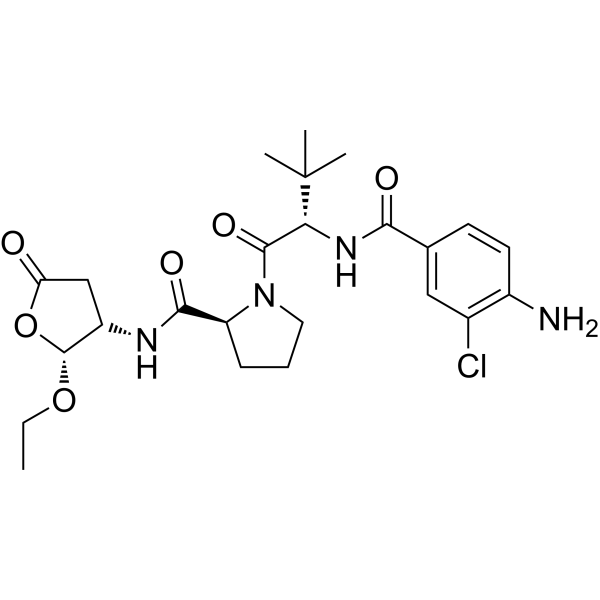
Belnacasan (VX-765) is an orally bioactive proagent of VRT-043198, which is a potent and selective inhibitor of IL-converting enzyme (ICE)/caspase-1 with Kis of 0.8 nM and less than 0.6 nM for caspase-1 and caspase-4, respectively. Belnacasan (VX-765) inhibits the release of LPS-induced IL-1β and IL-18 by human PBMCs with an IC50 of ~0.7 μM .
loading...
    loading...
163
163 Cited Publications
Cat. No.: HY-B0496
CAS No.: 329-98-6
Synonyms: Phenylmethylsulfonyl fluoride; Benzylsulfonyl fluoride
Research Areas:  

Neurological Disease

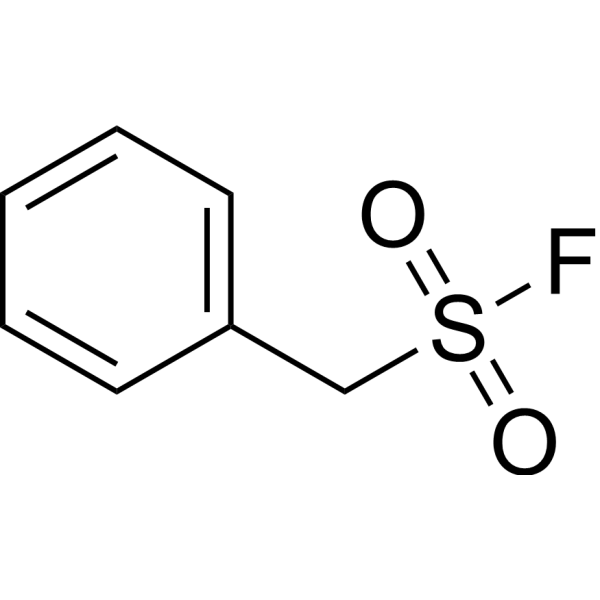
PMSF (Phenylmethylsulfonyl fluoride) is a nonspecific and irreversible serine proteases inhibitor. PMSF inhibits some thiol proteases, non-protease enzymes, and acetylcholinesterase. PMSF can be used to prepare protein extracts from tissue and cell lysates .
loading...
    loading...
147
147 Cited Publications
Cat. No.: HY-100573
CAS No.: 1360614-48-7
Purity:  99.47%
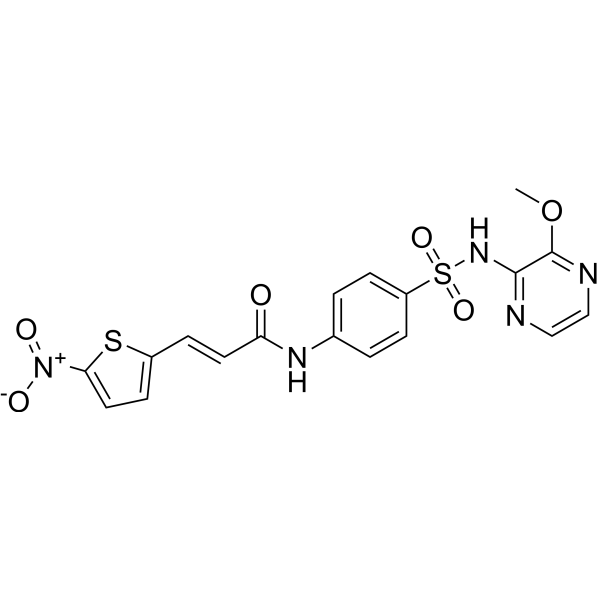
Necrosulfonamide is a MLKL and Gasdermin D (GSDMD) inhibitor, capable of separately inhibiting necroptosis and pyroptosis of cells. Necrosulfonamide does not affect the activation of upstream signals, but specifically inhibits the downstream executor oligomerization step. Necrosulfonamide reduces the expression of the key kinases NLRP3 and caspase-1 involved in necroptosis and pyroptosis, activate the Nrf2 pathway and the downstream antioxidant enzymes, and also downregulates a variety of inflammatory factors. Necrosulfonamide plays significant roles in various diseases such as neurodegenerative diseases (such as Parkinson’s disease), tissue damage and ischemia-reperfusion injury, inflammatory bowel disease, osteoarthritis and fracture repair, and hair loss by regulating two important programmed necrosis pathways .
loading...
    loading...
142
142 Cited Publications
Cat. No.: HY-12591
CAS No.: 103404-75-7
Purity:  99.92%
Synonyms: D-(-)-Luciferin sodium; Firefly luciferin sodium; Beetle Luciferin sodium
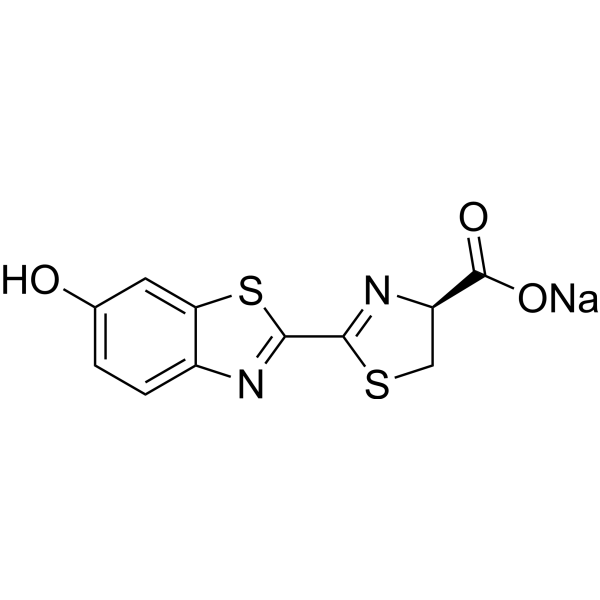
D-luciferin sodium is the natural substrate of the enzyme luciferase (Luc) that catalyzes the production of the typical yellowgreen light of fireflies. The 560 nm chemiluminescence from this reaction peaks within seconds, with light output that is proportional to luciferase concentration when the substrate luciferin is present in excess. The luciferase (luc) gene is a popular reporter gene for research and agent screening. Chemiluminescent techniques are virtually background-free, making the luc reporter gene ideal for detecting low-level gene expression. As little as 0.02 pg of luciferase can be reliably measured in a standard scintillation counter. In addition to its role as a reporter of gene expression, luciferase is commonly used in an extremely sensitive assay for ATP . We of er the firefly luciferase (HY-P1004A), luciferin free acid (HY-12591A), as well as its water-soluble sodium salts (HY-12591) and potassium salts (HY-12591B) .
loading...
    loading...
142
142 Cited Publications
Cat. No.: HY-12591A
CAS No.: 2591-17-5
Purity:  99.54%
Synonyms: D-(-)-Luciferin; Firefly luciferin; Beetle Luciferin
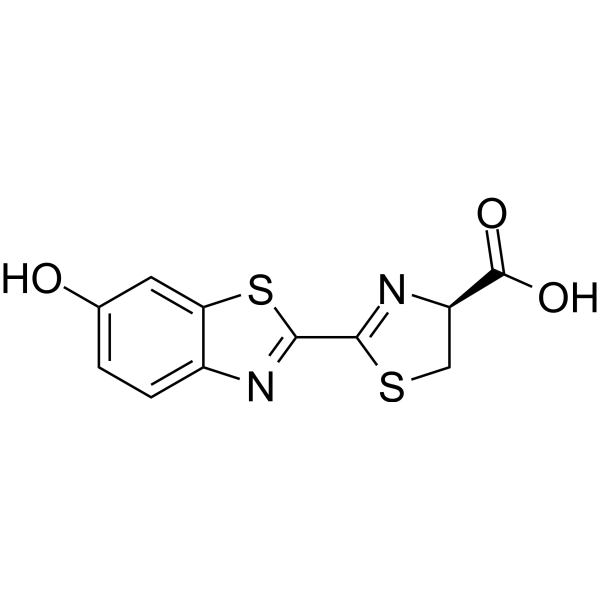
D-luciferin is the natural substrate of the enzyme luciferase (Luc) that catalyzes the production of the typical yellowgreen light of fireflies. The 560 nm chemiluminescence from this reaction peaks within seconds, with light output that is proportional to luciferase concentration when the substrate luciferin is present in excess. The luciferase (luc) gene is a popular reporter gene for research and agent screening. Chemiluminescent techniques are virtually background-free, making the luc reporter gene ideal for detecting low-level gene expression. As little as 0.02 pg of luciferase can be reliably measured in a standard scintillation counter. In addition to its role as a reporter of gene expression, luciferase is commonly used in an extremely sensitive assay for ATP . We of er the firefly luciferase (HY-P1004A), luciferin free acid (HY-12591A), as well as its water-soluble sodium salts (HY-12591) and potassium salts (HY-12591B) .
loading...
    loading...
142
142 Cited Publications
Cat. No.: HY-12591B
CAS No.: 115144-35-9
Purity:  99.97%
Synonyms: D-(-)-Luciferin potassium; Firefly luciferin potassium; Beetle Luciferin potassium
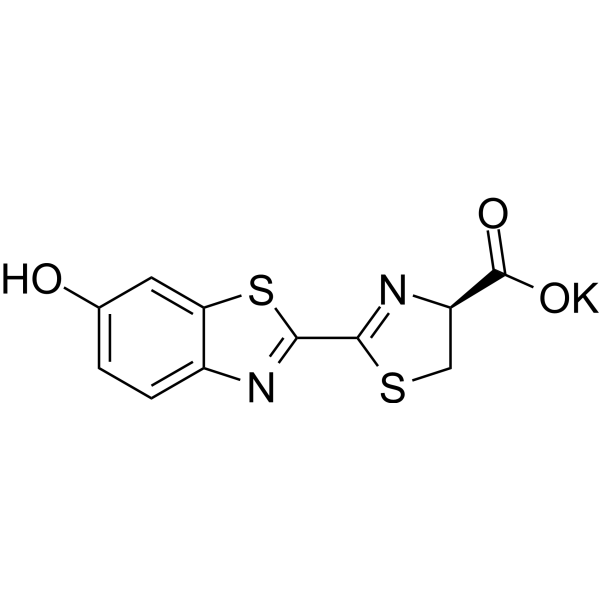
D-luciferin potassium is the natural substrate of the enzyme luciferase (Luc) that catalyzes the production of the typical yellowgreen light of fireflies. The 560 nm chemiluminescence from this reaction peaks within seconds, with light output that is proportional to luciferase concentration when the substrate luciferin is present in excess. The luciferase (luc) gene is a popular reporter gene for research and agent screening. Chemiluminescent techniques are virtually background-free, making the luc reporter gene ideal for detecting low-level gene expression. As little as 0.02 pg of luciferase can be reliably measured in a standard scintillation counter. In addition to its role as a reporter of gene expression, luciferase is commonly used in an extremely sensitive assay for ATP . We offer the firefly luciferase (HY-P1004A), luciferin free acid (HY-12591A), as well as its water-soluble sodium salts (HY-12591) and potassium salts (HY-12591B) .
loading...
    loading...
130
130 Cited Publications
Cat. No.: HY-15463
CAS No.: 152459-95-5
Purity:  99.95%
Synonyms: STI571; CGP-57148B
Research Areas:  

Cancer

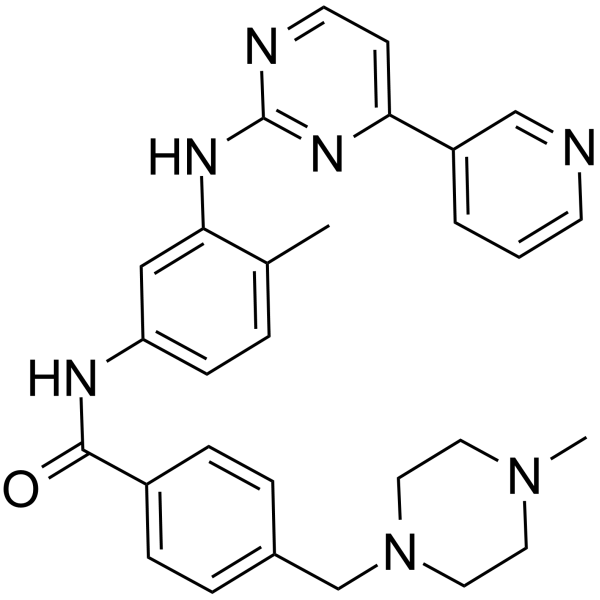
Imatinib (STI571) is an orally bioavailable tyrosine kinases inhibitor that selectively inhibits BCR/ABL, v-Abl, PDGFR and c-kit kinase activity. Imatinib (STI571) works by binding close to the ATP binding site, locking it in a closed or self-inhibited conformation, therefore inhibiting the enzyme activity of the protein semicompetitively . Imatinib also is an inhibitor of SARS-CoV and MERS-CoV .
loading...
    loading...
120
120 Cited Publications
Cat. No.: HY-18723
CAS No.: 448947-81-7
Yoda 1 is a potent and selective Piezo1 agonist. Yoda 1 activates purified Piezo1 channels. Yoda 1 potently inhibits macropinocytosis induced by epidermal growth factor (EGF). Yoda 1 enhances Ca 2+ influx followed by activation of the calcium-activated potassium channel KCa3.1 and inhibition of Rac1 activation .
loading...
    loading...
112
112 Cited Publications
Cat. No.: HY-16106
CAS No.: 1207456-01-6
Synonyms: BMN-673; LT-673
Target:  

PARP

Research Areas:  

Cancer

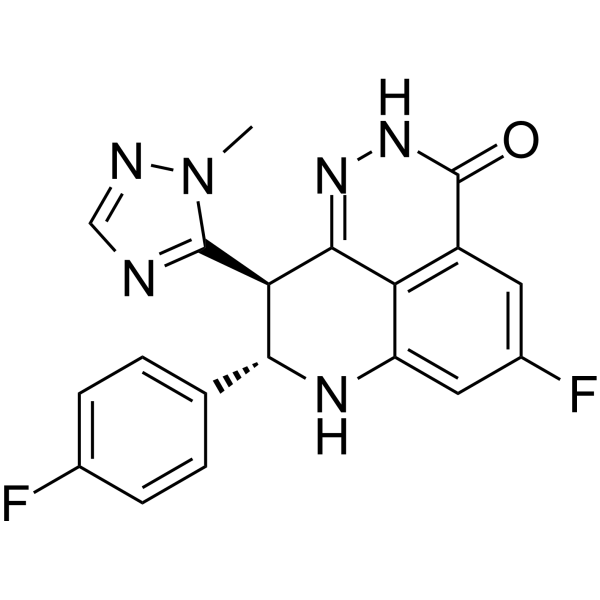
Talazoparib (BMN-673) is a highly potent, orally active PARP1/2 inhibitor.Talazoparib inhibits PARP1 and PARP2 enzyme activity with Kis of 1.2 nM and 0.87 nM, respectively. Talazoparib has antitumor activity .
loading...
    loading...
109
109 Cited Publications
Cat. No.: HY-108331
CAS No.: 120241-79-4
Purity:  99.96%
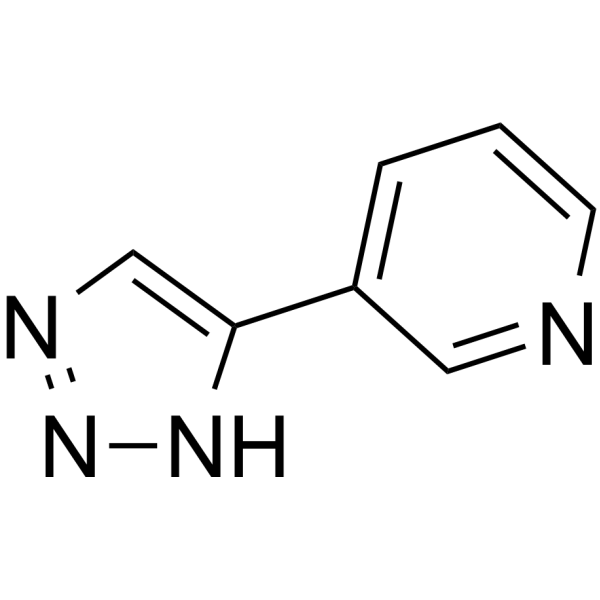
3-TYP is an inhibitor of SIRT3 (IC50of 38 μM) and an inhibitor of Methionine Adenosyltransferase (MAT) 2 and Indoleamine 2,3-Dioxygenase (IDO). There may be many off-target sites for 3-TYP that need to be examined, such as NAD-dependent enzymes, including dehydrogenases .
loading...
    loading...
100
100 Cited Publications
Cat. No.: HY-50898
CAS No.: 231277-92-2
Synonyms: GW572016; GW2016
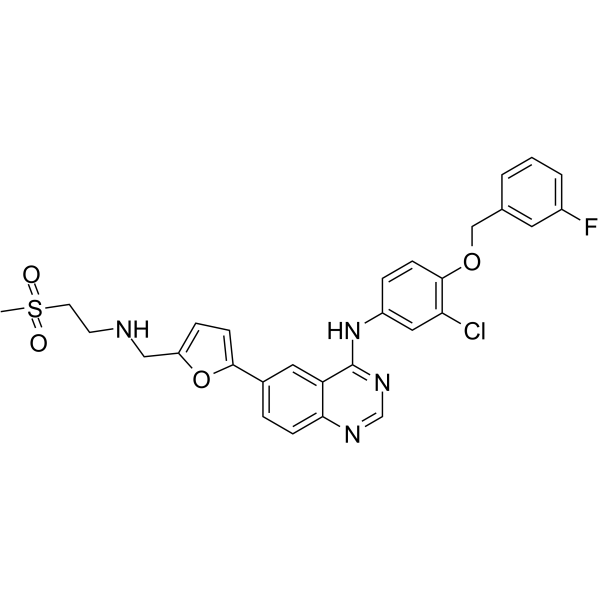
Lapatinib (GW572016) is a potent, orally active inhibitor of the ErbB-2 and EGFR tyrosine kinase domains with IC50 values against purified EGFR and ErbB-2 of 10.2 and 9.8 nM, respectively .
loading...
    loading...
100
100 Cited Publications
Cat. No.: HY-50898A
CAS No.: 388082-77-7
Synonyms: GW572016 ditosylate; GW2016 ditosylate
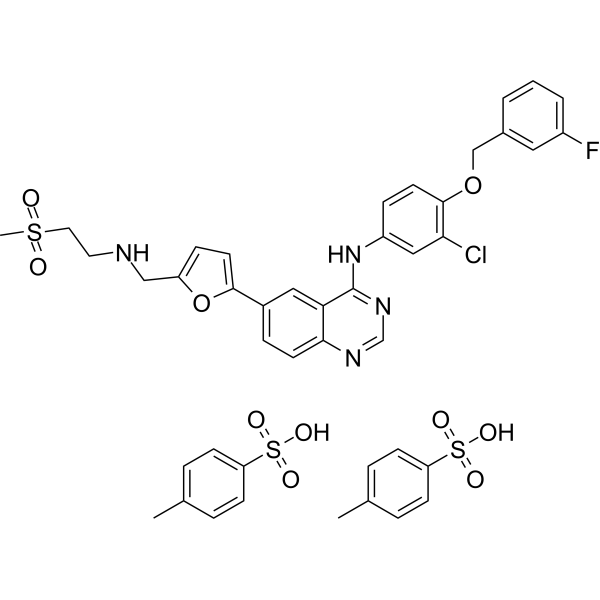
Lapatinib ditosylate (GW572016 ditosylate) is a potent, orally active inhibitor of the ErbB-2 and EGFR tyrosine kinase domains with IC50 values against purified EGFR and ErbB-2 of 10.2 and 9.8 nM, respectively .
loading...
    loading...
100
100 Cited Publications
Cat. No.: HY-50898B
CAS No.: 388082-78-8
Synonyms: GW572016 ditosylate monohydrate; GW2016 ditosylate monohydrate
Target:  

EGFR Autophagy Ferroptosis

Research Areas:  

Infection Metabolic Disease Cancer

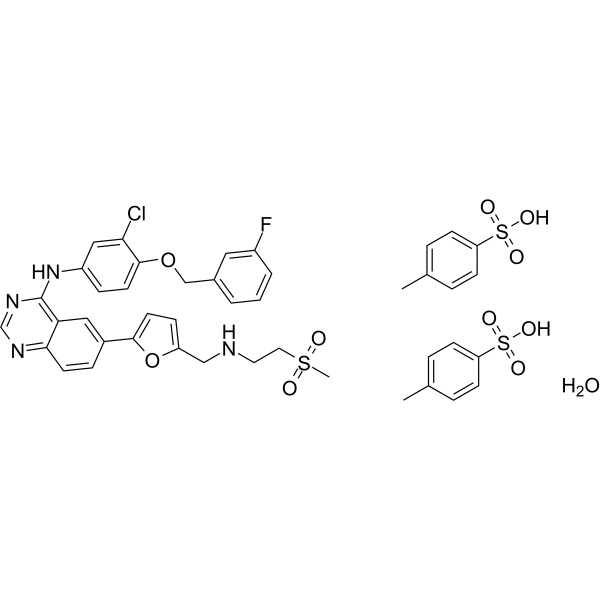
Lapatinib ditosylate monohydrate (GW572016 ditosylate monohydrate) is a potent, orally active inhibitor of the ErbB-2 and EGFR tyrosine kinase domains with IC50 values against purified EGFR and ErbB-2 of 10.2 and 9.8 nM, respectively .
loading...
    loading...
96
96 Cited Publications
Cat. No.: HY-100487
CAS No.: 1450833-55-2
Purity:  98.38%
Synonyms: MLN7243
Research Areas:  

Cancer

TAK-243 (MLN7243) is a first-in-class, selective ubiquitin activating enzyme, UAE (UBA1) inhibitor (IC50=1 nM), which blocks ubiquitin conjugation, disrupting monoubiquitin signaling as well as global protein ubiquitination. TAK-243 (MLN7243) induces endoplasmic reticulum (ER) stress, abrogates NF-κB pathway activation and promotes apoptosis .
loading...
    loading...
79
79 Cited Publications
Cat. No.: HY-114158
CAS No.: 9036-06-0
Synonyms: Pronase (Activity ≥ 7000 U/g)
Pronase E (Activity ≥ 7000 U/g) is a mixture of proteolytic enzymes that is obtained from Streptomyces griseus and could digest protein into individual amino acids .
loading...
    loading...
73
73 Cited Publications
Cat. No.: HY-112490
CAS No.: 344423-98-9
Purity:  99.64%
Research Areas:  

Cardiovascular Disease Others

Atorvastatin calcium salt trihydrate is a drug belonging to the statin class of drugs used to lower blood cholesterol levels. Atorvastatin calcium salt trihydrate has unique chemical properties that make it an effective tool in controlling high levels of low-density lipoprotein (LDL) cholesterol and triglycerides in the body, reducing the risk of heart attack and stroke. Atorvastatin calcium salt trihydrate works by inhibiting HMG-CoA reductase, the enzyme responsible for producing cholesterol in the liver.
loading...
    loading...

