Search Result
Results for "
quaternary
" in MedChemExpress (MCE) Product Catalog:
65
Biochemical Assay Reagents
13
Isotope-Labeled Compounds
| Cat. No. |
Product Name |
Target |
Research Areas |
Chemical Structure |
-
- HY-B1464
-
|
|
Environmental Pollutants
Bacterial
HBV
|
Infection
Inflammation/Immunology
|
|
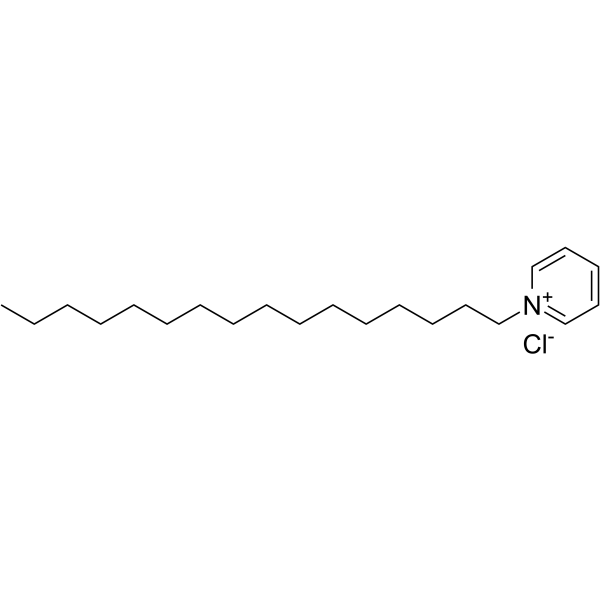
Cetylpyridinium chloride, a cationic quaternary ammonium compound, is an anti-bacterial agent with broad-spectrum activity. Cetylpyridinium chloride is an effective anti-HBV capsid assembly inhibitor with an IC50 of 2.5 μM. Cetylpyridinium chloride is used in pesticides and various types of mouthwashes, and other personal care products .
|
-
-
- HY-B2232
-
|
Alkyldimethylbenzylammonium chloride
|
Bacterial
Biochemical Assay Reagents
|
Infection
|
|
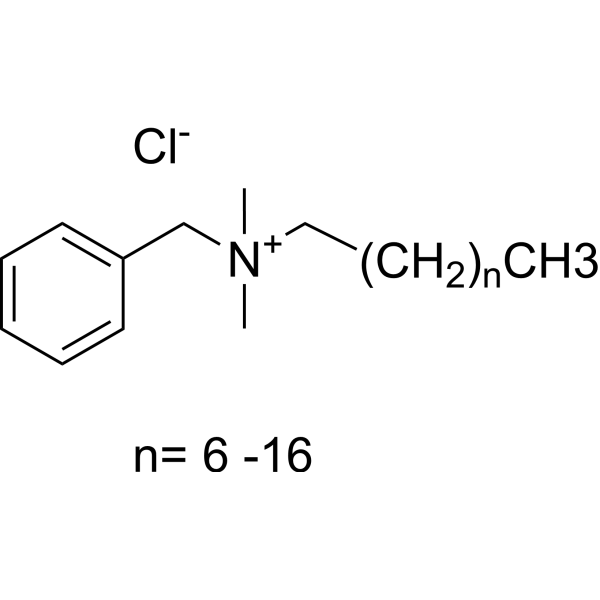
Benzalkonium (Alkyldimethylbenzylammonium) chloride (51% in water) is a quaternary ammonium preservative, cationic surfactant, and antimicrobial (Antimicrobial) agent. Benzalkonium chloride (51% in water) is toxic .
|
-
-
- HY-17465
-
|
Glycopyrronium bromide; Glycopyrrolate bromide
|
mAChR
|
Cardiovascular Disease
Neurological Disease
Cancer
|
|
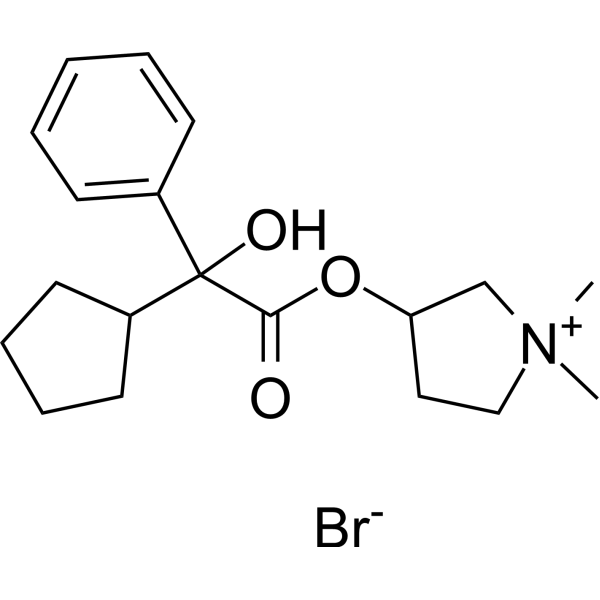
Glycopyrrolate (Glycopyrronium bromide), a quaternary ammonium derivative, is a muscarinic receptor antagonist. Glycopyrrolate has bronchoprotective effect and produces a beneficial effect on blood pressure. Glycopyrrolate can be used for the research of bronchial diseases .
|
-
-
- HY-B1260
-
|
CTAB; Cetyltrimethylammonium bromide; Hexadecyltrimethylammonium bromide
|
Environmental Pollutants
Biochemical Assay Reagents
Apoptosis
TGF-β Receptor
MMP
|
Cancer
|
|
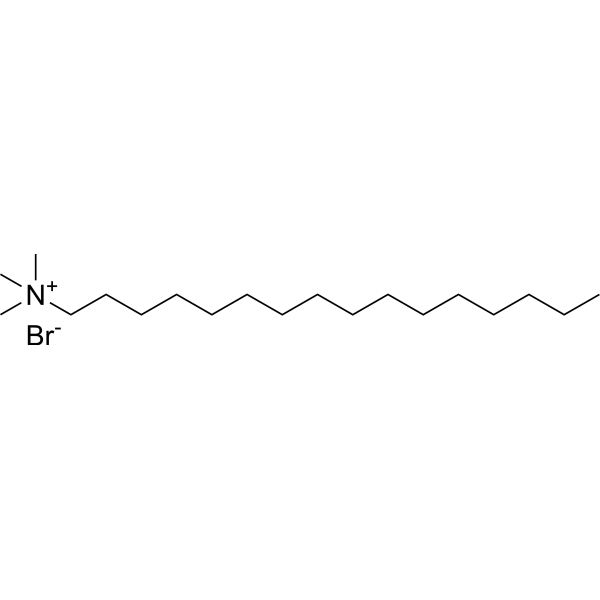
Cetrimonium bromide (CTAB), a quaternary ammonium, is an orally active cationic surfaetant. Cetrimonium bromide has toxicity and anticancer effect. Cetrimonium bromide inhibits cell migration and invasion through modulating the canonical and non-canonical TGF-β signaling pathways. Cetrimonium bromide can be used for DNA extraction .
|
-
-
- HY-B1289
-
|
Hexadecylpyridinium chloride monohydrate
|
Bacterial
|
Infection
|
|
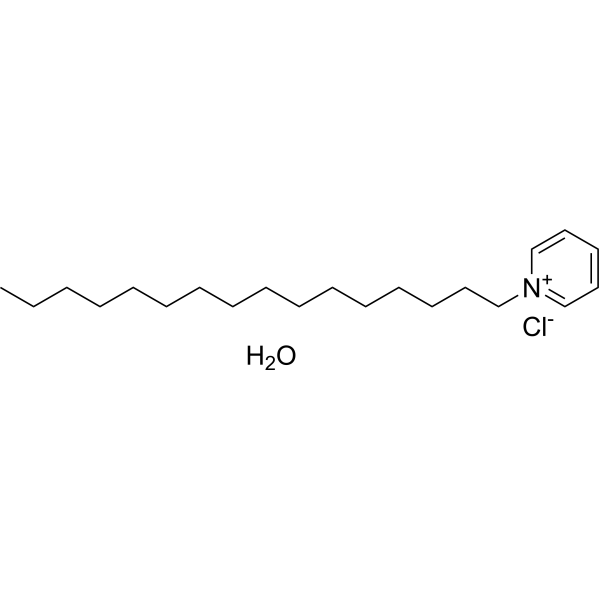
Cetylpyridinium chloride monohydrate is a cationic quaternary ammonium compound used in some types of mouthwashes, toothpastes, and throat and nasal sprays as an antiseptic that kills bacteria and other microorganisms. Effectively prevents plaque and reduces gingivitis.
|
-
-
- HY-W749411
-
|
|
Biochemical Assay Reagents
Endogenous Metabolite
|
Others
|
|
Malondialdehyde tetrabutylammonium is a quaternary ammonium salt formed by the decomposition of polyunsaturated fatty acids in plant cell membranes. Malondialdehyde tetrabutylammonium can be used for the quantification of malondialdehyde, a biomarker of lipid peroxidation .
|
-
-
- HY-B1337S1
-
|
|
Cholinesterase (ChE)
|
Others
|
|
Choline-d9 (chloride) is the deuterium labeled Choline chloride. Choline chloride is an organic compound and a quaternary ammonium salt, an acyl group acceptor and choline acetyltransferase substrate, also is an important additive in feed especially for chickens where it accelerates growth.
|
-
-
- HY-Y1045
-
|
TBAHS-MB
|
Biochemical Assay Reagents
|
Others
|
|
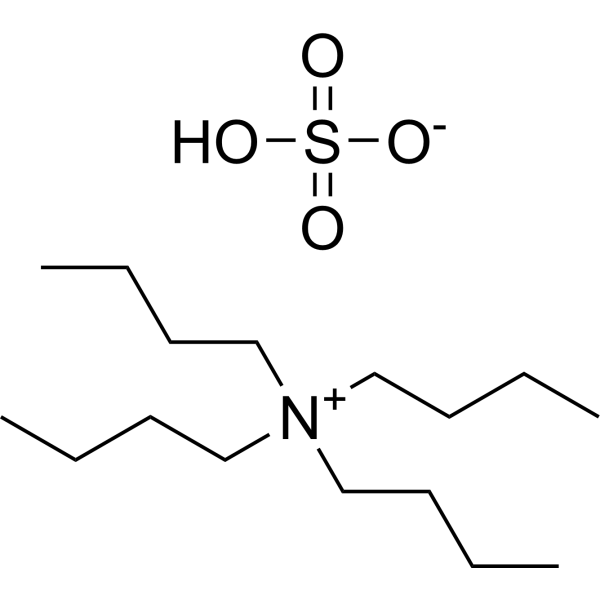
Tetrabutylammonium hydrosulfate is a quaternary ammonium salt that is commonly used as a phase transfer catalyst, acid catalyst and reagent in various chemical reactions, especially in organic synthesis. Tetrabutylammonium hydrosulfate has unique chemical properties that allow it to facilitate the transfer of ions or molecules from one phase to another, making it an important ingredient in a variety of industrial processes.
|
-
-
- HY-W096983
-
|
Dodecyltrimethylammonium chloride,for IPC,≥99%
|
Environmental Pollutants
Biochemical Assay Reagents
|
Others
|
|
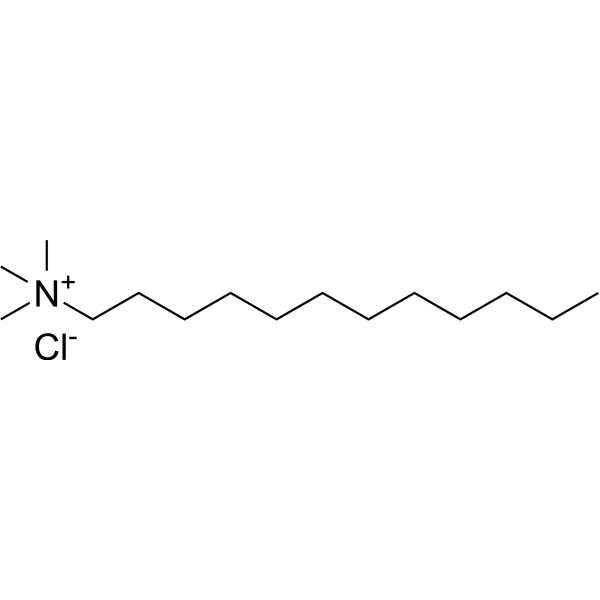
DTAC (Dodecyltrimethylammonium chloride), for IPC, ≥99% is a quaternary ammonium cationic surfactant. DTAC, for IPC, ≥99% can form micelles in aqueous media, which interact with and encapsulate Diclofenac sodium (HY-15037) molecules; the micellization process is entropy-driven at lower temperatures and enthalpy-driven at higher temperatures .
|
-
-
- HY-B1337S
-
|
|
Cholinesterase (ChE)
|
Others
|
|
Choline-d4 (chloride) is the deuterium labeled Choline chloride. Choline chloride is an organic compound and a quaternary ammonium salt, an acyl group acceptor and choline acetyltransferase substrate, also is an important additive in feed especially for chickens where it accelerates growth.
|
-
-
- HY-B0429
-
|
|
nAChR
|
Neurological Disease
|
|
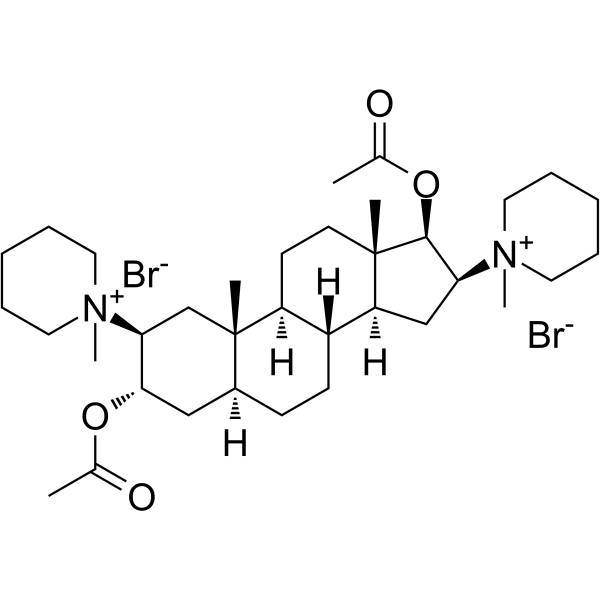
Pancuronium dibromide, a bis-quaternary steroid, is a neuromuscular relaxant. Pancuronium dibromide inhibits neuromuscular transmission by competing with acetylcholine for binding sites on nACh receptors. Pancuronium dibromide also inhibits cardiac muscarinic receptors and has a sympathomimetic action .
|
-
-
- HY-112076
-
|
Methylatropine bromide
|
mAChR
|
Neurological Disease
|
|
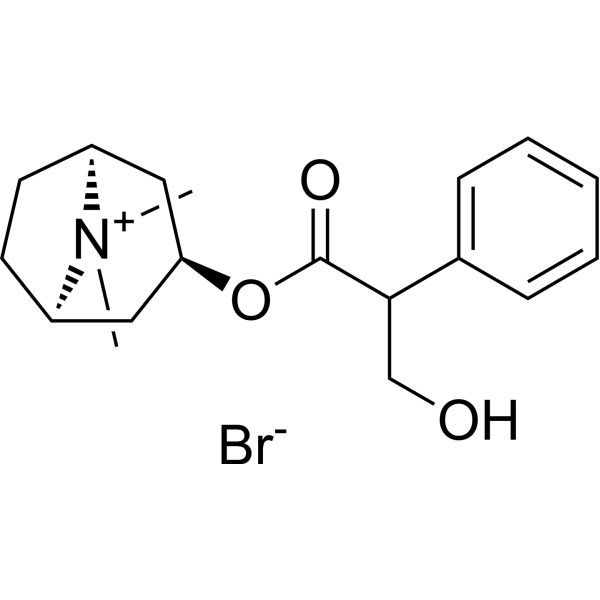
Atropine methyl bromide, a muscarinic receptor (mAChR) antagonist, is a quaternary ammonium salt of atropine and a mydriatic for dilation of the pupil during ophthalmic examination. It is introduced for relieving pyloric spasm in infants for its highly polar nature. It penetrates less readily into the central nervous system than atropine .
|
-
-
- HY-B1132
-
|
Ro 2-3773
|
mAChR
|
Neurological Disease
|
|
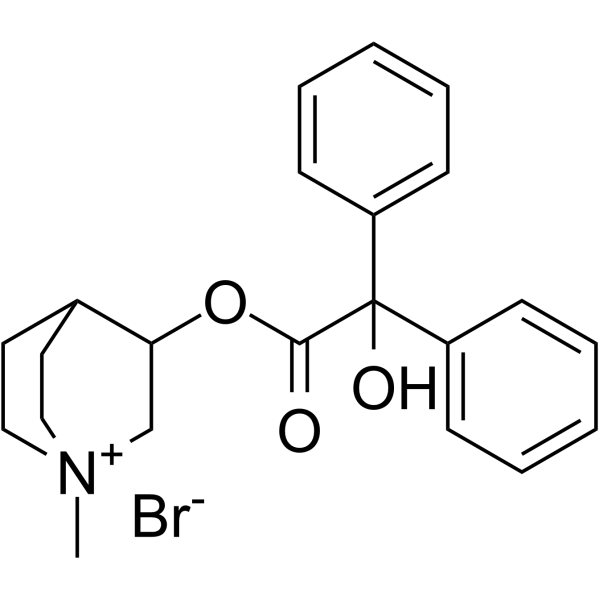
Clidinium bromide is a quaternary amine antimuscarinic agent. Clidinium bromide may help symptoms of cramping and abdominal/stomach pain by decreasing stomach acid, and slowing the intestines in vivo .
|
-
-
- HY-W042181
-
|
Didecyldimethylammonium chloride; DDAC
|
Environmental Pollutants
Fungal
Bacterial
|
Infection
|
|
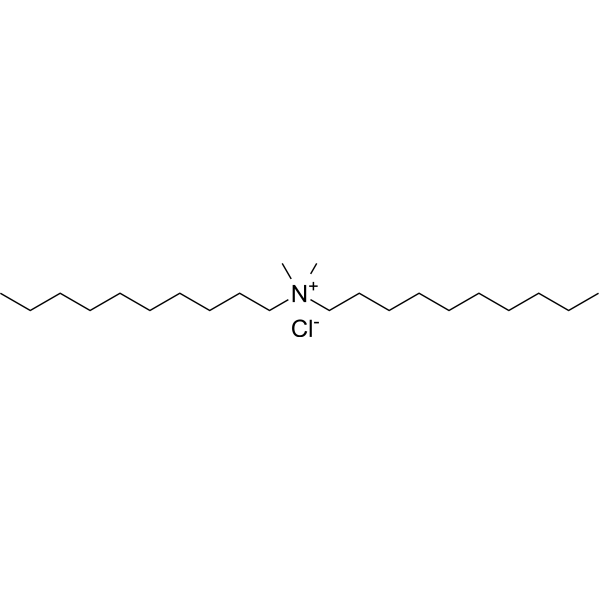
N-Decyl-N,N-dimethyldecan-1-aminium chloride (Didecyldimethylammonium chloride) is a dialkyl-quaternary ammonium compound that is used in numerous products for its bactericidal, virucidal and fungicidal properties .
|
-
-
- HY-B1337S3
-
|
|
Isotope-Labeled Compounds
Endogenous Metabolite
Cholinesterase (ChE)
|
Others
|
|
Choline-d13 (chloride) is the deuterium labeled Choline chloride. Choline chloride is an organic compound and a quaternary ammonium salt, an acyl group acceptor and choline acetyltransferase substrate, also is an important additive in feed especially for chickens where it accelerates growth.
|
-
-
- HY-B1337S4
-
|
|
Cholinesterase (ChE)
|
Others
|
|
Choline Chloride- 13C3 is the 13C-labeled Choline (chloride). Choline chloride is an organic compound and a quaternary ammonium salt, an acyl group acceptor and choline acetyltransferase substrate, also is an important additive in feed especially for chickens where it accelerates growth.
|
-
-
- HY-W654210
-
|
Glycopyrronium-d3 bromide
|
Isotope-Labeled Compounds
mAChR
|
Cancer
|
|
Glycopyrrolate-d3 (bromide) is deuterium labeled Glycopyrrolate. Glycopyrrolate (Glycopyrronium bromide), a quaternary ammonium derivative, is a muscarinic receptor antagonist. Glycopyrrolate has bronchoprotective effect and produces a beneficial effect on blood pressure. Glycopyrrolate can be used for the research of bronchial diseases .
|
-
-
- HY-16171
-
-
-
- HY-128443
-
-
-
- HY-W002849
-
|
2-(Dicyclohexylphosphino)biphenyl
|
Biochemical Assay Reagents
|
Others
|
|
Cyjohnphos is a biochemical reagent that can be used as a biological material or organic compound for life science related research. Cyjohnphos can be used in combination with a nickel catalyst for the Suzuki-Miyaura arylation of tertiary benzylic acetates with aryl boroxines to produce diaryl and triaryl quaternary stereocenters .
|
-
-
- HY-112076A
-
|
Methylatropine nitrate; Atropine methyl nitrate
|
mAChR
|
Neurological Disease
|
|
Atropine methyl bromide, a muscarinic receptor (mAChR) antagonist, is a quaternary ammonium salt of atropine and a mydriatic for dilation of the pupil during ophthalmic examination. It is introduced for relieving pyloric spasm in infants for its highly polar nature. It penetrates less readily into the central nervous system than atropine .
|
-
-
- HY-W250302
-
|
|
Environmental Pollutants
Biochemical Assay Reagents
|
Others
|
|
Methylbenzethonium chloride is a quaternary ammonium compound commonly used as a preservative and disinfectant in a variety of personal care and healthcare products. Methylbenzethonium chloride has several properties that make it suitable for these applications, including its broad-spectrum antibacterial activity against bacteria, viruses and fungi. In addition, it is used as a preservative in cosmetic and pharmaceutical formulations to prevent the growth of microorganisms.
|
-
-
- HY-Y0080
-
|
|
Environmental Pollutants
Biochemical Assay Reagents
|
Others
|
|
Methyl trioctyl ammonium chloride is a quaternary ammonium salt commonly used as a surfactant, stabilizer and phase transfer catalyst in various chemical reactions, especially in organic synthesis. Methyl trioctyl ammonium chloride has unique chemical properties that facilitate the transfer of ions or molecules from one phase to another, making it an important ingredient in a variety of industrial processes.
|
-
-
- HY-W011087
-
|
|
Environmental Pollutants
Biochemical Assay Reagents
|
Others
|
|
Benzyldimethyltetradecylammonium chloride is a quaternary ammonium salt consisting of a positively charged N-benzyl-N,N-dimethyltetradecyl-1-amine cation and a negatively charged chloride anion. The compound is commonly used as a surfactant and emulsifier in a variety of applications including detergents, fabric softeners and personal care products. It also has antimicrobial properties and is used as a disinfectant or antiseptic in some products.
|
-
-
- HY-W014408
-
|
TEA bromide
|
Biochemical Assay Reagents
|
Others
|
|
Tetraethylammonium bromide is a quaternary ammonium salt consisting of a positively charged tetraethylammonium cation and a negatively charged bromide anion. This compound is commonly used as a phase transfer catalyst in organic chemical reactions, facilitating the transfer of reactants between immiscible phases. It can also be used as a reagent for the synthesis of various organic compounds, an electrolyte in electrochemical experiments, and a source of tetraethylammonium ions in biochemical and pharmacological research.
|
-
-
- HY-W014106
-
|
N,N,N-Triethylethanaminium tetrafluoroborate
|
Biochemical Assay Reagents
|
Others
|
|
Tetraethylammonium tetrafluoroborate is a quaternary ammonium salt consisting of a positively charged tetraethylammonium cation and a negatively charged tetrafluoroborate anion. This compound is commonly used as a phase transfer catalyst in organic chemical reactions, facilitating the transfer of reactants between immiscible phases. It can also be used as a reagent for the synthesis of various organic compounds, an electrolyte in electrochemical experiments, and a source of tetraethylammonium ions in biochemical and pharmacological research.
|
-
-
- HY-106372A
-
-
-
- HY-B1667
-
|
|
mAChR
|
Metabolic Disease
|
|
Isopropamide iodide is a long-acting quaternary anticholinergic agent. Isopropamide iodide is used in peptic ulcer and other gastrointestinal disorders marked by hyperacidity and hypermotility .
|
-
-
- HY-W099682
-
|
n-Hexyl trimethylammonium bromide
|
Biochemical Assay Reagents
|
Others
|
|
Hexyltrimethylammonium bromide is a cationic surfactant, quaternary ammonium compound, detergent, emulsifier, phase transfer catalyst, antibacterial agent, electrochemical device, corrosion inhibitor, micelle former, industrial chemical.
|
-
-
- HY-W127672
-
|
|
Biochemical Assay Reagents
|
Others
|
|
Tetramethylammonium tetrafluoroborate is a quaternary ammonium salt commonly used as an electrolyte in various chemical reactions, especially in electrochemistry and battery technology. Tetramethylammonium tetrafluoroborate has unique chemical properties that make it an important ingredient in a variety of industrial processes, including the production of advanced materials and electronic components.
|
-
-
- HY-W127687
-
|
Tetrabutylammonium (dihydrogen trifluoride)
|
Biochemical Assay Reagents
|
Others
|
|
Tetrabutylammonium dihydrogen trifluoride is a quaternary ammonium salt commonly used as an electrolyte in various chemical reactions, especially in electrochemistry and battery technology. Tetrabutylammonium dihydrogen trifluoride has unique chemical properties that make it an important ingredient in a variety of industrial processes, including the production of advanced materials and electronic components.
|
-
-
- HY-157666
-
|
PC(13:0/13:0); DTPC
|
Endogenous Metabolite
|
Others
|
|
13:0 PC (PC(13:0/13:0)), also known as ditridecanoyl phosphatidyl choline (DTPC), is a phospholipid characterized by its unique structure that includes a polar head with a positively charged quaternary amine and a negatively charged phosphate, along with two non-polar fatty acid tails.
|
-
-
- HY-91018
-
|
N-[3-(Trimethoxysilyl)propyl]-N,N,N-trimethylammonium chloride, 50% in methanol
|
Biochemical Assay Reagents
|
Others
|
|
Trimethyl[3-(trimethoxysilyl)propyl]ammonium (N-[3-(Trimethoxysilyl)propyl]-N,N,N-trimethylammonium) chloride (50% in methanol) is a functional organic silane coupling agent and quaternary ammonium salt cationic functional monomer, which can be used for functionalizing mesoporous silica with electrochemical modified electrodes or surface chemical modification .
|
-
-
- HY-W127653
-
|
Dimethylditetradecylammonium bromide
|
Biochemical Assay Reagents
|
Others
|
|
Dimethyldimyristylammonium bromide is a quaternary ammonium compound commonly used as a surfactant or emulsifier in a variety of industrial applications, including the production of detergents, fabric softeners and hair conditioners. In addition, it can also be used as an intermediate in the synthesis of various organic compounds. Its unique chemical properties make it an important ingredient in a variety of industrial processes, especially in the manufacture of personal care products and pharmaceuticals.
|
-
-
- HY-W012450
-
|
Phenyltrimethylammonium bromide
|
Biochemical Assay Reagents
|
Others
|
|
Trimethylphenylammonium bromide is a quaternary ammonium salt consisting of a positively charged N,N,N-trimethylanilinium cation and a negatively charged bromide anion. This compound is commonly used as a phase transfer catalyst in organic chemical reactions, facilitating the transfer of reactants between immiscible phases. It can also be used as a reagent in the synthesis of various organic compounds and in some applications as a surfactant or corrosion inhibitor.
|
-
-
- HY-W013076
-
|
tetra(decyl)ammonium bromide
|
Biochemical Assay Reagents
|
Others
|
|
Tetrakis(decyl)ammonium bromide is a compound belonging to the class of quaternary ammonium compounds. It is a salt with cationic properties and is used in various industrial and biomedical applications. Tetrakis(decyl)ammonium bromide is commonly used as an emulsifier, solubilizer and antimicrobial agent in personal care products, cleansers and pharmaceutical formulations. It is also used as a phase transfer catalyst in organic synthesis reactions, facilitating the movement of reactants between immiscible phases.
|
-
-
- HY-W101255
-
|
MTEACl
|
Biochemical Assay Reagents
|
Others
|
|
Triethylmethylammonium chloride is a quaternary ammonium salt belonging to the class of alkylammonium salts. This compound is widely used as a phase transfer catalyst in organic synthesis to facilitate the transfer of reactants between immiscible phases. In addition, it can be used as an electrolyte in electrochemical devices, a surfactant in emulsion polymerization, and a corrosion inhibitor. Its unique chemical properties make it an important ingredient in a variety of industrial applications, including pharmaceuticals, agrochemicals, and materials science.
|
-
-
- HY-W013264A
-
-
-
- HY-W683499
-
|
LHSB
|
Biochemical Assay Reagents
|
Others
|
|
Lauryl hydroxysultaine (LHSB), a surfactant, is comprised of a core Sultaine structure with a sulphopropyl quaternary ammonium salt, an alkyl group and a hydroxyl group .
|
-
-
- HY-N6894A
-
|
Isocoptisine chloride
|
Cholinesterase (ChE)
|
Inflammation/Immunology
|
|
Pseudocoptisine (Isocoptisine) chloride is a quaternary alkaloid with benzylisoquinoline skeleton, was isolated from Corydalis Tuber. Pseudocoptisine chloride inhibits acetylcholinesterase (AChE) activity with an IC50 of 12.8 μM. Anti-inflammatory and anti-amnestic effects .
|
-
-
- HY-W011052
-
|
|
Biochemical Assay Reagents
|
Others
|
|
Tetrapentylammonium bromide is a quaternary ammonium salt consisting of a positively charged tetrapentylammonium cation and a negatively charged bromide anion. This compound is commonly used as a phase transfer catalyst in organic synthesis reactions to facilitate the transfer of reactants between immiscible phases. It is also used in the production of surfactants, detergents and the synthesis of pharmaceuticals.
|
-
-
- HY-W127678
-
|
Tetraethylammonium (trifluoromethanesulphonate)
|
Biochemical Assay Reagents
|
Others
|
|
Tetraethylammonium trifluoromethanesulfonate is a quaternary ammonium salt commonly used as a phase transfer catalyst in various chemical reactions, especially in organic synthesis. Tetraethylammonium trifluoromethanesulfonate has unique chemical properties that allow it to facilitate the transfer of ions or molecules from one phase to another, making it an important ingredient in a variety of industrial processes.
|
-
-
- HY-W111436
-
|
N,N,N-tributylbutan-1-aminium tetraphenylborate(1-)
|
Biochemical Assay Reagents
|
Others
|
|
Tetrabutylammonium tetraphenylborate is a quaternary ammonium salt belonging to the class of alkylammonium salts. This compound is commonly used as an ion-pairing reagent in chromatography and analytical chemistry, facilitating the separation and identification of various organic compounds. Its unique chemical properties make it an important ingredient in a variety of scientific applications, including pharmaceuticals, agrochemicals, and materials science products.
|
-
-
- HY-W127637
-
|
Tetrapentylammonium chloride
|
Biochemical Assay Reagents
|
Others
|
|
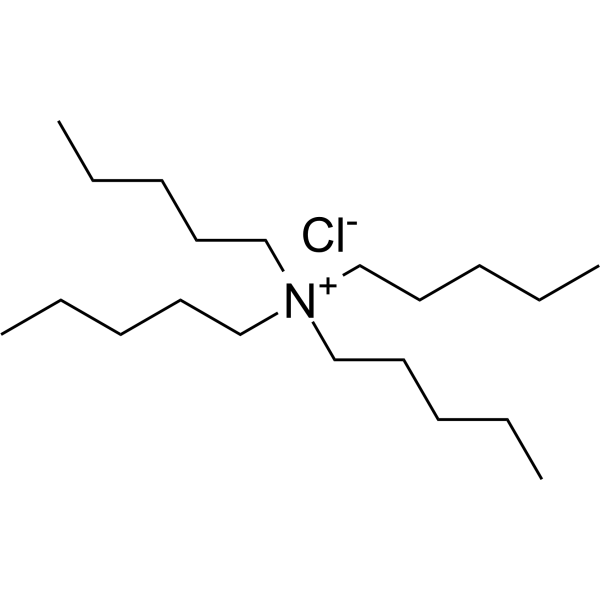
Tetraamylammonium chloride is an organic compound containing ammonium and chloride ions. It is commonly used as a phase transfer catalyst in organic synthesis, especially in the production of pharmaceuticals and agrochemicals. Tetraamylammonium Chloride has a strong base that facilitates the transfer of reactants between immiscible solvents, resulting in more efficient chemical reactions. In addition, it can also be used as an intermediate in the synthesis of other quaternary ammonium compounds.
|
-
-
- HY-W099641
-
|
|
Biochemical Assay Reagents
|
Others
|
|
Methyltrioctylammonium hydrogen sulfate is a quaternary ammonium salt that is mainly used as an extraction solvent and a phase transfer catalyst in various chemical reactions. It is also used as an electrolyte in electrochemical devices such as batteries and fuel cells, and as a building block for the synthesis of pharmaceuticals and agrochemicals. MTOAHS are multifunctional compounds with many potential industrial applications due to their reactivity, stability, and ability to selectively extract certain compounds from mixtures.
|
-
-
- HY-W012412
-
|
|
Biochemical Assay Reagents
|
Others
|
|
Tetrapropylammonium chloride is a compound belonging to the class of quaternary ammonium compounds. It is a salt with cationic properties and is used in various industrial and biomedical applications. Tetrapropylammonium chloride is commonly used as a phase transfer catalyst to facilitate the movement of reactants between immiscible phases in organic synthesis reactions. It is also used as a surfactant in the formulation of personal care products, detergents, textiles and pharmaceuticals. Additionally, it is used in the production of certain types of polymers and resins.
|
-
-
- HY-Y0407A
-
|
TPAOH (40% w/w in water)
|
Biochemical Assay Reagents
|
Others
|
|
Tetrapropylammonium hydroxide (40% w/w in water)It is a compound belonging to the class of quaternary ammonium compounds and is a strong base with cationic properties. Tetrapropylammonium hydroxide (40% w/w in water)It is usually used as a phase transfer catalyst to promote the transfer of reactants between immiscible phases in various organic synthesis reactions. It is also used in the production of semiconductors, especially the manufacture of thin-film transistors and other electronic devices.
|
-
-
- HY-P4030
-
|
|
HIV Protease
|
Infection
|
|
Herpes virus inhibitor 2 is a herpes virus inhibitor and disrupts herpes virus ribonucleotide reductase quaternary structure. Herpes virus inhibitor 2 inhibits viral replication .
|
-
-
- HY-B1260S3
-
|
CTAB-d9; Cetyltrimethylammonium-d9 bromide; Hexadecyltrimethylammonium-d9 bromide
|
Isotope-Labeled Compounds
|
Others
|
|
Cetrimonium-d9 (bromide) is the deuterium labeled Cetrimonium bromide . Cetrimonium bromide (CTAB) is an amine based cationic quaternary surfactant, is one of the components of the topical antiseptic Cetrimide.
|
-
-
- HY-B1260S1
-
|
CTAB-d33; Cetyltrimethylammonium-d33 bromide; Hexadecyltrimethylammonium-d33 bromide
|
Isotope-Labeled Compounds
|
Others
|
|
Cetrimonium-d33 bromide is the deuterium labeled Cetrimonium bromide . Cetrimonium bromide (CTAB) is an amine based cationic quaternary surfactant, is one of the components of the topical antiseptic Cetrimide.
|
-
- HY-172516
-
|
|
Biochemical Assay Reagents
|
Others
|
|
1-Palmitoyl-2-(propargylacetyl)-sn-glycero-3-phosphocholine is a phosphocholine containing an azide-reactive propargyl on one of its tails and a positively charged quaternary amine head.
|
-
- HY-W127677
-
|
N,N,N-Triethylethanaminium nitrate
|
Biochemical Assay Reagents
|
Others
|
|
Tetraethylammonium nitrate is a quaternary ammonium salt commonly used as an electrolyte in various chemical reactions, especially in electrochemistry and battery technology. Tetraethylammonium nitrate has unique chemical properties that make it an important ingredient in a variety of industrial processes, including the production of advanced materials and electronic components.
|
-
- HY-128384
-
|
|
Bacterial
|
Infection
|
|
Benzyldodecyldimethylammonium chloride dihydrate is a quaternary ammonium compound (QAC) and can be used as a biocide to target antibiotic-resistant bacteria, such as methicillin-resistant Staphylococcus aureus (MRSA), multidrug-resistant (MDR) P. aeruginosa et. al. Benzyldodecyldimethylammonium chloride dihydrate, an antimicrobial agent, bacteriostatic or bactericidal properties depending on the concentration.
|
-
- HY-Y0667
-
|
|
Biochemical Assay Reagents
|
Others
|
|
Benzyltriethylammonium chloride is a quaternary ammonium salt commonly used as a phase transfer catalyst, surfactant and stabilizer in various chemical reactions, especially in organic synthesis. Benzyltriethylammonium chloride has unique chemical properties that facilitate the transfer of ions or molecules from one phase to another, making it an important ingredient in a variety of industrial processes.
|
-
- HY-W040184
-
|
TMAHS
|
Biochemical Assay Reagents
|
Others
|
|
Tetramethylammonium hydrogensulfate, sometimes abbreviated as TMAHS, is a quaternary ammonium salt commonly used as a catalyst and phase transfer agent in chemical reactions, especially in organic synthesis. In addition, it is used as an electrolyte additive in electrochemical and rechargeable batteries. TMAHSs have also been investigated for their potential use in various applications such as wastewater treatment, gas separation, and fuel cells.
|
-
- HY-W099640
-
|
Tetra-n-octylammonium iodide
|
Biochemical Assay Reagents
|
Others
|
|
Tetraoctylammonium iodideIt is an organic compound and belongs to the category of quaternary ammonium salts. It is often used as a phase transfer catalyst, meaning it facilitates a reaction between two immiscible phases, such as an aqueous phase and an organic phase. Tetraoctylammonium iodideIt has a variety of applications in organic synthesis, especially in reactions involving nucleophilic substitution, oxidation, and reduction. Additionally, it is used as a surfactant and emulsifier in industrial and laboratory settings.
|
-
- HY-W105516
-
|
Phenylbenzyldimethylammonium chloride
|
Biochemical Assay Reagents
|
Others
|
|
N-Benzyl-N,N-dimethylbenzeneminium chloride is a quaternary ammonium compound belonging to the class of alkylammonium salts. This compound is widely used as a phase transfer catalyst in organic synthesis to facilitate the transfer of reactants between immiscible phases. In addition, it is used as an emulsifier, surfactant or disinfectant in various industrial applications. Its unique chemical properties make it an important ingredient in the production of pharmaceuticals, agrochemicals and polymer materials.
|
-
- HY-U00080
-
-
- HY-B1689A
-
|
|
Drug Derivative
mAChR
|
Metabolic Disease
Inflammation/Immunology
|
|
Methantheline bromide is a quaternary Ammonium derivate with anticholinergic activity. Methantheline bromide results in a significant greater reduction of axillary sweat production. Methyl bromide can be used in the research of intractable peptic ulcers .
|
-
- HY-122407
-
|
Cetyltrimethylammonium hydroxide
|
Biochemical Assay Reagents
|
Others
|
|
Hexadecyltrimethylammonium hydroxide, a quaternary ammonium compound, is commonly used as an emulsifier, detergent, and surfactant in various industrial processes, especially in the production of cosmetics, pharmaceuticals, and textiles. Hexadecyltrimethylammonium hydroxide has unique chemical properties that make it an active ingredient in many applications requiring strong surface activity and solubility.
|
-
- HY-W109978
-
|
|
Biochemical Assay Reagents
|
Others
|
|
Tetrabutylammonium perrhenate is a quaternary ammonium salt belonging to the class of alkylammonium salts. This compound is used as a catalyst in organic synthesis, especially in the production of alkenes and alcohols. Furthermore, due to its ability to bind radioisotopes, it is useful as a radiopharmaceutical in nuclear medicine. Its unique chemical properties make it an essential ingredient in a variety of industrial processes, including petrochemical refining and pharmaceuticals.
|
-
- HY-W010900
-
|
|
Biochemical Assay Reagents
|
Others
|
|
Tetrahexylammonium bromide is a compound that belongs to the class of quaternary ammonium compounds. It is a salt with cationic properties and thus useful in various industrial and biomedical applications. Tetrahexylammonium bromide is commonly used as a phase transfer catalyst to facilitate the movement of reactants between immiscible phases in various organic synthesis reactions. It is also used as a surfactant and emulsifier in the formulation of detergents, personal care products and pharmaceuticals.
|
-
- HY-W011122
-
|
|
Biochemical Assay Reagents
|
Others
|
|
Tributylbenzylammonium bromide is a quaternary ammonium salt composed of a positively charged N-benzyl-N,N-dibutylbutan-1-amine cation and a negatively charged bromide anion composition. The compound is commonly used as a surfactant and emulsifier in a variety of applications including detergents, fabric softeners and personal care products. It also has antimicrobial properties and is used as a disinfectant or antiseptic in some products.
|
-
- HY-W127681
-
|
Tetra-n-butylammonium dichlorobromide
|
Biochemical Assay Reagents
|
Others
|
|
Tetrabutylammonium dichlorobromide is an organic compound containing ammonium, chloride, and bromide ions. It is commonly used as a phase transfer catalyst in organic synthesis, especially in the production of pharmaceuticals and agrochemicals. Tetrabutylammonium Dichlorobromide has a strong base that facilitates the transfer of reactants between immiscible solvents, resulting in more efficient chemical reactions. In addition, it can also be used as an intermediate in the synthesis of other quaternary ammonium compounds.
|
-
- HY-W100404
-
|
|
Biochemical Assay Reagents
|
Others
|
|
Tetramethylammonium p-toluenesulfonate is a quaternary ammonium compound belonging to the class of alkylammonium salts. This compound is widely used as a phase transfer catalyst in organic synthesis to facilitate the transfer of reactants between immiscible phases. Furthermore, it can be used as a surfactant, emulsifier or stabilizer in various industrial applications. Its unique chemical properties make it an important ingredient in the production of pharmaceuticals, agrochemicals and materials science products.
|
-
- HY-138064
-
|
|
Biochemical Assay Reagents
|
Others
|
|
4-APC hydrobromide is a highly sensitive and selective derivatization agent for aldehydes. 4-APC hydrobromide possesses an aniline moiety for a fast selective reaction with aliphatic aldehydes as well as a quaternary ammonium group for improved MS sensitivity. 4-APC hydrobromide allows highly sensitive and selective MS detection of aldehydes .
|
-
- HY-B1464R
-
|
|
Reference Standards
Bacterial
HBV
|
Infection
Inflammation/Immunology
|
|
Cetylpyridinium (chloride) (Standard) is the analytical standard of Cetylpyridinium (chloride). This product is intended for research and analytical applications. Cetylpyridinium chloride, a cationic quaternary ammonium compound, is an anti-bacterial agent with broad-spectrum activity. Cetylpyridinium chloride is an effective anti-HBV capsid assembly inhibitor with an IC50 of 2.5 μM. Cetylpyridinium chloride is used in pesticides and various types of mouthwashes, and other personal care products .
|
-
- HY-172330
-
|
|
Liposome
|
Inflammation/Immunology
|
|
Q1-SM-102 iodide is a quaternary ammonium lipid derivative of SM-102 (HY-13454). Q1-SM-102 iodide can be used to prepare lipid nanoparticles (LNPs) for the delivery of mRNA in vivo. Q1-SM-102 iodide is a carriers for targeting delivery of mRNA to immune organs .
|
-
- HY-156981
-
-
- HY-N0298A
-
|
|
Others
|
Inflammation/Immunology
|
|
(±)-Stachydrine is a quaternary ammonium alkaloid that can be extracted from Courbonia glauca. (±)-Stachydrine can be used for research on inflammatory conditions .
|
-
- HY-B1132S
-
-
- HY-155166
-
-
- HY-P4028
-
|
|
Virus Protease
|
Infection
|
|
Herpes virus inhibitor 1 is a herpes virus inhibitor and disrupts herpes virus ribonucleotide reductase quaternary structure. Herpes virus inhibitor 1 inhibits viral replication .
|
-
- HY-N6894
-
|
Isocoptisine acetate
|
Cholinesterase (ChE)
|
Inflammation/Immunology
|
|
Pseudocoptisine (Isocoptisine) acetate is a quaternary alkaloid with benzylisoquinoline skeleton, was isolated from Corydalis Tuber. Pseudocoptisine acetate inhibits acetylcholinesterase (AChE) activity with an IC50 of 12.8 μM. Anti-inflammatory and anti-amnestic effects .
|
-
- HY-B1337S2
-
|
|
Endogenous Metabolite
|
Others
|
|
Choline-d6 (chloride) is the deuterium labeled Choline chloride. Choline chloride is an organic compound and a quaternary ammonium salt, an acyl group acceptor and choline acetyltransferase substrate, also is an important additive in feed especially for chickens where it accelerates growth.
|
-
- HY-W112005
-
|
|
Biochemical Assay Reagents
|
Others
|
|
Benzyltrimethylammonium tetrachloroiodate is a quaternary ammonium salt belonging to the class of alkylammonium salts. The compound is used as a reagent in organic synthesis, especially in the oxidation of alkenes and alcohols. Its unique chemical properties make it an important ingredient in a variety of industrial processes, including pharmaceuticals and agrochemicals.
|
-
- HY-113698
-
|
|
Bacterial
|
Infection
|
|
L 652813 is a quaternary ammonium heterocyclic amino β-lactam compound. L 652813 exhibits inhibitory activity against a broad spectrum of aerobic and anaerobic bacteria in vitro. L 652813 also exhibits good antibacterial activity in a mouse experimental bacteremia model .
|
-
- HY-B1667R
-
|
|
mAChR
Reference Standards
|
Metabolic Disease
|
|
Isopropamide (iodide) (Standard) is the analytical standard of Isopropamide (iodide). This product is intended for research and analytical applications. Isopropamide iodide is a long-acting quaternary anticholinergic agent. Isopropamide iodide is used in peptic ulcer and other gastrointestinal disorders marked by hyperacidity and hypermotility .
|
-
- HY-B1289R
-
|
Hexadecylpyridinium chloride monohydrate (Standard)
|
Reference Standards
Bacterial
|
Infection
|
|
Cetylpyridinium (chloride monohydrate) (Standard) is the analytical standard of Cetylpyridinium (chloride monohydrate). This product is intended for research and analytical applications. Cetylpyridinium chloride monohydrate is a cationic quaternary ammonium compound used in some types of mouthwashes, toothpastes, and throat and nasal sprays as an antiseptic that kills bacteria and other microorganisms. Effectively prevents plaque and reduces gingivitis.
|
-
- HY-B1132R
-
|
Ro 2-3773 (Standard)
|
Reference Standards
mAChR
|
Neurological Disease
|
|
Clidinium (bromide) (Standard) is the analytical standard of Clidinium (bromide). This product is intended for research and analytical applications. Clidinium bromide is a quaternary amine antimuscarinic agent. Clidinium bromide may help symptoms of cramping and abdominal/stomach pain by decreasing stomach acid, and slowing the intestines in vivo .
|
-
- HY-17465R
-
|
Glycopyrronium bromide (Standard); Glycopyrrolate bromide (Standard)
|
Reference Standards
mAChR
|
Neurological Disease
Cancer
|
|
Glycopyrrolate (Standard) is the analytical standard of Glycopyrrolate. This product is intended for research and analytical applications. Glycopyrrolate (Glycopyrronium bromide), a quaternary ammonium derivative, is a muscarinic receptor antagonist. Glycopyrrolate has bronchoprotective effect and produces a beneficial effect on blood pressure. Glycopyrrolate can be used for the research of bronchial diseases .
|
-
- HY-W075836
-
|
|
Biochemical Assay Reagents
|
Others
|
|
Ferrocenylmethyltrimethylammonium (iodide) is an organometallic salt consisting of a ferrocenyl group attached to a quaternary ammonium cation via a methylene bridge. Ferrocenylmethyltrimethylammonium (iodide) has been used as a catalyst and reagent in various organic reactions, including oxidation, reduction, and CH bond activation. In addition, it is also used as a precursor for the synthesis of other organometallic compounds and as a potential material for electrochemical applications.
|
-
- HY-W036734
-
|
|
Biochemical Assay Reagents
|
Others
|
|
Tetrabutylammonium (hydrogen difluoride) is a quaternary ammonium salt containing fluoride ions. It is a highly active and effective reagent, often used in organic synthesis reactions, especially for the modification of organic molecules with fluorine atoms. Tetrabutylammonium (hydrogen difluoride) is also used as a catalyst for various chemical reactions such as esterification and transesterification. Additionally, it is used in the production of specialty chemicals such as surfactants and detergents.
|
-
- HY-168281
-
|
|
Bacterial
|
Infection
|
|
P6P-10,10 is an antimicrobial agent. P6P-10,10 has an IC50 value of 3 μM against colistin-resistant Acinetobacter baumannii .
|
-
- HY-W250177
-
|
|
Biochemical Assay Reagents
|
Others
|
|
Tridodexylmethylammonium chloride, also known as TDMAC, is a cationic surfactant commonly used in various industrial and research applications. It belongs to the family of quaternary ammonium compounds and has a positively charged head and a hydrophobic tail, which allows it to be used as a detergent, emulsifier and antimicrobial. Known for its ability to disrupt cell membranes, TDMAC is frequently used in microbiology for the selective isolation and identification of bacteria.
|
-
- HY-W127651
-
|
Dioctyldimethylammonium bromide
|
Biochemical Assay Reagents
|
Others
|
|
Dimethyldioctylammonium bromide is an organic compound containing ammonium and bromide ions. It is commonly used in the production of detergents, emulsifiers and surfactants for various industrial applications. Dimethyldioctylammonium bromide is highly surface active and reduces the surface tension of aqueous solutions, so it can be used to clean and wet surfaces. In addition, it can also be used as an intermediate in the synthesis of other quaternary ammonium compounds.
|
-
- HY-B0429R
-
|
|
Reference Standards
nAChR
|
Neurological Disease
|
|
Pancuronium (dibromide) (Standard) is the analytical standard of Pancuronium (dibromide). This product is intended for research and analytical applications. Pancuronium dibromide, a bis-quaternary steroid, is a neuromuscular relaxant. Pancuronium dibromide inhibits neuromuscular transmission by competing with acetylcholine for binding sites on nACh receptors. Pancuronium dibromide also inhibits cardiac muscarinic receptors and has a sympathomimetic action .
|
-
- HY-W042181S
-
|
Didecyldimethylammonium-d6 chloride; DDAC-d6
|
Isotope-Labeled Compounds
Bacterial
Fungal
|
Infection
|
|
N-Decyl-N,N-dimethyldecan-1-aminium-d6 (chloride) is a deuterated labeled N-Decyl-N,N-dimethyldecan-1-aminium (chloride) . N-Decyl-N,N-dimethyldecan-1-aminium chloride (Didecyldimethylammonium chloride) is a dialkyl-quaternary ammonium compound that is used in numerous products for its bactericidal, virucidal and fungicidal properties .
|
-
- HY-W165085
-
|
Decamethylenebispyridinium dibromide
|
Cholinesterase (ChE)
|
Neurological Disease
|
|
1,10-Bis(pyridinium)decane (Decamethylenebispyridinium dibromide) is an acetylcholinesterase (AChE) inhibitor with an IC50 of 25.8 nM. 1,10-Bis(pyridinium)decane acts as a bis-quaternary ligand that bridges the enzyme's catalytic site and peripheral site via its two pyridinium groups. 1,10-Bis(pyridinium)decane can be used for the research of alzheimer's disease .
|
-
- HY-172329
-
|
|
Liposome
|
Others
|
|
Q1-ALC-0315 iodide is a cationic quaternary ammonium lipid derivative of the ionizable cationic lipid ALC-0315 (HY-138170). Q1-ALC-0315-based LNPs can be used for lung-targeted mRNA delivery, which demonstrates high-performing firefly luciferase protein expression in the lungs .
|
-
- HY-W250302R
-
|
|
Biochemical Assay Reagents
Reference Standards
|
Others
|
|
Methylbenzethonium (chloride) (Standard) is the analytical standard of Methylbenzethonium (chloride). This product is intended for research and analytical applications. Methylbenzethonium chloride is a quaternary ammonium compound commonly used as a preservative and disinfectant in a variety of personal care and healthcare products. Methylbenzethonium chloride has several properties that make it suitable for these applications, including its broad-spectrum antibacterial activity against bacteria, viruses and fungi. In addition, it is used as a preservative in cosmetic and pharmaceutical formulations to prevent the growth of microorganisms.
|
-
- HY-182480
-
|
|
Biochemical Assay Reagents
|
Others
|
|
Trantheline bromide is a quaternary ammonium compound. Trantheline bromide represents its intrinsic lipophilicity independent of Galvani potential difference and counter-ion effects. Trantheline bromide is used as a model compound to study the lipophilicity of quaternary ammonium ions via cyclic voltammetry .
|
-
- HY-B2232A
-
|
Alkyldimethylbenzylammonium chloride (solid)
|
Biochemical Assay Reagents
Bacterial
|
Infection
|
|
Benzalkonium chloride (solid) (Alkyldimethylbenzylammonium chloride (solid)) is a quaternary ammonium preservative, cationic surfactant, and antimicrobial (Antimicrobial) agent. Benzalkonium chloride (solid) is toxic .
|
-
- HY-W353842
-
|
|
Bacterial
Interleukin Related
|
Infection
|
|
Octyl decyldimethyl ammonium chloride, a quaternary ammonium salt, is an antibacterial agent. Octyl decyldimethyl ammonium chloride disrupts cell membranes, leading to cytotoxicity. Octyl decyldimethyl ammonium chloride has risk of skin irritation and increases pro-inflammatory IL-1α secretion .
|
-
- HY-106372AR
-
-
- HY-W110755
-
|
|
Bacterial
|
Infection
|
|
Poly diallyldimethylammonium chloride is a cationic antimicrobial polymer with quaternary ammonium side chains, and it exhibits microbicidal activity. Poly diallyldimethylammonium (chloride) can be used in studies of bacterial and fungal infections (E. coli, S. aureus, C. albicans infections) .
|
-
- HY-124533
-
|
|
Biochemical Assay Reagents
|
Others
|
|
Trimethylolmelamine is a bioactive chemical. The hydroxymethyl of Trimethylolmelamine plays an important role in atomically dispersing Cu atoms in carbon nitride in which the melem ring not only stabilizes Cu sites by quaternary coordination way but also provides high reactivity and selectivity for the hydrogenation reaction .
|
-
- HY-W035708
-
|
|
Biochemical Assay Reagents
|
Others
|
|
Hydrocinchonidine is an alkaloid that can be used as a chiral base in the 1,3-dipolar cycloaddition reactions of alkenes and azomethine ylides using silver fluoride. Hydrocinchonidine can also be used to synthesize molecules withoptically active quaternary centers via the aza-Henry reaction .
|
-
- HY-W342467
-
|
D821
|
Bacterial
|
Infection
|
|
Dioctyldimethylammonium chloride (D821), a quaternary ammonium salt, is a bactericide. Dioctyldimethylammonium chloride exerts bactericidal activity via disruption of membrane integrity, and intracellular lysate leakage. Dioctyldimethylammonium chloride also can be used as a petroleum additive, antistatic agent, softening agent, rare metal flotation agent, and corrosion inhibitor .
|
-
- HY-W008952
-
|
|
Environmental Pollutants
Biochemical Assay Reagents
|
Others
|
|
Tributyltetradecyl phosphonium chloride is a quaternary phosphonium salt cation. Tributyltetradecyl phosphonium chloride can form an acidic aqueous biphasic system with acid and water, exhibits temperature-induced phase separation behavior with a lower critical solution temperature, enables the partitioning of Co 2+, Fe 3+, Pt 4+ and Ni 2+ between the two phases, and also promotes the separation of Co 2+ and Ni 2+ .
|
-
- HY-W042181R
-
|
Didecyldimethylammonium chloride (Standard); DDAC (Standard)
|
Reference Standards
Bacterial
Fungal
|
Infection
|
|
N-Decyl-N,N-dimethyldecan-1-aminium (chloride) (Standard) is the analytical standard of N-Decyl-N,N-dimethyldecan-1-aminium (chloride). This product is intended for research and analytical applications. N-Decyl-N,N-dimethyldecan-1-aminium chloride (Didecyldimethylammonium chloride) is a dialkyl-quaternary ammonium compound that is used in numerous products for its bactericidal, virucidal and fungicidal properties .
|
-
- HY-164283
-
|
2-((2,3-Bis(oleoyloxy)propyl)dimethylammonio)ethyl hydrogen phosphate
|
Endogenous Metabolite
|
Others
|
|
DOCP (2-((2,3-Bis(oleoyloxy)propyl)dimethylammonio)ethyl hydrogen phosphate), characterized by their inverted charge orientation compared to traditional phosphocholine (PC) lipids, feature a quaternary amine positioned near the bilayer interface and a phosphate group that protrudes into the aqueous environment. This unique configuration of iPC lipids provides an exceptional opportunity to explore the biophysical properties and bioactivity implications resulting from the charge inversion at the bilayer surface.
|
-
- HY-W011972
-
|
|
Biochemical Assay Reagents
|
Others
|
|
2-Bromo-N,N,N-trimethylethanaminium bromide is a quaternary ammonium salt consisting of a positively charged 2-bromo-N,N,N-trimethylethylamine cation and a negatively charged bromide anion. This compound is commonly used as a phase transfer catalyst in organic chemical reactions, facilitating the transfer of reactants between immiscible phases. It can also be used as a halogenating agent, for example in the bromination of olefins.
|
-
- HY-W101253
-
|
|
Biochemical Assay Reagents
|
Others
|
|
Tetraethylammonium (iodide) is a quaternary ammonium compound belonging to the class of alkylammonium salts. This compound is commonly used as a phase-transfer catalyst in organic synthesis because it facilitates the transfer of reactants between immiscible phases. It can also be used as an electrolyte in electrochemical devices and as a surfactant in detergent formulations. Its unique chemical properties make it an important ingredient in a variety of industrial applications, including pharmaceuticals, agrochemicals, and materials science.
|
-
- HY-112076R
-
|
Methylatropine bromide (Standard)
|
Reference Standards
mAChR
|
Neurological Disease
|
|
Atropine methyl (bromide) (Standard) is the analytical standard of Atropine methyl (bromide). This product is intended for research and analytical applications. Atropine methyl bromide, a muscarinic receptor (mAChR) antagonist, is a quaternary ammonium salt of atropine and a mydriatic for dilation of the pupil during ophthalmic examination. It is introduced for relieving pyloric spasm in infants for its highly polar nature. It penetrates less readily into the central nervous system than atropine .
|
-
- HY-W250194
-
|
|
Biochemical Assay Reagents
|
Others
|
|
Luviquat FC 550 is a cationic polymer commonly used in a variety of personal care and cosmetics. It is a viscous liquid containing quaternary ammonium groups which give it a positive charge. Luviquat FC 550 has a variety of properties suitable for these applications including its ability to provide conditioning, antistatic and film-forming properties to hair and skin. In addition, it is used as a binder in oral care products and as a flocculant in industrial water treatment.
|
-
- HY-W013231
-
|
Benzyltriethylammonium iodide
|
Biochemical Assay Reagents
|
Others
|
|
N-Benzyl-N,N-diethylethanaminium iodide is a quaternary ammonium salt consisting of a positively charged N-benzyl-N,N-diethylethylamine cation and a negatively charged iodide anion. This compound is commonly used as a phase transfer catalyst in organic chemical reactions, facilitating the transfer of reactants between immiscible phases. It can also be used as a reagent for the synthesis of various organic compounds, and as a surfactant or emulsifier in industrial and personal care products.
|
-
- HY-W101256
-
|
Triethylmethylammonium tetrafluoroborate
|
Biochemical Assay Reagents
|
Others
|
|
N,N-Diethyl-N-methylethanaminium tetrafluoroborate is a quaternary ammonium compound belonging to the class of alkylammonium salts. This compound is commonly used as a phase transfer catalyst in organic synthesis, facilitating the transfer of reactants between immiscible phases. Additionally, it is used as an electrolyte in electrochemical devices and as a surfactant in detergent formulations. Its unique chemical properties make it an important ingredient in a variety of industrial applications, including pharmaceuticals, agrochemicals, and materials science.
|
-
- HY-W012167
-
|
|
Environmental Pollutants
Biochemical Assay Reagents
|
Others
|
|
N,N,N-Trimethyldecan-1-aminium chloride is a compound belonging to the class of quaternary ammonium compounds. It is a salt with cationic properties and thus useful in various industrial and biomedical applications. Decyltrimethylammonium chloride is commonly used as a surfactant, emulsifier and disinfectant in personal care products, detergents, textiles and pharmaceutical formulations. It is also used as a phase transfer catalyst in organic synthesis reactions, which involves facilitating the movement of reactants between immiscible phases.
|
-
- HY-W654567
-
|
|
Biochemical Assay Reagents
Bacterial
|
Infection
|
|
N,N-Dimethyl-N-(3-(trimethoxysilyl)propyl)tetradecan-1-aminium chloride is a cationic surfactant of the silylated quaternary ammonium salt type, possessing dual functions of antibacterial activity and silane coupling. N,N-Dimethyl-N-(3-(trimethoxysilyl)propyl)tetradecan-1-aminium chloride can be used as a cationic silane coupling agent, antibacterial surface treatment agent, and disinfectant.
|
-
- HY-W011087R
-
|
|
Biochemical Assay Reagents
Reference Standards
|
Others
|
|
Benzyldimethyltetradecylammonium (chloride) (Standard) is the analytical standard of Benzyldimethyltetradecylammonium (chloride). This product is intended for research and analytical applications. Benzyldimethyltetradecylammonium chloride is a quaternary ammonium salt consisting of a positively charged N-benzyl-N,N-dimethyltetradecyl-1-amine cation and a negatively charged chloride anion. The compound is commonly used as a surfactant and emulsifier in a variety of applications including detergents, fabric softeners and personal care products. It also has antimicrobial properties and is used as a disinfectant or antiseptic in some products.
|
-
- HY-W106486
-
|
N,N-Dimethyl-N-2-propenyl-2-propen-1-aminium chloride
|
Biochemical Assay Reagents
|
Others
|
|
Diallyldimethylammonium chloride (60% in water) is a quaternary ammonium compound belonging to the class of alkylammonium salts. The compound is widely used as a cationic monomer in the production of water-soluble polymers, especially in the manufacture of flocculants and coagulants for water treatment processes. In addition, it can be used as an antimicrobial agent, surfactant or adhesive in various industrial applications. Its unique chemical properties make it an important ingredient in a variety of industrial processes, including papermaking, textiles and personal care products.
|
-
- HY-W111461
-
|
|
Biochemical Assay Reagents
|
Others
|
|
Tetrabutylammonium thiocyanateIt is a quaternary ammonium salt and belongs to the category of alkyl ammonium salts. This compound is widely used as a reagent in organic chemistry, especially for the synthesis of various organic compounds, including pharmaceuticals and agrochemicals. also, Tetrabutylammonium thiocyanateIt can also be used as an electrolyte in electrochemical devices and as a phase transfer catalyst in organic synthesis. Its unique chemical properties make it an important ingredient in a variety of industrial processes, including petrochemical refining and materials science.
|
-
- HY-W099575
-
|
|
Biochemical Assay Reagents
|
Others
|
|
3-(Hexadecyldimethylammonio)propane-1-sulfonate is an organic compound belonging to the class of sulfonates. It is a quaternary ammonium surfactant commonly used in various industrial and laboratory applications such as the production of detergents, personal care products and pharmaceuticals. 3-(Hexadecyldimethylammonio)propane-1-sulfonate is surface active and can be used as an emulsifier, foaming agent and wetting agent. In addition, it is used as a solubilizer in protein purification and as a surfactant in chromatography.
|
-
- HY-128914
-
|
|
ADC Payload
Microtubule/Tubulin
Apoptosis
|
Cancer
|
|
Tubulysin is a microtubule destabilizer that binds to the β-tubulin peptide site adjacent to the vinca alkaloid binding site and inhibits tubulin polymerization. Tubulysin induces apoptosis and exhibits antiproliferative activity against a variety of human cancer cells, including multidrug-resistant strains. Tubulysin can be conjugated to antibodies via a disulfide-containing quaternary ammonium linker for ADC synthesis . Tubulysin is applicable to tumor-related research .
|
-
- HY-W099790
-
|
1-Butyl-1-methylpiperidinium Bromide
|
Biochemical Assay Reagents
|
Others
|
|
N-butyl-N-methyl-piperidinium bromide is a quaternary ammonium compound belonging to the class of piperidinium salts. N-butyl-N-methyl-piperidinium bromide is commonly used as a phase transfer catalyst in organic synthesis to transfer reactants between immiscible phases. It can also be used as a surfactant, corrosion inhibitor and antibacterial agent. Its unique chemical properties make it an important reagent in many different industries, including pharmaceuticals, agrochemicals, and materials science.
|
-
- HY-124339
-
|
|
TNF Receptor
|
Neurological Disease
Inflammation/Immunology
Cancer
|
|
JNJ525 is a TNFα inhibitor with IC50 values of 1.2 μM and 1.1 μM against TNFR1 and TNFR2, respectively. JNJ525 forms ordered aggregates and induces quaternary structural transition of TNFα, thereby blocking the protein-protein interaction between TNFα and its receptors. The inhibitory activity of JNJ525 is completely lost in the presence of 0.1% Triton X-100 .
|
-
- HY-W010790
-
|
|
Bacterial
Fungal
|
Infection
|
|
Dimethyloctadecyl[3-(trimethoxysilyl) propyl]ammonium chloride is a quaternary ammonium silane monomer-based disinfectant/antimicrobial agent. Dimethyloctadecylammonium chloride exhibits bactericidal activity against Gram-positive and Gram-negative bacteria, as well as fungicidal activity against Candida albicans in solution; it can form a hydrophobic glass coating that displays bactericidal activity against Gram-positive and Gram-negative bacteria but has limited fungicidal activity against Candida albicans .
|
-
- HY-W018574
-
|
|
Biochemical Assay Reagents
|
Others
|
|
Tetraoctylammonium bromide (TOAB) is a quaternary ammonium salt consisting of a positively charged tetraoctylammonium cation and a negatively charged bromide anion. This compound is commonly used as a phase transfer catalyst in organic chemical reactions, facilitating the transfer of reactants between immiscible phases. It is also used as a surfactant and dispersant in various industrial applications, for example in the production of coatings, adhesives and polymers. Additionally, Tetraoctylammonium bromide has been investigated for potential applications in energy storage devices and as an antimicrobial agent.
|
-
- HY-W099930
-
|
Trimethylpropylammonium bromide
|
Biochemical Assay Reagents
|
Others
|
|
N,N,N-Trimethylpropan-1-aminium bromide is a quaternary ammonium compound belonging to the class of alkylammonium salts. This compound is widely used as a phase transfer catalyst in organic synthesis, facilitating the transfer of reactants between immiscible phases. It can also be used as a surfactant, corrosion inhibitor or antimicrobial. Due to its unique chemical properties, N,N,N-Trimethylpropan-1-aminium bromide has applications in various industries such as pharmaceuticals, agrochemicals, and materials science.
|
-
- HY-Y0791S
-
|
Tetra-n-butylammonium-d36 iodide; TBAI-d36
|
Isotope-Labeled Compounds
Biochemical Assay Reagents
|
Others
|
|
Tetrabutylammonium-d36 iodide (Tetra-n-butylammonium-d36 iodide) is the deuterium labeled Tetrabutylammonium iodide (HY-Y0791). Tetrabutylammonium iodide is a quaternary ammonium salt commonly used as a phase transfer catalyst, surfactant, and stabilizer in various chemical reactions, especially in organic synthesis. Tetrabutylammonium iodide has unique chemical properties that facilitate the transfer of ions or molecules from one phase to another, making it an important ingredient in a variety of industrial processes.
|
-
- HY-W008974
-
|
|
Biochemical Assay Reagents
|
Others
|
|
3-(Dimethyl(octadecyl)ammonio)propane-1-sulfonate is a class of quaternary ammonium compounds. It is a surfactant and cationic detergent with amphiphilic properties and therefore useful in various industrial and biomedical applications. 3-(Dimethyl(octadecyl)ammonium)propane-1-sulfonate is commonly used as an emulsifier, solubilizer and antimicrobial agent in personal care products, detergents, textiles and pharmaceutical formulations. It is also used as a reagent in analytical chemistry, especially in the analysis of proteins and DNA.
|
-
- HY-W724293
-
|
|
Isotope-Labeled Compounds
Biochemical Assay Reagents
|
Others
|
|
Tetrapropylammonium-d28 chloride is the deuterium labeled Tetrapropylammonium chloride (HY-W012412). Tetrapropylammonium chloride is a compound belonging to the class of quaternary ammonium compounds. It is a salt with cationic properties and is used in various industrial and biomedical applications. Tetrapropylammonium chloride is commonly used as a phase transfer catalyst to facilitate the movement of reactants between immiscible phases in organic synthesis reactions. It is also used as a surfactant in the formulation of personal care products, detergents, textiles and pharmaceuticals. Additionally, it is used in the production of certain types of polymers and resins.
|
-
- HY-W724370
-
|
TEA bromide-d20
|
Isotope-Labeled Compounds
Biochemical Assay Reagents
|
Others
|
|
Tetraethylammonium bromide-d20 (TEA bromide-d20) is the deuterium labeled Tetraethylammonium bromide (HY-W014408). Tetraethylammonium bromide is a quaternary ammonium salt consisting of a positively charged tetraethylammonium cation and a negatively charged bromide anion. This compound is commonly used as a phase transfer catalyst in organic chemical reactions, facilitating the transfer of reactants between immiscible phases. It can also be used as a reagent for the synthesis of various organic compounds, an electrolyte in electrochemical experiments, and a source of tetraethylammonium ions in biochemical and pharmacological research.
|
-
- HY-W099929
-
|
|
Biochemical Assay Reagents
|
Others
|
|
N-Ethyl-N,N-dipropylpropan-1-aminium iodide is a quaternary ammonium compound belonging to the class of alkylammonium salts. N-Ethyl-N,N-dipropylpropan-1-aminium (iodide) is commonly used as a phase transfer catalyst in organic synthesis to transfer reactants between immiscible phases. It can also be used as a surfactant, antimicrobial or corrosion inhibitor. Its unique chemical properties make it an essential reagent in many different industrial applications, including pharmaceuticals, agrochemicals, and materials science.
|
-
- HY-W039760
-
|
|
Biochemical Assay Reagents
|
Others
|
|
2-Hydroxy-N,N,N-trimethylethan-1-aminium iodide, also known as choline iodide, is a quaternary ammonium salt commonly used in organic synthesis and biochemical research. It is a water-soluble compound derived from choline, an essential nutrient found in many foods. Choline iodide has been used as a source of choline groups in various chemical reactions and in microbiology as a selective agent for isolating bacteria. In addition, its potential role in cognitive impairment and liver disease has also been studied.
|
-
- HY-W014536
-
|
Trimethyl-n-octylammonium Chloride
|
Biochemical Assay Reagents
|
Others
|
|
N,N,N-Trimethyloctan-1-aminium chloride is a quaternary ammonium salt consisting of a positively charged N,N,N-trimethyloctan-1-aminium cation and a negatively charged chloride anion. The compound is commonly used as a surfactant and emulsifier in a variety of applications including detergents, fabric softeners and personal care products. It can also be used as a phase transfer catalyst in organic chemical reactions, facilitating the transfer of reactants between immiscible phases. Additionally, it has antimicrobial properties and is used as a disinfectant or antiseptic in some products.
|
-
- HY-B1467
-
|
|
Potassium Channel
Bacterial
Parasite
Phosphatase
|
Infection
Inflammation/Immunology
|
|
Domiphen bromide is a cationic active quaternary ammonium salt and also an inhibitor of HERG channels (IC50: 9 nM), aminopeptidase-like enzymes, Escherichia coli alkaline phosphatase, and α-chymotrypsin. Domiphen bromide has multiple activities such as antibacterial, antimalarial, and disinfectant properties, and it is also a synergist of Colistin (HY-113678). Domiphen bromide can be used as a chemical preservative and a cationic surfactant, and it can also be used in the research of bacterial infectious diseases such as pharyngitis, thrush, and oral ulcers .
|
-
- HY-W095635
-
|
|
Biochemical Assay Reagents
|
Others
|
|
Tetramethylammonium fluoride tetrahydrate (TMAF) is a quaternary ammonium salt. TMAF is commonly used as a weak base and a source of fluoride ions in various organic reactions, including nucleophilic substitution, functional group deprotection, and ring-opening polymerization. Unlike other fluoride sources, TMAF is compatible with many functional groups, making it a versatile tool in synthetic chemistry. Functional reagents, In addition, TMAF has been used as a fluorinating agent in medicinal chemistry, for the preparation of radiotracers and protein modification in biochemistry, and the tetrahydrate form of TMAF is more stable and easier to handle than the anhydrous form.
|
-
- HY-W010795
-
|
|
Biochemical Assay Reagents
|
Others
|
|
Tetraheptylammonium bromide (>98%,BC) (THAB) is a quaternary ammonium compound commonly used as a phase transfer catalyst in organic synthesis reactions, especially those involving charged species or polar reagents. It can facilitate the transfer of reactants between two immiscible phases, such as water and organic solvents, by forming stable ion pairs. In addition, THAB is used as a surfactant, and as an additive in various products such as cosmetics, pharmaceuticals, and detergents. Due to THAB's ability to form complexes with these ions, its potential use in the removal of heavy metal ions from wastewater was also investigated.
|
-
- HY-W099581
-
|
SB3-14; DMAPS
|
Biochemical Assay Reagents
|
Others
|
|
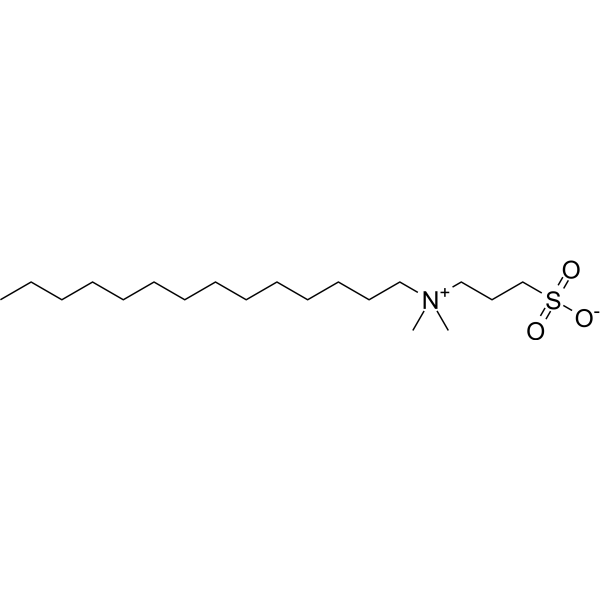
Zwittergent 3-14 (DMAPS) is a zwitterionic detergent commonly used in biochemistry and molecular biology for the solubilization and purification of membrane-bound proteins and other hydrophobic biomolecules, which have both hydrophilic and hydrophobic moieties , so that it has good detergency properties, making it suitable for stabilizing membrane proteins in aqueous solutions. In addition, DMAPS has been used in various techniques such as electrophoresis and chromatography for the separation and analysis of biomolecules. The long The hydrocarbon chains provide it with good membrane penetration and solubilization capabilities, while the sulfonate and quaternary ammonium groups ensure water solubility and charge neutrality.
|
-
- HY-W250187
-
|
|
Biochemical Assay Reagents
|
Others
|
|
DDMAB, or didodecyldimethylammonium bromide, is a cationic surfactant commonly used in a variety of industrial and research applications. It belongs to the family of quaternary ammonium compounds and has a positively charged head and a hydrophobic tail, which allows it to be used as a detergent, emulsifier and antimicrobial. Known for its ability to disrupt cell membranes, DDMAB is commonly used in microbiology to selectively isolate and identify bacteria. It is also used in nanotechnology to synthesize metal nanoparticles and other materials. In addition, DDMAB has the ability to interact with and penetrate cell membranes, which has potential applications in drug delivery, gene therapy, and other medical fields.
|
-
- HY-B1467R
-
|
|
Reference Standards
Potassium Channel
Bacterial
Parasite
Phosphorylase
|
Infection
Inflammation/Immunology
|
|
Domiphen bromide (Standard) is the analytical standard of Domiphen bromide (HY-B1467). This product is intended for research and analytical applications. Domiphen bromide is a cationic active quaternary ammonium salt and also an inhibitor of HERG channels (IC50: 9 nM), aminopeptidase-like enzymes, Escherichia coli alkaline phosphatase, and α-chymotrypsin. Domiphen bromide has multiple activities such as antibacterial, antimalarial, and disinfectant properties, and it is also a synergist of Colistin (HY-113678). Domiphen bromide can be used as a chemical preservative and a cationic surfactant, and it can also be used in the research of bacterial infectious diseases such as pharyngitis, thrush, and oral ulcers.
|
-
- HY-180575
-
|
|
Nucleoside Antimetabolite/Analog
Apoptosis
AMPK
Acetyl-CoA Carboxylase
|
Cardiovascular Disease
|
|
LCB-2122 is an adenosine-like nucleoside analogue bearing a C2'-stereogenic all-carbon quaternary center. LCB-2122 can prevent Doxorubicin (HY-15142A)-induced cardiomyocytes apoptosis with an IC50 of 0.5 μM and prevent Imatinib (HY-15463)-induced apoptosis. LCB-2122 can activate AMPK signaling and induce the phosphorylation of AMPK and its downstream substrate, acetyl-CoA carboxylase (ACC). LCB-2122 can reduce Doxorubicin-induced mitochondrial damage. LCB-2122 can be used for the research of heart failure .
|
-
- HY-W099581R
-
|
SB3-14 (Standard); DMAPS (Standard)
|
Biochemical Assay Reagents
Reference Standards
|
Others
|
|
Sulfobetaine-14 (Standard) is the analytical standard of Sulfobetaine-14. This product is intended for research and analytical applications. Zwittergent 3-14 (DMAPS) is a zwitterionic detergent commonly used in biochemistry and molecular biology for the solubilization and purification of membrane-bound proteins and other hydrophobic biomolecules, which have both hydrophilic and hydrophobic moieties , so that it has good detergency properties, making it suitable for stabilizing membrane proteins in aqueous solutions. In addition, DMAPS has been used in various techniques such as electrophoresis and chromatography for the separation and analysis of biomolecules. The long The hydrocarbon chains provide it with good membrane penetration and solubilization capabilities, while the sulfonate and quaternary ammonium groups ensure water solubility and charge neutrality.
|
-
- HY-46846
-
|
|
Environmental Pollutants
Biochemical Assay Reagents
|
Others
|
|
Styrene-divinylbenzene sulfonated copolymer is a cation exchange resin prepared from sulfonic acid group-containing microporous styrene/divinylbenzene (DVB) copolymer. Styrene-divinylbenzene sulfonated copolymer serves as the core matrix material for most bilirubin adsorbents. It also acts as a hydrophilic cell immobilization carrier, whose porous structure provides an ideal environment for microbial growth and biochemical reactions .
|
-
- HY-N0749
-
|
|
Cholinesterase (ChE)
5-HT Receptor
Bacterial
|
Neurological Disease
|
|
Jatrorrhizine is an alkaloid isolated from Coptis chinensis with neuroprotective, antimicrobial, antiplasmodial and antioxidant activities . Jatrorrhizine is a potent and orally active inhibitor of AChE (IC50=872 nM) over >115-fold selectivity for BuChE . Jatrorrhizine reduces uptake of serotonin (5-HT) and norepinephrine (NE) via inhibition of uptake-2 transporters .
|
-
- HY-N0740
-
|
|
Cholinesterase (ChE)
5-HT Receptor
Bacterial
|
Neurological Disease
Inflammation/Immunology
|
|
Jatrorrhizine chloride is an alkaloid isolated from?Coptis chinensis with neuroprotective, antimicrobial, antiplasmodial and antioxidant activities . Jatrorrhizine chloride is a potent and orally active inhibitor of?AChE?(IC50=872 nM) over >115-fold selectivity for BuChE . Jatrorrhizine chloride reduces uptake of serotonin (5-HT) and norepinephrine (NE) via inhibition of uptake-2 transporters .
|
-
- HY-N0749A
-
|
|
Cholinesterase (ChE)
5-HT Receptor
Bacterial
|
Neurological Disease
Inflammation/Immunology
|
|
Jatrorrhizine hydroxide is an alkaloid isolated from Coptis chinensis with neuroprotective, antimicrobial, antiplasmodial and antioxidant activities . Jatrorrhizine hydroxide is a potent and orally active inhibitor of AChE (IC50=872 nM) over >115-fold selectivity for BuChE . Jatrorrhizine hydroxide reduces uptake of serotonin (5-HT) and norepinephrine (NE) via inhibition of uptake-2 transporters .
|
-
- HY-N0740R
-
|
|
Reference Standards
Cholinesterase (ChE)
5-HT Receptor
Bacterial
|
Neurological Disease
Inflammation/Immunology
|
|
Jatrorrhizine (chloride) (Standard) is the analytical standard of Jatrorrhizine (chloride). This product is intended for research and analytical applications. Jatrorrhizine chloride is an alkaloid isolated from Coptis chinensis with neuroprotective, antimicrobial, antiplasmodial and antioxidant activities . Jatrorrhizine chloride is a potent and orally active inhibitor of AChE (IC50=872 nM) over >115-fold selectivity for BuChE . Jatrorrhizine chloride reduces uptake of serotonin (5-HT) and norepinephrine (NE) via inhibition of uptake-2 transporters .
|
-
- HY-W010221
-
|
Trimethylanilinium hydroxide (ca. 8.5% in Methanol)
|
Biochemical Assay Reagents
|
Others
|
|
Phenyltrimethylammonium hydroxide (Trimethylanilinium hydroxide (ca. 8.5% in Methanol)) is a derivatization reagent. Phenyltrimethylammonium hydroxide converts phenolic compounds including pentachlorophenol herbicides into methyl ethers .
|
-
- HY-W099594
-
|
Benzyldimethyldodecylammonium bromide
|
Environmental Pollutants
Biochemical Assay Reagents
|
Others
|
|
N-Benzyl-N, N-dimethyldodecan-1-aminium bromide, also known as Benzalkonium Chloride (BAC), is a quaternary ammonium compound widely used as an antimicrobial and surfactant in various industries. BAC is commonly used as a disinfectant and antiseptic in a variety of products including hand sanitizers, disinfectant wipes and eye drops. Its ability to kill bacteria, viruses and fungi makes it an effective tool in preventing the spread of infection. BAC is also used as a preservative and disinfectant in the food industry. It is added to food packaging and processing equipment to prevent the growth of microorganisms and increase the shelf life of foods. Additionally, BACs are found in many household products such as cleaning solutions, fabric softeners and personal care products. Its surfactant properties allow it to be used to reduce surface tension and increase the effectiveness of cleaning agents. Although BAC has many uses, ingestion or exposure to high concentrations of BAC can cause skin irritation and other adverse effects.
|
-
- HY-B1549
-
-
| Cat. No. |
Product Name |
Type |
-
- HY-W099581
-
|
SB3-14; DMAPS
|
Biochemical Assay Reagents
|
|
Zwittergent 3-14 (DMAPS) is a zwitterionic detergent commonly used in biochemistry and molecular biology for the solubilization and purification of membrane-bound proteins and other hydrophobic biomolecules, which have both hydrophilic and hydrophobic moieties , so that it has good detergency properties, making it suitable for stabilizing membrane proteins in aqueous solutions. In addition, DMAPS has been used in various techniques such as electrophoresis and chromatography for the separation and analysis of biomolecules. The long The hydrocarbon chains provide it with good membrane penetration and solubilization capabilities, while the sulfonate and quaternary ammonium groups ensure water solubility and charge neutrality.
|
-
- HY-Y1045
-
|
TBAHS-MB
|
Biochemical Assay Reagents
|
|
Tetrabutylammonium hydrosulfate is a quaternary ammonium salt that is commonly used as a phase transfer catalyst, acid catalyst and reagent in various chemical reactions, especially in organic synthesis. Tetrabutylammonium hydrosulfate has unique chemical properties that allow it to facilitate the transfer of ions or molecules from one phase to another, making it an important ingredient in a variety of industrial processes.
|
-
- HY-W099594
-
|
Benzyldimethyldodecylammonium bromide
|
Biochemical Assay Reagents
|
|
N-Benzyl-N, N-dimethyldodecan-1-aminium bromide, also known as Benzalkonium Chloride (BAC), is a quaternary ammonium compound widely used as an antimicrobial and surfactant in various industries. BAC is commonly used as a disinfectant and antiseptic in a variety of products including hand sanitizers, disinfectant wipes and eye drops. Its ability to kill bacteria, viruses and fungi makes it an effective tool in preventing the spread of infection. BAC is also used as a preservative and disinfectant in the food industry. It is added to food packaging and processing equipment to prevent the growth of microorganisms and increase the shelf life of foods. Additionally, BACs are found in many household products such as cleaning solutions, fabric softeners and personal care products. Its surfactant properties allow it to be used to reduce surface tension and increase the effectiveness of cleaning agents. Although BAC has many uses, ingestion or exposure to high concentrations of BAC can cause skin irritation and other adverse effects.
|
-
- HY-W096983
-
|
Dodecyltrimethylammonium chloride,for IPC,≥99%
|
Biochemical Assay Reagents
|
|
DTAC (Dodecyltrimethylammonium chloride), for IPC, ≥99% is a quaternary ammonium cationic surfactant. DTAC, for IPC, ≥99% can form micelles in aqueous media, which interact with and encapsulate Diclofenac sodium (HY-15037) molecules; the micellization process is entropy-driven at lower temperatures and enthalpy-driven at higher temperatures .
|
-
- HY-W018574
-
|
|
Biochemical Assay Reagents
|
|
Tetraoctylammonium bromide (TOAB) is a quaternary ammonium salt consisting of a positively charged tetraoctylammonium cation and a negatively charged bromide anion. This compound is commonly used as a phase transfer catalyst in organic chemical reactions, facilitating the transfer of reactants between immiscible phases. It is also used as a surfactant and dispersant in various industrial applications, for example in the production of coatings, adhesives and polymers. Additionally, Tetraoctylammonium bromide has been investigated for potential applications in energy storage devices and as an antimicrobial agent.
|
-
- HY-W010795
-
|
|
Biochemical Assay Reagents
|
|
Tetraheptylammonium bromide (>98%,BC) (THAB) is a quaternary ammonium compound commonly used as a phase transfer catalyst in organic synthesis reactions, especially those involving charged species or polar reagents. It can facilitate the transfer of reactants between two immiscible phases, such as water and organic solvents, by forming stable ion pairs. In addition, THAB is used as a surfactant, and as an additive in various products such as cosmetics, pharmaceuticals, and detergents. Due to THAB's ability to form complexes with these ions, its potential use in the removal of heavy metal ions from wastewater was also investigated.
|
-
- HY-W002849
-
|
2-(Dicyclohexylphosphino)biphenyl
|
Biochemical Assay Reagents
|
|
Cyjohnphos is a biochemical reagent that can be used as a biological material or organic compound for life science related research. Cyjohnphos can be used in combination with a nickel catalyst for the Suzuki-Miyaura arylation of tertiary benzylic acetates with aryl boroxines to produce diaryl and triaryl quaternary stereocenters .
|
-
- HY-W250302
-
|
|
Biochemical Assay Reagents
|
|
Methylbenzethonium chloride is a quaternary ammonium compound commonly used as a preservative and disinfectant in a variety of personal care and healthcare products. Methylbenzethonium chloride has several properties that make it suitable for these applications, including its broad-spectrum antibacterial activity against bacteria, viruses and fungi. In addition, it is used as a preservative in cosmetic and pharmaceutical formulations to prevent the growth of microorganisms.
|
-
- HY-Y0080
-
|
|
Biochemical Assay Reagents
|
|
Methyl trioctyl ammonium chloride is a quaternary ammonium salt commonly used as a surfactant, stabilizer and phase transfer catalyst in various chemical reactions, especially in organic synthesis. Methyl trioctyl ammonium chloride has unique chemical properties that facilitate the transfer of ions or molecules from one phase to another, making it an important ingredient in a variety of industrial processes.
|
-
- HY-W011087
-
|
|
Biochemical Assay Reagents
|
|
Benzyldimethyltetradecylammonium chloride is a quaternary ammonium salt consisting of a positively charged N-benzyl-N,N-dimethyltetradecyl-1-amine cation and a negatively charged chloride anion. The compound is commonly used as a surfactant and emulsifier in a variety of applications including detergents, fabric softeners and personal care products. It also has antimicrobial properties and is used as a disinfectant or antiseptic in some products.
|
-
- HY-W014408
-
|
TEA bromide
|
Biochemical Assay Reagents
|
|
Tetraethylammonium bromide is a quaternary ammonium salt consisting of a positively charged tetraethylammonium cation and a negatively charged bromide anion. This compound is commonly used as a phase transfer catalyst in organic chemical reactions, facilitating the transfer of reactants between immiscible phases. It can also be used as a reagent for the synthesis of various organic compounds, an electrolyte in electrochemical experiments, and a source of tetraethylammonium ions in biochemical and pharmacological research.
|
-
- HY-W014106
-
|
N,N,N-Triethylethanaminium tetrafluoroborate
|
Biochemical Assay Reagents
|
|
Tetraethylammonium tetrafluoroborate is a quaternary ammonium salt consisting of a positively charged tetraethylammonium cation and a negatively charged tetrafluoroborate anion. This compound is commonly used as a phase transfer catalyst in organic chemical reactions, facilitating the transfer of reactants between immiscible phases. It can also be used as a reagent for the synthesis of various organic compounds, an electrolyte in electrochemical experiments, and a source of tetraethylammonium ions in biochemical and pharmacological research.
|
-
- HY-W099682
-
|
n-Hexyl trimethylammonium bromide
|
Biochemical Assay Reagents
|
|
Hexyltrimethylammonium bromide is a cationic surfactant, quaternary ammonium compound, detergent, emulsifier, phase transfer catalyst, antibacterial agent, electrochemical device, corrosion inhibitor, micelle former, industrial chemical.
|
-
- HY-W127672
-
|
|
Biochemical Assay Reagents
|
|
Tetramethylammonium tetrafluoroborate is a quaternary ammonium salt commonly used as an electrolyte in various chemical reactions, especially in electrochemistry and battery technology. Tetramethylammonium tetrafluoroborate has unique chemical properties that make it an important ingredient in a variety of industrial processes, including the production of advanced materials and electronic components.
|
-
- HY-W127687
-
|
Tetrabutylammonium (dihydrogen trifluoride)
|
Biochemical Assay Reagents
|
|
Tetrabutylammonium dihydrogen trifluoride is a quaternary ammonium salt commonly used as an electrolyte in various chemical reactions, especially in electrochemistry and battery technology. Tetrabutylammonium dihydrogen trifluoride has unique chemical properties that make it an important ingredient in a variety of industrial processes, including the production of advanced materials and electronic components.
|
-
- HY-91018
-
|
N-[3-(Trimethoxysilyl)propyl]-N,N,N-trimethylammonium chloride, 50% in methanol
|
Biochemical Assay Reagents
|
|
Trimethyl[3-(trimethoxysilyl)propyl]ammonium (N-[3-(Trimethoxysilyl)propyl]-N,N,N-trimethylammonium) chloride (50% in methanol) is a functional organic silane coupling agent and quaternary ammonium salt cationic functional monomer, which can be used for functionalizing mesoporous silica with electrochemical modified electrodes or surface chemical modification .
|
-
- HY-W127653
-
|
Dimethylditetradecylammonium bromide
|
Biochemical Assay Reagents
|
|
Dimethyldimyristylammonium bromide is a quaternary ammonium compound commonly used as a surfactant or emulsifier in a variety of industrial applications, including the production of detergents, fabric softeners and hair conditioners. In addition, it can also be used as an intermediate in the synthesis of various organic compounds. Its unique chemical properties make it an important ingredient in a variety of industrial processes, especially in the manufacture of personal care products and pharmaceuticals.
|
-
- HY-W012450
-
|
Phenyltrimethylammonium bromide
|
Biochemical Assay Reagents
|
|
Trimethylphenylammonium bromide is a quaternary ammonium salt consisting of a positively charged N,N,N-trimethylanilinium cation and a negatively charged bromide anion. This compound is commonly used as a phase transfer catalyst in organic chemical reactions, facilitating the transfer of reactants between immiscible phases. It can also be used as a reagent in the synthesis of various organic compounds and in some applications as a surfactant or corrosion inhibitor.
|
-
- HY-W013076
-
|
tetra(decyl)ammonium bromide
|
Biochemical Assay Reagents
|
|
Tetrakis(decyl)ammonium bromide is a compound belonging to the class of quaternary ammonium compounds. It is a salt with cationic properties and is used in various industrial and biomedical applications. Tetrakis(decyl)ammonium bromide is commonly used as an emulsifier, solubilizer and antimicrobial agent in personal care products, cleansers and pharmaceutical formulations. It is also used as a phase transfer catalyst in organic synthesis reactions, facilitating the movement of reactants between immiscible phases.
|
-
- HY-W101255
-
|
MTEACl
|
Biochemical Assay Reagents
|
|
Triethylmethylammonium chloride is a quaternary ammonium salt belonging to the class of alkylammonium salts. This compound is widely used as a phase transfer catalyst in organic synthesis to facilitate the transfer of reactants between immiscible phases. In addition, it can be used as an electrolyte in electrochemical devices, a surfactant in emulsion polymerization, and a corrosion inhibitor. Its unique chemical properties make it an important ingredient in a variety of industrial applications, including pharmaceuticals, agrochemicals, and materials science.
|
-
- HY-W012167
-
|
|
Biochemical Assay Reagents
|
|
N,N,N-Trimethyldecan-1-aminium chloride is a compound belonging to the class of quaternary ammonium compounds. It is a salt with cationic properties and thus useful in various industrial and biomedical applications. Decyltrimethylammonium chloride is commonly used as a surfactant, emulsifier and disinfectant in personal care products, detergents, textiles and pharmaceutical formulations. It is also used as a phase transfer catalyst in organic synthesis reactions, which involves facilitating the movement of reactants between immiscible phases.
|
-
- HY-W111461
-
|
|
Biochemical Assay Reagents
|
|
Tetrabutylammonium thiocyanateIt is a quaternary ammonium salt and belongs to the category of alkyl ammonium salts. This compound is widely used as a reagent in organic chemistry, especially for the synthesis of various organic compounds, including pharmaceuticals and agrochemicals. also, Tetrabutylammonium thiocyanateIt can also be used as an electrolyte in electrochemical devices and as a phase transfer catalyst in organic synthesis. Its unique chemical properties make it an important ingredient in a variety of industrial processes, including petrochemical refining and materials science.
|
-
- HY-W099575
-
|
|
Biochemical Assay Reagents
|
|
3-(Hexadecyldimethylammonio)propane-1-sulfonate is an organic compound belonging to the class of sulfonates. It is a quaternary ammonium surfactant commonly used in various industrial and laboratory applications such as the production of detergents, personal care products and pharmaceuticals. 3-(Hexadecyldimethylammonio)propane-1-sulfonate is surface active and can be used as an emulsifier, foaming agent and wetting agent. In addition, it is used as a solubilizer in protein purification and as a surfactant in chromatography.
|
-
- HY-W099930
-
|
Trimethylpropylammonium bromide
|
Biochemical Assay Reagents
|
|
N,N,N-Trimethylpropan-1-aminium bromide is a quaternary ammonium compound belonging to the class of alkylammonium salts. This compound is widely used as a phase transfer catalyst in organic synthesis, facilitating the transfer of reactants between immiscible phases. It can also be used as a surfactant, corrosion inhibitor or antimicrobial. Due to its unique chemical properties, N,N,N-Trimethylpropan-1-aminium bromide has applications in various industries such as pharmaceuticals, agrochemicals, and materials science.
|
-
- HY-W039760
-
|
|
Biochemical Assay Reagents
|
|
2-Hydroxy-N,N,N-trimethylethan-1-aminium iodide, also known as choline iodide, is a quaternary ammonium salt commonly used in organic synthesis and biochemical research. It is a water-soluble compound derived from choline, an essential nutrient found in many foods. Choline iodide has been used as a source of choline groups in various chemical reactions and in microbiology as a selective agent for isolating bacteria. In addition, its potential role in cognitive impairment and liver disease has also been studied.
|
-
- HY-W683499
-
|
LHSB
|
Biochemical Assay Reagents
|
|
Lauryl hydroxysultaine (LHSB), a surfactant, is comprised of a core Sultaine structure with a sulphopropyl quaternary ammonium salt, an alkyl group and a hydroxyl group .
|
-
- HY-W011052
-
|
|
Biochemical Assay Reagents
|
|
Tetrapentylammonium bromide is a quaternary ammonium salt consisting of a positively charged tetrapentylammonium cation and a negatively charged bromide anion. This compound is commonly used as a phase transfer catalyst in organic synthesis reactions to facilitate the transfer of reactants between immiscible phases. It is also used in the production of surfactants, detergents and the synthesis of pharmaceuticals.
|
-
- HY-W127678
-
|
Tetraethylammonium (trifluoromethanesulphonate)
|
Biochemical Assay Reagents
|
|
Tetraethylammonium trifluoromethanesulfonate is a quaternary ammonium salt commonly used as a phase transfer catalyst in various chemical reactions, especially in organic synthesis. Tetraethylammonium trifluoromethanesulfonate has unique chemical properties that allow it to facilitate the transfer of ions or molecules from one phase to another, making it an important ingredient in a variety of industrial processes.
|
-
- HY-W111436
-
|
N,N,N-tributylbutan-1-aminium tetraphenylborate(1-)
|
Biochemical Assay Reagents
|
|
Tetrabutylammonium tetraphenylborate is a quaternary ammonium salt belonging to the class of alkylammonium salts. This compound is commonly used as an ion-pairing reagent in chromatography and analytical chemistry, facilitating the separation and identification of various organic compounds. Its unique chemical properties make it an important ingredient in a variety of scientific applications, including pharmaceuticals, agrochemicals, and materials science products.
|
-
- HY-W127637
-
|
Tetrapentylammonium chloride
|
Biochemical Assay Reagents
|
|
Tetraamylammonium chloride is an organic compound containing ammonium and chloride ions. It is commonly used as a phase transfer catalyst in organic synthesis, especially in the production of pharmaceuticals and agrochemicals. Tetraamylammonium Chloride has a strong base that facilitates the transfer of reactants between immiscible solvents, resulting in more efficient chemical reactions. In addition, it can also be used as an intermediate in the synthesis of other quaternary ammonium compounds.
|
-
- HY-W099641
-
|
|
Biochemical Assay Reagents
|
|
Methyltrioctylammonium hydrogen sulfate is a quaternary ammonium salt that is mainly used as an extraction solvent and a phase transfer catalyst in various chemical reactions. It is also used as an electrolyte in electrochemical devices such as batteries and fuel cells, and as a building block for the synthesis of pharmaceuticals and agrochemicals. MTOAHS are multifunctional compounds with many potential industrial applications due to their reactivity, stability, and ability to selectively extract certain compounds from mixtures.
|
-
- HY-W012412
-
|
|
Biochemical Assay Reagents
|
|
Tetrapropylammonium chloride is a compound belonging to the class of quaternary ammonium compounds. It is a salt with cationic properties and is used in various industrial and biomedical applications. Tetrapropylammonium chloride is commonly used as a phase transfer catalyst to facilitate the movement of reactants between immiscible phases in organic synthesis reactions. It is also used as a surfactant in the formulation of personal care products, detergents, textiles and pharmaceuticals. Additionally, it is used in the production of certain types of polymers and resins.
|
-
- HY-Y0407A
-
|
TPAOH (40% w/w in water)
|
Biochemical Assay Reagents
|
|
Tetrapropylammonium hydroxide (40% w/w in water)It is a compound belonging to the class of quaternary ammonium compounds and is a strong base with cationic properties. Tetrapropylammonium hydroxide (40% w/w in water)It is usually used as a phase transfer catalyst to promote the transfer of reactants between immiscible phases in various organic synthesis reactions. It is also used in the production of semiconductors, especially the manufacture of thin-film transistors and other electronic devices.
|
-
- HY-W011972
-
|
|
Biochemical Assay Reagents
|
|
2-Bromo-N,N,N-trimethylethanaminium bromide is a quaternary ammonium salt consisting of a positively charged 2-bromo-N,N,N-trimethylethylamine cation and a negatively charged bromide anion. This compound is commonly used as a phase transfer catalyst in organic chemical reactions, facilitating the transfer of reactants between immiscible phases. It can also be used as a halogenating agent, for example in the bromination of olefins.
|
-
- HY-W101253
-
|
|
Biochemical Assay Reagents
|
|
Tetraethylammonium (iodide) is a quaternary ammonium compound belonging to the class of alkylammonium salts. This compound is commonly used as a phase-transfer catalyst in organic synthesis because it facilitates the transfer of reactants between immiscible phases. It can also be used as an electrolyte in electrochemical devices and as a surfactant in detergent formulations. Its unique chemical properties make it an important ingredient in a variety of industrial applications, including pharmaceuticals, agrochemicals, and materials science.
|
-
- HY-W013231
-
|
Benzyltriethylammonium iodide
|
Biochemical Assay Reagents
|
|
N-Benzyl-N,N-diethylethanaminium iodide is a quaternary ammonium salt consisting of a positively charged N-benzyl-N,N-diethylethylamine cation and a negatively charged iodide anion. This compound is commonly used as a phase transfer catalyst in organic chemical reactions, facilitating the transfer of reactants between immiscible phases. It can also be used as a reagent for the synthesis of various organic compounds, and as a surfactant or emulsifier in industrial and personal care products.
|
-
- HY-W099581R
-
|
SB3-14 (Standard); DMAPS (Standard)
|
Biochemical Assay Reagents
|
|
Sulfobetaine-14 (Standard) is the analytical standard of Sulfobetaine-14. This product is intended for research and analytical applications. Zwittergent 3-14 (DMAPS) is a zwitterionic detergent commonly used in biochemistry and molecular biology for the solubilization and purification of membrane-bound proteins and other hydrophobic biomolecules, which have both hydrophilic and hydrophobic moieties , so that it has good detergency properties, making it suitable for stabilizing membrane proteins in aqueous solutions. In addition, DMAPS has been used in various techniques such as electrophoresis and chromatography for the separation and analysis of biomolecules. The long The hydrocarbon chains provide it with good membrane penetration and solubilization capabilities, while the sulfonate and quaternary ammonium groups ensure water solubility and charge neutrality.
|
-
- HY-W127677
-
|
N,N,N-Triethylethanaminium nitrate
|
Biochemical Assay Reagents
|
|
Tetraethylammonium nitrate is a quaternary ammonium salt commonly used as an electrolyte in various chemical reactions, especially in electrochemistry and battery technology. Tetraethylammonium nitrate has unique chemical properties that make it an important ingredient in a variety of industrial processes, including the production of advanced materials and electronic components.
|
-
- HY-Y0667
-
|
|
Biochemical Assay Reagents
|
|
Benzyltriethylammonium chloride is a quaternary ammonium salt commonly used as a phase transfer catalyst, surfactant and stabilizer in various chemical reactions, especially in organic synthesis. Benzyltriethylammonium chloride has unique chemical properties that facilitate the transfer of ions or molecules from one phase to another, making it an important ingredient in a variety of industrial processes.
|
-
- HY-W040184
-
|
TMAHS
|
Biochemical Assay Reagents
|
|
Tetramethylammonium hydrogensulfate, sometimes abbreviated as TMAHS, is a quaternary ammonium salt commonly used as a catalyst and phase transfer agent in chemical reactions, especially in organic synthesis. In addition, it is used as an electrolyte additive in electrochemical and rechargeable batteries. TMAHSs have also been investigated for their potential use in various applications such as wastewater treatment, gas separation, and fuel cells.
|
-
- HY-W099640
-
|
Tetra-n-octylammonium iodide
|
Biochemical Assay Reagents
|
|
Tetraoctylammonium iodideIt is an organic compound and belongs to the category of quaternary ammonium salts. It is often used as a phase transfer catalyst, meaning it facilitates a reaction between two immiscible phases, such as an aqueous phase and an organic phase. Tetraoctylammonium iodideIt has a variety of applications in organic synthesis, especially in reactions involving nucleophilic substitution, oxidation, and reduction. Additionally, it is used as a surfactant and emulsifier in industrial and laboratory settings.
|
-
- HY-W105516
-
|
Phenylbenzyldimethylammonium chloride
|
Biochemical Assay Reagents
|
|
N-Benzyl-N,N-dimethylbenzeneminium chloride is a quaternary ammonium compound belonging to the class of alkylammonium salts. This compound is widely used as a phase transfer catalyst in organic synthesis to facilitate the transfer of reactants between immiscible phases. In addition, it is used as an emulsifier, surfactant or disinfectant in various industrial applications. Its unique chemical properties make it an important ingredient in the production of pharmaceuticals, agrochemicals and polymer materials.
|
-
- HY-W250194
-
|
|
Biochemical Assay Reagents
|
|
Luviquat FC 550 is a cationic polymer commonly used in a variety of personal care and cosmetics. It is a viscous liquid containing quaternary ammonium groups which give it a positive charge. Luviquat FC 550 has a variety of properties suitable for these applications including its ability to provide conditioning, antistatic and film-forming properties to hair and skin. In addition, it is used as a binder in oral care products and as a flocculant in industrial water treatment.
|
-
- HY-W095635
-
|
|
Biochemical Assay Reagents
|
|
Tetramethylammonium fluoride tetrahydrate (TMAF) is a quaternary ammonium salt. TMAF is commonly used as a weak base and a source of fluoride ions in various organic reactions, including nucleophilic substitution, functional group deprotection, and ring-opening polymerization. Unlike other fluoride sources, TMAF is compatible with many functional groups, making it a versatile tool in synthetic chemistry. Functional reagents, In addition, TMAF has been used as a fluorinating agent in medicinal chemistry, for the preparation of radiotracers and protein modification in biochemistry, and the tetrahydrate form of TMAF is more stable and easier to handle than the anhydrous form.
|
-
- HY-W010221
-
|
Trimethylanilinium hydroxide (ca. 8.5% in Methanol)
|
Biochemical Assay Reagents
|
|
Phenyltrimethylammonium hydroxide (Trimethylanilinium hydroxide (ca. 8.5% in Methanol)) is a derivatization reagent. Phenyltrimethylammonium hydroxide converts phenolic compounds including pentachlorophenol herbicides into methyl ethers .
|
-
- HY-122407
-
|
Cetyltrimethylammonium hydroxide
|
Biochemical Assay Reagents
|
|
Hexadecyltrimethylammonium hydroxide, a quaternary ammonium compound, is commonly used as an emulsifier, detergent, and surfactant in various industrial processes, especially in the production of cosmetics, pharmaceuticals, and textiles. Hexadecyltrimethylammonium hydroxide has unique chemical properties that make it an active ingredient in many applications requiring strong surface activity and solubility.
|
-
- HY-W109978
-
|
|
Biochemical Assay Reagents
|
|
Tetrabutylammonium perrhenate is a quaternary ammonium salt belonging to the class of alkylammonium salts. This compound is used as a catalyst in organic synthesis, especially in the production of alkenes and alcohols. Furthermore, due to its ability to bind radioisotopes, it is useful as a radiopharmaceutical in nuclear medicine. Its unique chemical properties make it an essential ingredient in a variety of industrial processes, including petrochemical refining and pharmaceuticals.
|
-
- HY-W010900
-
|
|
Biochemical Assay Reagents
|
|
Tetrahexylammonium bromide is a compound that belongs to the class of quaternary ammonium compounds. It is a salt with cationic properties and thus useful in various industrial and biomedical applications. Tetrahexylammonium bromide is commonly used as a phase transfer catalyst to facilitate the movement of reactants between immiscible phases in various organic synthesis reactions. It is also used as a surfactant and emulsifier in the formulation of detergents, personal care products and pharmaceuticals.
|
-
- HY-W011122
-
|
|
Biochemical Assay Reagents
|
|
Tributylbenzylammonium bromide is a quaternary ammonium salt composed of a positively charged N-benzyl-N,N-dibutylbutan-1-amine cation and a negatively charged bromide anion composition. The compound is commonly used as a surfactant and emulsifier in a variety of applications including detergents, fabric softeners and personal care products. It also has antimicrobial properties and is used as a disinfectant or antiseptic in some products.
|
-
- HY-W127681
-
|
Tetra-n-butylammonium dichlorobromide
|
Biochemical Assay Reagents
|
|
Tetrabutylammonium dichlorobromide is an organic compound containing ammonium, chloride, and bromide ions. It is commonly used as a phase transfer catalyst in organic synthesis, especially in the production of pharmaceuticals and agrochemicals. Tetrabutylammonium Dichlorobromide has a strong base that facilitates the transfer of reactants between immiscible solvents, resulting in more efficient chemical reactions. In addition, it can also be used as an intermediate in the synthesis of other quaternary ammonium compounds.
|
- HY-W100404
-
|
|
Biochemical Assay Reagents
|
|
Tetramethylammonium p-toluenesulfonate is a quaternary ammonium compound belonging to the class of alkylammonium salts. This compound is widely used as a phase transfer catalyst in organic synthesis to facilitate the transfer of reactants between immiscible phases. Furthermore, it can be used as a surfactant, emulsifier or stabilizer in various industrial applications. Its unique chemical properties make it an important ingredient in the production of pharmaceuticals, agrochemicals and materials science products.
|
- HY-W101256
-
|
Triethylmethylammonium tetrafluoroborate
|
Biochemical Assay Reagents
|
|
N,N-Diethyl-N-methylethanaminium tetrafluoroborate is a quaternary ammonium compound belonging to the class of alkylammonium salts. This compound is commonly used as a phase transfer catalyst in organic synthesis, facilitating the transfer of reactants between immiscible phases. Additionally, it is used as an electrolyte in electrochemical devices and as a surfactant in detergent formulations. Its unique chemical properties make it an important ingredient in a variety of industrial applications, including pharmaceuticals, agrochemicals, and materials science.
|
- HY-W106486
-
|
N,N-Dimethyl-N-2-propenyl-2-propen-1-aminium chloride
|
Biochemical Assay Reagents
|
|
Diallyldimethylammonium chloride (60% in water) is a quaternary ammonium compound belonging to the class of alkylammonium salts. The compound is widely used as a cationic monomer in the production of water-soluble polymers, especially in the manufacture of flocculants and coagulants for water treatment processes. In addition, it can be used as an antimicrobial agent, surfactant or adhesive in various industrial applications. Its unique chemical properties make it an important ingredient in a variety of industrial processes, including papermaking, textiles and personal care products.
|
- HY-W099790
-
|
1-Butyl-1-methylpiperidinium Bromide
|
Biochemical Assay Reagents
|
|
N-butyl-N-methyl-piperidinium bromide is a quaternary ammonium compound belonging to the class of piperidinium salts. N-butyl-N-methyl-piperidinium bromide is commonly used as a phase transfer catalyst in organic synthesis to transfer reactants between immiscible phases. It can also be used as a surfactant, corrosion inhibitor and antibacterial agent. Its unique chemical properties make it an important reagent in many different industries, including pharmaceuticals, agrochemicals, and materials science.
|
- HY-W014536
-
|
Trimethyl-n-octylammonium Chloride
|
Biochemical Assay Reagents
|
|
N,N,N-Trimethyloctan-1-aminium chloride is a quaternary ammonium salt consisting of a positively charged N,N,N-trimethyloctan-1-aminium cation and a negatively charged chloride anion. The compound is commonly used as a surfactant and emulsifier in a variety of applications including detergents, fabric softeners and personal care products. It can also be used as a phase transfer catalyst in organic chemical reactions, facilitating the transfer of reactants between immiscible phases. Additionally, it has antimicrobial properties and is used as a disinfectant or antiseptic in some products.
|
- HY-W112005
-
|
|
Biochemical Assay Reagents
|
|
Benzyltrimethylammonium tetrachloroiodate is a quaternary ammonium salt belonging to the class of alkylammonium salts. The compound is used as a reagent in organic synthesis, especially in the oxidation of alkenes and alcohols. Its unique chemical properties make it an important ingredient in a variety of industrial processes, including pharmaceuticals and agrochemicals.
|
- HY-W075836
-
|
|
Biochemical Assay Reagents
|
|
Ferrocenylmethyltrimethylammonium (iodide) is an organometallic salt consisting of a ferrocenyl group attached to a quaternary ammonium cation via a methylene bridge. Ferrocenylmethyltrimethylammonium (iodide) has been used as a catalyst and reagent in various organic reactions, including oxidation, reduction, and CH bond activation. In addition, it is also used as a precursor for the synthesis of other organometallic compounds and as a potential material for electrochemical applications.
|
- HY-W036734
-
|
|
Biochemical Assay Reagents
|
|
Tetrabutylammonium (hydrogen difluoride) is a quaternary ammonium salt containing fluoride ions. It is a highly active and effective reagent, often used in organic synthesis reactions, especially for the modification of organic molecules with fluorine atoms. Tetrabutylammonium (hydrogen difluoride) is also used as a catalyst for various chemical reactions such as esterification and transesterification. Additionally, it is used in the production of specialty chemicals such as surfactants and detergents.
|
- HY-W250177
-
|
|
Biochemical Assay Reagents
|
|
Tridodexylmethylammonium chloride, also known as TDMAC, is a cationic surfactant commonly used in various industrial and research applications. It belongs to the family of quaternary ammonium compounds and has a positively charged head and a hydrophobic tail, which allows it to be used as a detergent, emulsifier and antimicrobial. Known for its ability to disrupt cell membranes, TDMAC is frequently used in microbiology for the selective isolation and identification of bacteria.
|
- HY-W127651
-
|
Dioctyldimethylammonium bromide
|
Biochemical Assay Reagents
|
|
Dimethyldioctylammonium bromide is an organic compound containing ammonium and bromide ions. It is commonly used in the production of detergents, emulsifiers and surfactants for various industrial applications. Dimethyldioctylammonium bromide is highly surface active and reduces the surface tension of aqueous solutions, so it can be used to clean and wet surfaces. In addition, it can also be used as an intermediate in the synthesis of other quaternary ammonium compounds.
|
- HY-W250302R
-
|
|
Biochemical Assay Reagents
|
|
Methylbenzethonium (chloride) (Standard) is the analytical standard of Methylbenzethonium (chloride). This product is intended for research and analytical applications. Methylbenzethonium chloride is a quaternary ammonium compound commonly used as a preservative and disinfectant in a variety of personal care and healthcare products. Methylbenzethonium chloride has several properties that make it suitable for these applications, including its broad-spectrum antibacterial activity against bacteria, viruses and fungi. In addition, it is used as a preservative in cosmetic and pharmaceutical formulations to prevent the growth of microorganisms.
|
- HY-W011087R
-
|
|
Biochemical Assay Reagents
|
|
Benzyldimethyltetradecylammonium (chloride) (Standard) is the analytical standard of Benzyldimethyltetradecylammonium (chloride). This product is intended for research and analytical applications. Benzyldimethyltetradecylammonium chloride is a quaternary ammonium salt consisting of a positively charged N-benzyl-N,N-dimethyltetradecyl-1-amine cation and a negatively charged chloride anion. The compound is commonly used as a surfactant and emulsifier in a variety of applications including detergents, fabric softeners and personal care products. It also has antimicrobial properties and is used as a disinfectant or antiseptic in some products.
|
- HY-W008974
-
|
|
Biochemical Assay Reagents
|
|
3-(Dimethyl(octadecyl)ammonio)propane-1-sulfonate is a class of quaternary ammonium compounds. It is a surfactant and cationic detergent with amphiphilic properties and therefore useful in various industrial and biomedical applications. 3-(Dimethyl(octadecyl)ammonium)propane-1-sulfonate is commonly used as an emulsifier, solubilizer and antimicrobial agent in personal care products, detergents, textiles and pharmaceutical formulations. It is also used as a reagent in analytical chemistry, especially in the analysis of proteins and DNA.
|
- HY-W099929
-
|
|
Biochemical Assay Reagents
|
|
N-Ethyl-N,N-dipropylpropan-1-aminium iodide is a quaternary ammonium compound belonging to the class of alkylammonium salts. N-Ethyl-N,N-dipropylpropan-1-aminium (iodide) is commonly used as a phase transfer catalyst in organic synthesis to transfer reactants between immiscible phases. It can also be used as a surfactant, antimicrobial or corrosion inhibitor. Its unique chemical properties make it an essential reagent in many different industrial applications, including pharmaceuticals, agrochemicals, and materials science.
|
- HY-W250187
-
|
|
Biochemical Assay Reagents
|
|
DDMAB, or didodecyldimethylammonium bromide, is a cationic surfactant commonly used in a variety of industrial and research applications. It belongs to the family of quaternary ammonium compounds and has a positively charged head and a hydrophobic tail, which allows it to be used as a detergent, emulsifier and antimicrobial. Known for its ability to disrupt cell membranes, DDMAB is commonly used in microbiology to selectively isolate and identify bacteria. It is also used in nanotechnology to synthesize metal nanoparticles and other materials. In addition, DDMAB has the ability to interact with and penetrate cell membranes, which has potential applications in drug delivery, gene therapy, and other medical fields.
|
| Cat. No. |
Product Name |
Target |
Research Area |
-
- HY-P4030
-
|
|
HIV Protease
|
Infection
|
|
Herpes virus inhibitor 2 is a herpes virus inhibitor and disrupts herpes virus ribonucleotide reductase quaternary structure. Herpes virus inhibitor 2 inhibits viral replication .
|
-
- HY-P4028
-
|
|
Virus Protease
|
Infection
|
|
Herpes virus inhibitor 1 is a herpes virus inhibitor and disrupts herpes virus ribonucleotide reductase quaternary structure. Herpes virus inhibitor 1 inhibits viral replication .
|
-
- HY-K0263
-
|
|
|
MCE Q Agarose HP is a high-resolution strong anion exchanger formed by covalently coupling quaternary ammonium (Q) groups to agarose. This medium offers high binding capacity, high specificity, and excellent ligand stability, making it suitable for both laboratory-scale and large-scale industrial purification applications.
|
| Cat. No. |
Product Name |
Category |
Target |
Chemical Structure |
| Cat. No. |
Product Name |
Chemical Structure |
-
- HY-B1337S1
-
3 Publications Verification
|
|
Choline-d9 (chloride) is the deuterium labeled Choline chloride. Choline chloride is an organic compound and a quaternary ammonium salt, an acyl group acceptor and choline acetyltransferase substrate, also is an important additive in feed especially for chickens where it accelerates growth.
|
-
-
- HY-B1337S
-
1 Publications Verification
|
|
Choline-d4 (chloride) is the deuterium labeled Choline chloride. Choline chloride is an organic compound and a quaternary ammonium salt, an acyl group acceptor and choline acetyltransferase substrate, also is an important additive in feed especially for chickens where it accelerates growth.
|
-
-
- HY-B1337S3
-
|
|
|
Choline-d13 (chloride) is the deuterium labeled Choline chloride. Choline chloride is an organic compound and a quaternary ammonium salt, an acyl group acceptor and choline acetyltransferase substrate, also is an important additive in feed especially for chickens where it accelerates growth.
|
-
-
- HY-B1337S4
-
1 Publications Verification
|
|
Choline Chloride- 13C3 is the 13C-labeled Choline (chloride). Choline chloride is an organic compound and a quaternary ammonium salt, an acyl group acceptor and choline acetyltransferase substrate, also is an important additive in feed especially for chickens where it accelerates growth.
|
-
-
- HY-W654210
-
|
|
|
Glycopyrrolate-d3 (bromide) is deuterium labeled Glycopyrrolate. Glycopyrrolate (Glycopyrronium bromide), a quaternary ammonium derivative, is a muscarinic receptor antagonist. Glycopyrrolate has bronchoprotective effect and produces a beneficial effect on blood pressure. Glycopyrrolate can be used for the research of bronchial diseases .
|
-
-
- HY-B1260S3
-
|
|
|
Cetrimonium-d9 (bromide) is the deuterium labeled Cetrimonium bromide . Cetrimonium bromide (CTAB) is an amine based cationic quaternary surfactant, is one of the components of the topical antiseptic Cetrimide.
|
-
-
- HY-B1260S1
-
|
|
|
Cetrimonium-d33 bromide is the deuterium labeled Cetrimonium bromide . Cetrimonium bromide (CTAB) is an amine based cationic quaternary surfactant, is one of the components of the topical antiseptic Cetrimide.
|
-
-
- HY-B1132S
-
|
|
|
Clidinium-d5 (bromide) is the deuterium labeled Clidinium bromide. Clidinium bromide is a quaternary amine antimuscarinic agent .
|
-
-
- HY-B1337S2
-
|
|
|
Choline-d6 (chloride) is the deuterium labeled Choline chloride. Choline chloride is an organic compound and a quaternary ammonium salt, an acyl group acceptor and choline acetyltransferase substrate, also is an important additive in feed especially for chickens where it accelerates growth.
|
-
-
- HY-W042181S
-
|
|
|
N-Decyl-N,N-dimethyldecan-1-aminium-d6 (chloride) is a deuterated labeled N-Decyl-N,N-dimethyldecan-1-aminium (chloride) . N-Decyl-N,N-dimethyldecan-1-aminium chloride (Didecyldimethylammonium chloride) is a dialkyl-quaternary ammonium compound that is used in numerous products for its bactericidal, virucidal and fungicidal properties .
|
-
-
- HY-W724370
-
|
|
|
Tetraethylammonium bromide-d20 (TEA bromide-d20) is the deuterium labeled Tetraethylammonium bromide (HY-W014408). Tetraethylammonium bromide is a quaternary ammonium salt consisting of a positively charged tetraethylammonium cation and a negatively charged bromide anion. This compound is commonly used as a phase transfer catalyst in organic chemical reactions, facilitating the transfer of reactants between immiscible phases. It can also be used as a reagent for the synthesis of various organic compounds, an electrolyte in electrochemical experiments, and a source of tetraethylammonium ions in biochemical and pharmacological research.
|
-
-
- HY-Y0791S
-
|
|
|
Tetrabutylammonium-d36 iodide (Tetra-n-butylammonium-d36 iodide) is the deuterium labeled Tetrabutylammonium iodide (HY-Y0791). Tetrabutylammonium iodide is a quaternary ammonium salt commonly used as a phase transfer catalyst, surfactant, and stabilizer in various chemical reactions, especially in organic synthesis. Tetrabutylammonium iodide has unique chemical properties that facilitate the transfer of ions or molecules from one phase to another, making it an important ingredient in a variety of industrial processes.
|
-
-
- HY-W724293
-
|
|
|
Tetrapropylammonium-d28 chloride is the deuterium labeled Tetrapropylammonium chloride (HY-W012412). Tetrapropylammonium chloride is a compound belonging to the class of quaternary ammonium compounds. It is a salt with cationic properties and is used in various industrial and biomedical applications. Tetrapropylammonium chloride is commonly used as a phase transfer catalyst to facilitate the movement of reactants between immiscible phases in organic synthesis reactions. It is also used as a surfactant in the formulation of personal care products, detergents, textiles and pharmaceuticals. Additionally, it is used in the production of certain types of polymers and resins.
|
-
| Cat. No. |
Product Name |
|
Classification |
-
- HY-172516
-
|
|
|
Alkynes
|
|
1-Palmitoyl-2-(propargylacetyl)-sn-glycero-3-phosphocholine is a phosphocholine containing an azide-reactive propargyl on one of its tails and a positively charged quaternary amine head.
|
| Cat. No. |
Product Name |
|
Classification |
-
- HY-B2232
-
|
Alkyldimethylbenzylammonium chloride
|
|
Solubilizing Agents
|
|
Benzalkonium (Alkyldimethylbenzylammonium) chloride (51% in water) is a quaternary ammonium preservative, cationic surfactant, and antimicrobial (Antimicrobial) agent. Benzalkonium chloride (51% in water) is toxic .
|
-
- HY-157666
-
|
PC(13:0/13:0); DTPC
|
|
Phospholipids
|
|
13:0 PC (PC(13:0/13:0)), also known as ditridecanoyl phosphatidyl choline (DTPC), is a phospholipid characterized by its unique structure that includes a polar head with a positively charged quaternary amine and a negatively charged phosphate, along with two non-polar fatty acid tails.
|
-
- HY-W127653
-
|
Dimethylditetradecylammonium bromide
|
|
Cationic Lipids
|
|
Dimethyldimyristylammonium bromide is a quaternary ammonium compound commonly used as a surfactant or emulsifier in a variety of industrial applications, including the production of detergents, fabric softeners and hair conditioners. In addition, it can also be used as an intermediate in the synthesis of various organic compounds. Its unique chemical properties make it an important ingredient in a variety of industrial processes, especially in the manufacture of personal care products and pharmaceuticals.
|
-
- HY-172516
-
|
|
|
Phospholipids
|
|
1-Palmitoyl-2-(propargylacetyl)-sn-glycero-3-phosphocholine is a phosphocholine containing an azide-reactive propargyl on one of its tails and a positively charged quaternary amine head.
|
-
- HY-172329
-
|
|
|
Cationic Lipids
|
|
Q1-ALC-0315 iodide is a cationic quaternary ammonium lipid derivative of the ionizable cationic lipid ALC-0315 (HY-138170). Q1-ALC-0315-based LNPs can be used for lung-targeted mRNA delivery, which demonstrates high-performing firefly luciferase protein expression in the lungs .
|
Your information is safe with us. * Required Fields.
Inquiry Information
- Product Name:
- Cat. No.:
- Quantity:
- MCE Japan Authorized Agent:

