


1. Search Result
Search Result
Results for "

scaffolds

" in MedChemExpress (MCE) Product Catalog:

207

Inhibitors & Agonists

31

Screening Libraries

15

Fluorescent Dye

46

Biochemical Assay Reagents

17

Peptides

8

MCE Kits

14

Natural
Products

1

Isotope-Labeled Compounds

3

Click Chemistry

7

Oligonucleotides

1

GMP Molecules

Cat. No. Product Name Target Research Areas Chemical Structure
  • HY-D0208
    Fluorescein sodium
    10+ Cited Publications

    Uranine sodium

    Environmental Pollutants Fluorescent Dye Cancer
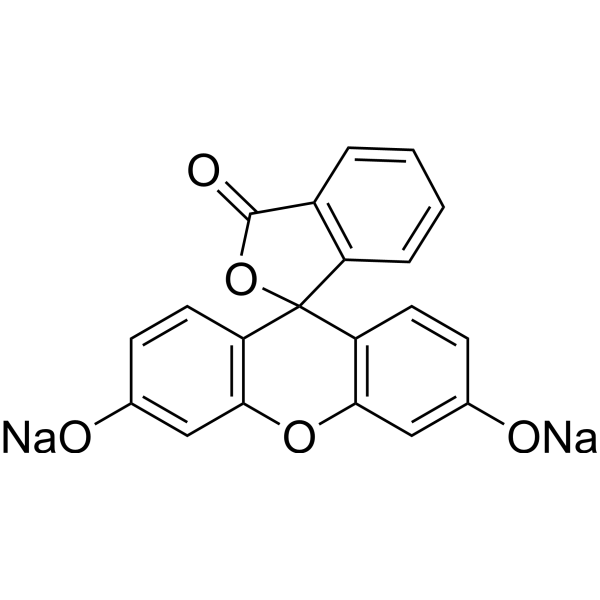
    Fluorescein (Uranine) sodium is widely used as a fluorescent tracer in medicinal and biological applications and tumor infected tissues tracer. Fluorescein (Uranine) sodium is a representative green fluorophore that has been widely used as a scaffold of practically useful green fluorescent probes .
    Fluorescein sodium
  • HY-D0020
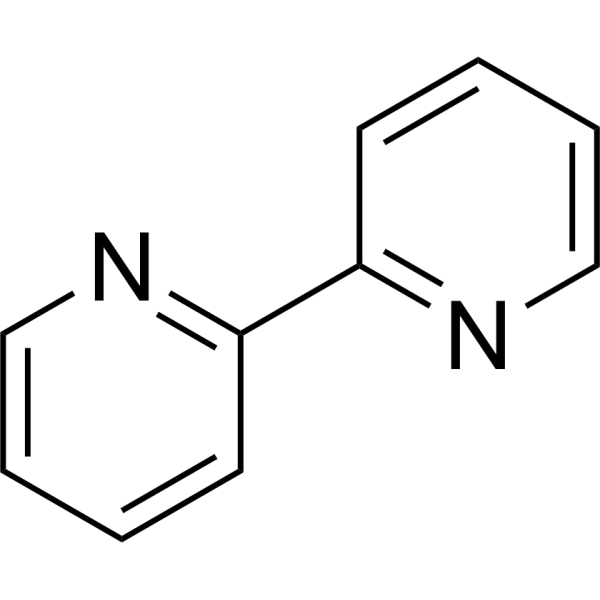
    2,2'-Bipyridine
    1 Publications Verification

    MOFs Infection Endocrinology
    2,2'-Bipyridine is the unique molecular scaffold of the bioactive natural products. 2,2'-Bipyridine is extensively used as the core structure of many chelating ligands by acting as a bridge in the arrangement of the catalytic center. 2,2'-Bipyridine shows robust redox stability and hyperglycemic activity .
    2,2'-Bipyridine
  • HY-D0251
    Fluorescein
    Maximum Cited Publications
    13 Publications Verification

    Uranine

    Fluorescent Dye Cancer
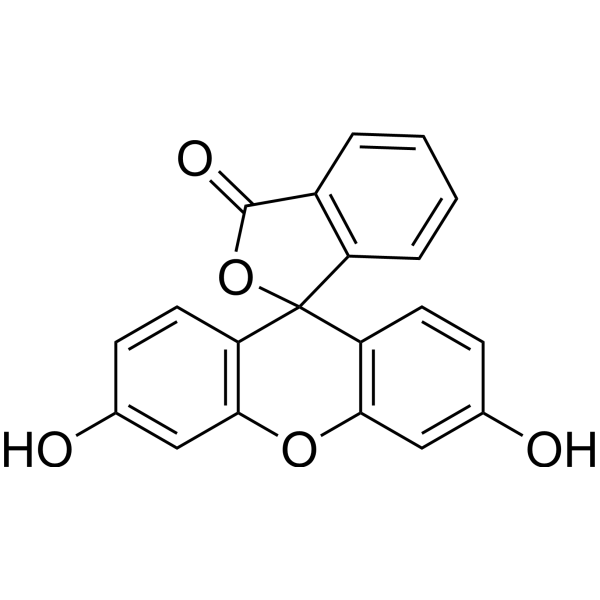
    Fluorescein (Uranine) is widely used as a fluorescent tracer in medicinal and biological applications and tumor infected tissues tracer. Fluorescein (Uranine) is a representative green fluorophore that has been widely used as a scaffold of practically useful green fluorescent probes .
    Fluorescein
  • HY-109103
    Tegatrabetan
    5 Publications Verification

    Tegavivint; BC2059

    β-catenin Cancer
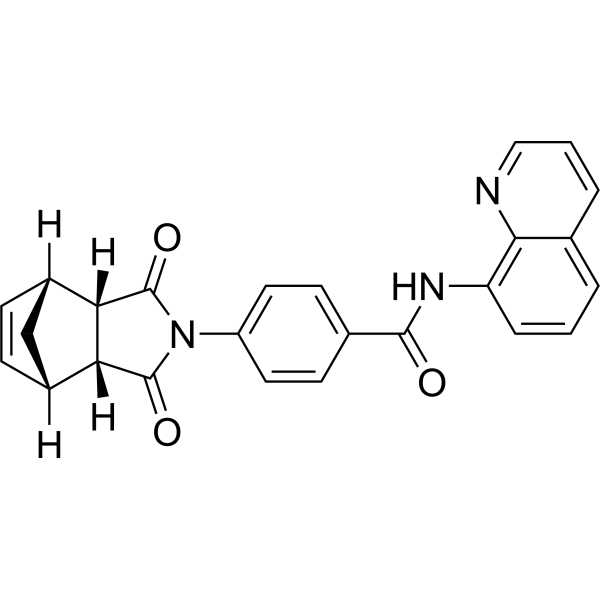
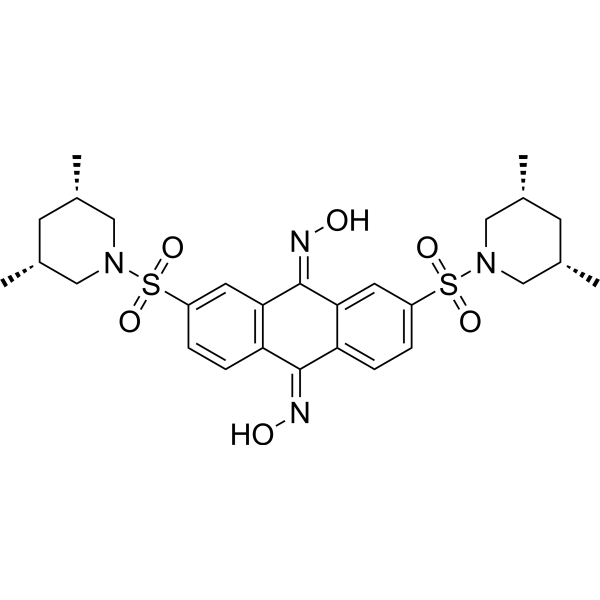
    Tegatrabetan (BC2059) is a β-Catenin antagonist. Tegatrabetan disrupts the binding of β-catenin with the scaffold protein transducin β-like 1 (TBL1) .
    Tegatrabetan
  • HY-W110584

    Biochemical Assay Reagents Others
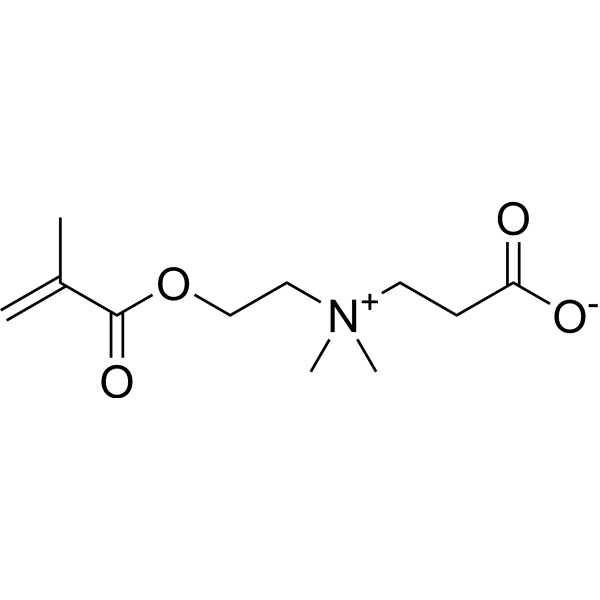
    Carboxybetaine methacrylate is an amphoteric ionic compound with excellent properties such as good hydrophilicity, antistatic property, and biocompatibility. Carboxybetaine methacrylate can be used to prepare tissue engineering scaffolds, drug carriers, and so on .
    Carboxybetaine methacrylate
  • HY-112299
    Zipalertinib
    3 Publications Verification

    TAS6417; CLN-081

    EGFR Apoptosis Cancer
    Zipalertinib (TAS6417; CLN-081) is a highly effective, orally active and pan-mutation-selective EGFR tyrosine kinase inhibitor with a unique scaffold fitting into the ATP-binding site of the EGFR hinge region, with IC50 values ranging from 1.1-8.0 nM .
    Zipalertinib
  • HY-W110542G

    PEGDA (MW 6000)

    Biochemical Assay Reagents Others
    Poly(ethylene glycol) diacrylate (PEGDA) (MW 6000) is a versatile polymer material that is widely used as a building material for hydrogel scaffolds, especially in the fields of tissue engineering and regenerative medicine. Poly(ethylene glycol) diacrylate (MW 6000) can be used as a building material for wound dressing hydrogels .
    Poly(ethylene glycol) diacrylate (MW 6000)
  • HY-W110542J

    PEGDA (MW 700)

    Biochemical Assay Reagents Others
    Poly(ethylene glycol) diacrylate (PEGDA) (MW 700) is a versatile polymer material that is widely used as a building material for hydrogel scaffolds, especially in the fields of tissue engineering and regenerative medicine. Poly(ethylene glycol) diacrylate (MW 700) mimics the extracellular matrix (ECM), providing support and growth space for cells .
    Poly(ethylene glycol) diacrylate (MW 700)
  • HY-W048825

    Amino Acid Derivatives Others
    Fmoc-Ala-Ala-OH is a self-assembling fluorenylmethoxycarbonyl dipeptide, a small amphiphilic building block composed of a dipeptide linked to a fluorenylmethoxycarbonyl (Fmoc) group. Under conditions of pH < 4, Fmoc-Ala-Ala-OH spontaneously assembles to form a nanofiber network, constructing a hydrogel scaffold with a water content exceeding 99% (w/w). The fibers have a diameter of approximately 22 nm, matching the size of extracellular matrix (ECM) components. Fmoc-Ala-Ala-OH supports cell adhesion, proliferation, and maintains of cell phenotype. Fmoc-Ala-Ala-OH's function is to mimic the ECM, providing a 3D growth microenvironment for cells, and Fmoc-Ala-Ala-OH is primarily used in tissue engineering and 3D cell culture, particularly suitable for in vitro culture studies of cells such as chondrocytes[1] .
    Fmoc-Ala-Ala-OH
  • HY-139840

    PSMA Carboxypeptidase Cancer
    GCPII-IN-1 (Compound 2) is a GCPII (also known as PSMA) inhibitor with a Ki of 44.3 nM. GCPII-IN-1 can be used in the research of prostate cancer .
    GCPII-IN-1
  • HY-P10956

    LY3541105

    Amylin Receptor CGRP Receptor Metabolic Disease
    Colulintide (LY3541105) is an amylin-calcitonin dual receptor agonist with Amylin as its scaffold. Colulintide is applicable to research related to type 2 diabetes and obesity .
    Colulintide
  • HY-W110542D

    PEGDA (MW 1000)

    Biochemical Assay Reagents Others
    Poly(ethylene glycol) diacrylate (PEGDA) (MW 1000) is a versatile polymer material that is widely used as a building material for hydrogel scaffolds, especially in the fields of tissue engineering and regenerative medicine .
    Poly(ethylene glycol) diacrylate (MW 1000)
  • HY-W110542N

    PEGDA (MW 250),MEHQ as inhibitor

    Biochemical Assay Reagents Others
    Poly(ethylene glycol) diacrylate (PEGDA) (MW 250), MEHQ as inhibitor is a versatile polymer material that is widely used as a building material for hydrogel scaffolds, especially in the fields of tissue engineering and regenerative medicine. Poly(ethylene glycol) diacrylate (MW 250), MEHQ as inhibitor can be used to construct optical cross-linked hydrogel implants .
    Poly(ethylene glycol) diacrylate (MW 250),MEHQ as inhibitor
  • HY-D0835

    Hydroxyapatite (25-45 μm)

    Others Cardiovascular Disease Inflammation/Immunology
    Hydroxylapatite (Hydroxyapatite) (25-45 μm) is a natural form of calcium phosphate and is the main mineral component of bones and teeth. Hydroxylapatite (25-45 μm) can stimulate the expression and secretion of collagen in primary human dermal fibroblasts. Hydroxylapatite (25-45 μm) has good biocompatibility, bioactivity, and bone conductivity, making it suitable for targeted drug or nucleic acid delivery. Hydroxylapatite (25-45 μm) can be used in research on osteoarthritis, gout, and atherosclerosis .
    Hydroxylapatite (25-45 μm)
  • HY-125870

    Agar substitute gelling agent, for cell culture

    Environmental Pollutants Biochemical Assay Reagents Inflammation/Immunology
    Gellan gum is a linear microbial exopolysaccharide that can be used as a cell scaffold for both soft tissue and load bearing applications. Gellan gum has many advantages such as biocompatibility, biodegradability, nontoxic in nature, and physical stability in the presence of cations .
    Gellan gum, for cell culture
  • HY-32004

    Endogenous Metabolite Parasite Hydroxycarboxylic Acid Receptor (HCAR) Infection
    Coumalic acid is an inhibitor of human carbonic anhydrase (hCA) (KI = 0.073 μM for hCA IX; KI = 0.083 μM for hCA XII). Coumalic acid is a valuable platform compound which can be prepared from malic acid. Coumalic acid can be used in the flavorings, fragrances and cosmetics industries, as polymer components, and pharmaceutical scaffolds. Coumalic acid displays antibronchial and antimalarial activity .
    Coumalic acid
  • HY-W110542P

    PEGDA (MW 4000), MEHQ as inhibitor

    Biochemical Assay Reagents Others
    Poly(ethylene glycol) diacrylate (PEGDA) (MW 4000), MEHQ as inhibitor is a versatile polymer material that is widely used as a building material for hydrogel scaffolds, especially in the fields of tissue engineering and regenerative medicine. Poly(ethylene glycol) diacrylate (MW 4000), MEHQ as inhibitor can be used to construct enzyme-responsive hydrogel drug delivery system .
    Poly(ethylene glycol) diacrylate (MW 4000), MEHQ as inhibitor
  • HY-139840A

    PSMA Carboxypeptidase Cancer
    GCPII-IN-1 (Compound 2) TFA is a GCPII (also known as PSMA) inhibitor with a Ki of 44.3 nM. GCPII-IN-1 TFA can be used in the research of prostate cancer .
    GCPII-IN-1 TFA
  • HY-18086
    TCS PIM-1 1
    4 Publications Verification

    SC 204330

    Pim Cancer
    TCS PIM-1 1 (SC 204330) is a potent, selective and ATP-competitive Pim-1 kianse inhibitor with an IC50 of 50 nM, displays good selectivity over Pim-2 and MEK1/MEK2 (IC50s >20000 nM) .
    TCS PIM-1 1
  • HY-Y0191

    2-Pyridone

    Endogenous Metabolite Bacterial Infection
    α-Pyridone (2-Pyridone) is an antibacterial agent that plays an important role in the field of biochemical research. α-Pyridone can serve as a scaffold compound to synthesize a variety of active compounds .
    α-Pyridone
  • HY-W110542H

    PEGDA (MW 10000)

    Biochemical Assay Reagents Others
    Poly(ethylene glycol) diacrylate (PEGDA) (MW 10000) is a versatile polymer material that is widely used as a building material for hydrogel scaffolds, especially in the fields of tissue engineering and regenerative medicine. Poly(ethylene glycol) diacrylate (MW 10000) can be used to create a three-dimensional (3D) breast cancer cell culture model .
    Poly(ethylene glycol) diacrylate (MW 10000)
  • HY-W010649

    HSP Epigenetic Reader Domain ATP-binding cassette (ABC) transporters Bacterial Fungal Antibiotic Infection Metabolic Disease Inflammation/Immunology Cancer
    Isoxazole is a member of the five-membered heterocycle drug scaffold. Isoxazole has been used as a BET bromodomain inhibitor and can improve β-cell function in a diabetic mouse model. Isoxazole and its derivatives exhibit broad biological activities (such as antimicrobial, antibacterial, antifungal, antiviral, anticancer, anti-inflammatory, immunomodulatory, analgesic, anti-tuberculosis, and anti-diabetic effects). For example, the bicyclic Isoxazole can act as an HSP90 inhibitor, and the tricyclic Isoxazole is promising as a selective multidrug resistance protein (MRP1) inhibitor​ .
    Isoxazole
  • HY-76562

    Biochemical Assay Reagents Others
    Methyl 6-bromopicolinate is a synthetic intermediate used in the preparation of γ-secretase inhibitor library scaffolds .
    Methyl 6-bromopicolinate
  • HY-W110542O

    PEGDA (MW 575),MEHQ as inhibitor

    Biochemical Assay Reagents Others
    Poly(ethylene glycol) diacrylate (PEGDA) (MW 575), MEHQ as inhibitor is a versatile polymer material that is widely used as a building material for hydrogel scaffolds, especially in the fields of tissue engineering and regenerative medicine. Poly(ethylene glycol) diacrylate (MW 575), MEHQ as inhibitor can be used for the synthesis of a class of biodegradable polymers .
    Poly(ethylene glycol) diacrylate (MW 575),MEHQ as inhibitor
  • HY-P6022

    Integrin Others
    G4RGDSP, Integrin-binding peptide is a cell integrin-binding peptide that targets integrin receptors. G4RGDSP, integrin-binding peptide is coupled to alginate to increase the viability of cells in the scaffold. G4RGDSP, integrin-binding peptide can be used as an extrudable carrier for chondrocyte delivery for the study of 3D printing technology
    G4RGDSP, integrin-binding peptide
  • HY-W015820

    Biochemical Assay Reagents Bacterial Infection Cardiovascular Disease Inflammation/Immunology Cancer
    Phthalide is a chemical scaffold. Phthalide can be used to synthesize a variety of phthalide derivatives including anti-inflammatory agent, antimicrobial, antioxidant and blood-tumor barrier modulators .
    Phthalide
  • HY-W094517

    Biochemical Assay Reagents Endocrinology
    Sodium phosphate dibasic heptahydrate is an orally active and osmotic laxative, often used as a component of over-the-counter gastrointestinal lavage drugs. Sodium phosphate dibasic heptahydrate draws water into the intestinal lumen, maintains electrical neutrality by retaining cations in the intestinal lumen, and thereby alters fecal volume, consistency and phosphate levels. Sodium phosphate dibasic heptahydrate can be used to generate self-assembled calcium phosphate tubular scaffolds, which support the adhesion, survival and elongation of mesenchymal stem cells. Sodium phosphate dibasic heptahydrate can be applied to research on factitious disorders and related fields .
    Sodium phosphate dibasic heptahydrate
  • HY-N7089
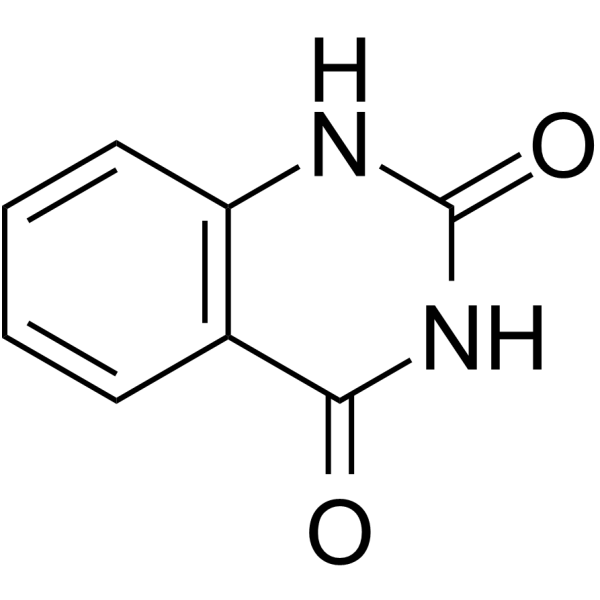
    Benzoyleneurea
    1 Publications Verification

    quinazolinedione

    Bacterial Infection
    Benzoyleneurea possesses anti-bacterial activity. Benzoyleneurea scaffold can be used in the synthesis of novel protein geranylgeranyltransferase-I (PGGTase-I) inhibitors .
    Benzoyleneurea
  • HY-P2632

    RADA16

    Biochemical Assay Reagents Neurological Disease
    RAD16-I (RADA16) is a non-directed self-assembling peptide hydrogel. Under physiological conditions, RAD16-I spontaneously forms a three-dimensional nanofiber network that mimics the extracellular matrix, and possesses excellent properties such as high water content, biocompatibility and degradability. RAD16-I serves as an ideal scaffold for three-dimensional cell culture. RAD16-I not only maintains cell viability and induces self-organization, but also supports cell adhesion, proliferation, differentiation and insulin secretion, effectively stabilizes islet clusters and promotes directed differentiation of the cardiac lineage. RAD16-I can construct a cell-friendly nano-microenvironment for research related to diseases such as myocardial infarction and diabetes .
    RAD16-I
  • HY-50542

    Drug Intermediate Others
    7-Azaindole is a kinase privileged fragment. 7-Azaindole can be used for synthesis 7-azaindole-based kinase inhibitors .
    7-Azaindole
  • HY-D1262

    Thiol-green 2

    Fluorescent Dye Others
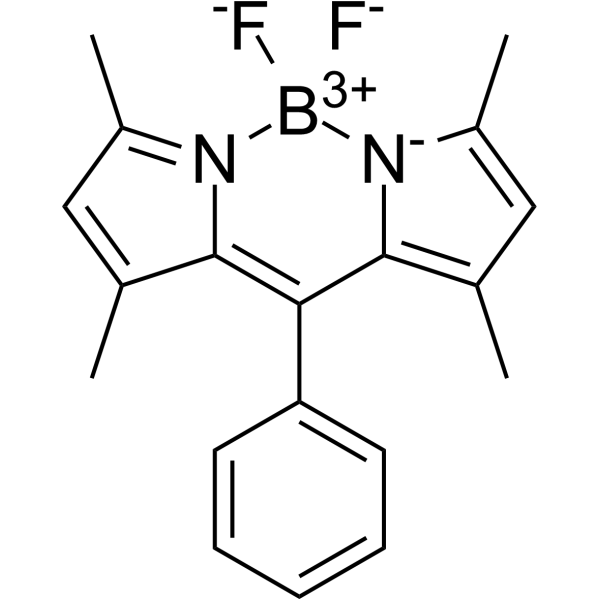
    BODIPY-TS (Thiol-green 2) is a fast response and thiol-specific turn-on probe. BODIPY-TS utilizes the thiosulfonate scaffold as a thiol recognition unit. BODIPY-TS has low toxicity, and features high selectivity, low detection limit, and quantitative reaction to thiols . Ex: 490 nM; Em: 515 nM.
    BODIPY-TS
  • HY-121462

    Quinoline Blue

    Fluorescent Dye Cancer
    Cyanine is an excellent fluorescent core scaffold for constructing fluorescent probes. Covalent conjugation of Cyanine with other potent compounds can not only enhance their efficacy but also expand their application modes. Cyanine supports the development of cancer theranostic agents. Cyanine can be used in cancer research .
    Cyanine
  • HY-141515

    Opioid Receptor Neurological Disease
    BMS-986121 is a positive allosteric modulator (PAM) of the μ opioid receptor extracted from patent WO2014107344. BMS-986121 is built on a chemical scaffold representing a new chemotype for μ receptor PAMs .
    BMS-986121
  • HY-W094994

    alpha-Carboline

    Drug Intermediate Others
    α-carboline (alpha-Carboline) is a promising scaffold compound for medicinal chemistry. α-carboline natural products and their derivatives possess diverse bioactivities .
    α-Carboline
  • HY-175397

    DFHBI-thalidomide

    PROTACs NF-κB Early 2 Factor (E2F) Bcl-2 Family VEGFR Cancer
    Dth (DFHBI-thalidomide) is an RNA aptamer-based PROTAC degrader. Dth can degrade a variety of endogenous proteins (such as mCherry, p50, p65 and E2F1) by replacing the 3′ module on the RNA scaffold with the RNA aptamer corresponding to the target protein. Dth upregulates IκB-α and Bax, and downregulates Bcl-2 and VEGF. Dth generates green fluorescence upon binding to the Broccoli RNA aptamer, enabling the tracing of RNA scaffolds. Dth can be used in cancer-related research .
    Dth
  • HY-20362

    Biochemical Assay Reagents Drug Intermediate Neurological Disease Cancer
    4-Azaindole is a scaffold. 4-Azaindole can be used in the synthesis of Nav1.2 inhibitors. 4-Azaindole can be used in epilepsy and breast cancer research .
    4-Azaindole
  • HY-148255

    Apoptosis Autophagy Cancer
    QN523 is a novel scaffold with agent-like properties, showing potent in vitro cytotoxicity in a panel of 12 cancer cell lines. QN523 induces apoptosis and autophagy. QN523 can be used in research of cancer .
    QN523
  • HY-B0055
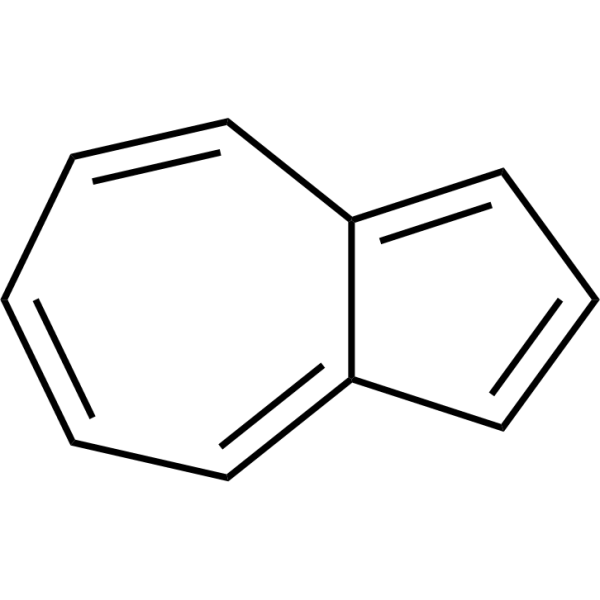
    Azulene
    1 Publications Verification

    Cyclopentacycloheptene

    HIV Infection
    Azulene (Cyclopentacycloheptene) is as an isomer of naphthalene with high anti-HIV activity. Azulene, isolated from the distillation of chamomile oil, is a scaffold in medicinal chemistry .
    Azulene
  • HY-Y0850U

    Polyvinyl alcohol (Mw 31000, 87-89% hydrolyzed, ~630 polymerization); Poly(Ethenol) (Mw 31000, 87-89% hydrolyzed, ~630 polymerization)

    Biochemical Assay Reagents Others
    PVA (Mw 31000, 87-89% hydrolyzed, ~630 polymerization) (Polyvinyl alcohol (Mw 31000, 87-89% hydrolyzed, ~630 polymerization); Poly(Ethenol) (Mw 31000, 87-89% hydrolyzed, ~630 polymerization)) is a biocompatible, biodegradable, nontoxic and hydrophilic synthetic polymer. PVA (Mw 31000, 87-89% hydrolyzed, ~630 polymerization) can be used to produce bone tissue engineering scaffold [1]
    PVA (Mw 31000, 87-89% hydrolyzed, ~630 polymerization)
  • HY-163529

    HSV Cytochrome P450 Infection
    HN0037 is a selective, orally active Helicase-primase inhibitor. HN0037 is mainly metabolized by CYP3A4. HN0037 inhibits HSV replication by targeting the viral helicase-primase complex, which consists of three proteins encoded by UL5 (helicase), UL52 (primase), and UL8 (scaffold protein that promotes primer synthesis) .
    HN0037
  • HY-W020940

    Biochemical Assay Reagents Others
    Allylpalladium(II) chloride dimer is an organometallic Pd complexe that can be used as a protein scaffold .
    Allylpalladium(II) chloride dimer
  • HY-131948

    Potassium Channel Cardiovascular Disease
    3-Chlorodiphenylamine is a high affinity Ca 2+ sensitizer of cardiac muscle. 3-Chlorodiphenylamine is based on diphenylamine and binds to the isolated N-domain of cardiac troponin C (cTnC) (Kd=6 µM). 3-Chlorodiphenylamine is an excellent starting scaffold for the development of more potent Ca 2+-sensitizing compounds due to its small size, and can be used for systolic heart failure research .
    3-Chlorodiphenylamine
  • HY-W777979

    Cytochrome P450 Bacterial Infection
    Frutinone A is a CYP1A2 inhibitor, possesses a chromonocoumarin structural scaffold. Frutinone A shows various biological activities, including antibacterial and antioxidant .
    Frutinone A
  • HY-156675

    Microtubule/Tubulin Cancer
    Plecstatin-1 is a potent organoruthenium anti-cancer agent . Plecstatin-1 selectively targets plectin (a scaffold protein and cytolinker) in tumour spheroids .
    Plecstatin-1
  • HY-172377C

    Biochemical Assay Reagents Others
    Poly(L-lactide) (MW 40000) is a polymer that can be used for orthopedic devices, dental applications, scaffolds for autologous transplanted new skin, wound coverings, vascular systems and stents .
    Poly(L-lactide) (MW 40000)
  • HY-109633

    mTOR PI3K Cancer
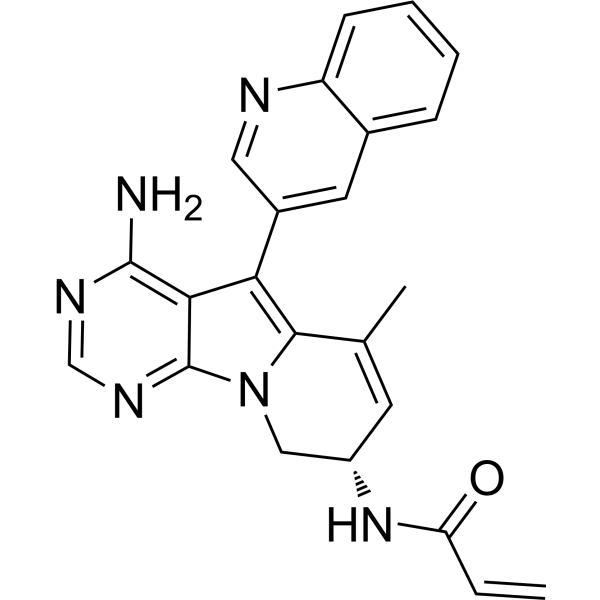
    PI3K/mTOR-IN-23 is a dual inhibitor of PI3K and mTOR with IC50 values of 49 and 41 nM. PI3K/mTOR-IN-23 inhibits cancer cells proliferation .
    PI3K/mTOR-IN-23
  • HY-D2379

    Fluorescent Dye Endocrinology Cancer
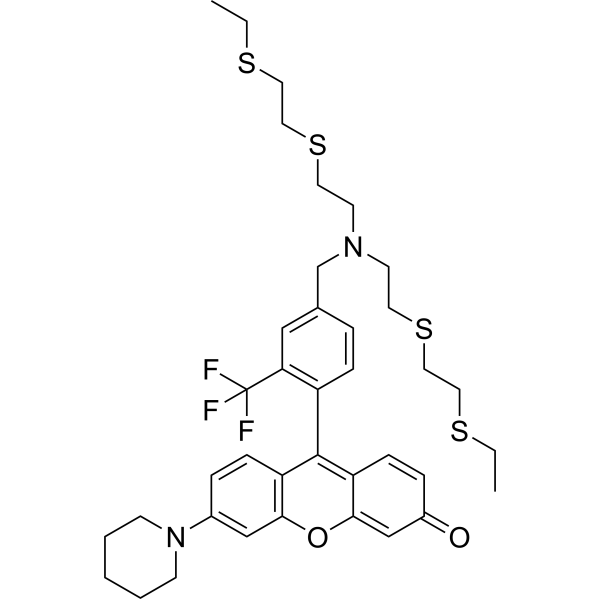
    HMRG is a type of hydroxymethyl rhodamine green fluorescent scaffold, featuring an open non-cyclic structure. HMRG can produce significant dynamic fluorescence changes through a one-step enzymatic reaction at physiological pH, which is useful for developing various probes. Fluorescent probes based on HMRG can be used for fluorescence detection of diseases such as tumors and diabetic nephropathy .
    HMRG
  • HY-124279

    Biochemical Assay Reagents Others
    14-Pentadecenoic acid is a 15-carbon long-chain fatty acid that contains an olefin functional group on the terminal carbon of its fatty tail. 14-Pentadecenoic acid can be used as a fibrous scaffold biomaterial for tissue engineering applications, as well as a metal-forming side-chain polymer for constructing capillary columns in gas chromatography .
    14-Pentadecenoic acid
  • HY-P11309

    Biochemical Assay Reagents Neurological Disease
    QL6 peptide is a self-assembling peptide. QL6 peptide can self-assembles into β-sheets bridging the cavity at neutral pH and improves the inhibitory environment by reducing inflammation and tissue scaring. QL6 peptide can be used for synthesis nanofiber scaffolds for spinal cord injuries (SCI) research .
    QL6 peptide
  • HY-W067159

    Biochemical Assay Reagents Drug Intermediate Others
    6-Bromo-1-methyl-1H-benzo[d]imidazol-2(3H)-one is an organic compound that can be used as a catalyst and ligand in organic synthesis. 6-Bromo-1-methyl-1H-benzo[d]imidazol-2(3H)-one is a versatile small molecule scaffold .
    6-Bromo-1-methyl-1H-benzo[d]imidazol-2(3H)-one

Inquiry Online

Your information is safe with us. * Required Fields.

Salutation


Country or Region *

Applicant Name *


Organization Name *

Department *


Email Address *


Product Name *

Cat. No.


Requested quantity *

Phone Number *


Remarks

Inquiry Online

Inquiry Information

Product Name:
Cat. No.:
Quantity:
MCE Japan Authorized Agent:

