


1. Search Result
Search Result
Results for "

scar

" in MedChemExpress (MCE) Product Catalog:

28

Inhibitors & Agonists

1

Screening Libraries

2

Peptides

1

Inhibitory Antibodies

1

Natural
Products

10

Antibodies

5

Oligonucleotides

Cat. No. Product Name Target Research Areas Chemical Structure
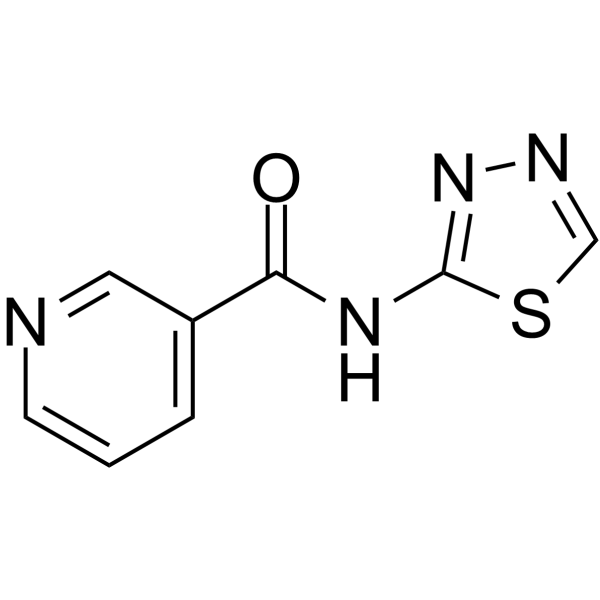
  • HY-W008574
    TGN-020
    Maximum Cited Publications
    21 Publications Verification

    PROTAC Linkers Inflammation/Immunology Cancer
    TGN-020 is a selective Aquaporin 4 (AQP4) inhibitor with an IC50 of 3.1 μM . TGN-020 is an alkyl chain-based PROTAC linker that can be used in the synthesis of PROTACs .TGN-020 alleviates edema and inhibits glial scar formation after spinal cord compression injury in rats .
    TGN-020
  • HY-B0135
    Furosemide
    5+ Cited Publications

    NKCC GABA Receptor Cardiovascular Disease Metabolic Disease Cancer
    Furosemide is a potent and orally active inhibitor of Na +/K +/2Cl - (NKCC) cotransporter, NKCC1 and NKCC2 . Furosemide is also a GABAA receptors antagonist and displays 100-fold selectivity for α6-containing receptors than α1-containing receptors. Furosemide acts as a loop diuretic and used for the study of congestive heart failure, hypertension and edema .
    Furosemide
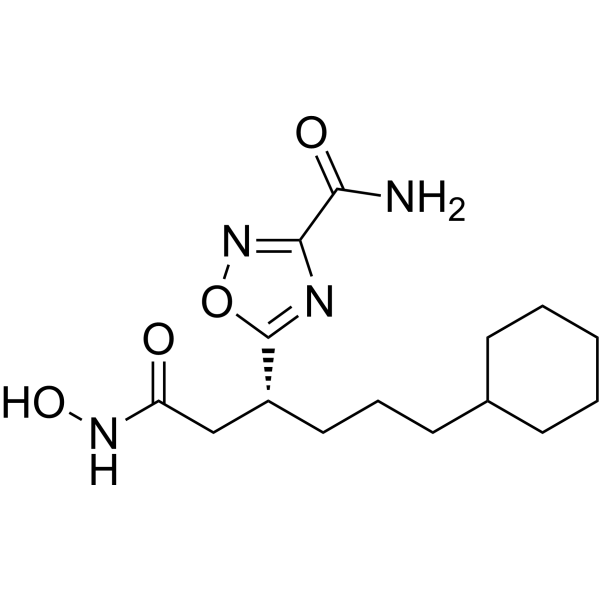
  • HY-13102

    Procollagen C Proteinase Others
    UK-383367 is an orally available pro-collagen C-protease inhibitor (BMP-1) with an IC50 value of 44 nM. UK-383367 can reduce renal fibrosis and inflammation in chronic kidney disease (CKD) and may be used to study postoperative skin scarring .
    UK-383367
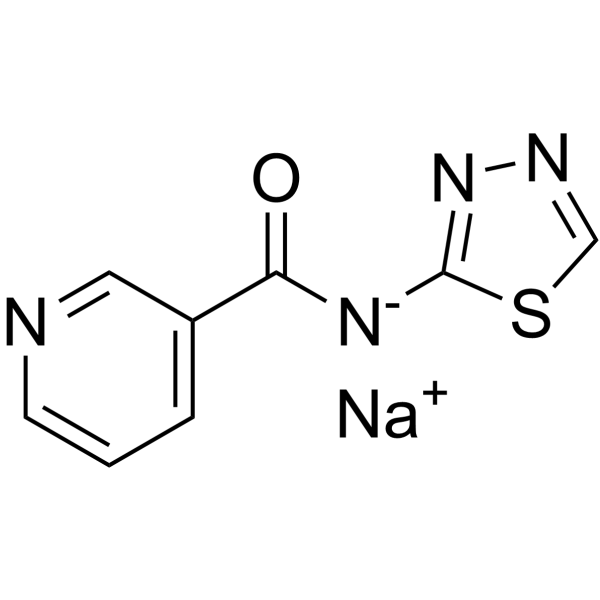
  • HY-W008574A
    TGN-020 sodium
    Maximum Cited Publications
    21 Publications Verification

    PROTAC Linkers Inflammation/Immunology Cancer
    TGN-020 sodium is a selective Aquaporin 4 (AQP4) inhibitor with an IC50 of 3.1 μM . TGN-020 sodium is an alkyl chain-based PROTAC linker that can be used in the synthesis of PROTACs . TGN-020 sodium alleviates edema and inhibits glial scar formation after spinal cord compression injury in rats .
    TGN-020 sodium
  • HY-B0135A
    Furosemide sodium
    5+ Cited Publications

    NKCC GABA Receptor Cardiovascular Disease Metabolic Disease Cancer
    Furosemide sodium is a potent and orally active inhibitor of Na +/K +/2Cl - (NKCC) cotransporter, NKCC1 and NKCC2 . Furosemide sodium is also a GABAA receptors antagonist and displays 100-fold selectivity for α6-containing receptors than α1-containing receptors. Furosemide sodium acts as a loop diuretic and used for the study of congestive heart failure, hypertension and edema .
    Furosemide sodium
  • HY-P5225

    PGC-1α Others
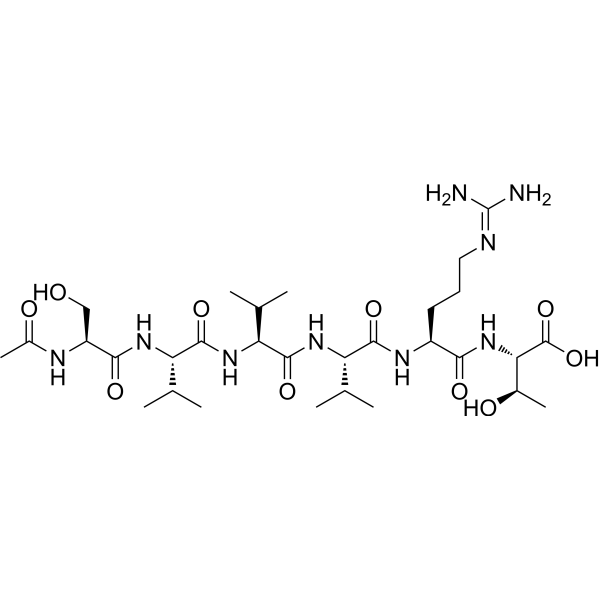
    Acetyl hexapeptide-38 is a tissue repair promoter that targets fibroblasts in the dermis of the skin. It works by promoting collagen synthesis in the dermis and thickening of subcutaneous fat. Acetyl hexapeptide-38 can activate the skin repair mechanism, increase the collagen content in the dermis, improve the skin tissue structure, and has the activity of promoting local tissue repair. Acetyl hexapeptide-38 can be used in the field of cosmetic medicine to repair congenital soft tissue defects, reduce tear grooves and nasolabial folds, eliminate postoperative scars, and conduct micro-plastic surgery of skin tissue .
    Acetyl hexapeptide-38
  • HY-151499A

    Monoamine Oxidase Inflammation/Immunology
    PXS-6302 hydrochloride is an irreversible lysyl oxidase inhibitor with IC50s of 3.7 μM (Bovine LOX), 3.4 μM (rh LOXL1), 0.4 μM (rh LOXL2), 1.5 μM (rh LOXL3), 0.3 μM (rh LOXL4), respectively. PXS-6302 hydrochloride has readily skin penetrability, reduces collagen deposition and significantly improves scar appearance .
    PXS-6302 hydrochloride
  • HY-175746

    CX3CR1 Cardiovascular Disease
    AZD0233 is an orally active CX3CR1 antagonist. AZD0233 modulates the CX3CR1/CX3CL1 signaling axis via immunomodulatory effects. AZD0233 has improved physicochemical properties, metabolic stability, low toxicity and CYP inhibition. AZD0233 improves cardiac function and reduces macrophages and fibrotic scar in mice model of dilated cardiomyopathy. AZD0233 can be used for cardiovascular diseases like dilated cardiomyopathy research .
    AZD0233
  • HY-151499

    Monoamine Oxidase Others
    PXS-6302 is an irreversible lysyl oxidase inhibitor with IC50s of 3.7 μM (Bovine LOX), 3.4 μM (rh LOXL1), 0.4 μM (rh LOXL2), 1.5 μM (rh LOXL3), 0.3 μM (rh LOXL4), respectively. PXS-6302 has readily skin penetrability, reduces collagen deposition and significantly improves scar appearance .
    PXS-6302
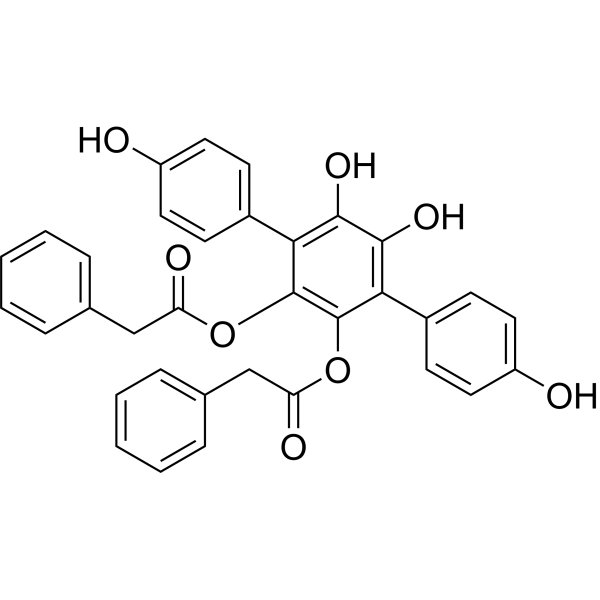
  • HY-103435
    Vialinin A
    2 Publications Verification

    Terrestrin A

    Deubiquitinase TNF Receptor E1/E2/E3 Enzyme Keap1-Nrf2 Inflammation/Immunology Cancer
    Vialinin A (Terrestrin A) is a p-terphenyl compound that can be derived from a Chinese edible mushroom. Vialinin A is an inhibitor of ubiquitin-specific peptidase 4 (USP4) and has anti-inflammatory and antioxidant properties. Vialinin A can alleviate cerebral ischaemia-reperfusion injury-induced neurological deficits and neuronal apoptosis. Vialinin A promotes activation of Keap1-Nrf2-ARE signaling pathway and increases the protein degradation of Keap1. Vialinin A possesses various pharmacological activities in cancer, Kawasaki disease, asthma, and pathological scarring. Vialinin A is a potent inhibitor of TNF-α, USP4, USP5, and sentrin/SUMO-specific protease 1 (SENP1). Vialinin A can be studied in reseach for autoimmune diseases, cancer and ischaemic stroke .
    Vialinin A
  • HY-P10886

    Gap Junction Protein Claudin Inflammation/Immunology
    Zifogaptide is a gap junction protein channel regulator. Zifogaptide mimics the PDZ-binding motif at the C-terminal of Claudin C and competitively interferes with the interaction between Claudin–TJP1 (ZO-1) scaffold. Zifogaptide can promote epithelial cell migration, reduce scar formation, and accelerate wound healing. Zifogaptide can be used for radiation dermatitis, skin injuries, etc .
    Zifogaptide
  • HY-151498A

    Monoamine Oxidase Others
    PXS-4787 hydrochloride is a specific and effective pan-LOX (lysyl oxidase) inhibitor for abolishing lysyl oxidase activity. PXS-4787 hydrochloride inhibits LOX with IC50s of 2 μM (Bovine LOX), 3.2 μM (rh LOXL1), 0.6 μM (rh LOXL2), 1.4 μM (rh LOXL3), 0.2 μM (rh LOXL4), respectively. PXS-4787 hydrochloride reduces deposition and crosslinking of collagen I secreted by human fibroblasts .
    PXS-4787 hydrochloride
  • HY-132602A

    MRG-201 sodium

    MicroRNA Inflammation/Immunology
    Remlarsen (MRG-201), a miR-29b mimic, acts a miR-29b agonist. Remlarsen sodium has the potential for preventiong formation of a fibrotic scar or cutaneous fibrosis .
    Remlarsen sodium
  • HY-132602

    MRG-201

    MicroRNA Inflammation/Immunology
    Remlarsen (MRG-201), a miR-29b mimic, acts a miR-29b agonist. Remlarsen has the potential for preventiong formation of a fibrotic scar or cutaneous fibrosis .
    Remlarsen
  • HY-P99695

    CAT-152

    TGF-beta/Smad Neurological Disease
    Lerdelimumab (CAT-152) is an IgG4 human anti-TGF-β2 recombinant monoclonal antibody. Lerdelimumab can be used as an anti-scarring agent for glaucoma research .
    Lerdelimumab
  • HY-B1234R

    Octyl methoxycinnamate (Standard)

    Reference Standards Androgen Receptor Estrogen Receptor/ERR Others
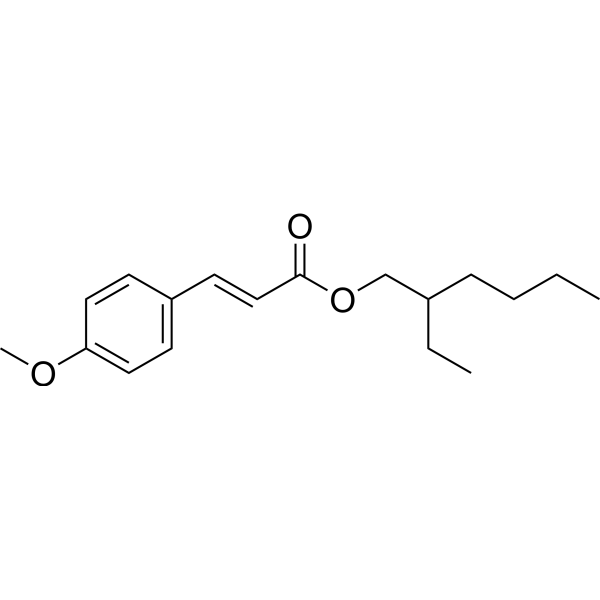
    Octinoxate (Standard) is the analytical standard of Octinoxate. This product is intended for research and analytical applications. Octinoxate (Octyl methoxycinnamate) is an organic compound that is an ingredient in some sunscreens and lip balms, primarily used is in sunscreens and other cosmetics to absorb UV-B rays from the sun, protecting the skin from damage and can be used to reduce the appearance of scars. Octinoxate also has a complex androgenic and estrogenic effect .
    Octinoxate (Standard)
  • HY-151498

    Monoamine Oxidase Others
    PXS-4787 is a specific and effective pan-LOX (lysyl oxidase) inhibitor for abolishing lysyl oxidase activity. PXS-4787 inhibits LOX with IC50s of 2 μM (Bovine LOX), 3.2 μM (rh LOXL1), 0.6 μM (rh LOXL2), 1.4 μM (rh LOXL3), 0.2 μM (rh LOXL4), respectively .
    PXS-4787
  • HY-B1234A

    (E)-Octyl methoxycinnamate

    Estrogen Receptor/ERR Androgen Receptor Endocrinology
    (E)-Octinoxate is the isomer of Octinoxate (HY-B1234). Octinoxate is an organic compound that is an ingredient in some sunscreens and lip balms, primarily used is in sunscreens and other cosmetics to absorb UV-B rays from the sun, protecting the skin from damage and can be used to reduce the appearance of scars. Octinoxate also has a complex androgenic and estrogenic effect .
    (E)-Octinoxate
  • HY-19864

    AGN 210937

    Prostaglandin Receptor Inflammation/Immunology
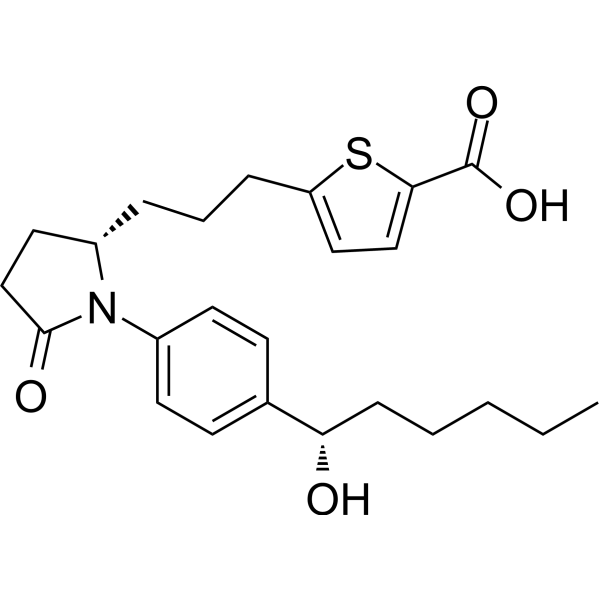
    Aganepag is a potent Prostanoid EP2 receptor agonist, with an EC50 of 0.19 nM, and shows no activity at EP4 receptor. Aganepag can be used in the research of wound healing, scar reduction, scar prevention and wrinkle treatment and prevention.
    Aganepag
  • HY-110367A

    Src Others
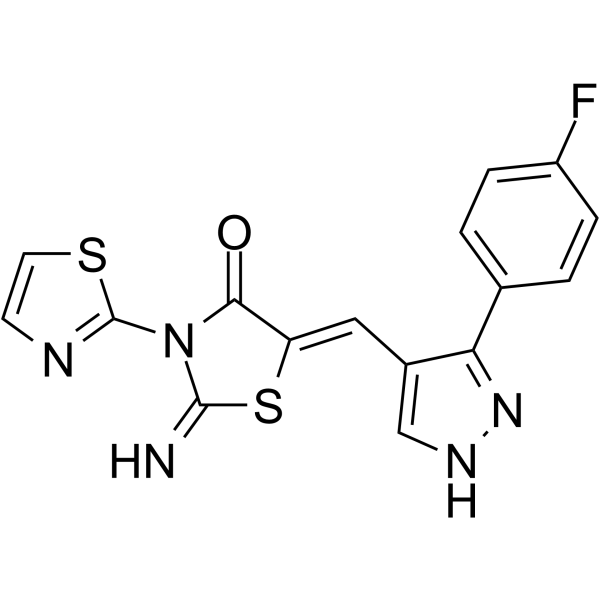
    LCB 03-0110, a thienopyridine derivative, is a potent pan-discoidin domain receptor/c-Src family tyrosine kinase inhibitor. LCB 03-0110 suppresses scar formation by inhibiting fibroblast and macrophage activation .
    LCB 03-0110
  • HY-107386

    Anaplastic lymphoma kinase (ALK) Others
    PF-03671148 is an ALK5 inhibitor. PF-03671148 can reduce TGFβ induced fibrotic gene expression in fibroblasts. PF-03671148 has potential utility for the prevention of dermal scarring .
    PF-03671148
  • HY-167643

    Drug Metabolite Metabolic Disease Inflammation/Immunology
    Hydroxy tipelukast (Compound MN-002), the metabolite of Compound MN-001, is an orally active phenoxyalkylcarboxylic acid. Hydroxy tipelukast inhibits liver steatosis, lobular inflammation, hepatic ballooning, and hepatic scarring, and reduces liver hydroxyproline levels. Hydroxy tipelukast is promising for research of non-alcoholic fatty liver disease (NAFLD) and non-alcoholic steatohepatitis (NASH) .
    Hydroxy tipelukast
  • HY-RS22917

    Small Interfering RNA (siRNA) Others

    Wasf1 Mouse Pre-designed siRNA Set A contains three designed siRNAs for Wasf1 gene (Mouse), as well as a negative control, a positive control, and a FAM-labeled negative control.

    Wasf1 Mouse Pre-designed siRNA Set A
    Wasf1 Mouse Pre-designed siRNA Set A
  • HY-RS12244

    Small Interfering RNA (siRNA) Others

    RPS4X Human Pre-designed siRNA Set A contains three designed siRNAs for RPS4X gene (Human), as well as a negative control, a positive control, and a FAM-labeled negative control.

    RPS4X Human Pre-designed siRNA Set A
    RPS4X Human Pre-designed siRNA Set A
  • HY-B0135AR

    NKCC GABA Receptor Reference Standards Cardiovascular Disease Metabolic Disease Cancer
    Furosemide (sodium) (Standard) is the analytical standard of Furosemide (sodium). This product is intended for research and analytical applications. Furosemide sodium is a potent and orally active inhibitor of Na+/K+/2Cl- (NKCC) cotransporter, NKCC1 and NKCC2 . Furosemide sodium is also a GABAA receptors antagonist and displays 100-fold selectivity for α6-containing receptors than α1-containing receptors. Furosemide sodium acts as a loop diuretic and used for the study of congestive heart failure, hypertension and edema .
    Furosemide sodium (Standard)
  • HY-175076

    Endogenous Metabolite Metabolic Disease Inflammation/Immunology
    Globotriaosylceramide (non-hydroxy) (porcine RBC) is a glycosphingolipid found in the cell membranes of mammals. Globotriaosylceramide (non-hydroxy) (porcine RBC) is the core pathogenic molecule of Fabry disease, and its level can be downregulated by supplementing α-galactosidase A. Globotriaosylceramide (non-hydroxy) (porcine RBC) amplifies B-cell receptor signals by regulating the localization of co-receptor CD19, and can be used as a vaccine adjuvant, capable of guiding the generation of broad-spectrum and cross-protective antibody responses. Globotriaosylceramide (non-hydroxy) (porcine RBC) promotes wound healing and reduces scar formation by regulating fibroblast heterogeneity .
    Globotriaosylceramide (non-hydroxy) (porcine RBC)
  • HY-181431

    TGF-beta/Smad Inflammation/Immunology
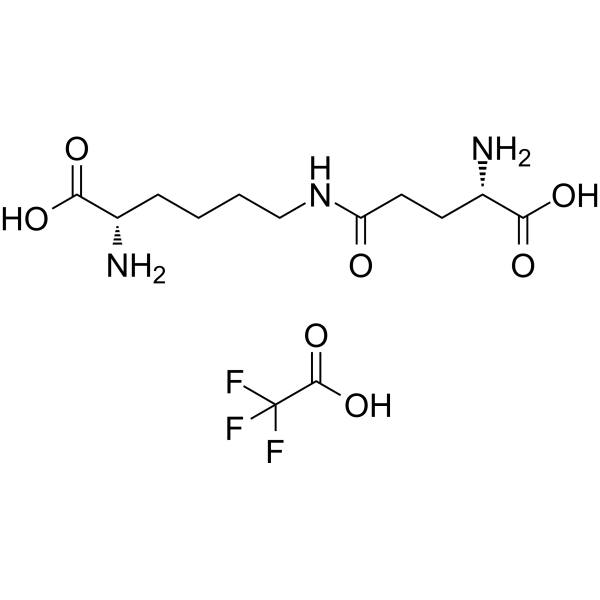
    PXS 64, a mannose-6-phosphate (M6P) analogue. a lipophilic prodrug of PXS 25 (HY-181430). PXS 64 is an effective anti-fibrotic agent by inhibiting the activation of latent TGF-β1. PXS64, inhibits fibrosis via TGF-β1 pathway in human lung fibroblasts. PXS 64 reduces TGFβ-mediated collagen IV, fibronectin, MCP-1, and phospho-smad2 expression in kidney cells. PXS 64 reduces collagen deposition in dermal scar fibroblasts. PXS 64 can be used for the research of chronic kidney disease, idiopathic pulmonary fibrosis, scarring .
    PXS 64
  • HY-177933

    CCR Neurological Disease Inflammation/Immunology
    mNOX-E36 is a murine-specific analogue of NOX-E36 (HY-148100), an anti-CCL-2 L-RNA aptamer that binds and neutralises the mouse chemokine CCL-2. mNOX-E36 reduces scarring in an experimental murine model of glaucoma filtration surgery (GFS). mNOX-E36 ameliorates lupus nephritis in mice. mNOX-E36 can be used for GFS and lupus nephritis research .
    mNOX-E36

Inquiry Online

Your information is safe with us. * Required Fields.

Salutation


Country or Region *

Applicant Name *


Organization Name *

Department *


Email Address *


Product Name *

Cat. No.


Requested quantity *

Phone Number *


Remarks

Inquiry Online

Inquiry Information

Product Name:
Cat. No.:
Quantity:
MCE Japan Authorized Agent:

