
1. Search Result
Search Result
Results for "

skin lesions

" in MedChemExpress (MCE) Product Catalog:

18

Inhibitors & Agonists

2

Biochemical Assay Reagents

1

Inhibitory Antibodies

2

Natural
Products

1

Click Chemistry

Cat. No. Product Name Target Research Areas Chemical Structure
  • HY-E70005I
    Collagenase, Type VI
    1 Publications Verification

    Type VI collagenase

    MMP Cancer
    Collagenase, Type VI (EC 3.4.24.3) is a collagenase that can degrade type VI collagen. Type VI collagen is a component of cell membranes in various tissues (such as skin, heart, blood vessels, cartilage, and synovial fluid). Excessive collagenase can cause extracellular matrix lesions. Collagenase is also a biomarker for tumor invasion and metastasis. Collagenase, Type VI can specifically act on the peptide bond between proline and glycine. This feature can be used to quickly and sensitively detect its concentration level in experiments using corresponding modified electrodes .
    Collagenase, Type VI
  • HY-P99301

    Anti-Canine IL31 Recombinant Antibody; CAN34D3-65; PF-06443537

    Interleukin Related Inflammation/Immunology
    Lokivetmab (Anti-Canine IL31 Recombinant Antibody) is an anti-canine IL-31 monoclonal antibody. Lokivetmab inhibits IL-31-mediated activation of pruritogenic signals in peripheral sensory neurons and reduces TH2-weighted inflammation. Lokivetmab demonstrates long-term efficacy in controlling pruritus and improving skin lesions in dogs with canine atopic dermatitis (CAD). Lokivetmab can be used for the research of atopic dermatitis (AD) in dogs .
    Lokivetmab
  • HY-W127575

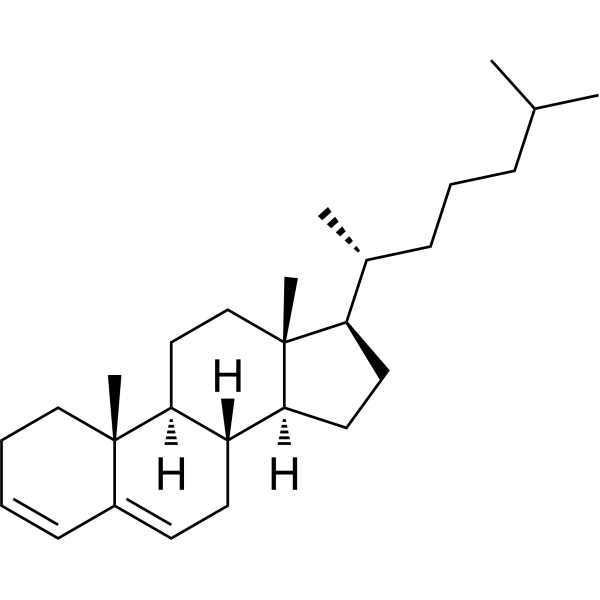
    delta-3,5-Cholestadiene

    PI3K Akt Inflammation/Immunology
    Cholesta-3,5-diene is an inflammatory modulator that targets immune cells such as neutrophils and accelerates wound healing by promoting neutrophil chemotaxis and fibroblast migration. Cholesta-3,5-diene enhances immune cell recruitment and extracellular matrix deposition by activating chemokine receptor-mediated signaling pathways such as PI3K/Akt. Cholesta-3,5-diene can be applied topically to wound repair and has potential therapeutic value in chronic ulcers or skin lesions .
    Cholesta-3,5-diene
  • HY-163731
    EGR-1-IN-1
    2 Publications Verification

    DNA Methyltransferase Interleukin Related Inflammation/Immunology
    EGR-1-IN-1 is a EGR-1 inhibitor with an IC50 of 1.86 μM. EGR-1-IN-1 binds to the zinc finger DNA-binding domain of EGR-1 and promotes the dissociation of the EGR-1-DNA complex. EGR-1-IN-1 reduces the mRNA expression levels of EGR-1-regulated inflammatory genes induced by TNFα. EGR-1-IN-1 alleviates atopic dermatitis-like lesions in the ear skin of mice. EGR-1-IN-1 serves as a lead compound for the development of targeted compounds for inflammatory skin diseases. EGR-1-IN-1 can be used in studies related to atopic dermatitis .
    EGR-1-IN-1
  • HY-132819

    LY-3411067

    JAK Others
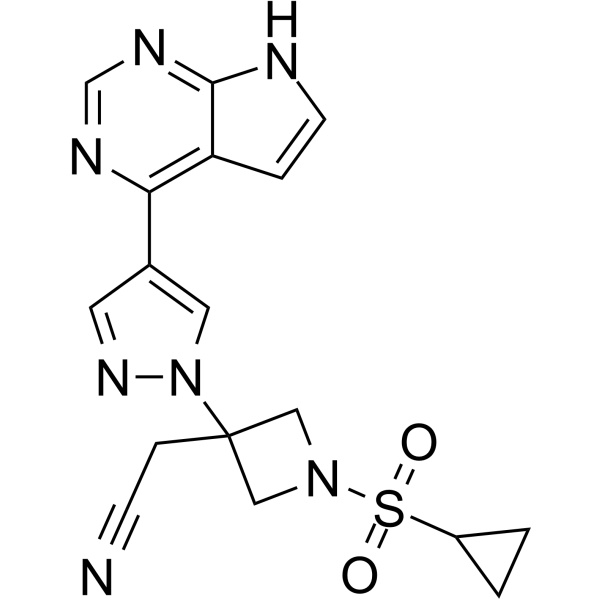
    Ilunocitinib (compound 27) is a JAK inhibitor (extracted from patent WO2009114512A1) .
    Ilunocitinib
  • HY-Y0850U3

    Polyvinyl alcohol (Mw 125000, 98-99% hydrolyzed, ~2800 polymerization); Poly(Ethenol) (Mw 125000, 98-99% hydrolyzed, ~2800 polymerization)

    Biochemical Assay Reagents Others
    PVA (Polyvinyl alcohol) (Mw 125000, 98-99% hydrolyzed, ~2800 polymerization) is a water-soluble, biodegradable, biocompatible and non-immunogenic polymer. PVA (Mw 125000, 98-99% hydrolyzed, ~2800 polymerization) causes no irritation to rabbit eyes, no skin sensitization in guinea pigs, promotes the proliferation of human skin keratinocytes, and reduces the loss of corneal endothelial cells. The LD50 of PVA (Mw 125000, 98-99% hydrolyzed, ~2800 polymerization) in rats and dogs is greater than 10 g/kg. PVA (Mw 125000, 98-99% hydrolyzed, ~2800 polymerization) is hardly absorbed by the digestive system, causes no adverse effects upon long-term oral administration, and shows no mutagenicity or carcinogenicity. However, repeated intravenous or portal vein injection of PVA (Mw 125000, 98-99% hydrolyzed, ~2800 polymerization) may induce pathological changes such as glomerular lesions, anemia, hypertension or liver fibrosis in rats or dogs. Crosslinked nanofibers prepared by modifying PVA (Mw 125000, 98-99% hydrolyzed, ~2800 polymerization) can be used in studies related to wound dressings and other applications .
    PVA (Mw 125000, 98-99% hydrolyzed, ~2800 polymerization)
  • HY-N1677

    Akt mTOR Bacterial Fungal AMPK Infection Metabolic Disease Inflammation/Immunology Cancer
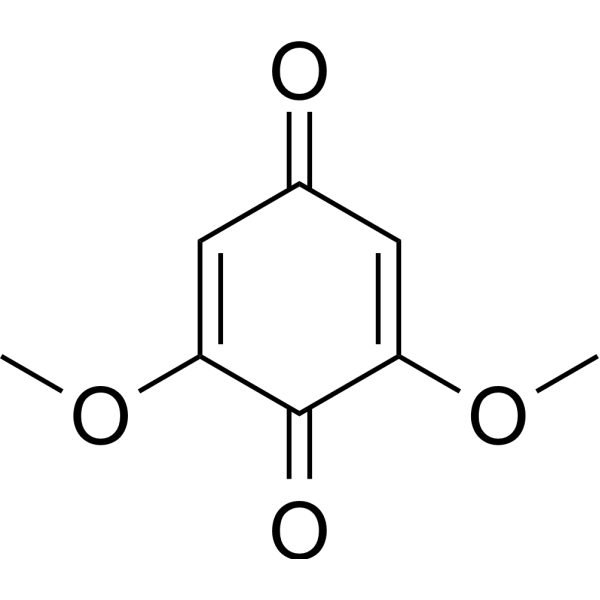
    2,6-Dimethoxy-1,4-benzoquinone is a 1,4-benzoquinone derivative. 2,6-Dimethoxy-1,4-benzoquinone promotes phosphorylation of AKT, S6K, mTOR, 4E-BP1, and AMPK, and attenuates mTORC1 activity as part of the AKT/mTOR pathway. 2,6-Dimethoxy-1,4-benzoquinone stimulates myoblast differentiation, increases myotube size, elevates MHC protein expression, enhances mitochondrial biogenesis, respiration, and DNA content, and increases skeletal muscle weights, fiber size, grip strength, and treadmill performance. 2,6-Dimethoxy-1,4-benzoquinone exerts anti-cancer, anti-inflammatory, anti-adipogenic, antibacterial, and antimutagenic effects, inhibits adipogenic transcription factors, nitric oxide production, skin tumor development, Magnaporthe oryzae growth, spore germination, appressorium formation, and growth of select bacterial species, induces H2O2 generation and rice defense gene expression, and reduces rice blast lesion formation. 2,6-Dimethoxy-1,4-benzoquinone can be used for the research of obesity, skin tumorigenesis, rice blast disease, and food-borne illness .
    2,6-Dimethoxy-1,4-benzoquinone
  • HY-W129596

    Virus Protease Dengue Virus Infection Inflammation/Immunology
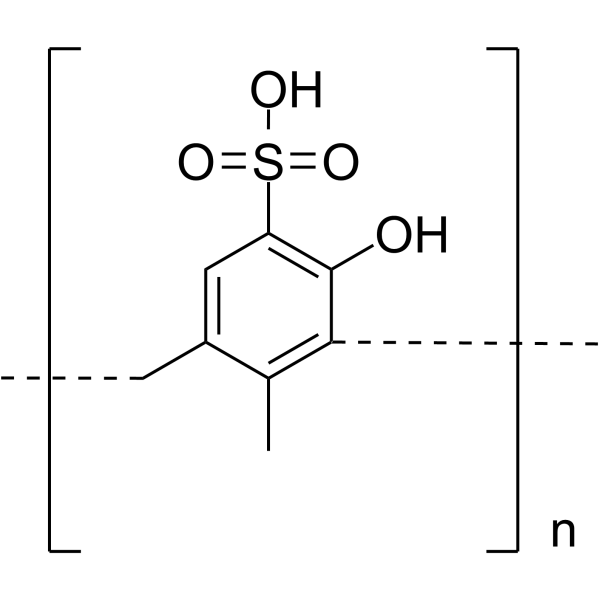
    Policresulen is a competitive inhibitor for DENV2 NS2B/NS3 protease with an IC50 of 0.48 μg/mL. Policresulen can be used as a local hemostatic and antibacterial agent for research of cervical and vaginal inflammation, skin lesions, oral mucosa and gingival inflammation .
    Policresulen
  • HY-Y0588

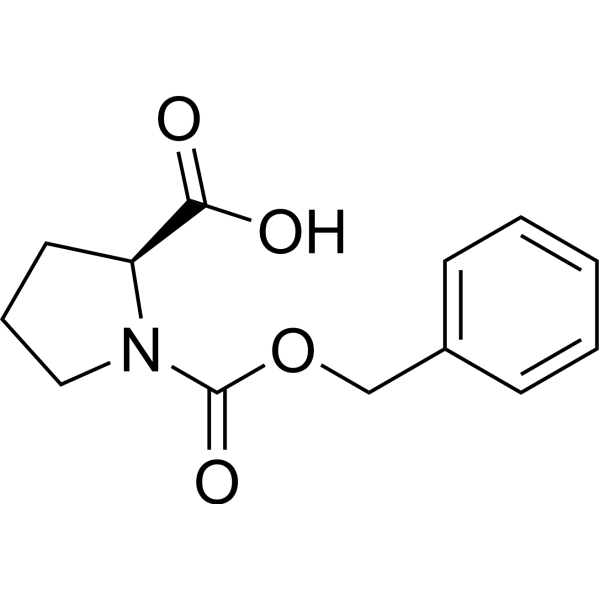
    L-Cbz-Proline

    MMP Others
    Carbobenzoxyproline (L-Cbz-Proline) is an inhibitor of prolidase. Carbobenzoxyproline can be used for prolidase deficiency (PD) research .
    Carbobenzoxyproline
  • HY-155505

    Aryl Hydrocarbon Receptor Inflammation/Immunology
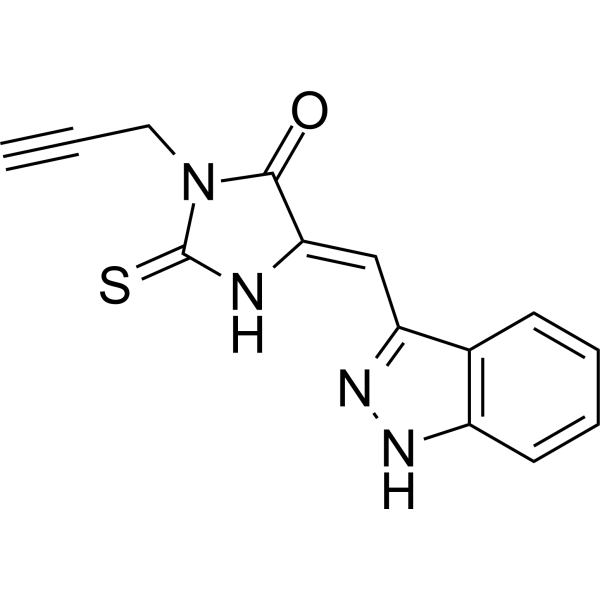
    AHR agonist 4 (compound 24e) is an agonist of Aryl hydrocarbon receptor (AHR), assocaited with the immune balance of Th17/22 and Treg cells. AHR agonist 4 serves as a lead compound for anti-psoriasis drug, alleviates imiquimod (IMQ)-induced psoriasis-like skin lesion . AHR agonist 4 is a click chemistry reagent, it contains an Alkyne group and can undergo copper-catalyzed azide-alkyne cycloaddition (CuAAc) with molecules containing Azide groups.
    AHR agonist 4
  • HY-175149

    Tyrosine Hydroxylase Metabolic Disease
    2-Fluorodeoxyarbutin, a derivative of Deoxyarbutin (HY-B1461), is a tyrosine hydroxylase and dopa oxidase inhibitor. 2-Fluorodeoxyarbutin inhibits melanin synthesis in intact melanocytes. 2-Fluorodeoxyarbutin can be used for the strudy of skin lightening or for ameliorating hyperpigmented lesions .
    2-Fluorodeoxyarbutin
  • HY-169290

    JAK HDAC Inflammation/Immunology
    JAK/HDAC-IN-4 (compound 11 i) is a JAK/HDAC inhibitor with the IC50 values of 0.49 nM and 12 nM for JAK2 and HDAC6, respectively. JAK/HDAC-IN-4 inhibits the cell proliferation and the production of nitric oxide. JAK/HDAC-IN-4 ameliorates psoriasis-like skin lesions in an Imiquimod (HY-B0180)-induced murine model with low toxicity .
    JAK/HDAC-IN-4
  • HY-N1677R

    Reference Standards Akt mTOR Bacterial Fungal AMPK Infection Metabolic Disease Inflammation/Immunology Cancer
    2,6-Dimethoxy-1,4-benzoquinone (Standard) is the analytical standard of 2,6-Dimethoxy-1,4-benzoquinone (HY-N1677). This product is intended for research and analytical applications. 2,6-Dimethoxy-1,4-benzoquinone is a 1,4-benzoquinone derivative. 2,6-Dimethoxy-1,4-benzoquinone promotes phosphorylation of AKT, S6K, mTOR, 4E-BP1, and AMPK, and attenuates mTORC1 activity as part of the AKT/mTOR pathway. 2,6-Dimethoxy-1,4-benzoquinone stimulates myoblast differentiation, increases myotube size, elevates MHC protein expression, enhances mitochondrial biogenesis, respiration, and DNA content, and increases skeletal muscle weights, fiber size, grip strength, and treadmill performance. 2,6-Dimethoxy-1,4-benzoquinone exerts anti-cancer, anti-inflammatory, anti-adipogenic, antibacterial, and antimutagenic effects, inhibits adipogenic transcription factors, nitric oxide production, skin tumor development, Magnaporthe oryzae growth, spore germination, appressorium formation, and growth of select bacterial species, induces H2O2 generation and rice defense gene expression, and reduces rice blast lesion formation. 2,6-Dimethoxy-1,4-benzoquinone can be used for the research of obesity, skin tumorigenesis, rice blast disease, and food-borne illness.
    2,6-Dimethoxy-1,4-benzoquinone (Standard)
  • HY-106913

    Drug Derivative Endocrinology
    PU 2049 is a Melatonin (HY-B0075) derivative. PU 2049 exhibits greater efficacy than Melatonin in reducing skin scaling and erythematous papular lesions. PU 2049 can be used in the research of psoriasis .
    PU 2049
  • HY-183326

    IDMF

    Keap1-Nrf2 Inflammation/Immunology
    Isosorbide di-(methyl fumarate) (IDMF), topical DMF (HY-17363) derivative, is an NRF2/ARE pathway activator. Isosorbide di-(methyl fumarate) downregulates ANCR targets, modulates epithelial differentiation, represses proinflammatory cytokine genes, IL-17A- and TNF-induced keratinocyte genes, psoriatic skin lesion-specific genes, and immune response genes. Isosorbide di-(methyl fumarate) stimulates oxidative stress response gene transcription, reduces erythema and scaling in Imiquimod (HY-B0180)-induced psoriasiform lesions. Isosorbide di-(methyl fumarate) exhibits no genotoxicity or radiation sensitivity in skin fibroblasts, is nonirritating and nonsensitizing in rodent models. Isosorbide di-(methyl fumarate) can be used for the research of psoriasis vulgaris .
    Isosorbide di-(methyl fumarate)
  • HY-183548

    PARP Inflammation/Immunology
    XW-17 is a PARP14 inhibitor with an IC50 of 3.03 nM and selectivity over other PARP family members.XW-17 suppresses PARP14-mediated mono-ADP-ribosylation, engages and stabilizes endogenous PARP14 protein.XW-17 attenuates skin lesions and decreases expression of IL-4, IL-13, IgE, and IL-17A in an atopic dermatitis-like mouse model.XW-17 can be used for the research of atopic dermatitis .
    XW-17
  • HY-181796

    Toll-like Receptor (TLR) Interleukin Related Inflammation/Immunology
    TLR7 antagonist-1 (Compound 44#) is an orally active, selective TLR7 antagonist with an IC50 value of 0.3 nM against TLR7. TLR7 antagonist-1 selectively binds to TLR7, inhibits its activation, and downregulates the c-Rel signaling pathway. TLR7 antagonist-1 downregulates the mRNA levels of proinflammatory cytokines IL-1β, IL-6, and TNF-α. TLR7 antagonist-1 alleviates Imiquimod (HY-B0180)-induced psoriasis-like skin lesions. TLR7 antagonist-1 is applicable to research related to psoriasis .
    TLR7 antagonist-1
  • HY-186214

    Phosphodiesterase (PDE) Inflammation/Immunology
    PDE4-IN-36 is a phosphodiesterase 4 (PDE4) inhibitor with significant inhibitory activity at 10 μM. PDE4-IN-36 can be used in the research of psoriasis and atopic dermatitis .
    PDE4-IN-36

Inquiry Online

Your information is safe with us. * Required Fields.

Salutation


Country or Region *

Applicant Name *


Organization Name *

Department *


Email Address *


Product Name *

Cat. No.


Requested quantity *

Phone Number *


Remarks

Inquiry Online

Inquiry Information

Product Name:
Cat. No.:
Quantity:
MCE Japan Authorized Agent:

