
1. Search Result
Search Result
Results for "

thyroid carcinomas

" in MedChemExpress (MCE) Product Catalog:

28

Inhibitors & Agonists

1

Peptides

1

Inhibitory Antibodies

5

Natural
Products

2

Isotope-Labeled Compounds

Cat. No. Product Name Target Research Areas Chemical Structure
  • HY-13653
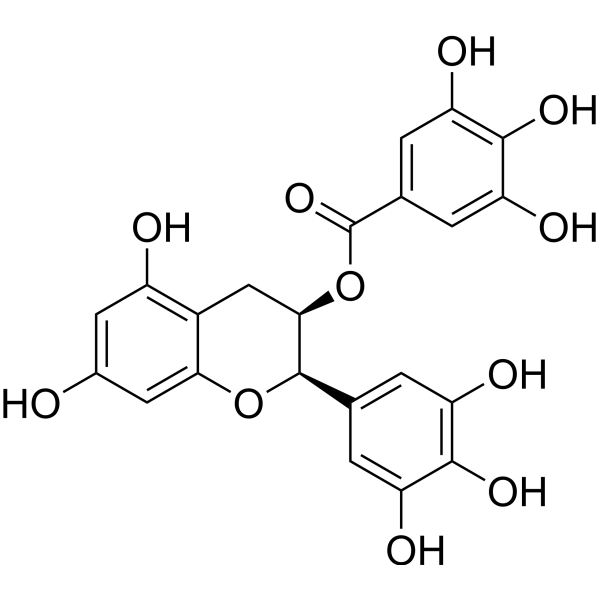
    (-)-Epigallocatechin Gallate
    Maximum Cited Publications
    57 Publications Verification

    EGCG; Epigallocatechol Gallate

    Endogenous Metabolite Apoptosis Inflammation/Immunology Cancer
    (-)-Epigallocatechin Gallate (EGCG) is a major polyphenol in green tea, which can inhibit cell proliferation and induce cell apoptosis. (-)-Epigallocatechin Gallate inhibits glutamate dehydrogenase 1/2 (GDH1/2, GLUD1/2) activity. (-)-Epigallocatechin Gallate has a potent anticancer, antioxidant and anti-inflammatory properties against various types of cancers such as colorectal cancer, myeloid leukemia, thyroid carcinoma .
    (-)-Epigallocatechin Gallate
  • HY-131686

    Akt mTOR EGFR ERK Infection Neurological Disease Metabolic Disease Inflammation/Immunology Cancer
    Ganglioside GT1b (bovine) ammonium is a member of the ganglioside family. Ganglioside GT1b (bovine) ammonium acts as a protective signal against nerve injury-induced spinal synapse elimination. Ganglioside GT1b (bovine) ammonium induces HA synthesis and the phosphorylation of Akt/mTOR in orbital fibroblasts. Ganglioside GT1b (bovine) ammonium enhances porcine oocyte maturation and induce activation of EGFR and ERK1/2 signaling. Ganglioside GT1b (bovine) ammonium is a putative host cell receptor for the Merkel cell polyomavirus. Ganglioside GT1b (bovine) ammonium can be used for the researches of cancer, infection, immunology, endocrinology and neurological disease, such as Thyroid eye disease .
    Ganglioside GT1b (bovine) ammonium
  • HY-13653R
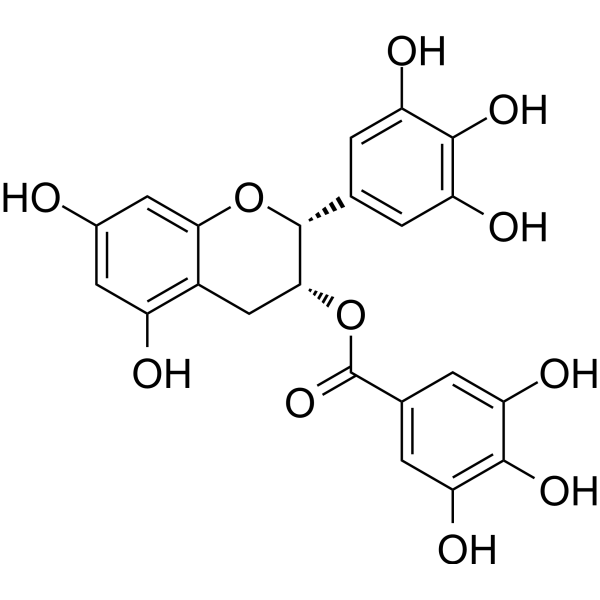
    (-)-Epigallocatechin Gallate (Standard)
    Maximum Cited Publications
    57 Publications Verification

    EGCG(Standard); Epigallocatechol Gallate (Standard)

    Reference Standards Endogenous Metabolite Apoptosis Inflammation/Immunology Cancer
    (-)-Epigallocatechin Gallate (Standard) is the analytical standard of (-)-Epigallocatechin Gallate. This product is intended for research and analytical applications. (-)-Epigallocatechin Gallate (EGCG) is a major polyphenol in green tea, which can inhibit cell proliferation and induce cell apoptosis. (-)-Epigallocatechin Gallate inhibits glutamate dehydrogenase 1/2 (GDH1/2, GLUD1/2) activity. (-)-Epigallocatechin Gallate has a potent anticancer, antioxidant and anti-inflammatory properties against various types of cancers such as colorectal cancer, myeloid leukemia, thyroid carcinoma .
    (-)-Epigallocatechin Gallate (Standard)
  • HY-W009776

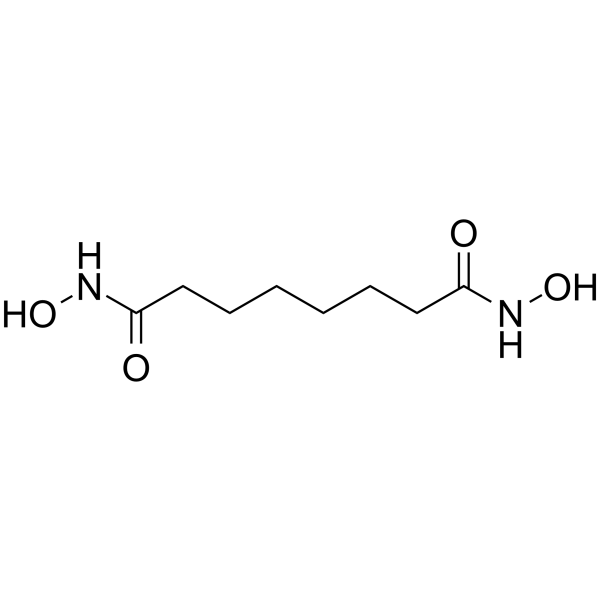
    Suberohydroxamic acid; SBHA

    HDAC Apoptosis Cancer
    Suberoyl bis-hydroxamic acid (Suberohydroxamic acid; SBHA) is a competitive and cell-permeable HDAC1 and HDAC3 inhibitor with ID50 values of 0.25 μM and 0.30 μM, respectively .Suberoyl bis-hydroxamic acid renders MM cells susceptible to apoptosis and facilitates the mitochondrial apoptotic pathways .Suberoyl bis-hydroxamic acid can be used for the study of medullary thyroid carcinoma (MTC) .
    Suberoyl bis-hydroxamic acid
  • HY-156135

    MDM-2/p53 RET DNA/RNA Synthesis Apoptosis Caspase Endocrinology Cancer
    NSC194598 is a p53 DNA-binding inhibitor with an IC50 value of 180 nM. NSC194598 inhibits p53 DNA binding and induction of target genesn when p53 is stabilized and activated by irradiation or chemotherapy. NSC194598 can interfere with transcriptional activation of mutated rearranged during transfection (RET) gene, induce apoptosis and G0/G1 phase arrest. NSC194598 can be used for the researches of acute radiation toxicity and medullary thyroid carcinoma .
    NSC194598
  • HY-W017424

    Drug Intermediate Caspase Apoptosis Neurological Disease Cancer
    2-Aminobenzothiazole acts as a caspase 3/7 activator, an anticancer cytotoxic agent, and also exhibits neurotoxicity. 2-Aminobenzothiazole drives the apoptotic pathway by activating caspase 3/7, induces mitochondrial inner membrane depolarization, and triggers both early and late apoptosis via a caspase-dependent pathway. In zebrafish models, 2-Aminobenzothiazole induces oxidative damage in brain tissues and inhibits genes related to GABA and 5-HT synthesis pathways. Long-term exposure to 2-Aminobenzothiazole impairs motor ability, social behavior, anxiety-like state and cognitive function. 2-Aminobenzothiazole can be used in studies of human laryngeal carcinoma and related neurotoxicity .
    2-Aminobenzothiazole
  • HY-101246

    RET Cancer
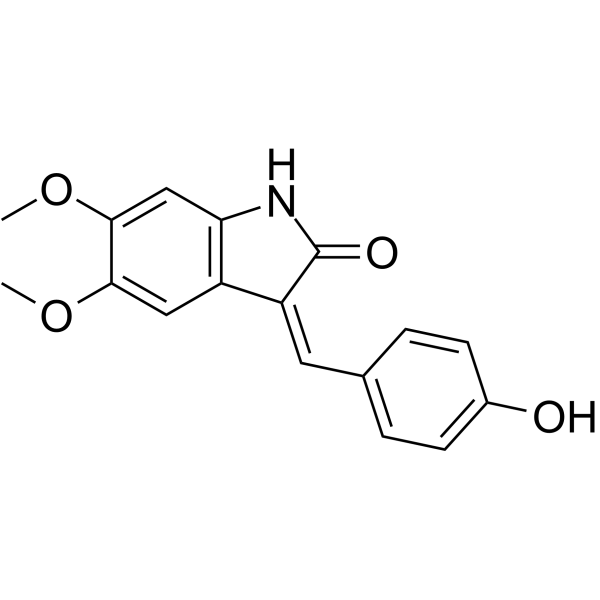
    RPI-1 is a specific, orally available 2-indolinone Ret tyrosine kinase inhibitor. RPI-1 inhibits proliferation, Ret tyrosine phosphorylation, Ret protein expression, and the activation of PLCgamma, ERKs and AKT in human medullary thyroid carcinoma TT cells. Antitumor activity .
    RPI-1
  • HY-150526

    Endogenous Metabolite Apoptosis Inflammation/Immunology Cancer
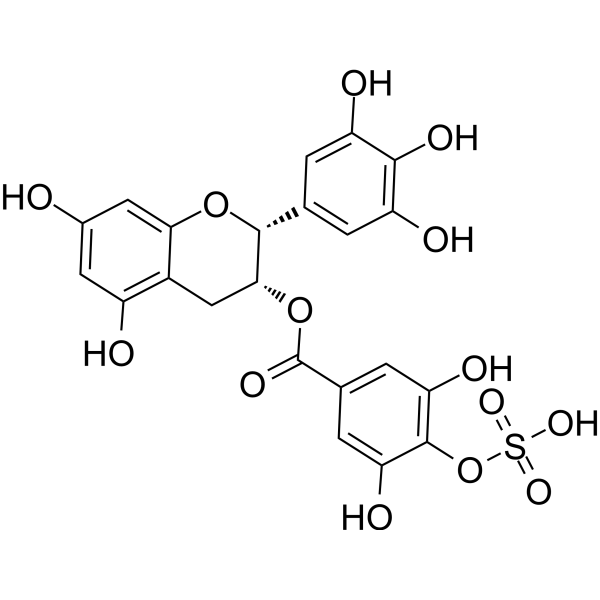
    EGCG-4″-sulfate is a major polyphenol in green tea, which can inhibit cell proliferation and induce cell apoptosis. (-)-Epigallocatechin Gallate sulfate inhibits glutamate dehydrogenase 1/2 (GDH1/2, GLUD1/2) activity. EGCG-4″-sulfate has a potent anticancer, antioxidant and anti-inflammatory properties against various types of cancers such as colorectal cancer, myeloid leukemia, thyroid carcinoma .
    EGCG-4″-sulfate
  • HY-13653S1

    EGCG-d4; Epigallocatechol Gallate-d4

    Isotope-Labeled Compounds Apoptosis Inflammation/Immunology Cancer
    (-)-Epigallocatechin Gallate-d4 (EGCG-d4) is the deuterium labeled (-)-Epigallocatechin Gallate (HY-13653). (-)-Epigallocatechin Gallate (EGCG) is a major polyphenol in green tea, which can inhibit cell proliferation and induce cell apoptosis. (-)-Epigallocatechin Gallate inhibits glutamate dehydrogenase 1/2 (GDH1/2, GLUD1/2) activity. (-)-Epigallocatechin Gallate has a potent anticancer, antioxidant and anti-inflammatory properties against various types of cancers such as colorectal cancer, myeloid leukemia, thyroid carcinoma .
    (-)-Epigallocatechin Gallate-d4
  • HY-N0885
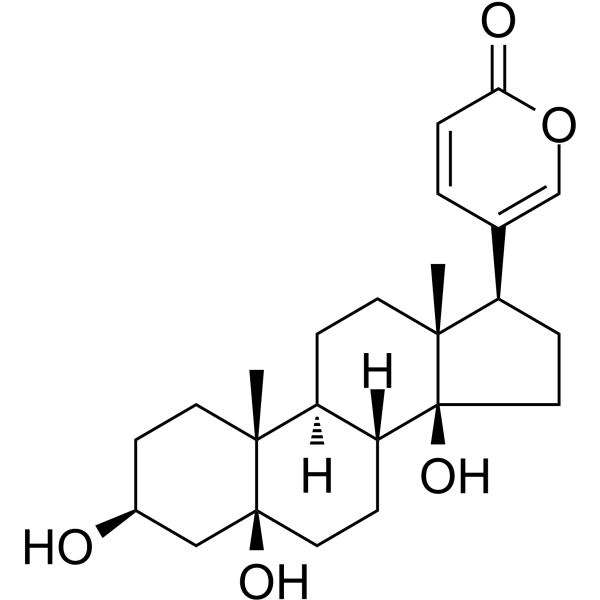
    Telocinobufagin
    1 Publications Verification

    Telobufotoxin; Telocinobufogenin

    JAK STAT mTOR PI3K Akt Polo-like Kinase (PLK) Na+/K+ ATPase Apoptosis Bacterial Infection Cardiovascular Disease Neurological Disease Inflammation/Immunology Cancer
    Telocinobufagin (Telobufotoxin; Telocinobufogenin) is an orally active bufadienolide with potential anti-tumor effects. Telocinobufagin exerts its anti-cancer effects on non-small cell carcinoma, osteosarcoma, thyroid cancer, breast cancer and head and neck squamous cell carcinoma by inhibiting the STAT3, JAK2/STAT3, LARP1-mTOR, PI3K/Akt/Snail and PLK1 pathways, and can also induce tumor cell apoptosis. Telocinobufagin enhances the Th1 immune response and protects against Salmonella typhimurium infection. Telocinobufagin has a strong cardiac-stimulating effect by inhibiting the activity of Na +/K +-ATPase, and it can promote renal fibrosis. Telocinobufagin demonstrates non-opioid analgesic effects in various acute pain models .
    Telocinobufagin
  • HY-P9972

    PDR001

    PD-1/PD-L1 IFNAR Cancer
    Spartalizumab is a humanized PD-1 IgG4 monoclonal antibody, with a Kd of 0.83 nM for human PD-1 and a Kd of 0.93 nM for cynomolgus monkey PD-1. Spartalizumab binds to PD-1 and blocks its interaction with the ligands PD-L1 and PD-L2. Spartalizumab induces increased IFNγ release. Spartalizumab can be used in the research of anaplastic thyroid carcinoma (ATC) and neuroendocrine neoplasms (NENs) .
    Spartalizumab
  • HY-W010593

    Environmental Pollutants Drug Metabolite Cancer
    Ethylenethiourea is a degradation product of the ethylenebisthiocarbamate group of fungicides. Ethylenethiourea is tumorigenic and teratogenic. Ethylenethiourea is orally active .
    Ethylenethiourea
  • HY-15855

    Microtubule/Tubulin Cancer
    Fosbretabulin (tromethamine), also known as combretastatin A4 phosphate (CA4P), is a vascular disrupting agent evaluated for its efficacy against anaplastic thyroid carcinoma (ATC). It targets tumor neovasculature, causing acute and reversible reductions in tumor blood flow and central necrosis .
    Fosbretabulin tromethamine
  • HY-14815

    Combretastatin A4 phosphate

    Apoptosis Microtubule/Tubulin Cancer
    Fosbretabulin (Combretastatin A4 phosphate) is a vascular disruptor with antitumor activity against atypical thyroid carcinoma (ATC) cell lines and xenografts. Fosbretabulin inhibits tumor growth by inhibiting microtubule polymerization, inducing apoptosis, and suppressing angiogenesis in tumors .
    Fosbretabulin
  • HY-13752

    HSP Cancer
    STA-1474 is an orally active and highly selective HSP90 inhibitor. STA-1474 can trigger tumor cell apoptosis. STA-1474 demonstrates significant antitumor efficacy in spontaneous canine cancer models (e.g., osteosarcoma, thyroid carcinoma). STA-1474 is promising for research of solid tumors (e.g., osteosarcoma, breast cancer) and HSP90-driven cancers .
    STA-1474
  • HY-124944

    Ras Cancer
    APS6-45 is an orally active tumor-calibrated inhibitor (TCI). APS6-45 inhibits RAS/MAPK signaling and exhibits antitumor activity .
    APS6-45
  • HY-170017S

    EGCG-d3/d4; Epigallocatechol Gallate-d3/d4

    Isotope-Labeled Compounds Apoptosis Inflammation/Immunology Cancer
    (-)-Epigallocatechin Gallate-d3/d4 (EGCG-d3/d4) is the deuterium labeled (-)-Epigallocatechin Gallate (HY-13653). (-)-Epigallocatechin Gallate (EGCG) is a major polyphenol in green tea, which can inhibit cell proliferation and induce cell apoptosis. (-)-Epigallocatechin Gallate inhibits glutamate dehydrogenase 1/2 (GDH1/2, GLUD1/2) activity. (-)-Epigallocatechin Gallate has a potent anticancer, antioxidant and anti-inflammatory properties against various types of cancers such as colorectal cancer, myeloid leukemia, thyroid carcinoma .
    (−)-Epigallocatechin Gallate-d3/d4
  • HY-156113

    RET Cancer
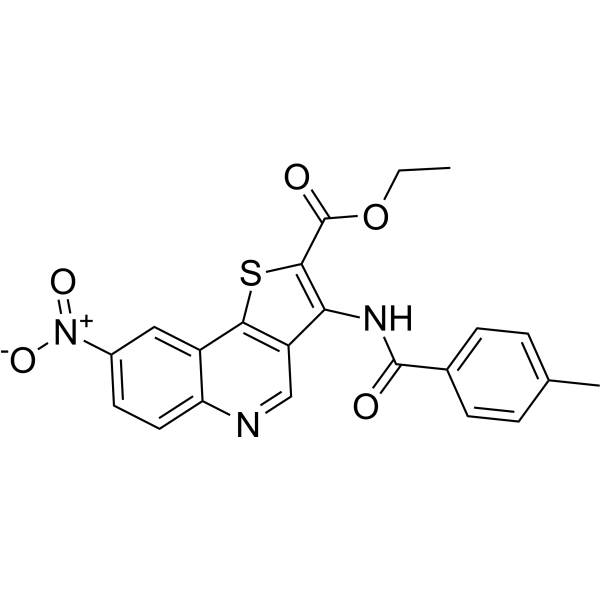
    RET-IN-25 (compound 6b) is a RET kinase inhibitor with anticancer activity. RET-IN-25 inhibits medullary thyroid carcinoma (MTC) with IC50s of 3.6 μM (3 days) and 3.0 μM (6 days) against TT(C634R) MTC .
    RET-IN-25
  • HY-W010593R

    Drug Metabolite Reference Standards Cancer
    Ethylenethiourea (Standard) is the analytical standard of Ethylenethiourea. This product is intended for research and analytical applications. Ethylenethiourea is a degradation product of the ethylenebisthiocarbamate group of fungicides. Ethylenethiourea is tumorigenic and teratogenic. Ethylenethiourea is orally active .
    Ethylenethiourea (Standard)
  • HY-139132

    Apoptosis Cancer
    Met-F-AEA is a metabolically stable anandamine analogue. Met-F-AEA inhibits cell growth by activating apoptosis. Met-F-AEA has antitumor activity .
    Met-F-AEA
  • HY-175302

    Trk Receptor Apoptosis Cancer
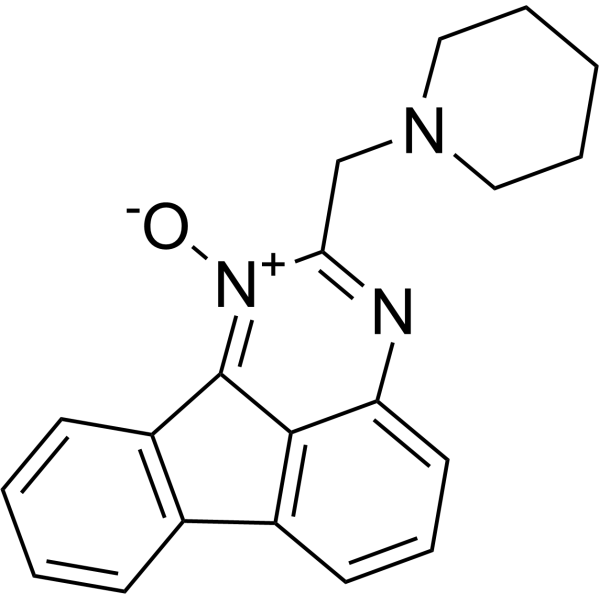
    TRK-IN-32 is a potent TRK inhibitor. TRK-IN-32 potently inhibits TRK WT, TRK G595R and TRK G667C with IC50 values of 0.08 nM, 2.14 nM and 0.68 nM, respectively. TRK-IN-32 also demonstrates antiproliferative activity against a panel of Ba/F3 cell lines transformed with wild type, xDFG, solvent-front as well as gatekeeper mutant TRK fusion proteins. TRK-IN-32 induces apoptosis of Ba/F3-TRKA WT and Ba/F3-TRKA G667C cells.TRK-IN-32 can be used for the study of various cancers (such as thyroid cancer, secretory breast carcinoma) .
    TRK-IN-32
  • HY-183729

    Ligands for Target Protein for PROTAC RET Endocrinology Cancer
    RET-IN-34 (Compound EV1) is a RET inhibitor with an IC50 of 0.89 nM. RET-IN-34 serves as a target protein ligand for PROTAC synthesis (Ligand for Target Protein for PROTAC). RET-IN-34 is applicable for the synthesis of PROTAC RET Degrader 2 (HY-183783). RET-IN-34 exhibits anticancer activity against medullary thyroid carcinoma. RET-IN-34 can be used in studies related to medullary thyroid carcinoma .
    RET-IN-34
  • HY-177011

    Estrogen Receptor/ERR Cancer
    ERRγ-IN-1 is a ERRγ inhibitor with an IC50 of 0.040 μM. ERRγ-IN-1 activates MAPK (p44/p42) and inhibits the activity of ERRγ. ERRγ-IN-1 significantly increases iodine uptake in anaplastic thyroid carcinoma xenografts and suppresses tumor growth in nude mice. ERRγ-IN-1 is applicable for the research of anaplastic thyroid carcinoma .
    ERRγ-IN-1
  • HY-183783

    PROTACs RET STAT ERK Apoptosis Endocrinology Cancer
    PROTAC RET Degrader 2 is a RET degrader with a target IC50 of 0.36 nM. PROTAC RET Degrader 2 is mainly composed of RET-IN-34 (HY-183729) and Thalidomide (HY-14658). PROTAC RET Degrader 2 mediates RET degradation via the ubiquitin-proteasome system. PROTAC RET Degrader 2 induces apoptosis, inhibits colony-forming ability, and exhibits antiproliferative activity in cancer cells. PROTAC RET Degrader 2 suppresses tumor growth in xenograft models. PROTAC RET Degrader 2 can be used in research related to medullary thyroid carcinoma, papillary thyroid carcinoma, and RET fusion-positive lung adenocarcinoma .
    PROTAC RET Degrader 2
  • HY-183684

    RET VEGFR PDGFR Akt ERK Endocrinology Cancer
    RET-IN-33 (Compound CN-3) is a moderately selective inhibitor of RET mutants. RET-IN-33 potently inhibits G810 mutants, with IC50 values of 4.43 nM (G810R), 3.28 nM (G810C) and 0.51 nM (G810S), respectively. RET-IN-33 also inhibits other RET mutants: V804M (IC50 0.73 nM), V804L (IC50 0.36 nM), Y806H (IC50 0.74 nM) and M918T (IC50 0.55 nM). RET-IN-33 also inhibits other kinases, with an IC50 of 1.50 nM against VEGFR2 and 1.60 nM against PDGFRα. RET-IN-33 blocks the autophosphorylation of RET mutants and the downstream SHC/AKT/ERK signaling pathway. RET-IN-33 selectively inhibits the proliferation of RET-driven cell models without affecting non-RET-dependent or normal cells. RET-IN-33 exhibits dose-dependent antitumor efficacy in RET-driven xenograft models. RET-IN-33 can be used for the research of medullary thyroid carcinoma, papillary thyroid carcinoma and non-small cell lung cancer .
    RET-IN-33
  • HY-N16764

    Necroptosis NO Synthase Neurological Disease Inflammation/Immunology Endocrinology Cancer
    (rel)-Salcolin A is a flavonoid lignan compound with anticancer, anti-inflammatory, and neuroprotective activities. (rel)-Salcolin A has IC50 values ??of 66.69 μM and 56.12 μM against anaplastic thyroid carcinoma cells (HTH83) and papillary thyroid carcinoma cells (TPC1), respectively. (rel)-Salcolin A also inhibits LPS-induced NO production with an IC50 of 14.65 μM. (rel)-Salcolin A exerts its effects by inducing necroptosis in thyroid cancer cells, inhibiting the production of the inflammatory factor NO, and protecting against glutamate-induced neuronal cell damage, with a neuroprotective E50 of 47.44 μM. (rel)-Salcolin A can be used in research related to thyroid cancer, anti-inflammation, and neuroprotection. (rel)-Salcolin A can be naturally extracted from the leaves of Casearia arborea and the stems of Zea mays (corn) .
    (rel)-Salcolin A
  • HY-181555

    Ras Endocrinology Cancer
    IACS-56676 is a selective NRAS G12D inhibitor with a target Kd of 0.031 μM. IACS-56676 stabilizes the p-loop, maintains key interactions with Asp12, Gly60 and Asp69, and achieves selectivity over wild-type KRAS through substitution targeting Leu95. IACS-56676 can be used for research on melanoma, hematologic malignancies and thyroid cancer .
    IACS-56676
  • HY-P11766

    GALA-cholesterol

    Biochemical Assay Reagents Cancer
    GALA-chol is a cholesterol-conjugated pH-responsive fusion peptide that can serve as a delivery adjuvant. GALA-chol enhances the endocytosis of siRNA RET/PTC1-SQ nanoparticles, inhibits cell viability, and undergoes pH-responsive charge conversion in the acidic lysosomal environment, thereby promoting lysosomal escape of small extracellular vesicle (sEV) cargo. GALA-chol anchors to the sEV membrane and maintains the structural integrity and intrinsic homing activity of sEVs. GALA-chol can be used in studies related to adjuvant delivery .
    GALA-chol

Inquiry Online

Your information is safe with us. * Required Fields.

Salutation


Country or Region *

Applicant Name *


Organization Name *

Department *


Email Address *


Product Name *

Cat. No.


Requested quantity *

Phone Number *


Remarks

Inquiry Online

Inquiry Information

Product Name:
Cat. No.:
Quantity:
MCE Japan Authorized Agent:

