1. Search Result
Search Result
Results for "

tubulin depolymerization

" in MedChemExpress (MCE) Product Catalog:

28

Inhibitors & Agonists

5

Natural
Products

Targets Recommended:
Cat. No. Product Name Target Research Areas Chemical Structure
  • HY-14444
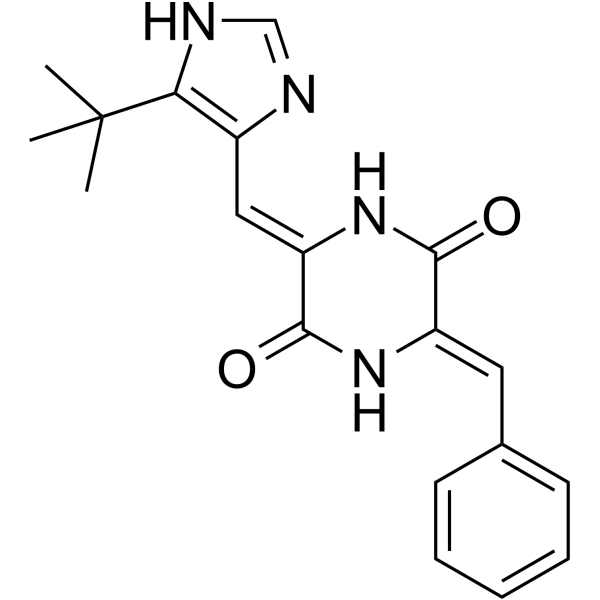
    Plinabulin
    2 Publications Verification

    NPI-2358

    Microtubule/Tubulin Cancer
    Plinabulin (NPI-2358) is a vascular disrupting agen (VDA) against tubulin-depolymerizing with an IC50 of 9.8 nM against HT-29 cells . Plinabulin binds the colchicine binding site of β-tubulin preventing polymerization and has potent inhibitory to tumor cells .
    Plinabulin
  • HY-N1408

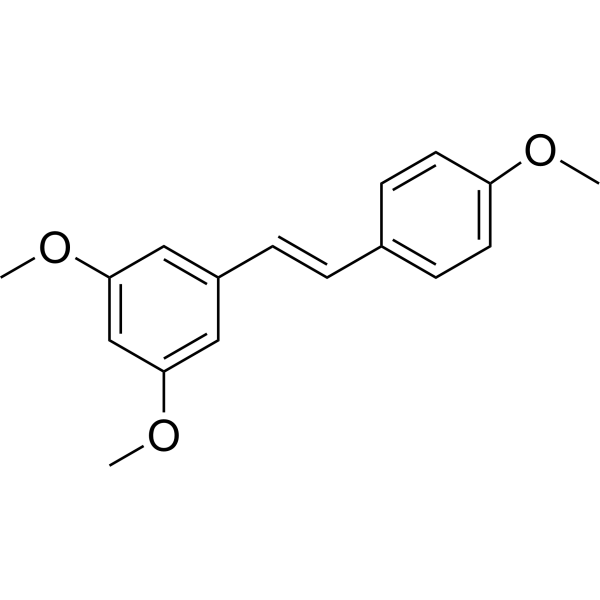
    trans-trismethoxy Resveratrol; (E)-Resveratrol trimethyl ether; trans-3,5,4'-Trimethoxystilbene

    VEGFR Reactive Oxygen Species (ROS) Caspase Apoptosis Inflammation/Immunology Cancer
    Trans-Trimethoxyresveratrol (trans-trismethoxy Resveratrol; (E)-Resveratrol trimethyl ether; trans-3,5,4'-Trimethoxystilbene) is an orally active natural derivative of Resveratrol (HY-16561). Trans-Trimethoxyresveratrol has an enhanced anticancer profile compared to Resveratrol, exhibiting higher potency than resveratrol, with improved cancer cell proliferation inhibition, induction of cell cycle arrest, decreased metastasis, and increased apoptosis. Trans-Trimethoxyresveratrol causes microtubule disassembling and tubulin depolymerization and exerts anti-angiogenic effects through VEGFR2. Trans-Trimethoxyresveratrol can be used for the studies of anti-angiogenic and anti-cancer (such as non-small cell lung cancer and osteosarcoma) .
    trans-Trimethoxyresveratrol
  • HY-N2438
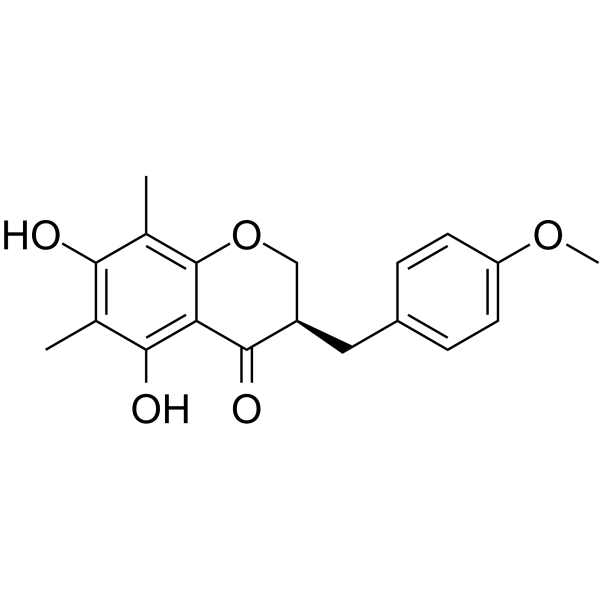
    Methylophiopogonanone B
    2 Publications Verification

    Ras Microtubule/Tubulin Cancer
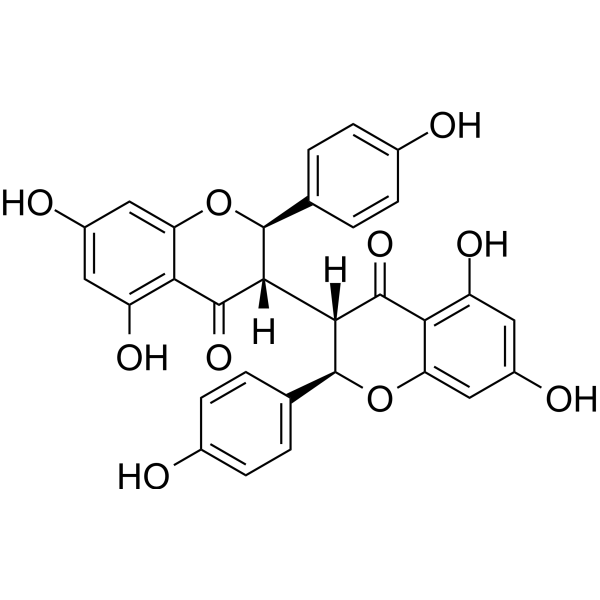
    Methylophiopogonanone B is a homoisoflavonoid compound. Methylophiopogonanone B can be isolated from O. japonicus root. Methylophiopogonanone B promotes Rho activation and Tubulin depolymerization. Methylophiopogonanone B significantly increases GTP-Rho, but not GTP-Rac or GTP-CDC42. Methylophiopogonanone B induces cell morphological change via melanocyte dendrite retraction and stress fiber formation. Methylophiopogonanone B exhibits strong antioxidant activity. Methylophiopogonanone B can be used in the research of cervical cancer .
    Methylophiopogonanone B
  • HY-121993
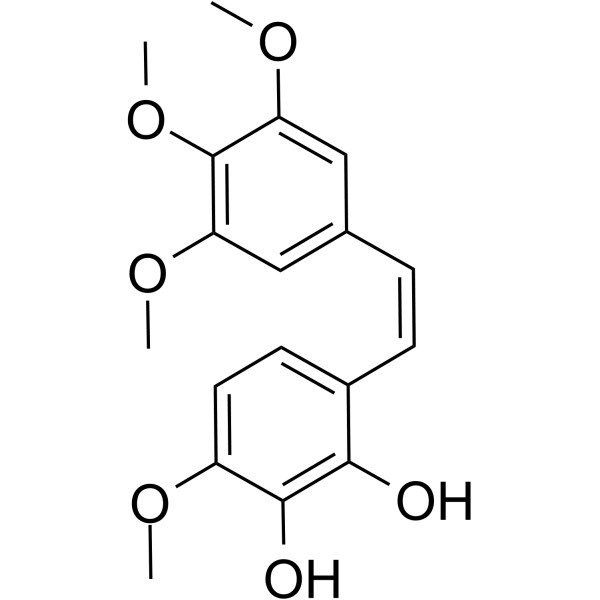
    Combretastatin A-1
    1 Publications Verification

    Wnt Microtubule/Tubulin Cancer
    Combretastatin A-1 is a microtubule polymerization inhibitor that binds to the colchicine-binding site of tubulin. Combretastatin A-1 inhibits the Wnt/β-catenin pathway through tubulin depolymerization mediated AKT deactivation. Combretastatin A-1 exhibits anti-tumor and anti-vascular effects .
    Combretastatin A-1
  • HY-N1391

    10-Deacetylpaclitaxel

    Microtubule/Tubulin Cancer
    10-Deacetyltaxol (10-Deacetylpaclitaxel) is a taxane derivative isolated from Taxus wallichiana Zucc . 10-Deacetyltaxol (10-Deacetylpaclitaxel) promotes the polymerization of tubulin and to inhibit the depolymerization of microtubules induced by cold or by calcium ions in vitro . 10-Deacetyltaxol (10-Deacetylpaclitaxel) exhibits cytotoxicity in human glial and neuroblastoma cell-lines .
    10-Deacetyltaxol
  • HY-148128

    Microtubule/Tubulin ADC Payload Cancer
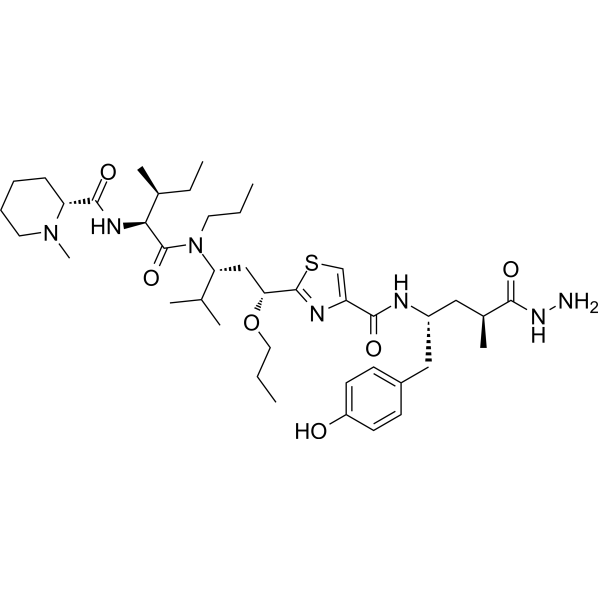
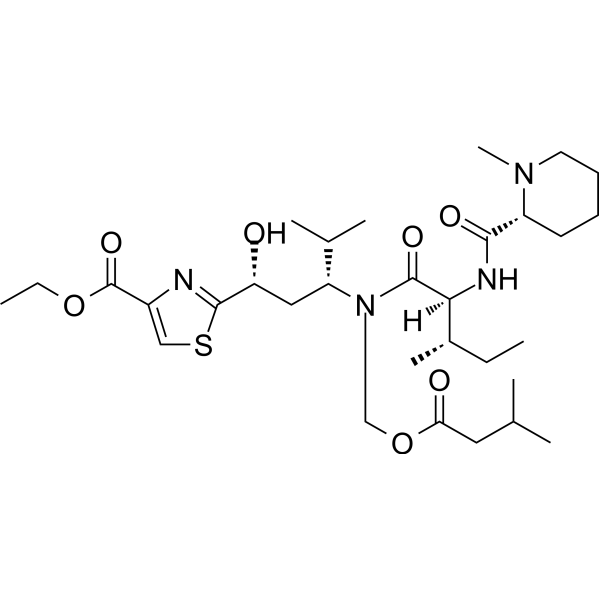
    TAM470 is a novel cytolysin, inhibiting tubulin polymerization and microtubule depolymerization. TAM470 can be used in the synthesis of OMTX705 as payload molecule, OMTX705 is a novel FAP-targeting antibody-drug conjugates (ADCs) with antitumor activity .
    TAM470
  • HY-116920

    Reactive Oxygen Species (ROS) Microtubule/Tubulin Cancer
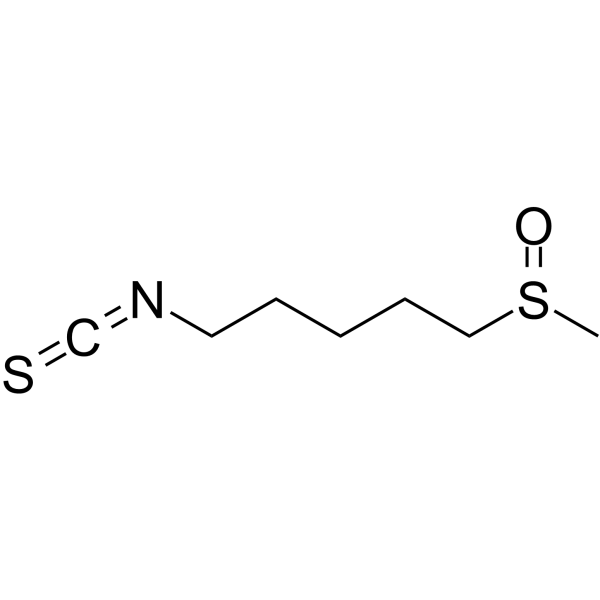
    Alyssin, found in Cruciferous Vegetables, exerts anticancer activity in HepG2 by increasing intracellular reactive oxygen species and tubulin depolymerization .
    Alyssin
  • HY-101287

    Microtubule/Tubulin JNK Apoptosis Caspase Cancer
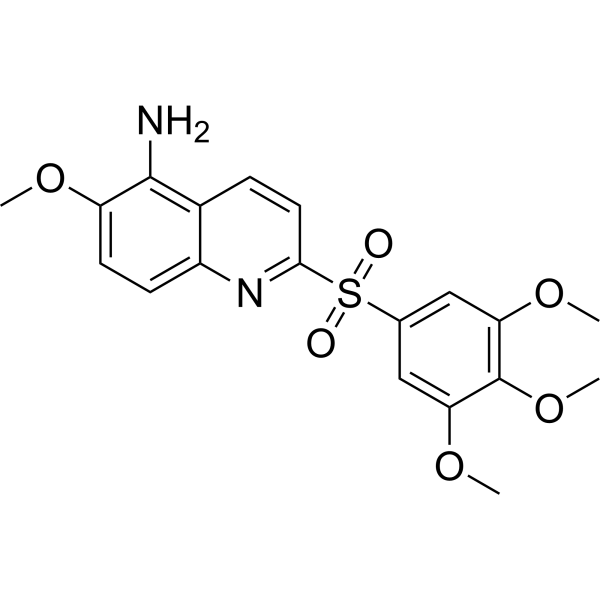
    MPT0B392, an orally active quinoline derivative, induces c-Jun N-terminal kinase (JNK) activation, leading to apoptosis. MPT0B392 inhibits tubulin polymerization and triggers induction of the mitotic arrest, followed by mitochondrial membrane potential loss and caspases cleavage by activation of JNK and ultimately leads to apoptosis. MPT0B392 is demonstrated to be a novel microtubule-depolymerizing agent and enhances the cytotoxicity of sirolimus in sirolimus-resistant acute leukemic cells and the multidrug resistant cell line .
    MPT0B392
  • HY-16491

    DJ-927

    Microtubule/Tubulin Cancer
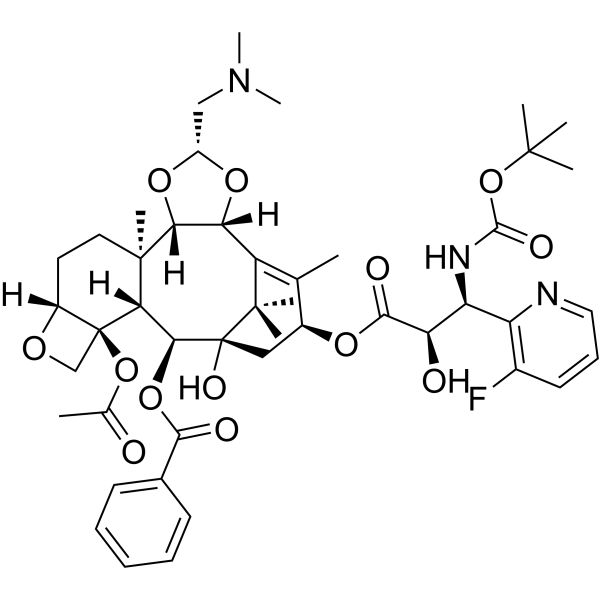
    Tesetaxel (DJ-927) is an orally active and brain-penetrant taxane tubulin inhibitor. Tesetaxel inhibits tubulin depolymerization with an IC50 of 0.44 μM. Tesetaxel inhibits cancer cells proliferation and shows potent antitumor activity against P-glycoprotein-positive cancer cells. Tesetaxel can be used for the research of cancer, such as solid tumors, liver metastasis, and advanced breast cancer .
    Tesetaxel
  • HY-116920A

    Reactive Oxygen Species (ROS) Microtubule/Tubulin Cancer
    (R)-Alyssin is a enantiomer of Alyssin (HY-116920). Alyssin, found in Cruciferous Vegetables, exerts anticancer activity in HepG2 by increasing intracellular reactive oxygen species and tubulin depolymerization .
    (R)-Alyssin
  • HY-116920B

    Reactive Oxygen Species (ROS) Microtubule/Tubulin Cancer
    (S)-Alyssin is a enantiomer of Alyssin (HY-116920). Alyssin, found in Cruciferous Vegetables, exerts anticancer activity in HepG2 by increasing intracellular reactive oxygen species and tubulin depolymerization .
    (S)-Alyssin
  • HY-146362

    Microtubule/Tubulin Apoptosis Cancer
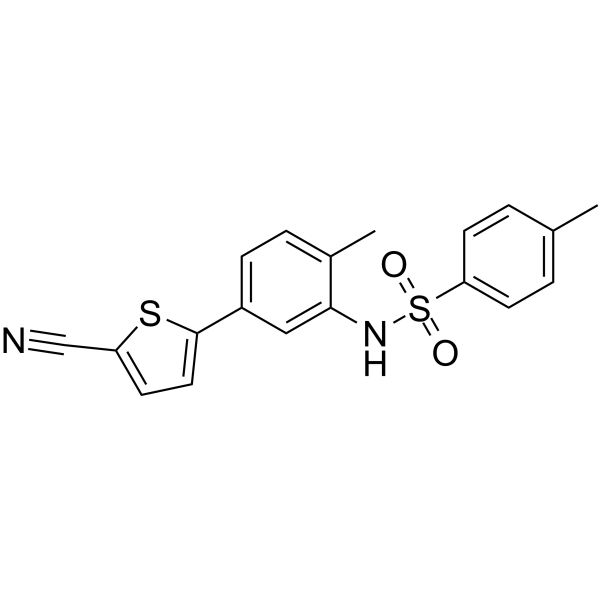
    Tubulin polymerization-IN-17 (compound 23g) is a potent inhibitor of tubulin polymerization. Tubulin polymerization-IN-17 exhibits tubulin depolymerization and induced cell apoptosis and inhibits migration. Tubulin polymerization-IN-17 has the potential for the research of cancer diseases .
    Tubulin polymerization-IN-17
  • HY-124624

    Microtubule/Tubulin Apoptosis Cancer
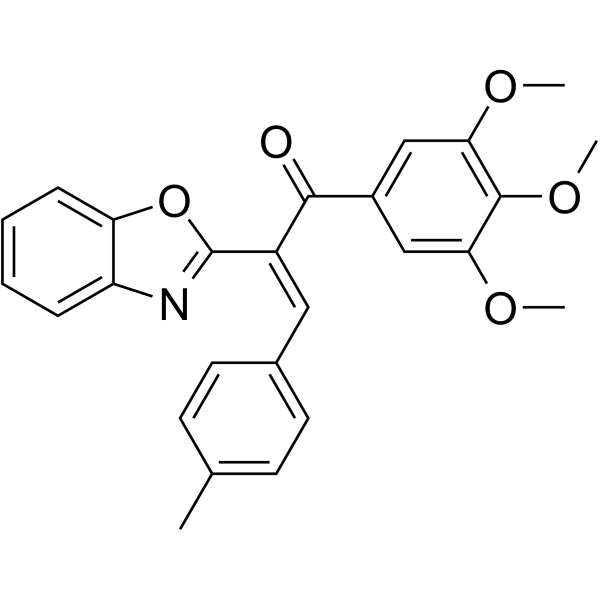
    PBOX-15 is a microtubule targeting agent. PBOX-15 induces apoptosis by promoting tubulin depolymerization in tumor cells .
    PBOX-15
  • HY-16146

    OXi-4503 tetrasodium

    Wnt Microtubule/Tubulin Cancer
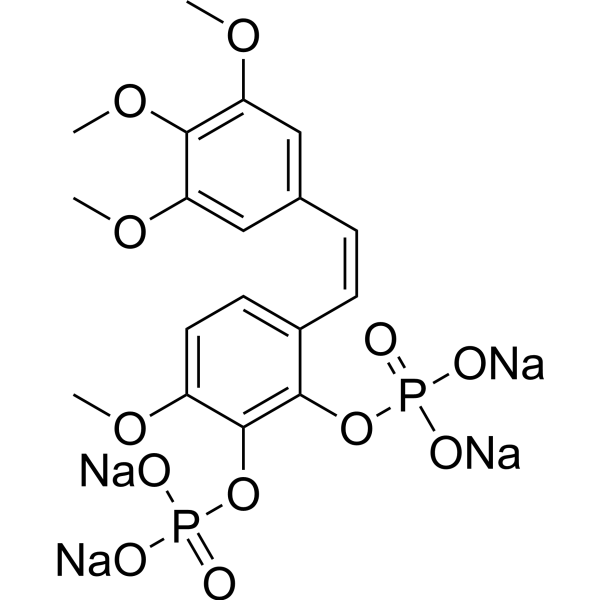
    Combretastatin A-1 phosphate (OXi-4503) tetrasodium, a proagent of Combretastatin A-1, is a microtubule polymerization inhibitor that binds to the colchicine-binding site of tubulin. Combretastatin A-1 phosphate tetrasodium inhibits the Wnt/β-catenin pathway through tubulin depolymerization mediated AKT deactivation. Combretastatin A-1 phosphate tetrasodium exhibits anti-tumor and anti-vascular effects .
    Combretastatin A-1 phosphate tetrasodium
  • HY-103711R

    Microtubule/Tubulin Reference Standards Apoptosis Mitosis Cancer
    Estramustine (Standard) is the analytical standard of Estramustine. This product is intended for research and analytical applications. Estramustine is an antineoplastic agent. Estramustine depolymerizes microtnbules by binding to tubulin 1, exhibits antimitotic activity with an IC50 value of ~16 μM for mitosis of DU 145 cells. Estramustine blocks cells at mitosis in prostate tumor xenografts .
    Estramustine (Standard)
  • HY-121993R

    Wnt Microtubule/Tubulin Reference Standards Cancer
    Combretastatin A-1 (Standard) is the analytical standard of Combretastatin A-1. This product is intended for research and analytical applications. Combretastatin A-1 is a microtubule polymerization inhibitor that binds to the colchicine-binding site of tubulin. Combretastatin A-1 inhibits the Wnt/β-catenin pathway through tubulin depolymerization mediated AKT deactivation. Combretastatin A-1 exhibits anti-tumor and anti-vascular effects .
    Combretastatin A-1 (Standard)
  • HY-N1391R

    10-Deacetylpaclitaxel (Standard)

    Reference Standards Microtubule/Tubulin Cancer
    10-Deacetyltaxol (Standard) is the analytical standard of 10-Deacetyltaxol. This product is intended for research and analytical applications. 10-Deacetyltaxol (10-Deacetylpaclitaxel) is a taxane derivative isolated from Taxus wallichiana Zucc . 10-Deacetyltaxol (10-Deacetylpaclitaxel) promotes the polymerization of tubulin and to inhibit the depolymerization of microtubules induced by cold or by calcium ions in vitro . 10-Deacetyltaxol (10-Deacetylpaclitaxel) exhibits cytotoxicity in human glial and neuroblastoma cell-lines .
    10-Deacetyltaxol (Standard)
  • HY-W854934

    Microtubule/Tubulin Cancer
    IKP-104 is a microtubule/tubulin inhibitor (IC50 = 1.31 μM). IKP-104 arrests cells in mitosis and the M phase by inhibiting microtubule polymerization and inducing cytoskeletal microtubule depolymerization. IKP-104 inhibits the growth of mouse and human tumor cell lines. IKP-104 exhibits anti-tumor effects in mouse ascites tumors and lung cancer models. IKP-104 is useful in the research of cancers such as leukemia, lung cancer and melanoma .
    IKP-104
  • HY-400684

    Bacterial Cancer
    Tubulysin A intermediate-1 is an intermediate in the synthesis of the cytotoxic peptide Tubulysin A (HY-15995). Tubulysin A (TubA) is an antibiotic, anti-microtubule toxins, and apoptosis inducer isolated from myxobacteria. Tubulysin A has anti-angiogenic, anti-microtubule, anti-mitotic, and anti-proliferative activities. Tubulysin A arrests cells in the G2/M phase, effectively inhibits tubulin polymerization, and induces depolymerization of detached microtubules. Tubulysin A acts as an ADC cytotoxin (ADC Cytotoxin) to synthesize ADC .
    Tubulysin A intermediate-1
  • HY-N0060AR

    Coniferic acid sodium (Standard)

    Reference Standards FGFR Endogenous Metabolite Reactive Oxygen Species (ROS) Cardiovascular Disease Cancer
    10-Deacetyltaxol (Standard) is the analytical standard of 10-Deacetyltaxol. This product is intended for research and analytical applications. 10-Deacetyltaxol (10-Deacetylpaclitaxel) is a taxane derivative isolated from Taxus wallichiana Zucc . 10-Deacetyltaxol (10-Deacetylpaclitaxel) promotes the polymerization of tubulin and to inhibit the depolymerization of microtubules induced by cold or by calcium ions in vitro . 10-Deacetyltaxol (10-Deacetylpaclitaxel) exhibits cytotoxicity in human glial and neuroblastoma cell-lines .
    Ferulic acid sodium (Standard)
  • HY-182478

    Microtubule/Tubulin Cancer
    MDL-27048, a tubulin inhibitor, binds competitively, reversibly to the Colchicine (HY-16569)-binding site on tubulin heterodimers. MDL-27048 inhibits microtubule assembly, induces slow depolymerization of preassembled microtubules, disrupts microtubule polymerization-depolymerization dynamics, and disrupts cytoplasmic microtubule networks. MDL-27048 exerts growth inhibitory effects on human cancer cells, induces mitotic arrest, and does not disrupt actin filaments at microtubule-depolymerizing concentrations. MDL-27048 can be used for the research of malignant tumors .
    MDL-27048
  • HY-179516

    Akt Microtubule/Tubulin Apoptosis Cancer
    AKT1-IN-11, a Podophyllotoxin (HY-15552) derivative, is a AKT1/tubulin dual inhibitor. AKT1-IN-11 down-regulates the phosphorylation level of AKT kinase in tumor cells, disrupting cell proliferation, causeing G2/M phase arrest and inducing apoptosis. AKT1-IN-11 also promotes tubulin depolymerization. AKT1-IN-11 can be used for the research of colorectal cancer .
    AKT1-IN-11
  • HY-16457

    MST 997

    Microtubule/Tubulin Caspase Apoptosis Cancer
    Simotaxel (MST 997) is an orally active derivative of the taxane class. Simotaxel binds to β-tubulin and promotes tubulin polymerization (EC₅₀ = 0.9 μM), inhibits tubulin depolymerization, and causes cell cycle arrest at the G₂-M phase. Simotaxel disrupts the formation of the mitotic spindle and triggers the caspase-dependent apoptotic pathway (apoptosis). Simotaxel has inhibitory effects on Paclitaxel (HY-B0015) sensitive cell lines and overcomes drug resistance. Simotaxel can be used to study Paclitaxel / Docetaxel (HY-B0011) resistant solid tumors .
    Simotaxel
  • HY-180347

    Microtubule/Tubulin Neurological Disease
    HD-800 is a tubulin inhibitor with an IC50 of 4.3 nM and an EC50 for depolymerization of 24 nM. HD-800 can be used to generate a radioactive tracer [11C]HD-800, and [11C]HD-800 can penetrate the blood-brain barrier and be used for positron emission tomography (PET) in various neurological diseases .
    HD-800
  • HY-138008

    Microtubule/Tubulin Apoptosis Cancer
    WX-132-18B is a tubulin inhibitor with an IC50 of 0.45-0.99 nM. WX-132-18B selectively binds to the colchicine-binding site on tubulin, reduces microtubule content via depolymerization, and inhibits tubulin polymerization. WX-132-18B induces tumor cell cycle arrest, apoptosis and changes in nuclear membrane permeability, and decreases mitochondrial membrane potential. WX-132-18B exhibits antiproliferative activity against endothelial cells and human tumor cells, and inhibits the proliferation and growth of xenograft tumors in mice. WX-132-18B can be used in research related to sarcoma, non-small cell lung cancer, gastric cancer and breast cancer .
    WX-132-18B
  • HY-183147A

    Amino acid Transporter Cancer
    LAT1-IN-2 hydrochloride is an orally active anticancer agent, as well as a LAT1 substrate and tubulin-binding agent. LAT1-IN-2 hydrochloride relies on LAT1 for cellular uptake, disrupts microtubule formation by binding to the colchicine site of tubulin, and induces actin depolymerization to transform cells into a spherical shape. LAT1-IN-2 hydrochloride effectively inhibits tumor growth in xenograft mice. Compared with Etoposide (HY-13629), LAT1-IN-2 hydrochloride shows higher distribution in tumor tissues, lower distribution in major organs, and better tolerability. LAT1-IN-2 hydrochloride has been applied in studies related to esophageal cancer .
    LAT1-IN-2 hydrochloride
  • HY-136893

    Microtubule/Tubulin Apoptosis Caspase Bcl-2 Family Cancer
    SP-6-27 is a tubulin depolymerizing agent that binds to the colchicine site of β-tubulin. SP-6-27 induces G2/M cell cycle arrest in ovarian cancer cells. SP-6-27 enhances intrinsic apoptosis in ovarian cancer cells through upregulation of Bax, Apaf-1, caspase-6, caspase-9, and caspase-3. SP-6-27 reduces ovarian cancer cell migration. SP-6-27 inhibits capillary tube formation by human umbilical vein endothelial cells. SP-6-27 shows minimum cytotoxicity to normal ovarian epithelia. SP-6-27 shows enhanced cytotoxicity in chemo-sensitive/resistant ovarian cancer cells when combined with Cisplatin (HY-17394). SP-6-27 can be used for the research of ovarian cancer .
    SP-6-27
  • HY-101287R

    Microtubule/Tubulin Reference Standards JNK Apoptosis Caspase Cancer
    MPT0B392 (Standard) is the analytical standard of MPT0B392 (HY-101287). This product is intended for research and analytical applications. MPT0B392, an orally active quinoline derivative, induces c-Jun N-terminal kinase (JNK) activation, leading to apoptosis. MPT0B392 inhibits tubulin polymerization and triggers induction of the mitotic arrest, followed by mitochondrial membrane potential loss and caspases cleavage by activation of JNK and ultimately leads to apoptosis. MPT0B392 is demonstrated to be a novel microtubule-depolymerizing agent and enhances the cytotoxicity of sirolimus in sirolimus-resistant acute leukemic cells and the multidrug resistant cell line .
    MPT0B392 (Standard)

Inquiry Online

Your information is safe with us. * Required Fields.

Salutation


Country or Region *

Applicant Name *


Organization Name *

Department *


Email Address *


Product Name *

Cat. No.


Requested quantity *

Phone Number *


Remarks

Inquiry Online

Inquiry Information

Product Name:
Cat. No.:
Quantity:
MCE Japan Authorized Agent:

