1. Search Result
Search Result
Results for "

tumor cell apoptosis

" in MedChemExpress (MCE) Product Catalog:

1450

Inhibitors & Agonists

3

Screening Libraries

18

Fluorescent Dyes

12

Biochemical Assay Reagents

57

Peptides

49

Inhibitory Antibodies

268

Natural
Products

47

Isotope-Labeled Compounds

2

Antibodies

10

Click Chemistry

21

Oligonucleotides

7

GMP Molecules

Cat. No. Product Name Target Research Areas Chemical Structure
  • HY-11005
    BX-912
    5+ Cited Publications

    PDK-1 Apoptosis Cancer
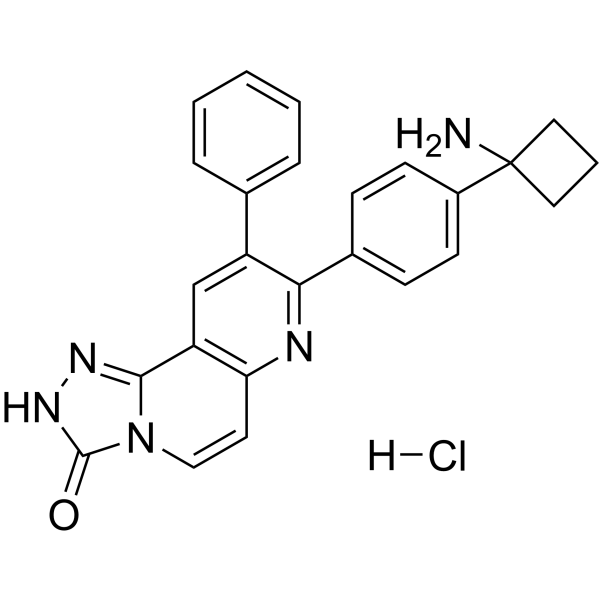
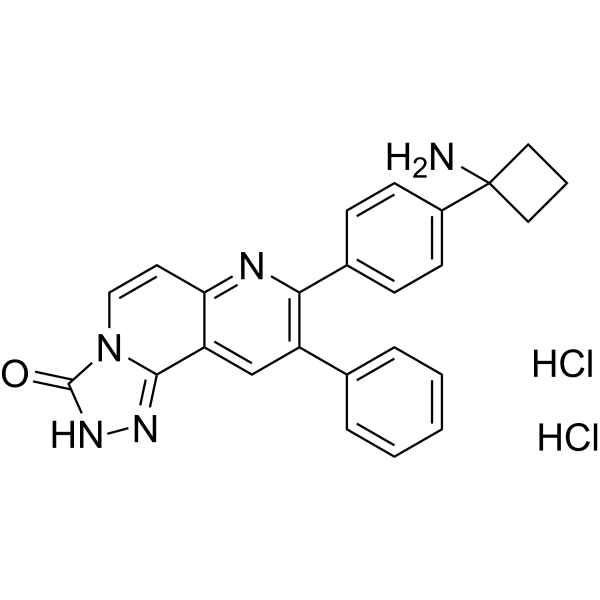
    BX-912 is a direct, selective, and ATP-competitive PDK1 inhibitor (IC50=26 nM). BX-912 blocks PDK1/Akt signaling in tumor cells and inhibits the anchorage-dependent growth of a variety of tumor cell lines in culture or induces apoptosis .
    BX-912
  • HY-N0706
    Gracillin
    2 Publications Verification

    Apoptosis Autophagy Cancer
    Gracillin is a steroidal saponin that can be extracted from the roots of the plant and has anti-tumor properties. Gracillin can induce cancer cell apoptosis and autophagy .
    Gracillin
  • HY-10222
    Ixabepilone
    5+ Cited Publications

    BMS-247550; Aza-epothilone B

    Microtubule/Tubulin Apoptosis Bacterial Cancer
    Ixabepilone (BMS-247550) is an orally bioavailable microtubule inhibitor, which binds to tubulin and promotes tubulin polymerization and microtubule stabilization, thereby arrests cells in the G2-M phase of the cell cycle and induces tumor cell apoptosis.
    Ixabepilone
  • HY-N0797
    (20S)-Protopanaxadiol
    3 Publications Verification

    20-Epiprotopanaxadiol; 20(S)-APPD

    P-glycoprotein Reactive Oxygen Species (ROS) Apoptosis Cancer
    20S-protopanaxadiol (aPPD) is a metabolite of ginseng saponins, inhibits Akt activity and induces apoptosis in various tumor cells .
    (20S)-Protopanaxadiol
  • HY-170451

    KT-253

    PROTACs MDM-2/p53 Apoptosis Cancer
    Seldegamadlin (KT-253) is a selective p53 stabilizer and a MDM2 PROTAC degrader (DC50 = 0.4 nM). Seldegamadlin inhibits the proliferation of cancer cell RS4;11 with an IC50 of 0.3 nM, arrests the cell cycle at G2/M phase, and induces apoptosis. Seldegamadlin upregulates p53 activity and overcomes the p53-MDM2 feedback loop. Seldegamadlin can be used for the study of hematologic and solid tumors, such as acute myeloid leukemia (AML) and acute lymphoblastic leukemia (ALL). (Pink: ligand for target protein MDM2 ligand 4 (HY-170452); Black: linker (HY-W001478); Blue: ligand for E3 ligase cereblon (HY-163927)) .
    Seldegamadlin
  • HY-P9933

    APN-311; Ch14.18; MAb-14.18

    Apoptosis PERK mTOR Cancer
    Dinutuximab (APN-311) is a chimeric human-mouse anti-GD2 monoclonal antibody. Dinutuximab can bind to GD2 on the cell surface, triggering antibody-dependent cell-mediated cytotoxicity and complement-dependent cytotoxicity, and promoting tumor regression. Dinutuximab can inhibit the growth, invasion, and migration and induce apoptosis of tumor cells. Dinutuximab can be used in the research of tumors such as neuroblastoma and breast cancer .
    Dinutuximab
  • HY-150190
    F5446
    1 Publications Verification

    Histone Methyltransferase Apoptosis Cancer
    F5446 (Compound 1) is a selective small molecule inhibitor of SUV39H1 methyltransferase. F5446 decreases H3K9me3 deposition at the FAS promoter, increases Fas expression and increases colorectal carcinoma cell sensitivity to FasL-induced apoptosis in vitro. F5446 suppresses human colon tumor xenograft growth in vivo .
    F5446
  • HY-N6601

    Randialic acid A

    Apoptosis Cancer
    Randialic acid A (Pomolic acid) is a pentacyclic triterpene isolated from?Euscaphis japonica?(Tunb.). Randialic acid A (Pomolic acid) inhibits tumor cells growth and induces cell apoptosis. Randialic acid A (Pomolic acid) has a potential for the treatment of prostate cancer (PC) .
    Pomolic acid
  • HY-N7000

    Environmental Pollutants Caspase Reactive Oxygen Species (ROS) Apoptosis Akt Ras Cardiovascular Disease Neurological Disease Inflammation/Immunology Cancer
    Perillyl alcohol is an orally active monoterpene. Perillyl alcohol exhibits multiple activities such as analgesic, anti-inflammatory, anti-tumor, anti-angiogenic, and anti-nociceptive effects. Perillyl alcohol can induce apoptosis and cell cycle arrest in tumor cells .
    Perillyl alcohol
  • HY-14808
    Adarotene
    10+ Cited Publications

    ST1926

    Apoptosis Cancer
    Adarotene is an effective apoptosis inducer, which surprisingly produces DNA damage and exhibites a potent antiproliferative activity on a large panel of human tumor cells.
    Adarotene
  • HY-N2424

    2-Phenyl-4-chromone

    CDK Apoptosis Caspase Cancer
    Flavone is an anti-tumor compound that targets cell cycle regulatory proteins (such as cyclin B1) and apoptosis-related factors (such as p21waf1, PIG3). Flavone selectively induces mitochondrial-mediated apoptosis pathways in tumor cells, inhibits cyclin B1 protein expression, upregulates p21waf1, and activates p63/p73 proteins. Flavone has immunomodulatory functions that enhance natural killer cell (NK cell) activity and lymphocyte proliferation. Flavone is used in cancer research, especially for its inhibitory potential in solid tumor models such as esophageal cancer and liver cancer .
    Flavone
  • HY-13631I

    (1S,9R)-DX8951f

    Drug Derivative Topoisomerase Apoptosis Cancer
    (1S,9R)-Exatecan mesylate ((1S,9R)-DX8951f) is a non-prodrug camptothecin derivative and a topoisomerase I inhibitor (IC50=0.975 μg/mL in mice and 0.82 μg/mL in humans). (1S,9R)-Exatecan mesylate blocks enzyme activity and induces apoptosis by stabilizing the enzyme-DNA cleavable complex. (1S,9R)-Exatecan mesylate not only effectively inhibits the proliferation of various malignant tumor cells and tumor growth, but also circumvents P-glycoprotein-mediated multidrug resistance. (1S,9R)-Exatecan mesylate is widely used in preclinical studies of various cancers such as pancreatic cancer, lung cancer, breast cancer, and leukemia .
    The chiral isomer of (1S,9R)-Exatecan mesylate is (1R,9R)-Exatecan mesylate (HY-13631J).
    (1S,9R)-Exatecan mesylate
  • HY-114440

    GR-MD-02

    Galectin Apoptosis Cancer
    Belapectin (GR-MD-02) is a Galectin-3 (Gal-3) inhibitor. Belapectin drives tumor-induced immunosuppression by inducing T cell Apoptosis. Belapectin promotes tumor regression and improves survival of tumor-bearing mice through a CD8+ T cell-dependent mechanism. Belapectin binds to Gal-3 with affinity Ki of 2.8 μM .
    Belapectin
  • HY-N0211
    Cyasterone
    2 Publications Verification

    EGFR Apoptosis Cancer
    Cyasterone, a natural EGFR inhibitor, mainly isolated from Ajuga decumbens Thunb (Labiatae). Cyasterone manifests anti-proliferation effect by induced apoptosis and cell cycle arrests. Cyasterone may serves as a therapeutic anti-tumor agent against human tumors .
    Cyasterone
  • HY-N0438
    Pimpinellin
    1 Publications Verification

    Apoptosis Cancer
    Pimpinellin is a constituent of Cyrtomium fortumei (J.). Pimpinellin inhibits the growth of tumor cells via the induction of tumor cell apoptosis .
    Pimpinellin
  • HY-N6843
    Arnicolide D
    2 Publications Verification

    Caspase PI3K Akt mTOR STAT Apoptosis NF-κB Reactive Oxygen Species (ROS) Cancer
    Arnicolide D is a sesquiterpene lactone that can be isolated from Centipeda minima. Arnicolide D is cytotoxic to tumor cells and can induce cell cycle arrest, apoptosis, and oncosis in tumor cells. Arnicolide D has anti-tumor activity .
    Arnicolide D
  • HY-N7526
    Naphthazarin
    1 Publications Verification

    DHNQ; 5,8-Dihydroxy-1,4-naphthoquinone

    Apoptosis Autophagy PI3K Akt Neurological Disease Inflammation/Immunology Cancer
    Naphthazarin (DHNQ) is a microtubule depolymerizing agent. Naphthazarin can improve motor function and reduce neuroinflammation in mouse models of Parkinson's disease. Naphthazarin can induce tumor cell apoptosis, autophagy, and cell cycle arrest. Naphthazarin can also induce erythrocyte apoptosis. Naphthazarin can be used in the research of tumors and neurodegenerative diseases .
    Naphthazarin
  • HY-164129

    CDK Apoptosis Cancer
    CDK4-IN-3 (Compound 389) is a potent irreversible cyclin-dependent kinase 4 (CDK4) inhibitor (IC50=25 nM, >10-fold selective over CDK6). CDK4-IN-3 arrests the cell cycle at G₁ phase, and induces tumor cell apoptosis. CDK4-IN-3 is promising for research of solid tumors such as breast and lung cancers .
    CDK4-IN-3
  • HY-16999

    MDM-2/p53 E1/E2/E3 Enzyme Apoptosis Cancer
    RO8994 (Compound 4) is an orally active, highly potent and selective spiroindolinone p53-MDM2 inhibitor with an IC50 value of 5 nM (HTRF binding assays) and 20 nM (MTT proliferation assays). RO8994 induces up-regulation of p53 expression and Apoptosis in wild-type p53 cancer cells. RO8994 also inhibits tumor growth in the tumor xenograft model .
    RO8994
  • HY-W111581
    Copper(II) diethyldithiocarbamate
    1 Publications Verification

    Diethyldithiocarbamic acid copper salt

    Apoptosis Caspase Cancer
    Copper(II) diethyldithiocarbamate (Diethyldithiocarbamic acid copper salt) is a Copper(II) and diethyldithiocarbamate coordination polymer. Copper(II) diethyldithiocarbamate binds tightly to NPL4 and induces its aggregation, disrupting the p97-NPL4-UFD1 pathway. Copper(II) diethyldithiocarbamate causes ubiquitinated proteins accumulation and impairs waste proteins degradation, thus resulting in cell apoptosis. Copper(II) diethyldithiocarbamate inhibits tumor growth in MDA-MB-231 xenograft mice models. Copper(II) diethyldithiocarbamate can be used for the research of cancer, such as breast cancer .
    Copper(II) diethyldithiocarbamate
  • HY-N2135

    Apoptosis Caspase Bcl-2 Family Tyrosinase Metabolic Disease Cancer
    Puerarin 6''-O-Xyloside is one of the major iso-flavones found in P. lobata. Puerarin 6''-O-Xyloside inhibits cancer cells proliferation, induces apoptosis by upregulating cleaved caspase-3, 7, 9, Bax and downregulating Bcl-2 levles and inhibits tumor growth in mice. Puerarin 6''-O-Xyloside has anti-osteoporotic activity in ovariectomized mice. Puerarin 6''-O-Xyloside inhibits mushroom tyrosinase with an IC50 of 513.8 μM. Puerarin 6''-O-Xyloside can be used for the research of human lung carcinoma, osteoporosis, melanosis and melanomar .
    Puerarin 6''-O-Xyloside
  • HY-B1461

    Tyrosinase Apoptosis Cancer
    Deoxyarbutin is an orally active tyrosinase inhibitor that can promote apoptosis of melanoma cells, enhance the vitality of mouse acinar cells, and has skin whitening and anti-tumor activity [1][2][3].
    Deoxyarbutin
  • HY-103036

    Epigenetic Reader Domain Apoptosis Cancer
    BET bromodomain-IN-5 is an orally active BET inhibitor with an IC50 of 14 nM against BRD4 (1). BET bromodomain-IN-5 can inhibit the proliferation of tumor cells and induce cell cycle arrest and apoptosis. BET bromodomain-IN-5 can be used in the research of tumors .
    BET bromodomain-IN-5
  • HY-N3181

    Apoptosis Wnt β-catenin c-Myc Survivin GSK-3 Ferroptosis Keap1-Nrf2 Heme Oxygenase (HO) NF-κB Interleukin Related Cardiovascular Disease Neurological Disease Metabolic Disease Inflammation/Immunology Cancer
    Nodosin is an orally active diterpenoid compound that can be isolated from Isodon serra. Nodosin can inhibit the proliferation and induce cell cycle arrest and apoptosis of tumor cells. Nodosin can also inhibit oxidative stress, inflammatory responses, and ferroptosis. Nodosin has anti-inflammatory and anti-tumor activities .
    Nodosin
  • HY-N4225
    Aaptamine
    2 Publications Verification

    Adrenergic Receptor Proteasome Cholinesterase (ChE) Bacterial Apoptosis AP-1 NF-κB Infection Neurological Disease Inflammation/Immunology Endocrinology Cancer
    Aaptamine is an alkaloid that can be isolated from the sponge Aaptos suberitoides. Aaptamine is a competitive antagonist of the α-adrenergic receptor, as well as an inhibitor of the proteasome and cholinesterase. Aaptamine is cytotoxic to tumor cells and can induce apoptosis, cell cycle arrest of tumor cells, and the expression of p21 through a p53-independent pathway. Aaptamine has multiple activities such as anti-tumor, antioxidant, antibacterial, and analgesic effects .
    Aaptamine
  • HY-108640A

    MDM-2/p53 Parasite Apoptosis Infection Cancer
    HLI373 dihydrochloride is an efficacious Hdm2 inhibitor. HLI373 dihydrochloride inhibits the ubiquitin ligase activity of Hdm2. HLI373 dihydrochloride is effective in inducing apoptosis of several tumor cells that are sensitive to DNA-damaging agents . Antimalarial activity .
    HLI373 dihydrochloride
  • HY-160506

    PROTACs c-Met/HGFR Apoptosis Cancer
    PRO-6E is an oral active PROTAC based on Cereblon ligand, and induces the degradation of MET with maximum degradation of 81.9% at 1 μM in MKN-45 cells. PRO-6E inhibits tumor growth in vivo and in vitro. PRO-6E induces cell apoptosis and induces cell arrest (Sturcture Note:(Blue: Cereblon ligand (HY-103596), Black: linker;Pink: ALK/c-Met inhibitor Crizotinib (HY-50878)) .
    PRO-6E
  • HY-168566

    HSP Cancer
    EV206 is a Hsp70 binder and apoptosis inducer that binds to the N-terminal domain of Hsp70, promotes Hsp70 degradation via the ubiquitin-proteasome system, and reduces Hsp70 protein stability. EV206 induces apoptotic cell death, inhibits colony formation, and downregulates the expression of cancer stem cell-related markers in non-small cell lung cancer cells. EV206 inhibits the growth of H460 xenograft tumors in nude mice and can be used for the research of non-small cell lung cancer .
    EV206
  • HY-145722A
    Apatorsen
    1 Publications Verification

    OGX-427

    HSP Cancer
    Apatorsen is a 2'-methoxyethyl-modified antisense oligonucleotide and also a Hsp27 inhibitor. Apatorsen reduces Hsp27 mRNA and protein levels, impairs stress-induced cytoprotective functions, induces cell apoptosis, inhibits tumor growth and prevents metastasis. Apatorsen is applicable to research related to non-small cell lung cancer, castration-resistant prostate cancer, breast cancer, ovarian cancer and bladder cancer .
    Apatorsen
  • HY-N8207
    Gypenoside LI
    1 Publications Verification

    Apoptosis MicroRNA Cancer
    Gypenoside LI, a gypenoside monomer, possesses anti-tumor activity. Gypenoside LI induces cell apoptosis, cell cycle and migration .
    Gypenoside LI
  • HY-122760
    Bax activator-1
    3 Publications Verification

    Bcl-2 Family Apoptosis Cancer
    Bax activator-1 (compound 106) is a Bax activator that induces Bax-dependent tumor cell apoptosis .
    Bax activator-1
  • HY-126856

    HDAC Apoptosis Cancer
    HC-Toxin, a cyclic tetrapeptide, is a potent HDAC inhibitor with an IC50 of 30 nM . HC-Toxin induces tumor cell apoptosis and has anticancer effects .
    HC-Toxin
  • HY-N0797R

    20-Epiprotopanaxadiol (Standard); 20(S)-APPD (Standard)

    Reference Standards P-glycoprotein Reactive Oxygen Species (ROS) Apoptosis Cancer
    (20S)-Protopanaxadiol (Standard) is the analytical standard of (20S)-Protopanaxadiol. This product is intended for research and analytical applications. 20S-protopanaxadiol (aPPD) is a metabolite of ginseng saponins, inhibits Akt activity and induces apoptosis in various tumor cells .
    (20S)-Protopanaxadiol (Standard)
  • HY-172086

    TrxR Apoptosis Reactive Oxygen Species (ROS) Cancer
    TrxR-IN-7 is a thioredoxin reductase (TrxR) inhibitor with an IC50 of 3.5 μM. TrxR-IN-7 induces reactive oxygen species (ROS) generation and apoptosis in tumor cells. TrxR-IN-7 can be used for the research of liver cancer and breast cancer .
    TrxR-IN-7
  • HY-12564

    Aurora Kinase Apoptosis Mitosis Cancer
    Phthalazinone pyrazole is a potent, selective, and orally active inhibitor of Aurora-A kinase with an IC50 of 0.031 μM. Phthalazinone pyrazole can arrests mitosis and subsequently inhibit tumor growth via apoptosis of proliferating cells. Phthalazinone pyrazole suppresses the epithelial-mesenchymal transition (EMT) during the differentiation of hepatocyte-like cells (HLCs) from human embryonic stem cells .
    Phthalazinone pyrazole
  • HY-N15194A

    Bacterial Apoptosis Infection Cancer
    Inostamycin A sodium is an inhibitor of cytidine-5'-diphosphate-1,2-diacyl-sn-glycerol (CDP-DG):inositol transferase. Inostamycin A sodium reduces phosphatidylinositol turnover, and inhibits cell proliferation and transformation. Inostamycin A sodium inhibits cancer cell proliferation, induces apoptosis, and prevents tumor recurrence. Inostamycin A sodium exhibits antibacterial activity. Inostamycin A sodium is applicable to research related to infection and cancer .
    Inostamycin A sodium
  • HY-163299
    pan-KRAS-IN-5
    1 Publications Verification

    Ras Apoptosis PI3K Akt p38 MAPK Cancer
    pan-KRAS-IN-5 is a pan-KRAS translation inhibitor by targeting 5′-UTR RNA G-quadruplexes (rG4s). pan-KRAS-IN-5 strongly binds to and stabilizes KRAS rG4s, inhibits KRAS translation, and blocks the MAPK and PI3K-AKT pathways. pan-KRAS-IN-5 induces cell cycle arrest, prompts apoptosis in KRAS-driven cancer cells. pan-KRAS-IN-5 inhibits tumor growth and KRAS expression in KRAS-mutant xenograft. KRAS-IN-5 can be used for KRAS-driven cancer research .
    pan-KRAS-IN-5
  • HY-N10520

    Methyl protopectin; Polygalacturonic acid

    Apoptosis Necroptosis Endogenous Metabolite Inflammation/Immunology Cancer
    Pectic acid (Methyl protopectin), a polygalacturonic acid, induces cell apoptosis and necrosis in pituitary tumor cells. Pectic acid can be used in the research of cancers and autoimmune disease .
    Pectic acid
  • HY-N12677

    Caflanone; FBL-03G

    SARS-CoV Apoptosis Autophagy Akt Infection Cancer
    Isocannflavin B (Caflanone) is a flavonoid compound. Isocannflavin B exhibits anti-tumor and anti-viral activities. Isocannflavin B induces apoptosis, autophagy and cell cycle arrest in tumor cells, and inhibits cell proliferation. Isocannflavin B inhibits HCoV-OC43. Isocannflavin B can be used in research related to cancer and COVID-19 .
    Isocannflavin B
  • HY-N16420

    DNA/RNA Synthesis Apoptosis Cancer
    Illudin B is a DNA-targeting cytotoxin that forms interstrand DNA crosslinks via covalent binding, disrupting DNA replication and transcription. Illudin B induces cell cycle arrest and apoptosis, showing toxicity against multiple tumor cells (e.g., leukemia, breast, lung cancer) .
    Illudin B
  • HY-160843

    Apoptosis Cancer
    N-ω-chloroacetyl-L-ornithine (NCAO) is a potent reversible competitive ornithine decarboxylase (ODC) inhibitor that exerts cytotoxic and antiproliferative effects on tumor cell lines with EC50 values ranging from 1 to 50.6 µM. NCAO induces tumor cell Apoptosis and inhibits tumor cell migration in vitro. NCAO also exhibits a potent antitumor activity against both solid and ascitic tumors in a mouse model using the myeloma (Ag8) cell line. NCAO is promising for research of antitumor agents .
    NCAO
  • HY-108640

    MDM-2/p53 Parasite Apoptosis Infection Cancer
    HLI373 is an efficacious Hdm2 inhibitor. HLI373 inhibits the ubiquitin ligase activity of Hdm2. HLI373 is effective in inducing apoptosis of several tumor cells that are sensitive to DNA-damaging agents . Antimalarial activity .
    HLI373
  • HY-P10553

    Apoptosis Cancer
    ARF(26–44), cell-permeable is a cell-penetrating peptide derived from a specific amino acid sequence of the p14ARF tumor suppressor protein. As a functional inhibitor of FoxM1, ARF(26–44) cell-permeable shows significant anti-tumor activity in the treatment of mouse hepatocellular carcinoma (HCC), significantly increasing tumor cell apoptosis and reducing tumor cell proliferation and angiogenesis. ARF(26–44), cell-permeable can be used in research on tumor therapy .
    ARF(26–44), cell-permeable
  • HY-162863

    Apoptosis Cancer
    ERK-MYD88 interaction inhibitor 1 is an ERK-MYD88 interaction inhibitor. ERK-MYD88 interaction inhibitor 1 can induce an HRI-mediated integrated stress response (ISR), leading to cancer cell-specific immunogenic cell apoptosis (apoptosis). ERK-MYD88 interaction inhibitor 1 can induce anti-tumor T cell responses in Lewis lung cancer mice, exhibiting anti-tumor activity .
    ERK-MYD88 interaction inhibitor 1
  • HY-15960A

    VDC-597; SN33597

    PI3K mTOR Apoptosis Cancer
    PWT-33597 (VDC-597) is a dual inhibitor of PI3Kα and mTOR, which can effectively block the signaling downstream of PI3K and mTOR. PWT-33597 is capable of inducing tumor cell apoptosis and inhibiting tumor growth. PWT-33597 has anti-tumor activity and can be used in the research of tumors such as renal cell carcinoma .
    PWT-33597
  • HY-112225

    Antibiotic Bacterial Parasite NF-κB Apoptosis Infection Cancer
    Narasin sodium is a cationic ionophore and coccidiostat agent. Narasin inhibits NF-κB signaling and induces tumor cells apoptosis. Narasin sodium has antimicrobial and anticancer activity .
    Narasin sodium
  • HY-151620

    Apoptosis Cancer
    Antitumor agent-80 (compound 11) is an orally active and potent antitumor agent. Antitumor agent-80 induces apoptosis in tumor cells .
    Antitumor agent-80
  • HY-15960

    VDC-597 free base

    PI3K mTOR Apoptosis Cancer
    PWT-33597 (VDC-597) free base is a dual inhibitor of PI3Kα and mTOR, which can effectively block the signaling downstream of PI3K and mTOR. PWT-33597 free base is capable of inducing tumor cell apoptosis and inhibiting tumor growth. PWT-33597 free base has anti-tumor activity and can be used in the research of tumors such as renal cell carcinoma .
    PWT-33597 free base
  • HY-176740

    PROTACs Bcl-2 Family p38 MAPK Reactive Oxygen Species (ROS) Mitochondrial Metabolism Apoptosis ERK JNK Cancer
    PROTAC Bcl-xL degrader-4 (Compound 2-38-III) is a Bcl-xL PROTAC degrader. PROTAC Bcl-xL degrader-4 has strong anti-tumor activity against HepG2 cells and HUVEC cells. PROTAC Bcl-xL degrader-4 induces cells apoptosis by decreasing mitochondrial membrane potential and activating the MAPK signaling pathway. PROTAC Bcl-xL degrader-4 significantly inhibits tumor growth in xenograft tumor mouse models . Pink: MAPK ligand (HY-176741); Blue: CRBN ligase ligand (HY-10984); Black: linker (HY-W017440)
    PROTAC Bcl-xL degrader-4
  • HY-177768

    HDAC Apoptosis Cancer
    HDAC-IN-96 (Compound 3f) is a selective HDAC1/2 inhibitor with IC50 values of 457.1 and 433.7 nM. HDAC-IN-96 has strong inhibitory activity against multiple hematological tumor cells (RS4;11, K562, RPMI-8226, U266), with IC50 values ranging from 2.11 to 5.35 μM. HDAC-IN-96 can induce cancer cells apoptosis and S phase arrest. HDAC-IN-96 can be used for the research of cancer, such as acute lymphoblastic leukemia .
    HDAC-IN-96

Inquiry Online

Your information is safe with us. * Required Fields.

Salutation


Country or Region *

Applicant Name *


Organization Name *

Department *


Email Address *


Product Name *

Cat. No.


Requested quantity *

Phone Number *


Remarks

Inquiry Online

Inquiry Information

Product Name:
Cat. No.:
Quantity:
MCE Japan Authorized Agent:

