






1. Search Result
Search Result
Results for "

variable

" in MedChemExpress (MCE) Product Catalog:

52

Inhibitors & Agonists

1

Fluorescent Dye

2

Biochemical Assay Reagents

4

Peptides

32

Inhibitory Antibodies

2

Isotope-Labeled Compounds

4

Antibodies

Cat. No. Product Name Target Research Areas Chemical Structure
  • HY-P1464

    Amylin (rat)

    Amylin Receptor Metabolic Disease
    Amylin, amide, rat is a potent and high affinity ligand of Amylin receptor AMY1 and AMY3 receptors and variably of AMY2 receptors; binding studies are generally used for the latter receptor.
    Amylin, amide, rat
  • HY-P990110
    Lecanemab (Mouse IGG2a)
    1 Publications Verification

    Mab158

    Amyloid-β Neurological Disease
    Lecanemab (Mouse IGG2a) (Mab158) is a monoclonal antibody that targets soluble β-amyloid and has the potential to reduce cognitive decline. The variable region of Lecanemab (Mouse IGG2a) is consistent with that of Lecanemab, while the constant region is of Mouse IGG2a sequence. Lecanemab (Mouse IGG2a) almost abolishes accumulation in astrocytes and rescues neurons from Aβ-induced cell death. Lecanemab (Mouse IGG2a) holds promise for research in the field of Alzheimer's disease .
    Lecanemab (Mouse IGG2a)
  • HY-P990688

    AMG-509

    CD3 Cancer
    Xaluritamig (AMG-509) is a bispecific T cell engager and cytolytic agent with a Kd of 27.6 nM for human CD3ε. Xaluritamig binds to CD3ε via an anti-CD3 single-chain variable fragment (scFv) domain, and to STEAP1 via a bispecific anti-STEAP1 antigen-binding fragment (Fab) domain, thereby recruiting and activating T cells and forming a bridge between T cells and STEAP1-expressing cancer cells. Xaluritamig induces T cell-mediated redirected cytotoxicity, tumor cell lysis, cytokine release, CD8 + T cell activation and expansion, as well as tumor stasis or regression. Xaluritamig contains an Fc domain with no effector function, which prolongs serum half-life, exhibits only minimal activity against cells with low STEAP1 expression and normal cells, and shows extremely low target-related off-tumor toxicity in cynomolgus monkeys. Xaluritamig is used in STEAP1×CD3 XmAb 2+1 immunotherapy and in research on metastatic castration-resistant prostate cancer and Ewing sarcoma .
    Xaluritamig
  • HY-P99721

    ABT-981

    Interleukin Related Inflammation/Immunology
    Lutikizumab (ABT-981) is an anti-IL-1α and IL-1β dual variable domain immunoglobulin. Lutikizumab binds and inhibits IL-1α and IL-1β. Lutikizumab can be used for the research of osteoarthritis .
    Lutikizumab
  • HY-P990534

    K1-70

    TSH Receptor Endocrinology Cancer
    Anti-TSHR Antibody (K1-70) is an anti-TSHR monoclonal antibody. Anti-TSHR Antibody (K1-70) incorporates a single-chain variable fragment into a chimeric antigen receptor to redirect T cells to TSHR-expressing cells. Anti-TSHR Antibody (K1-70) shows antitumor activity with no apparent toxicity. Anti-TSHR Antibody (K1-70) can be used for the research of differentiated thyroid cancer (DTC) .
    Anti-TSHR Antibody (K1-70)
  • HY-P990748

    SAR443765

    Interleukin Related Inflammation/Immunology
    Lunsekimig (SAR443765) is an anti-TSLP/IL13/ALB nonobody composed of 5 sequentially linked variable region heavy chains. Lunsekimig decreases blood eosinophils and lowers plasma levels of IL-5, eotaxin-3, and IgE. Lunsekimig also improves lung function. Lunsekimig can be used for the study and treatment of type 2 inflammatory asthma .
    Lunsekimig
  • HY-P990109

    Amyloid-β Neurological Disease
    Aducanumab (Mouse IGG2a) is a monoclonal antibody that selectively targets aggregated amyloid-beta (Aβ). The variable region of Aducanumab (Mouse IGG2a) is consistent with that of Aducanumab (HY-P9967), while the constant region is of Mouse IGG2a sequence. Aducanumab (Mouse IGG2a) has strong selectivity for Aβ fibrils with EC50s of >1 μM and 0.2 nM for monomeric Aβ1-40 and fibrillar Aβ1-42, respectively. Aducanumab (Mouse IGG2a) can be used for Alzheimer's disease (AD) research .
    Aducanumab (Mouse IGG2a)
  • HY-130187A
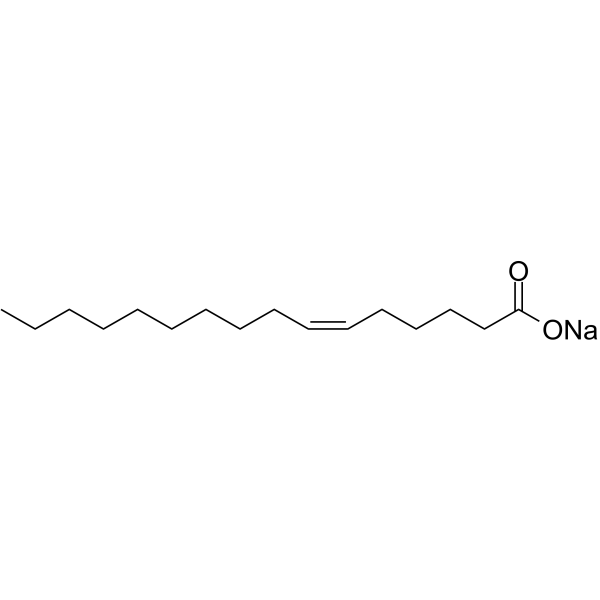
    Sapienic acid sodium
    1 Publications Verification

    Bacterial Infection
    Sapienic acid sodium is a fatty acid commonly found on the skin and in mucosa. Sapienic acid sodium has variable antimicrobial activities against Gram-positive and Gram-negative bacteria found on the skin and in the oral cavity. Sapienic acid sodium is active against Streptococcus sanguinis, Streptococcus mitis and Fusobacterium nucleatum with MBC values of 31.3 μg/mL, 375.0 μg/mL and 93.8 μg/mL, respectively .
    Sapienic acid sodium
  • HY-P99008
    Atibuclimab
    2 Publications Verification

    IC14

    Toll-like Receptor (TLR) Infection Neurological Disease Inflammation/Immunology
    Atibuclimab (IC14), is a chimeric monoclonal antibody directed against CD14 and is composed of murine variable and human IgG4 Fc regions. Atibuclimab attenuates Lipopolysaccharides (HY-D1056) (LPS)-induced symptoms and strongly inhibits LPS-induced proinflammatory cytokine release, while only delaying the release of the anti-inflammatory cytokines soluble TNF receptor type I and IL-1 receptor antagonist. Atibuclimab can be used for the research of amyotrophic lateral sclerosis, sepsis, community-acquired pneumonia, or acute lung injury .
    Atibuclimab
  • HY-112747

    LPI; PE (soy)

    Phospholipase Infection
    Soy PE (LPI) is the most abundant phospholipid in prokaryotes and the second most abundant found in the membrane of mammalian, plant, and yeast cells, comprising approximately 25% of total mammalian phospholipids. In the brain, phosphatidylethanolamine comprises almost half of the total phospholipids. It is synthesized mainly through the cytidine diphosphate-ethanolamine and phosphatidylserine decarboxylation pathways, which occur in the endoplasmic reticulum (ER) and mitochondrial membranes, respectively. It is a precursor in the synthesis of phosphatidylcholine and arachidonoyl ethanolamide and is a source of ethanolamine used in various cellular functions. In E.coli, phosphatidylethanolamine deficiency prevents proper assembly of lactose permease, suggesting a role as a lipid chaperone. It is a cofactor in the propagation of prions in vitro and can convert recombinant mammalian proteins into infectious molecules even in the absence of RNA. This product contains phosphatidylethanolamine molecular species with variable fatty acyl chain lengths at the sn-1 and sn-2 positions .
    Soy PE
  • HY-P99852

    ABT165; PR1283233

    VEGFR Notch Cancer
    Dilpacimab (ABT165) is a bispecific variable domain immunoglobulin. Dilpacimab binds to and inhibits DLL4 and VEGF and acts as a tumor growth inhibitor. Dilpacimab can be used in research related to metastatic colorectal cancer and advanced solid tumors .
    Dilpacimab
  • HY-P99940

    ABT-122

    TNF Receptor Interleukin Related Inflammation/Immunology
    Remtolumab is a bispecific variable domain immunoglobulin molecule with human affinities for TNFα and IL-17 in the low pM range of Kd. Remtolumab can be used in research related to rheumatoid arthritis, psoriatic arthritis, and moderate-to-severe plaque psoriasis .
    Remtolumab
  • HY-P991736

    Interleukin Related Inflammation/Immunology
    Anti-IL11 Antibody (X203, Mouse IgG) is a chimeric antibody composed of humanized variable regions and a mouse IgG backbone. Anti-IL11 Antibody (X203, Mouse IgG) is a mouse-derived IgG antibody inhibitor, targeting to human IL-11.
    Anti-IL11 Antibody (X203, Mouse IgG)
  • HY-P99293

    IDEC 114; Anti-Human CD80 Recombinant Antibody

    CD28 Apoptosis Cancer
    Galiximab (IDEC-114) is a primatized monoclonal IgG1 antibody targeting CD80. Galiximab variable regions are primatized, and the constant regions are humanized. Galiximab induces antibody-dependent cellular cytotoxicity by blocking CD80-CD28 binding. Galiximab has antitumor activity and can induce apoptosis in tumor cells. Galiximab can be used in the research of relapsed Hodgkin lymphoma and solid tumors .
    Galiximab
  • HY-P99674

    GEN-3009

    Transmembrane Glycoprotein Cancer
    Ivicentamab (GEN-3009) is a bispecific antibody targeting CD37 with dual epitopes. Ivicentamab carries an E430G mutation in the Fc region, which efficiently promotes IgG hexamer formation on the surface of target cells. Ivicentamab provides the parental variable regions for an H429F-engineered anti-CD37 bispecific antibody, enabling it to exert complement-dependent cytotoxicity in Daudi lymphoma cells. Ivicentamab is mainly used in lymphoma-related research .
    Ivicentamab
  • HY-156041

    Lyso-PE (egg); LPE (egg); L-α-lysophosphatidylethanolamine

    Endogenous Metabolite Metabolic Disease
    Lysophosphatidylethanolamine (LPE) is a naturally-occurring lysophospholipid that can be generated via deacylation of phosphatidylethanolamine by phospholipase A2 (PLA2). It increases the phosphorylation of ERK1/2 in PC12 cells, an effect that can be blocked by the MEK inhibitors U-0126 (HY-12031A) and PD 98059 (HY-12028) and the EGFR inhibitor AG-1478 (HY-13524).1 LPE also increases neurite outgrowth and expression of neurofilament M in PC12 cells. LPE inhibits the activity of phospholipase D (PLD) partially purified from cabbage.3 This product contains lysophosphatidylethanolamine molecular species with variable fatty acyl chain lengths at the sn-1 position and a hydroxy group at the sn-2 position.
    Lysophosphatidylethanolamines, egg
  • HY-P99145A

    PD-1/PD-L1 Cancer
    Anti-Mouse PD-L1/B7-H1 Antibody (10F.9G2-Mouse IgG1) is a recombinant chimeric version of the original 10F.9G2 antibody (HY-P99145). The variable domain sequences are identical to the original 10F.9G2 but the constant region sequences have been switched from rat IgG2b to mouse IgG1. Anti-Mouse PD-L1/B7-H1 Antibody (10F.9G2-Mouse IgG1) contains no Fc mutations just as the original rat IgG2b antibody does not. Anti-Mouse PD-L1/B7-H1 Antibody (10F.9G2-Mouse IgG1) blocks PD-1 signaling. Anti-Mouse PD-L1/B7-H1 Antibody (10F.9G2-Mouse IgG1) can be used for the research of cancer.
    Anti-Mouse PD-L1/B7-H1 Antibody (10F.9G2-Mouse IgG1)
  • HY-P991046

    Amyloid-β Neurological Disease
    Donanemab (Mouse IgG2b) is a chimeric antibody composed of humanized variable regions and a mouse IgG2b backbone. Donanemab (Mouse IgG2b) is an anti-amyloid inhibitor used in Alzheimer's disease research.
    Donanemab (Mouse IgG2b)
  • HY-W011258

    L-Tyrosyl-L-phenylalanine

    Xanthine Oxidase Angiotensin-converting Enzyme (ACE) Inflammation/Immunology Cancer
    H-Tyr-Phe-OH (L-Tyrosyl-L-phenylalanine) is an orally active inhibitor of Angiotensin converting enzyme (ACE), with an inhibiton rate of 48% at 50 μM. H-Tyr-Phe-OH can be used as an biomarker for differentiating benign thyroid nodules (BTN) from thyroid cancer (TC). H-Tyr-Phe-OH exhibits xanthine oxidase inhibition (uric acid lowering) activity and serves as regulator in IL-8 production in neutrophil-like cells .
    H-Tyr-Phe-OH
  • HY-P990172

    PD-1/PD-L1 Cancer
    Anti-Mouse PD-L1/B7-H1 (D265A) Antibody (10F.9G2) is a recombinant chimeric version of the original 10F.9G2 antibody (HY-P99145). The variable domain sequences are identical to the original 10F.9G2 but the constant region sequences have been switched from rat IgG2b to mouse IgG1. Anti-Mouse PD-L1/B7-H1 (D265A) Antibody (10F.9G2) contains a D265A mutation in the Fc fragment rendering it unable to bind to endogenous Fcγ receptors. Anti-Mouse PD-L1/B7-H1 (D265A) Antibody (10F.9G2) blocks PD-1 signaling. Anti-Mouse PD-L1/B7-H1 (D265A) Antibody (10F.9G2) can be used for the research of cancer.
    Anti-Mouse PD-L1/B7-H1 (D265A) Antibody (10F.9G2)
  • HY-P990171

    PD-1/PD-L1 Cancer
    Anti-Mouse PD-L1/B7-H1 (LALA-PG) Antibody (10F.9G2) is a recombinant chimeric version of the original 10F.9G2 antibody (HY-P99145). The variable domain sequences are identical to the original 10F.9G2 but the constant region sequences have been switched from rat IgG2b to mouse IgG2a. Anti-Mouse PD-L1/B7-H1 (LALA-PG) Antibody (10F.9G2) contains a LALA-PG mutation in the Fc fragment rendering it unable to bind to endogenous Fcγ receptors. Anti-Mouse PD-L1/B7-H1 (LALA-PG) Antibody (10F.9G2) blocks PD-1 signaling. Anti-Mouse PD-L1/B7-H1 (LALA-PG) Antibody (10F.9G2) can be used for the research of cancer.
    Anti-Mouse PD-L1/B7-H1 (LALA-PG) Antibody (10F.9G2)
  • HY-130187
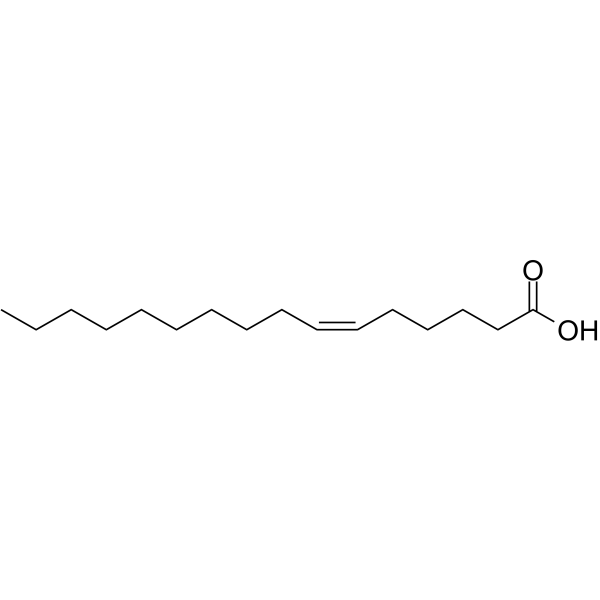
    Sapienic acid
    1 Publications Verification

    Bacterial Infection
    Sapienic acid is a fatty acid commonly found on the skin and in mucosa. Sapienic acid has variable antimicrobial activities against Gram-positive and Gram-negative bacteria found on the skin and in the oral cavity. Sapienic acid is active against Streptococcus sanguinis, Streptococcus mitis and Fusobacterium nucleatum with MBC values of 31.3 μg/mL, 375.0 μg/mL and 93.8 μg/mL, respectively .
    Sapienic acid
  • HY-P990303

    Nuclear Factor of activated T Cells (NFAT) Others
    Anti-Mouse 2C TCR Antibody (1B2) is a mouse-derived IgG1 type antibody inhibitor, targeting to mouse 2C TCR. Anti-Mouse 2C TCR Antibody (1B2) recognizes determinants on the variable regions of both the α and β subunits of the TCR (T cell receptor) expressed by the mouse cytotoxic T lymphocyte clone 2C. Anti-Mouse 2C TCR Antibody (1B2) can be used for the detections of immunofluorescence and flow cytometry .
    Anti-Mouse 2C TCR Antibody (1B2)
  • HY-P990714

    CD3 Inflammation/Immunology
    Obertamig is an engineered, humanized, anti-CD3E/HLA-G monoclonal antibody with humanized CH2-CH3 modifications and consists of half immunoglobulin IgG1 λ2 and a single-chain variable fragment (scFv) .
    Obertamig
  • HY-D1275

    Fluorescent Dye Others
    CAY10731 (compound 3) is a highly selective fluorescent probe for detection of hydrogen sulfide (H2S). CAY10731 is used to monitor exo- and endogenous H2S in both cancer and normal cells. CAY10731 is applied for imaging of H2S in living tissues at variable depths and in nematodes .
    CAY10731
  • HY-P990269

    TNF Receptor Inflammation/Immunology Cancer
    Anti-Mouse CD40L/CD154 (LALA-PG) Antibody (MR-1) is a mouse-derived IgG2a κ type antibody inhibitor, targeting to mouse CD40L/CD154. Anti-Mouse CD40L/CD154 (LALA-PG) Antibody (MR-1) is a chimeric version of the original MR-1 antibody (HY-P990134). The variable domain sequences are identical to the original MR-1 but the constant region sequences have been switched from Armenian hamster IgG to mouse IgG2a. Anti-Mouse CD40L/CD154 (LALA-PG) Antibody (MR-1) contains a LALA-PG mutation in the Fc fragment rendering it unable to bind to endogenous Fcγ receptors. Anti-Mouse CD40L/CD154 (LALA-PG) Antibody (MR-1) blocks CD40/CD40L signaling. Anti-Mouse CD40L/CD154 (LALA-PG) Antibody (MR-1) can be used for researches of cancer, inflammation and immunology.
    Anti-Mouse CD40L/CD154 (LALA-PG) Antibody (MR-1)
  • HY-W017163S

    Endogenous Metabolite Metabolic Disease
    7-Methylxanthine-2,4,5,6- 13C4, 1,3- 15N2 (with variable 15N labeling at N9) is the 13C and 15N labeled 7-Methylxanthine . 7-Methylxanthine, a methyl derivative of xanthine, is one of the purine components in urinary calculi .
    7-Methylxanthine-2,4,5,6-13C4, 1,3-15N2 (with variable 15N labeling at N9)
  • HY-123956

    IRAK Inflammation/Immunology
    HG-12-6 is a type II inhibitor of IRAK4. HG-12-6 shows preferential binding to unphosphorylated inactive IRAK4 with an IC50 of 165 nM. HG-12-6 can modulate IRAK4 activity in autoimmunity and inflammation .
    HG-12-6
  • HY-P4019

    HIV Protease Others
    Ac-Ser-Gln-Asn-Tyr-Pro-Val-Val-NH2 is a substrato peptídico of HIV-1 protease. Ac-Ser-Gln-Asn-Tyr-Pro-Val-Val-NH2 acts as the variable substrate in a peptidolytic assay to quantify the inhibition of the protease .
    Ac-Ser-Gln-Asn-Tyr-Pro-Val-Val-NH2
  • HY-172558

    Biochemical Assay Reagents Others
    MEL-A is a glycolipid biosurfactant. MEL-A can be produced from vegetable oils by Pseudozyma yeasts. MEL-A can improve the low-temperature fluidity of biodiesel and hydrocarbon fuels. MEL-A is composed of a mixture of MEL-A isoforms with variable lengths of the fatty acid chain. MEL-A can significantly increases gene transfection by cationic liposomes via membrane fusion .
    MEL-A
  • HY-P991512

    Apoptosis Cancer
    SGN-30 is a chimeric antibody derived from a mouse antihuman CD30 antibody, AC10, with the variable regions of AC10 and human α 1 heavy chain and κ light chain constant regions. SGN-30 induces apoptosis and cell-cycle arrest in cancer cells. SGN-30 can be used for the study of Hodgkin lymphoma (HL) and anaplastic large cell lymphoma (ALCL) .
    SGN-30
  • HY-129579

    Histamine Receptor Others
    Linadryl is a compound with antihistamine and other effects. It has a variable effect on gastric acid secretion after oral administration, and its effect is about half that of Diphenhydramine (HY-B0303).
    Linadryl
  • HY-P990695

    EGFR Inflammation/Immunology
    Lunaxafusp is an anti-ERBB2 scFv-heavy-κ monoclonal antibody composed of a single chain variable fragment, an antibody heavy chain, and a kappa antibody light chain .
    Lunaxafusp
  • HY-126635

    Dopamine Receptor Adrenergic Receptor Others
    Mafoprazine is a phenylpiperazine derivative with variable affinities for neuronal receptors. It may exert its antipsychotic effects primarily through D2 receptor blockade and α-adrenergic activity, and may increase the activity of dopamine metabolites.
    Mafoprazine
  • HY-W127461

    Gangliotriosylceramide

    Biochemical Assay Reagents Others
    Ganglioside GM2 asialo (asialo-GM2) is a glycosphingolipid containing three monosaccharide residues and one fatty acid of variable chain length, but lacks the sialic acid residue present on ganglioside M2. Asialo-GM2 is found at low or undetectable levels in normal human brains, but it accumulates in the brains of patients with Tay-Sachs disease and Sandhoff disease, which are expressed as lysosomal β- A neurodegenerative disorder characterized by hexosaminidase A and B deficiency. It also binds to various bacteria, including Pseudomonas isolated from cystic fibrosis patients. The Asialo-GM2 mixture contains ganglioside GM2 asialo molecular species with fatty acyl chains of variable length.
    Ganglioside GM2, Asialo
  • HY-162476

    SHP2 Cancer
    SHP2-IN-28 (Compound 7188-0011) is an inhibitor of SHP2 (IC50=54.31 μM). SHP2-IN-28 exerts its inhibitory effect by binding to the variable site of SHP2 with high selectivity .
    SHP2-IN-28
  • HY-126635R

    Adrenergic Receptor Dopamine Receptor Reference Standards Others
    Mafoprazine (Standard) is the analytical standard of Mafoprazine. This product is intended for research and analytical applications. Mafoprazine is a phenylpiperazine derivative with variable affinities for neuronal receptors. It may exert its antipsychotic effects primarily through D2 receptor blockade and α-adrenergic activity, and may increase the activity of dopamine metabolites.
    Mafoprazine (Standard)
  • HY-W040186

    Biochemical Assay Reagents Others
    1-Naphthenyl phosphate hydrate sodium is commonly used as a flame retardant for various materials such as plastics, textiles, and construction materials. In addition, its potential use as a corrosion inhibitor and as an ingredient in fertilizers and detergents has been investigated. Its hydrated form contains variable amounts of water molecules, which affects its physical properties and applications.
    1-Naphthenyl phosphate hydrate sodium
  • HY-P991594

    Interleukin Related Inflammation/Immunology
    Anti-IL-13 Antibody (C836) is a neutralizing monoclonal antibody targeting human IL-13. The Fab fragment of Anti-IL-13 Antibody (C836) is a heterodimer composed of heavy chains and light chains, each folded into variable and constant domains. Anti-IL-13 Antibody (C836) can be used for chronic inflammatory diseases, such as asthma .
    Anti-IL-13 Antibody (C836)
  • HY-130187S

    Isotope-Labeled Compounds Bacterial Infection
    Sapienic acid-d19 is a deuterated labeled Sapienic acid . Sapienic acid is a fatty acid commonly found on the skin and in mucosa. Sapienic acid has variable antimicrobial activities against Gram-positive and Gram-negative bacteria found on the skin and in the oral cavity. Sapienic acid is active against Streptococcus sanguinis, Streptococcus mitis and Fusobacterium nucleatum with MBC values of 31.3 μg/mL, 375.0 μg/mL and 93.8 μg/mL, respectively .
    Sapienic acid-d19
  • HY-P5472

    Transmembrane Glycoprotein Others
    Tumour-associated MUC1 epitope is a biological active peptide. (This sequence is the hallmark of MUC1 mucin. MUC1 is a highly glycosylated type I transmembrane glycoprotein with a unique extracellular domain consisting of a variable number of tandem repeats (VNTR) of this 20 amino acid peptide. It is overexpressed on the cell surface of many human adenocarcinomas and hematological malignancies, including multiple myeloma and B-cell lymphoma, making MUC1 broadly applicable target for immunotherapeutic strategies.)
    Tumour-associated MUC1 epitope
  • HY-102093A

    Others Others
    ZD 7155 is an AT1R selective antagonist with renal function modulating activity. The effects of ZD 7155 on glomeruli and tubules were measured in 1- (N = 9) and 6-week-old (N = 13) lambs. Pretreatment with ZD 7155 after L-NAME infusion did not alter glomerular function in 1- or 6-week-old lambs. During postnatal development, Ang II modulates the effects of NO on electrolyte handling via AT1R and AT2R. In 6-week-old lambs, selective inhibition of AT1R and AT2R increased the excretion of Na+, K+, and Cl-. In 6-week-old lambs, pretreatment with ZD 7155 and PD 123319 followed by the addition of L-NAME increased urine flow rate by 200%, free water clearance by 50%, and decreased urine osmolality by 40%. The same trends of changes in these variables were also observed when L-NAME was added to ZD 7155 or PD 123319, although to a lesser extent.
    ZD 7155
  • HY-P990304A

    TNF Receptor Infection Inflammation/Immunology Cancer
    Anti-Mouse 4-1BBL/CD137L Antibody (TKS-1-Mouse IgG2a) is a mouse-derived IgG2a κ antibody inhibitor that targets mouse 4-1BBL/CD137L. Anti-Mouse 4-1BBL/CD137L Antibody (TKS-1-Mouse IgG2a) is a chimeric version of the original TKS-1 antibody (HY-P990304). The variable domain sequences are identical to the original TKS-1 but the constant region sequences have been switched from rat IgG2a to mouse IgG2a. Anti-Mouse 4-1BBL/CD137L Antibody (TKS-1-Mouse IgG2a) reacts with mouse 4-1BB ligand (4-1BBL). Anti-Mouse 4-1BBL/CD137L Antibody (TKS-1-Mouse IgG2a) can be used for the researches of cancer, infection, inflammation and immunology.
    Anti-Mouse 4-1BBL/CD137L Antibody (TKS-1-Mouse IgG2a)
  • HY-P990304B

    TNF Receptor Infection Inflammation/Immunology Cancer
    Anti-Mouse 4-1BBL/CD137L (D265A) Antibody (TKS-1) is a mouse-derived IgG1 κ antibody inhibitor that targets mouse 4-1BBL/CD137L. Anti-Mouse 4-1BBL/CD137L (D265A) Antibody (TKS-1) is a chimeric version of the original TKS-1 antibody (HY-P990304). The variable domain sequences are identical to the original TKS-1 but the constant region sequences have been switched from rat IgG2a to mouse IgG1. Anti-Mouse 4-1BBL/CD137L (D265A) Antibody (TKS-1) contains a D265A mutation in the Fc fragment rendering it unable to bind to endogenous Fcγ receptors. Anti-Mouse 4-1BBL/CD137L (D265A) Antibody (TKS-1) reacts with mouse 4-1BB ligand (4-1BBL). Anti-Mouse 4-1BBL/CD137L (D265A) Antibody (TKS-1) can be used for the researches of cancer, infection, inflammation and immunology.
    Anti-Mouse 4-1BBL/CD137L (D265A) Antibody (TKS-1)
  • HY-P990270

    TNF Receptor Inflammation/Immunology Cancer
    Anti-Mouse CD40L/CD154 (D265A) Antibody (MR-1) is a mouse-derived IgG1 κ type antibody inhibitor, targeting to mouse CD40L/CD154. Anti-Mouse CD40L/CD154 (D265A) Antibody (MR-1) is a chimeric version of the original MR-1 antibody (HY-P990134). The variable domain sequences are identical to the original MR-1 but the constant region sequences have been switched from Armenian hamster IgG to mouse IgG1. Anti-Mouse CD40L/CD154 (D265A) Antibody (MR-1) contains a D265A mutation in the Fc fragment rendering it unable to bind to endogenous Fcγ receptors. Anti-Mouse CD40L/CD154 (D265A) Antibody (MR-1) blocks CD40/CD40L signaling. Anti-Mouse CD40L/CD154 (D265A) Antibody (MR-1) can be used for researches of cancer, inflammation and immunology.
    Anti-Mouse CD40L/CD154 (D265A) Antibody (MR-1)
  • HY-P990304C

    TNF Receptor Infection Others Inflammation/Immunology Cancer
    Anti-Mouse 4-1BBL/CD137L (LALA-PG) Antibody (TKS-1) is a mouse-derived IgG2a κ antibody inhibitor that targets mouse 4-1BBL/CD137L.Anti-Mouse 4-1BBL/CD137L (LALA-PG) Antibody (TKS-1) is a chimeric version of the original TKS-1 antibody (HY-P990304). The variable domain sequences are identical to the original TKS-1 but the constant region sequences have been switched from rat IgG2a to mouse IgG2a. Anti-Mouse 4-1BBL/CD137L (LALA-PG) Antibody (TKS-1) contains a LALA-PG mutation in the Fc fragment rendering it unable to bind to endogenous Fcγ receptors. Anti-Mouse 4-1BBL/CD137L (LALA-PG) Antibody (TKS-1) reacts with mouse 4-1BB ligand (4-1BBL). Anti-Mouse 4-1BBL/CD137L (LALA-PG) Antibody (TKS-1) can be used for the researches of cancer, infection, inflammation and immunology.
    Anti-Mouse 4-1BBL/CD137L (LALA-PG) Antibody (TKS-1)
  • HY-P992232

    RET Inflammation/Immunology
    Anti-GFRA4 Antibody (scFv) is a recombinant single-chain antibody fragment targeting GFRA4. Anti-GFRA4 Antibody (scFv) is formed by connecting the variable region of the heavy chain (VH) and the variable region of the light chain (VL) through a flexible short peptide (Linker), without the Fc segment, while maintaining the antigen-binding specificity.
    Anti-GFRA4 Antibody (scFv)
  • HY-126635A

    Dopamine Receptor Adrenergic Receptor Drug Derivative Neurological Disease
    Mafoprazine methanesulfonate is a phenylpiperazine derivative with variable affinities for neuronal receptors. It may exert its antipsychotic effects primarily through D2 receptor blockade and α-adrenergic activity, and may increase the activity of dopamine metabolites .
    Mafoprazine methanesulfonate
  • HY-148307

    Enterovirus Infection
    MDL-20610 is a potent antirhinovirus compound with an median plaque 50% inhibitory concentrations (IC1/2) of 0.003 µg/mL. MDL-20610 also exhibits activity against human, simian, and bovine rotaviruses and possesses variable enterovirus and paramyxovirus activity. MDL-20610 can be used for antiviral research .
    MDL-20610
  • HY-P992390

    CD3 Inflammation/Immunology
    IOR-T3 is a monoclonal antibody targeting CD3, with biological activities related to T cell activation regulation . IOR-T3 uses its variable region to competitively engage surface CD3 on lymphocytes and trigger robust T cell proliferation and activation. IOR-T3 and its derivatives can be used in studies related to acute transplant rejection .
    IOR-T3

Inquiry Online

Your information is safe with us. * Required Fields.

Salutation


Country or Region *

Applicant Name *


Organization Name *

Department *


Email Address *


Product Name *

Cat. No.


Requested quantity *

Phone Number *


Remarks

Inquiry Online

Inquiry Information

Product Name:
Cat. No.:
Quantity:
MCE Japan Authorized Agent:

