



HSF1A
Based on 3 publication(s) in Google Scholar
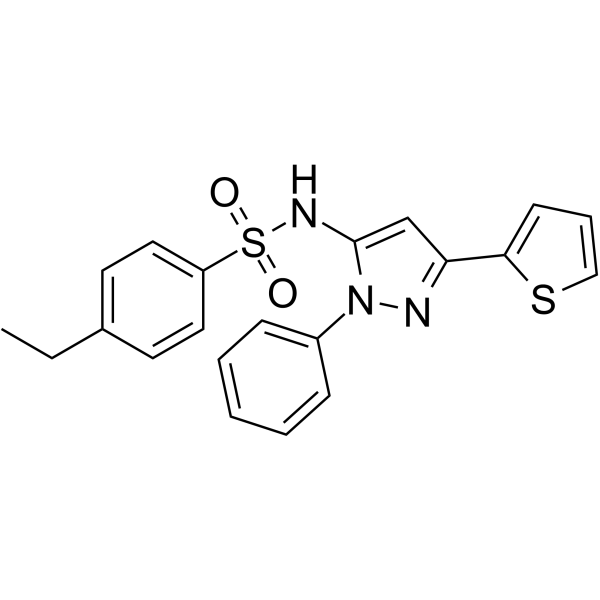
HSF1A is a cell-permeable activator of heat shock transcription factor 1 (HSF1). HSF1A also acts as a specific inhibitor of TRiC/CCT. Chaperonin TCP-1 ring complex (TRiC)/chaperonin containing TCP-1 (CCT) plays a pivotal role in toxin translocation and/or refolding.
For research use only. We do not sell to patients.
- Purity : 99.94%
- CAS No.: 1196723-93-9
- Formula: C21H19N3O2S2
- Molecular Weight:409.52
-
Storage:Powder -20°C, 3 years , 4°C, 2 years ; In solvent -80°C, 2 years , -20°C, 1 year

To place orders, for customer services and technical support, please contact: MedChemExpress USA
Tel: 609-228-6898 E-mail: [email protected] [email protected]


-
 Biological Activity
-
Chemical Information
-
Solvent & Solubility
- Protocols
- Purity & Documentation
- References
-
 Help & FAQs


-
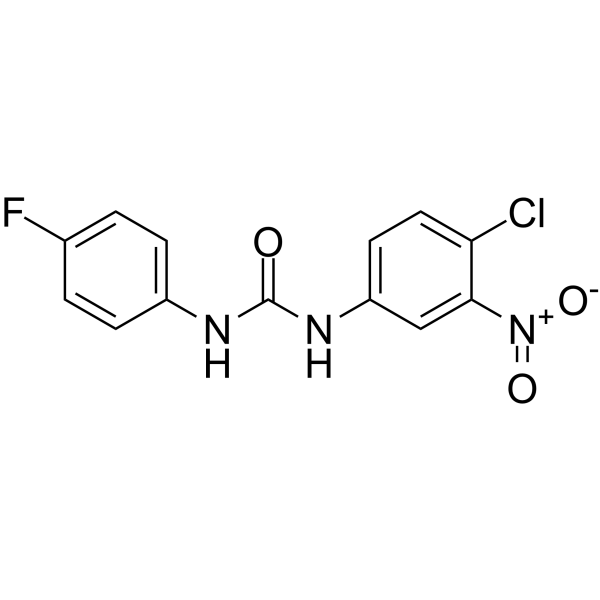
HY-138280
DTHIBHSF1 Inhibitor -
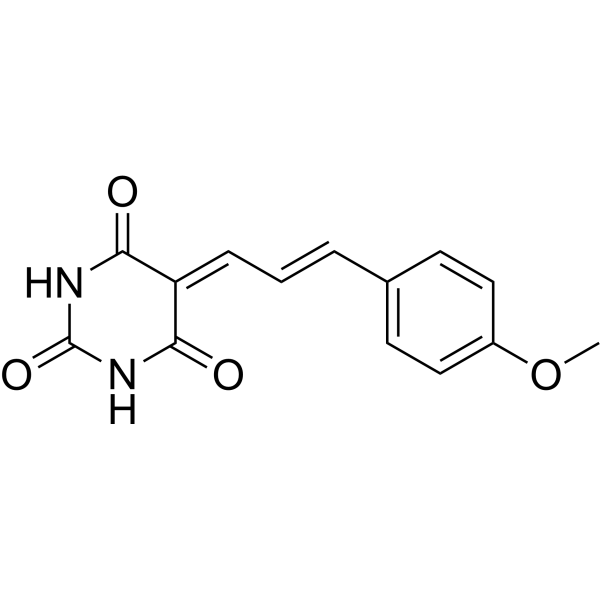
HY-18669
ML346Hsp70 Activator -
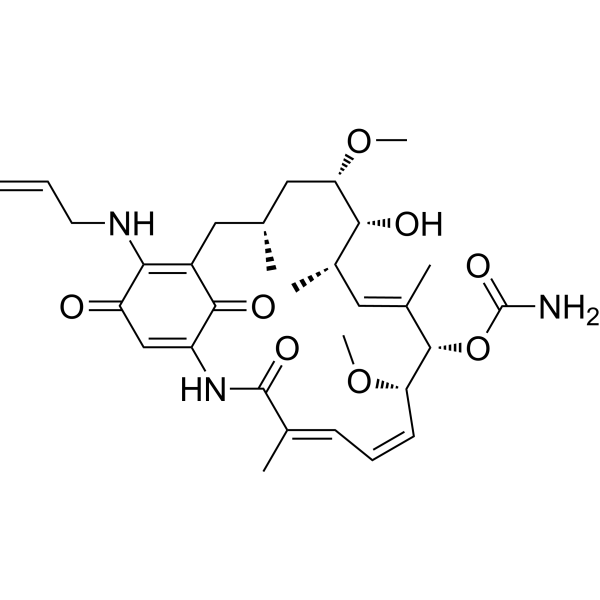
HY-10211
TanespimycinHSP90 Inhibitor -
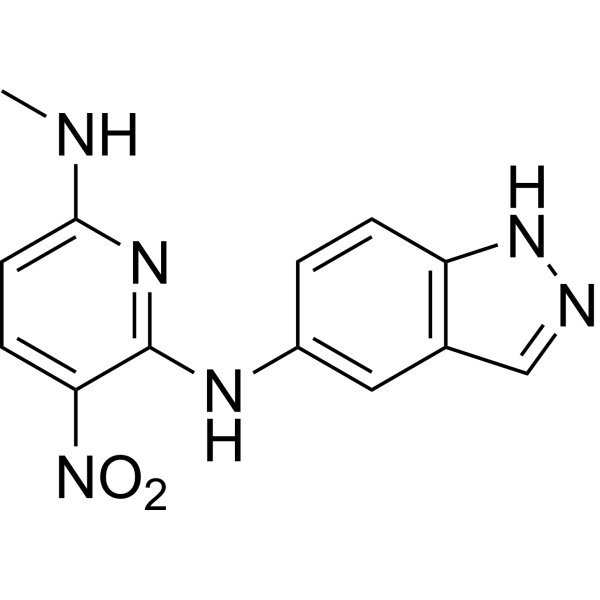
HY-100872
KRIBB11HSF1 Inhibitor -
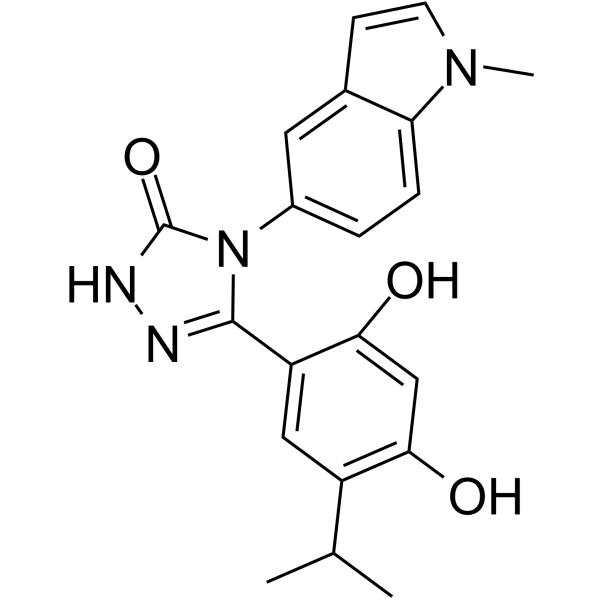
HY-15205
GanetespibHSP90 Inhibitor -
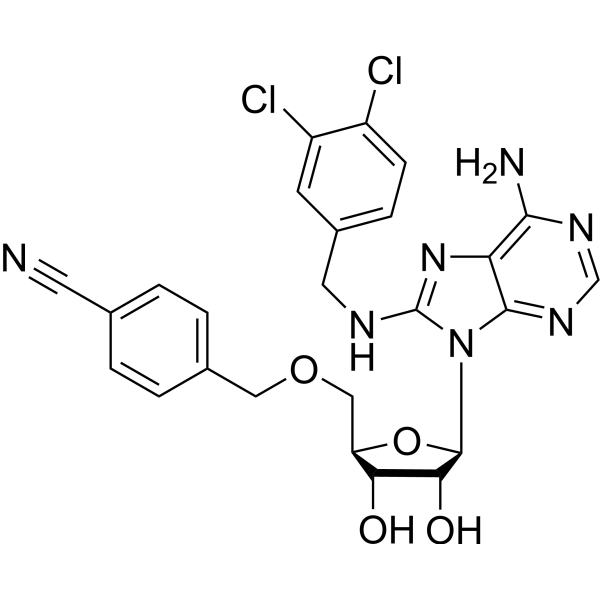
HY-10941
VER-155008Hsp70 Inhibitor -
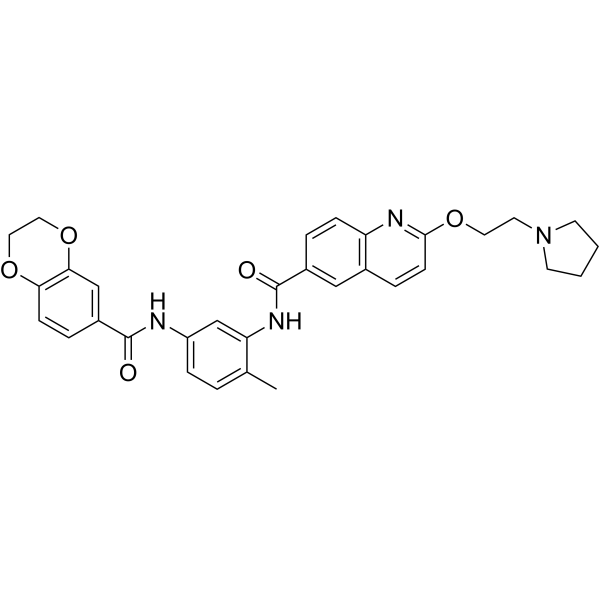
HY-101026
CCT251236PROTAC Ligand -
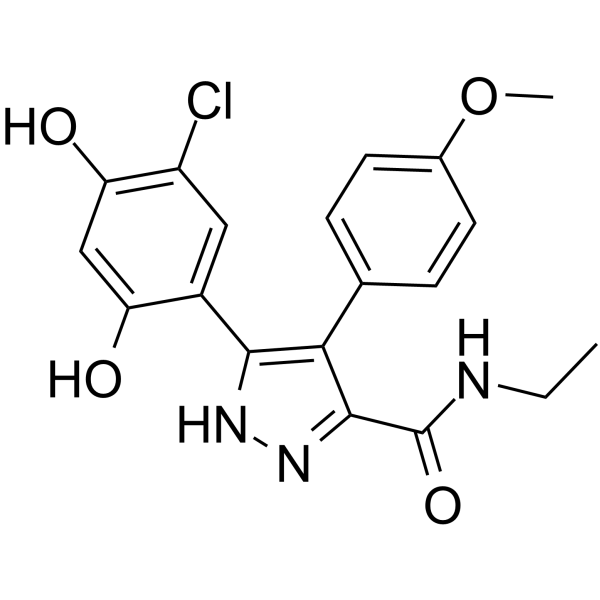
HY-15986
VER-49009HSP Inhibitor -
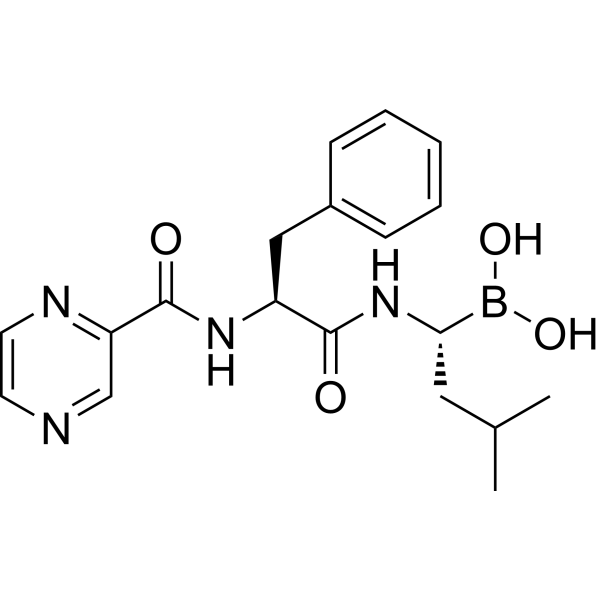
HY-10227
BortezomibProteasome Inhibitor -
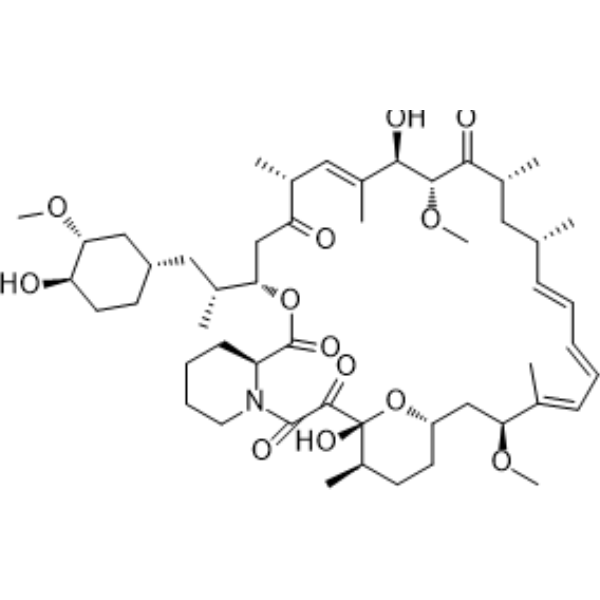
HY-10219
RapamycinmTOR Inhibitor -
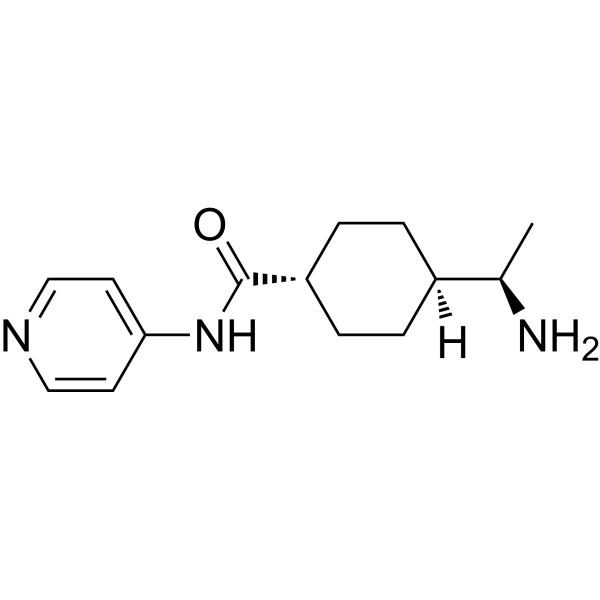
HY-10071
Y-27632ROCK Inhibitor -
HY-70062
PevonedistatNAE Inhibitor
Publications Citing Use of MedChemExpress (MCE) HSF1A
More Customer Validation & Images

-
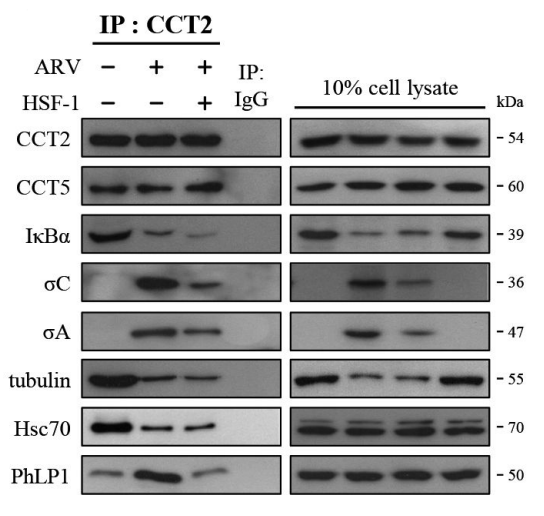
WB
-
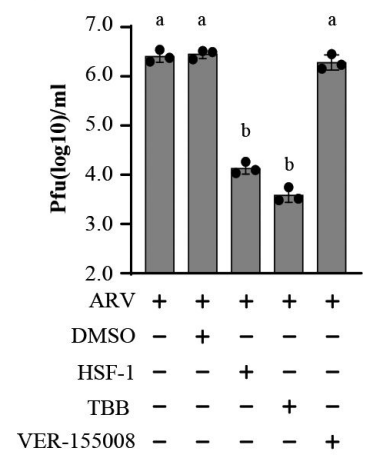
Bio/Physico-chemical Assay
-
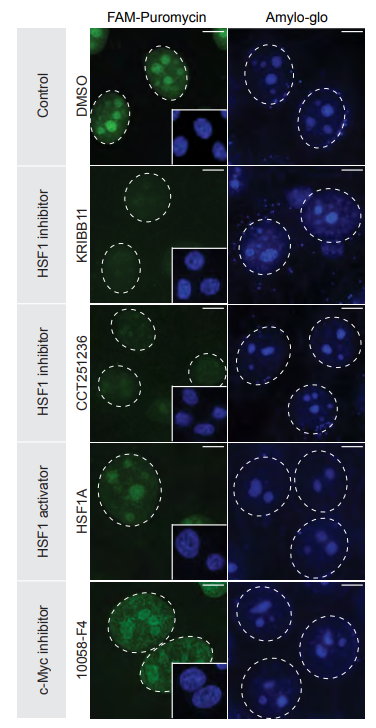
Cell Imaging/Staining


Biological Activity
Description
IC50 & Target
[1]|
HSF1 |
In Vitro
HSF1A protects cells from stress-induced apoptosis, binds TRiC subunits and inhibits TRiC activity without perturbation of ATP hydrolysis. Genetic inactivation or depletion of the TRiC complex results in human HSF1 activation and HSF1A inhibits the direct interaction between purified TRiC and HSF1 in vitro. Moreover, fluorescence anisotropy experiments using FITC coupled to HSF1A demonstrates that HSF1A-FITC binds to a purified Tcp1 subunit of TRiC with an affinity of approximately 600 nM. This is validated qualitatively via titration of purified Tcp1 into binding reactions containing 500 nM Biotin or HSF1A-Biotin[1]. Quantification by counting the number of cell containing aggregates as a function of the total number of cells reveals that at HSF1A concentrations as low as 2 μM, a reduced number of aggregate-containing cells are observed. The fraction of cells containing aggregates continued to decrease in a dose-dependent manner such that pretreatment with 12 μM HSF1A resulta in ~20% of the cells exhibiting aggregates visible by fluorescence microscopy[2].
MedChemExpress (MCE) has not independently confirmed the accuracy of these methods. They are for reference only.
In Vivo
MedChemExpress (MCE) has not independently confirmed the accuracy of these methods. They are for reference only.


Chemical Information
-
CAS No. 1196723-93-9
-
Appearance Solid
-
Molecular Weight 409.52
-
Formula C21H19N3O2S2
-
Color White to off-white
-
SMILES
O=S(C1=CC=C(CC)C=C1)(NC2=CC(C3=CC=CS3)=NN2C4=CC=CC=C4)=O
-
Shipping
Room temperature in continental US; may vary elsewhere.
-
Storage
Powder -20°C 3 years 4°C 2 years In solvent -80°C 2 years -20°C 1 year


Publications (3)
-
Journal Impact Factor
-
Most Recent
-
Proc Natl Acad Sci U S A
2021 Feb 16;118(7):e2014457118. PMID: 33568529
HSF1A purchased from MedChemExpress. Usage Cited in: Proc Natl Acad Sci U S A. 2021 Feb 16;118(7):e2014457118. [Abstract]
HSF1A (100 μM; 30 min). Effect of drug-altered HSF1 activity on LNPS in thermal-stressed cells.
-
J Virol
The oncolytic avian reovirus p17 protein triggers chaperone-mediated autophagy by modulating Hsp90 and the T-complex protein-1 ring complex chaperones and co-chaperones to activate the IKK/NF-κB signaling. [Abstract]2025 Dec 23;99(12):e0108925. PMID: 41334925
HSF1A purchased from MedChemExpress. Usage Cited in: J Virol. 2025 Dec 23;99(12):e0108925. [Abstract]
Western blot assays of vero cells treated with TRiC inhibitor HSF1A (40 µM).
HSF1A purchased from MedChemExpress. Usage Cited in: J Virol. 2025 Dec 23;99(12):e0108925. [Abstract]
HSF1A (40 µM) significantly reduced virus yields of Vero cells infected with ARV.
-


Solvent & Solubility
In Vitro:
DMSO : 100 mg/mL (244.19 mM; Need ultrasonic; Hygroscopic DMSO has a significant impact on the solubility of product, please use newly opened DMSO)
Please refer to the solubility information to select the appropriate solvent. Once prepared, please aliquot and store the solution to prevent product inactivation from repeated freeze-thaw cycles.
Storage method and period of stock solution: -80°C, 2 years; -20°C, 1 year. When stored at -80°C, please use it within 2 years. When stored at -20°C, please use it within 1 year.
Please refer to the solubility information to select the appropriate solvent. Once prepared, please aliquot and store the solution to prevent product inactivation from repeated freeze-thaw cycles.
Storage method and period of stock solution: -80°C, 2 years; -20°C, 1 year. When stored at -80°C, please use it within 2 years. When stored at -20°C, please use it within 1 year.
Concentration (start) × Volume (start) = Concentration (final) × Volume (final)
In Vivo:
Select the appropriate dissolution method based on your experimental animal and administration route.
- For the following dissolution methods, please ensure to first prepare a clear stock solution using an In Vitro approach and then sequentially add co-solvents:
- To ensure reliable experimental results, the clarified stock solution can be appropriately stored based on storage conditions. As for the working solution for In Vivo experiments, it is recommended to prepare freshly and use it on the same day.
- The percentages shown for the solvents indicate their volumetric ratio in the final prepared solution. If precipitation or phase separation occurs during preparation, heat and/or sonication can be used to aid dissolution.
Add each solvent one by one: 10% DMSO 40% PEG300 5% Tween-80 45% Saline
Solubility: ≥ 2.5 mg/mL (6.10 mM); Clear solution
This protocol yields a clear solution of ≥ 2.5 mg/mL (saturation unknown).
Taking 1 mL working solution as an example, add 100 μL DMSO stock solution (25.0 mg/mL) to 400 μL PEG300, and mix evenly; then add 50 μL Tween-80 and mix evenly; then add 450 μL Saline to adjust the volume to 1 mL.
Preparation of Saline: Dissolve 0.9 g sodium chloride in ddH₂O and dilute to 100 mL to obtain a clear Saline solution.
Add each solvent one by one: 10% DMSO 90% (20% SBE-β-CD in Saline)
Solubility: 2.5 mg/mL (6.10 mM); Suspended solution; Need ultrasonic
This protocol yields a suspended solution of 2.5 mg/mL. Suspended solution can be used for oral and intraperitoneal injection.
Taking 1 mL working solution as an example, add 100 μL DMSO stock solution (25.0 mg/mL) to 900 μL 20% SBE-β-CD in Saline, and mix evenly.
Preparation of 20% SBE-β-CD in Saline (4°C, storage for one week): 2 g SBE-β-CD powder is dissolved in 10 mL Saline, completely dissolve until clear.
For the following dissolution methods, please prepare the working solution directly:
It is recommended to prepare fresh solutions and use them promptly within a short period of time.
The percentages shown for the solvents indicate their volumetric ratio in the final prepared solution. If precipitation or phase separation occurs during preparation, heat and/or sonication can be used to aid dissolution.
Add each solvent one by one: 50% PEG300 50% Saline
Solubility: 10 mg/mL (24.42 mM); Suspended solution; Need ultrasonic
In Vivo Dissolution Calculator
Please enter the basic information of animal experiments:
-
-
-
-
Recommended: Prepare an additional quantity of animals to account for potential losses during experiments.
Please enter your animal formula composition:
-
%DMSO +
Recommended: Keep the proportion of DMSO in working solution below 2% if your animal is weak.
-
%+
-
+%Tween-80 + +
-
%Saline +
The co-solvents required include: DMSO, . All of co-solvents are available by MedChemExpress (MCE). , Tween 80. All of co-solvents are available by MedChemExpress (MCE).
Working solution concentration: 0.22 mg/mL
Method for preparing stock solution: mg drug dissolved in μL DMSO. Stock solution concentration: mg/mL.
1. Take μL DMSO stock solution;
2. Add μL .
μL , mix evenly;
3. Then add μL Tween 80, mix evenly;
4. Then add μL
Please ensure that the stock solution in the first step is dissolved to a clear state, and add co-solvents in sequence. You can use ultrasonic heating (ultrasonic cleaner, recommended frequency 20-40 kHz), vortexing, etc. to assist dissolution.


Purity & Documentation
-
Data Sheet (283 KB)
-
SDS (393 KB)
- English - EN (393 KB)
- Français - FR (393 KB)
- Deutsch - DE (393 KB)
- Norwegian - NO (393 KB)
- Español - ES (393 KB)
- Swedish - SV (393 KB)
- Italian - IT (393 KB)
- Korean - KR (393 KB)
- Portuguese - PT (393 KB)
-
Handling Instructions (2659 KB)
References
[1]. Neef DW, et al. A direct regulatory interaction between chaperonin TRiC and stress-responsive transcription factor HSF1. Cell Rep. 2014 Nov 6;9(3):955-66. [Content Brief]
[2]. Neef DW, et al. Modulation of heat shock transcription factor 1 as a therapeutic target for small molecule intervention in neurodegenerative disease. PLoS Biol. 2010 Jan 19;8(1):e1000291. [Content Brief]
[3]. Huang CY, et al. Doxorubicin attenuates CHIP-guarded HSF1 nuclear translocation and protein stability to trigger IGF-IIR-dependent cardiomyocyte death. Cell Death Dis. 2016 Nov 3;7(11):e2455. [Content Brief]
[4]. Marcus Steinemann, et al. The chaperonin TRiC/CCT is essential for the action of bacterial glycosylating protein toxins like Clostridium difficile toxins A and B. Proc Natl Acad Sci U S A. 2018 Sep 18;115(38):9580-9585. [Content Brief]


Complete Stock Solution Preparation Table
Please refer to the solubility information to select the appropriate solvent. Once prepared, please aliquot and store the solution to prevent product inactivation from repeated freeze-thaw cycles.
Storage method and period of stock solution: -80°C, 2 years; -20°C, 1 year. When stored at -80°C, please use it within 2 years. When stored at -20°C, please use it within 1 year.
| Optional Solvent | Concentration Solvent Mass | 1 mg | 5 mg | 10 mg | 25 mg |
|---|---|---|---|---|---|
| DMSO | 1 mM | 2.4419 mL | 12.2094 mL | 24.4188 mL | 61.0471 mL |
| 5 mM | 0.4884 mL | 2.4419 mL | 4.8838 mL | 12.2094 mL | |
| 10 mM | 0.2442 mL | 1.2209 mL | 2.4419 mL | 6.1047 mL | |
| 15 mM | 0.1628 mL | 0.8140 mL | 1.6279 mL | 4.0698 mL | |
| 20 mM | 0.1221 mL | 0.6105 mL | 1.2209 mL | 3.0524 mL | |
| 25 mM | 0.0977 mL | 0.4884 mL | 0.9768 mL | 2.4419 mL | |
| 30 mM | 0.0814 mL | 0.4070 mL | 0.8140 mL | 2.0349 mL | |
| 40 mM | 0.0610 mL | 0.3052 mL | 0.6105 mL | 1.5262 mL | |
| 50 mM | 0.0488 mL | 0.2442 mL | 0.4884 mL | 1.2209 mL | |
| 60 mM | 0.0407 mL | 0.2035 mL | 0.4070 mL | 1.0175 mL | |
| 80 mM | 0.0305 mL | 0.1526 mL | 0.3052 mL | 0.7631 mL | |
| 100 mM | 0.0244 mL | 0.1221 mL | 0.2442 mL | 0.6105 mL |


HSF1A Related Classifications
HY-103000 Related Classifications
 Powered by Bioz