



Orotic acid
Based on 5 publication(s) in Google Scholar
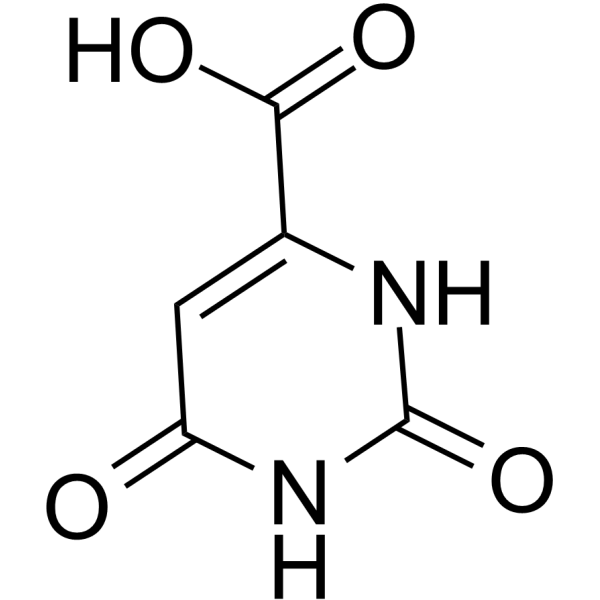
Orotic acid (6-Carboxyuracil), a precursor in biosynthesis of pyrimidine nucleotides and RNA, is released from the mitochondrial dihydroorotate dehydrogenase (DHODH) for conversion to UMP by the cytoplasmic UMP synthase enzyme. Orotic acid is a marker for measurement in routine newborn screening for urea cycle disorders. Orotic acid can induce hepatic steatosis and hepatomegaly in rats.
For research use only. We do not sell to patients.
- Purity : 99.98%
- CAS No.: 65-86-1
- Formula: C5H4N2O4
- Molecular Weight:156.10
-
Storage:Powder -20°C, 3 years , 4°C, 2 years ; In solvent -80°C, 2 years , -20°C, 1 year

To place orders, for customer services and technical support, please contact: MedChemExpress USA
Tel: 609-228-6898 E-mail: [email protected] [email protected]


-
 Biological Activity
-
Chemical Information
-
Solvent & Solubility
- Protocols
- Purity & Documentation
- References
-
 Help & FAQs


-
HY-B1449
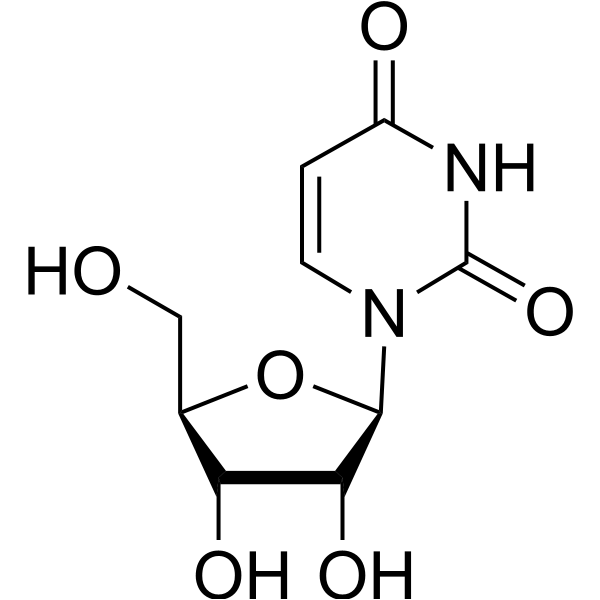
UridineNucleoside -
HY-W015495
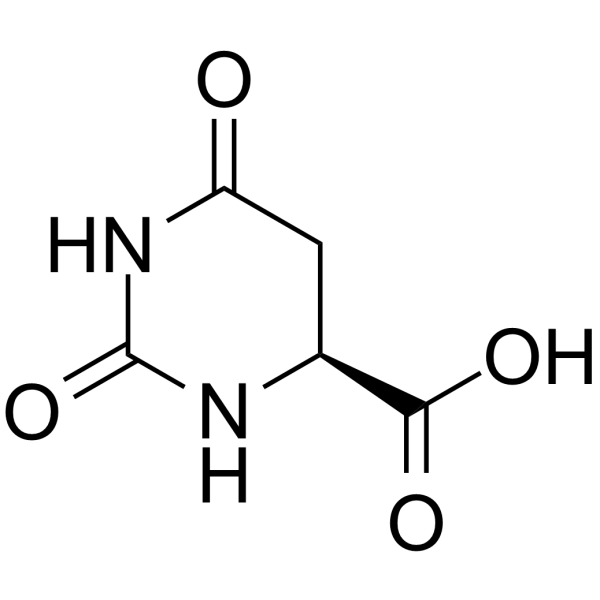
L-Dihydroorotic acidMetabolic Product -
HY-N0157R
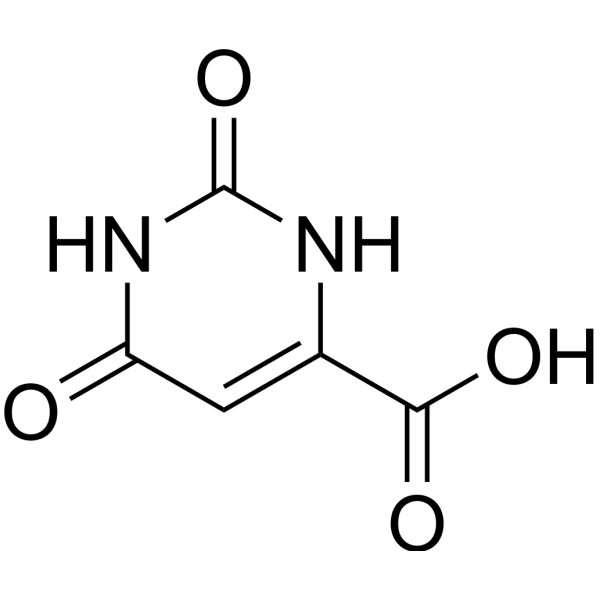
Orotic acid (Standard)Active Compound -
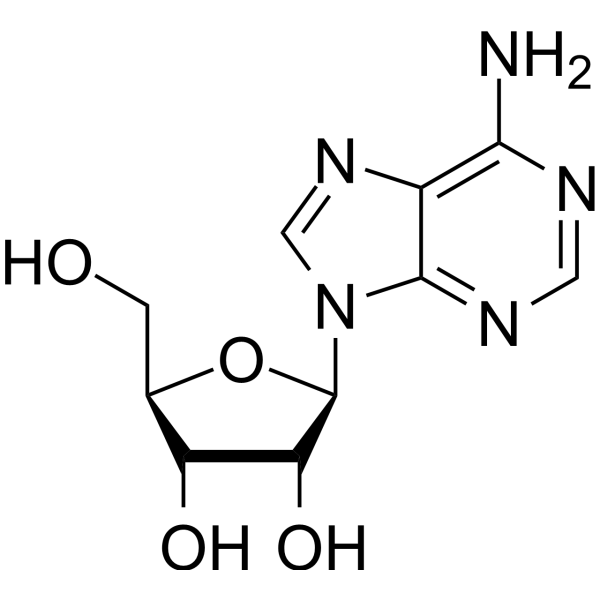
HY-B0228
AdenosineEndogenous Autacoid -
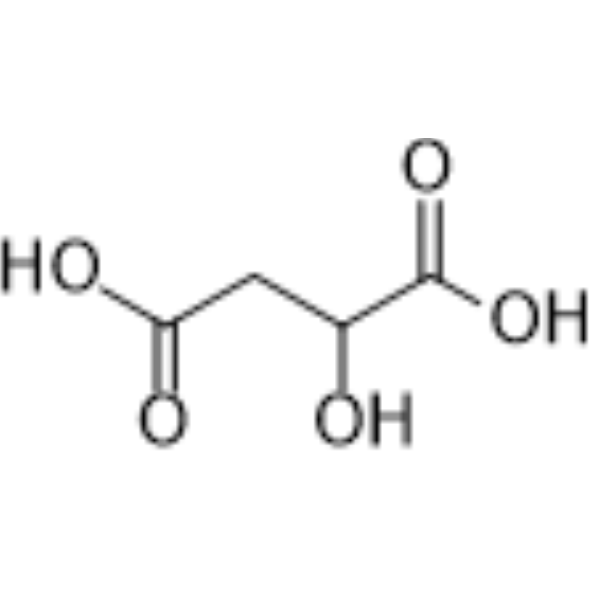
HY-Y1311
Malic acidDicarboxylic Acid -
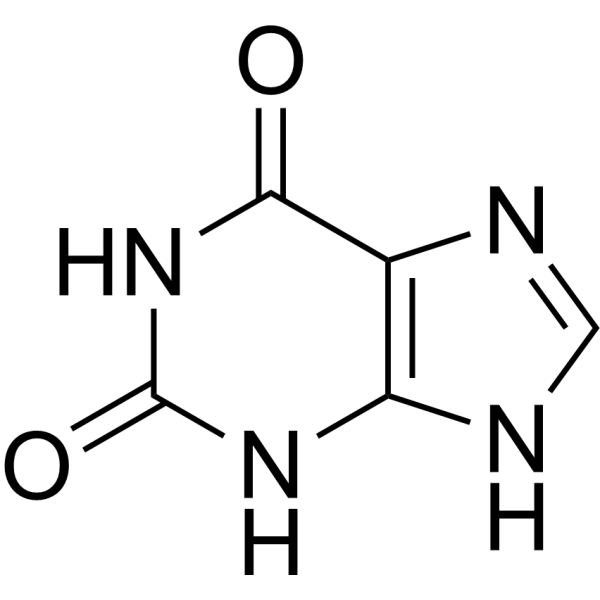
HY-W017389
Xanthine -
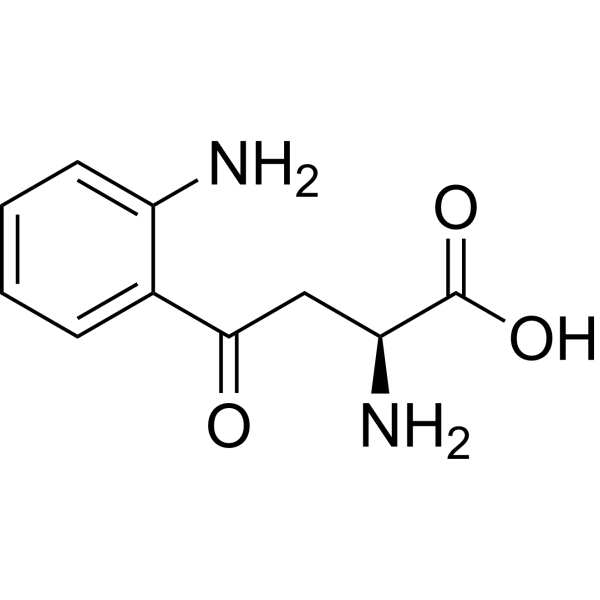
HY-104026
L-KynurenineAryl Hydrocarbon Receptor Agonist -
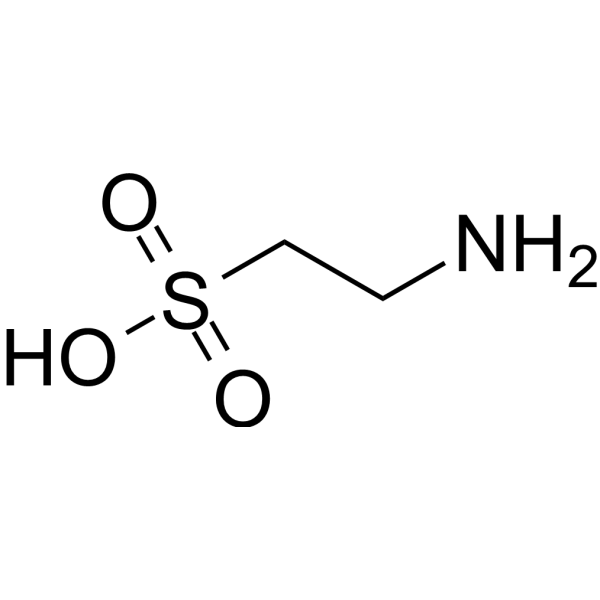
HY-B0351
TaurineAutophagy Inducer -
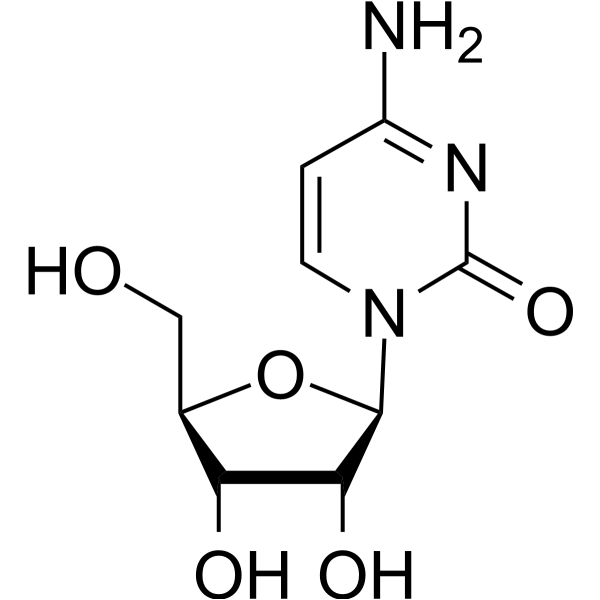
HY-B0158
CytidineNucleoside Molecule -
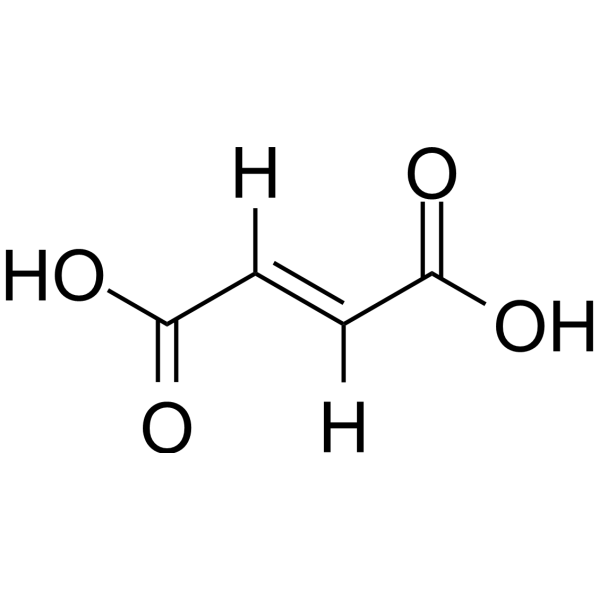
HY-W015883
Fumaric acidAnti-inflammatory agent -
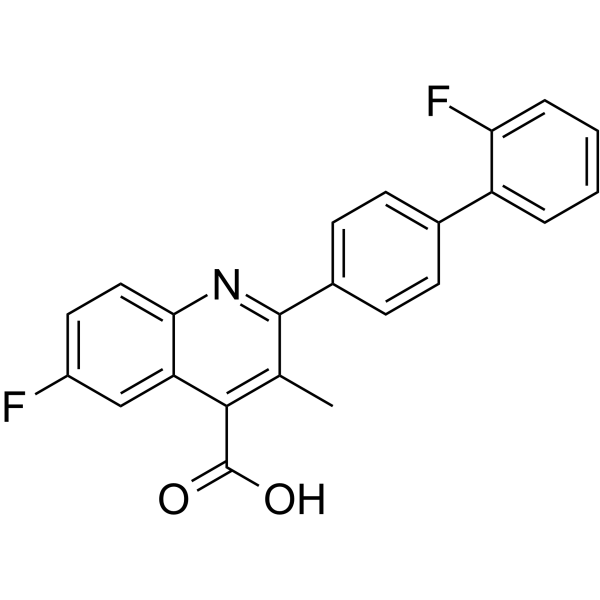
HY-108325
BrequinarDHODH Inhibitor -

HY-B0228R
Adenosine (Standard)Endogenous Autacoid
Publications Citing Use of MedChemExpress (MCE) Orotic acid
MoreAll Endogenous Metabolite Isoforms
More

Biological Activity
Description
IC50 & Target
|
Human Endogenous Metabolite |
Cellular Effect
|
Cell Line

|
Type | Value | Description | References |
|---|---|---|---|---|
| HEK293 | EC50 |
1 mM
Compound: 967
|
Substrate uptake by the Glucose Transporter Type 9 (GLUT9, SLC2A9) as assessed by the fluorescent FLIPR membrane potential dye in HEK-293 cells stably transfected with SLC2A9 isoform 1
Substrate uptake by the Glucose Transporter Type 9 (GLUT9, SLC2A9) as assessed by the fluorescent FLIPR membrane potential dye in HEK-293 cells stably transfected with SLC2A9 isoform 1
|
10.5281/zenodo.7360607 |
| HEK293 | EC50 |
1 mM
Compound: 967
|
Substrate uptake by the Glucose Transporter Type 9 (GLUT9, SLC2A9) as assessed by the fluorescent FLIPR membrane potential dye in HEK-293 cells stably transfected with SLC2A9 isoform 2
Substrate uptake by the Glucose Transporter Type 9 (GLUT9, SLC2A9) as assessed by the fluorescent FLIPR membrane potential dye in HEK-293 cells stably transfected with SLC2A9 isoform 2
|
10.5281/zenodo.7360607 |
| HEK293 | EC50 |
1 mM
Compound: 967
|
Substrate uptake by the Glucose Transporter Type 9 (GLUT9, SLC2A9) as assessed by the fluorescent FLIPR membrane potential dye in HEK-293 cells stably transfected with SLC2A9 isoform 1 (PubChem AID: 1794831)
Substrate uptake by the Glucose Transporter Type 9 (GLUT9, SLC2A9) as assessed by the fluorescent FLIPR membrane potential dye in HEK-293 cells stably transfected with SLC2A9 isoform 1 (PubChem AID: 1794831)
|
10.5281/zenodo.7360607 |
| HEK293 | EC50 |
1 mM
Compound: 967
|
Substrate uptake by the Glucose Transporter Type 9 (GLUT9, SLC2A9) as assessed by the fluorescent FLIPR membrane potential dye in HEK-293 cells stably transfected with SLC2A9 isoform 2 (PubChem AID: 1794831)
Substrate uptake by the Glucose Transporter Type 9 (GLUT9, SLC2A9) as assessed by the fluorescent FLIPR membrane potential dye in HEK-293 cells stably transfected with SLC2A9 isoform 2 (PubChem AID: 1794831)
|
10.5281/zenodo.7360607 |
In Vitro
In Vivo
Orotic acid (1.0% addition to the diet; p.o. for 3-10 d) induces a development of fatty liver by day 7, and decreases purine/pyrimidine ratio of hepatic acid-soluble nucleotides by day 3[3].
MedChemExpress (MCE) has not independently confirmed the accuracy of these methods. They are for reference only.
Clinical Trial
| NCT Number | Sponsor | Condition | Start Date |
Phase
|
|---|---|---|---|---|
| NCT01329991 | Plexxikon| | 2011-05 | PHASE1 |


Chemical Information
-
CAS No. 65-86-1
-
Appearance Solid
-
Molecular Weight 156.10
-
Formula C5H4N2O4
-
Color White to off-white
-
SMILES
O=C(C(NC1=O)=CC(N1)=O)O
-
Synonyms
6-Carboxyuracil; Vitamin B13
-
Structure Classification
-
Shipping
Room temperature in continental US; may vary elsewhere.
-
Storage
Powder -20°C 3 years 4°C 2 years In solvent -80°C 2 years -20°C 1 year


Publications (5)
-
Journal Impact Factor
-
Most Recent
-
Nature
2025 Jul;643(8070):192-200. PMID: 39695227 -
Autophagy
2026 Jul;22(7):1657-1678. PMID: 41968644 -
-
J Adv Res
Antimycin A inhibits alpha-herpesvirus replication by disrupting the formation of pyrimidinosomes. [Abstract]2025 May 10:S2090-1232(25)00309-1. PMID: 40354935 -
J Mol Med (Berl)
2019 Aug;97(8):1183-1193. PMID: 31201471


Solvent & Solubility
In Vitro:
DMSO : 50 mg/mL (320.31 mM; ultrasonic and warming and heat to 60°C; Hygroscopic DMSO has a significant impact on the solubility of product, please use newly opened DMSO)
H2O : < 0.1 mg/mL (insoluble)
Please refer to the solubility information to select the appropriate solvent. Once prepared, please aliquot and store the solution to prevent product inactivation from repeated freeze-thaw cycles.
Storage method and period of stock solution: -80°C, 2 years; -20°C, 1 year. When stored at -80°C, please use it within 2 years. When stored at -20°C, please use it within 1 year.
Please refer to the solubility information to select the appropriate solvent. Once prepared, please aliquot and store the solution to prevent product inactivation from repeated freeze-thaw cycles.
Storage method and period of stock solution: -80°C, 2 years; -20°C, 1 year. When stored at -80°C, please use it within 2 years. When stored at -20°C, please use it within 1 year.
Concentration (start) × Volume (start) = Concentration (final) × Volume (final)
In Vivo:
Select the appropriate dissolution method based on your experimental animal and administration route.
- For the following dissolution methods, please ensure to first prepare a clear stock solution using an In Vitro approach and then sequentially add co-solvents:
- To ensure reliable experimental results, the clarified stock solution can be appropriately stored based on storage conditions. As for the working solution for In Vivo experiments, it is recommended to prepare freshly and use it on the same day.
- The percentages shown for the solvents indicate their volumetric ratio in the final prepared solution. If precipitation or phase separation occurs during preparation, heat and/or sonication can be used to aid dissolution.
In Vivo Dissolution Calculator
Please enter the basic information of animal experiments:
-
-
-
-
Recommended: Prepare an additional quantity of animals to account for potential losses during experiments.
Please enter your animal formula composition:
-
%DMSO +
Recommended: Keep the proportion of DMSO in working solution below 2% if your animal is weak.
-
%+
-
+%Tween-80 + +
-
%Saline +
The co-solvents required include: DMSO, . All of co-solvents are available by MedChemExpress (MCE). , Tween 80. All of co-solvents are available by MedChemExpress (MCE).
Working solution concentration: 0.22 mg/mL
Method for preparing stock solution: mg drug dissolved in μL DMSO. Stock solution concentration: mg/mL.
1. Take μL DMSO stock solution;
2. Add μL .
μL , mix evenly;
3. Then add μL Tween 80, mix evenly;
4. Then add μL
Please ensure that the stock solution in the first step is dissolved to a clear state, and add co-solvents in sequence. You can use ultrasonic heating (ultrasonic cleaner, recommended frequency 20-40 kHz), vortexing, etc. to assist dissolution.


Purity & Documentation
-
Data Sheet (281 KB)
-
SDS (394 KB)
- English - EN (394 KB)
- Français - FR (394 KB)
- Deutsch - DE (394 KB)
- Norwegian - NO (394 KB)
- Español - ES (394 KB)
- Swedish - SV (394 KB)
- Italian - IT (394 KB)
- Korean - KR (394 KB)
- Portuguese - PT (394 KB)
-
Handling Instructions (2659 KB)
References
[1]. Löffler M, et, al. Orotate (orotic acid): An essential and versatile molecule. Nucleosides Nucleotides Nucleic Acids. [Content Brief]
[2]. Staretz-Chacham O, et, al. The role of orotic acid measurement in routine newborn screening for urea cycle disorders. J Inherit Metab Dis. 2020 Nov 15. [Content Brief]
[3]. Durschlag RP, et, al. Orotic acid-induced metabolic changes in the rat. J Nutr. 1980 Apr;110(4):816-21. [Content Brief]


Complete Stock Solution Preparation Table
Please refer to the solubility information to select the appropriate solvent. Once prepared, please aliquot and store the solution to prevent product inactivation from repeated freeze-thaw cycles.
Storage method and period of stock solution: -80°C, 2 years; -20°C, 1 year. When stored at -80°C, please use it within 2 years. When stored at -20°C, please use it within 1 year.
| Optional Solvent | Concentration Solvent Mass | 1 mg | 5 mg | 10 mg | 25 mg |
|---|---|---|---|---|---|
| DMSO | 1 mM | 6.4061 mL | 32.0307 mL | 64.0615 mL | 160.1537 mL |
| 5 mM | 1.2812 mL | 6.4061 mL | 12.8123 mL | 32.0307 mL | |
| 10 mM | 0.6406 mL | 3.2031 mL | 6.4061 mL | 16.0154 mL | |
| 15 mM | 0.4271 mL | 2.1354 mL | 4.2708 mL | 10.6769 mL | |
| 20 mM | 0.3203 mL | 1.6015 mL | 3.2031 mL | 8.0077 mL | |
| 25 mM | 0.2562 mL | 1.2812 mL | 2.5625 mL | 6.4061 mL | |
| 30 mM | 0.2135 mL | 1.0677 mL | 2.1354 mL | 5.3385 mL | |
| 40 mM | 0.1602 mL | 0.8008 mL | 1.6015 mL | 4.0038 mL | |
| 50 mM | 0.1281 mL | 0.6406 mL | 1.2812 mL | 3.2031 mL | |
| 60 mM | 0.1068 mL | 0.5338 mL | 1.0677 mL | 2.6692 mL | |
| 80 mM | 0.0801 mL | 0.4004 mL | 0.8008 mL | 2.0019 mL | |
| 100 mM | 0.0641 mL | 0.3203 mL | 0.6406 mL | 1.6015 mL |


Orotic acid Related Classifications
HY-N0157 Related Classifications
 Powered by Bioz