



Tyk2-IN-7
Based on 1 Customer Validation
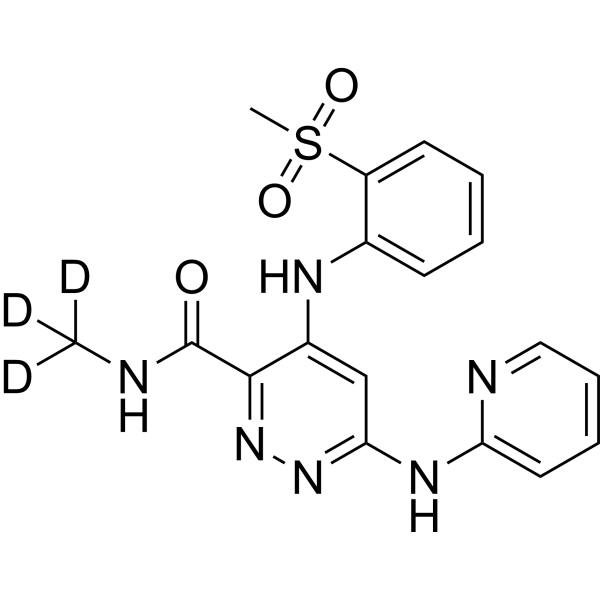
Tyk2-IN-7 is an orally active TYK2 JH2 inhibitor, binds to TYK2 JH2 domain with IC50 and Ki.app of 0.00053 μM and 0.00007 μM, respectively. Tyk2-IN-7 provides a highly selective alternative to conventional TYK2 orthosteric inhibitors, inhibits TYK2/JAK1/JAK2 kinase domain. Tyk2-IN-7 can inhibit the IL-23 and IFN-α signaling pathways. Tyk2-IN-7 is commonly used in the study of inflammatory conditions such as colitis.
For research use only. We do not sell to patients.
- Purity : 99.58%
- CAS No.: 1609391-90-3
- Formula: C18H15D3N6O3S
- Molecular Weight:401.46
-
Storage:
4°C, sealed storage, away from moisture and light
* In solvent : -80°C, 6 months; -20°C, 1 month (sealed storage, away from moisture and light)

To place orders, for customer services and technical support, please contact: MedChemExpress USA
Tel: 609-228-6898 E-mail: [email protected] [email protected]


-
 Biological Activity
-
Chemical Information
-
Solvent & Solubility
- Protocols
- Purity & Documentation
- References
-
 Help & FAQs


-
HY-107429
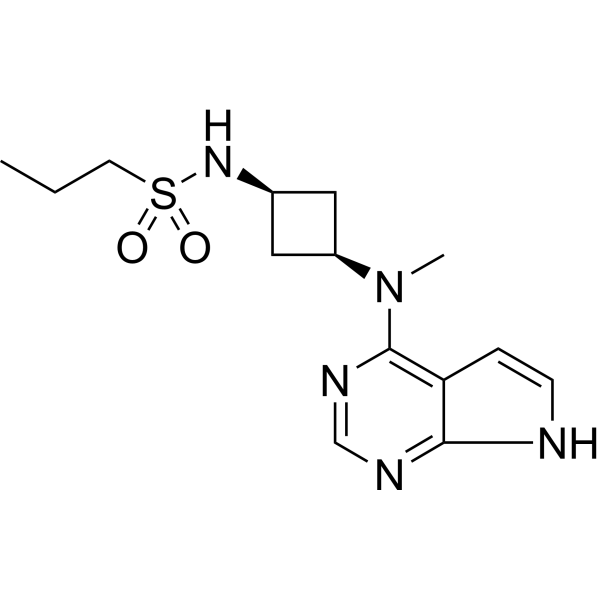
AbrocitinibJAK1 Inhibitor -
HY-13577
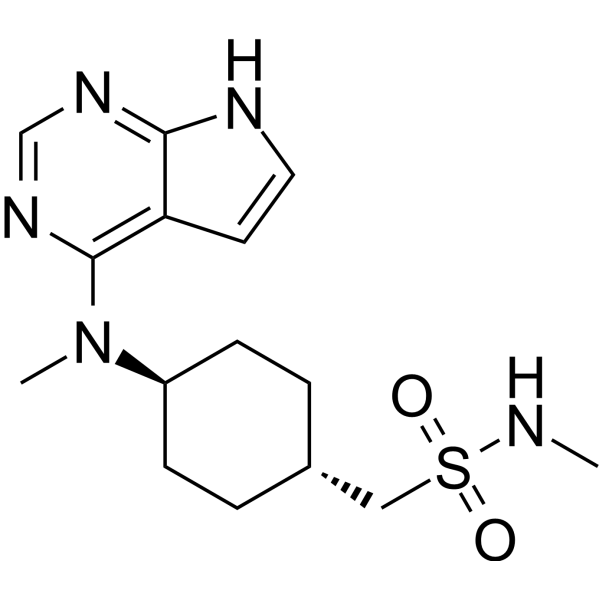
OclacitinibJAK Inhibitor -
HY-15315A
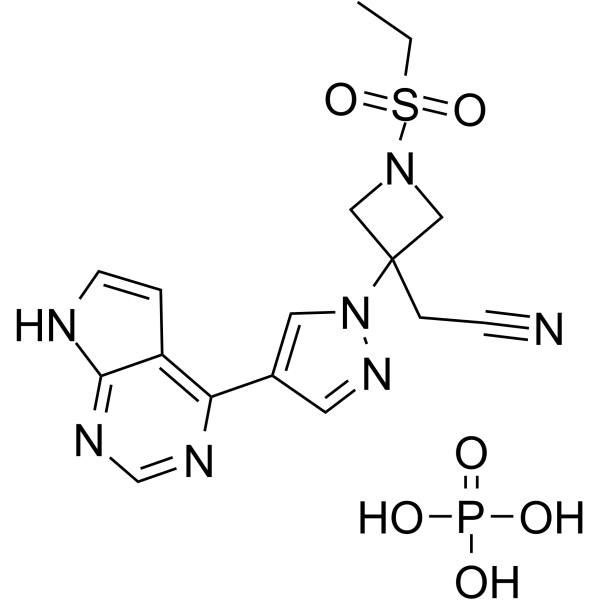
Baricitinib phosphateJAK1/2 Inhibitor -
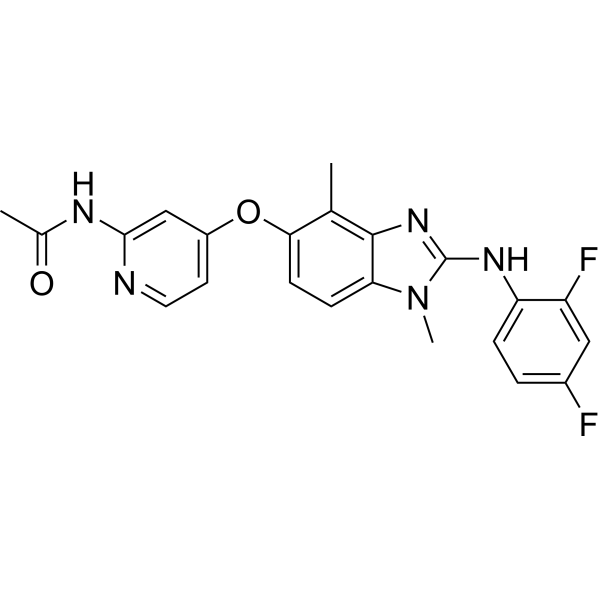
HY-18960
CHZ868JAK2 Inhibitor -
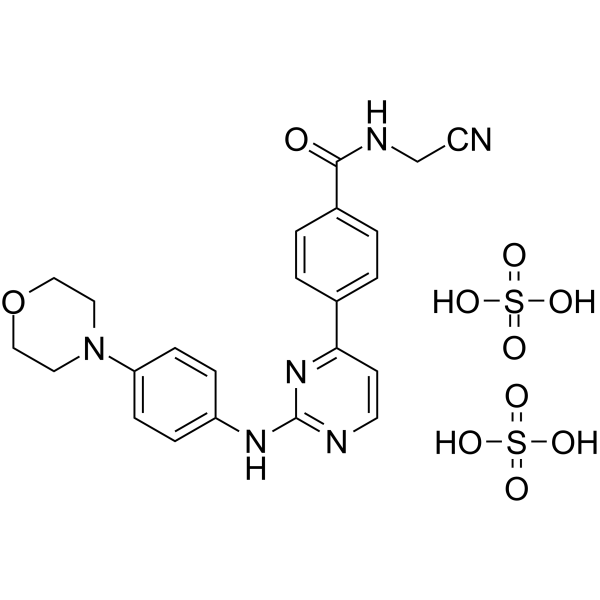
HY-10962
Momelotinib sulfateJAK1/2 Inhibitor -
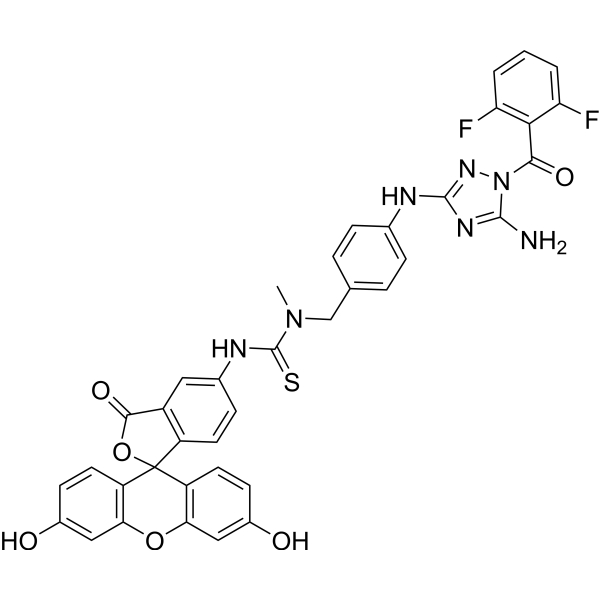
HY-102055
JAK2 JH2 TracerJAK2 JH2 Tracer -
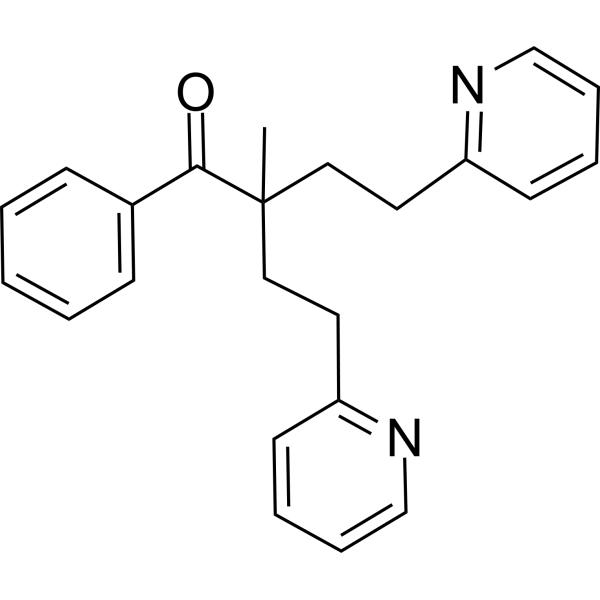
HY-15480
NSC 42834JAK Inhibitor -
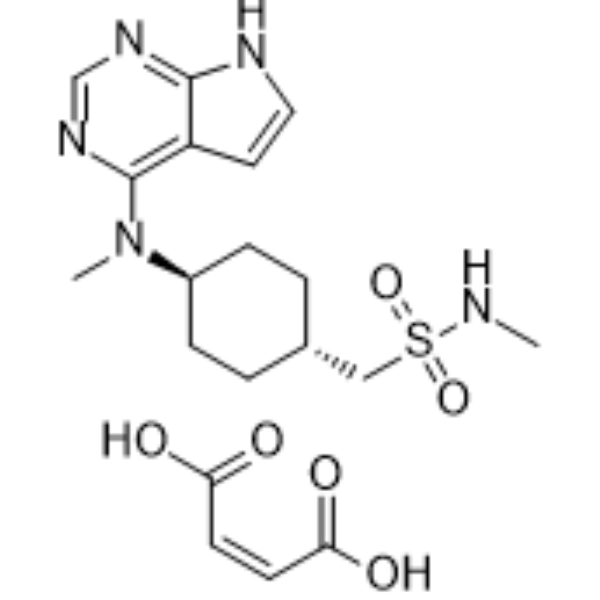
HY-13577A
Oclacitinib monomaleate -
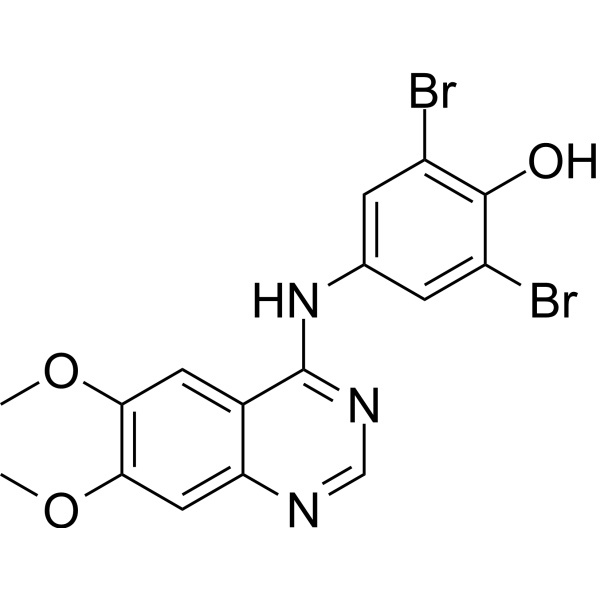
HY-11067
WHI-P97JAK3 Inhibitor -
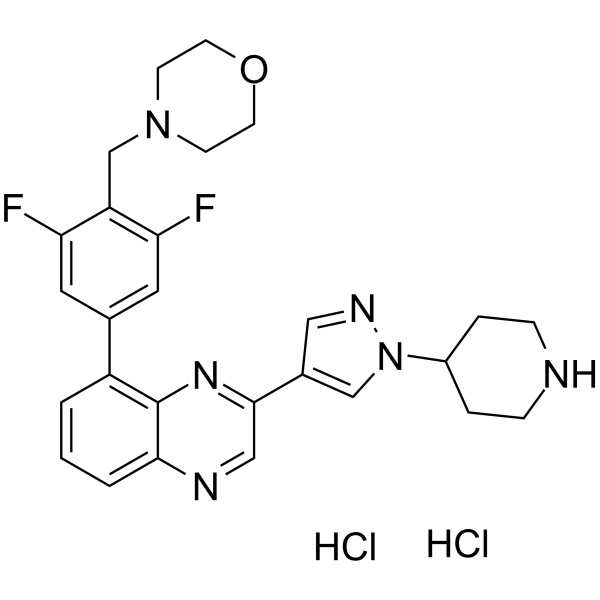
HY-14722A
NVP-BSK805 dihydrochlorideJAK2 Inhibitor -
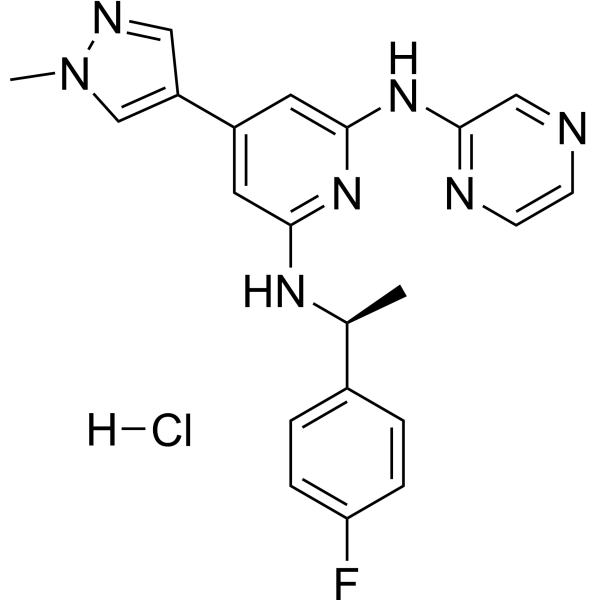
HY-19631B
Ilginatinib hydrochlorideJAK2 Inhibitor -
HY-19631
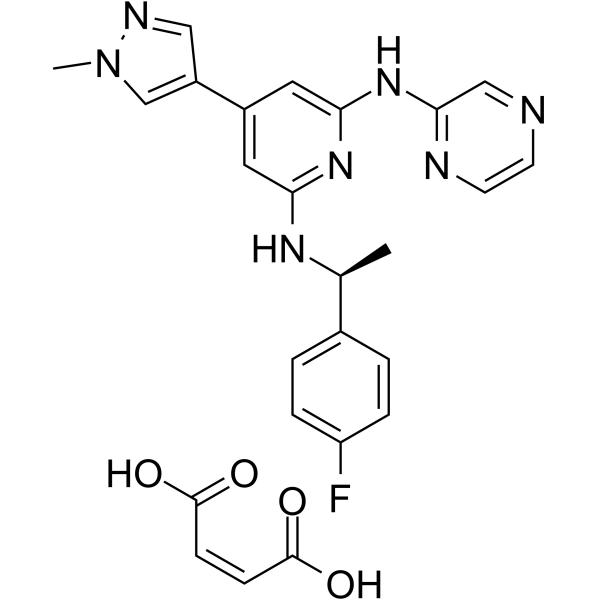
Ilginatinib maleateJAK2 Inhibitor


Biological Activity
Description
|
Tyk2 JH2 0.00053 μM (IC50) |
Tyk2 JH2 0.00007 μM (Ki app) |
IL-23 |
Cellular Effect
|
Cell Line

|
Type | Value | Description | References |
|---|---|---|---|---|
| TF-1 | IC50 |
2700 nM
Compound: 12
|
Inhibition of JAK2 in GM-CSF-stimulated human TF-1 cells
Inhibition of JAK2 in GM-CSF-stimulated human TF-1 cells
|
[PMID: 31318208] |
In Vivo
Tyk2-IN-7 (25-250 mg/kg, p.o., twice daily, for 7 days) can alleviate inflammation in male B6CB17 SCID mice with a CD40 mAb induced colitis model[1].
MedChemExpress (MCE) has not independently confirmed the accuracy of these methods. They are for reference only.
-
Animal Model:IL-12/IL-18 induced female C57BL/6 mice[1]
-
Dosage:0.3, 1, 3 and 10 mg/kg
-
Administration:Oral administration (p.o.), single dose
-
Result:Achieved a 91% inhibition rate of IFNγ at 10mg/kg.
-
Animal Model:CD40 mAb induced male B6CB17 SCID mice[1]
-
Dosage:25, 80 and 100 mg/kg
-
Administration:Oral administration (p.o.), twice daily for 7 days
-
Result:Significantly improved histological scoring at 250 mg/kg.
Dose dependently reduced weight loss and colitis symptoms.
Application
1. This compound can be used as a tracer
2. This compound can be used as an internal standard for quantitative analysis by NMR, GC-MS, or LC-MS.


Chemical Information
-
CAS No. 1609391-90-3
-
Unlabeled CAS 1609392-06-4
-
Appearance Solid
-
Molecular Weight 401.46
-
Formula C18H15D3N6O3S
-
Color Off-white to yellow
-
SMILES
O=C(NC([2H])([2H])[2H])C1=NN=C(NC2=CC=CC=N2)C=C1NC3=CC=CC=C3S(=O)(C)=O
-
Shipping
Room temperature in continental US; may vary elsewhere.
-
Storage
4°C, sealed storage, away from moisture and light
* In solvent : -80°C, 6 months; -20°C, 1 month (sealed storage, away from moisture and light)


Solvent & Solubility
In Vitro:
DMSO : 100 mg/mL (249.09 mM; Need ultrasonic; Hygroscopic DMSO has a significant impact on the solubility of product, please use newly opened DMSO)
Please refer to the solubility information to select the appropriate solvent. Once prepared, please aliquot and store the solution to prevent product inactivation from repeated freeze-thaw cycles.
Storage method and period of stock solution: -80°C, 6 months; -20°C, 1 month (sealed storage, away from moisture and light). When stored at -80°C, please use it within 6 months. When stored at -20°C, please use it within 1 month.
Please refer to the solubility information to select the appropriate solvent. Once prepared, please aliquot and store the solution to prevent product inactivation from repeated freeze-thaw cycles.
Storage method and period of stock solution: -80°C, 6 months; -20°C, 1 month (sealed storage, away from moisture and light). When stored at -80°C, please use it within 6 months. When stored at -20°C, please use it within 1 month.
Concentration (start) × Volume (start) = Concentration (final) × Volume (final)

Protocols
-
Cell Cytotoxicity Assay
Cytotoxicity assays are usually based on the assessment of cell membrane damage, which can also be indirectly detected by measuring cell viability. Detection methods include MTT assay, CKK-8 assay, LDH assay and ATP assay, etc.
-
DSS-Induced Colitis
Dextran sulfate sodium (DSS)-induced colitis is generated by administering DSS in mouse drinking water, producing epithelial injury, barrier disruption, weight loss, diarrhea, fecal blood, colon shortening, histologic mucosal damage, and inflammatory mediator changes; the model is mainly used to study acute or chronic intestinal inflammation resembling selected features of ulcerative colitis. DSS injury is interpreted through clinical and tissue readouts rather than a single molecular endpoint: daily body weight, stool consistency, and bleeding are combined into a disease activity index, while colon length, histology, cytokines, myeloperoxidase activity, intestinal permeability, and tight-junction markers provide complementary measures of inflammation and barrier damage.
-
TNBS-Induced Colitis
TNBS-induced colitis is produced by intrarectal delivery of 2,4,6-trinitrobenzene sulfonic acid in ethanol, where ethanol disrupts the mucosal barrier and TNBS haptenates colonic proteins, generating immune-mediated colonic inflammation with weight loss, diarrhea, ulceration, transmural injury, inflammatory-cell infiltration, and cytokine responses. The model is used as an experimental intestinal inflammation model with Crohn’s disease–like features, especially when Th1-type responses, IL-12–dependent inflammation, chronic relapsing inflammation, or fibrosis-related endpoints are studied.


Purity & Documentation
-
Data Sheet (279 KB)
-
SDS (252 KB)
- English - EN (252 KB)
- Français - FR (252 KB)
- Deutsch - DE (252 KB)
- Norwegian - NO (252 KB)
- Español - ES (252 KB)
- Swedish - SV (252 KB)
- Italian - IT (252 KB)
- Korean - KR (252 KB)
- Portuguese - PT (252 KB)
-
Handling Instructions (2659 KB)
References
[1]. Moslin R, et al. Identification of N-Methyl Nicotinamide and N-Methyl Pyridazine-3-Carboxamide Pseudokinase Domain Ligands as Highly Selective Allosteric Inhibitors of Tyrosine Kinase 2 (TYK2). J Med Chem. 2019 Oct 24;62(20):8953-8972. [Content Brief]
[2]. Wrobleski ST, et al. Highly Selective Inhibition of Tyrosine Kinase 2 (TYK2) for the Treatment of Autoimmune Diseases: Discovery of the Allosteric Inhibitor BMS-986165. J Med Chem. 2019 Oct 24;62(20):8973-8995. [Content Brief]


Complete Stock Solution Preparation Table
Please refer to the solubility information to select the appropriate solvent. Once prepared, please aliquot and store the solution to prevent product inactivation from repeated freeze-thaw cycles.
Storage method and period of stock solution: -80°C, 6 months; -20°C, 1 month (sealed storage, away from moisture and light). When stored at -80°C, please use it within 6 months. When stored at -20°C, please use it within 1 month.
| Optional Solvent | Concentration Solvent Mass | 1 mg | 5 mg | 10 mg | 25 mg |
|---|---|---|---|---|---|
| DMSO | 1 mM | 2.4909 mL | 12.4545 mL | 24.9091 mL | 62.2727 mL |
| 5 mM | 0.4982 mL | 2.4909 mL | 4.9818 mL | 12.4545 mL | |
| 10 mM | 0.2491 mL | 1.2455 mL | 2.4909 mL | 6.2273 mL | |
| 15 mM | 0.1661 mL | 0.8303 mL | 1.6606 mL | 4.1515 mL | |
| 20 mM | 0.1245 mL | 0.6227 mL | 1.2455 mL | 3.1136 mL | |
| 25 mM | 0.0996 mL | 0.4982 mL | 0.9964 mL | 2.4909 mL | |
| 30 mM | 0.0830 mL | 0.4152 mL | 0.8303 mL | 2.0758 mL | |
| 40 mM | 0.0623 mL | 0.3114 mL | 0.6227 mL | 1.5568 mL | |
| 50 mM | 0.0498 mL | 0.2491 mL | 0.4982 mL | 1.2455 mL | |
| 60 mM | 0.0415 mL | 0.2076 mL | 0.4152 mL | 1.0379 mL | |
| 80 mM | 0.0311 mL | 0.1557 mL | 0.3114 mL | 0.7784 mL | |
| 100 mM | 0.0249 mL | 0.1245 mL | 0.2491 mL | 0.6227 mL |


Tyk2-IN-7 Related Classifications
HY-126242S Related Classifications
 Powered by Bioz