



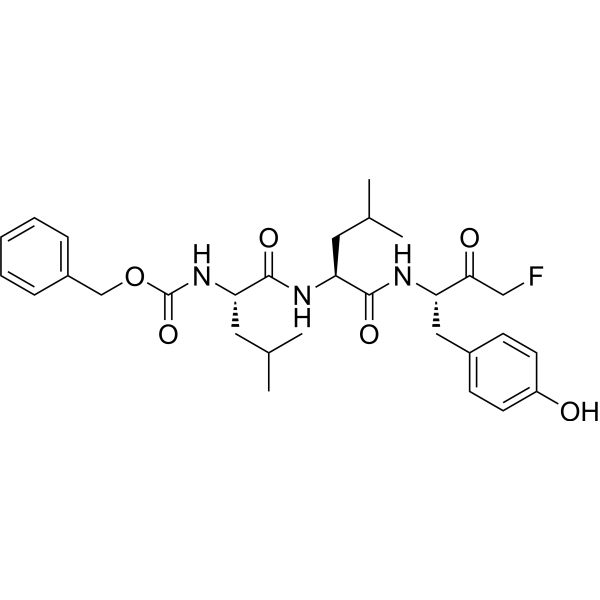
Z-LLY-FMK

Based on 1 Customer Validation
Z-LLY-FMK (Calpain Inhibitor IV) is a calpain inhibitor, involved in apoptosis of many cell systems. Z-LLY-FMK inhibits the intestine apoptosis after common bile duct ligation. Z-LLY-FMK reduces parasite burden in mice challenged with Taenia crassiceps cysts. Z-LLY-FMK can be used for the study of cysticercosis.
For research use only. We do not sell to patients.
- Purity : 98.65%
- CAS No.: 133410-84-1
- Formula: C30H40FN3O6
- Molecular Weight:557.65
-
Storage:Powder -20°C, 3 years , 4°C, 2 years ; In solvent -80°C, 6 months , -20°C, 1 month

To place orders, for customer services and technical support, please contact: MedChemExpress USA
Tel: 609-228-6898 E-mail: [email protected] [email protected]


-
 Biological Activity
-
Chemical Information
-
Solvent & Solubility
- Protocols
- Purity & Documentation
- References
-
 Help & FAQs


-

HY-K2017
siRNA/miRNA Transfection Reagent -
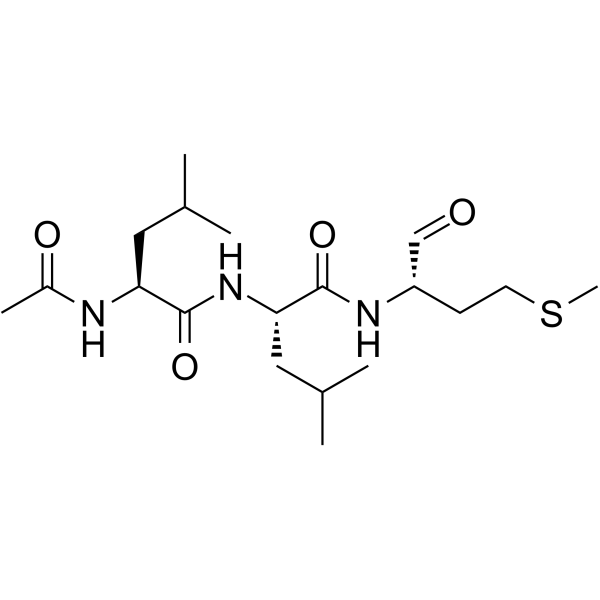
HY-118355
ALLMCalpain/Cathepsin Inhibitor -
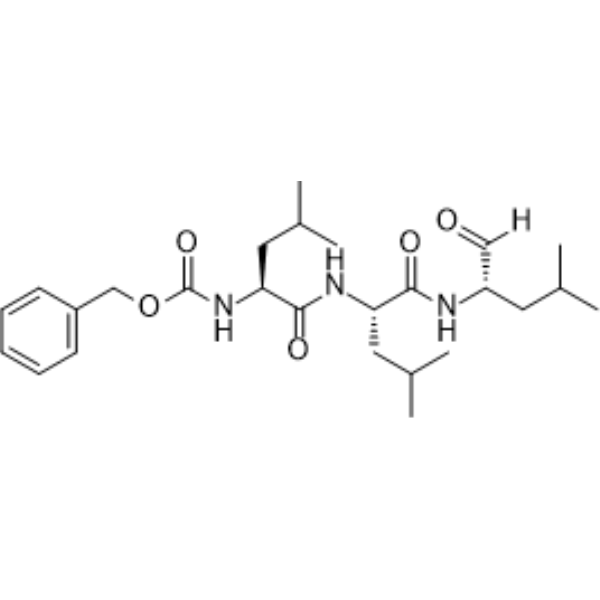
HY-13259
MG-132Proteasome Inhibitor -
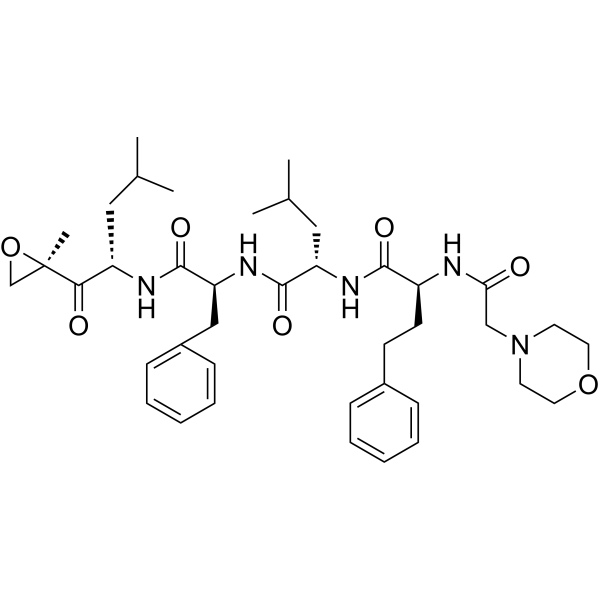
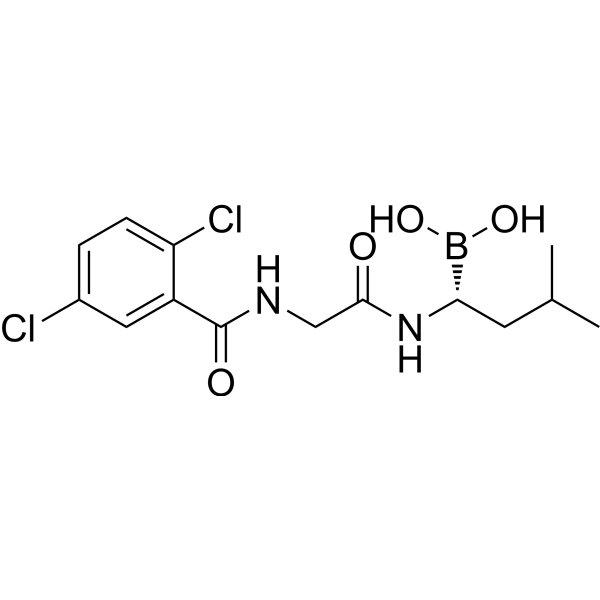
HY-10455
CarfilzomibProteasome Inhibitor -
HY-10453
IxazomibProteasome Inhibitor -
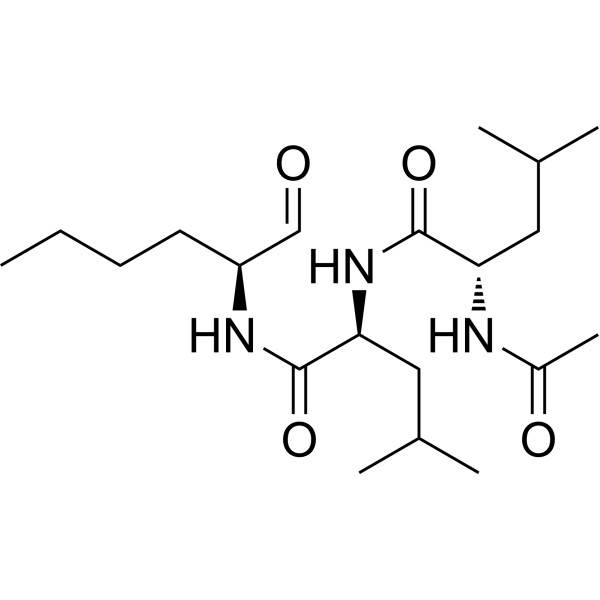
HY-18964
MG-101Cysteine Protease Inhibitor -
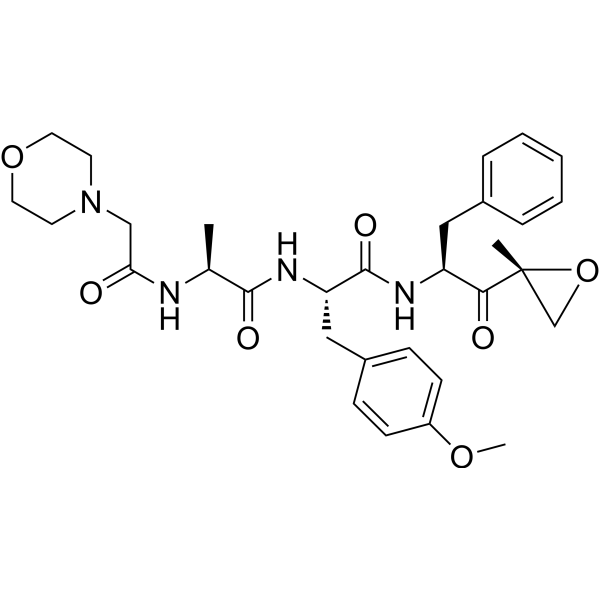
HY-13207
ONX-0914Proteasome Inhibitor -
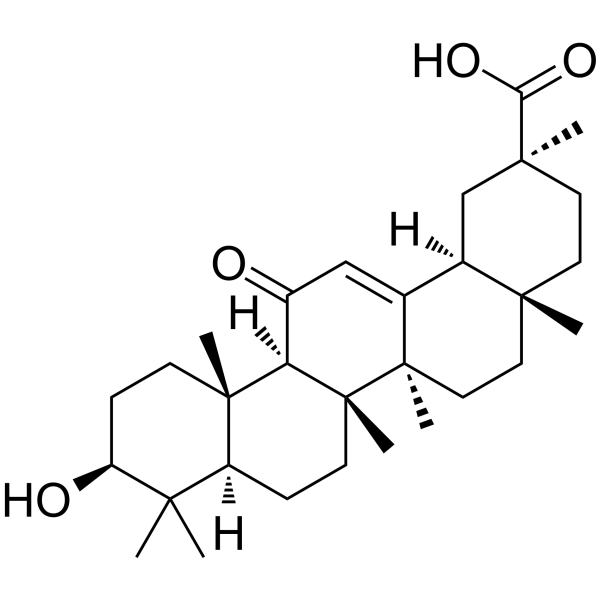
HY-N0375
18α-Glycyrrhetinic acidNF-kB Inhibitor -
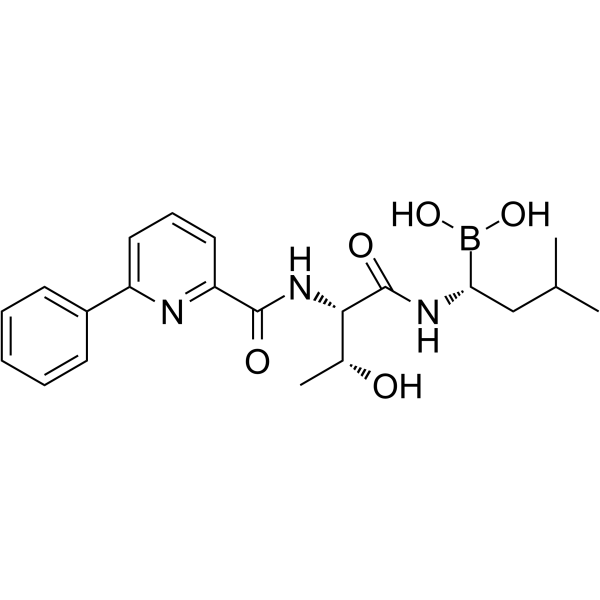
HY-10454
DelanzomibProteasome Inhibitor -
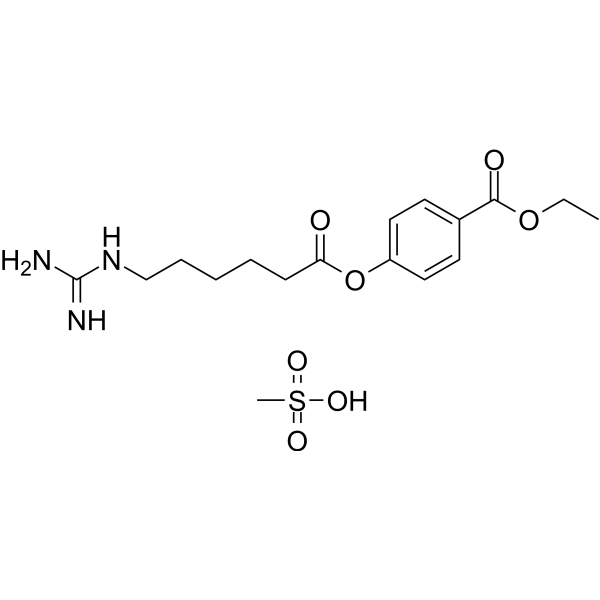
HY-B0385
Gabexate mesylateProteasome Inhibitor -
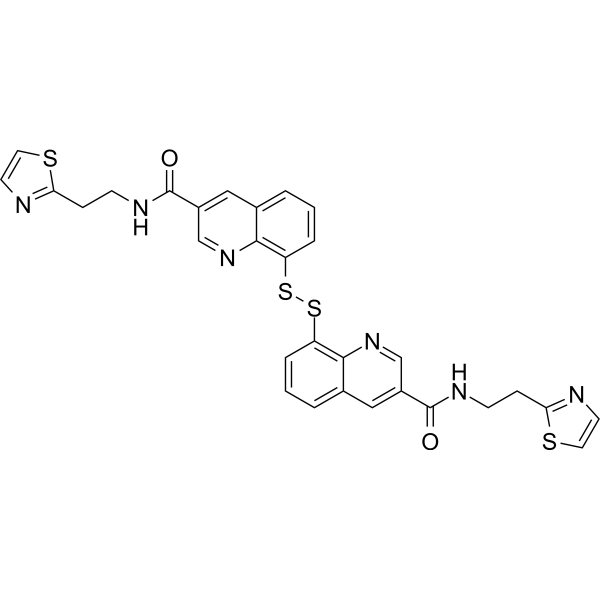
HY-110404
CapziminRpn11 Inhibitor -

HY-10455R
Carfilzomib (Standard)Proteasome Inhibitor
All Parasite Isoforms
More

Biological Activity
Description
IC50 & Target
Calpain[1]
In Vitro
In Vivo
Z-LLY-FMK (2.2 μg, i.p., daily, starting 2 days pre-infection and continuing for 30 days post-challenge) achieves an 80% reduction in parasite burden in BALB/c mice challenged with 10 Taenia crassiceps cysts[2].
MedChemExpress (MCE) has not independently confirmed the accuracy of these methods. They are for reference only.
-
Animal Model:Male Sprague-Dawley rats (250-300 g) underwent common bile duct ligation (double-ligated with 50 silk and divided between ligatures) to establish a model of extrahepatic cholestasis[1].
-
Dosage:0.5 mg
-
Administration:0.5 mg via inferior vena cava immediately after common bile duct ligation, then 0.5 mg i.p. twice daily on days 1-2, and 0.5 mg i.p. on the morning of day 3
-
Result:Significantly diminished hepatocyte apoptosis in common bile duct-ligated rats.
Markedly reduced ductular proliferation in common bile duct-ligated rats.
-
Animal Model:Taenia crassiceps cysts (10 in 200 µL phosphate-buffered saline) were intraperitoneally challenged into BALB/c mice[2]
-
Dosage:2.2 μg
-
Administration:i.p., daily starting 2 days pre-infection and continuing for 30 days post-challenge
-
Result:Achieved an 80% reduction in parasite burden in BALB/c mice.
Showed no obvious toxicity.
Caused cysts to exhibit degenerative changes including tegumental erosion, shortened or sloughed microtriches, and breaks in the cyst surface.
Led to an intense but focal inflammatory reaction on cyst surfaces, with presence of fibroblasts, collagen, neutrophils, and macrophages.


Chemical Information
-
CAS No. 133410-84-1
-
Appearance Solid
-
Molecular Weight 557.65
-
Formula C30H40FN3O6
-
Color White to off-white
-
SMILES
O=C(CF)[C@@H](NC([C@H](CC(C)C)NC([C@H](CC(C)C)NC(OCC1=CC=CC=C1)=O)=O)=O)CC(C=C2)=CC=C2O
-
Synonyms
Calpain Inhibitor IV
-
Shipping
Room temperature in continental US; may vary elsewhere.
-
Storage
Powder -20°C 3 years 4°C 2 years In solvent -80°C 6 months -20°C 1 month


Solvent & Solubility
In Vitro:
DMSO : 125 mg/mL (224.15 mM; Need ultrasonic; Hygroscopic DMSO has a significant impact on the solubility of product, please use newly opened DMSO)
Please refer to the solubility information to select the appropriate solvent. Once prepared, please aliquot and store the solution to prevent product inactivation from repeated freeze-thaw cycles.
Storage method and period of stock solution: -80°C, 6 months; -20°C, 1 month. When stored at -80°C, please use it within 6 months. When stored at -20°C, please use it within 1 month.
Please refer to the solubility information to select the appropriate solvent. Once prepared, please aliquot and store the solution to prevent product inactivation from repeated freeze-thaw cycles.
Storage method and period of stock solution: -80°C, 6 months; -20°C, 1 month. When stored at -80°C, please use it within 6 months. When stored at -20°C, please use it within 1 month.
Concentration (start) × Volume (start) = Concentration (final) × Volume (final)

Protocols
-
Apoptosis
Apoptosis, also called programmed cell death, is generally characterized by distinct morphological characteristics.
-
TUNEL staining for apoptotic DNA fragmentation
TUNEL staining detects DNA strand breaks by using terminal deoxynucleotidyl transferase to add labeled nucleotides to exposed 3′-OH DNA termini, generating either microscopic staining in fixed cells or tissue sections, or fluorescence/cytometric signal in cell suspensions. TUNEL positivity reflects DNA fragmentation but should not be interpreted alone as definitive apoptosis, because TUNEL can also label necrotic, autolytic, mechanically damaged, or DNA-repair-associated DNA breaks.
-
Annexin V plus membrane-impermeant dye apoptosis staining
Annexin V-based apoptosis assays rely on the detection of phosphatidylserine (PS) externalization from the inner leaflet of the plasma membrane to the outer leaflet, an early biochemical hallmark of apoptosis. Fluorescently labeled Annexin V binds PS in a calcium-dependent manner, enabling identification of early apoptotic cells by flow cytometry or fluorescence microscopy. When combined with a membrane-impermeant DNA-binding dye (e. g. , propidium iodide), this approach allows discrimination between viable (Annexin V−/dye−), early apoptotic (Annexin V+/dye−), and late apoptotic or necrotic (Annexin V+/dye+) cell populations by assessing membrane integrity and PS exposure.
-
Apoptosis Solutions
Apoptosis is a regulated, generally non-lytic cell-death pathway that removes unwanted, damaged, infected, or abnormal cells through coordinated morphological changes, caspase activation, DNA fragmentation, and membrane remodeling. The intrinsic apoptosis pathway is controlled mainly by mitochondrial outer membrane permeabilization, BCL-2 family proteins, cytochrome c release, apoptosome formation, caspase-9 activation, and downstream executioner caspase-3/7 activation. The extrinsic apoptosis pathway is initiated by death receptors such as Fas, TNFR, and TRAIL receptors, which recruit adaptor proteins and activate caspase-8 before engaging executioner caspases or mitochondrial amplification through BID cleavage. Apoptosis is linked to many phenotypes, including cancer cell killing, tissue homeostasis, immune regulation, neurodegeneration, infection response, and treatment-induced cytotoxicity; unresolved questions include how apoptosis interacts with necroptosis, pyroptosis, ferroptos


Purity & Documentation
-
Data Sheet (273 KB)
-
SDS (254 KB)
- English - EN (254 KB)
- Français - FR (254 KB)
- Deutsch - DE (254 KB)
- Norwegian - NO (254 KB)
- Español - ES (254 KB)
- Swedish - SV (254 KB)
- Italian - IT (254 KB)
- Korean - KR (254 KB)
- Portuguese - PT (254 KB)
-
Handling Instructions (2659 KB)
References
[1]. Sheen-Chen SM, et al. Z-LLY-FMK can attenuate hepatocyte apoptosis after bile duct ligation in rat. Dig Dis Sci. 2008 Nov;53(11):2975-9. [Content Brief]
[2]. Baig S, et al. Cysteine proteinase inhibitors in murine cysticercosis. Antimicrob Agents Chemother. 2006 Aug;50(8):2886-8. [Content Brief]
[3]. Kashio Y, et al. Galectin-9 induces apoptosis through the calcium-calpain-caspase-1 pathway. J Immunol. 2003 Apr 1;170(7):3631-6. [Content Brief]


Complete Stock Solution Preparation Table
Please refer to the solubility information to select the appropriate solvent. Once prepared, please aliquot and store the solution to prevent product inactivation from repeated freeze-thaw cycles.
Storage method and period of stock solution: -80°C, 6 months; -20°C, 1 month. When stored at -80°C, please use it within 6 months. When stored at -20°C, please use it within 1 month.
| Optional Solvent | Concentration Solvent Mass | 1 mg | 5 mg | 10 mg | 25 mg |
|---|---|---|---|---|---|
| DMSO | 1 mM | 1.7932 mL | 8.9662 mL | 17.9324 mL | 44.8310 mL |
| 5 mM | 0.3586 mL | 1.7932 mL | 3.5865 mL | 8.9662 mL | |
| 10 mM | 0.1793 mL | 0.8966 mL | 1.7932 mL | 4.4831 mL | |
| 15 mM | 0.1195 mL | 0.5977 mL | 1.1955 mL | 2.9887 mL | |
| 20 mM | 0.0897 mL | 0.4483 mL | 0.8966 mL | 2.2415 mL | |
| 25 mM | 0.0717 mL | 0.3586 mL | 0.7173 mL | 1.7932 mL | |
| 30 mM | 0.0598 mL | 0.2989 mL | 0.5977 mL | 1.4944 mL | |
| 40 mM | 0.0448 mL | 0.2242 mL | 0.4483 mL | 1.1208 mL | |
| 50 mM | 0.0359 mL | 0.1793 mL | 0.3586 mL | 0.8966 mL | |
| 60 mM | 0.0299 mL | 0.1494 mL | 0.2989 mL | 0.7472 mL | |
| 80 mM | 0.0224 mL | 0.1121 mL | 0.2242 mL | 0.5604 mL | |
| 100 mM | 0.0179 mL | 0.0897 mL | 0.1793 mL | 0.4483 mL |


Z-LLY-FMK Related Classifications
HY-136750 Related Classifications
 Powered by Bioz