



ZLN024
Based on 1 publication(s) in Google Scholar
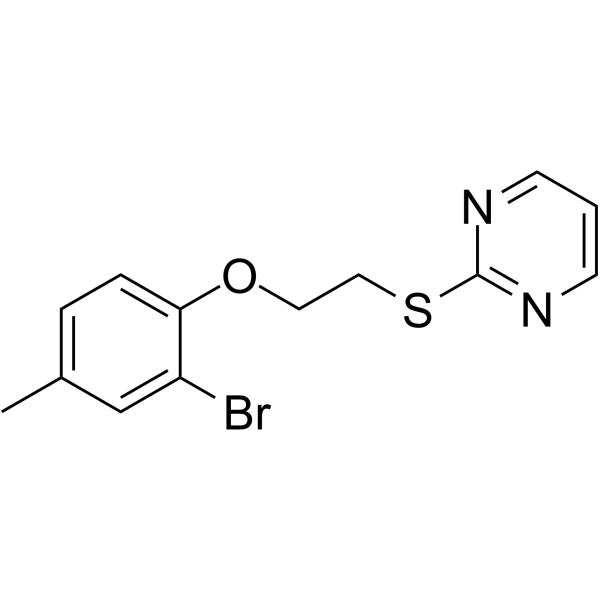
ZLN024 is an AMPK allosteric activator. ZLN024 directly activates recombinant AMPK α1β1γ1, AMPK α2β1γ1, AMPK α1β2γ1 and AMPK α2β2γ1 heterotrimer with EC50s of 0.42 µM, 0.95 µM, 1.1 µM and 0.13 µM, respectively.
Nur für Forschungszwecke. Wir verkaufen nicht an Patienten.
- CAS. Nr.: 723249-01-2
- Formel: C13H13BrN2OS
- Molecular Weight:325.22
-
Speicherung:
Please store the product under the recommended conditions in the Certificate of Analysis.

To place orders, for customer services and technical support, please contact: MedChemExpress USA
Tel: 609-228-6898 E-mail: [email protected] [email protected]


-
 Biologische Aktivität
-
Chemical Information
- Reinheit & Dokumentation
- Verweise
-
 Help & FAQs


-
HY-50662
A-769662AMPK Activator -
HY-112769
EX229AMPK Activator -
HY-13418A
DorsomorphinAMPK Inhibitor -
HY-12334
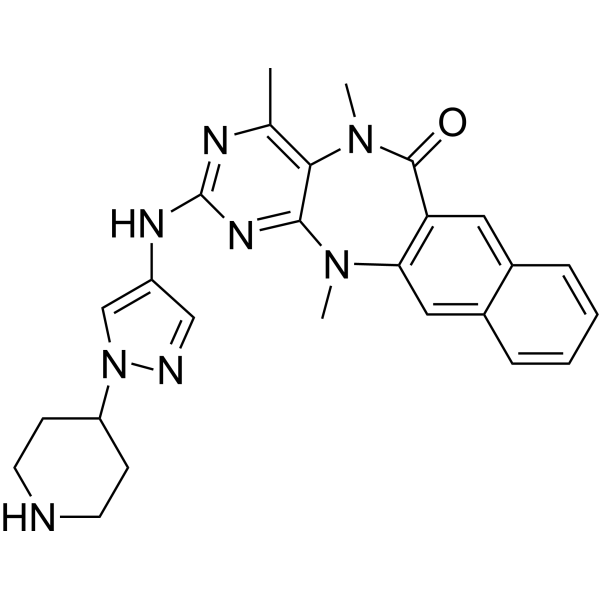
HTH-01-015NUAK1/ARK5 Inhibitor -
HY-112233
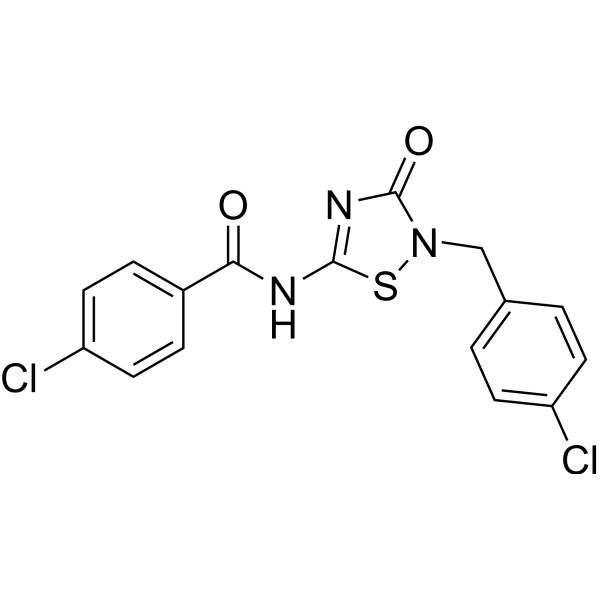
O-304AMPK Activator -
HY-13418
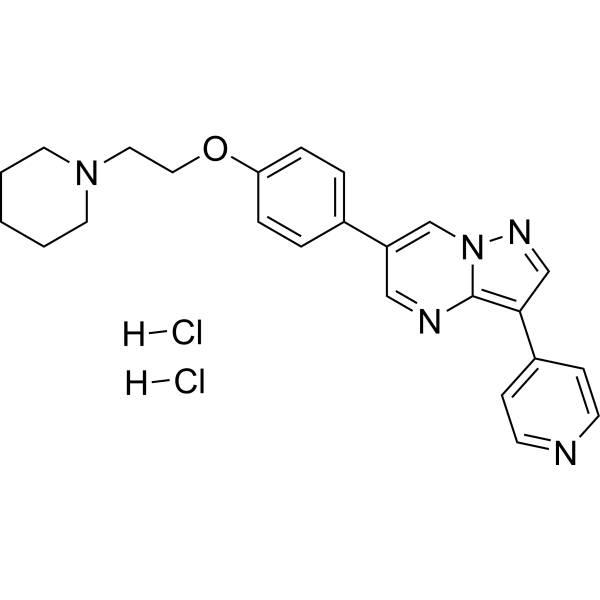
Dorsomorphin dihydrochlorideAMPK Inhibitor -
HY-15802
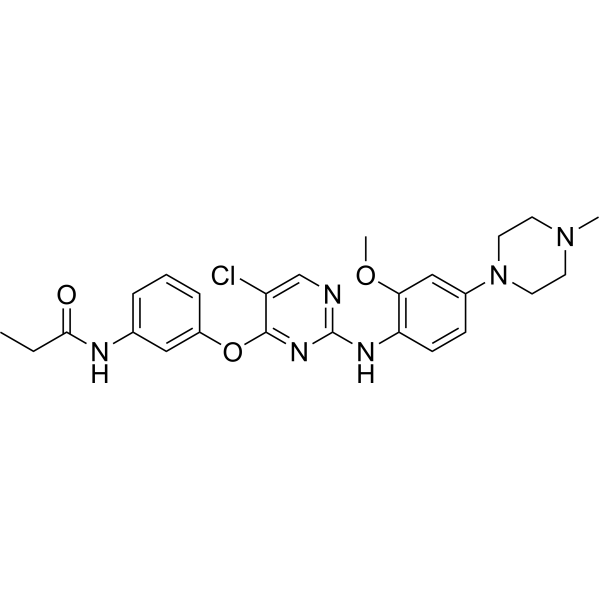
WZ4003NUAK Kinase Inhibitor -
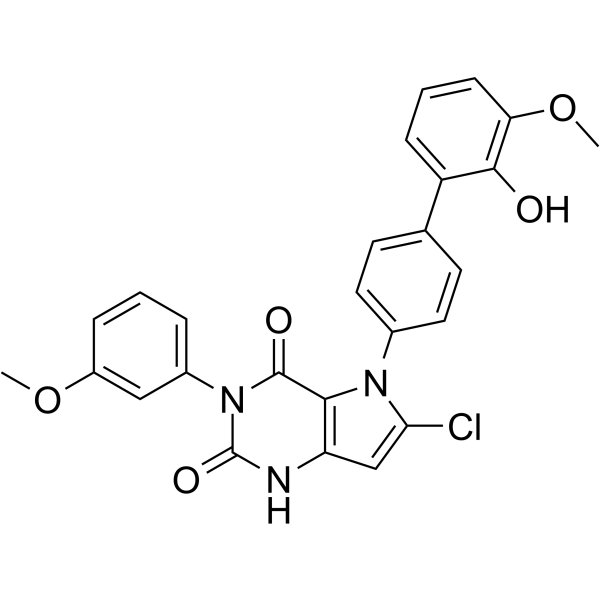
HY-100548
GSK621AMPK Activator -
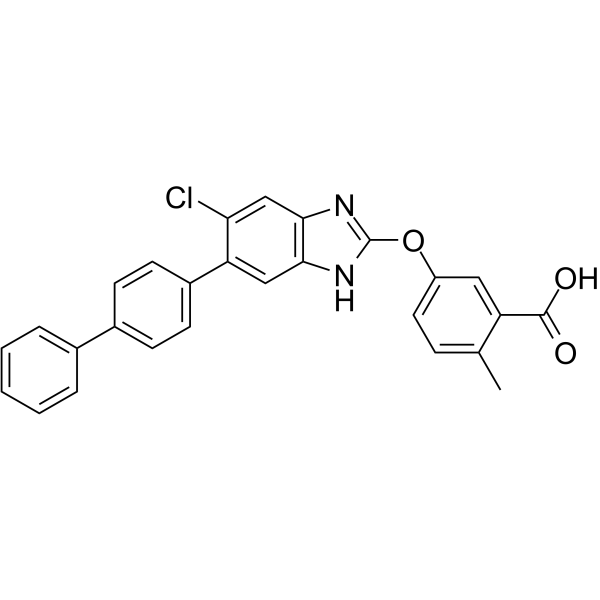
HY-107988
MK-3903AMPK Activator -
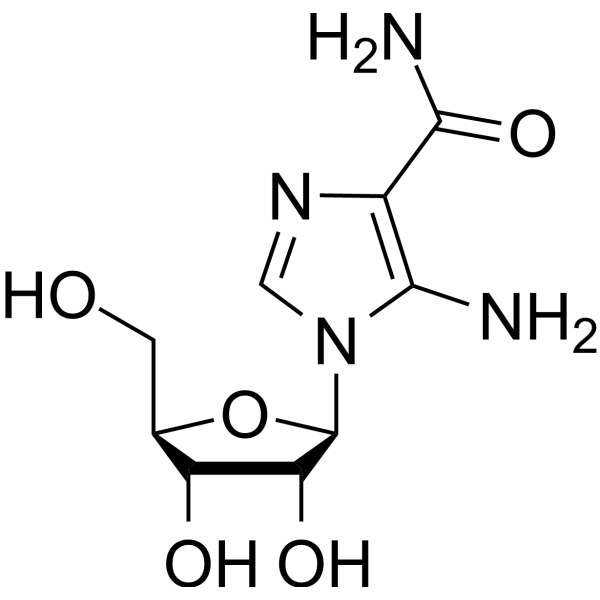
HY-13417
AICARAMPK Activator -
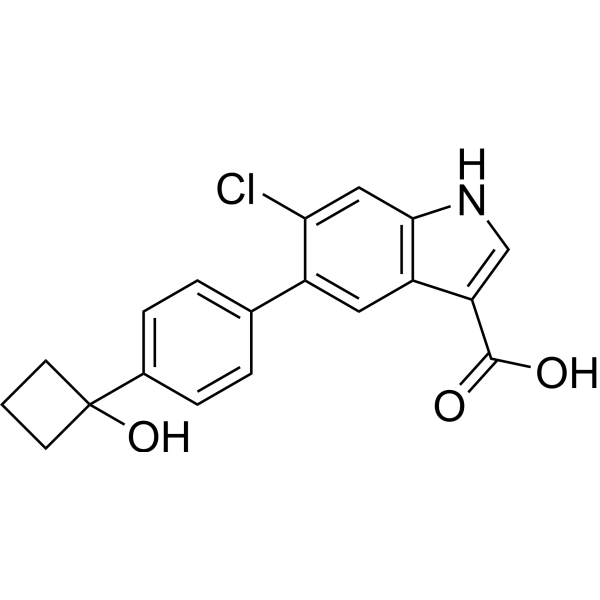
HY-103683
PF-06409577AMPK Activator -
HY-15840
YLF-466DAMPK Activator
Publications Citing Use of MedChemExpress (MCE) ZLN024
MoreAlle AMPK Isoform-spezifische Produkte anzeigen
More

Biologische Aktivität
Beschreibung
IC50 & Target
[1]|
AMPK α2β2γ1 0.13 μM (EC50) |
AMPK α1β1γ1 0.42 μM (EC50) |
AMPK α2β1γ1 0.95 μM (EC50) |
Cellular Effect
|
Cell Line

|
Type | Value | Description | References |
|---|---|---|---|---|
| Sf9 | EC50 |
0.55 μM
Compound: ZLN024
|
Activation of C-terminal His tagged human recombinant full length AMPK alpha1/beta1/gamma1 expressed in baculovirus infected Sf9 cells using SAMS peptide as substrate incubated for 60 mins by ADP-Glo luminescence assay
Activation of C-terminal His tagged human recombinant full length AMPK alpha1/beta1/gamma1 expressed in baculovirus infected Sf9 cells using SAMS peptide as substrate incubated for 60 mins by ADP-Glo luminescence assay
|
[PMID: 31358465] |
In Vitro
ZLN024 allosterically stimulates active AMPK heterotrimers and the inactive α1 subunit truncations α1 (1-394) and α1 (1-335) but not α1 (1-312). AMPK activation by ZLN024 requires the pre-phosphorylation of Thr-172 by at least one upstream kinase and protects AMPK Thr-172 against dephosphorylation by PP2Cα. ZLN024 activates AMPK in L6 myotubes and stimulates glucose uptake and fatty acid oxidation without increasing the ADP/ATP ratio. Using the established scintillation proximity assay (SPA) assay, random screening against the AMPK α1β1γ1 heterotrimer is performed and a new AMPK activator, ZLN024 is found. ZLN024 directly activates recombinant AMPK α1β1γ1 and its homologue α2β1γ1 in a concentration-dependent manner. ZLN024 increases the activity of α1β1γ1 by 1.5-fold and has an EC50 of 0.42 µM, and it increases the activity of α2β1γ1 by 1.7-fold with an EC50 of 0.95 µM. ZLN024 also directly activates recombinant AMPK α1β2γ1, by 1.7-fold with an EC50 of 1.1 µM; and AMPK α2β2γ1, by 1.6-fold with an EC50 of 0.13 µM[1].
MedChemExpress (MCE) has not independently confirmed the accuracy of these methods. They are for reference only. .
In Vivo
MedChemExpress (MCE) has not independently confirmed the accuracy of these methods. They are for reference only.


Chemical Information
-
CAS. Nr. 723249-01-2
-
Molecular Weight 325.22
-
Formel C13H13BrN2OS
-
SMILES
CC1=CC=C(OCCSC2=NC=CC=N2)C(Br)=C1
-
Versand
Room temperature in continental US; may vary elsewhere.
-
Speicherung
Please store the product under the recommended conditions in the Certificate of Analysis.


Publications (1)
-
Journal Impact Factor
-
Most Recent
-
Cell Death Differ
Circadian rhythm modulates endochondral bone formation via MTR1/AMPKβ1/BMAL1 signaling axis. [Abstract]2022 Apr;29(4):874-887. PMID: 35094018


Reinheit & Dokumentation
Verweise

Calculators
Konzentration (Stammlösung) × Volumen (Stammlösung) = Konzentration (Ziellösung) × Volumen (Ziellösung)


ZLN024 Related Classifications
HY-16708 Related Classifications
 Powered by Bioz