



Dinitolmide
Based on 1 publication(s) in Google Scholar
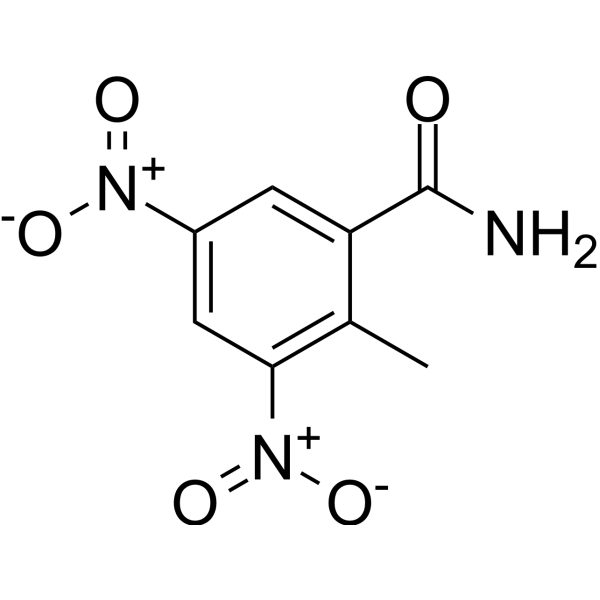
Dinitolmide (Zoalene) is an orally active anticoccidial agent used as a fodder additive. Dinitolmide has a wide anticoccidial spectrum with no effect on host immunity. Dinitolmide mainly acts on the first generation merozoite stage of coccidia and also has an inhibitory effect on the sporulation process of oocysts. Dinitolmide has anti-Toxoplasma gondii effect in vitro with an EC50 of 3.625 μg/mL. Dinitolmide can be used to inhibits infections caused by Eimeria tenella.
For research use only. We do not sell to patients.
- Purity : 99.66%
- CAS No.: 148-01-6
- Formula: C8H7N3O5
- Molecular Weight:225.16
-
Storage:Powder -20°C, 3 years , 4°C, 2 years ; In solvent -80°C, 2 years , -20°C, 1 year

To place orders, for customer services and technical support, please contact: MedChemExpress USA
Tel: 609-228-6898 E-mail: [email protected] [email protected]


-
 Biological Activity
-
Chemical Information
-
Solvent & Solubility
- Protocols
- Purity & Documentation
- References
-
 Help & FAQs


-
HY-B0357
DiclazurilAnticoccidial Agent -

HY-B1004R
Dinitolmide (Standard)Stanard of Dinitolmide -
HY-B0175
ToltrazurilAntibiotic -
HY-101476
EmodepsideAnthelmintic Agent -
HY-B0291
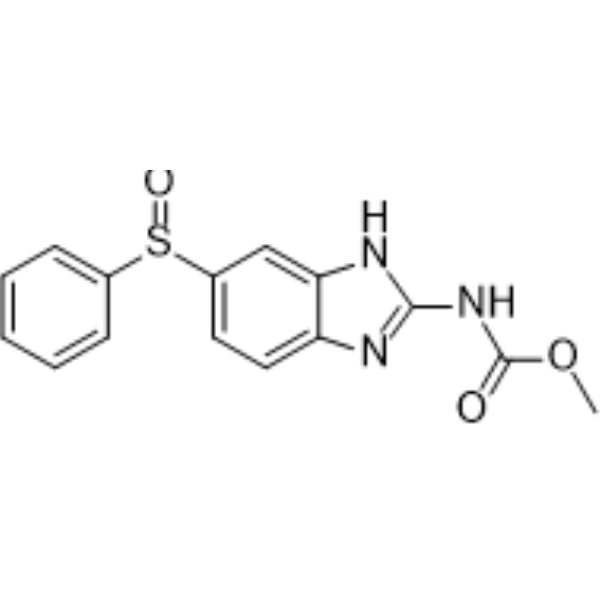
OxfendazoleParasite Inhibitor -
HY-B0299
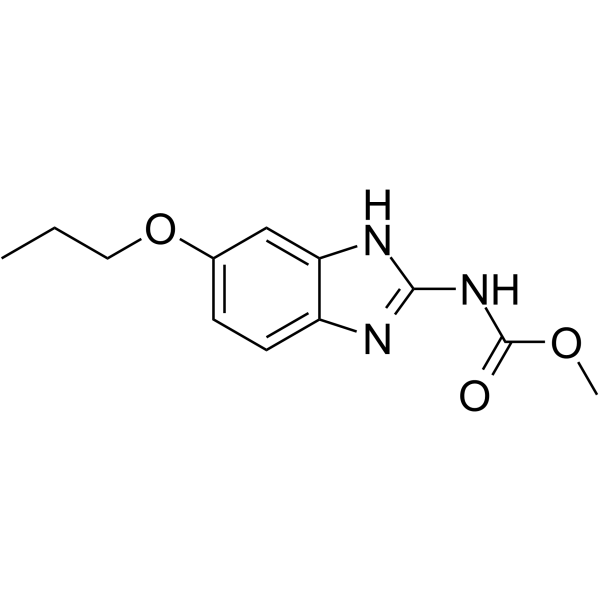
OxibendazolePolymerase Inhibitor -
HY-12642
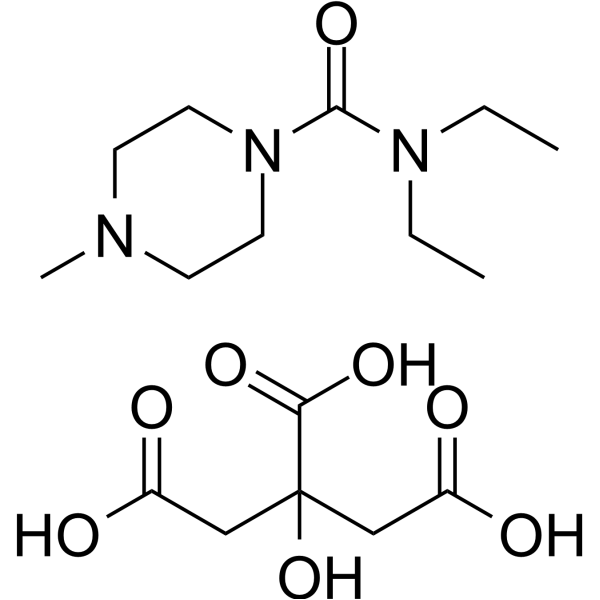
Diethylcarbamazine citrateMicrofilaricidal Agent -

HY-B0357R
Diclazuril (Standard)Anticoccidial Agent -

HY-B0175R
Toltrazuril (Standard)Antibiotic -

HY-B0291R
Oxfendazole (Standard)Parasite Inhibitor -
HY-B0299R
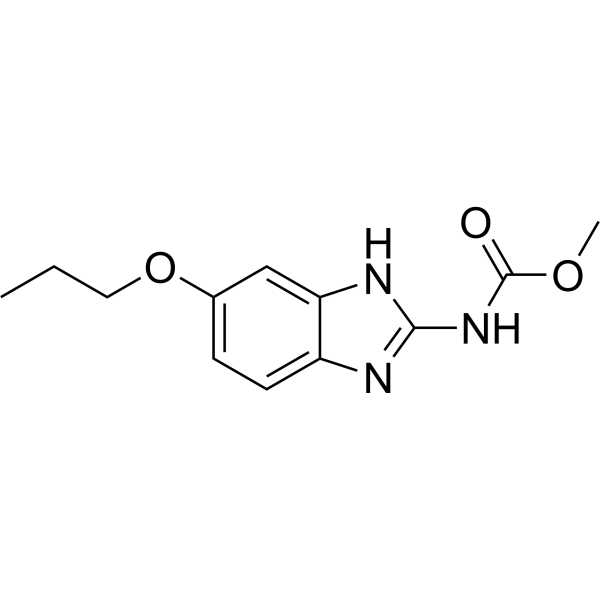
Oxibendazole (Standard)Polymerase Inhibitor -

HY-101476R
Emodepside (Standard)Anthelmintic Agent
Publications Citing Use of MedChemExpress (MCE) Dinitolmide
More Customer Validation & Images

-
IF
All Parasite Isoforms
More

Biological Activity
Description
|
Coccidia |
Toxoplasma |
In Vitro
Dinitolmide (10-700 μg/mL, 24 h-7 d) potently inhibit T. gondii growth with slight cytotoxicity against Vero cells[2].
Dinitolmide (20 μg/mL, 24 h) significantly inhibits the viability, invasion and proliferation of T. gondii tachyzoites in Vero cells[2].
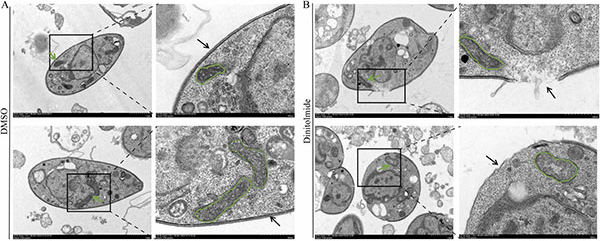
Dinitolmide (10 μg/mL, 20 h) results in asynchronous development of the inner membrane complex (IMC) in the daughter cells and the disruption of the membrane of T. gondii in Vero cells[2].
Dinitolmide (10 μg/mL, 15 h) up-regulates genes related to cell apoptosis and nitric-oxide synthase and down-regulates many Sag-related sequence (srs) genes in T. gondii tachyzoites in Vero cells[2].
MedChemExpress (MCE) has not independently confirmed the accuracy of these methods. They are for reference only. Further protocols information, click here.
-
Cell Line:T. gondii in Vero cells
-
Concentration:10 μg/mL
-
Incubation Time:20 h
-
Result:Caused 77% of tachyzoites to have abnormal morphology (rounding, membrane rupture), and the IMC to develop asynchronously or break.
-
Cell Line:T. gondii in Vero cells
-
Concentration:10 μg/mL
-
Incubation Time:15 h
-
Result:Significantly down-regulated srs genes.
In Vivo
MedChemExpress (MCE) has not independently confirmed the accuracy of these methods. They are for reference only.
-
Animal Model:E. tenella oocysts Infection model established in 14-day-old AA broiler chickens[1]
-
Dosage:125 mg/kg feed intercalated into Na+-montmorillonite (Na+-MMT)
-
Administration:Oral administration (p.o.), free access to food for 7 days
-
Result:Significantly increased broiler weight and survival rates.
Reduced bloody stool scores and oocyst excretion.
Improved anticoccidial index.


Chemical Information
-
CAS No. 148-01-6
-
Appearance Solid
-
Molecular Weight 225.16
-
Formula C8H7N3O5
-
Color Light yellow to yellow
-
SMILES
O=C(N)C1=CC([N+]([O-])=O)=CC([N+]([O-])=O)=C1C
-
Synonyms
Zoalene
-
Shipping
Room temperature in continental US; may vary elsewhere.
-
Storage
Powder -20°C 3 years 4°C 2 years In solvent -80°C 2 years -20°C 1 year


Publications (1)
-
Journal Impact Factor
-
Most Recent
-
Vet Parasitol
2023 Apr:316:109903. PMID: 36871500
Dinitolmide purchased from MedChemExpress. Usage Cited in: Vet Parasitol. 2023 Apr:316:109903. [Abstract]
Dinitolmide (10 µg/mL; 15 h) corrupts the integrity of the T. gondii membrane, while has no significant impact to the mitochondria structure.


Solvent & Solubility
In Vitro:
DMSO : ≥ 100 mg/mL (444.13 mM; Hygroscopic DMSO has a significant impact on the solubility of product, please use newly opened DMSO)
* "≥" means soluble, but saturation unknown.
Please refer to the solubility information to select the appropriate solvent. Once prepared, please aliquot and store the solution to prevent product inactivation from repeated freeze-thaw cycles.
Storage method and period of stock solution: -80°C, 2 years; -20°C, 1 year. When stored at -80°C, please use it within 2 years. When stored at -20°C, please use it within 1 year.
Please refer to the solubility information to select the appropriate solvent. Once prepared, please aliquot and store the solution to prevent product inactivation from repeated freeze-thaw cycles.
Storage method and period of stock solution: -80°C, 2 years; -20°C, 1 year. When stored at -80°C, please use it within 2 years. When stored at -20°C, please use it within 1 year.
Concentration (start) × Volume (start) = Concentration (final) × Volume (final)
In Vivo:
Select the appropriate dissolution method based on your experimental animal and administration route.
- For the following dissolution methods, please ensure to first prepare a clear stock solution using an In Vitro approach and then sequentially add co-solvents:
- To ensure reliable experimental results, the clarified stock solution can be appropriately stored based on storage conditions. As for the working solution for In Vivo experiments, it is recommended to prepare freshly and use it on the same day.
- The percentages shown for the solvents indicate their volumetric ratio in the final prepared solution. If precipitation or phase separation occurs during preparation, heat and/or sonication can be used to aid dissolution.
Add each solvent one by one: 10% DMSO 40% PEG300 5% Tween-80 45% Saline
Solubility: ≥ 2.5 mg/mL (11.10 mM); Clear solution
This protocol yields a clear solution of ≥ 2.5 mg/mL (saturation unknown).
Taking 1 mL working solution as an example, add 100 μL DMSO stock solution (25.0 mg/mL) to 400 μL PEG300, and mix evenly; then add 50 μL Tween-80 and mix evenly; then add 450 μL Saline to adjust the volume to 1 mL.
Preparation of Saline: Dissolve 0.9 g sodium chloride in ddH₂O and dilute to 100 mL to obtain a clear Saline solution.
Add each solvent one by one: 10% DMSO 90% (20% SBE-β-CD in Saline)
Solubility: ≥ 2.5 mg/mL (11.10 mM); Clear solution
This protocol yields a clear solution of ≥ 2.5 mg/mL (saturation unknown).
Taking 1 mL working solution as an example, add 100 μL DMSO stock solution (25.0 mg/mL) to 900 μL 20% SBE-β-CD in Saline, and mix evenly.
Preparation of 20% SBE-β-CD in Saline (4°C, storage for one week): 2 g SBE-β-CD powder is dissolved in 10 mL Saline, completely dissolve until clear.
In Vivo Dissolution Calculator
Please enter the basic information of animal experiments:
-
-
-
-
Recommended: Prepare an additional quantity of animals to account for potential losses during experiments.
Please enter your animal formula composition:
-
%DMSO +
Recommended: Keep the proportion of DMSO in working solution below 2% if your animal is weak.
-
%+
-
+%Tween-80 + +
-
%Saline +
The co-solvents required include: DMSO, . All of co-solvents are available by MedChemExpress (MCE). , Tween 80. All of co-solvents are available by MedChemExpress (MCE).
Working solution concentration: 0.22 mg/mL
Method for preparing stock solution: mg drug dissolved in μL DMSO. Stock solution concentration: mg/mL.
1. Take μL DMSO stock solution;
2. Add μL .
μL , mix evenly;
3. Then add μL Tween 80, mix evenly;
4. Then add μL
Please ensure that the stock solution in the first step is dissolved to a clear state, and add co-solvents in sequence. You can use ultrasonic heating (ultrasonic cleaner, recommended frequency 20-40 kHz), vortexing, etc. to assist dissolution.

Protocols
-
Filamentous Fungal Mold Culture and Sporulation
Filamentous fungal mold culture and sporulation assays grow hyphae under defined nutritional and environmental conditions until asexual spores, commonly conidia, are produced; the main readouts are colony growth, sporulation onset, conidial yield, conidial morphology, viability, and, when relevant, downstream infectivity or stress phenotype.


Purity & Documentation
-
Data Sheet (280 KB)
-
SDS (393 KB)
- English - EN (393 KB)
- Français - FR (393 KB)
- Deutsch - DE (393 KB)
- Norwegian - NO (393 KB)
- Español - ES (393 KB)
- Swedish - SV (393 KB)
- Italian - IT (393 KB)
- Korean - KR (393 KB)
- Portuguese - PT (393 KB)
-
Handling Instructions (2659 KB)
References
[1]. Qu D, et al. Effect of dinitolmide intercalated into Montmorillonite on E. tenella infection in chickens. Parasitol Res. 2014 Mar;113(3):1233-8. [Content Brief]
[2]. Cao X, et al. In vitro anti-Toxoplasma gondii effects of a coccidiostat dinitolmide. Vet Parasitol. 2023 Apr;316:109903. [Content Brief]


Complete Stock Solution Preparation Table
Please refer to the solubility information to select the appropriate solvent. Once prepared, please aliquot and store the solution to prevent product inactivation from repeated freeze-thaw cycles.
Storage method and period of stock solution: -80°C, 2 years; -20°C, 1 year. When stored at -80°C, please use it within 2 years. When stored at -20°C, please use it within 1 year.
| Optional Solvent | Concentration Solvent Mass | 1 mg | 5 mg | 10 mg | 25 mg |
|---|---|---|---|---|---|
| DMSO | 1 mM | 4.4413 mL | 22.2064 mL | 44.4129 mL | 111.0322 mL |
| 5 mM | 0.8883 mL | 4.4413 mL | 8.8826 mL | 22.2064 mL | |
| 10 mM | 0.4441 mL | 2.2206 mL | 4.4413 mL | 11.1032 mL | |
| 15 mM | 0.2961 mL | 1.4804 mL | 2.9609 mL | 7.4021 mL | |
| 20 mM | 0.2221 mL | 1.1103 mL | 2.2206 mL | 5.5516 mL | |
| 25 mM | 0.1777 mL | 0.8883 mL | 1.7765 mL | 4.4413 mL | |
| 30 mM | 0.1480 mL | 0.7402 mL | 1.4804 mL | 3.7011 mL | |
| 40 mM | 0.1110 mL | 0.5552 mL | 1.1103 mL | 2.7758 mL | |
| 50 mM | 0.0888 mL | 0.4441 mL | 0.8883 mL | 2.2206 mL | |
| 60 mM | 0.0740 mL | 0.3701 mL | 0.7402 mL | 1.8505 mL | |
| 80 mM | 0.0555 mL | 0.2776 mL | 0.5552 mL | 1.3879 mL | |
| 100 mM | 0.0444 mL | 0.2221 mL | 0.4441 mL | 1.1103 mL |


Dinitolmide Related Classifications
HY-B1004 Related Classifications
 Powered by Bioz