



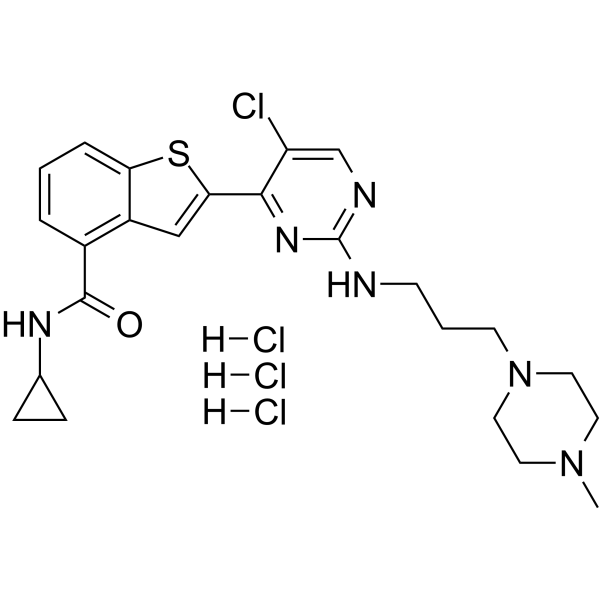
LY2409881 trihydrochloride
Based on 5 publication(s) in Google Scholar
LY2409881 trihydrochloride is a selective IκB kinase β (IKK2) inhibitor with an IC50 of 30 nM.
For research use only. We do not sell to patients.
- Purity : 98.33%
- CAS No.: 946518-60-1
- Formula: C24H32Cl4N6OS
- Molecular Weight:594.43
-
Storage:
4°C, sealed storage, away from moisture
* In solvent : -80°C, 6 months; -20°C, 1 month (sealed storage, away from moisture)

To place orders, for customer services and technical support, please contact: MedChemExpress USA
Tel: 609-228-6898 E-mail: [email protected] [email protected]


-
 Biological Activity
-
Chemical Information
-
Solvent & Solubility
- Protocols
- Purity & Documentation
- References
-
 Help & FAQs


-
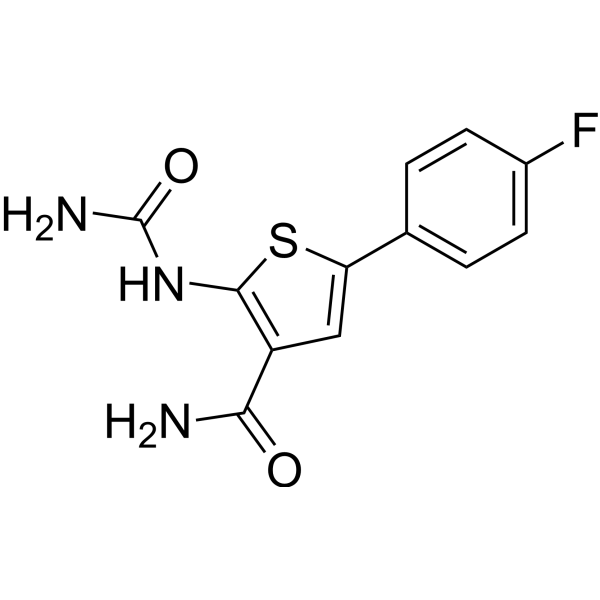
HY-10074
TPCA-1IKK-2 Inhibitor -
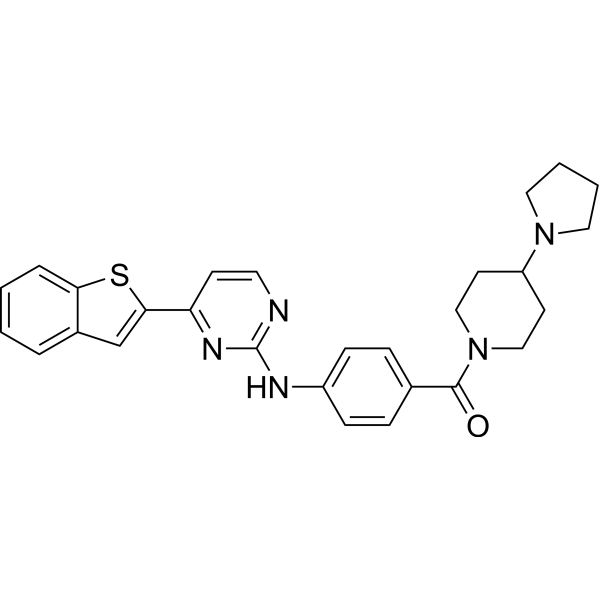
HY-13687
IKK 16IKK Inhibitor -
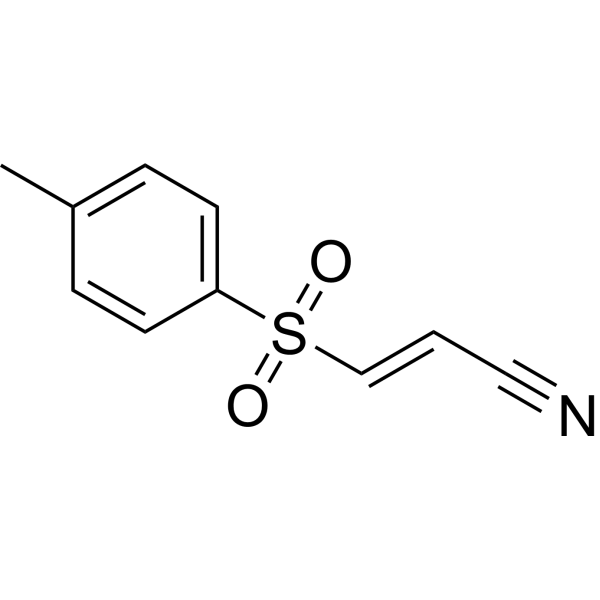
HY-13453
BAY 11-7082IκBα/NF-κB Inhibitor -
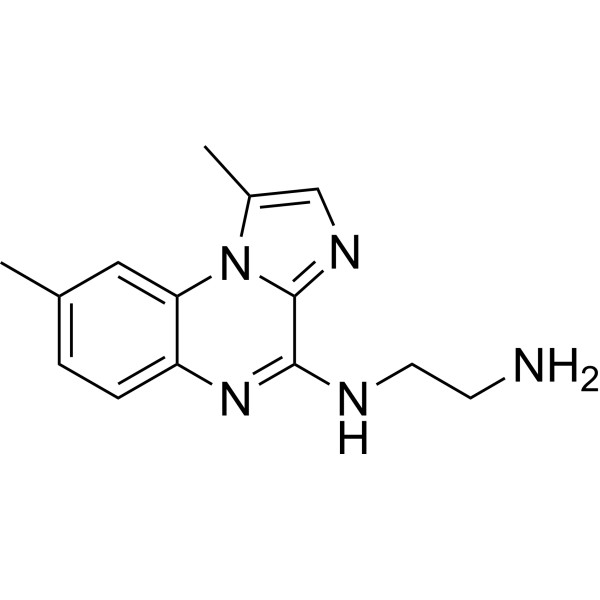
HY-10519
BMS-345541IKK-1/IKK-2 Inhibitor -
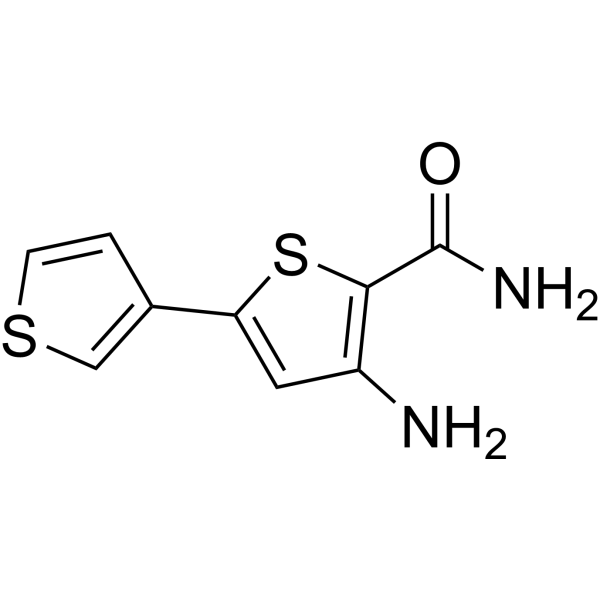
HY-13802
SC-514IKK Inhibitor -
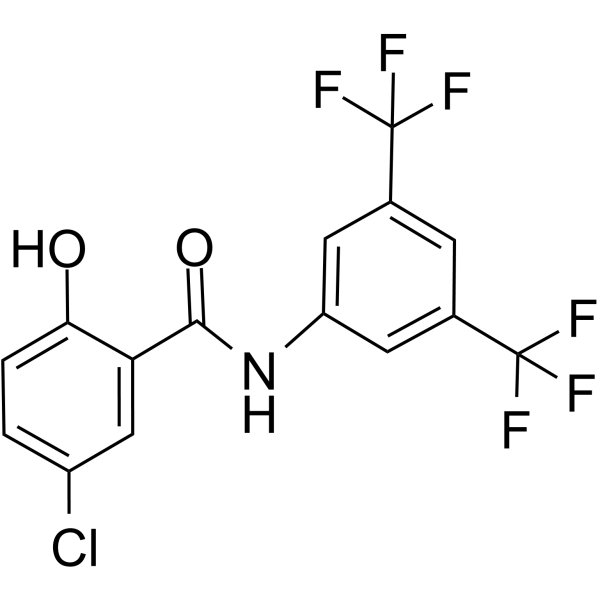
HY-10172
IMD-0354IKKβ Inhibitor -
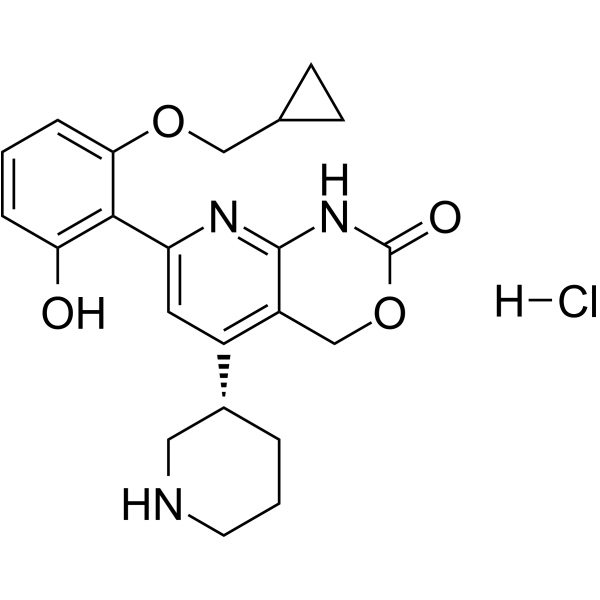
HY-50948
Bay 65-1942 hydrochlorideIKK Inhibitor -
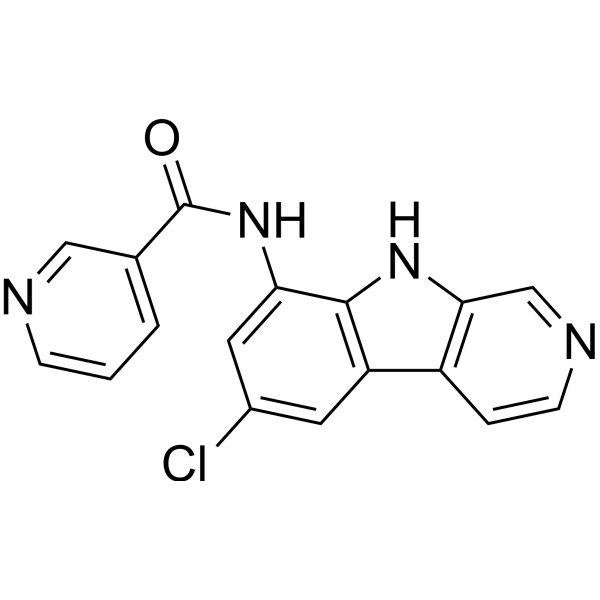
HY-18008
PS-1145Apoptosis Inducer -
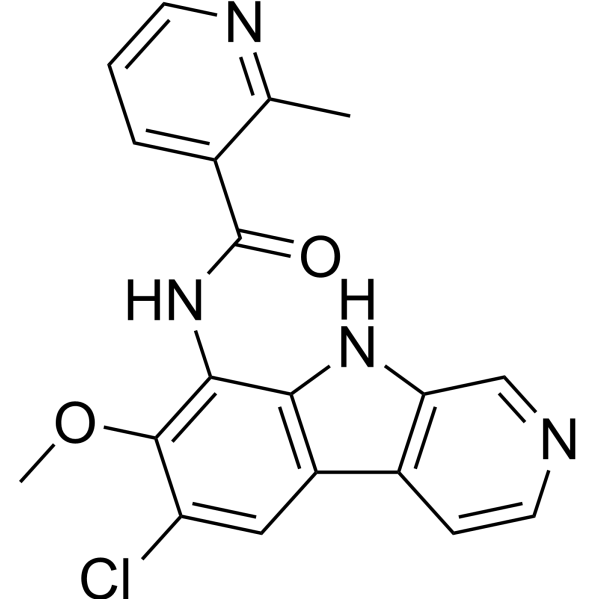
HY-15473
MLN120BIKKβ Inhibitor -
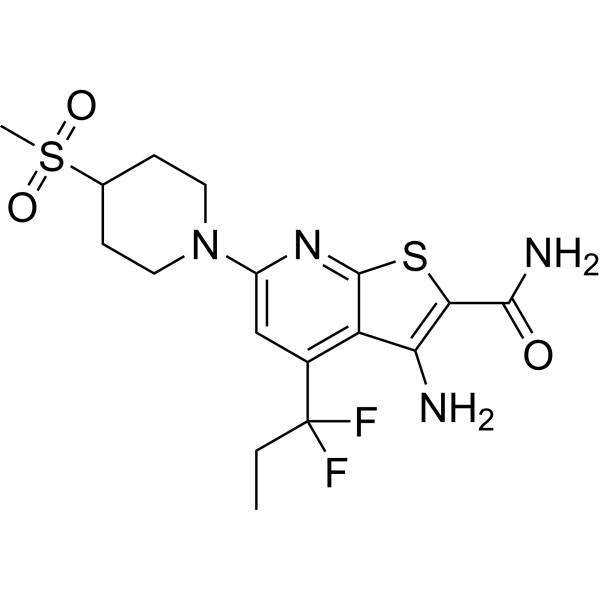
HY-13019
BI605906IKK Inhibitor -
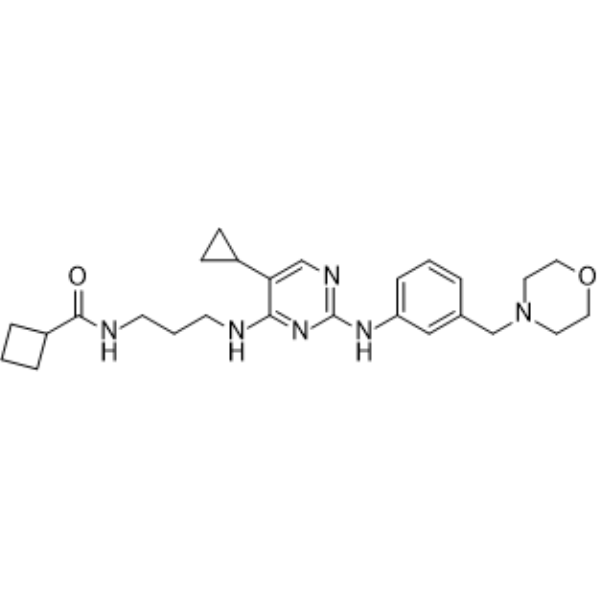
HY-13018
MRT67307IKKε/TBK-1 Inhibitor -
HY-13060
ACHP HydrochlorideIKKβ Inhibitor
Publications Citing Use of MedChemExpress (MCE) LY2409881 trihydrochloride
More

Biological Activity
Description
IC50 & Target
[1]|
IKK2 30 nM (IC50) |
In Vitro
LY2409881 is an IKK2 inhibitor that inhibits TNFα-induced activation of NF-κB. By in vitro kinase assay, LY2409881 potently inhibits IKK2, with an IC50 of 30 nM. In contrast, the IC50 for IKK1 and other common kinases is at least one log higher. The specificity of LY2409881 for NF-κB signaling is further studied in a cell-based assay, by examining the effect of LY2409881 in the TNFα-dependent antiapoptosis function. TNFα is a well-characterized upstream stimulus of NF-κB. In the ovarian cancer cell line SKOV3, LY2409881 demonstrates moderate cytotoxicity, whereas TNFα at 10 ng/mL does not cause any cytotoxicity. In contrast, coadministration of LY2409881 and TNFα results in markedly higher cell killing compared with LY2409881. This is because TNFα-dependent activation of antiapoptotic signals mediated by NF-κB is blocked by LY2409881, while the proapoptotic TNF receptor-associated death domain (TRADD) and FAS-associated death domain (FADD) cascade pathways activated by TNFα are not affected by LY2409881[1].
MedChemExpress (MCE) has not independently confirmed the accuracy of these methods. They are for reference only. Further protocols information, click here.
In Vivo
MedChemExpress (MCE) has not independently confirmed the accuracy of these methods. They are for reference only.


Chemical Information
-
CAS No. 946518-60-1
-
Appearance Solid
-
Molecular Weight 594.43
-
Formula C24H32Cl4N6OS
-
Color Light yellow to yellow
-
SMILES
O=C(C1=C(C=C(C2=NC(NCCCN3CCN(C)CC3)=NC=C2Cl)S4)C4=CC=C1)NC5CC5.[H]Cl.[H]Cl.[H]Cl
-
Shipping
Room temperature in continental US; may vary elsewhere.
-
Storage
4°C, sealed storage, away from moisture
* In solvent : -80°C, 6 months; -20°C, 1 month (sealed storage, away from moisture)


Publications (5)
-
Journal Impact Factor
-
Most Recent
-
Acta Pharmacol Sin
2026 Mar 11. PMID: 41813972 -
Clin Transl Med
Uterus globulin associated protein 1 (UGRP1) binds podoplanin (PDPN) to promote a novel inflammation pathway during Streptococcus pneumoniae infection. [Abstract]2022 Jun;12(6):e850. PMID: 35652821 -
Cell Rep
Polo-like kinase 2 promotes microglial activation via regulation of the HSP90α/IKKβ pathway. [Abstract]2024 Oct 8;43(10):114827. PMID: 39383034 -
Int J Mol Sci
Salicylate Sodium Suppresses Monocyte Chemoattractant Protein-1 Production by Directly Inhibiting Phosphodiesterase 3B in TNF-α-Stimulated Adipocytes. [Abstract]2022 Dec 24;24(1):320. PMID: 36613764 -
iScience
Pan-cancer analysis reveals Rho kinase addiction as a vulnerability of de-differentiated cancer cells. [Abstract]2026 Jun 2;29(6):116031. PMID: 42369662


Solvent & Solubility
In Vitro:
DMSO : 14.29 mg/mL (24.04 mM; Need ultrasonic; Hygroscopic DMSO has a significant impact on the solubility of product, please use newly opened DMSO)
H2O : < 0.1 mg/mL (insoluble)
Please refer to the solubility information to select the appropriate solvent. Once prepared, please aliquot and store the solution to prevent product inactivation from repeated freeze-thaw cycles.
Storage method and period of stock solution: -80°C, 6 months; -20°C, 1 month (sealed storage, away from moisture). When stored at -80°C, please use it within 6 months. When stored at -20°C, please use it within 1 month.
Please refer to the solubility information to select the appropriate solvent. Once prepared, please aliquot and store the solution to prevent product inactivation from repeated freeze-thaw cycles.
Storage method and period of stock solution: -80°C, 6 months; -20°C, 1 month (sealed storage, away from moisture). When stored at -80°C, please use it within 6 months. When stored at -20°C, please use it within 1 month.
Concentration (start) × Volume (start) = Concentration (final) × Volume (final)
In Vivo:
Select the appropriate dissolution method based on your experimental animal and administration route.
- For the following dissolution methods, please ensure to first prepare a clear stock solution using an In Vitro approach and then sequentially add co-solvents:
- To ensure reliable experimental results, the clarified stock solution can be appropriately stored based on storage conditions. As for the working solution for In Vivo experiments, it is recommended to prepare freshly and use it on the same day.
- The percentages shown for the solvents indicate their volumetric ratio in the final prepared solution. If precipitation or phase separation occurs during preparation, heat and/or sonication can be used to aid dissolution.
Add each solvent one by one: 10% DMSO 40% PEG300 5% Tween-80 45% Saline
Solubility: ≥ 1.43 mg/mL (2.41 mM); Clear solution
This protocol yields a clear solution of ≥ 1.43 mg/mL (saturation unknown).
Taking 1 mL working solution as an example, add 100 μL DMSO stock solution (14.3 mg/mL) to 400 μL PEG300, and mix evenly; then add 50 μL Tween-80 and mix evenly; then add 450 μL Saline to adjust the volume to 1 mL.
Preparation of Saline: Dissolve 0.9 g sodium chloride in ddH₂O and dilute to 100 mL to obtain a clear Saline solution.
Add each solvent one by one: 10% DMSO 90% (20% SBE-β-CD in Saline)
Solubility: ≥ 1.43 mg/mL (2.41 mM); Clear solution
This protocol yields a clear solution of ≥ 1.43 mg/mL (saturation unknown).
Taking 1 mL working solution as an example, add 100 μL DMSO stock solution (14.3 mg/mL) to 900 μL 20% SBE-β-CD in Saline, and mix evenly.
Preparation of 20% SBE-β-CD in Saline (4°C, storage for one week): 2 g SBE-β-CD powder is dissolved in 10 mL Saline, completely dissolve until clear.
For the following dissolution methods, please prepare the working solution directly:
It is recommended to prepare fresh solutions and use them promptly within a short period of time.
The percentages shown for the solvents indicate their volumetric ratio in the final prepared solution. If precipitation or phase separation occurs during preparation, heat and/or sonication can be used to aid dissolution.
Add each solvent one by one: 20% SBE-β-CD in Saline
Solubility: 35 mg/mL (58.88 mM); Clear solution; Need ultrasonic
In Vivo Dissolution Calculator
Please enter the basic information of animal experiments:
-
-
-
-
Recommended: Prepare an additional quantity of animals to account for potential losses during experiments.
Please enter your animal formula composition:
-
%DMSO +
Recommended: Keep the proportion of DMSO in working solution below 2% if your animal is weak.
-
%+
-
+%Tween-80 + +
-
%Saline +
The co-solvents required include: DMSO, . All of co-solvents are available by MedChemExpress (MCE). , Tween 80. All of co-solvents are available by MedChemExpress (MCE).
Working solution concentration: 0.22 mg/mL
Method for preparing stock solution: mg drug dissolved in μL DMSO. Stock solution concentration: mg/mL. * In solvent : -80°C, 6 months; -20°C, 1 month (sealed storage, away from moisture)
1. Take μL DMSO stock solution;
2. Add μL .
μL , mix evenly;
3. Then add μL Tween 80, mix evenly;
4. Then add μL
Please ensure that the stock solution in the first step is dissolved to a clear state, and add co-solvents in sequence. You can use ultrasonic heating (ultrasonic cleaner, recommended frequency 20-40 kHz), vortexing, etc. to assist dissolution.

Protocols
-
Cell Cytotoxicity Assay
Cytotoxicity assays are usually based on the assessment of cell membrane damage, which can also be indirectly detected by measuring cell viability. Detection methods include MTT assay, CKK-8 assay, LDH assay and ATP assay, etc.


Purity & Documentation
-
Data Sheet (282 KB)
-
SDS (393 KB)
- English - EN (393 KB)
- Français - FR (393 KB)
- Deutsch - DE (393 KB)
- Norwegian - NO (393 KB)
- Español - ES (393 KB)
- Swedish - SV (393 KB)
- Italian - IT (393 KB)
- Korean - KR (393 KB)
- Portuguese - PT (393 KB)
-
Handling Instructions (2659 KB)
References


Complete Stock Solution Preparation Table
Please refer to the solubility information to select the appropriate solvent. Once prepared, please aliquot and store the solution to prevent product inactivation from repeated freeze-thaw cycles.
Storage method and period of stock solution: -80°C, 6 months; -20°C, 1 month (sealed storage, away from moisture). When stored at -80°C, please use it within 6 months. When stored at -20°C, please use it within 1 month.
| Optional Solvent | Concentration Solvent Mass | 1 mg | 5 mg | 10 mg | 25 mg |
|---|---|---|---|---|---|
| DMSO | 1 mM | 1.6823 mL | 8.4114 mL | 16.8228 mL | 42.0571 mL |
| 5 mM | 0.3365 mL | 1.6823 mL | 3.3646 mL | 8.4114 mL | |
| 10 mM | 0.1682 mL | 0.8411 mL | 1.6823 mL | 4.2057 mL | |
| 15 mM | 0.1122 mL | 0.5608 mL | 1.1215 mL | 2.8038 mL | |
| 20 mM | 0.0841 mL | 0.4206 mL | 0.8411 mL | 2.1029 mL |


LY2409881 trihydrochloride Related Classifications
HY-B0788A Related Classifications
 Powered by Bioz