



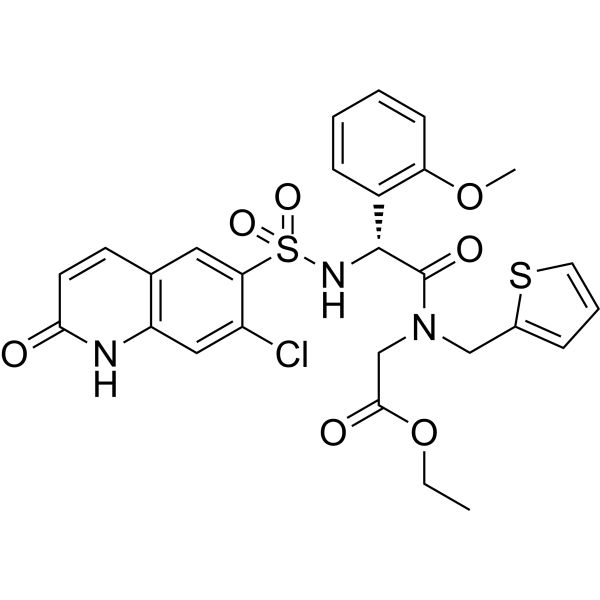
OSMI-4
Based on 33 publication(s) in Google Scholar
OSMI-4 is a low nanomolar O-GlcNAc transferase (OGT) inhibitor, with an EC50 of 3 μM in cells.
연구목적의 판매만을 진행합니다. 환자를 대상으로 한 판매는 하지 않습니다.
- Purity : 99.69%
- CAS No.: 2260791-14-6
- 화학식: C27H26ClN3O7S2
- 분자량:604.09
-
보관:Powder -20°C, 3 years , 4°C, 2 years ; In solvent -80°C, 2 years , -20°C, 1 year

To place orders, for customer services and technical support, please contact: MedChemExpress USA
Tel: 609-228-6898 E-mail: [email protected] [email protected]


-
 Biological Activity
-
Chemical Information
-
용액&용해도
- 순도&문서
- References
-
 Help & FAQs


-
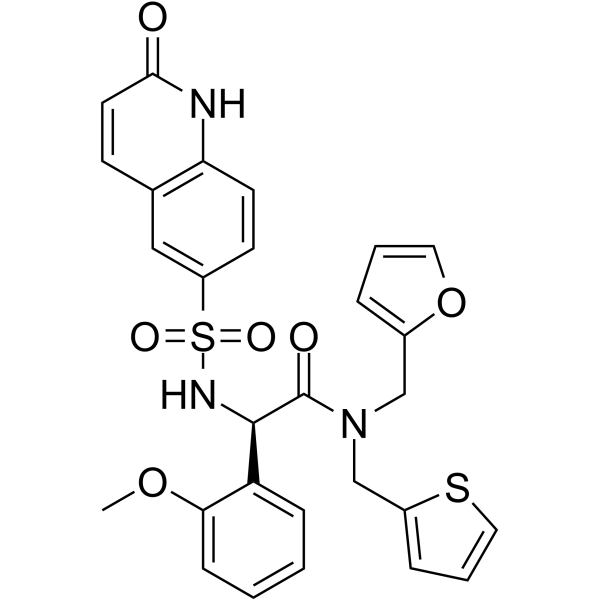
HY-119738
OSMI-1O-GlcNAc Transferase Inhibitor -
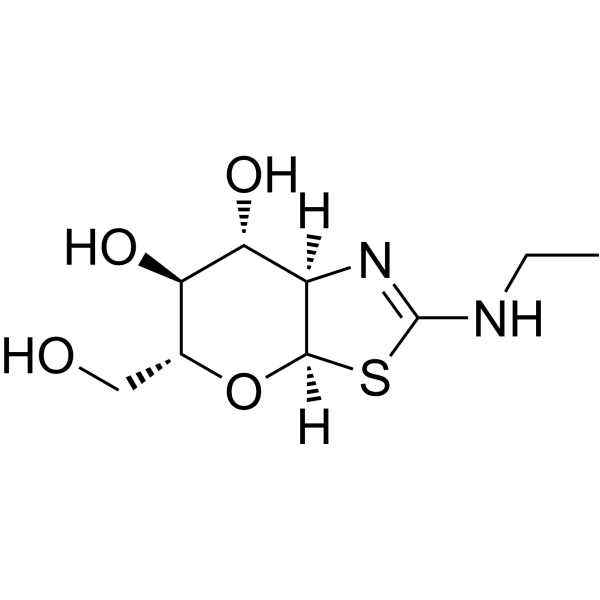
HY-12588
Thiamet GO-GlcNAcase Inhibitor -
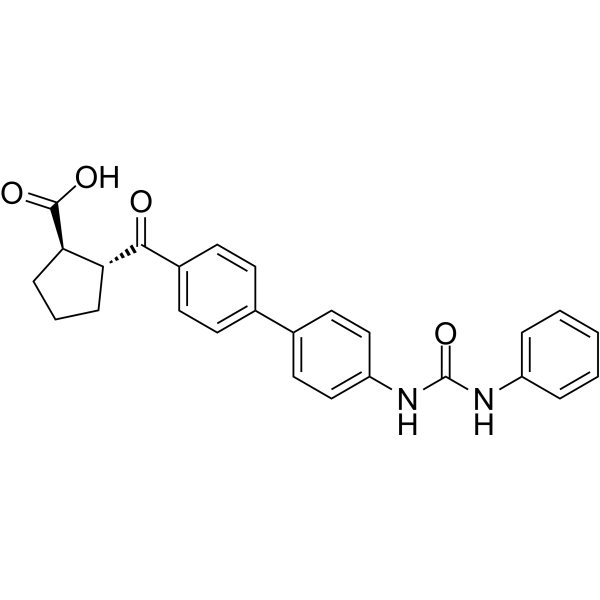
HY-10038
A 922500DGAT-1 Inhibitor -
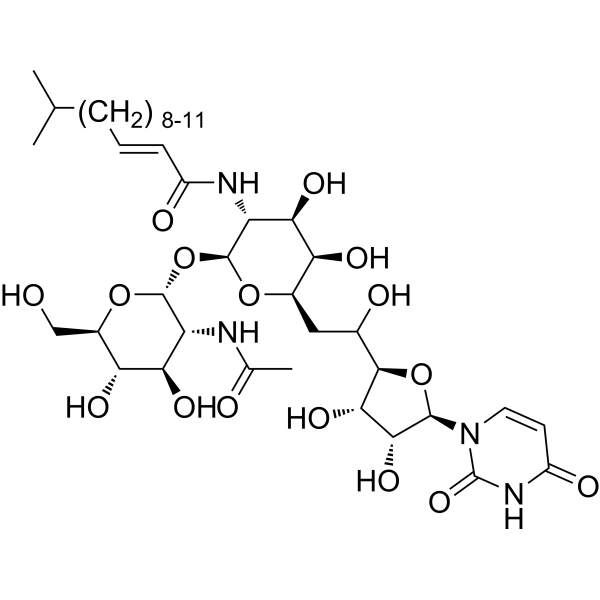
HY-A0098
TunicamycinER Stress Inducer -
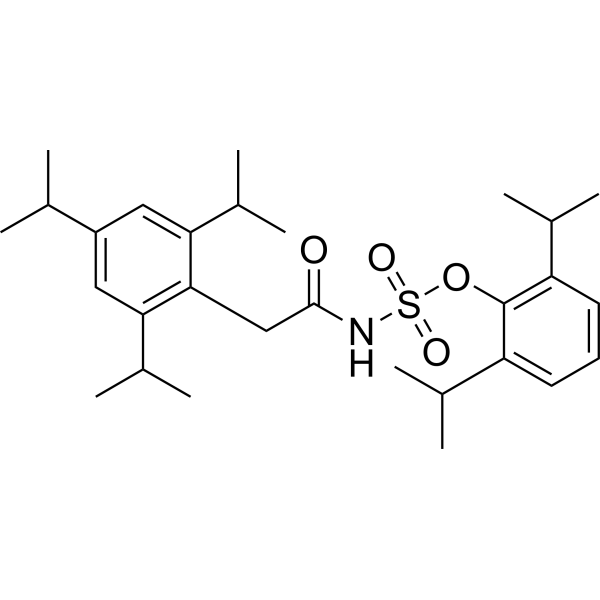
HY-13215
AvasimibeACAT/SOAT Inhibitor -
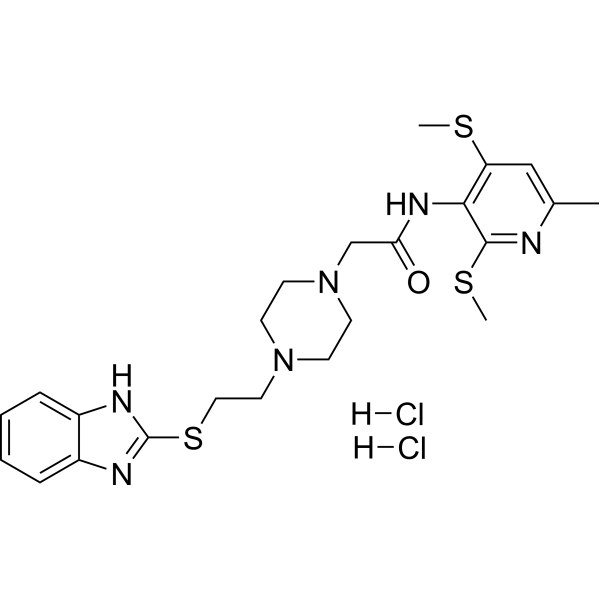
HY-100400A
K-604 dihydrochlorideACAT1 Inhibitor -
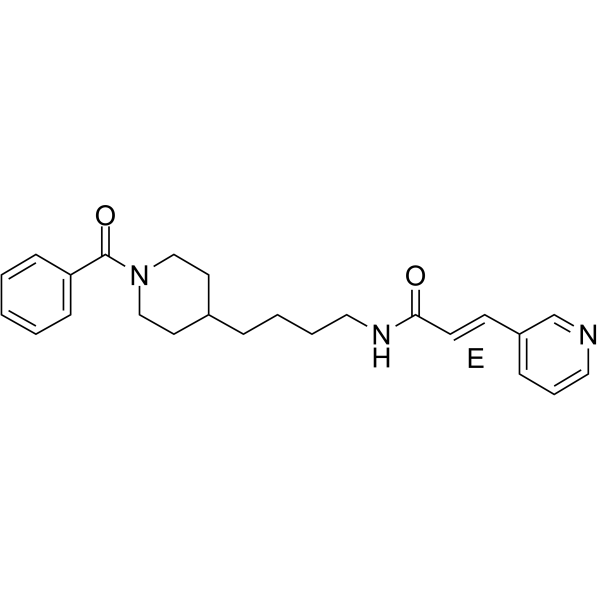
HY-50876
DaporinadNMPRT Inhibitor -
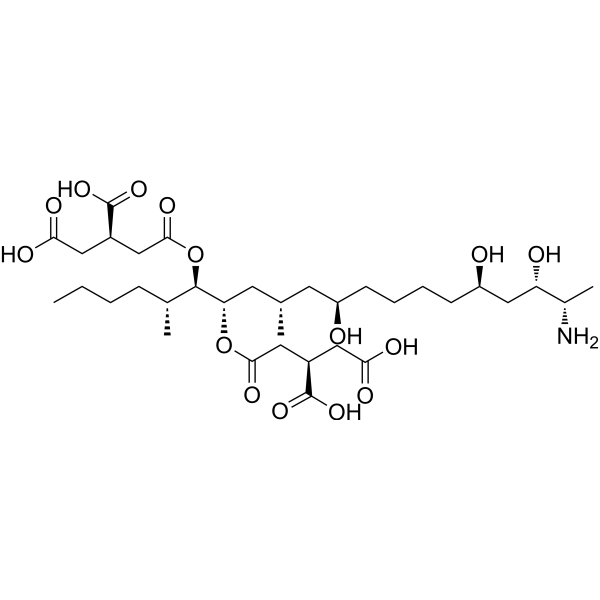
HY-N6719
Fumonisin B1Sphingosine N-acyltransferase Inhibitor -
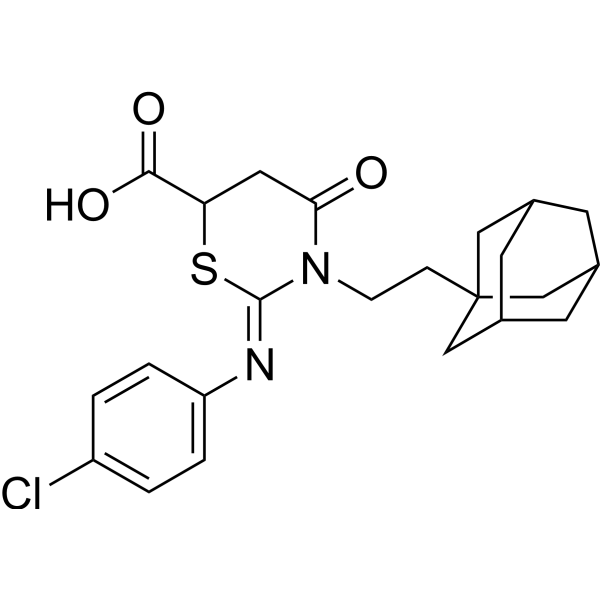
HY-136282
ST045849OGT Inhibitor -
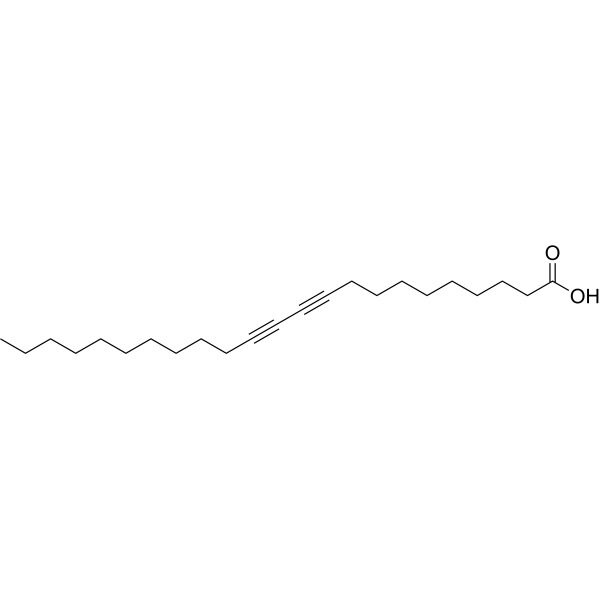
HY-135425
10,12-Tricosadiynoic acidACOX1 Inhibitor -
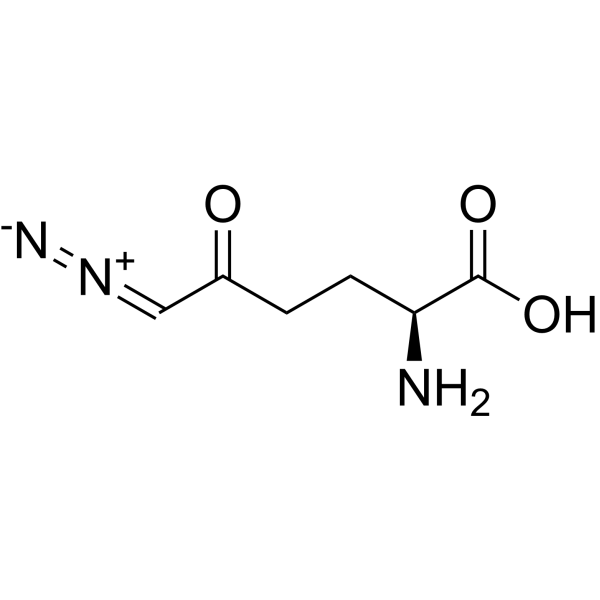
HY-108357
6-Diazo-5-oxo-L-nor-LeucineGlutaminases Antagonist -
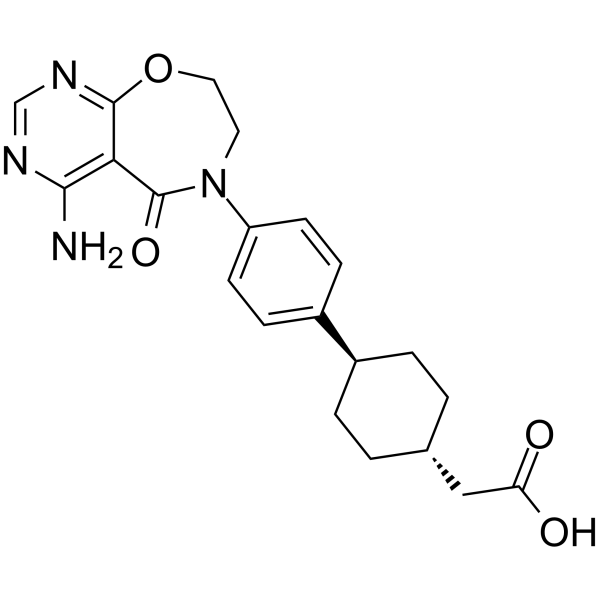
HY-13009
PF-04620110DGAT-1 Inhibitor
Publications Citing Use of MedChemExpress (MCE) OSMI-4
More- Nat Commun. 2025 Feb 2;16(1):1274. [Abstract]
- J Biomed Sci. 2022 Feb 14;29(1):13. [Abstract]
- Plant Cell. 2026 May 14:koag144. [Abstract]
- Nat Cardiovasc Res. 2025 Jul;4(7):904-920. [Abstract]
- Burns Trauma. 2021 Oct 8:9:tkab031. [Abstract]
- Acta Biomater. 2022 Oct 1:151:148-162. [Abstract]
- Int J Biol Macromol. 2025 Apr;304(Pt 2):140925. [Abstract]
- Cell Rep. 2025 Dec 11;44(12):116678. [Abstract]
- Cell Rep. 2024 Apr 27;43(5):114163. [Abstract]
- Cell Rep. 2023 Jul 14;42(7):112796. [Abstract]
- Neurosci Bull. 2025 May 24. [Abstract]
- World J Diabetes. 2025 Mar 15;16(3):95092. [Abstract]
- iScience. 2023 Oct 12;26(11):108184. [Abstract]
- J Biol Chem. 2026 May 28;302(7):113213. [Abstract]
- J Virol. 2025 Jun 17;99(6):e0005825. [Abstract]
- J Biol Chem. 2023 Aug;299(8):104950. [Abstract]
- J Biol Chem. 2022 Sep;298(9):102340. [Abstract]
- RNA Biol. 2021 Nov 12;18(sup2):722-729. [Abstract]
- Exp Biol Med. 2022 Sep;247(17):1518-1528. [Abstract]
- Glycobiology. 2024 Dec 10;34(12):cwae081. [Abstract]
- J Cancer Res Clin Oncol. 2023 Jul;149(8):5255-5263. [Abstract]
- Glycobiology. 2022 Aug 18;32(9):751-759. [Abstract]
- Biochem Biophys Res Commun. 2026 Aug 20:827:154043. [Abstract]
- Biochem Biophys Res Commun. 2024 Sep 10:724:150198. [Abstract]
- bioRxiv. 2026 Sep 3.
- bioRxiv. 2026 Jul 8:2026.07.07.737034.
- bioRxiv. 2025 Dec 11.
- University of Konstanz. 2025.
- University of British Columbia. 2025.
- bioRxiv. 2025 March 19.
- Res Sq. 2024 Jun 13.
- SSRN. 2023 Jun 15.
- bioRxiv. 2023 Jan 11:2023.01.11.523512. [Abstract]
 Customer Validation & Images

-
Cell Proliferation/Viability Assay
-
WB
-
Flow Cytometry
-
Cell Proliferation/Viability Assay
-
Cell Proliferation/Viability Assay


Biological Activity
제품 설명
IC50 & Target
EC50: 3 μM (OGT)[1].
In Vitro


Chemical Information
-
CAS No. 2260791-14-6
-
Appearance Solid
-
분자량 604.09
-
화학식 C27H26ClN3O7S2
-
Color White to yellow
-
SMILES
O=C1C=CC2=C(C=C(Cl)C(S(N[C@@H](C(N(CC(OCC)=O)CC3=CC=CS3)=O)C4=C(OC)C=CC=C4)(=O)=O)=C2)N1
-
선적
Room temperature in continental US; may vary elsewhere.
-
보관
Powder -20°C 3 years 4°C 2 years In solvent -80°C 2 years -20°C 1 year


Publications (33)
-
Journal Impact Factor
-
Most Recent
-
Nat Commun
FBXO31-mediated ubiquitination of OGT maintains O-GlcNAcylation homeostasis to restrain endometrial malignancy. [Abstract]2025 Feb 2;16(1):1274. PMID: 39894887
OSMI-4 purchased from MedChemExpress. Usage Cited in: Nat Commun. 2025 Feb 2;16(1):1274. [Abstract]
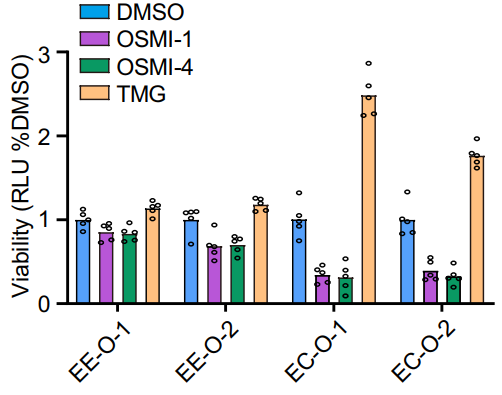
OSMI-4 (20 µM; 72 h) significantly reduced the viability of endometrial cancer organoids (EC-Os) by inhibiting OGT.
-
J Biomed Sci
O-GlcNAc transferase couples MRE11 to transcriptionally active chromatin to suppress DNA damage. [Abstract]2022 Feb 14;29(1):13. PMID: 35164752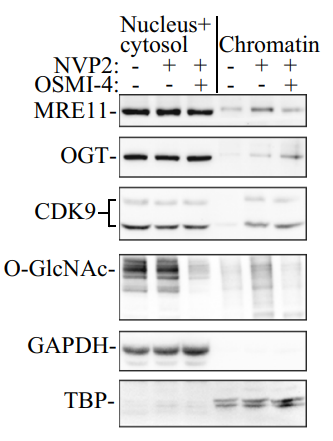
OSMI-4 purchased from MedChemExpress. Usage Cited in: J Biomed Sci. 2022 Feb 14;29(1):13. [Abstract]
C4-2 cell line was treated with 20 nM NVP2 or 20 nM NVP2 + 20 µM OSMI-4 for four hours, fractions isolated and samples analyzed using western blot. The results showed that OSMI‑4, an OGT inhibitor, antagonized the enhancement of MRE11 binding to chromatin caused by CDK9 inhibitor treatment.
-
Plant Cell
SlSEC1- and SlSPY-mediated O-glycosylation stabilizes the transcription factor SlNOR to promote tomato fruit ripening. [Abstract]2026 May 14:koag144. PMID: 42135064 -
Nat Cardiovasc Res
2025 Jul;4(7):904-920. PMID: 40615582
OSMI-4 purchased from MedChemExpress. Usage Cited in: Nat Cardiovasc Res. 2025 Jul;4(7):904-920. [Abstract]
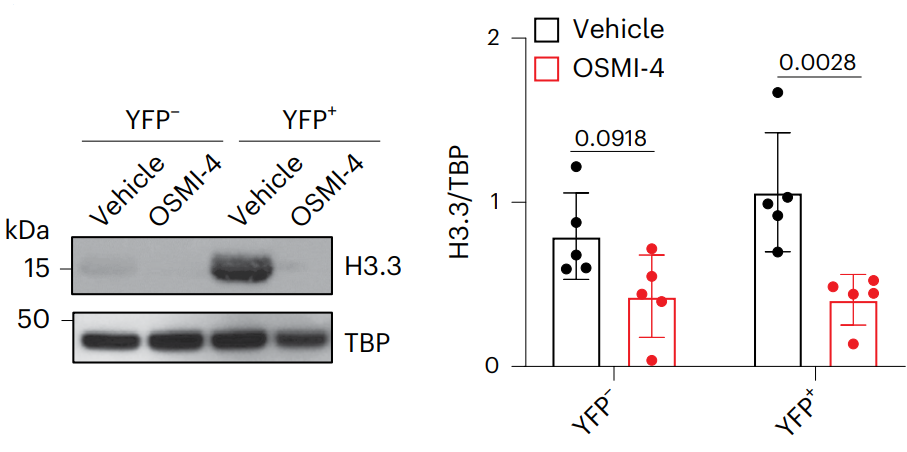
Western blot analysis (left) and densitometry quantification (right) represent the expression levels of H3.3 in sorted YFP-positive and YFP-negative cells from vehicle and OSMI-4 (4 mg/kg; i.p.; once daily on days 0–2 post hindlimb ischemia surgery) treatment groups (n = 5 biologically independent replicates per group).
OSMI-4 purchased from MedChemExpress. Usage Cited in: Nat Cardiovasc Res. 2025 Jul;4(7):904-920. [Abstract]
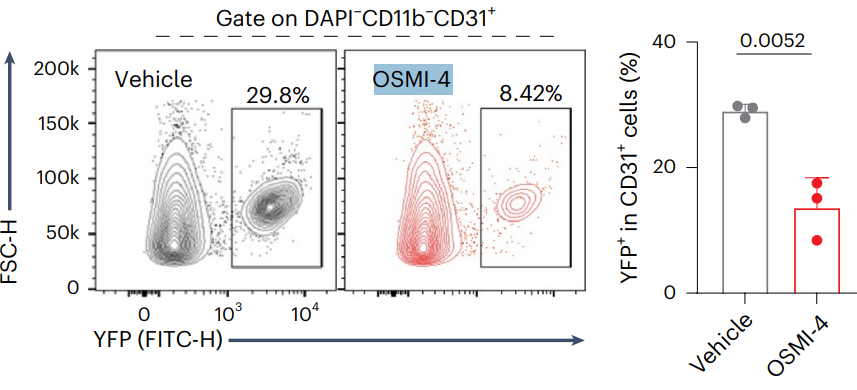
Representative flow cytometry plots (left) and quantification (right) of YFP+ signal from the CD31+ population in mice treated with vehicle or OSMI-4 (4 mg/kg; i.p.; once daily on days 0–2 post hindlimb ischemia surgery) at day 7 after surgery. All flow cytometry plots are gated on live non-immune cells (DAPI- CD11b- or DAPI- CD45-, n = 3 mice per group; results are representative of two independent experiments).
-
Burns Trauma
Inhibiting Hyper-O-GlcNAcylation of c-Myc accelerate diabetic wound healing by alleviating keratinocyte dysfunction. [Abstract]2021 Oct 8:9:tkab031. PMID: 34646892 -
Acta Biomater
Release of O-GlcNAc transferase inhibitor promotes neuronal differentiation of neural stem cells in 3D bioprinted supramolecular hydrogel scaffold for spinal cord injury repair. [Abstract]2022 Oct 1:151:148-162. PMID: 36002129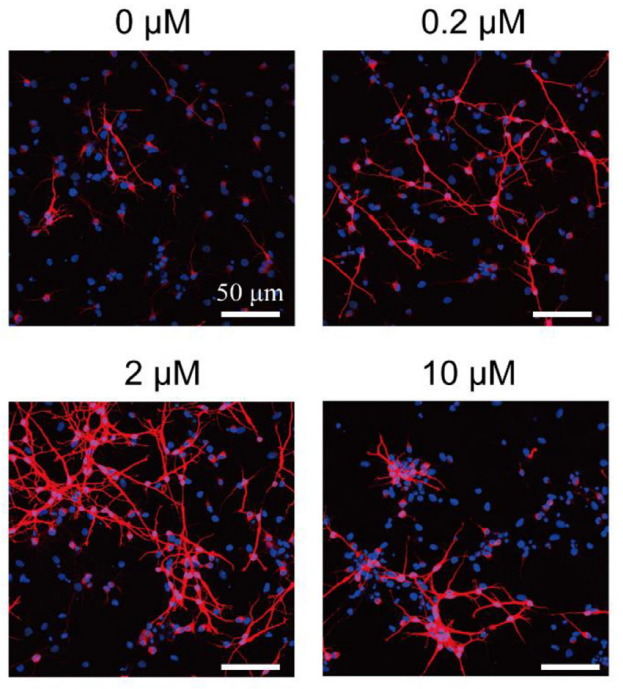
OSMI-4 purchased from MedChemExpress. Usage Cited in: Acta Biomater. 2022 Oct 1:151:148-162. [Abstract]
Induction effect of OSMI-4 on neuronal differentiation of NSCs in vitro. Representative images of Tuj1+ (red, for neurons) and DAPI (blue, for nucleus) immunostaining of NSCs treated by OSMI-4 at varied concentrations. The results showed that the percentage of Tuj1-positive cells increased in a dose‑dependent manner with OSMI‑4 concentrations below 10 µM, but began to decrease at 10 µM.
-
Int J Biol Macromol
Buckwheat protein-derived peptide ameliorates insulin resistance by directing O-linked N-acetylglucosamine transferase to regulate the SIRT1/PGC1α pathway. [Abstract]2025 Apr;304(Pt 2):140925. PMID: 39947565 -
Cell Rep
Paracrine stimulation of brown adipose tissue vascularization by adipocyte O-GlcNAc signaling. [Abstract]2025 Dec 11;44(12):116678. PMID: 41385373 -
Cell Rep
O-GlcNAcylation of RBM14 contributes to elevated cellular O-GlcNAc through regulation of OGA protein stability. [Abstract]2024 Apr 27;43(5):114163. PMID: 38678556 -
Cell Rep
Systematic analysis of the impact of phosphorylation and O-GlcNAcylation on protein subcellular localization. [Abstract]2023 Jul 14;42(7):112796. PMID: 37453062 -
Neurosci Bull
OGT-Mediated O-GlcNAcylation of ATF2 Protects Against Sepsis-Associated Encephalopathy by Inhibiting Microglial Pyroptosis. [Abstract]2025 May 24. PMID: 40411666 -
World J Diabetes
O-linked β-N-acetylglucosamine transferase regulates macrophage polarization in diabetic periodontitis: In vivo and in vitro study. [Abstract]2025 Mar 15;16(3):95092. PMID: 40093279 -
iScience
2023 Oct 12;26(11):108184. PMID: 38026167 -
J Biol Chem
Hexosamine biosynthesis drives hemocyanin O-GlcNAcylation to potentiate antibacterial immunity in shrimp. [Abstract]2026 May 28;302(7):113213. PMID: 42214671 -
J Virol
Identification and characterization of O-GlcNAc modifications of a conserved orthopoxvirus core protein. [Abstract]2025 Jun 17;99(6):e0005825. PMID: 40407344 -
J Biol Chem
Follicular cells protect Xenopus oocyte from abnormal maturation via integrin signaling downregulation and O-GlcNAcylation control. [Abstract]2023 Aug;299(8):104950. PMID: 37354972 -
J Biol Chem
EGF promotes PKM2 O-GlcNAcylation by stimulating O-GlcNAc transferase phosphorylation at Y976 and their subsequent association. [Abstract]2022 Sep;298(9):102340. PMID: 35931120 -
RNA Biol
2021 Nov 12;18(sup2):722-729. PMID: 34592899 -
Exp Biol Med
2022 Sep;247(17):1518-1528. PMID: 35723049 -
Glycobiology
Compromised CDK12 activity causes dependency on the high activity of O-GlcNAc transferase. [Abstract]2024 Dec 10;34(12):cwae081. PMID: 39361894 -
J Cancer Res Clin Oncol
2023 Jul;149(8):5255-5263. PMID: 36401094
OSMI-4 purchased from MedChemExpress. Usage Cited in: J Cancer Res Clin Oncol. 2023 Jul;149(8):5255-5263. [Abstract]
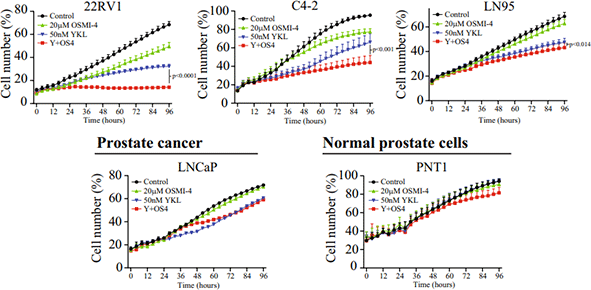
Depletion of OGT activity using OSMI-4 (20 µM; 0-96 h) signifcantly enhances the efcacy of CDK7 inhibitor YKL-5-124 (50 nM; 0-96 h) in three models of CRPC but not in the androgen-dependent LNCaP cell line or the normal prostate cells.
OSMI-4 purchased from MedChemExpress. Usage Cited in: J Cancer Res Clin Oncol. 2023 Jul;149(8):5255-5263. [Abstract]
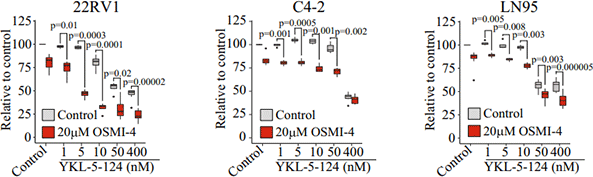
OSMI-4 (20 µM; 4 days) and YKL-5-124 (1, 5, 10, 50, 400 nM; 4 days) demonstrate highly signifcant combinatorial toxicity on three CRPC models.
-
Glycobiology
2022 Aug 18;32(9):751-759. PMID: 35708495 -
Biochem Biophys Res Commun
O-GlcNAcylation of NSD2 promotes lung metastasis of triple-negative breast cancer through extracellular matrix remodeling. [Abstract]2026 Aug 20:827:154043. PMID: 42217410 -
Biochem Biophys Res Commun
Downregulation of O-GlcNAc transferase activity impairs basal autophagy and late endosome positioning under nutrient-rich conditions in human colon cells. [Abstract]2024 Sep 10:724:150198. PMID: 38852504 -
-
-
-
-
-
-
-
-
bioRxiv
2023 Jan 11:2023.01.11.523512. PMID: 36711626


용액&용해도
In Vitro:
DMSO : 62.5 mg/mL (103.46 mM; Need ultrasonic; Hygroscopic DMSO has a significant impact on the solubility of product, please use newly opened DMSO)
Please refer to the solubility information to select the appropriate solvent. Once prepared, please aliquot and store the solution to prevent product inactivation from repeated freeze-thaw cycles.
Storage method and period of stock solution: -80°C, 2 years; -20°C, 1 year. When stored at -80°C, please use it within 2 years. When stored at -20°C, please use it within 1 year.
Please refer to the solubility information to select the appropriate solvent. Once prepared, please aliquot and store the solution to prevent product inactivation from repeated freeze-thaw cycles.
Storage method and period of stock solution: -80°C, 2 years; -20°C, 1 year. When stored at -80°C, please use it within 2 years. When stored at -20°C, please use it within 1 year.
Concentration (start) × Volume (start) = Concentration (final) × Volume (final)
In Vivo:
Select the appropriate dissolution method based on your experimental animal and administration route.
- For the following dissolution methods, please ensure to first prepare a clear stock solution using an In Vitro approach and then sequentially add co-solvents:
- To ensure reliable experimental results, the clarified stock solution can be appropriately stored based on storage conditions. As for the working solution for In Vivo experiments, it is recommended to prepare freshly and use it on the same day.
- The percentages shown for the solvents indicate their volumetric ratio in the final prepared solution. If precipitation or phase separation occurs during preparation, heat and/or sonication can be used to aid dissolution.
Add each solvent one by one: 10% DMSO 40% PEG300 5% Tween-80 45% Saline
Solubility: ≥ 2.08 mg/mL (3.44 mM); Clear solution
This protocol yields a clear solution of ≥ 2.08 mg/mL (saturation unknown).
Taking 1 mL working solution as an example, add 100 μL DMSO stock solution (20.8 mg/mL) to 400 μL PEG300, and mix evenly; then add 50 μL Tween-80 and mix evenly; then add 450 μL Saline to adjust the volume to 1 mL.
Preparation of Saline: Dissolve 0.9 g sodium chloride in ddH₂O and dilute to 100 mL to obtain a clear Saline solution.
In Vivo Dissolution Calculator
Please enter the basic information of animal experiments:
-
-
-
-
Recommended: Prepare an additional quantity of animals to account for potential losses during experiments.
Please enter your animal formula composition:
-
%DMSO +
Recommended: Keep the proportion of DMSO in working solution below 2% if your animal is weak.
-
%+
-
+%Tween-80 + +
-
%Saline +
The co-solvents required include: DMSO, . All of co-solvents are available by MedChemExpress (MCE). , Tween 80. All of co-solvents are available by MedChemExpress (MCE).
Working solution concentration: 0.22 mg/mL
Method for preparing stock solution: mg drug dissolved in μL DMSO. Stock solution concentration: mg/mL.
1. Take μL DMSO stock solution;
2. Add μL .
μL , mix evenly;
3. Then add μL Tween 80, mix evenly;
4. Then add μL
Please ensure that the stock solution in the first step is dissolved to a clear state, and add co-solvents in sequence. You can use ultrasonic heating (ultrasonic cleaner, recommended frequency 20-40 kHz), vortexing, etc. to assist dissolution.


순도&문서
-
Data Sheet (278 KB)
-
SDS (393 KB)
- English - EN (393 KB)
- Français - FR (393 KB)
- Deutsch - DE (393 KB)
- Norwegian - NO (393 KB)
- Español - ES (393 KB)
- Swedish - SV (393 KB)
- Italian - IT (393 KB)
- Korean - KR (393 KB)
- Portuguese - PT (393 KB)
-
Handling Instructions (2659 KB)
References


Complete Stock Solution Preparation Table
Please refer to the solubility information to select the appropriate solvent. Once prepared, please aliquot and store the solution to prevent product inactivation from repeated freeze-thaw cycles.
Storage method and period of stock solution: -80°C, 2 years; -20°C, 1 year. When stored at -80°C, please use it within 2 years. When stored at -20°C, please use it within 1 year.
| Optional Solvent | Concentration Solvent Mass | 1 mg | 5 mg | 10 mg | 25 mg |
|---|---|---|---|---|---|
| DMSO | 1 mM | 1.6554 mL | 8.2769 mL | 16.5538 mL | 41.3846 mL |
| 5 mM | 0.3311 mL | 1.6554 mL | 3.3108 mL | 8.2769 mL | |
| 10 mM | 0.1655 mL | 0.8277 mL | 1.6554 mL | 4.1385 mL | |
| 15 mM | 0.1104 mL | 0.5518 mL | 1.1036 mL | 2.7590 mL | |
| 20 mM | 0.0828 mL | 0.4138 mL | 0.8277 mL | 2.0692 mL | |
| 25 mM | 0.0662 mL | 0.3311 mL | 0.6622 mL | 1.6554 mL | |
| 30 mM | 0.0552 mL | 0.2759 mL | 0.5518 mL | 1.3795 mL | |
| 40 mM | 0.0414 mL | 0.2069 mL | 0.4138 mL | 1.0346 mL | |
| 50 mM | 0.0331 mL | 0.1655 mL | 0.3311 mL | 0.8277 mL | |
| 60 mM | 0.0276 mL | 0.1379 mL | 0.2759 mL | 0.6897 mL | |
| 80 mM | 0.0207 mL | 0.1035 mL | 0.2069 mL | 0.5173 mL | |
| 100 mM | 0.0166 mL | 0.0828 mL | 0.1655 mL | 0.4138 mL |


OSMI-4 Related Classifications
HY-114361 Related Classifications
 Powered by Bioz