



Cancer Immunotherapy
Cancer immunotherapy (CIT) is a type of biological therapy, aiming to improve anti-tumor immune responses with fewer off-target effects than chemotherapy. Several types of immunotherapy include: oncolytic virus therapies, cancer vaccines, cytokine therapies, adoptive cell transfer (ACT), and immune checkpoint inhibitors (ICIs). In particular, ICIs and ACT have obtained immense clinical response, but their efficacy varies from person to person. Immune cells can be harnessed to eliminate tumor cells, such as T cells, B cells, NK cells, and myeloid cells. T cells have potent tumor-killing capability, therefore, a plethora of cancer immunotherapy research have focused on inducing T-cell-mediated anti-tumor responses. CTLA-4 and PD-1 are found on the cell surface of T cells as co-inhibitory receptors. The breakthrough in cancer immunotherapy results from the identification and subsequent targeting of checkpoint mechanisms in T cells with monoclonal antibodies against CTLA-4 and programmed death-ligand 1/programmed death-1 (PD-L1/PD-1).
Several types of cancers (e.g., melanoma, mismatch repair-deficient cancers, bladder cancer, and non-small cell lung cancer) have achieved significant clinical responses in T-cell checkpoint blockade therapies. However, single-mode immunotherapy faces challenges such as low immune response, low tumor infiltration, and complex immunosuppressive tumor microenvironment. Recently, combined therapies based on tumor immunity have received extensive attention in the research of enhancing tumor cells immunogenicity and inhibiting their growth. For example, anti CTLA-4 and PD-1, immune checkpoint blockade (ICB) combined with chemotherapy, anti-angiogenic drugs and kinase inhibitors.
-
EGFR-IN-213
 0 ImagesCat. No.: HY-183754CAS No.: 3115216-45-7
EGFR-IN-213 is a selective inhibitor of EGFRL858R/T790M/C797S with a human IC50 of 0.48 nM. EGFR-IN-213 acts as an antiproliferative agent, inducing apoptosis and cell cycle arrest, and inhibiting colony formation, cell migration, and tube formation. EGFR-IN-213 can be used for the research of non-small cell lung cancer, chronic myeloid leukemia, gastric cancer, prostate cancer.
-
GP369
 0 ImagesCat. No.: HY-P991583
GP369 is a humanized FGFR2-IIIb-specific antibody. GP369 significantly inhibits the proliferation of tumor cells. GP369 can significantly inhibit phosphorylation of FGFR2 and downstream signaling pathways. GP369 can be used for research on cancer such as gastric cancer and breast cancer.
-
Phomoxanthone A
 0 ImagesCat. No.: HY-126640CAS No.: 359844-69-2
Phomoxanthone A is a xanthone dimer, which can be isolated from Phomopsis. Phomoxanthone A exhibits antimalarial and antitubercular activities against Plasmodium falciparum (K1, multidrug-resistant strain, IC50 is 0.11 µg/mL) and Mycobacterium tuberculosis (H37Ra strain, MIC is 0.50 µg/mL). Phomoxanthone A exhibits cytotoxicity in cells KB, BC-1 and Vero, IC50 is 0.99, 0.51 and 1.4 µg/mL, respectively.
-
Cefazolin sodium pentahydrate
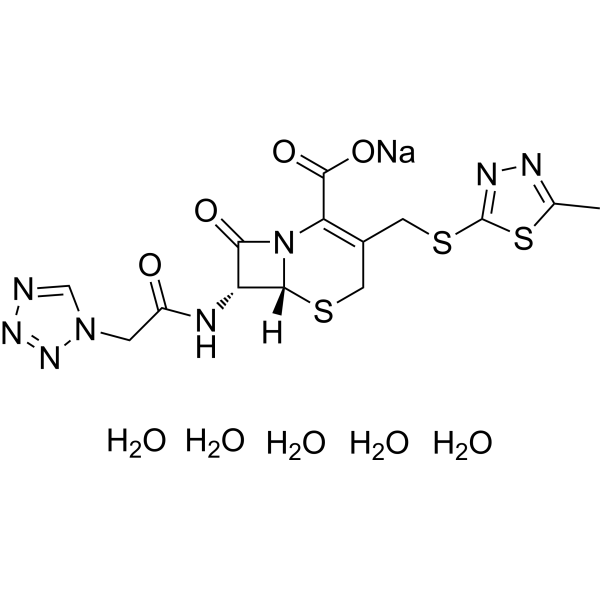 0 ImagesCat. No.: HY-B0756CAS No.: 115850-11-8Synonyms: Cephazolin sodium pentahydrate
Cefazolin sodium pentahydrate is a first-generation cephalosporin antibiotic and can be used in varieties of bacterial infections research. Cefazolin sodium pentahydrate has anti-inflammatory effect and can attenuate post-operative cognitive dysfunction (POCD).
-
MTHFD2-IN-8
 0 ImagesCat. No.: HY-183364
MTHFD2-IN-8 is a selective MTHFD2 inhibitor with an IC50 of 0.066 μM. MTHFD2-IN-8 directly binds to intracellular mitochondrially localized protein MTHFD2 and accumulates selectively in tumor mitochondria. MTHFD2-IN-8 increases intracellular ROS levels, induces mitochondrial membrane potential depolarization, arrests cell cycle at G0/G1 phase, promotes apoptosis in cancer cells. MTHFD2-IN-8 inhibits tumor growth in a mouse colon cancer graft model.
-
Deracoxib-d3
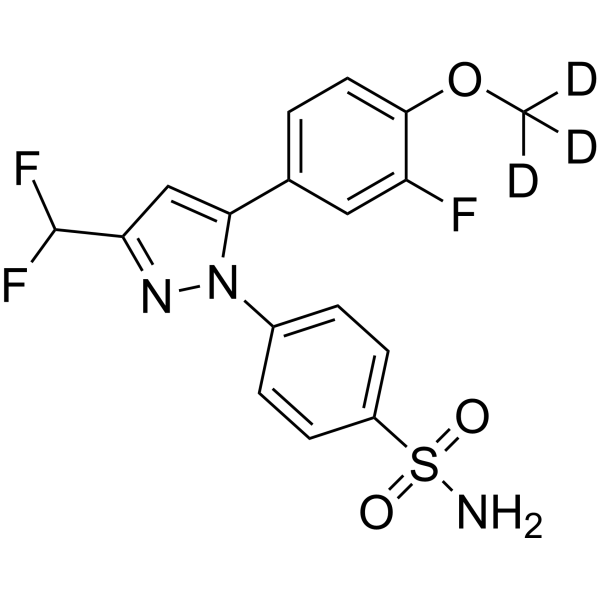 0 ImagesCat. No.: HY-17509SCAS No.: 2012598-48-8Synonyms: SC 046-d3; SC 46-d3; SC 59046-d3
Deracoxib-d3 (SC 046-d3; SC 59046-d3) is the deuterium labeled Deracoxib (HY-17509). Deracoxib, an orally active COX-2 inhibitor, is a veterinary nonsteroidal anti-inflammatory agent used exclusively in dogs. Deracoxib inhibits the COX-2 enzyme to reduce the production of prostaglandins, effectively controlling pain and inflammation after canine soft tissue surgery. Deracoxib reduces the inhibition of COX-1 and lowers the risk of gastrointestinal side effects. Deracoxib induces tumor cell cycle arrest and apoptosis, and shows anti-tumor activity in canine osteosarcoma, breast tumors and bladder transitional cell carcinomas.
-
MRK 003
 0 ImagesCat. No.: HY-15211CAS No.: 623165-93-5
MRK 003 is an orally active γ-secretase inhibitor. MRK 003 targets the Notch signaling pathway by blocking the proteolytic cleavage of Notch receptors. MRK 003 inhibits tumor cell proliferation, induces apoptosis, downregulates anti-apoptotic proteins, upregulates phosphorylated Akt, suppresses angiogenesis, and overcomes microenvironment-mediated proliferative protection. MRK 003 can be used in research related to lung cancer, multiple myeloma, non-Hodgkin's lymphoma, pancreatic ductal adenocarcinoma, glioblastoma, and breast cancer.

-
4-Isopropylbenzyl alcohol (Standard)
 0 Images
(±)-Leucine (Standard) is the analytical standard of (±)-Leucine. This product is intended for research and analytical applications. (±)-Leucine (DL-Leucine), an isomer of Leucine, chemosterilant and dietary additive. (±)-Leucine inhibits growth of Escherichia coli HfrH by 92.08%.
-
Anti-CD27 Antibody (M2177)
 0 ImagesCat. No.: HY-P991465Purity: 99.50%
Anti-CD27 Antibody (M2177) is a human monoclonal antibody (mAb) targeting TNFRSF7/CD27. Anti-CD27 Antibody (M2177) inhibits the binding of sCD70 to human CD27 ECD-Fc. Anti-CD27 Antibody (M2177) can be used in the study of anti-tumor immunity. Recommended isotype control: Human IgG1 kappa, Isotype Control (HY-P99001).
-
(±)-Catechin-13C3
 0 ImagesCat. No.: HY-B1890SCAS No.: 1261254-33-4Synonyms: rel-Cianidanol-13C3; rel-Catechuic acid-13C3
(±)-Catechin-13C3 (rel-Cianidanol-13C3) is the 13C-labeled (±)-Catechin (HY-B1890). (±)-Catechin (rel-Cianidanol) is the racemate of the green tea polyphenol Catechin. Catechin has anticancer activity and induces apoptosis. (±)-Catechin has two forms, (+)-Catechin and its enantiomer (-)-Catechin. (+)-Catechin inhibits cyclooxygenase-1 (COX-1) with an IC50 of 1.4 μM. (-)-Catechin can effectively promote hBM-MSC adipocyte differentiation and increase adiponectin and PPARγ levels. (±)-Catechin has anti-tumor, anti-obesity, anti-diabetic, anti-cardiovascular, anti-infectious, hepatoprotective and neuroprotective effects.
-
Camalexin (Standard)
 0 Images
Camalexin (Standard) is the analytical standard of Camalexin. This product is intended for research and analytical applications. Camalexin is a phytoalexin isolated from Camelina sativa (Cruciferae) with antibacterial, antifungal, antiproliferative and anticancer activities. Camalexin can induce reactive oxygen species (ROS) production[1][2][3].
-
N-(endo-BCN-PEG4)-N-(PEG4-Val-Cit-PAB-MMAE)-N-(PEG4-Val-Cit-PAB-Exatecan)
 0 ImagesCat. No.: HY-177684
N-(endo-BCN-PEG4)-N-(PEG4-Val-Cit-PAB-MMAE)-N-(PEG4-Val-Cit-PAB-Exatecan) is a drug-linker conjugate for ADC (Drug-Linker Conjugate for ADC), consisting of a tubulin polymerization inhibitor MMAE (HY-15162) and a DNA topoisomerase I inhibitor Exatecan (HY-13631), and an ADC linker composition. N-(endo-BCN-PEG4)-N-(PEG4-Val-Cit-PAB-MMAE)-N-(PEG4-Val-Cit-PAB-Exatecan) can be used for synthesis of ADCs and for cancer research.

-
rel-Boc-Hyp-OMe
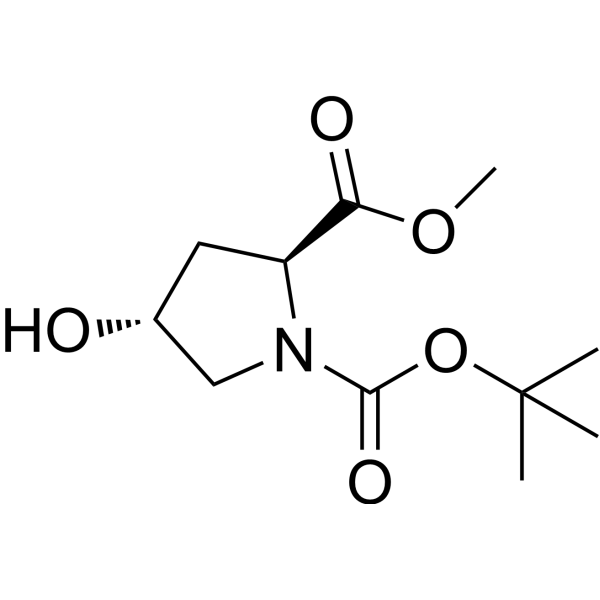 0 ImagesCat. No.: HY-65039ACAS No.: 1145663-09-7
rel-Boc-Hyp-OMe is the isomer of Boc-Hyp-OMe (HY-65039), and can be used as an experimental control. Boc-Hyp-OMe is a non-cleavable ADC linker used in the synthesis of antibody-drug conjugates (ADCs). Boc-Hyp-OMe is also a alkyl chain-based PROTAC linker that can be used in the synthesis of PROTACs.
-
Concanamycin A (purity≥90%)
 0 ImagesCat. No.: HY-N1724BCAS No.: 80890-47-7Synonyms: Antibiotic X 4357B (purity≥90%); Folimycin (purity≥90%); X 4357B (purity≥90%)
Concanamycin A (purity≥90%) (Antibiotic X 4357B) is a macrolide antibiotic, a vacuolar type H+-ATPase (V-ATPase) inhibitor. Concanamycin A (purity≥90%) is also an inhibitor of lysosomal acidification, can be used to T cell-mediated inflammation research-.
-
Nargenicin A1
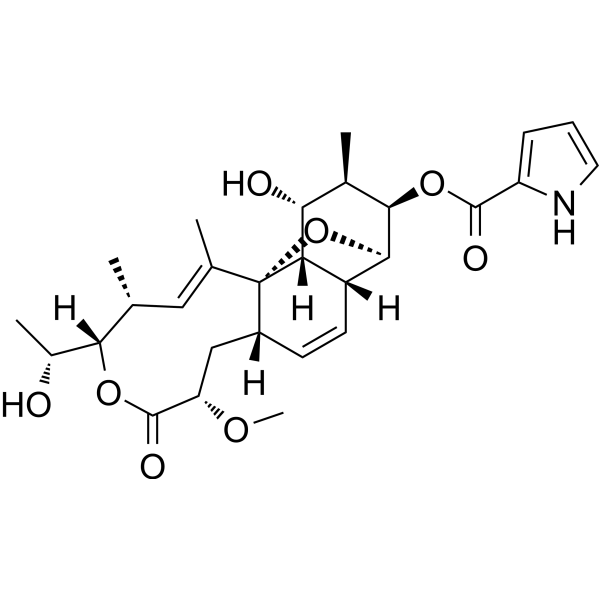 0 ImagesCat. No.: HY-123121CAS No.: 70695-02-2
Nargenicin A1 is an antibiotic agent against various Gram-positive bacteria. Nargenicin A1 shows anti-inflammatory activity. Nargenicin A1 protects HINAE cells against Tacrolimus (HY-13756)-induced DNA damage and apoptosis. Nargenicin A1 can also be used for the research of acute myeloid leukemia.
-
TMU454
 0 ImagesCat. No.: HY-180909
TMU454 is an ASGPR-targeting GalNAc-PROTAC BRD4 degrader conjugate. TMU454 undergoes ASGPR-mediated endocytosis and CTSB cleavage to release MZ1, which selectively degrades BRD4 in ASGPR-positive hepatocellular carcinoma cells via the VHL/UPS/proteasome pathway. TMU454 inhibits cancer cell proliferation and colony formation, and suppresses tumor growth in vivo. TMU454 can be used for research related to hepatocellular carcinoma.
-
EP26
 0 ImagesCat. No.: HY-159101
EP26 is a potent and orally active EGFR and PD-L1 inhibitor with IC50 values of 48.6 nM, 1.77 µM, respectively. EP26 decreased the protein expression of p-EGFR. EP26 induces cell cycle arrest at G0/G1 phase. EP26 has the potential for the research of glioblastoma.
-
Mycophenolate Mofetil-d4 (hydrochloride)
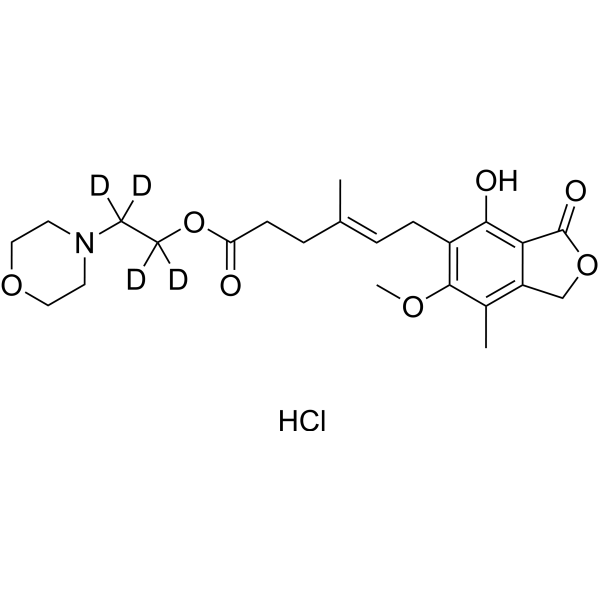 0 ImagesCat. No.: HY-B0199ASSynonyms: RS 61443-d4 hydrochloride; TM-MMF-d4 hydrochloride
Mycophenolate Mofetil-d4 hydrochloride is deuterated labeled Mycophenolate mofetil hydrochloride (HY-B0199A). Mycophenolate mofetil (RS 61443; TM-MMF) hydrochloride is an orally active antimetabolic immunosuppressant with antiproliferative and anti-inflammatory properties. Mycophenolate mofetil hydrochloride significantly inhibits the production of B, T lymphocytes and the proliferation of smooth muscle cells by selectively blocking the de novo purine synthesis pathway. Mycophenolate mofetil hydrochloride effectively reduces adventitial inflammation, medial necrosis and intimal thickening in rat aortic allografts, and decreases the number of lymphocytes expressing the IL-2 receptor, thereby delaying xenograft rejection. Mycophenolate mofetil hydrochloride shows certain toxicity in a hamster-to-rat limb xenotransplantation model when used in combination with FK506 (HY-13756). Mycophenolate mofetil hydrochloride is widely used in studies related to allograft arteriosclerosis (chronic rejection).



