



Cancer Targeted Therapy
Cancer targeted therapy is the foundation of precision medicine; it uses drugs or other substances to target specific genes and proteins that control cancer cells’ growth, division and spreading. Compared to traditional chemotherapy drugs, targeted-drugs can specifically act on cancer cells with high efficacy without damaging normal cells. Drugs used in cancer targeted therapy mainly includes small molecules and macromolecules (e.g., monoclonal antibodies), which can target cancer cells and constituents in the tumor microenvironment to activate the immune system. Anti-angiogenesis drugs, such as those targeting vascular endothelial growth factor (VEGF), epidermal growth factor receptor (EGFR), transforming growth factor (TGF)-α, TGF-β, Tumor necrosis factor (TNF)-α, and platelet-derived endothelial growth factor (PDGFR) inhibit the proliferation and metastasis of cancer cells. In recent years, the proportion of antibody drugs in cancer treatment has gradually become prominent. Antibody-drug conjugates (ADCs) are a new type of targeted drugs that are composed of monoclonal antibody, cytotoxic drug and linker. ADCs can deliver drugs to tumor cells and minimize the toxicity to normal tissues. Proteolysis-targeting chimera (PROTAC) is a useful technology for targeted protein degradation. PROTAC exploits the ubiquitin-proteasome system and forms a ternary complex with a hijacked E3 ubiquitin ligase and target protein, leading to polyubiquitination and degradation of the target protein.
Targeted therapy is a useful strategy in treatment of cancer either alone or in combination with standard chemotherapy. At present, targeted therapy has proved significant clinical success in the treatment of many types of cancer, including breast cancer, colorectal cancer, leukemia, ovarian cancer and lung cancer.
-
PQ-1
 0 ImagesCat. No.: HY-14584CAS No.: 955995-48-9
PQ-1 is a gap junction enhancer.
-
IDO1-IN-21
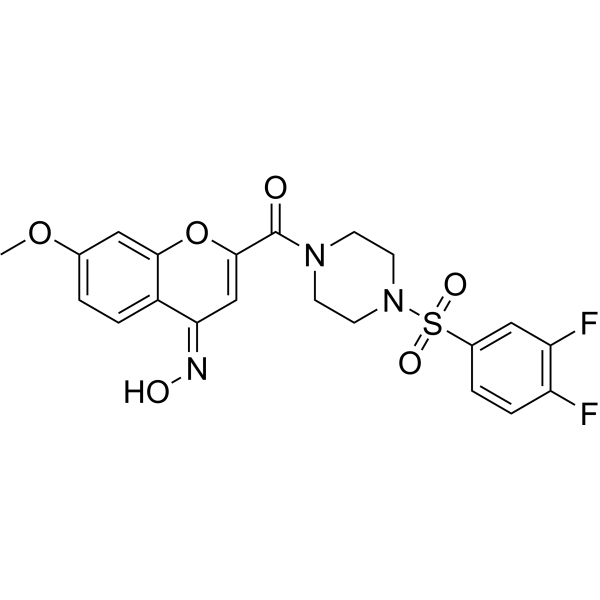 0 ImagesCat. No.: HY-149227CAS No.: 2892432-98-1
IDO1-IN-21 (compound 10m) is an IDO1 inhibitor (IC50 = 0.64 μM). IDO1-IN-21 effectively inhibits tumor growth in mice.
-
2’,3’,5’-Tri-O-acetyl-5-methoxycarbonylmethyl-2-thiouridine
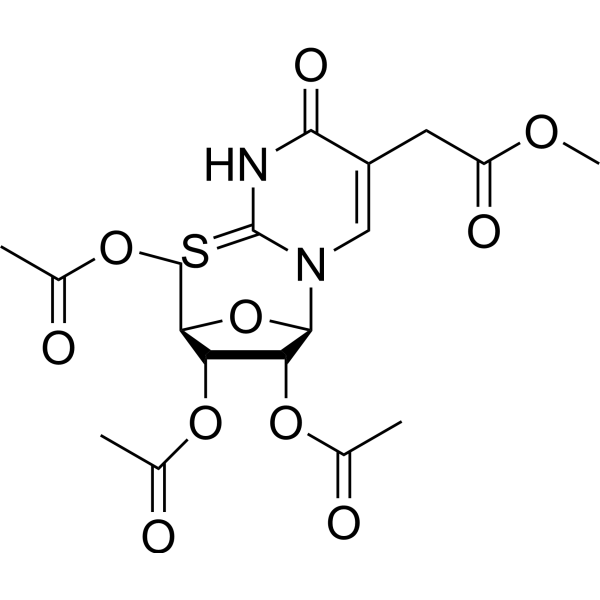 0 ImagesCat. No.: HY-152998CAS No.: 1613530-52-1
2’,3’,5’-Tri-O-acetyl-5-methoxycarbonylmethyl-2-thiouridine is a purine nucleoside analog. Purine nucleoside analogs have broad antitumor activity targeting indolent lymphoid malignancies. Anticancer mechanisms in this process rely on inhibition of DNA synthesis, induction of apoptosis, etc.
-
HDAC-IN-61
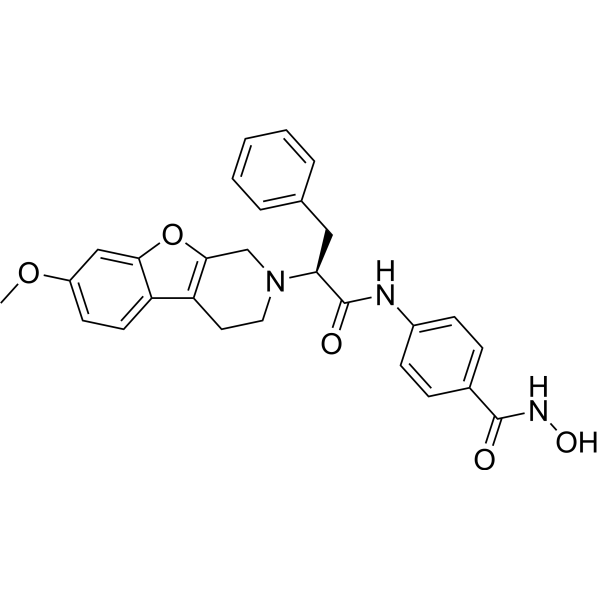 0 ImagesCat. No.: HY-155695
HDAC-IN-61 (compound 12k) is a potent and orally active HDAC inhibitor. HDAC-IN-61 has anticancer active with an IC50 value of 30 nM for Bel-7402 cell. HDAC-IN-61 can be used in research of cancer.
-
MAT2A inhibitor 6
 0 ImagesCat. No.: HY-159156CAS No.: 2447686-21-5
MAT2A inhibitor 6 (Compound 3N-h) is a specific MAT2A inhibitor with oral activity and yellow fluorescence (IC50=26 nM), capable of visualizing MAT2A both in vitro and in vivo (λex = 430 nm, λem = 585 nm). MAT2A inhibitor 6 can induce apoptosis and has anticancer activity, which can be used in cancer research.
-
EGFR kinase inhibitor 6
 0 ImagesCat. No.: HY-162483
EGFR kinase inhibitor 6 (Compound 4b) is an orally active inhibitor for epidermal growth factor receptor (EGFR) kinase, with IC50 of 24.34 μM. EGFR kinase inhibitor 6 induces apoptosis. EGFR kinase inhibitor 6 exhibits anticancer and anti-inflammatory activity with low toxicity (LD50 range: 500-2000 mg/kg).

-
DSPE-PEG5000-BR2
 0 ImagesCat. No.: HY-172283B
DSPE-PEG5000-BR2 is a PEG compound which composed of DSPE and a BR2. BR2 is a targeting peptide composed of 17 amino acids with the sequence RAGLQFPVGRLLRRLLR. It has the ability to assist cells to penetrate the membrane and can specifically target certain cells or tissues.
-
BY13
 0 ImagesCat. No.: HY-176225CAS No.: 3117131-00-4
BY13 is a SRC-3 PROTAC degrader with a DC50 of 0.031 μM. BY13 selectively blocks the ER signaling pathway over that of androgen receptor (AR)) through down-regulating ERα level. BY13 potently overcomes endocrine resistance in breast cancer by inducing cell cycle arrest in G1 phase and apoptosis, with superior effect over Fulvestrant (HY-13636). BY13 significantly inhibits the growth of drug-resistant breast tumors without obvious toxicity in LCC2 xenograft mice model.
-
m-PEG-acid
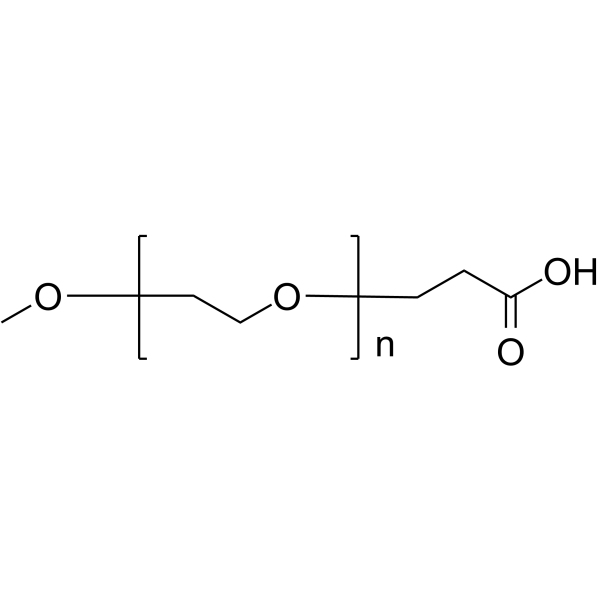 0 ImagesCat. No.: HY-130292CAS No.: 125220-94-2
-
Cryptophycin analog 1
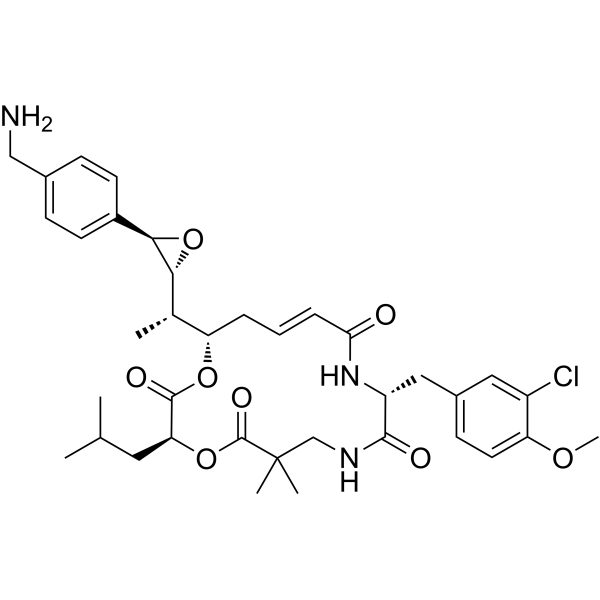 0 ImagesCat. No.: HY-107502CAS No.: 1260431-28-4
Cryptophycin analog 1 is an ADC payload. Cryptophycin analog 1 shows anticancer activity. Cryptophycin analog 1 displays cell activity an order of magnitude more potent than approved ADC payloads MMAE and DM1.
-
mmu-miR-297b-5p antagomir
 0 ImagesCat. No.: HY-RI02882A
mmu-miR-297b-5p antagomirs are chemically-modified oligonucleotides that hybridize with mature miRNAs. The miRNA antagomirs have 2 phosphorothioates at the 5' end, 4 phosphorothioates at the 3' end, 1 cholesterol group at the 3' end, and full-length nucleotide 2'-methoxy modification. The miRNA antagomirs strongly compete with mature miRNAs to prevent the complementary pairing of miRNAs and their target genes, thereby inhibiting miRNAs from functioning. Stability of miRNA antagomirs appears to be significantly higher than miRNA inhibitors, they exhibits enhanced cellular uptake, stability and regulatory activity in vivo.
-
mmu-miR-684 antagomir
 0 ImagesCat. No.: HY-RI03507A
mmu-miR-684 antagomirs are chemically-modified oligonucleotides that hybridize with mature miRNAs. The miRNA antagomirs have 2 phosphorothioates at the 5' end, 4 phosphorothioates at the 3' end, 1 cholesterol group at the 3' end, and full-length nucleotide 2'-methoxy modification. The miRNA antagomirs strongly compete with mature miRNAs to prevent the complementary pairing of miRNAs and their target genes, thereby inhibiting miRNAs from functioning. Stability of miRNA antagomirs appears to be significantly higher than miRNA inhibitors, they exhibits enhanced cellular uptake, stability and regulatory activity in vivo.
-
mmu-miR-7689-3p antagomir
 0 ImagesCat. No.: HY-RI04128A
mmu-miR-7689-3p antagomirs are chemically-modified oligonucleotides that hybridize with mature miRNAs. The miRNA antagomirs have 2 phosphorothioates at the 5' end, 4 phosphorothioates at the 3' end, 1 cholesterol group at the 3' end, and full-length nucleotide 2'-methoxy modification. The miRNA antagomirs strongly compete with mature miRNAs to prevent the complementary pairing of miRNAs and their target genes, thereby inhibiting miRNAs from functioning. Stability of miRNA antagomirs appears to be significantly higher than miRNA inhibitors, they exhibits enhanced cellular uptake, stability and regulatory activity in vivo.
-
hsa-miR-581 inhibitor
 0 ImagesCat. No.: HY-RI01808
hsa-miR-581 inhibitors are chemically-modified oligonucleotides that hybridize with mature miRNAs. The miRNA inhibitors have full-length nucleotide 2'-methoxy modification. The miRNA inhibitors strongly compete with mature miRNAs to prevent the complementary pairing of miRNAs and their target genes, thereby inhibiting miRNAs from functioning.
-
hsa-miR-7848-3p antagomir
 0 ImagesCat. No.: HY-RI02428A
hsa-miR-7848-3p antagomirs are chemically-modified oligonucleotides that hybridize with mature miRNAs. The miRNA antagomirs have 2 phosphorothioates at the 5' end, 4 phosphorothioates at the 3' end, 1 cholesterol group at the 3' end, and full-length nucleotide 2'-methoxy modification. The miRNA antagomirs strongly compete with mature miRNAs to prevent the complementary pairing of miRNAs and their target genes, thereby inhibiting miRNAs from functioning. Stability of miRNA antagomirs appears to be significantly higher than miRNA inhibitors, they exhibits enhanced cellular uptake, stability and regulatory activity in vivo.
-
CAIX-IN-17
 0 ImagesCat. No.: HY-181112
CAIX-IN-17 is a carbonic anhydrase IX (CAIX) inhibitor with an IC50 of 61 nM and accumulates specifically in CAIX-expressing xenograft tumors. CAIX-IN-17 can be labeled with 68Ga and acts as a CAIX-targeted PET tracer for detection of clear-cell renal cell carcinoma.
-
(6E)-1,7-Bis(4-hydroxyphenyl)-6-hepten-3-one
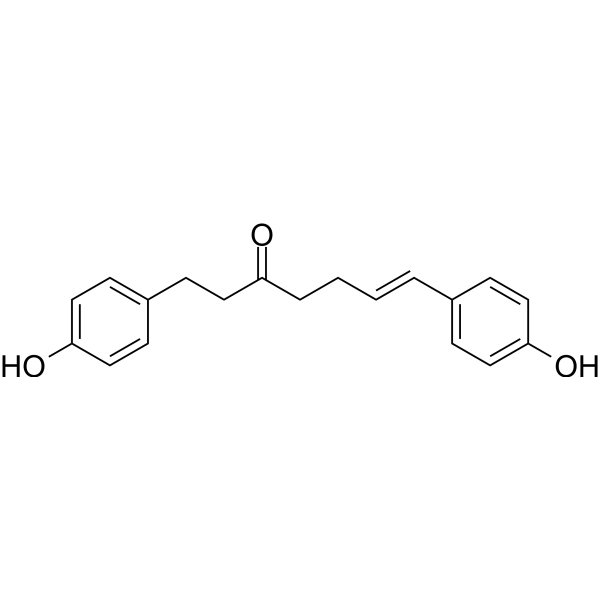 0 ImagesCat. No.: HY-N0997CAS No.: 1251830-57-5
(6E)-1,7-Bis(4-hydroxyphenyl)-6-hepten-3-one (compound7) is a nature product isolated from rhizomes of Curcuma kwangsiensis. (6E)-1,7-Bis(4-hydroxyphenyl)-6-hepten-3-one has inhibitory effect on NO production induced by LPS in macrophages with an IC50 value of 8.93 μM.
-
FS102
 0 ImagesCat. No.: HY-P991235Synonyms: BMS-986186
FS102 is a selective Fc fragment with antigen binding (Fcab) that targets HER2 with a KD value of 0.8 nM. FS102 induces the degradation of HER2, activates Caspase 3/7 and disrupts the integrity of the cell membrane, triggering apoptosis of tumor cells. FS102 is promising for research of cancers such as breast cancer, gastric cancer, and colorectal cancer.
-
hsa-miR-361-5p antagomir
 0 ImagesCat. No.: HY-RI00734A
hsa-miR-361-5p antagomirs are chemically-modified oligonucleotides that hybridize with mature miRNAs. The miRNA antagomirs have 2 phosphorothioates at the 5' end, 4 phosphorothioates at the 3' end, 1 cholesterol group at the 3' end, and full-length nucleotide 2'-methoxy modification. The miRNA antagomirs strongly compete with mature miRNAs to prevent the complementary pairing of miRNAs and their target genes, thereby inhibiting miRNAs from functioning. Stability of miRNA antagomirs appears to be significantly higher than miRNA inhibitors, they exhibits enhanced cellular uptake, stability and regulatory activity in vivo.



