



Cancer Targeted Therapy
Cancer targeted therapy is the foundation of precision medicine; it uses drugs or other substances to target specific genes and proteins that control cancer cells’ growth, division and spreading. Compared to traditional chemotherapy drugs, targeted-drugs can specifically act on cancer cells with high efficacy without damaging normal cells. Drugs used in cancer targeted therapy mainly includes small molecules and macromolecules (e.g., monoclonal antibodies), which can target cancer cells and constituents in the tumor microenvironment to activate the immune system. Anti-angiogenesis drugs, such as those targeting vascular endothelial growth factor (VEGF), epidermal growth factor receptor (EGFR), transforming growth factor (TGF)-α, TGF-β, Tumor necrosis factor (TNF)-α, and platelet-derived endothelial growth factor (PDGFR) inhibit the proliferation and metastasis of cancer cells. In recent years, the proportion of antibody drugs in cancer treatment has gradually become prominent. Antibody-drug conjugates (ADCs) are a new type of targeted drugs that are composed of monoclonal antibody, cytotoxic drug and linker. ADCs can deliver drugs to tumor cells and minimize the toxicity to normal tissues. Proteolysis-targeting chimera (PROTAC) is a useful technology for targeted protein degradation. PROTAC exploits the ubiquitin-proteasome system and forms a ternary complex with a hijacked E3 ubiquitin ligase and target protein, leading to polyubiquitination and degradation of the target protein.
Targeted therapy is a useful strategy in treatment of cancer either alone or in combination with standard chemotherapy. At present, targeted therapy has proved significant clinical success in the treatment of many types of cancer, including breast cancer, colorectal cancer, leukemia, ovarian cancer and lung cancer.
-
hsa-miR-6165 antagomir
 0 ImagesCat. No.: HY-RI01884A
hsa-miR-6165 antagomirs are chemically-modified oligonucleotides that hybridize with mature miRNAs. The miRNA antagomirs have 2 phosphorothioates at the 5' end, 4 phosphorothioates at the 3' end, 1 cholesterol group at the 3' end, and full-length nucleotide 2'-methoxy modification. The miRNA antagomirs strongly compete with mature miRNAs to prevent the complementary pairing of miRNAs and their target genes, thereby inhibiting miRNAs from functioning. Stability of miRNA antagomirs appears to be significantly higher than miRNA inhibitors, they exhibits enhanced cellular uptake, stability and regulatory activity in vivo.
-
hsa-miR-892b inhibitor
 0 ImagesCat. No.: HY-RI02505
hsa-miR-892b inhibitors are chemically-modified oligonucleotides that hybridize with mature miRNAs. The miRNA inhibitors have full-length nucleotide 2'-methoxy modification. The miRNA inhibitors strongly compete with mature miRNAs to prevent the complementary pairing of miRNAs and their target genes, thereby inhibiting miRNAs from functioning.
-
mmu-miR-3963 inhibitor
 0 ImagesCat. No.: HY-RI03127
mmu-miR-3963 inhibitors are chemically-modified oligonucleotides that hybridize with mature miRNAs. The miRNA inhibitors have full-length nucleotide 2'-methoxy modification. The miRNA inhibitors strongly compete with mature miRNAs to prevent the complementary pairing of miRNAs and their target genes, thereby inhibiting miRNAs from functioning.
-
mmu-miR-7009-3p inhibitor
 0 ImagesCat. No.: HY-RI03752
mmu-miR-7009-3p inhibitors are chemically-modified oligonucleotides that hybridize with mature miRNAs. The miRNA inhibitors have full-length nucleotide 2'-methoxy modification. The miRNA inhibitors strongly compete with mature miRNAs to prevent the complementary pairing of miRNAs and their target genes, thereby inhibiting miRNAs from functioning.
-
rno-miR-349 inhibitor
 0 ImagesCat. No.: HY-RI04373
rno-miR-349 inhibitors are chemically-modified oligonucleotides that hybridize with mature miRNAs. The miRNA inhibitors have full-length nucleotide 2'-methoxy modification. The miRNA inhibitors strongly compete with mature miRNAs to prevent the complementary pairing of miRNAs and their target genes, thereby inhibiting miRNAs from functioning.
-
2’,3’,5’-Tri-O-benzoyl-5-methoxyuridine
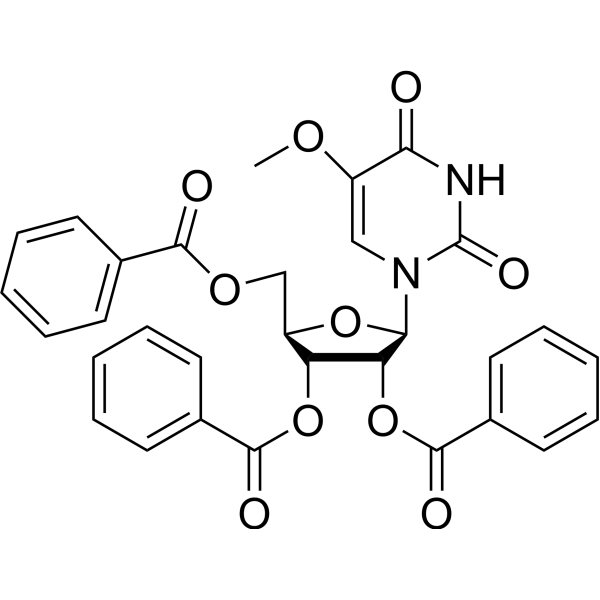 0 ImagesCat. No.: HY-W551974CAS No.: 37805-86-0
2’,3’,5’-Tri-O-benzoyl-5-methoxyuridine is a purine nucleoside analog. Purine nucleoside analogs have broad antitumor activity targeting indolent lymphoid malignancies. Anticancer mechanisms in this process rely on inhibition of DNA synthesis, induction of apoptosis, etc.
-
KRCA-0377
 0 ImagesCat. No.: HY-116636CAS No.: 1845711-03-6
KRCA-0377 is an orally active ALK inhibitor with an IC50 of 0.001 μM. KRCA-0377 also inhibits mutant ALK enzyme with IC50 values ≤0.01 μM. KRCA-0377 shows cytotoxicity against cancer cells and inhibits tumor growth in xenograft mice models. KRCA-0377 can be used for the research of ALK-positive non-small-cell lung cancer.
-
(S)-Thalidomide-piperazine-pyrimidine-piperazine-C2-O-C2-OH
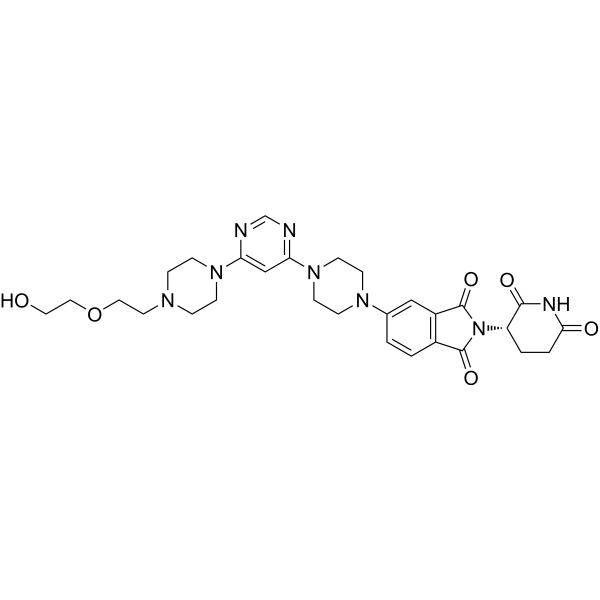 0 ImagesCat. No.: HY-157759
(S)-Thalidomide-piperazine-pyrimidine-piperazine-C2-O-C2-OH is a conjugate of E3 ligase ligand and linker, consisting of Thalidomide (HY-14658) and the corresponding Linker. (S)-Thalidomide-piperazine-pyrimidine-piperazine-C2-O-C2-OH can serve as a Cereblon ligand to recruit CRBN proteins and serve as a key intermediate for the synthesis of complete PROTAC molecules.
-
Cisplatin/Dasatinib prodrug-1
 0 ImagesCat. No.: HY-161687CAS No.: 3049801-09-1
Cisplatin/Dasatinib prodrug-1 (Compound 3) is a prodrug of Cisplatin (HY-17394) and Dasatinib (HY-10181). Cisplatin/Dasatinib prodrug-1 exhibits antiproliferative activity against A2780, MDA-MB-231, MCF7, HCT116, RD, Thp1 and HL60 cancer cells with IC50s of 0.1, 0.1, 0.36, 2.0, 0.4, 0.3 and 0.25 μM, respectively.


-
Antitumor agent-218
 0 ImagesCat. No.: HY-183797CAS No.: 3094774-72-5
Antitumor agent-218 is an aggregation-induced emission (AIE)-based photosensitizer. Antitumor agent-218 selectively accumulates in the endoplasmic reticulum, and generates ROS within the endoplasmic reticulum upon irradiation to induce necroptosis of tumor cells. Antitumor agent-218 can be used in cancer-related research.
-
Ketodarolutamide-d3
 0 ImagesCat. No.: HY-19337SCAS No.: 2484757-41-5Synonyms: BAY 1896953-d3; ORM-15341-d3
Ketodarolutamide-d3 (BAY 1896953-d3) is the deuterium labeled Ketodarolutamide (HY-19337). Ketodarolutamide (ORM-15341) is a potent, high-affinity nonsteroidal competitive full antagonist of androgen receptor (AR). Ketodarolutamide displays a Ki value of 8 nM for rat wild-type AR and an IC50 value of 38 nM in AR-HEK293 cells. Ketodarolutamide inhibits testosterone-induced nuclear translocation of the AR and antagonizes both overexpressed and mutant ARs. Ketodarolutamide specifically suppresses the proliferation of AR-dependent prostate cancer cells and exhibits antitumor activity in models of castration-resistant prostate cancer (CRPC) . Ketodarolutamide is suitable for the mechanistic and therapeutic research of prostate cancer.
-
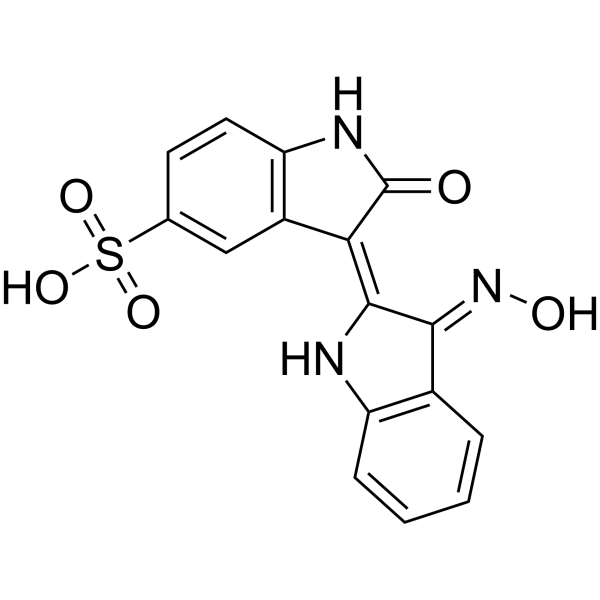
Omeprazole sodium (Standard)
 0 ImagesCat. No.: HY-B0113ARCAS No.: 95510-70-6Synonyms: H 16868 sodium (Standard)
Omeprazole (sodium) (Standard) is the analytical standard of Omeprazole (sodium). This product is intended for research and analytical applications. Omeprazole sodium (H 16868) is an orally active H+,K+-ATPase inhibitor and a proton pump inhibitor. Omeprazole sodium competitively inhibits CYP2C19, CYP3A4, and CYP2C9 activity. Omeprazole sodium inhibits gastric acid secretion and can be used for acid-related gastrointestinal disorders. Omeprazole sodium inhibits pancreatic cancer cell proliferation, induces apoptosis, autophagosome accumulation (elevated LC3-I and LC3-II levels), oxidative stress, and cytogenetic imbalance, modulates lysosomal transport, reduces inflammatory cytokines. Omeprazole sodium alters small intestinal morphology and magnesium absorption, and induces gastric mucosa morphologic changes. Omeprazole sodium also has neuroprotective and antibacterial effects.
-
(R)-MLT-985
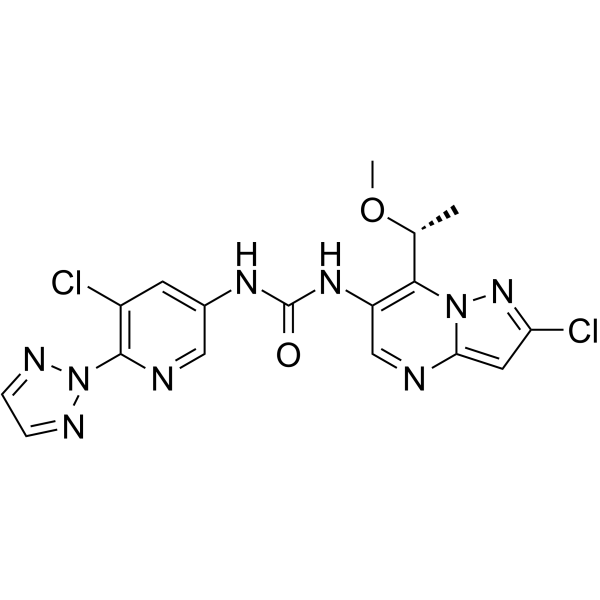 0 ImagesCat. No.: HY-142648ACAS No.: 1832577-07-7
(R)-MLT-985 is the R configuration of MLT-985 (HY-142648). MLT-985 is a selective allosteric and orally active MALT1 inhibitor with an IC50 value of 3 nM. MLT-985 can suppress cell growth and aberrant CARD11/BCL10/MALT1 complex signaling. MLT-985 can be used for the research of cancer, such as B cell malignancies.
-
Tetrahydrocurcumin-d6
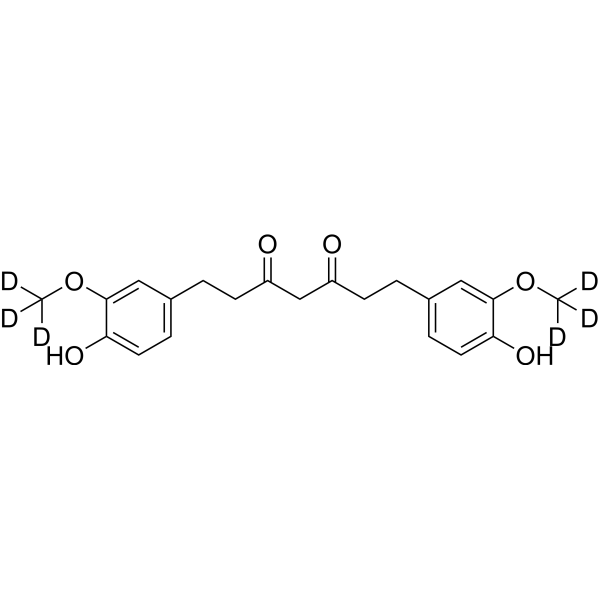 0 ImagesSynonyms: HZIV 81-2 d6
-
N-Acetyl-O-phosphono-Tyr-Glu dipentylamide
 0 ImagesCat. No.: HY-108487CAS No.: 190078-50-3Synonyms: Ac-Tyr-Glu-N(n-C5H11)2
N-Acetyl-O-phosphono-Tyr-Glu dipentylamide (Ac-Tyr-Glu-N(n-C5H11)2), a dipeptide, is a pp60c-src SH2 domain inhibitor. N-Acetyl-O-phosphono-Tyr-Glu dipentylamide can be used for cancer research.
-
hsa-miR-12124 antagomir
 0 ImagesCat. No.: HY-RI00100A
hsa-miR-12124 antagomirs are chemically-modified oligonucleotides that hybridize with mature miRNAs. The miRNA antagomirs have 2 phosphorothioates at the 5' end, 4 phosphorothioates at the 3' end, 1 cholesterol group at the 3' end, and full-length nucleotide 2'-methoxy modification. The miRNA antagomirs strongly compete with mature miRNAs to prevent the complementary pairing of miRNAs and their target genes, thereby inhibiting miRNAs from functioning. Stability of miRNA antagomirs appears to be significantly higher than miRNA inhibitors, they exhibits enhanced cellular uptake, stability and regulatory activity in vivo.
-
hsa-miR-3606-3p inhibitor
 0 ImagesCat. No.: HY-RI00723
hsa-miR-3606-3p inhibitors are chemically-modified oligonucleotides that hybridize with mature miRNAs. The miRNA inhibitors have full-length nucleotide 2'-methoxy modification. The miRNA inhibitors strongly compete with mature miRNAs to prevent the complementary pairing of miRNAs and their target genes, thereby inhibiting miRNAs from functioning.



