



Cholinesterase (ChE)
Cholinesterase (ChE) is a family of enzymes present in the central nervous system, particularly in nervous tissue, muscle and red cells, which catalyze the hydrolysis of the neurotransmitter acetylcholine into choline and acetic acid, a reaction necessary to allow a cholinergic neuron to return to its resting state after activation. It is one of many important enzymes needed for the proper functioning of the nervous systems of humans.
There are two types: acetylcholinesterase (AChE, acetylcholine hydrolase) and butyrylcholinesterase (BChE, acylcholine acylhydrolase), also known as nonspecific cholinesterase or pseudocholinesterase. AChE is primarily found in the blood on red blood cell membranes, in neuromuscular junctions, and in neural synapses, while BChE is produced in the liver and found primarily in plasma. The difference between the two types of cholinesterase is their relative preferences for substrates: AChE hydrolyzes acetylcholine faster while BChE hydrolyzes butyrylcholine faster.
Cholinesterase (ChE) Isoform Specific Products
All Product Categories
-
Cholinesterase (ChE) Inhibitors
(939)
View all products
-
Cholinesterase (ChE) Agonists
(5)
View all products
-
Cholinesterase (ChE) Antagonists
(10)
View all products
-
Cholinesterase (ChE) Activators
(33)
View all products
-
Cholinesterase (ChE) Modulators
(11)
View all products
-
Cholinesterase (ChE) Chemical
(1)
View all products
-
Cholinesterase (ChE) Inducer
(1)
View all products
-
Cholinesterase (ChE) Controls
(6)
View all products
-
Cholinesterase (ChE) Substrates
(3)
View all products
-
Cholinesterase (ChE) Related Products (1087)
Related Products (1087)

-
Antibodies (2)
-
Cholinesterase (ChE) Isoform Comparison
-
BChE-IN-26
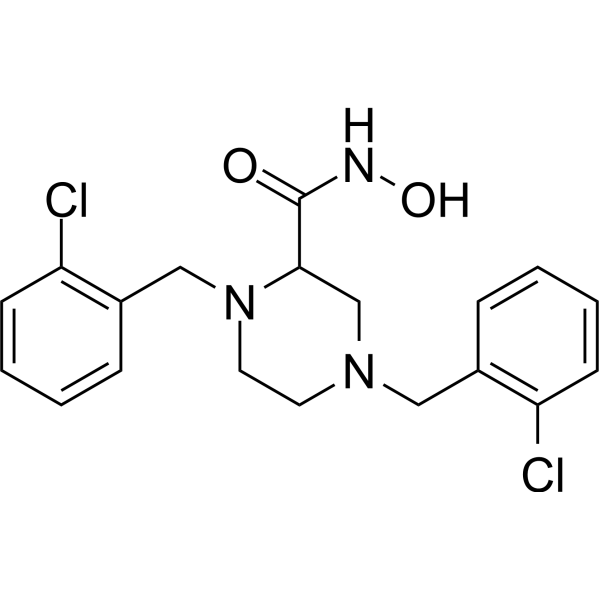 0 ImagesCat. No.: HY-161156BChE-IN-26 (Compound 7b) is a selective AChE and BChE inhibitor with Ki value of 35 μM and 1.6 μM. BChE-IN-26 has cytotoxicity to human neuroblastoma (SH-SY5Y) cell line. BChE-IN-26 can be used for the research of Alzheimer’s disease.
-
Quinolactacin A1
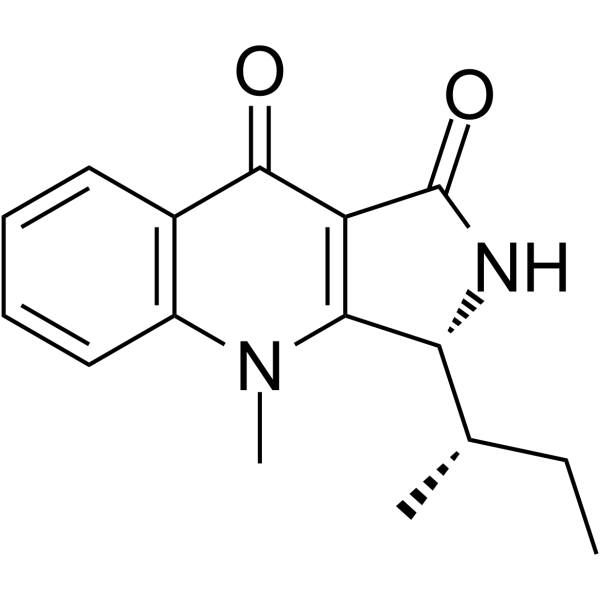 0 ImagesCat. No.: HY-N7480ACAS No.: 815576-68-2Quinolactacin A1 is a potent acetylcholinesterase (AChE) inhibitor from solid state fermentation of Penicillium citrinum 90648. Quinolactacin A1 can be used for the research of Alzheimer disease.
-
α-Glycosidase-IN-1
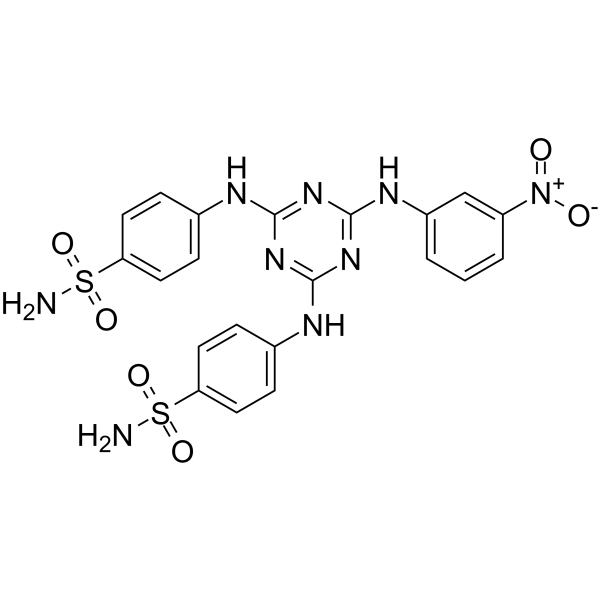 0 ImagesCat. No.: HY-147954CAS No.: 2428389-66-4α-Glycosidase-IN-1 (compound MZ7) is a potent α-GLY (α-Glycosidase) inhibitor, with an IC50 of 44.72 nM and a KI of 41.74 nM. α-Glycosidase-IN-1 also shows inhibition profile against human carbonic anhydrase isoenzymes I and II (hCA I and hCA II), and acetylcholinesterase (AChE), with IC50 values of 104.87, 100.04, and 654.87 nM, respectively. α-Glycosidase-IN-1 can be used for the research of many diseases such as diabetes, Alzheimer’s disease, heart failure, ulcer, and epilepsy.
-
Cyanofenphos
 0 ImagesCat. No.: HY-120131CAS No.: 13067-93-1Cyanofenphos is an orally active organophosphate insecticide and brain AChE inhibitor with neurotoxicity. Cyanofenphos induces delayed neurotoxicity such as ataxia and paralysis. Cyanofenphos also causes symptoms including somnolence, reduced feed intake and weight loss in hens. Cyanofenphos has a unique self-antagonistic effect: repeated low-dose pre-treatment not only reduces subsequent acute toxicity, but also exacerbates delayed neurotoxicity and attenuates enzyme inhibition, with the protective effect peaking at 24 h after the last pre-treatment. Cyanofenphos is commonly used in studies related to delayed neurotoxicity.
-
α-Glucosidase-IN-68
 0 ImagesCat. No.: HY-162639CAS No.: 1624628-01-8α-Glucosidase-IN-68 (Compound 2) is an inhibitor for α-Glucosidase, AChE, and BChE, with IC50 of 0.251, 0.774 and 0.793 μM, respectively. α-Glucosidase-IN-68 exhibits antioxidant efficacy, with IC50 of 0.69 μM and 0.02 μM, in DPPH and ABTS experiments. α-Glucosidase-IN-68 exhibits antidiabetic effect in Streptozotocin (HY-13753)-induced diabetic rat models.
-
TRV-7019
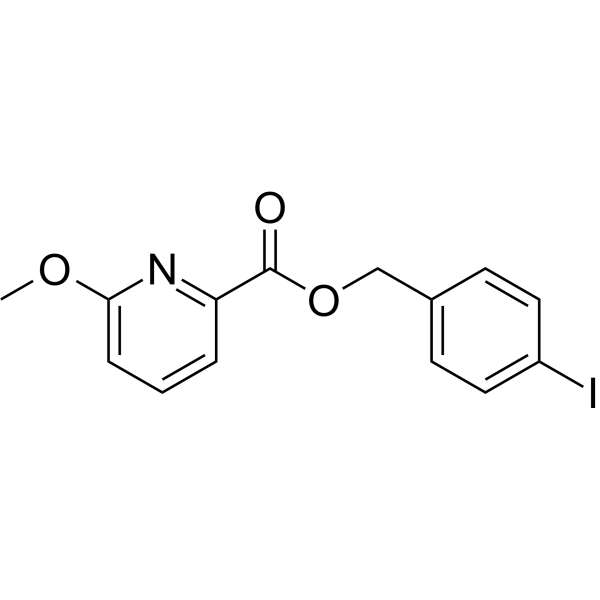 0 ImagesTRV-7019 is a BBB-penetrable radioligand for brain imaging that target butyrylcholinesterase. TRV-7019 can be used for the diagnosis of an amyloid disease, multiple sclerosis, a brain tumor, or butyrylcholinesterase activity.
-
2-Methyl-2-butenyl (E)-Caffeate
 0 ImagesCat. No.: HY-W746884CAS No.: 118971-61-22-Methyl-2-butenyl (E)-Caffeate is a type of caffeic acid ester compound. The petroleum ether and chloroform extracts containing 2-Methyl-2-butenyl (E)-Caffeate have inhibitory effects on acetylcholinesterase (AChE) and butyrylcholinesterase (BChE). The ether extract containing 2-Methyl-2-butenyl (E)-Caffeate exhibits strong antioxidant properties. 2-Methyl-2-butenyl (E)-Caffeate can be used in the research of Alzheimer's disease.
-
BChE-IN-9
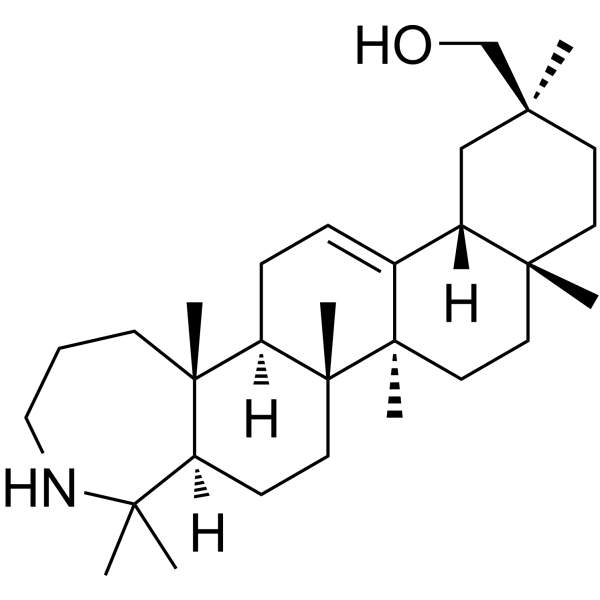 0 ImagesCat. No.: HY-147880CAS No.: 2468035-31-4BChE-IN-9 (Azepano-11-deoxo-glycyrrhetol) is a mixed type BChE inhibitor with a Ki of 0.21 µM.
-
Ipidacrine hydrochloride
 0 ImagesCat. No.: HY-19689CAS No.: 90043-86-0Synonyms: NIK-247; AmiridineIpidacrine (NIK-247; Amiridine) hydrochloride is orally active and blood-brain-barrier-penetrant AChE and BuChE inhibitors with IC50 values of 1 μM and 1.9 μM, respectively, which is also a partial agonist of M2-cholinergic receptors and a reversible cholinesterase inhibitor. Ipidacrine hydrochloride has a stimulating effect on neuromuscular transmission and excitation along the nerve fibres with a moderately anti-pain effect. Ipidacrine hydrochloride is an aminopyridines and is structurally similar to Tacrine (HY-111338). Ipidacrine hydrochloride is effective in various amnesia models, improves erectile function and inhibits K+ and Na+-channels in the neuronal membrane in diabetic rats. Ipidacrine hydrochloride is promising for research of Alzheimer’s disease, ischaemic stroke, idiopathic neuropathy of the facial nerve, diabetes mellitus-induced erectile dysfunction and other deficits in central or peripheral cholinergic deseases.
-
AChE-IN-21
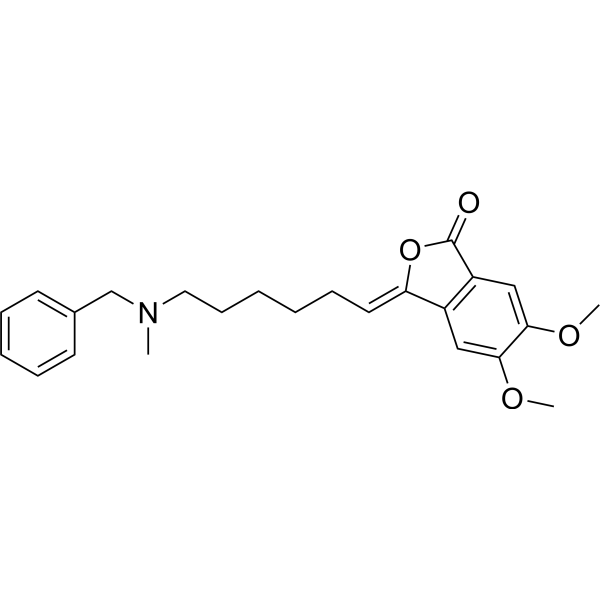 0 ImagesCat. No.: HY-150545CAS No.: 2413656-04-7AChE-IN-21 (Compound I-8) is a potent, selective and orally active AChE inhibitor with an IC50 of 2.66 nM. AChE-IN-21 displays excellent BBB permeability in vitro.
-
Quilostigmine
 0 ImagesCat. No.: HY-135427CAS No.: 139314-01-5Synonyms: HP-290; NXX-066Quilostigmine (HP-290) is an orally active Physostigmine (HY-N6608) analogue, acetylcholinesterase (IC50: 148 nM for rat brain acetylcholinesterase) inhibitor. Quilostigmine has a long-lasting effect on tremors. Quetiapine can be used in the research of Alzheimer's disease.
-
BChE-IN-4
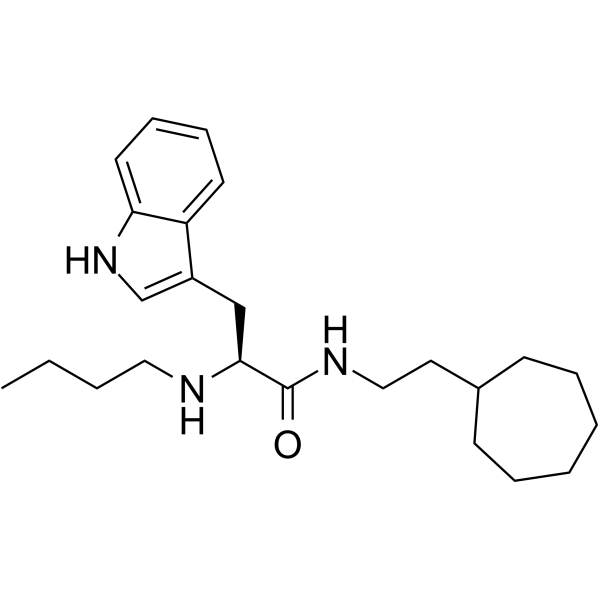 0 ImagesCat. No.: HY-143464CAS No.: 2304818-41-3BChE-IN-4 is a potent and cross the blood-brain barrier BChE inhibitor. BChE-IN-4 attenuates learning and memory deficits caused by cholinergic deficit in mouse model. BChE-IN-4 has the potential for the research of alzheimer’s disease.

-
AChE/BChE-IN-26
 0 ImagesCat. No.: HY-173152AChE/BChE-IN-26 (Compound 20aa) is a cholinesterase inhibitor with IC50 values of 0.75 μM and 4.11 μM against eeAChE and eqBChE, respectively. AChE/BChE-IN-26 has antioxidant activity and can be used in the research of diseases such as Alzheimer's disease.
-
AChE/BChE/BACE-1-IN-2
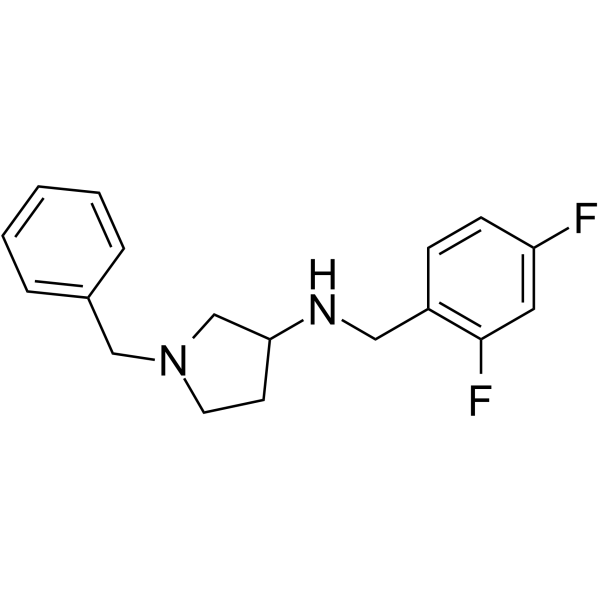 0 ImagesCat. No.: HY-147659CAS No.: 1877000-20-8AChE/BChE/BACE-1-IN-2 (Compound 4o) is an orally active inhibitor of AChE, BChE, and BACE-1 with IC50 values of 0.069, 0.127 and 0.097 μM against hAChE, hBChE and hBACE-1, respectively. AChE/BChE/BACE-1-IN-2 shows considerable PAS-AChE binding capability, excellent brain permeation, potential disassembly of Aβ aggregates, and neuroprotective activity against Aβ-induced stress. AChE/BChE/BACE-1-IN-2 has remarkable antioxidant potential.
-
Bleformin A
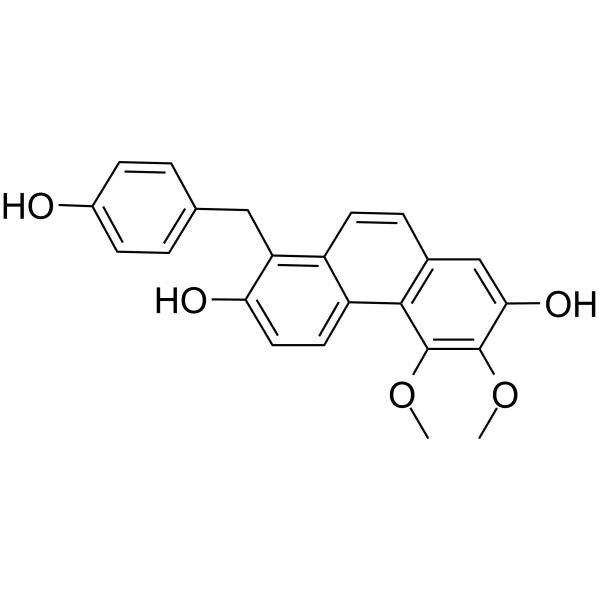 0 ImagesCat. No.: HY-N10487CAS No.: 1980064-35-4Bleformin A is a potent BChE inhibitor with an IC50 value of 5.2 μM. Bleformin A is a nature product that could be isolated from Bletilla striata. Bleformin A can be used for research of Alzheimer's disease (AD).
-
Melineurine
 0 ImagesCat. No.: HY-N17394CAS No.: 85802-28-4Melineurine is a reversible mixed-type acetylcholinesterase inhibitor, with an IC50 of 95.3 μM against AChE and an IC50 of 28.0 μM against BChE. Melineurine is applicable to the research of Alzheimer's disease.
-
AChE/BuChE-IN-6
 0 ImagesCat. No.: HY-170561CAS No.: 3105110-19-5AChE/BuChE-IN-6 (Compound 11f) is an inhibitor of AChE and BuChE, with IC50 values of 1.24 and 1.85 μg/mL, respectively. AChE/BuChE-IN-6 also exhibits strong DPPH free radical scavenging activity (IC50 = 3.15 μg/mL). In vivo toxicity studies indicate that AChE/BuChE-IN-6 is safe, showing no significant differences in blood and biochemical markers compared to the control group after long-term administration, and no abnormalities were observed in liver and kidney tissues. AChE/BuChE-IN-6 holds promise for research into Alzheimer's disease.
-
SON38
 0 ImagesCat. No.: HY-159888CAS No.: 3034673-37-2SON38 is a copper chelator capable of chelating divalent copper. SON38 can inhibit the activity of cholinesterases and has potential applications in Alzheimer's disease research.
-
Fasciculin-II
 0 ImagesCat. No.: HY-P5797CAS No.: 95506-56-2Synonyms: Fas-2Fasciculin-II (Fas-2) is a potential inhibitor of acetylcholinesterase (AChE).




