



Cholinesterase (ChE)
Cholinesterase (ChE) is a family of enzymes present in the central nervous system, particularly in nervous tissue, muscle and red cells, which catalyze the hydrolysis of the neurotransmitter acetylcholine into choline and acetic acid, a reaction necessary to allow a cholinergic neuron to return to its resting state after activation. It is one of many important enzymes needed for the proper functioning of the nervous systems of humans.
There are two types: acetylcholinesterase (AChE, acetylcholine hydrolase) and butyrylcholinesterase (BChE, acylcholine acylhydrolase), also known as nonspecific cholinesterase or pseudocholinesterase. AChE is primarily found in the blood on red blood cell membranes, in neuromuscular junctions, and in neural synapses, while BChE is produced in the liver and found primarily in plasma. The difference between the two types of cholinesterase is their relative preferences for substrates: AChE hydrolyzes acetylcholine faster while BChE hydrolyzes butyrylcholine faster.
Cholinesterase (ChE) Isoform Specific Products
All Product Categories
-
Cholinesterase (ChE) Inhibitors
(947)
View all products
-
Cholinesterase (ChE) Agonists
(5)
View all products
-
Cholinesterase (ChE) Antagonists
(10)
View all products
-
Cholinesterase (ChE) Activators
(34)
View all products
-
Cholinesterase (ChE) Modulators
(11)
View all products
-
Cholinesterase (ChE) Chemical
(1)
View all products
-
Cholinesterase (ChE) Inducer
(1)
View all products
-
Cholinesterase (ChE) Controls
(6)
View all products
-
Cholinesterase (ChE) Substrates
(3)
View all products
-
Cholinesterase (ChE) Related Products (1096)
Related Products (1096)

-
Antibodies (2)
-
Cholinesterase (ChE) Isoform Comparison
-
BChE-IN-48
 0 ImagesCat. No.: HY-180146BChE-IN-48 (Compound 12a) is a BChE inhibitor that can cross the blood-brain barrier with IC50 values for eqBChE and huBChE of 1.3 and 0.95 μM respectively. BChE-IN-48 exhibits an IC50 value for eeAChE of 8.6 μM. BChE-IN-48 exhibits significant neuroprotective activity in cell damage and significantly improves cognitive impairment in mouse models. BChE-IN-48 can be used for research on Alzheimer's disease.
-
AJ-4
 0 ImagesCat. No.: HY-184742AJ-4 is an orally active, blood-brain barrier-permeable GSK-3β/AChE inhibitor, with an IC50 of 4.7 nM against GSK-3β and 2.97 μM against AChE. AJ-4 increases the level of phosphorylated GSK-3β and reduces the expression of Amyloid-β and phosphorylated Tau. AJ-4 improves scopolamine-induced learning and memory impairment and alleviates hippocampal neuron damage in AD mice. AJ-4 can be used for the research of Alzheimer's disease.
-
AChE/BChE-IN-12
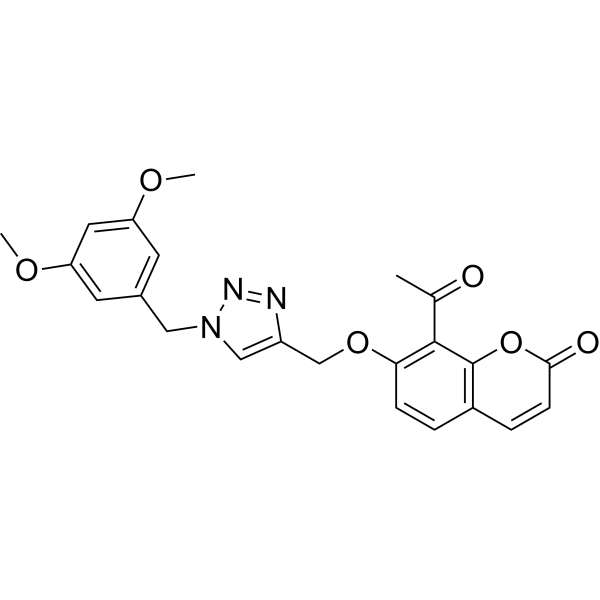 0 ImagesCat. No.: HY-149211AChE/BChE-IN-12 (compound 10b), a 3,5-dimethoxy analogue, is a potent AChE, BChE, and β-secretase-1 (BACE-1) inhibitor, with IC50 values of 2.57, 3.26, and 10.65 μM, respectively. AChE/BChE-IN-12 crosses the blood-brain barrier via passive diffusion and inhibits the self-aggregation of amyloid-β monomers. AChE/BChE-IN-12 can be used for Alzheimer’s disease (AD) research.
-
SP-10
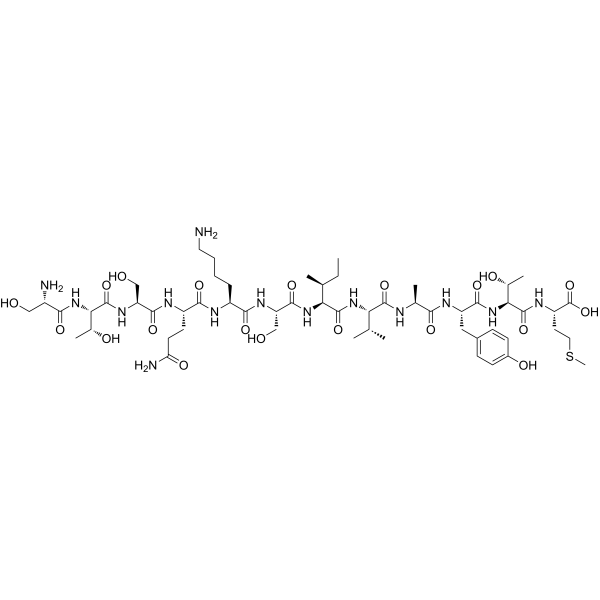 0 ImagesCat. No.: HY-P3258CAS No.: 882157-88-2SP-10 is a small peptide derived from S protein with an IC50 value of 1.88 nM for blocks the interaction between S protein and ACE2. SP-10 can be used for SARS-CoV research.
-
ω-Hydroxydigitoemodin
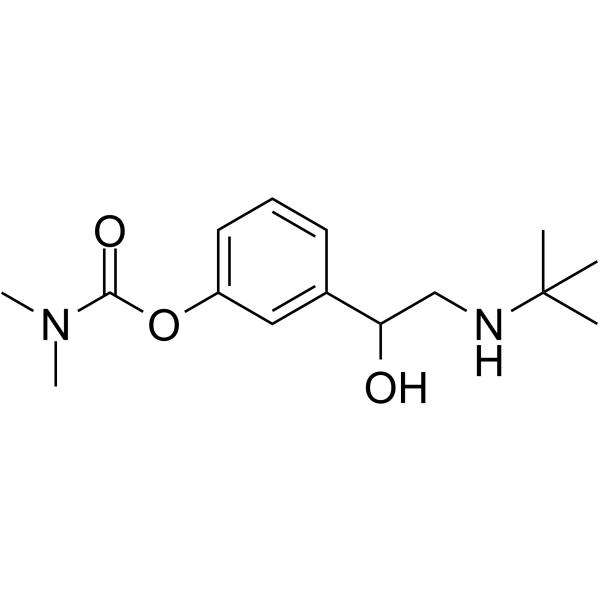
 0 ImagesCat. No.: HY-N17416CAS No.: 159898-12-1ω-Hydroxydigitoemodin is an anthraquinone derivative with anti-acetylcholinesterase activity, found in the marine fungus Trichoderma harzianum XS-20090075.
-
Ajmalicine hydrochloride
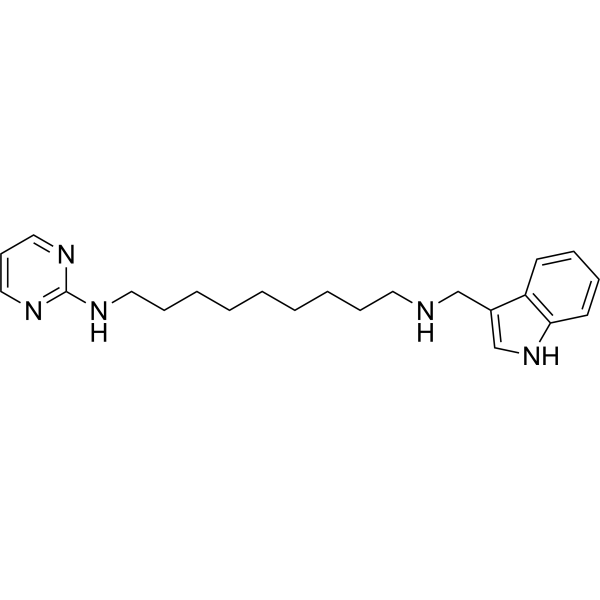
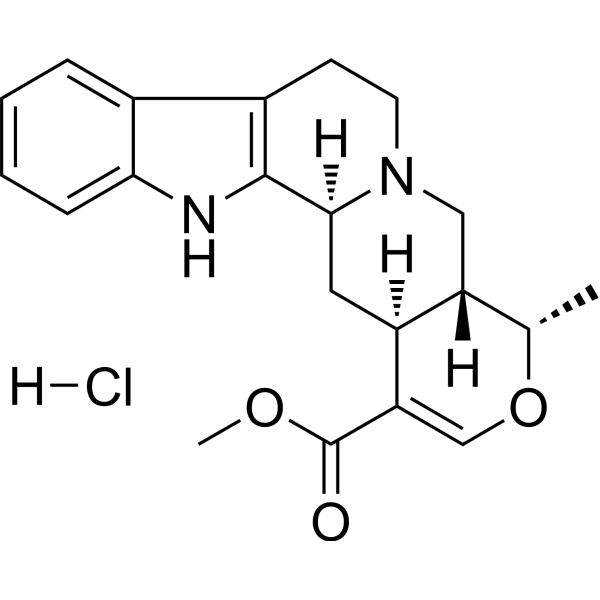 0 ImagesAjmalicine (Raubasine) hydrochloride is a potent adrenolytic agent which preferentially blocks α1-adrenoceptor. Ajmalicine hydrochloride is an reversible but non-competitive nicotine receptor full inhibitor, with an IC50 of 72.3 μM. Ajmalicine hydrochloride also can be used as anti-hypertensive, and serpentine, with sedative activity.
-
BChE-IN-30
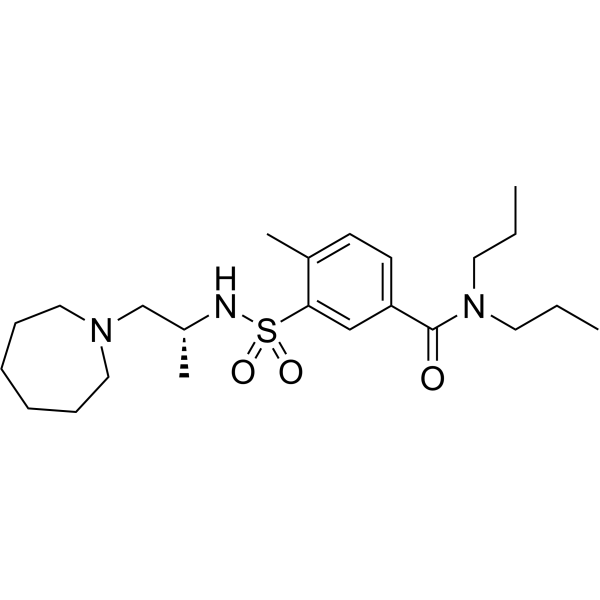 0 ImagesCat. No.: HY-162339CAS No.: 3034669-94-5BChE-IN-30 (compound (R)-37a) is a BChE inhibitor (IC50: 5 nM) with anti-inflammatory activity and low toxicity. BChE-IN-30 can improve cognitive deficits induced by scopolamine and Aβ1-42 peptide and can be used in the study of late-stage AD.
-
AChE-IN-105
 0 ImagesCat. No.: HY-180946CAS No.: 2678601-07-3AChE-IN-105 (Compound C5) is a potent, mixed AChE inhibitor with an IC50 of 5.02 μM. AChE-IN-105 scavenges ROS, decreases Hydrogen peroxide-induced Caspase-3 activation, reduces activity of the Nrf2-ARE pathway. AChE-IN-105 prevents memory impairments in the Scopolamine (HY-N0296)-induced cognitive dysfunction zebrafish model. AChE-IN-105 has potent antioxidant activity. AChE-IN-105 can be used in the research of Alzheimer's disease.
-
AChE-IN-30
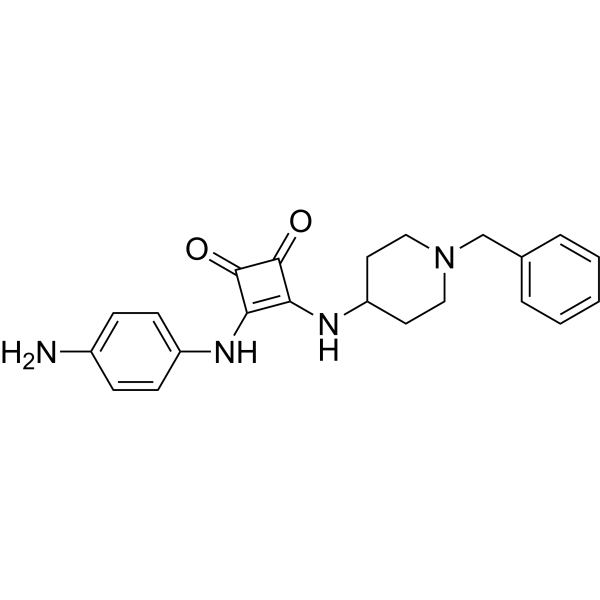 0 ImagesAChE-IN-30 is an AChE inhibitor with an IC50 value of 4.4 μM. AChE-IN-30 has neuroprotective activity, and inhibits H2O2-induced apoptosis by suppressing intracellular ROS accumulation. AChE-IN-30 can be used for research of Alzheimer's disease.
-
Plasiaticine B
 0 ImagesCat. No.: HY-N16645CAS No.: 1528768-32-2Plasiaticine B (Compound 2) is an indole alkaloid found in Plantago asiatica. Plasiaticine B shows no significant cytotoxicity to HL-60, A-549 and MCF-7 cells with IC50 >40 μM. Plasiaticine B shows no significant inhibitory effect on AChE, with an inhibition rate <60%.
-
Bisnorcymserine
 0 ImagesCat. No.: HY-121191CAS No.: 219920-81-7Synonyms: N1,N8-Bisnorcymserine; (-)-Bisnorcymserine
-
PD07
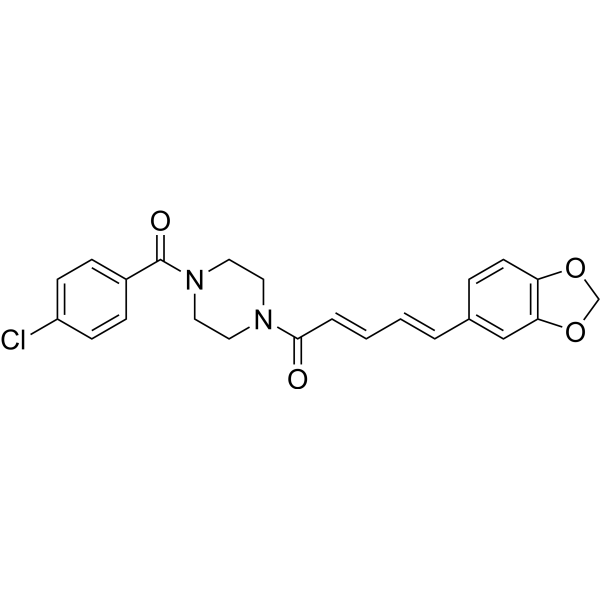 0 ImagesCat. No.: HY-149340PD07 is an orally active AChE inhibitor (IC50: 0.29 μM for hAChE). PD07 also inhibits ChEs, BACE1 (IC50: 13.42 μM), and Aβ1–42 aggregation in in vitro. PD07 is an antioxidant, and shows DPPH inhibitory activity (IC50: 26.46 μM). PD07 improves memory and cognition in Scopolamine (HY-N0296)-induced amnesia rats. PD07 can be used for research of Alzheimer’s disease.
-
BChE-IN-12
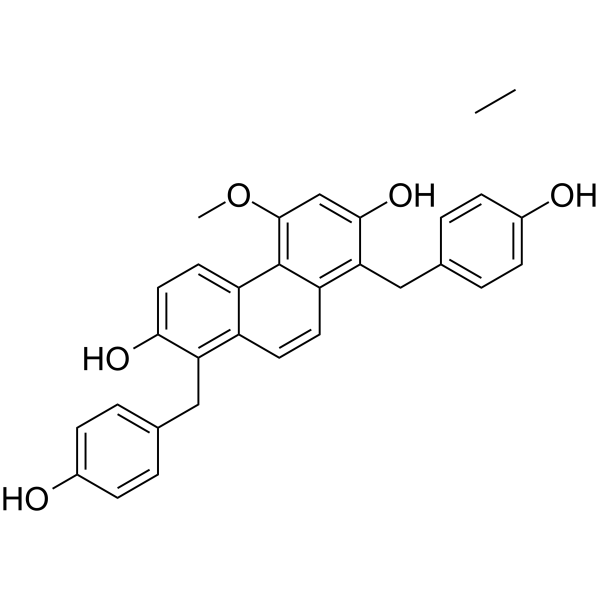 0 ImagesCat. No.: HY-N10489CAS No.: 136966-86-4BChE-IN-12 (compound 12) is a potent butyrylcholinesterase (BChE) non-competitive inhibitor with an IC50 value of 2.3 μM. BChE-IN-12 can be isolated from Bletilla striata. BChE-IN-12 can be used for the research of Alzheimer's disease (AD).


-
hCA I-IN-4
 0 ImagesCat. No.: HY-169962CAS No.: 3054159-56-4hCA I-IN-4 (Compound 14) is the inhibitor for carbonic anhydrase and cholinesterase, that inhibits hCA I, hCA II, AChE, and BChE with Ki of 29.94 nM, 17.72 nM, 21.21 nM, and 7.65 nMrespectively. hCA I-IN-4 exhibits cytotoxicity in BT-549 with IC50 of 16.59 μM.
-
(1S)-Quinolactacin A1
 0 ImagesCat. No.: HY-N7480BCAS No.: 2797139-68-3Synonyms: (1S)-Quinolactacin A2(1S)-Quinolactacin A1 ((1S)-Quinolactacin A2) is an acetylcholinesterase inhibitor. (1S)-Quinolactacin A1 can be used in the study of Alzheimer's disease.
-
hAChE/hBACE-1-IN-4
 0 ImagesCat. No.: HY-161512CAS No.: 229476-71-5hAChE/hBACE-1-IN-4 (compound AK-2) is a quinazoline derivative. hAChE/hBACE-1-IN-4 shows significant inhibitory activity against hAChE and hBACE-1 enzymes (hAChE, IC50=0.283 μM; hBACE-1, IC50=0.231 μM). hAChE/hBACE-1-IN-4 has the potential to inhibit Aβ aggregation. hAChE/hBACE-1-IN-4 has non-neurotoxicity , blood-brain barrier permeability and oral activity. hAChE/hBACE-1-IN-4 can be used in Alzheimer's disease research.




