



Cholinesterase (ChE)
Cholinesterase (ChE) is a family of enzymes present in the central nervous system, particularly in nervous tissue, muscle and red cells, which catalyze the hydrolysis of the neurotransmitter acetylcholine into choline and acetic acid, a reaction necessary to allow a cholinergic neuron to return to its resting state after activation. It is one of many important enzymes needed for the proper functioning of the nervous systems of humans.
There are two types: acetylcholinesterase (AChE, acetylcholine hydrolase) and butyrylcholinesterase (BChE, acylcholine acylhydrolase), also known as nonspecific cholinesterase or pseudocholinesterase. AChE is primarily found in the blood on red blood cell membranes, in neuromuscular junctions, and in neural synapses, while BChE is produced in the liver and found primarily in plasma. The difference between the two types of cholinesterase is their relative preferences for substrates: AChE hydrolyzes acetylcholine faster while BChE hydrolyzes butyrylcholine faster.
Cholinesterase (ChE) Isoform Specific Products
All Product Categories
-
Cholinesterase (ChE) Inhibitors
(947)
View all products
-
Cholinesterase (ChE) Agonists
(5)
View all products
-
Cholinesterase (ChE) Antagonists
(10)
View all products
-
Cholinesterase (ChE) Activators
(34)
View all products
-
Cholinesterase (ChE) Modulators
(11)
View all products
-
Cholinesterase (ChE) Chemical
(1)
View all products
-
Cholinesterase (ChE) Inducer
(1)
View all products
-
Cholinesterase (ChE) Controls
(6)
View all products
-
Cholinesterase (ChE) Substrates
(3)
View all products
-
Cholinesterase (ChE) Related Products (1096)
Related Products (1096)

-
Antibodies (2)
-
Cholinesterase (ChE) Isoform Comparison
-
Protriptyline hydrochloride (Standard)
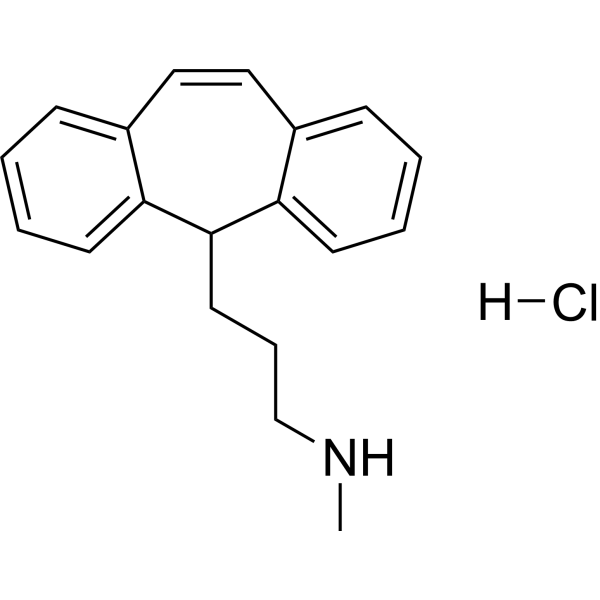 0 ImagesProtriptyline hydrochloride (Standard) is the analytical standard of Protriptyline hydrochloride (HY-B0949). This product is intended for research and analytical applications. Protriptyline hydrochloride is a potent tricyclic antidepressant (TCA). Protriptyline hydrochloride inhibits AChE activity with an IC50 value of 0.06 mM and inhibits Aβ self-assembly. Protriptyline hydrochloride can be used for the study of depression and Alzheimers disease.
-
Esculentoside B
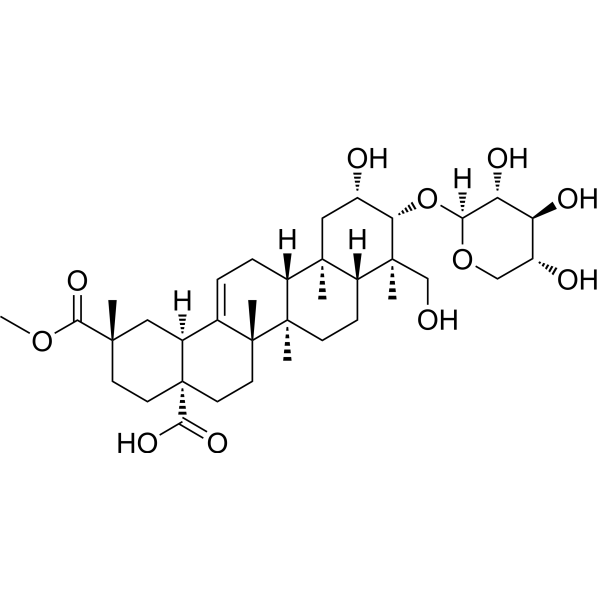 0 ImagesSynonyms: Phytolaccoside BEsculentoside B (Phytolaccoside B) is a natural product from the roots of Phytolacca acinosa Roxb. Esculentoside B is neurotoxic to zebrafish larvae, and impairs their central nervous system development. Esculentoside B inhibits inflammatory response and has antifungal activity.
-
GSK1034702 hydrochloride
 0 ImagesCat. No.: HY-107111ACAS No.: 932373-86-9GSK1034702 hydrochloride is an orally active and allosteric agonist of M1 mAChR (pEC50=8.1) that can cross the blood-brain barrier. GSK1034702 hydrochloride activates the Gq/11 protein-mediated signaling pathway, enhancing neuronal firing and long-term potentiation (LTP) in the CA1 region of the hippocampus. GSK1034702 hydrochloride can modulate hippocampal function, improve memory encoding in the nicotine withdrawal cognitive dysfunction model, and show pro-cognitive effects in rodents. GSK1034702 hydrochloride can be used for the study of the mechanisms of cognitive impairment diseases such as Alzheimer's disease, and has certain peripheral M receptor activation-related side effects (such as gastrointestinal reactions).
-
Neostigmine Bromide (Standard)
 0 ImagesSynonyms: Eustigmin bromide (Standard); Neoserine bromide (Standard)Neostigmine (Bromide) (Standard) is the analytical standard of Neostigmine (Bromide). This product is intended for research and analytical applications. Neostigmine Bromide is a cholinesterase inhibitor that acts on myasthenia gravis.

-
AChE-IN-19
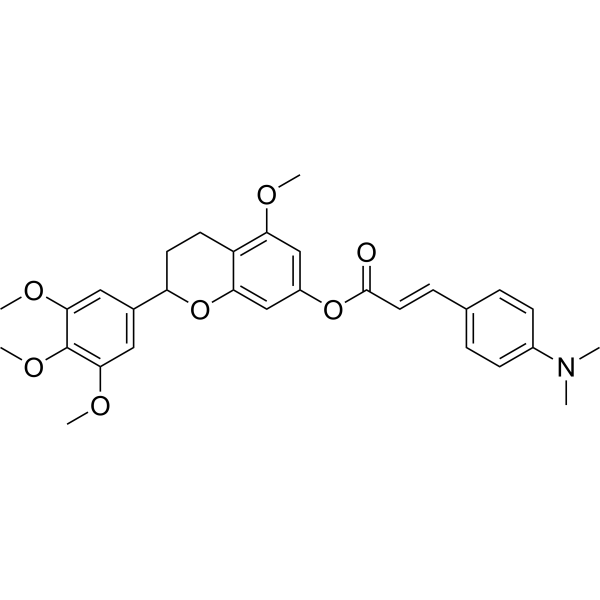 0 ImagesCat. No.: HY-147938CAS No.: 2742707-36-2AChE-IN-19 (compound A15) is a highly potent AChE inhibitor with an IC50 value of 0.56 μM, also inhibits Aβ aggregation. AChE-IN-19 has potent neuroprotective activities and nearly no toxicity on SH-SY5Y cells. AChE-IN-19 can be used for researching Alzheimer's disease.
-
S1R agonist/BChE-IN-1
 0 ImagesCat. No.: HY-180797S1R agonist/BChE-IN-1 (Compound 7c) is a S1R (IC50: 19 nM) agonist and selective BChE (IC50: 37 nM for hBChE) inhibitor. S1R agonist/BChE-IN-1 can be used in the research of Alzheimer's disease.
-
AChE/MAO-B-IN-6
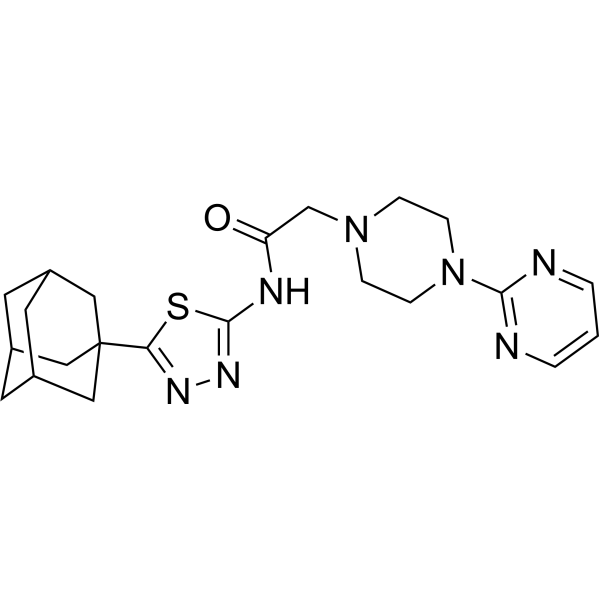 0 ImagesCat. No.: HY-157090AChE/MAO-B-IN-6 (compound 3a) is a dual inhibitor of AChE and h-MAO-B with potential to inhibit Alzheimer's disease.
-
Tacrine hydrochloride (Standard)
 0 ImagesTacrine (hydrochloride) (Standard) is the analytical standard of Tacrine (hydrochloride). This product is intended for research and analytical applications. Tacrine hydrochloride is a potent inhibitor of both AChE and BChE, with IC50s of 31 nM and 25.6 nM, respectively. Tacrine hydrochloride is also a NMDAR inhibitor, with an IC50 of 26 μM. Tacrine hydrochloride can be used for the research of Alzheimer’s disease.
-
Rivastigmine tartrate (Standard)
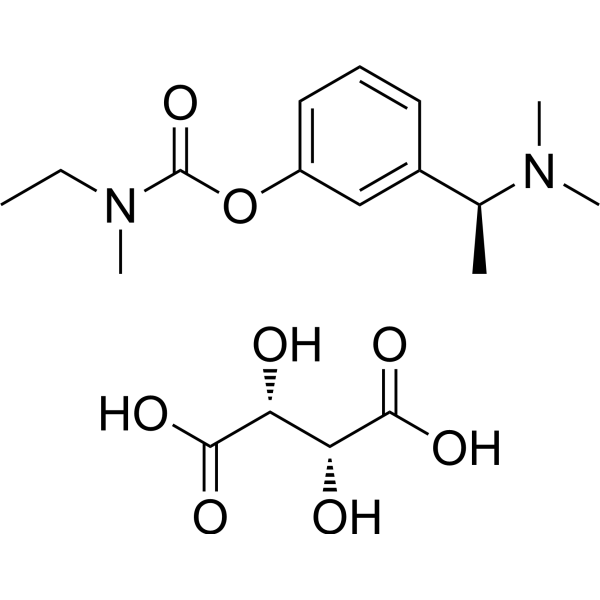 0 ImagesSynonyms: ENA 713 (Standard); SDZ-ENA 713 (Standard)Rivastigmine (tartrate) (Standard) is the analytical standard of Rivastigmine (tartrate). This product is intended for research and analytical applications. Rivastigmine tartrate (ENA 713; SDZ-ENA 713) is an orally active and potent cholinesterase (ChE) inhibitor and inhibits butyrylcholinesterase (BChE) and acetylcholinesteras (AChE) with IC50s of 0.037 μM, 4.15 μM, respectively. Rivastigmine tartrate can pass the blood brain barrier (BBB). Rivastigmine tartrate is a parasympathomimetic or cholinergic agent used for the research of mild to moderate dementia of the Alzheimer's type and dementia due to Parkinson's disease.
-
EQ-04
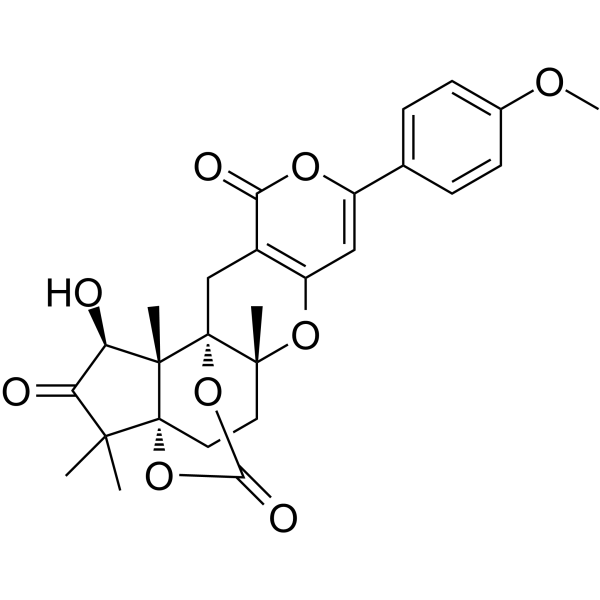
 0 ImagesCat. No.: HY-179621EQ-04 is a highly selective positive allosteric modulator (PAM) of α7 nAChR. EQ-04 has no direct inhibitory activity on AChE and BChE. EQ-04 inhibits Aβ aggregation. EQ-04 has safe cytotoxicity and potent neuroprotective activity. EQ-04 can be used for the study of Alzheimer's disease.

-
Difeterol
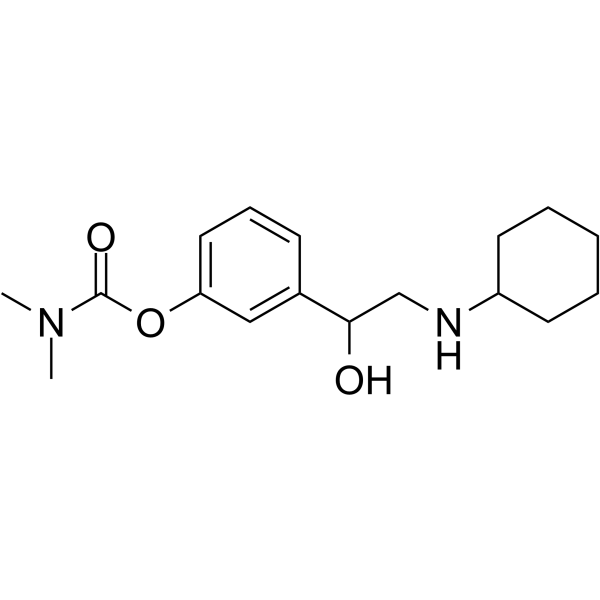
 0 ImagesCat. No.: HY-118729CAS No.: 14587-50-9Difeterol is an antihistamine agent and histamine-1 receptor antagonist. Difeterol inhibits BChE. Difeterol can be used in the research of Alzheimer's disease.
-
Keap1/Nrf2/ARE activator 2
 0 ImagesCat. No.: HY-180155CAS No.: 3105470-83-2Keap1/Nrf2/ARE activator 2 is an activator of Keap1/Nrf2/ARE pathway and non-competitively inhibits AChE with an IC50 of 14.79 μM and a Ki of 1.35 μM. Keap1/Nrf2/ARE activator 2 promotes Nrf2 nuclear translocation, leading to antioxidant gene upregulation and enhanced cellular defense against oxidative stress. Keap1/Nrf2/ARE activator exhibits robust neuroprotection against both H2O2- and Scopolamine (SCA) (HY-N0296)-induced injury in PC12 cells. Keap1/Nrf2/ARE activator 2 ameliorates memory impairment and the neuro-inflammation associated with SCA-initiated cognitive dysfunction in a zebrafish model. Keap1/Nrf2/ARE activator 2 can be used for the research of Alzheimer's disease.
-
KBR 2822
 0 ImagesCat. No.: HY-118222CAS No.: 126988-60-1KBR 2822 is an inhibitor of neurological target esterase (NTE) and has an inhibitory effect on AChE. KBR 2822 can aggravate neurological damage under certain conditions, but does not cause neurological disease when used alone in the absence of direct neurotoxicity or biochemical damage.
-
AChE-IN-8
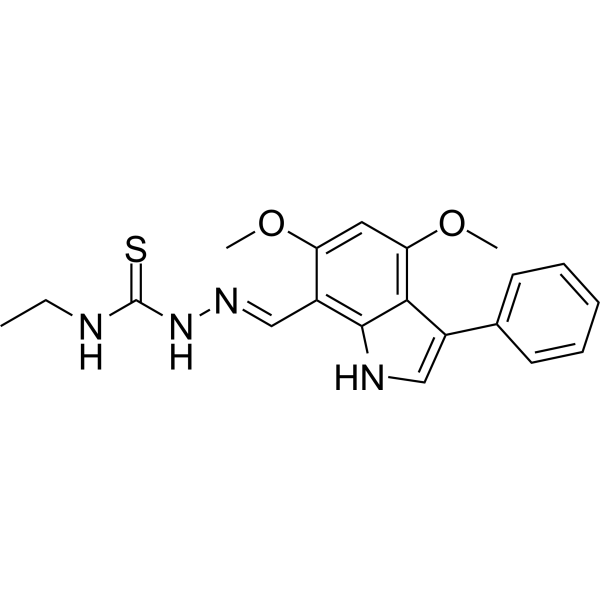 0 ImagesCat. No.: HY-115919CAS No.: 2919335-82-1AChE-IN-8 (Compound 19) is a potent inhibitor of AChE with an IC50 of 1.95 μM. AChE-IN-8 has the potential for the research of Alzheimer's disease.
-
CUR-IPA
 0 ImagesCat. No.: HY-172219CUR-IPA is a cholinesterase inhibitor, with IC50 of 5.99, 59.30, and 60.66 μM for eAChE (electric eel), hAChE (human), and hBChE (human), respectively. CUR-IPA can scavenge free radicals and has antioxidant activity. CUR-IPA can be used in the research of cognitive dysfunction.
-
Monarsen sodium
 0 ImagesCat. No.: HY-148412ASynonyms: EN101 sodium; ODN 7040 sodium; BL 7040 sodiumMonarsen sodium is a synthetic 20-base antisense oligodeoxynucleotide directed against the human AChE gene. Monarsen sodium is used in the study of Autoimmune myasthenia gravis (MG), a neuromuscular disorder caused by autoantibodies directed against the acetylcholine receptor (AChR).




