



AR-V7
AR-V7 belongs to the nuclear hormone receptor family and is a significant biomarker for prostate cancer. Containing a nuclear receptor DNA-binding domain, AR-V7 is a splice variant of the androgen receptor that lacks the C-terminal androgen-binding site. Its transcriptional activity is regulated by the binding of co-activators and co-repressors. As a ligand-activated transcription factor, it regulates eukaryotic gene expression and influences cell proliferation and differentiation in target tissues.
-
AR-V7 Related Products (13)
Related Products (13)

- 1
-
ARV-771
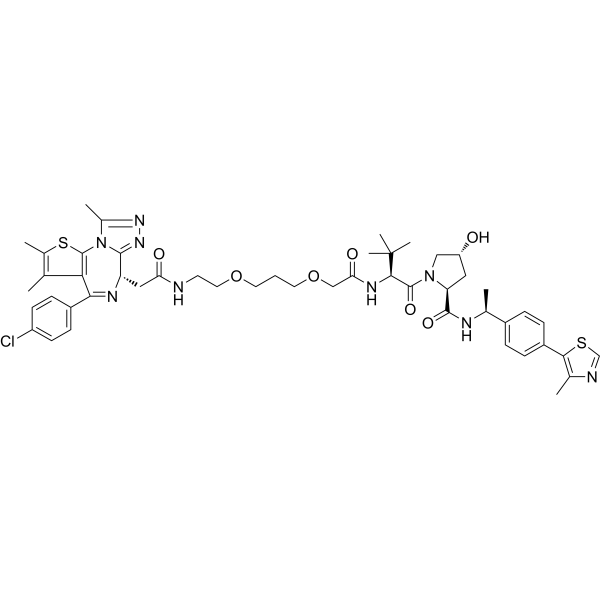 0 ImagesARV-771 is a BET PROTAC degrader, with Kd values of 34, 4.7, 8.3, 7.6, 9.6 and 7.6 nM against BRD2 (1), BRD2 (2), BRD3 (1), BRD3 (2), BRD4 (1) and BRD4 (2) , respectively. ARV-771 inhibits the transcription of AR/AR-v7 and its downstream target genes. By degrading BRD4 protein, ARV-771 enhances the sensitivity of prostate cancer cells to ferroptosis, suppresses cancer cell viability, and induces apoptosis. ARV-771 downregulates the levels of BRD4, c-MYC and AR-V7 in tumor tissues and inhibits tumor tissue growth. ARV-771 can be used in prostate cancer-related research.
-
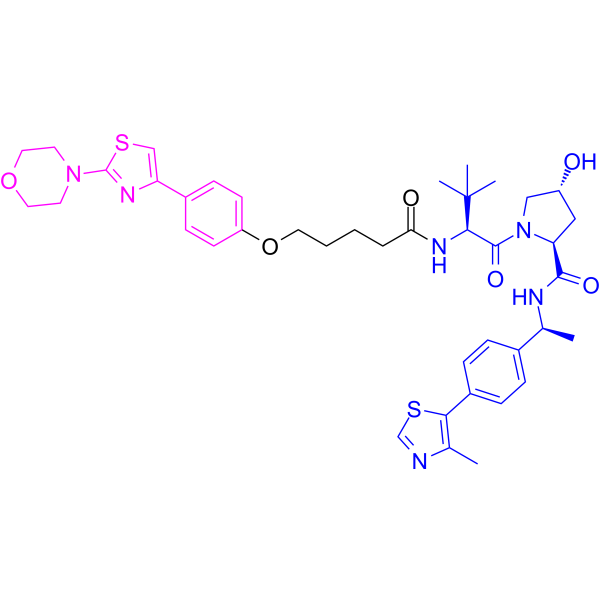
MTX-23
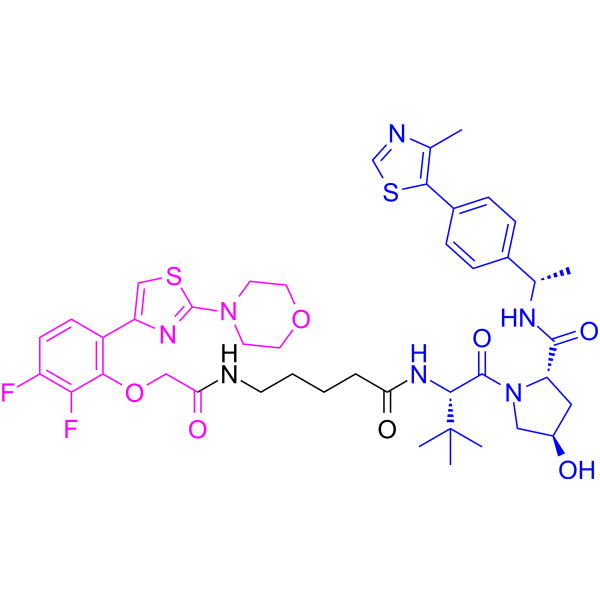 0 ImagesSynonyms: PROTAC AR-V7 degrader-2MTX-23 is a PROTAC degrader targeting androgen receptor splice variant 7 (AR-V7) and full-length androgen receptor (AR-FL), with DC50 values of 0.37 μM and 2 μM, respectively. MTX-23 binds to the DNA-binding domains of AR-V7 and AR-FL, recruits the VHL E3 ubiquitin ligase (E3 ubiquitin ligase) and induces their degradation. MTX-23 reduces the proliferation of prostate cancer cells, promotes their apoptosis (apoptosis), and also inhibits tumor growth in mouse models. MTX-23 can be used for the research of prostate cancer.
-
VPC-14228
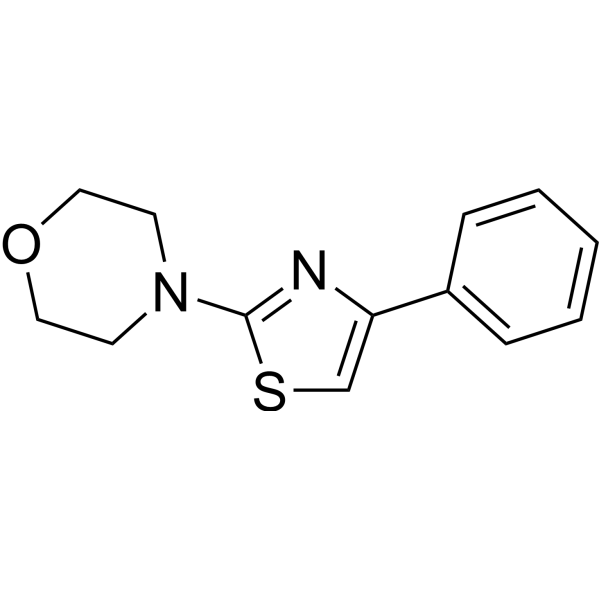 0 ImagesVPC-14228 is an inhibitor that selectively targets androgen receptor DNA binding domain (AR-DBD). VPC-14228 inhibits the interaction between AR and DNA, thereby blocking AR-mediated transcriptional activation. VPC-14228 does not rely on nuclear localization inhibition, but rather inhibits the activity of full-length AR and splice variant AR-V7 by interfering with AR binding to chromatin. And VPC-14228 has high selectivity for other nuclear receptors such as ER and PR. VPC-14228 can be used in the study of prostate cancer
[2].
-
ZNU-IMB-Z15
 0 ImagesZNU-IMB-Z15 is a bifunctional, selective androgen receptor (AR) antagonist and degrader. ZNU-IMB-Z15 directly binds to the ligand-binding domain (LBD) and transactivation function 1 (AF1) of AR, with an IC50 of 63.3 nM for competitive binding to AR LBD and a KD of 0.93 μM for AR AF1. ZNU-IMB-Z15 inhibits AR transcriptional activity and promotes the degradation of AR and ARV7 via the ubiquitin-proteasome pathway. ZNU-IMB-Z15 can be used for the research of castration-resistant prostate cancer.
-
XYD113
 0 ImagesCat. No.: HY-184896CAS No.: 3032314-99-8XYD113 is an orally active, selective GSPT1 Molecular glue degrader. XYD113 promotes the formation of the CRBN-GSPT1 ternary complex and mediates GSPT1 degradation in a CRBN-dependent manner via the ubiquitin-proteasome system. XYD113 downregulates genes associated with the occurrence and progression of prostate cancer (c-Myc, AR, AR-V7, KLK3, KLK2, TMPRSS2). XYD113 exhibits anticancer activity against prostate cancer. XYD113 can be used in the research of prostate cancer.
-
PROTAC AR Degrader-11
 0 ImagesCat. No.: HY-177694CAS No.: 2798907-41-0PROTAC AR Degrader-11 is a PROTAC degrader that targets the androgen receptor (AR) and its splice variant AR-V7. PROTAC AR Degrader-11 simultaneously degrades full-length AR and AR-V7 via the ubiquitin-proteasome system by recruiting the CRL4-CRBN E3 ligase (FIG.2A). PROTAC AR Degrader-11 reduces the viability of cancer cells. PROTAC AR Degrader-11 can be used in studies related to castration-resistant prostate cancer.
-
YXG-158
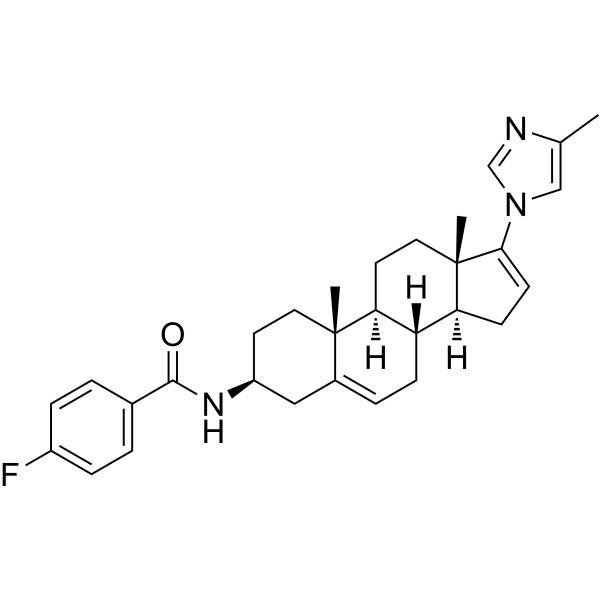 0 ImagesCat. No.: HY-155666CAS No.: 2952994-34-0YXG‑158 is an orally active, anticancer bifunctional steroid analog with both androgen receptor (AR) degradation activity (DC50 = 1.28 μM) and CYP17A1 inhibitory activity (IC50 = 100 nM). YXG-158 reduces AR protein and mRNA expression via proteasome-dependent degradation, degrades AR-V7, and inhibits CYP17A1 enzymatic activity to block androgen biosynthesis. YXG-158 inhibits the activities of ERα and ERβ, as well as cancer cell proliferation. YXG-158 decreases the weight of androgen-sensitive organs in castrated rats treated with testosterone propionate, downregulates AR protein, reduces PSA levels, and suppresses tumor growth in Enzalutamide (HY-70002)-sensitive and -resistant xenograft models. YXG-158 can be used in prostate cancer-related research.
-
AR antagonist 4
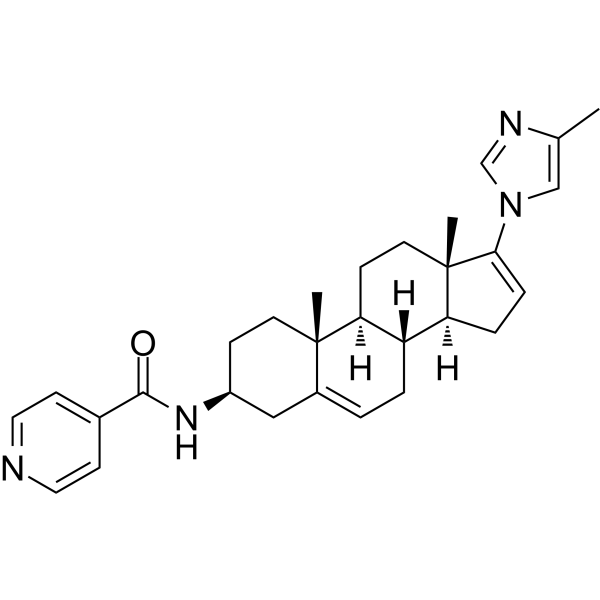 0 ImagesCat. No.: HY-151266CAS No.: 2883447-45-6AR antagonist 4 is an orally active androgen receptor (AR) antagonist with a DC50 of 2.84 μM in LNCaP human prostate cancer cells. AR antagonist 4 inhibits dihydrotestosterone-induced AR transcriptional activity, promotes proteasome-dependent AR degradation, and dose-dependently promotes AR-V7 degradation. AR antagonist 4 can be used for the research of metastatic castration-resistant prostate cancer.
-
TD-802
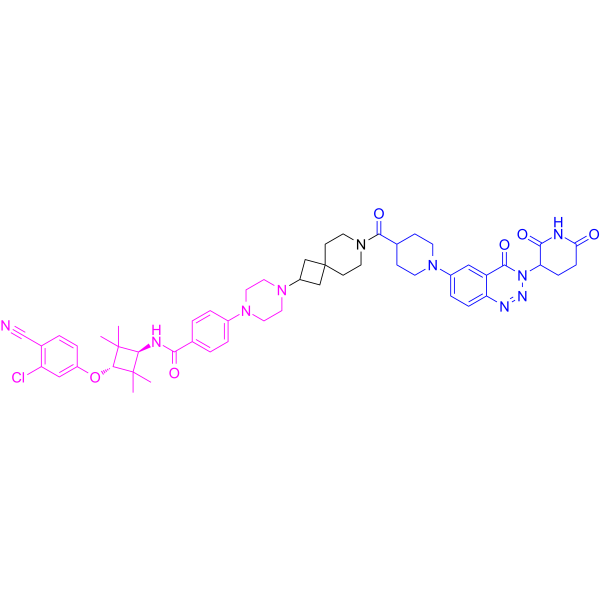 0 ImagesCat. No.: HY-146397CAS No.: 2760703-21-5TD-802 is a CRBN-recruiting PROTAC androgen receptor (AR) degrader with liver microsomal stability and in vivo pharmacokinetic properties. TD-802 exhibits weak degrading activity against the AR-V7 splice variant, and its degradation process depends on the ubiquitin-proteasome system and Cullin-Ring ubiquitin ligase. TD-802 inhibits the proliferation of AR-dependent prostate cancer cells and the growth of AR-positive prostate cancer tumors in in vivo xenograft models.
-
LYA914
 0 ImagesCat. No.: HY-175455LYA914 is an orally effective AR/AR-V7 PROTAC degrader. LYA914 recruits CRBN to target and bind the conserved DBD domain of AR and AR-V7, inducing their ubiquitination and subsequent degradation, thereby completely blocking AR signaling and transcriptional activity. LYA914 can be used for the research of castration-resistant prostate cancer.
-
EST1140
 0 ImagesCat. No.: HY-187458CAS No.: 3105892-11-0EST1140 is a covalent molecular glue degrader targeting RNF126 for AR/AR-V7, with DC50 values of 33 μM and 30 μM, respectively, in 22Rv1 cells. EST1140 covalently binds to the E3 ligase RNF126 to achieve targeted protein degradation. EST1140 can be used in the research of androgen-independent prostate cancer.
-
ARV-771 (Standard)
 0 ImagesCat. No.: HY-100972RCAS No.: 1949837-12-0ARV-771 (Standard) is the analytical standard of ARV-771 (HY-100972). This product is intended for research and analytical applications. ARV-771 is a BET PROTAC degrader, with Kd values of 34, 4.7, 8.3, 7.6, 9.6 and 7.6 nM against BRD2 (1), BRD2 (2), BRD3 (1), BRD3 (2), BRD4 (1) and BRD4 (2) , respectively. ARV-771 inhibits the transcription of AR/AR-v7 and its downstream target genes. By degrading BRD4 protein, ARV-771 enhances the sensitivity of prostate cancer cells to ferroptosis, suppresses cancer cell viability, and induces apoptosis. ARV-771 downregulates the levels of BRD4, c-MYC and AR-V7 in tumor tissues and inhibits tumor tissue growth. ARV-771 can be used in prostate cancer-related research.
- 1



