



Apoptosis
Apoptosis
Apoptosis is a distinctive form of cell death exhibiting specific morphological and biochemical characteristics, including cell membrane blebbing, chromatin condensation, genomic DNA fragmentation, and exposure of specific phagocytosis signaling molecules on the cell surface. Cells undergoing apoptosis differ from those dying through necrosis. Necrotic cells are usually recognized by the immune system as a danger signal and, thus, resulting in inflammation; in contrast, apoptotic death is quiet and orderly.
There are two major pathways of apoptotic cell death induction: The intrinsic pathway, also called the Bcl-2-regulated or mitochondrial pathway, is activated by various developmental cues or cytotoxic insults, such as viral infection, DNA damage and growth-factor deprivation, and is strictly controlled by the BCL-2 family of proteins. The extrinsic or death-receptor pathway is triggered by ligation of death receptors (members of the tumor necrosis factor (TNF) receptor family, such as Fas or TNF receptor-1 (TNFR1)) that contain an intracellular death domain, which can recruit and activate caspase-8 through the adaptor protein Fas-associated death domain (FADD; also known as MORT1) at the cell surface. This recruitment causes subsequent activation of downstream (effector) caspases, such as caspase-3, -6 or -7, without any involvement of the BCL-2 family.
Studies suggest that alterations in cell survival contribute to the pathogenesis of a number of human diseases, including cancer, viral infections, autoimmune diseases, neurodegenerative disorders, and AIDS (acquired immunodeficiency syndrome). Treatments designed to specifically alter the apoptotic threshold may have the potential to change the natural progression of some of these diseases.
All Product Categories
-
Apoptosis Inhibitors
(900)
View all products
-
Apoptosis Agonists
(7)
View all products
-
Apoptosis Antagonists
(9)
View all products
-
Apoptosis Activators
(362)
View all products
-
Apoptosis Modulators
(60)
View all products
-
Apoptosis Inducers
(7878)
View all products
-
Apoptosis Degrader
(1)
View all products
-
Apoptosis Controls
(33)
View all products
-
Apoptosis Related Products (9811)
Related Products (9811)

-
Antibodies (120)
-
Tauro-β-muricholic acid-d4-1 sodium
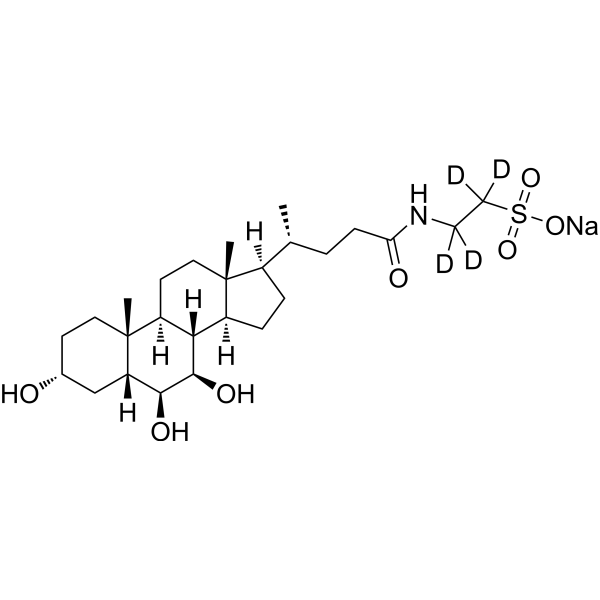 0 ImagesCat. No.: HY-N9933SSynonyms: T-βMCA-d4-1 sodiumTauro-β-muricholic acid-d4-1 (T-βMCA-d4-1) sodium is the deuterium labeled Tauro-β-muricholic acid (HY-N9933).
-
BiP inducer X (Standard)
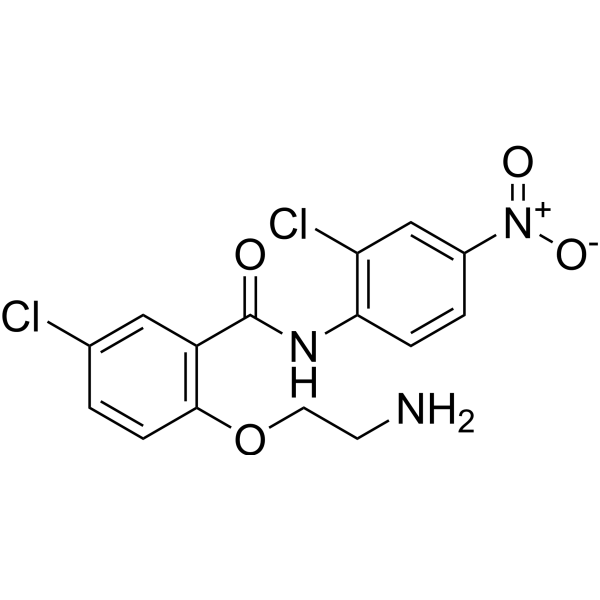
 0 ImagesCat. No.: HY-110188RCAS No.: 101714-41-4BiP inducer X (Standard) is the analytical standard of BiP inducer X (HY-110188). This product is intended for research and analytical applications. BiP inducer X, a selective inducer of immunoglobulin heavy chain binding protein (BiP)/GRP78, is an effective ER (endoplasmic reticulum) stress inhibitor. BiP inducer X preferentially induces BiP with slight inductions of GRP94, calreticulin, and C/EBP homologous protein. BiP inducer X protects neurons from ER stress.
-
Etomoxir sodium salt (Standard)
 0 ImagesCat. No.: HY-50202ARCAS No.: 828934-41-4Synonyms: (R)-(+)-Etomoxir sodium salt (Standard)Etomoxir sodium salt (Standard) is the analytical standard of Etomoxir sodium salt (HY-50202A). This product is intended for research and analytical applications. Etomoxir((R)-(+)-Etomoxir) sodium salt is an irreversible inhibitor of carnitine palmitoyltransferase 1a (CPT-1a), inhibits fatty acid oxidation (FAO) through CPT-1a and inhibits palmitate β-oxidation in human, rat and guinea pig.
-
Alisol B acetate
 0 ImagesCat. No.: HY-126365CAS No.: 19865-76-0Alisol B acetate is a Triterpenoids product that can be isolated from the tubers of Alisma plantago-aquatica Linn..
-
Guanosine triphosphate tritris solution (100 mM)
 0 ImagesSynonyms: GTP tritris solution (100 mM)Guanosine triphosphate (GTP) tritris solution (100 mM) is a critical nucleotide and regulator of cellular metabolism. Guanosine triphosphate tritris solution (100 mM) promotes ribosomal DNA localization, pre-rRNA transcription and ribosome biogenesis by binding to RNA polymerase I and GPN proteins (GPN1/3). Guanosine triphosphate tritris solution (100 mM) links MYC-dependent ribosome biogenesis to nucleotide sufficiency, acts as a metabolic gatekeeper supporting protein synthesis, DNA/RNA synthesis and cellular signal transduction, while also participating in the physiological activities of pancreatic β-cells and serving as an oxidative substrate for reactive oxygen species. In small cell lung cancer with high MYC expression, Guanosine triphosphate tritris solution (100 mM) accumulates through the IMPDH-driven synthetic pathway, thereby affecting apoptosis and mitotic processes. Guanosine triphosphate tritris solution (100 mM) is used in the research of small cell lung cancer, hepatoblastoma and cellular metabolism.
-
Daunorubicin-13C,d3
 0 ImagesCat. No.: HY-W654130Synonyms: Daunomycin-13C,d3; RP 13057-13C,d3; Rubidomycin-13C,d3Daunorubicin-13C,d3 is 13C and deuterium labeled Daunorubicin. Daunorubicin (Daunomycin) is a topoisomerase II inhibitor with potent anti-tumor activity. Daunorubicin inhibits DNA and RNA synthesis. Daunorubicin is a cytotoxin that inhibits cancer cell viability and induces apoptosis and necrosis. Daunorubicin is also an anthracycline antibiotic. Daunorubicin can be used in the research of infection and variety of cancers, including leukemia, non-Hodgkin lymphomas, Ewing's sarcoma, Wilms' tumor.
-
BHA536
 0 ImagesCat. No.: HY-164462CAS No.: 919992-85-1BHA536 is an orally active selective inhibitor for PKCα/β and NF-kB signaling pathway. BHA536 inhibits the proliferation of CD79-mutated ABC DLBCL cell, arrests cell cycle at G1 phase, and induces apoptosis in TMD8 cell. BHA536 exhibits antitumor efficacy in mice.
-
Glyphosate isopropylammonium
 0 ImagesCat. No.: HY-B0863BCAS No.: 38641-94-0Glyphosate isopropylammonium, a non-selective systemic biocide with broad-spectrum activity, is an herbicidal derivative of the amino acid glycine. Glyphosate isopropylammonium inhibits the enzymatic activity of the 5-endopyruvylshikimate 3-phosphate synthase (EPSPS) in the shikimic acid pathway, preventing the synthesis of the aromatic amino acids tyrosine, phenylalanine, and tryptophan. Glyphosate isopropylammonium induces oxidative stress, neuroinflammation, and mitochondrial dysfunction, processes that lead to neuronal death by autophagia, necrosis, or apoptosis, as well as the appearance of behavioral and motor disorders.
-
Dihydromethysticin (Standard)
 0 ImagesCat. No.: HY-N0921RCAS No.: 19902-91-1Synonyms: (+)-Dihydromethysticin (Standard)Dihydromethysticin (Standard) is the analytical standard of Dihydromethysticin (HY-N0921). This product is intended for research and analytical applications. Dihydromethysticin is an orally active natural active ingredient. Dihydromethysticin can be extracted from Piper methysticum. Dihydromethysticin inhibits carboxylesterase 1 (Ki = 68.2 μM) and CYP2A5. Dihydromethysticin upregulates NLRC3 and induces Apoptosis. Dihydromethysticin exhibits anticancer activity against colorectal cancer and lung adenoma.
-
Aminoguanidine-13C,15N4 hemisulfate
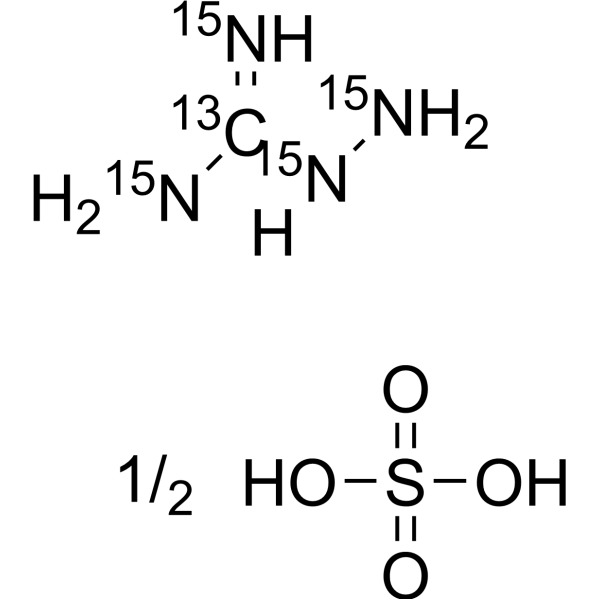 0 ImagesCat. No.: HY-W020772AS1Purity: 99.0%Synonyms: Pimagedine-13C,15N4 hemisulfate; GER-11-13C,15N4 hemisulfate; Aminoguanidinium-13C,15N4 hemisulfateAminoguanidine-13C,15N4 (Pimagedine-13C,15N4) hemisulfate is the 13C,15N4-labeled Aminoguanidine hemisulfate (HY-W020772). Aminoguanidine hemisulfate is an inhibitor of diamine oxidase (DAO) and nitric oxide synthase (NOS). Aminoguanidine hemisulfate can reduce the formation of advanced glycation end products (AGEs). Aminoguanidine hemisulfate has a dose-dependent inhibitory effect on Doxorubicin (HY-15142)-induced cell apoptosis. Aminoguanidine hemisulfate has antioxidant properties. Aminoguanidine hemisulfate can be used in the research of diabetic nephropathy.
-
Tigogenin (Standard)
 0 ImagesTigogenin (Standard) is a steroidal sapogenins. Tigogenin (Standard) can inhibit adipocytic differentiation and induce osteoblastic differentiation in mouse bone marrow stromal cells. Tigogenin (Standard) can inhibit cells proliferation and induce apoptosis. Tigogenin (Standard) can be used for the researches of cancer, inflammation, immunology, metabolic and cardiovascular disease, such as mammary gland carcinoma, rheumatoid arthritis, osteoporosis and atherosclerosis.
-
TL02-59-d5
 0 ImagesCat. No.: HY-112852SPurity: 99.00%TL02-59-d5 is the deuterium labeled TL02-59 (HY-112852). TL02-59 is an orally active, selective Src-family kinase Fgr inhibitor with an ICC50 of 0.03 nM. TL02-59 inhibits Lyn and Hck with ICC50s of 0.1 nM and 160 nM, respectively. TL02-59 potently suppresses acute myelogenous leukemia (AML) cell growth.
-
Garcinol (Standard)
 0 ImagesCat. No.: HY-107569RCAS No.: 78824-30-3Garcinol (Standard) is the analytical standard of Garcinol. This product is intended for research and analytical applications. Garcinol, a polyisoprenylated benzophenone harvested from Garcinia indica, exerts anti-cholinesterase properties towards acetyl cholinesterase (AChE) and butyrylcholinesterase (BChE) with IC50s of 0.66 μM and 7.39 μM, respectively. Garcinol also inhibits histone acetyltransferases (HATs, IC50= 7 μM) and p300/CPB-associated factor (PCAF, IC50 = 5 μM). Garcinol has anti-inflammatory and anti-cancer activity.
-
Glafenine hydrochloride (Standard)
 0 ImagesSynonyms: Glafenin hydrochloride (Standard)Glafenine (hydrochloride) (Standard) is the analytical standard of Glafenine (hydrochloride). This product is intended for research and analytical applications. Glafenine (Glafenin) hydrochloride is a non-selective, non-steroidal anti-inflammatory drug-based COX-1/COX-2 inhibitor. Glafenine hydrochloride exerts anti-inflammatory, anti-proliferative and anti-cell migration effects by inhibiting the arachidonic acid metabolic pathway and reducing prostaglandin synthesis. Glafenine hydrochloride can induce cell cycle arrest in vascular smooth muscle cells and endothelial cells and reduce the synthesis of the extracellular matrix protein Tenascin. Glafenine hydrochloride can be used in the research of inflammatory-related diseases, vascular restenosis and cystic fibrosis (CF).
-
PHA-665752 (Standard)
 0 ImagesCat. No.: HY-11107RCAS No.: 477575-56-7PHA-665752 (Standard) is the analytical standard of PHA-665752 (HY-11107). This product is intended for research and analytical applications. PHA-665752 is a selective, ATP-competitive, and active-site inhibitor of the catalytic activity of c-Met Kinase (Ki=4 nM; IC50=9 nM). PHA-665752 exhibits >50-fold selectivity for c-Met compared with a panel of diverse tyrosine and serine-threonine Kinases. PHA-665752 induces apoptosis and cell cycle arrest, and exhibits cytoreductive antitumor activity.
-
WK88-1
 0 ImagesCat. No.: HY-164548CAS No.: 958888-32-9WK88-1 is an apoptosis inducer and Hsp90 client protein inhibitor with antiproliferative and immunomodulatory activities. WK88-1 inhibits signaling pathways such as PI3K/Akt and NF-κB, and induces mitochondrial dysfunction and cell cycle arrest. WK88-1 effectively suppresses cancer cell migration and invasion, and reverses various EGFR mutations and resistance to Gefitinib (HY-50895). WK88-1 also regulates the differentiation of monocytes and dendritic cells, blocks the expression of multiple chemokines, inhibits immune cell migration and M1 marker transcription, and restores impaired endocytic activity. WK88-1 has been used in studies of breast cancer, non-small cell lung cancer with various EGFR mutations or Met amplification, and atherosclerosis and other related diseases.
-
(-)-Alkannin (Standard)
 0 Images(-)-Alkannin, found in Alkanna tinctoria, is used as a food coloring. (-)-Alkannin shows anticancer activity, arrests cell cycle, and induces apoptosis. (-)-Alkannin improves hepatic inflammation in a Rho-kinase pathway.
-
MKC-1 (Standard)
 0 ImagesCat. No.: HY-13691RCAS No.: 125313-92-0Synonyms: Ro-31-7453 (Standard)MKC-1 (Standard) is the analytical standard of MKC-1. This product is intended for research and analytical applications. MKC-1 (Ro-31-7453) is an orally active and potent cell cycle inhibitor with broad antitumor activity. MKC-1 inhibits the Akt/mTOR pathway. MKC-1 arrests cellular mitosis and induces cell apoptosis by binding to a number of different cellular proteins including tubulin and members of the importin β family.
-
Isovalerylcarnitine chloride (Standard)
 0 ImagesIsovalerylcarnitine chloride (Standard) is the analytical standard of Isovalerylcarnitine chloride (HY-145542). This product is intended for research and analytical applications. Isovalerylcarnitine chloride is a metabolite of leucine. Isovalerylcarnitine can specifically activate calpain in human neutrophils. Isovalerylcarnitine chloride inhibits tumor cell proliferation and induces apoptosis. Elevated circulating levels of Isovalerylcarnitine chloride are negatively correlated with reduced lung cancer risk.




