



Apoptosis Inducer
-
Ferroptosis inducer-16
 0 ImagesCat. No.: HY-182052CAS No.: 3063042-21-4Synonyms: anti-NSCLC agent-2
Ferroptosis inducer-16 (anti-NSCLC agent-2) is a nitric oxide (NO) donor and a ferroptosis inducer. Ferroptosis inducer-16 inhibits DNA synthesis and colony formation. Ferroptosis inducer-16 disrupts lysosomal integrity by releasing NO, triggers iron overload and oxidative stress, downregulates the SLC7A11-GPX4 axis, depletes GSH, and accumulates lipid peroxides. Ferroptosis inducer-16 inhibits tumor growth in an OVCAR8/ADR xenograft mouse model without obvious toxicity, and can be used in the study of non-small cell lung cancer and drug-resistant ovarian cancer.
-
Topo I-IN-1
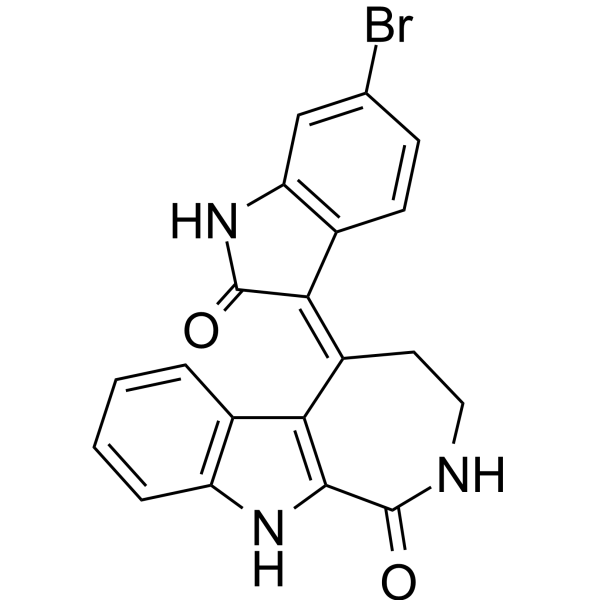 0 ImagesCat. No.: HY-145859CAS No.: 2763655-68-9
-
Goserelin-d7
 0 ImagesCat. No.: HY-13673S1Synonyms: ICI 118630-d7
Goserelin-d7 (ICI 118630-d7) is deuterium labeled Goserelin. Goserelin (ICI 118630), a decapeptide analogue of gonadotropin-releasing hormone (GnRH/LHRH), functions as a GnRH agonist. Goserelin can be used for the research of breast cancer, epithelial ovarian cancer and prostate cancer.
-
RUNX-IN-2
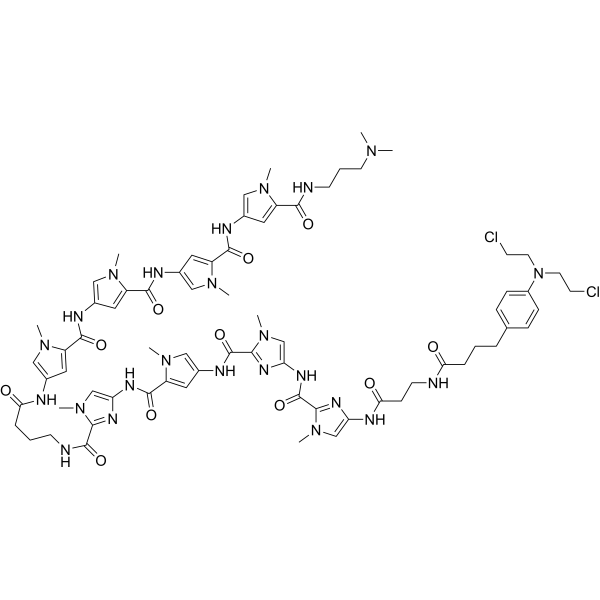 0 ImagesCat. No.: HY-155991CAS No.: 2893777-88-1
RUNX-IN-2 (Compound Conjugate 3) covalently binds to the RUNX-binding sequences, and inhibits the binding of RUNX proteins to their target sites. RUNX-IN-2 induces the p53-dependent apoptosis and inhibits cancer cell growth. RUNX-IN-2 inhibits tumor growth in PANC-1 xenograft mice. RUNX-IN-2 has high alkylation efficiency and specificity.

-
Caspase-3/7 activator 4
 0 ImagesCat. No.: HY-181163
Caspase-3/7 activator 4 is a caspase-3 activator and caspase-7 activator. Caspase-3/7 activator 4 inhibits key enzymes in estrogen biosynthesis, including aromatase (IC50 = 38.3 nM) and steroid sulfatase (IC50 = 12.7 µM), and selectively suppresses COX-2 (IC50 = 5.38 µM). Caspase-3/7 activator 4 shows strong antioxidant activity (DPPH: IC50 = 16.26 µM). Caspase-3/7 activator 4 inhibits estrogen synthesis, suppresses estrogen availability, reduces prostaglandin production, increases caspase-3/7 expression, induces G0/G1 cell cycle arrest, induces apoptotic cell death, reduces circulating TNF-α and VEGFR-II levels, restores hepatorenal function markers and histoarchitecture, restores antioxidant defense enzyme activity, reduces lipid peroxidation, exerts antiproliferative activity against breast cancer cells, exerts antitumor activity in the Ehrlich ascites carcinoma models. Caspase-3/7 activator 4 can be used for the research of breast cancer, ehrlich ascites carcinoma.
-
Kevetrin
 0 ImagesCat. No.: HY-16270CAS No.: 500863-50-3Synonyms: 3-Cyanopropyl carbamimidothioate; 4-Isothioureidobutyronitrile
Kevetrin (3-Cyanopropyl carbamimidothioate; 4-Isothioureidobutyronitrile) is an apoptosis inducer that exhibits p53-dependent and p53-independent antitumor activity. In TP53 wild-type models, Kevetrin activates and stabilizes the p53 protein by altering the processing of MDM2, thereby inducing cell cycle arrest and apoptosis. Kevetrin shows higher sensitivity in mutant models. Kevetrin is applicable for the research of various cancers including acute myeloid leukemia and breast cancer.
-
JH-IX-179
 0 ImagesCat. No.: HY-125008CAS No.: 1939104-08-1
JH-IX-179 is an FLT3 inhibitor (IC50 = 4 nM (FLT3-ITD), 10 nM (FLT3-D835Y)). JH-IX-179 inhibits G1 phase arrest and induces apoptosis in FLT3-ITD-expressing cells. JH-IX-179 can be used in acute myeloid leukemia (AML) research.
-
CDK9-IN-40
 0 ImagesCat. No.: HY-176736
CDK9-IN-40 is a potent and orally active CDK9 inhibitor with an IC50 of 5.5 nM. CDK9-IN-40 shows high selectivity for CDK9 versus CDK1, CDK2, CDK4, and CDK6, respectively. CDK9-IN-40 can arrest cell cycle, induce cell apoptosis and inhibit tumor growth. CDK9-IN-40 exhibits strong anti-cancer activity.
-
eEF2K degrader-2
 0 ImagesCat. No.: HY-177720CAS No.: 1044797-96-7
eEF2K degrader-2 (Compound C1) is a molecular glucose degrading agent that targets the eEF2K protein. eEF2K degrader-2 can significantly inhibit the proliferation, migration, invasion and induce apoptosis of triple negative breast cancer (TNBC) cells. eEF2K degrader-2 has no obvious organ toxicity or pathological damage. eEF2K degrader-2 can be used in the research of cancer such as breast cancer.
-
Etoposide-13C,d3
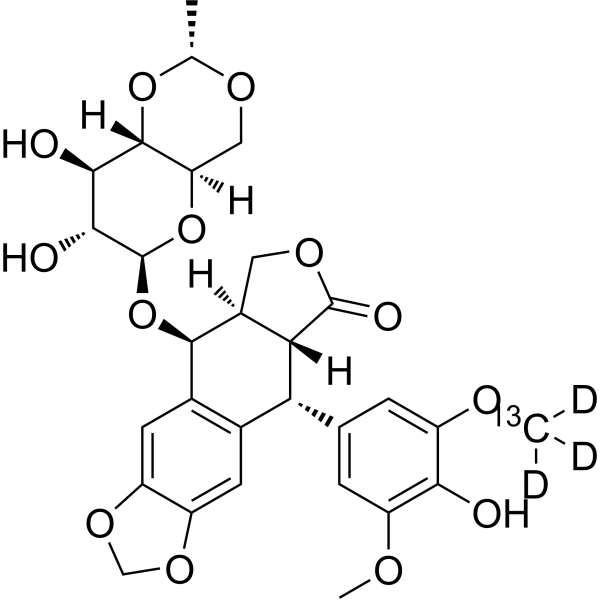 0 ImagesCat. No.: HY-13629S1Synonyms: VP-16-13C,d3; VP-16-213-13C,d3
Etoposide-13C,d3 is the 13C- and deuterium labeled Etoposide. Etoposide (VP-16; VP-16-213) is an anti-cancer chemotherapy agent. Etoposide inhibits topoisomerase II, thus stopping DNA replication. Etoposide induces cell cycle arrest, apoptosis and autophagy.
-
YZZ-24
 0 ImagesCat. No.: HY-184419
YZZ-24 is a highly potent and selective STAT3 inhibitor featuring a Ki of 0.26 μM. YZZ-24 directly binds to STAT3 (STAT3 SH2 domain) and effectively inhibits STAT3 phosphorylation at tyrosine 705 (p-STAT3Tyr705) and STAT3 phosphorylation at serine 727 (p-STAT3Ser727), thereby blocking downstream oncogenic signaling and inducing apoptosis, while having minimal impact on upstream kinases. YZZ-24 can be used in colorectal cancer research.
-
HJC0416
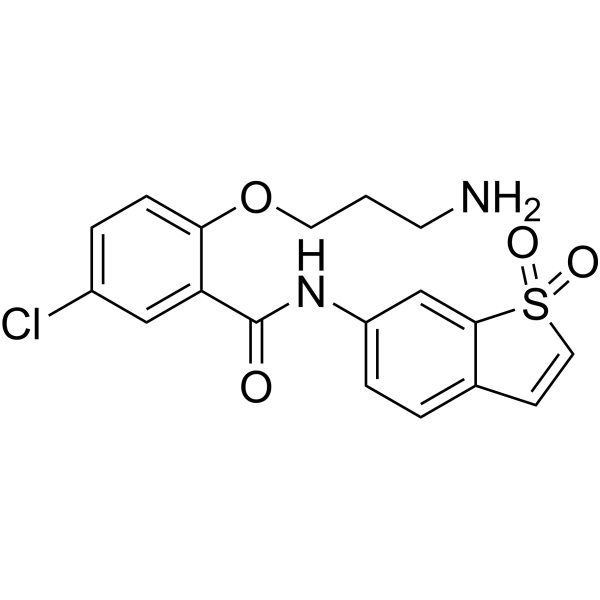 0 ImagesCat. No.: HY-12352CAS No.: 1617518-22-5
-
PI3K/mTOR-IN-19
 0 ImagesCat. No.: HY-179155
PI3K/mTOR-IN-19 is an orally active, potent, selective PI3K (IC50 = 4.23 nM) and mTOR (IC50 = 2.3 nM) inhibitor. PI3K/mTOR-IN-19 significantly inhibits Eca109 cell viability and induces apoptosis. PI3K/mTOR-IN-19 causes G0/G1 cell cycle arrest, decreased mitochondrial membrane potential, and demonstrates marked telomerase inhibitory activity. PI3K/mTOR-IN-19 modulates the expression of key apoptotic regulators (Bcl-2, Bax, and p53) and downregulates the PI3K/Akt/mTOR signaling pathway. PI3K/mTOR-IN-19 can be used for the study of esophageal cancer.
-
Methyl 3,4-dihydroxybenzoate (Standard)
 0 ImagesSynonyms: Protocatechuic acid methyl ester (Standard); Methyl protocatechuate (Standard)
Methyl 3,4-dihydroxybenzoate (Standard) is the analytical standard of Methyl 3,4-dihydroxybenzoate. This product is intended for research and analytical applications. Methyl 3,4-dihydroxybenzoate (Protocatechuic acid methyl ester; Methyl protocatechuate) is a major metabolite of antioxidant polyphenols found in green tea. Antioxidant and anti-inflammatory effect.

-
PROTAC BCR-ABL Degrader-2
 0 ImagesCat. No.: HY-180967CAS No.: 2703834-25-5
PROTAC BCR-ABL Degrader-2 is a selective Bcr-AblT315 PROTAC degrader with a DC50 of 108.7 nM in Ba/F3 Bcr-AblT315I cells. PROTAC BCR-ABL Degrader-2 exhibits the most potent degradation efficacy with DR of 69.89% and 94.23% at 100 and 300 nM, respectively. PROTAC BCR-ABL Degrader-2 demonstrates high plasma exposure, and induces significant tumor regression and induces tumor cell apoptosis with a good safety profile in vivo. PROTAC BCR-ABL Degrader-2 can be used for chronic myeloid leukemia (CML) research.
-
Sinigrin (Standard)
 0 ImagesSynonyms: Allyl-glucosinolate (Standard); 2-Propenyl-glucosinolate (Standard)
Sinigrin (Standard) (Allyl-glucosinolate (Standard)) is the analytical standard of Sinigrin (HY-N0404). This product is intended for research and analytical applications. Sinigrin (Allyl-glucosinolate) is an orally active glucosinolate found in cruciferous plants. Sinigrin possesses multiple activities such as anti-cancer, antibacterial, antifungal, anti-inflammatory, antioxidant, and inhibition of fat synthesis. Sinigrin can be used in the research of tumors, inflammatory, and metabolic diseases.



