



Bacterial
Anything that destroys bacteria or suppresses their growth or their ability to reproduce. Heat, chemicals such as chlorine, and antibiotic drugs all have antibacterial properties. Many antibacterial products for cleaning and handwashing are sold today. Such products do not reduce the risk for symptoms of viral infectious diseases in otherwise healthy persons. This does not preclude the potential contribution of antibacterial products to reducing symptoms of bacterial diseases in the home.
All Product Categories
-
Bacterial Inhibitors
(7553)
View all products
-
Bacterial Agonists
(3)
View all products
-
Bacterial Antagonists
(9)
View all products
-
Bacterial Activators
(25)
View all products
-
Bacterial Modulators
(27)
View all products
-
Bacterial Chemicals
(2)
View all products
-
Bacterial Inducers
(6)
View all products
-
Bacterial Controls
(14)
View all products
-
Bacterial Substrates
(2)
View all products
-
Bacterial Ligand
(1)
View all products
-
Bacterial Related Products (8893)
Related Products (8893)

-
Antibodies (14)
-
Related Compound Screening Libraries (1)
-
GP-2B
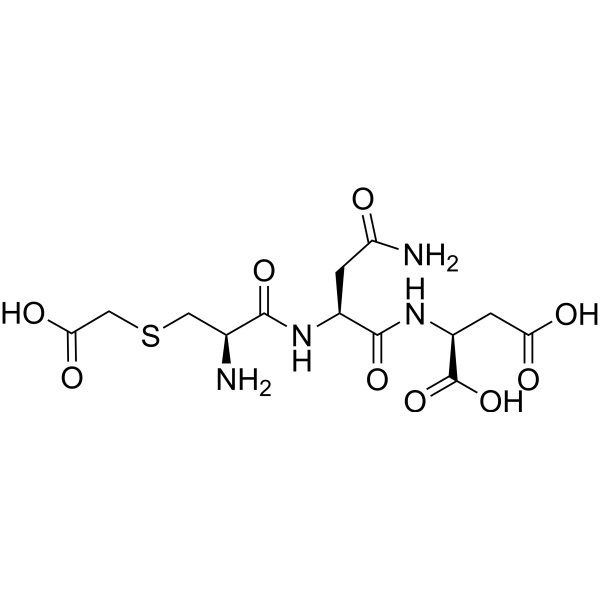 0 ImagesCat. No.: HY-P5695GP-2B is an antimicrobial peptide. GP-2B shows antibacterial activity against Gram-positive strain (MIC: 8-128 μg/mL for S. aureus and Enterococcus faecalis).
-
Glycocinnasperimicin D
 0 ImagesCat. No.: HY-N14652CAS No.: 99260-73-8Glycocinnasperimicin D is a glycoside cinnamyl imide histamine antibiotic. Glycocinnasperimicin D has the activity of anti-Gram positive bacteria and negative bacteria. Glycocinnasperimicin D inhibits leukemia L1210 cell with an IC50 of 2.0 μg/mL.
-
Anticancer agent 36
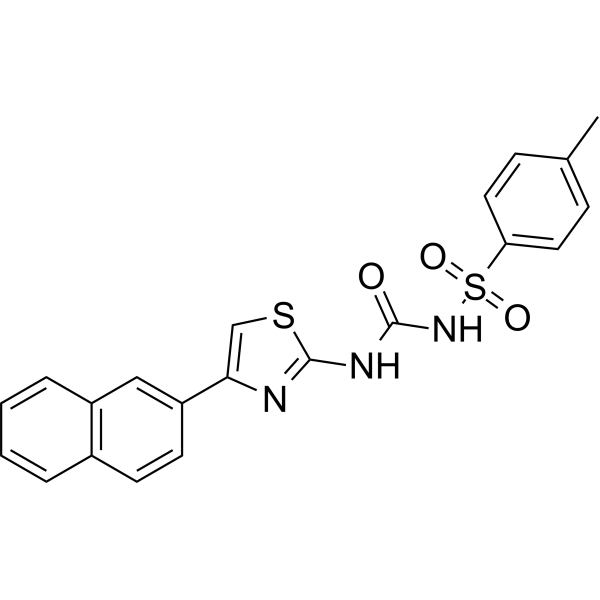 0 ImagesCat. No.: HY-115961CAS No.: 2902563-76-0Anticancer agent 36 (compound 11), a sulfonylurea derivative, is a potent antimicrobial and anticancer agent. Anticancer agent 36 inhibits the microbial growth of B. mycoides, E. coli, and C. albicans with a MIC between 0.156 and 0.039 mg/L. Anticancer agent 36 inhibits A549, PC3 cell growth with IC50s of 19.7 µg/mL, 11.9 µg/mL, respectively.
-
Loracarbef
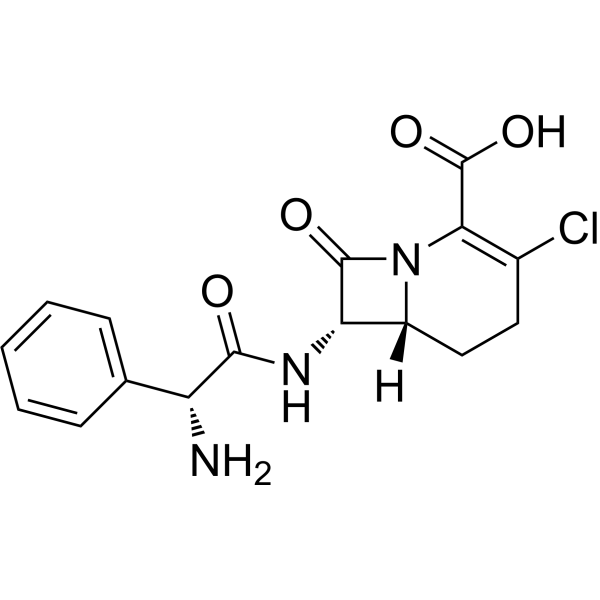 0 ImagesCat. No.: HY-B1682CAS No.: 76470-66-1Loracarbef, a cephalosporin antibiotic, is an orally active second-generation synthetic beta-lactam antibiotic of the carbacephem class.
-
(±)-ε-Viniferin
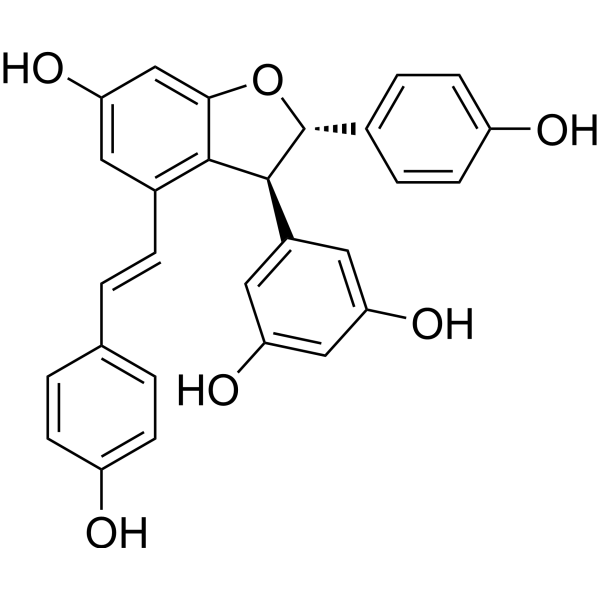 0 ImagesCat. No.: HY-N10755ACAS No.: 253435-07-3(±)-ε-Viniferin is a racemate of ε-Viniferin (HY-N3841). (±)-ε-Viniferin exhibits P450 inhibitory antioxidants, as well as hepato-protective and antimicrobial activities. (±)-ε-Viniferin has antibacterial and antibiofilm activity against Gram-positive bacteria Streptococcus pneumoniae with a MIC of 20 μM.
-
2',5,6',7-Tetraacetoxyflavanone
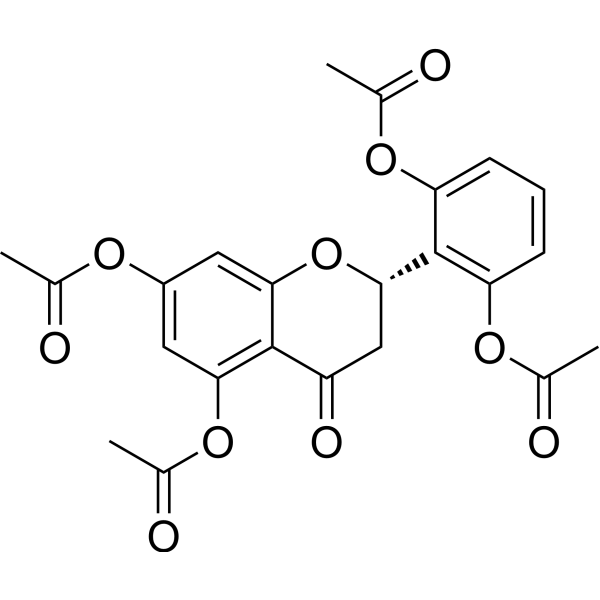 0 ImagesCat. No.: HY-N1671CAS No.: 80604-17-72',5,6',7-Tetraacetoxyflavanone is an extract isolated from Scutellaria baicalensis. 2',5,6',7-Tetraacetoxyflavanone shows significant antibacterial activity against gram-positive bacteria. 2',5,6',7-Tetraacetoxyflavanone can be used to study the treatment of inflammatory diseases .
-
Micronomicin (Standard)
 0 ImagesSynonyms: Gentamicin C2b (Standard); Antibiotic XK-62-2 (Standard); Sagamicin (Standard)Micronomicin (Standard) is the analytical standard of Micronomicin. This product is intended for research and analytical applications. Micronomicin (Gentamicin C2b) is an aminoglycoside antibiotic, with antibacterial and bactericidal activities.
-
ARC7
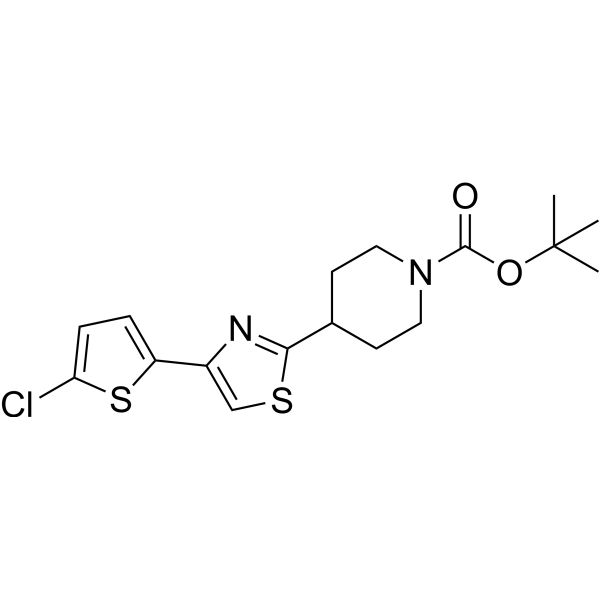 0 ImagesARC7 can act as a probe for secondary metabolism in S. coelicolor. ARC7 is a tool for studying secondary metabolism and the streptomycete life cycle.
-
Temporin B
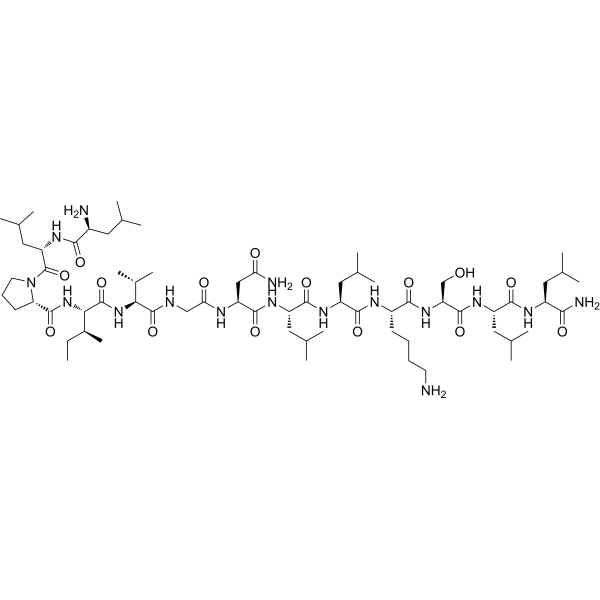 0 ImagesCat. No.: HY-P5592CAS No.: 188713-70-4Temporin B is an antimicrobial peptide against Gram-positive bacteria. Temporin B is less active against Gram-negative bacteria.
-
1-Amino-2,5-anhydro-1-deoxy-D-mannitol
 0 ImagesCat. No.: HY-69174CAS No.: 228862-97-31-Amino-2,5-anhydro-1-deoxy-D-mannitol is a potent antibacterial compound with antibacterial activity against a variety of Gram-positive bacteria, including methicillin-resistant Staphylococcus aureus (MRSA) and vancomycin-resistant Enterococci (VRE). The application potential of 1-Amino-2,5-anhydro-1-deoxy-D-mannitol lies in its ability to effectively combat common drug-resistant bacterial infections. 1-Amino-2,5-anhydro-1-deoxy-D-mannitol may become an emerging antibacterial agent in clinical inhibition.
-
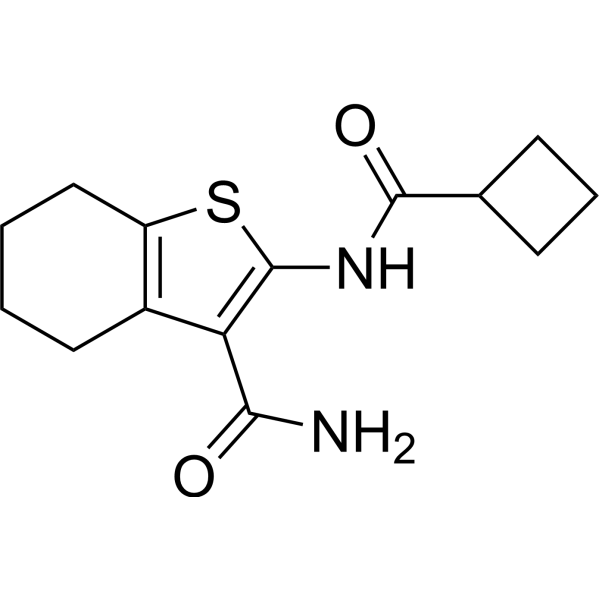
5-Chlorosalicylanilide
 0 Images5-Chlorosalicylanilide is a bactericidal and antifungal compound. 5-Chlorosalicylanilide exhibits antibacterial activity against bacteria and fungistatic activity against dermatophytes. 5-Chlorosalicylanilide inhibits the photosynthetic electron flow required for nitrite reduction while stimulating nitrate reduction, leading to nitrite accumulation and NOx release in soybean leaves. 5-Chlorosalicylanilide is used in the research of tinea capitis and dermatophytosis.

-
Brevicidine
 0 ImagesCat. No.: HY-P10519CAS No.: 2676889-05-5Brevicidine is an antimicrobial peptide with selective bactericidal activity against Gram-negative pathogens. Brevicidine disrupts bacterial morphology by binding to lipopolysaccharide (LPS) on the bacterial cell membrane to form pores. Brevicidine causes dissipation of intracellular proton motive force, outer membrane damage, inhibition of ATP biosynthesis and reactive oxygen species accumulation in bacterial cells. As a sensitizer, Brevicidine exerts synergistic activity when combined with a variety of conventional antibiotics.
-
DNA Gyrase-IN-18
 0 ImagesCat. No.: HY-182074DNA Gyrase-IN-18 (Compound 6B) is a DNA Gyrase inhibitor and Antibacterial agent. DNA Gyrase-IN-18 significantly inhibits the supercoiling activity of DNA Gyrase. DNA Gyrase-IN-18 inhibits biofilm formation by *Staphylococcus aureus*. DNA Gyrase-IN-18 exhibits excellent antibacterial activity, with a MIC of 0.125 μg/mL against Staphylococcus aureus and a MIC of 0.5 μg/mL against Mycobacterium tuberculosis.
-
DHFR-IN-17
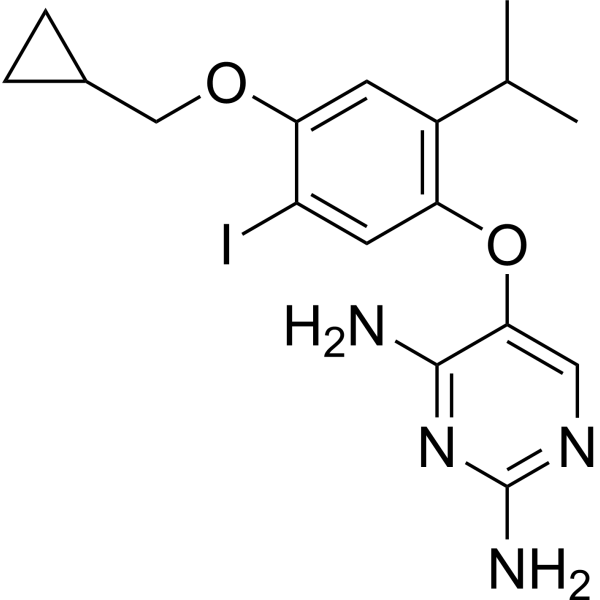 0 ImagesCat. No.: HY-162358DHFR-IN-17 (compound j9) is an oral active SaDHFR inhibitor with the IC50 of 0.97 nM. DHFR-IN-17 shows antibacterial activity against S. aureus with the minimum inhibitory concentration of 0.031 μg/mL.
-
Hs02
 0 ImagesCat. No.: HY-P11220Hs02 is a cationic amphiphilic antibacterial peptide derived from human proteins, and it is the membrane-active module of the core chimeric peptide Chim2. Hs02 exhibits broad-spectrum and potent antibacterial activity against various human pathogenic bacteria with the MIC for Staphylococcus aureus and Escherichia coli of as low as 2 μM, and the MBC is 2-4 μM. Hs02 primarily kills bacteria by disrupting the integrity of the bacterial cell membrane, and it has a relatively low selectivity for eukaryotic cell membranes. Hs02 induces the release of IL-12 but does not induce the release of IL-6, indicating its potential for pro-inflammatory or immune activation. Hs02 can be used in antibacterial and immunomodulatory research.
-
Mtb-IN-3
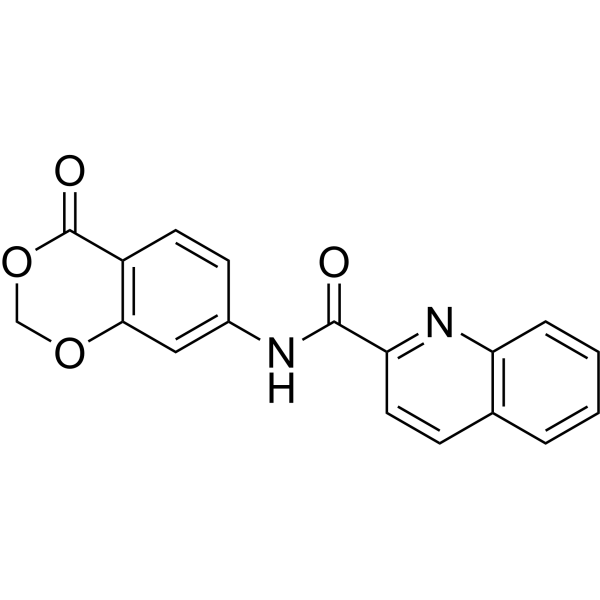 0 ImagesCat. No.: HY-149347CAS No.: 3052302-61-8Mtb-IN-3 (compound 10c) is an inhibitor of Mycobacterium tuberculosis (Mtb). Mtb-IN-3 shows selective, potent in vitro antimycobacterial activity without cytotoxicity. Mtb-IN-3 inhibits colony-forming in spleen in the murine tuberculosis model.
-
ADEP-14
 0 ImagesSynonyms: ADEP26ADEP-14 (ADEP26) is a ClpP activator. ADEP-14 exhibits antibacterial activity against Gram-negative and Gram-positive bacteria. ADEP-14 can be used in studies related to bacterial infections.
-
Tosufloxacin
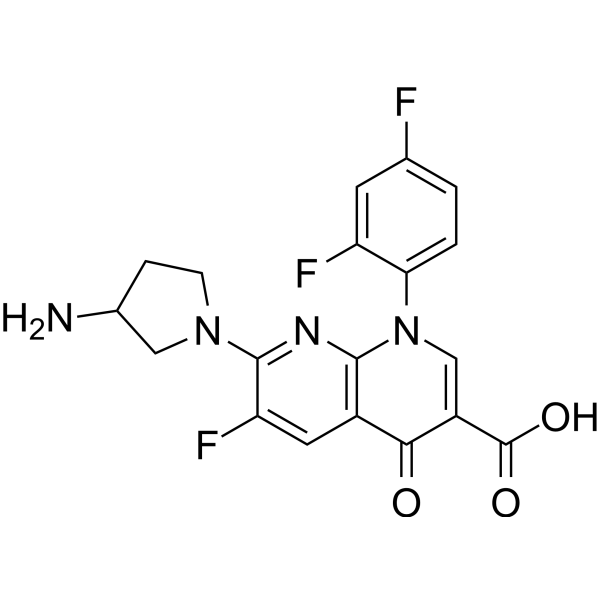 0 ImagesCat. No.: HY-B1802CAS No.: 100490-36-6Synonyms: A-61827Tosufloxacin (A-61827) is an orally active fluoroquinolone antibiotic. Tosufloxacin shows a broad spectrum of antibacterial activity against gram-positive and gram-negative bacteria.




