



Bcl-2 Family
Bcl-2 is a family of evolutionarily related proteins. These proteins govern mitochondrial outer membrane permeabilization (MOMP) and can be either pro-apoptotic (Bax, Bad, Bak and Bok among others) or anti-apoptotic (including Bcl-2 proper, Bcl-xL, and Bcl-w, among an assortment of others). There are a total of 25 genes in the Bcl-2 family known to date. Human genes encoding proteins that belong to this family include: Bak1, Bax, Bal-2, Bok, Mcl-1.
Bcl-2 Family Isoform Specific Products
-
Bcl-2 Family
(448)
View all products
-
Bcl-2
(320)
View all products
-
Bcl-xL
(123)
View all products
-
Bcl-W
(17)
View all products
-
Mcl-1
(97)
View all products
-
Bfl-1
(11)
View all products
-
Bcl-B
(6)
View all products
-
Bax
(213)
View all products
-
Bak
(14)
View all products
-
Bim
(14)
View all products
-
BNIP3
(1)
View all products
-
Bad
(10)
View all products
All Product Categories
-
Bcl-2 Family Inhibitors
(564)
View all products
-
Bcl-2 Family Agonists
(5)
View all products
-
Bcl-2 Family Antagonists
(9)
View all products
-
Bcl-2 Family Activators
(89)
View all products
-
Bcl-2 Family Modulators
(148)
View all products
-
Bcl-2 Family Inducers
(12)
View all products
-
Bcl-2 Family Degraders
(21)
View all products
-
Bcl-2 Family Controls
(2)
View all products
-
Bcl-2 Family Ligands
(9)
View all products
-
Bcl-2 Family Related Products (1035)
Related Products (1035)

-
Antibodies (31)
-
Bcl-2 Family Signaling Pathway
-
Bcl-2 Family Isoform Comparison
-
TBC1D2-IN-1
 0 ImagesCat. No.: HY-183772TBC1D2-IN-1 is a potent orally active and selective TBC1D2 inhibitor with a Kd of 1.1 μM. TBC1D2-IN-1 selectively inhibits TBC1D2-mediated GTP hydrolysis on RAB7A-GTP, promotes RAB7A accumulation on lysosomal membranes, and induces apoptosis and autophagy. TBC1D2-IN-1 exerts selective antiproliferative activity cancer cells. TBC1D2-IN-1 can be used for the research of cervical carcinoma.
-
WK499
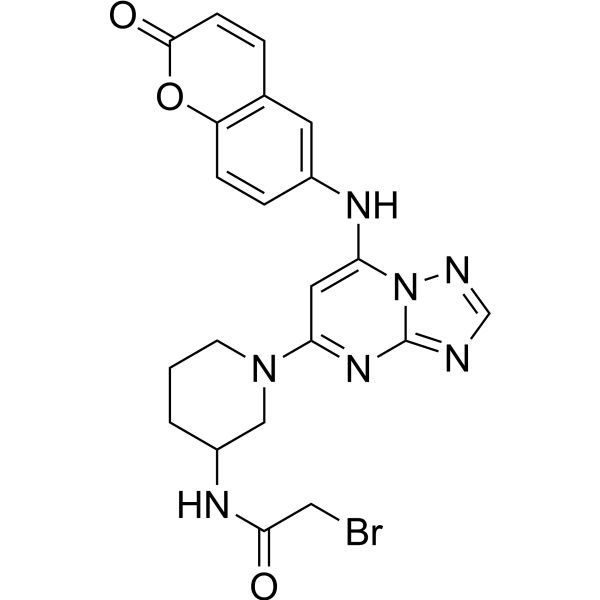 0 ImagesCat. No.: HY-149522CAS No.: 3034883-70-7BCL6-IN-10 (Compound WK499) is a BCL6 inhibitor. BCL6-IN-10 interrupts the binding of BCL6 to SMRT protein. BCL6-IN-10 induces cell apoptosis, cell cycle arrest and DNA damage. BCL6-IN-10 inhibits AML cell proliferation (IC50s: 0.91, 1.63, 1.026, 7.42, 0.87, 0.85μM for OCl-AML3, THP1, MOLM13, HL60, KG1, NB4 cell respectively).
-
Oxychlororaphine (Standard)
 0 ImagesCat. No.: HY-W042191RCAS No.: 550-89-0Oxychlororaphine (Standard) is the analytical standard of Oxychlororaphine. This product is intended for research and analytical applications. Oxychloroaphine could be isolated from the bacterium Pantoea agglomerans naturally present in soil. Oxychloroaphine has broad-spectrum antifungal activity. Oxychloroaphine has cytotoxicity in a dose-dependent manner and induces apoptosis. Oxychloroaphine can be used in research of cancer[1][2].
-
F1324 TFA
 0 ImagesCat. No.: HY-100866A
-
Mcl-1 inhibitor 15
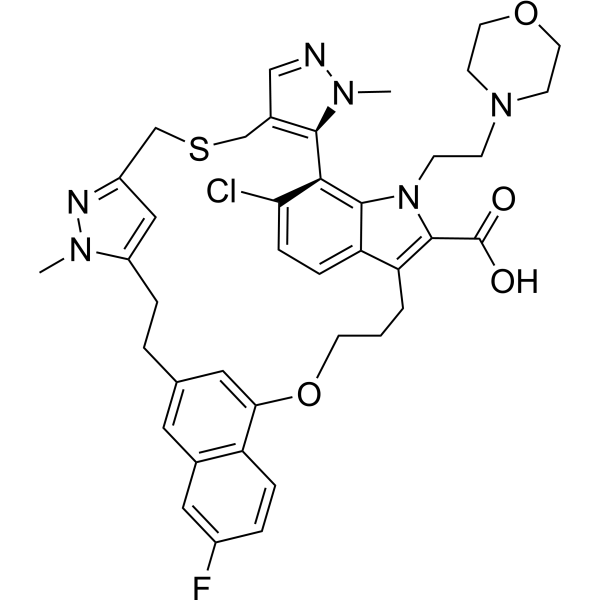 0 ImagesCat. No.: HY-154962CAS No.: 2750555-36-1Mcl-1 inhibitor 15 (Compound (Ra)-15) is a Mcl-1 inhibitor (Ki: 0.02 nM). Mcl-1 inhibitor 15 can be used for research of cancer.
-
Chlorin e6 (solution)
 0 ImagesCat. No.: HY-DY1092CAS No.: 19660-77-6Synonyms: Ce6 (solution)Chlorin e6 (solution) (Ce6 (solution)) is a photosensitizer and has strong absorption peaks at wavelength of 402 and 662 nm, as well as exhibiting intense fluorescence at 668 nm. Chlorin e6 has antimicrobial efficacy and anticancer activity. Chlorin e6 induces cell apoptosis via caspase-3 activation and can be used for the research of cancer.
Solvent and concentration: DMSO: 10 mM
The 1 mL volume is defined as the base specification. All larger sizes correspond to incremental volumes of this base.
-
Gymnoside II
 0 ImagesCat. No.: HY-N16929CAS No.: 899430-02-5Gymnoside II is one of the main bioactive constituents isolated from Bletilla striata. Gymnoside II inhibits nano SiO2-induced A549 cell viability reduction, apoptosis, and ROS generation by activating Nrf2. Gymnoside II upregulates HO-1 and γ-GCSc, while downregulating the Bax/Bcl-2 ratio. Gymnoside II is applicable for research on nano SiO2-induced pulmonary injury.
-
Apoptosis inducer 44
 0 ImagesCat. No.: HY-175815Apoptosis inducer 44 is an apoptosis inducer. Apoptosis inducer 44 triggers apoptosis in MDA-MB-231 cells by increasing the levels of Bax and Cyt C, reducing Bcl-2, and initiating caspase-3 cleavage. Apoptosis inducer 44 suppresses the invasion and migration of MDA-MB-231 cells by down-regulating MMP-2 and MMP-9 expression and up-regulating E-cadherin protein levels. Apoptosis inducer 44 can be used for the study of breast cancer.
-
RPS6-IN-1
 0 ImagesCat. No.: HY-161874RPS6-IN-1 (Compound 22o) inhibits cell metastasis, induces cell apoptosis (increases the expression of Bax, p53, cleaved-caspase 3, and cleaved-PARP). RPS6-IN-1 decreases mitochondrial membrane potential. RPS6-IN-1 activates autophagy through the PI3K-Akt-mTOR signaling pathway, damages intracellular mitochondria and lysosomes, and cause ER stress. RPS6-IN-1 inhibits RPS6 phosphorylation. RPS6-IN-1 is an anticancer agent with low systemic toxicity.
-
Mcl-1 inhibitor 10
 0 ImagesCat. No.: HY-148899CAS No.: 1580484-33-8Mcl-1 inhibitor 10 (compound 43) is a relatively strong MCL-1 inhibitor (IC50=0.67 μM). Mcl-1 inhibitor 10 interacts with specific binding sites of MCL-1 protein to block the pro-survival signal of MCL-1 and push cancer cells into apoptosis. Mcl-1 inhibitor 10 can be used in the study of MCL-1 dependent cancers.
-
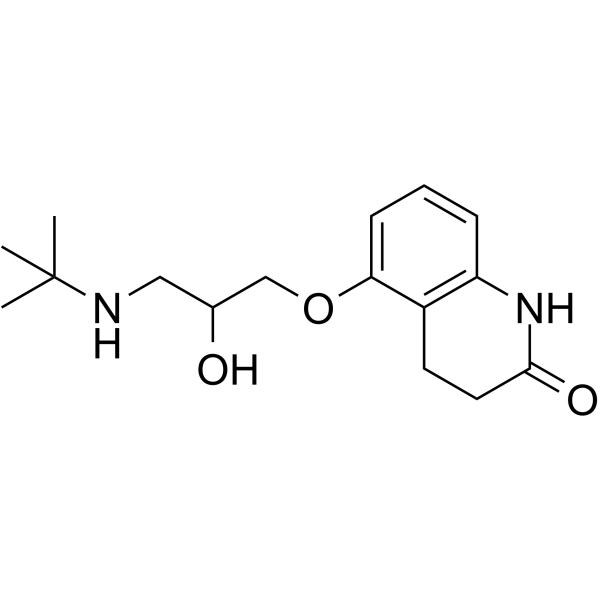
Sorafenib-d3 tosylate
 0 ImagesCat. No.: HY-10201S4CAS No.: 1333386-17-6Synonyms: Donafenib tosylate; Bay 43-9006-d3 tosylateSorafenib-d3 (Donafenib) tosylate is the deuterated-labeled Sorafenib tosylate (HY-10201A). Sorafenib (Bay 43-9006) tosylate is a potent oral active multikinase inhibitor. Sorafenib blocks autophosphorylation and activity of receptor tyrosine kinases (VEGFR-2, VEGFR-3) and RAF family kinases, thereby suppressing the RAF/MEK/ERK and PI3K/Akt pathways, inhibiting STAT3 phosphorylation, and selectively inhibiting the MAPK pathway in cancer cells. Sorafenib tosylate induces cell cycle arrest, autophagy, apoptosis, and PARP cleavage, reduces Bcl-2, Bcl-XL, cyclin D1 levels, and activates Bak and Bax. Sorafenib tosylate inhibits tumor growth and metastasis in mouse and rat models. Sorafenib tosylate can be used for cancer research, such as colon, breast, non-small-cell lung cancer (NSCLC), ovarian, pancreatic, melanoma, colorectal and hepatocellular carcinoma.
-
Pyraclostrobin (Standard)
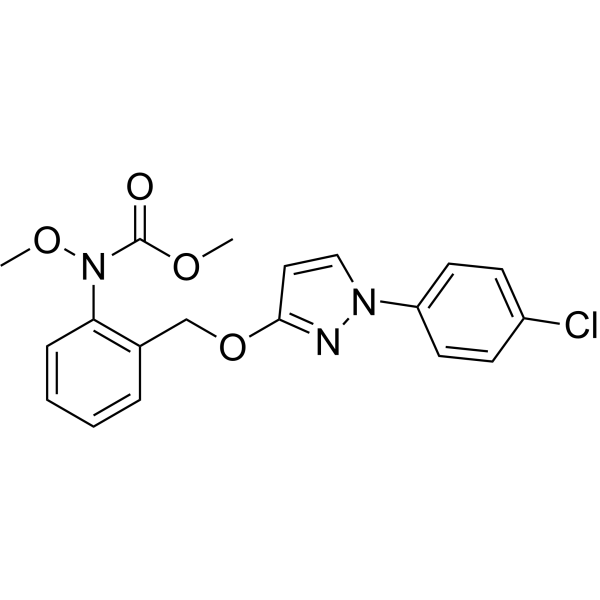 0 ImagesPyraclostrobin (Standard) is the analytical standard of Pyraclostrobin. This product is intended for research and analytical applications. Pyraclostrobin is a highly effective and broad-spectrum strobilurin fungicide. Pyraclostrobin can induce oxidative DNA damage, mitochondrial dysfunction and autophagy through the activation of AMPK/mTOR signaling. Pyraclostrobin can be used to control crop diseases.
-
EGFR-IN-171
 0 ImagesCat. No.: HY-175608EGFR-IN-171 is an EGFR inhibitor with an IC50 value of 0.19 μM. EGFR-IN-171 also inhibits vascular endothelial growth factor 2 (VEGFR-2) with an IC50 value of 31.65 μM. EGFR-IN-171 can induce apoptosis and G2/M phase cell cycle arrest. EGFR-IN-171 can be used for cancer research, such as liver and breast cancer.
-
Mcl-1 inhibitor 9
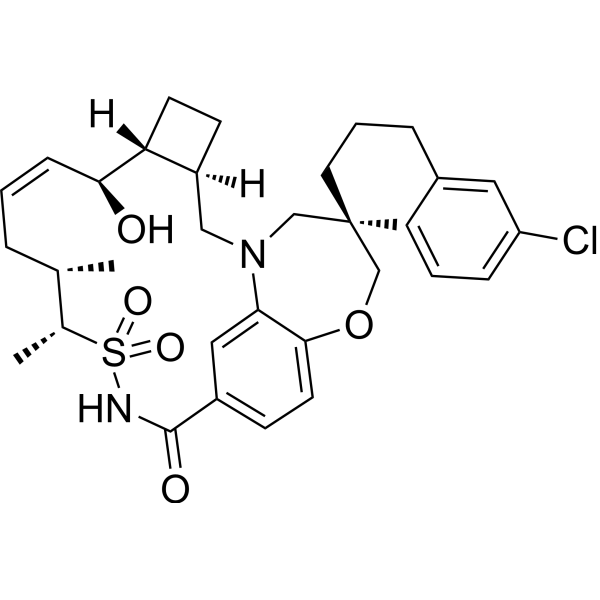 0 ImagesCat. No.: HY-148203CAS No.: 1883727-31-8Mcl-1 inhibitor 9 (example 2) is a myeloid cell leukemia 1 (Mcl-1) inhibitor with IC50 value of 0.21889 nM. Mcl-1 inhibitor 9 shows anti-tumor activity.
-
BCL-xL ligand 5
 0 ImagesCat. No.: HY-184713CAS No.: 1235033-76-7BCL-xL ligand 5 is a Bcl-xL ligand with an IC50 of 0.5 nM. BCL-xL ligand 5 can be used for the synthesis of PROTACs, such as PROTAC Bcl-xL degrader-2 (HY-139309).
-
Difopein
 0 ImagesCat. No.: HY-P1380CAS No.: 396834-58-5Difopein is a 14-3-3 protein inhibitor. Difopein acts as an apoptosis inducer, regulates apoptosis-related proteins, downregulates Bcl-2, upregulates Bax, activates caspase-9 and caspase-3, and induces nuclear fragmentation, membrane-enclosed apoptotic bodies and DNA ladder formation. Difopein serves as a tumor growth inhibitor, which inhibits the proliferation of glioma cells and induces their apoptosis in in vivo nude mouse models. Difopein is applicable to glioma-related research.
-
OICR12694
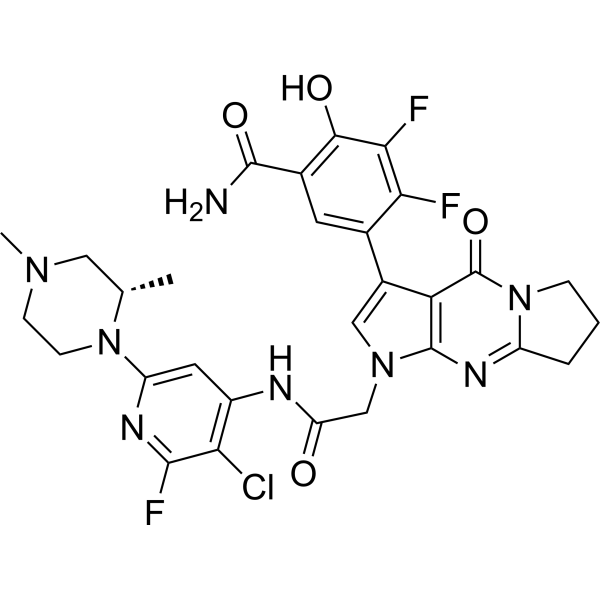 0 ImagesCat. No.: HY-153096CAS No.: 2360625-97-2Synonyms: JNJ-65234637OICR12694 (JNJ-65234637) is an orally active inhibitor of B cell lymphoma 6 (BCL6).
-
Gossypol (acetic acid) (Standard)
 0 ImagesSynonyms: (±)-Gossypol-acetic acid (Standard); BL-193 (acetic acid) (Standard)
-
Rosomidnar sodium scrambled negative control
 0 ImagesCat. No.: HY-153494CRosomidnar sodium scrambled negative control is the sequence scrambled negative control of Rosomidnar sodium.




