



Caspase 7 Activator
-
STK899704
 0 ImagesCat. No.: HY-120339CAS No.: 1578247-29-6
STK899704 is a tubulin polymerization inhibitor. STK899704 exhibits broad-spectrum inhibitory activity against various cancer cell lines with IC50 values ranging from 0.2 to 1.0 μM. STK899704 disrupts the mitotic spindle structure, inducing G2/M phase cell cycle arrest. STK899704 inhibits the migration ability of HT29 cells by downregulating the FAK-MEK-ERK signaling pathway, thereby suppressing the expression and activity of MMP-2 and MMP-9. STK899704 activates caspase-3/7/8/9, leading to PARP cleavage and inducing apoptosis. STK899704 induces cellular senescence through the p53 pathway. STK899704 can be used in research on skin cancer, lung cancer, colon cancer, and other cancers.
-
CK2-TN03
 0 Images
CK2-TN03 is an ATP-competitive casein kinase 2 (CK2) inhibitor, with an IC50 of 165 nM and a Ki of 20 nM. CK2-TN03 inhibits CK2-mediated survivin activation and reduces CK2-dependent phosphorylation levels of BRD4/MYCN and AKT1. CK2-TN03 exerts anti-neuroblastoma effects by inhibiting survivin, leading to mitotic catastrophe and apoptosis of cancer cells. CK2-TN03 can be used in studies related to neuroblastoma.
-
Bcl-2-IN-6
 0 ImagesCat. No.: HY-144791CAS No.: 3027734-50-2
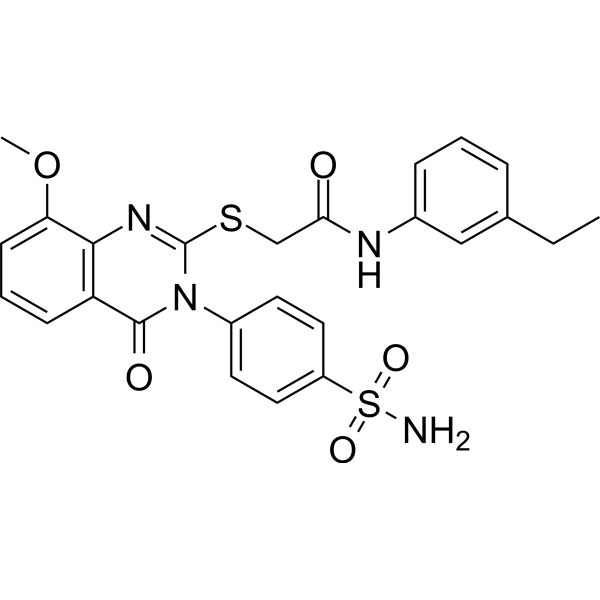
Bcl-2-IN-6 (compound 10) is a potent Bcl-2 (B-cell lymphoma-2) inhibitor. Bcl-2-IN-7 down-regulates the expression of Bcl-2, and increases the expression of p53, Bax, and caspase-7 mRNA. Bcl-2-IN-7 induces cell cycle arrest and apoptosis in breast cancer MCF-7 cells. Bcl-2-IN-7 shows good anticancer activity, with IC50 values of 20.91, 22.30, 42.29, and 48.00 μM against MCF-7, LoVo, HepG2, and A549 cell lines, respectively.
-
Lb54
 0 ImagesCat. No.: HY-181168
Lb54 is a caspase-3 and caspase-7 activator with an EC50 of 660.9 nM for human procaspase-3. Lb54 activates caspase-3/7, which cleaves Gasdermin D (GSDMD) at aspartic acid residue 87 to generate a p10 fragment, preventing formation of the pore-forming p30 fragment of GSDMD. Lb54 suppresses GSDMD-mediated pyroptosis through caspase-3/7 activation, thereby attenuating inflammatory responses and conferring protection against sepsis. Lb54 alleviates acute lung injury, and inhibited systemic inflammation by restraining the maturation of monocyte-derived dendritic cells. Lb54 can be used for the research of sepsis.
-
Bcl-2-IN-7
 0 ImagesCat. No.: HY-144792CAS No.: 3027734-46-6
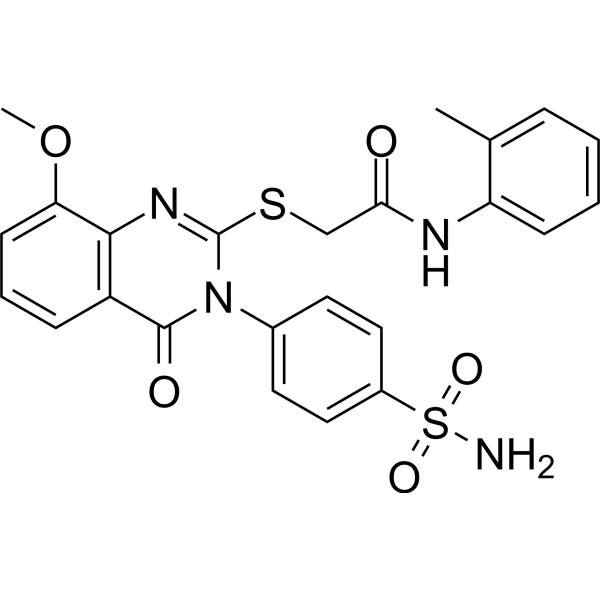
Bcl-2-IN-7 (compound 6) is a potent Bcl-2 (B-cell lymphoma-2) inhibitor. Bcl-2-IN-7 down-regulates the expression of Bcl-2, and increases the expression of p53, Bax, and caspase-7 mRNA. Bcl-2-IN-7 induces cell cycle arrest and apoptosis in breast cancer MCF-7 cells. Bcl-2-IN-7 shows good anticancer activity, with IC50 values of 20.17, 22.64, 45.57, and 51.50 μM against MCF-7, LoVo, HepG2, and A549 cell lines, respectively.
-
Apoptosis inducer 52
 0 ImagesCat. No.: HY-179124
Apoptosis inducer 52 is a derivative of flutamide that induces apoptosis in prostate cancer cells. Apoptosis inducer 52 promotes apoptosis by activating both intrinsic and extrinsic apoptotic pathways, without generating reactive oxygen species (ROS). Apoptosis inducer 52 triggers caspase 3/7 activity and the externalization of phosphatidylserine, leading to cell cycle arrest at the G0/G1 phase. Apoptosis inducer 52 can be used for the research of androgen receptor (AR)-dependent and -independent prostate cancers and leukemia.
-
Anticancer agent-364
 0 ImagesCat. No.: HY-189286
Anticancer agent-364 is a phenylalanine-derived hydrazone heterocyclic compound that exhibits selective cytotoxicity against NSCLC lung cancer cells. Anticancer agent-364 inhibits VEGF-A, VEGFR-1, and VEGFR-2, increases caspase-3/7, caspase-8, and caspase-9 activity, and induces apoptosis. Anticancer agent-364 can be used for research on non-small cell lung cancer.
-
COX/5-LO-IN-2
 0 ImagesCat. No.: HY-181061
COX/5-LO-IN-2 is a COX2, EGFR, COX1, 5-LOX, BRAF and FAK inhibitor with IC50 of 1.22 μM, 2.5 μM, 2.95 μM, 4.65 μM, 7.4 μM, 12.2 μM, respectively. COX/5-LO-IN-2 induces cell growth arrest at G2/M phase. COX/5-LO-IN-2 triggers apoptotic activity by up-regulating proapoptotic proteins p53, Bax, and caspase-7 and down-regulating anti-apoptotic protein Bcl-2. COX/5-LO-IN-2 can be used for the research of breast cancer.
-
Longilactone
 0 ImagesCat. No.: HY-N21972CAS No.: 129587-09-3
Longilactone is a quassinoid diterpenoid isolated from the roots of Eurycoma longifolia. Longilactone induces apoptosis in MCF-7 cells via the extrinsic caspase pathway, activating the cleavage of caspase-8, caspase-7 and PARP. Longilactone can be used in research related to breast cancer and human lung cancer.
-
HDAC6-IN-63
 0 ImagesCat. No.: HY-178022
HDAC6-IN-63 (Compound 7) is an orally active HDAC6 inhibitor with an IC50 of 145 nM. HDAC6-IN-63 inhibits the expression of Sp1 and RAD51, thereby inducing Caspase-dependent apoptosis. HDAC6-IN-63 has antitumor activity and sensitizes Etoposide (HY-13629) and Gemcitabine (HY-17026), promoting synergistic death of NSCLC cells through the inhibition of homologous recombination and non-homologous end joining (NHEJ) pathways involved in DNA DSB repair. HDAC6-IN-63 can be used for chemotherapy of cancers like NSCLC research.
-
JAK1-IN-21
 0 ImagesCat. No.: HY-184592
JAK1-IN-21, biotin-conjugated isoxazole derivative, is a JAK1 inhibitor. JAK1-IN-21 directly engages and stabilizes JAK1, reduces the phosphorylation of JAK1, STAT1 and AKT, induces apoptotic marker cleavage (PARP, Caspase-3, Caspase-7) and exhibits broad-spectrum antiproliferative activity against cancer cells. JAK1-IN-21 can be used for the study of liver cancer, prostate cancer, and breast cancer.
-
MAHS-3
 0 ImagesCat. No.: HY-187513
MAHS-3 is a thymidylate synthase (TS) and dihydrofolate reductase (DHFR) inhibitor, with IC50 values of 5.279 μM and 52.60 μM against human targets, respectively. MAHS-3 exhibits broad-spectrum antiproliferative activity against cancer cells, induces cell cycle arrest, activates endogenous caspase-dependent apoptosis, reduces MMP levels, inhibits cell migration, increases intracellular NO levels, and promotes autophagy activity. MAHS-3 can be used in cancer-related research.
-
RR-171
 0 ImagesCat. No.: HY-P11935CAS No.: 2410535-57-6
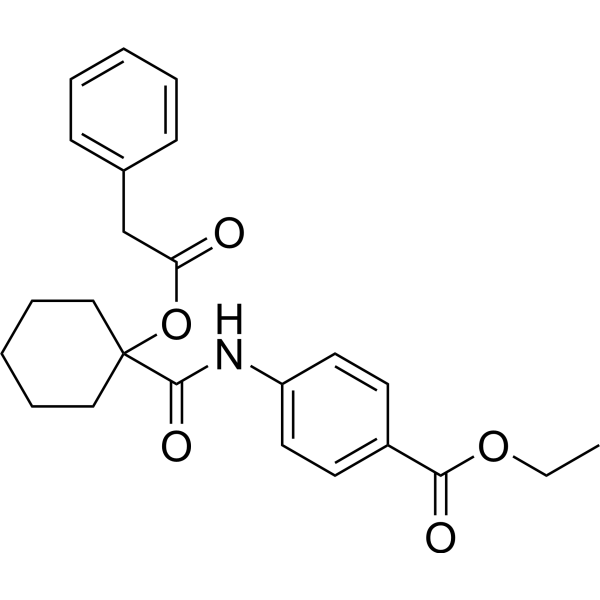
RR-171 is an amino acid polypeptide and an inhibitor of the Wnt signaling pathway. RR-171 reduces the expression levels of Wnt-1, GSK3β and β-catenin. RR-171 induces apoptosis (Apoptosis) in pancreatic cancer cells, which is characterized by an increased Bax/Bcl-2 ratio, activation of Caspase-3/7/9, and increased Cleaved-PARP; this pro-apoptotic effect can be partially reversed by Z-VAD-FMK (HY-16658B). RR-171 also induces pyroptosis (Pyroptosis) in pancreatic cancer cells, which is manifested by activation of the NLRP-3 inflammasome, activation of Caspase-1, cleavage of GSDMD, upregulation of IL-1β and IL-18, and increased LDH release; this pro-pyroptotic effect can be partially reversed by VX-765 (HY-13205). RR-171 inhibits the viability, proliferation and colony formation of pancreatic cancer cells, with low cytotoxicity against normal cells. RR-171 downregulates the expression of Ki-67 and PCNA in tumor tissues in vivo, with favorable biosafety. RR-171 can be used in studies related to pancreatic cancer.
-
Bfl-1-IN-7
 0 ImagesCat. No.: HY-180941
Bfl-1-IN-7 is an orally active and selective Bfl-1 inhibitor with an IC50 value of 0.015 μM. Bfl-1-IN-7 activates caspase 3/7, and when combined with the Mcl-1 inhibitor AZD5991 (HY-101533), it reduces the viability of lymphoma cells. Bfl-1-IN-7 can be used in lymphoma-related studies.
-
Apoptosis inducer 30
 0 ImagesCat. No.: HY-168589
Apoptosis inducer 30 (Compound 15a) is an anticancer agent. Apoptosis inducer 30 induces MCF-7 cells apoptosis through mitochondrial pathway. Apoptosis inducer 30 induces intracellular reactive oxygen species levels and decreases mitochondrial membrane potential, and blocks the cell cycle in the G0/G1 phase. Apoptosis inducer 30 inhibits cell growth, with an IC50 value of 0.32 μM against MCF-7 cells, and inhibits tumor growth in a mouse model of breast cancer.
-
MAHS-4
 0 ImagesCat. No.: HY-187514
MAHS-4 is an inhibitor of thymidylate synthase (TS) and dihydrofolate reductase (DHFR), with IC50 values of 1.918 μM and 83.53 μM, respectively. MAHS-4 inhibits thymidylate biosynthesis, reduces tetrahydrofolate pool maintenance, and interferes with extracellular matrix remodeling. MAHS-4 induces G2/M phase cell cycle arrest, activates endogenous caspase-dependent apoptosis, decreases MMP protein levels, inhibits cell migration, increases intracellular NO levels, and promotes autophagy activity. MAHS-4 is applicable for cancer-related research.
-
Benfluron hydrochloride
 0 ImagesCat. No.: HY-106419ACAS No.: 80427-58-3Synonyms: Benflurone hydrochloride
Benfluron hydrochloride is an Apoptosis inducer and inhibitor of the HIV-1 Rev-RRE complex, with an IC50 of 5.0 μM against the HIV-1 Rev-RRE complex. Benfluron hydrochloride induces p53 activation, and triggers phosphorylation of Chk1 at serine 345, Chk2 at threonine 68, as well as ERK1/2 at threonine 202 and tyrosine 204. Benfluron hydrochloride activates Caspase 8, Caspase 9 and Caspase 3/7, inhibits HIV-1 viral transcription, and acts as a substrate for 11β-HSD 1 and cytosolic carbonyl reductase. Benfluron hydrochloride can be used in research related to leukemia and HIV-1 infection.
-
HDAC-IN-82
 0 ImagesCat. No.: HY-169922
HDAC-IN-82 (Compound 18b) is a histone deacetylase (HDAC) inhibitor with selective antiplasmodial and anticancer activity. HDAC-IN-82 shows potent antiproliferative activity and caspase 3/7 activation in cancer cells. HDAC-IN-82 causes hyperacetylation of histone H3 and α-tubulin.
-
TASIN-1 hydrochloride
 0 ImagesCat. No.: HY-116572CAS No.: 1678515-13-3
TASIN-1 hydrochloride is a selective inhibitor of truncated APCTR (adenomatous polyposis coli gene) that exerts cytotoxic effects by inhibiting cholesterol biosynthesis. TASIN-1 hydrochloride specifically targets colorectal cancer (CRC) cells carrying APC truncated mutations, while having no significant toxicity to wild-type APC cells. TASIN-1 hydrochloride exerts cytotoxic effects by targeting Emopamil binding protein (EBP) to inhibit cholesterol biosynthesis, triggering endoplasmic reticulum (ER) stress, reactive oxygen species (ROS) generation, and JNK-mediated apoptosis, and inhibiting Akt survival signaling. TASIN-1 hydrochloride can be used to prevent and intervene in APC mutant colorectal cancer.



