



DNA/RNA Synthesis
RNA synthesis, which is also called DNA transcription, is a highly selective process. Transcription by RNA polymerase II extends beyond RNA synthesis, towards a more active role in mRNA maturation, surveillance and export to the cytoplasm.
Single-strand breaks are repaired by DNA ligase using the complementary strand of the double helix as a template, with DNA ligase creating the final phosphodiester bond to fully repair the DNA.DNA ligases discriminate against substrates containing RNA strands or mismatched base pairs at positions near the ends of the nickedDNA. Bleomycin (BLM) exerts its genotoxicity by generating free radicals, whichattack C-4′ in the deoxyribose backbone of DNA, leading to opening of the ribose ring and strand breakage; it is an S-independentradiomimetic agent that causes double-strand breaks in DNA.
First strand cDNA is synthesized using random hexamer primers and M-MuLV Reverse Transcriptase (RNase H). Second strand cDNA synthesis is subsequently performed using DNA Polymerase I and RNase H. The remaining overhangs are converted into blunt ends using exonuclease/polymerase activity. After adenylation of the 3′ ends of DNA fragments, NEBNext Adaptor with hairpin loop structure is ligated to prepare the samples for hybridization. Cell cycle and DNA replication are the top two pathways regulated by BET bromodomain inhibition. Cycloheximide blocks the translation of mRNA to protein.
DNA/RNA Synthesis Isoform Specific Products
All Product Categories
-
DNA/RNA Synthesis Inhibitors
(1490)
View all products
-
DNA/RNA Synthesis Agonists
(11)
View all products
-
DNA/RNA Synthesis Antagonists
(2)
View all products
-
DNA/RNA Synthesis Activators
(52)
View all products
-
DNA/RNA Synthesis Modulators
(34)
View all products
-
DNA/RNA Synthesis Chemicals
(20)
View all products
-
DNA/RNA Synthesis Inducers
(14)
View all products
-
DNA/RNA Synthesis Degraders
(5)
View all products
-
DNA/RNA Synthesis Controls
(5)
View all products
-
DNA/RNA Synthesis Substrates
(6)
View all products
-
DNA/RNA Synthesis Ligands
(6)
View all products
-
DNA/RNA Synthesis Related Products (2945)
Related Products (2945)

-
Antibodies (248)
-
DNA/RNA Synthesis Isoform Comparison
-
CDK9-IN-50
 0 ImagesCat. No.: HY-183710CAS No.: 3114520-65-6CDK9-IN-50 is a selective and orally active CDK9 inhibitor with an IC50 of 2.2 nM. CDK9-IN-50 targets a distinct CDK9-specific subpocket to disrupt RNA polymerase II Ser2 phosphorylation and downregulate short-lived oncoproteins, including AR-V7 and Myc. CDK9-IN-50 exhibits antiproliferative activity against cancer cells, induces apoptosis and induces tumor growth inhibition in CRPC orthotopic mice models. CDK9-IN-50 can be used for the research of cancer, such as prostate cancer.
-
Camptothecin analog-2
 0 ImagesCat. No.: HY-164861CAS No.: 3047369-35-4Camptothecin analog-2 (Compound 7b-2) is a camptothecin derivative. Camptothecin analog-2 can be used in the study of cancer.
-
(Rac)-Adibelivir hydrochloride
 0 ImagesCat. No.: HY-150306CCAS No.: 2954725-84-7Synonyms: (Rac)-IM-250 hydrochloride(Rac)-Adibelivir hydrochloride ((Rac)-IM-250 hydrochloride) is a blood-brain barrier-penetrant HSV helicase-primase inhibitor and metabolic stabilizer with antiviral activity. (Rac)-Adibelivir hydrochloride is also effective against Acyclovir (HY-17422)-resistant strains, and its deuterated structure exhibits enhanced metabolic stability, reducing the formation of hydroxylated metabolites. (Rac)-Adibelivir prolongs in vivo half-life, reduces administration dosage, improves oral bioavailability, and achieves higher brain exposure in mice. (Rac)-Adibelivir hydrochloride can be used in the research of herpes simplex infection, herpes encephalitis and Alzheimer's disease.
-
Antiviral agent 86
 0 ImagesCat. No.: HY-183761Antiviral agent 86 is an anti-coronavirus agent. Antiviral agent 86 acts as a binder of coronavirus non-structural protein 15 (nsp15), with a Kd value of 67 μM against human targets. Antiviral agent 86 inhibits the replication of HCoV-229E and SARS-CoV-2. Antiviral agent 86 exerts inhibitory effects at the post-entry lifecycle stage of coronaviruses in host cells and inhibits the formation of viral double-stranded RNA (dsRNA). Antiviral agent 86 exhibits an additive antiviral effect when used in combination with GS-441524. Antiviral agent 86 can be used in studies related to coronavirus infections.
-
Antiviral agent 36
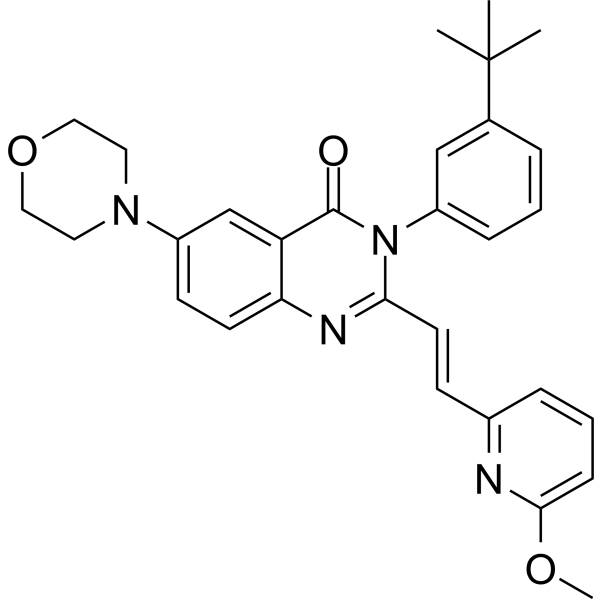 0 ImagesCat. No.: HY-155129CAS No.: 3033039-89-0Antiviral agent 36 (compound 27) is a potent dengue (DENV) and Zika (ZIKV) viruses inhibitor. Antiviral agent 36 inhibits replication of Zika and dengue virus with EC50s of 100 nM, 90 nM, 210 nM, and 120 nM for ZIKV-FLR, ZIKV-HN16, DENV-2, and DENV-3, respectively.
-
Zorubicin
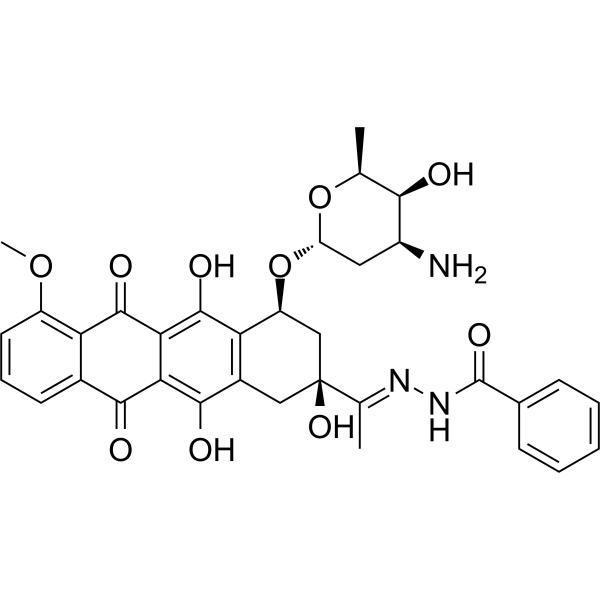 0 ImagesCat. No.: HY-106556CAS No.: 54083-22-6Synonyms: Rubidazon; RubidazoneZorubicin (Rubidazon) is a derivative of Daunorubicin (HY-13062A). Zorubicin interacts with topoisomerase II and inhibits DNA polymerases. Zorubicin can be used for the research of acute leukemias and sarcomas.
-
Bleomycin B2 sulfate
 0 ImagesSynonyms: Phleomycin D2 sulfateBleomycin B2 (Phleomycin D2) sulfate is a selective antitumor and antibacterial agent that induces DNA strand breaks and inhibits DNA ligase activity. The optimal pH for the activity of Bleomycin B2 sulfate is 9.1, and its efficacy is enhanced by thiol compounds or hydrogen peroxide. Bleomycin B2 sulfate undergoes enzymatic inactivation via bleomycin-inactivating enzymes, exhibits selective retention in squamous cell carcinoma, and is inactivated most rapidly in liver and kidney homogenates. Bleomycin B2 sulfate can be applied in research related to squamous cell carcinoma and other relevant studies.
-
PI3Kα-IN-28
 0 ImagesCat. No.: HY-178984CAS No.: 3095278-75-1PI3Kα-IN-28 (Compound 23) is an efficient dual targeted PI3K/BRD4 inhibitor. PI3Kα-IN-28 can inhibit the proliferation of various cells, such as KYSE180 and KYSE450 cells. PI3Kα-IN-28 can concentration dependently inhibit migration and colony formation, induce G0/G1 phase arrest, significantly inhibit DNA synthesis, and significantly increase the proportion of senescent cells. PI3Kα-IN-28 can inhibit the expression of p-AKT and c-Myc and activate the AMPK-p27 pathway. PI3Kα-IN-28 can be used for research on cancers such as esophageal cancer.
-
ddATP tetrasodium
 0 ImagesCat. No.: HY-128036CSynonyms: 2',3'-Dideoxyadenosine 5'-triphosphate tetrasodiumddATP (2',3'-Dideoxyadenosine 5'-triphosphate) tetrasodium is an active metabolite of 2',3'-dideoxyadenosine and an inhibitor of chain elongation by DNA polymerase (DNA polymerase). ddATP tetrasodium can be used in Sanger sequencing and research related to viral infections.
-
5'-O-DMT-2'-O-TBDMS-Bz-rC
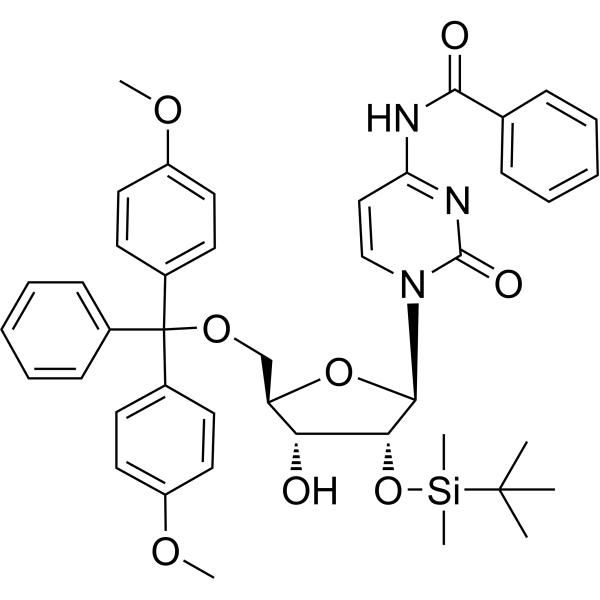 0 Images5'-O-DMT-2'-O-TBDMS-Bz-rC is a modified nucleoside and can be used to synthesize DNA or RNA.
-
DNA polymerase, NeoApollonia Thermophilus
 0 ImagesCat. No.: HY-P2937ADNA polymerase, NeoApollonia Thermophilus is a thermostable DNA polymerase from Streptococcus thermophilus that can be used in PCR reactions. DNA polymerase, NeoApollonia Thermophilus has 3’→5’ and 5’→3’ exonuclease activities.
-
G-quadruplex ligand 2
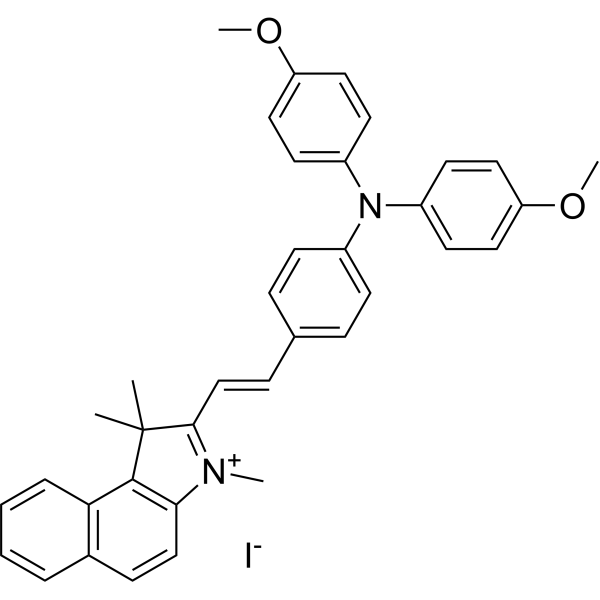 0 ImagesCat. No.: HY-158126G-quadruplex ligand 2 (compound A3) is a triphenylamine-based ligand that targets mitochondrial DNA G4s. G-quadruplex ligand 2 activates the cGAS-STING pathway. G-quadruplex ligand 2 inhibits tumor growth and metastasis via regulation of TME.
-
ART899
 0 ImagesART899 is a highly specific allosteric inhibitor of the Polθ DNA polymerase domain. ART899 can effectively enhance the radiosensitivity of tumor cells, shows good tolerance when combined with fractionated radiation, and significantly reduces tumor growth compared to radiation alone.
-
ICRF-196
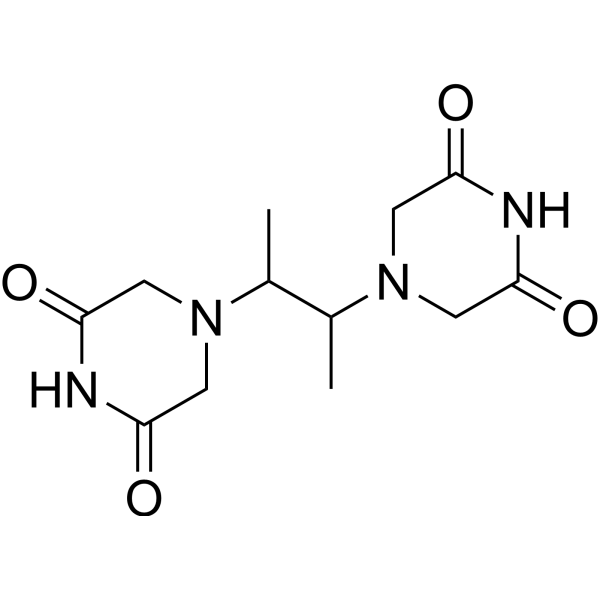 0 ImagesCat. No.: HY-118590ACAS No.: 21416-68-2ICRF-196 is an racemic mixture of the (S,S)- and (R,R)-isomers of ICRF-193 (HY-118590). ICRF-193 is a DNA Topoisomerase II inhibitor. ICRF-193 can inhibit DNA syntheses and induces apoptosis. ICRF-193 exhibits anti-cancer and anti-inflammation effects. ICRF-193 shows cardioprotective effect against anthracycline toxicity to cardiomyocytes. ICRF-193 can be used for the researches of cancer, infection, inflammation and cardiovascular disease, such as acute promyelocytic leukemia.
-
5-Iodo-dCTP
 0 ImagesCat. No.: HY-155867CAS No.: 31747-59-8Synonyms: 5-Iodo-2′-deoxycytidine 5′-triphosphate5-Iodo-dCTP is a good substrates for DNA polymerases and can be used for DNA synthesis.
-
10-Methoxy-canthin-6-one
 0 ImagesSynonyms: Mtx-C10-Methoxy-canthin-6-one (Mtx-C) is analkaloid derivative. 10-Methoxy-canthin-6-one can induce DNA damage by intercalating into DNA. 10-Methoxy-canthin-6-one can inhibit cancer cells proliferation, cause G2/M phase arrest and induce myeloid differentiation. T10-Methoxy-canthin-6-one can upregulate the expression of myeloperoxidase, CD15, CD11b, and CD14, as well as activation of p38 MAPK. 10-Methoxy-canthin-6-one also exhibits anti-bacterial activity. 10-Methoxy-canthin-6-one can be used for the researches of cancer and infection, such as acute myeloid leukemias (AML).
-
HDAC-IN-85
 0 ImagesCat. No.: HY-170907HDAC-IN-85 (Compound 1) is a BBB-permeable HDAC inhibitor. HDAC-IN-85 has an inhibitory effect on brain tumor cell lines. HDAC-IN-85 can induce acetylation, leading to DNA double-strand breaks, and induce the ubiquitination of RAD51, disrupting the DNA repair process. HDAC-IN-85 can be used in the research of glioblastoma.
-
3,4,6-Trichlorocatechol
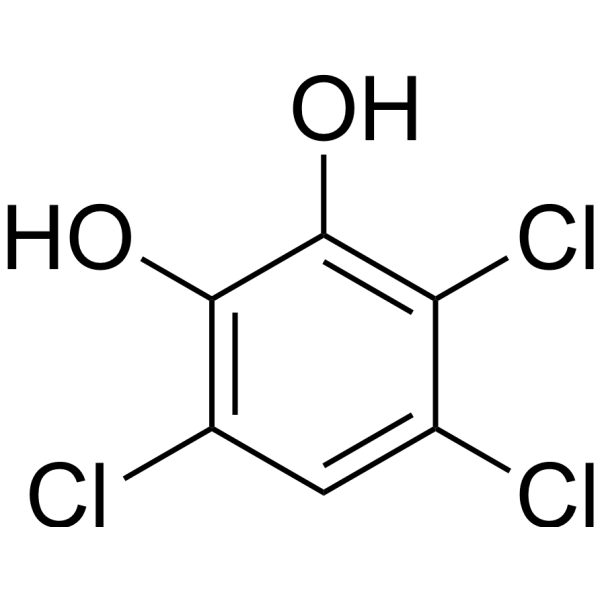 0 ImagesCat. No.: HY-133610CAS No.: 32139-72-33,4,6-trichlorocatechol (TCC) is the metabolite produced by industrial pollutant through post-mitochondrial liver fraction from Aroclor-1254 induced rats.
-
Resveratrol-13C6
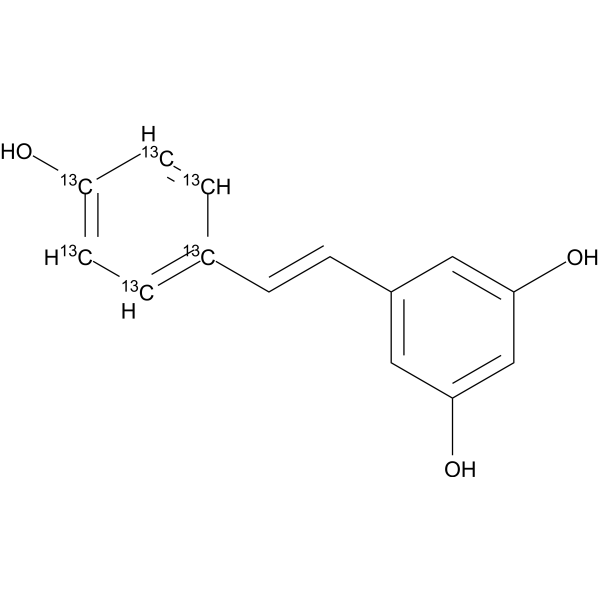 0 ImagesCat. No.: HY-16561S1Synonyms: trans-Resveratrol-13C6; SRT501-13C6Resveratrol-13C6 is the 13C-labeled Resveratrol. Resveratrol (trans-Resveratrol; SRT501), a natural polyphenolic phytoalexin that possesses anti-oxidant, anti-inflammatory, cardioprotective, and anti-cancer properties. Resveratrol (SRT 501) has a wide spectrum of targets including mTOR, JAK, β-amyloid, Adenylyl cyclase, IKKβ, DNA polymerase. Resveratrol also is a specific SIRT1 activator. Resveratrol is a potent pregnane X receptor (PXR) inhibitor. Resveratrol is an Nrf2 activator, ameliorates aging-related progressive renal injury in mice model. Resveratrol increases production of NO in endothelial cells.
-
Folic acid-13C5,15N
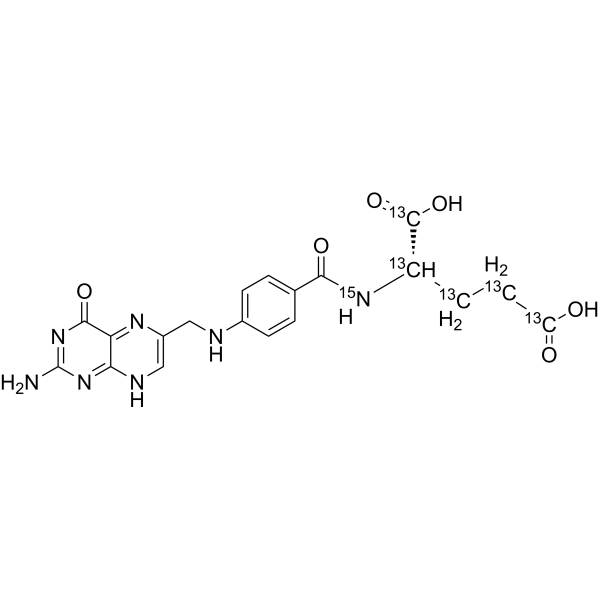 0 ImagesCat. No.: HY-16637S4CAS No.: 2687960-47-8Synonyms: Vitamin B9-13C5,15N; Vitamin M-13C5,15N




