



Dopamine Transporter
DAT; SLC6A3
Dopamine transporter (DAT) is a plasma membrane protein that mediates the reuptake of extracellular dopamine (DA) and controls the spatiotemporal dynamics of dopaminergic neurotransmission. DATs play a key role in terminating dopaminergic signalling and in maintaining a releasable pool of dopamine. DATs help to modulate the concentration of extraneuronal dopamine by actively shuttling released transmitter molecules back across the plasma membrane into dopaminergic neurons, where they can be sequestered for later reuse or enzymatic catabolism.
DAT is a principle target of various psychostimulant, nootropic, and antidepressant drugs, as well as certain drugs used recreationally, including the notoriously addictive stimulant cocaine. DAT ligands have traditionally been divided into two categories: cocaine-like inhibitors and amphetamine-like substrates. DAT is regulated by multiple signaling systems, such as PKC.
All Product Categories
-
Dopamine Transporter Inhibitors
(96)
View all products
-
Dopamine Transporter Agonist
(1)
View all products
-
Dopamine Transporter Antagonist
(1)
View all products
-
Dopamine Transporter Activator
(1)
View all products
-
Dopamine Transporter Modulators
(2)
View all products
-
Dopamine Transporter Control
(1)
View all products
-
Dopamine Transporter Ligand
(1)
View all products
-
Dopamine Transporter Related Products (123)
Related Products (123)

-
Dasotraline
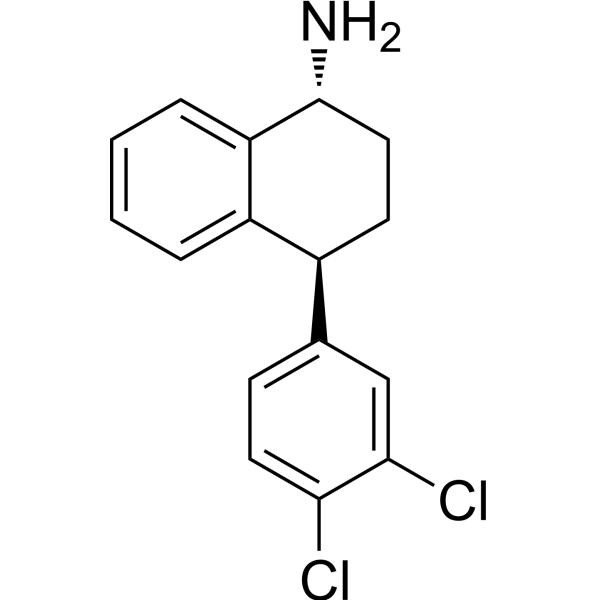 0 ImagesCat. No.: HY-12850CAS No.: 675126-05-3Synonyms: SEP 225289Dasotraline is a triple reuptake inhibitor that blocks dopamine, norepinephrine, and serotonin transporters with IC50 values of 4, 6, and 11 nM, respectively.
-
(S)-CE-123
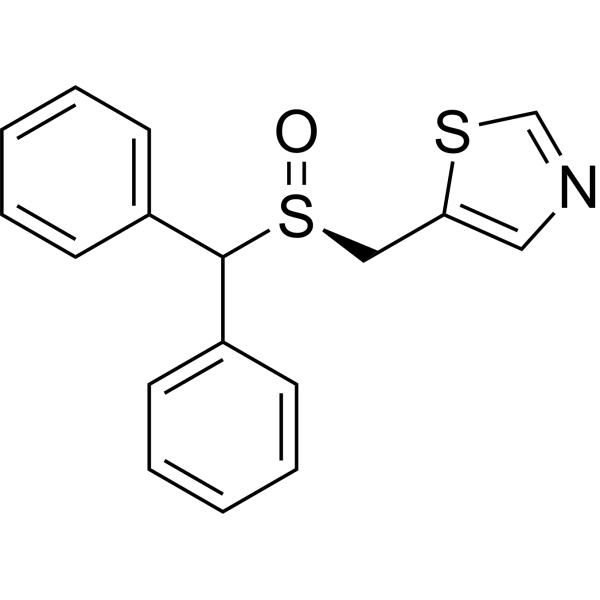 0 ImagesCat. No.: HY-163384CAS No.: 2378384-49-5(S)-CE-123 is a potent, selective, and novel atypical dopamine transporter (DAT) inhibitor with an EC50 of 2.76 μM in uptake inhibition assays conducted in HEK293 cells stably expressing human isoforms of DAT. (S)-CE-123, a Modafinil analogue, is able to penetrate the blood–brain barrier. (S)-CE-123 improves cognitive and motivational processes in experimental animals.
-
DOV-216,303 Free Base
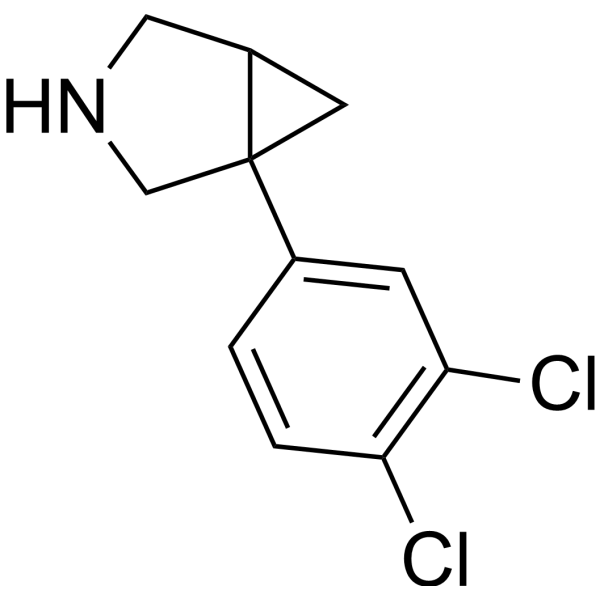 0 ImagesDOV-216,303 (Free Base) is a potent triple serotonin, norepinephrine, and dopamine reuptake inhibitor, with IC50 values of 14 nM, 20 nM and 78 nM for hSERT, hNET and hDAT, respectively. Has antidepressant-like effects and increases monoamine release in the prefrontal cortex of olfactory bulbectomized (OBX) rats.
-
JJC8-088 dioxalate
 0 ImagesJJC8-088 dioxalate is the dioxalate salt form of JJC8-088 (HY-158013). JJC8-088 dioxalate is a derivative of modafinil. JJC8-088 dioxalate is an inhibitor for dopamine transporter (DAT). JJC8-088 dioxalate exhibits behavioral characteristics similar to cocaine in rat models, and can be to study psychostimulant use disorders.
-
Diclofensine
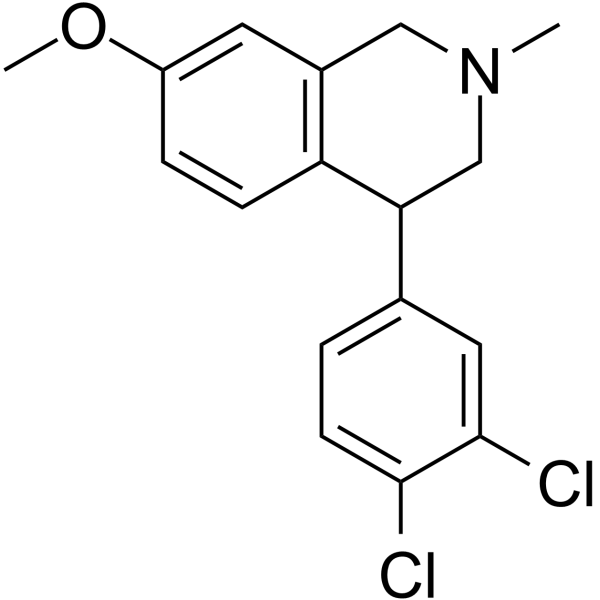 0 ImagesCat. No.: HY-18610ACAS No.: 67165-56-4Synonyms: Ro 8-4650Diclofensine (Ro 8-46500) is an orally active neuronal monoamine uptake inhibitor. Diclofensine blocks the uptake of dopamine, noradrenaline, and serotonin by rat brain synaptosomes with IC50 values of 0.74, 2.3 and 3.7 nM, respectively. Diclofensine potentiates norepinephrine-induced hypertension and attenuates Tyramine (HY-W007606)-induced hypertension. Diclofensine produces psychostimulant and mood-elevating effects without causing sudden disappearance or withdrawal reactions. Diclofensine can be used in the research of moderate to severe depression.
-
GBR 12935
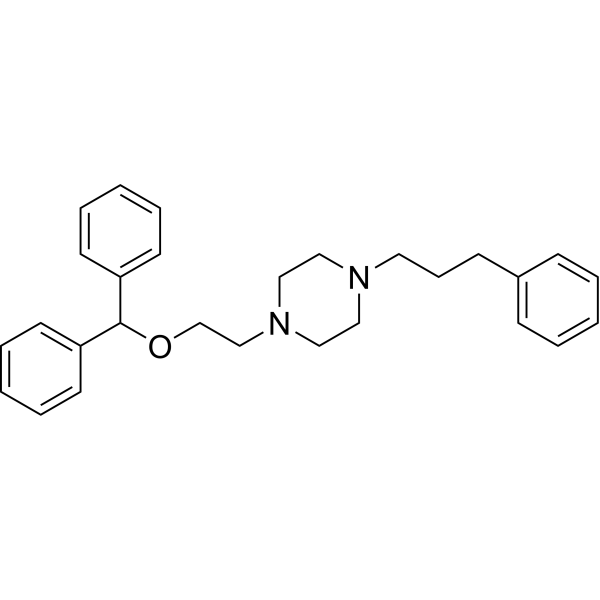 0 ImagesCat. No.: HY-12242ACAS No.: 76778-22-8GBR 12935 is a potent, and selective dopamine reuptake inhibitor, with the binding constant (Kd) of 1.08 nM in COS-7 cells. GBR 12935 stimulates the locomotion activity in different mice strains but fails to induce stereotypy. Thus, GBR 12935 also prevents the d-Fenfluramine-induced head-twitch response in mice.
-
6-Chloro-5-(2-chloroethyl)oxindole
 0 ImagesCat. No.: HY-W009666CAS No.: 118289-55-76-Chloro-5-(2-chloroethyl)oxindole (Imp Z2) is an impurity of Ziprasidone (HY-14542), a substrate of the human dopamine transporter (hDAT).
-
Diclofensine-d3 (hydrochloride)
 0 ImagesCat. No.: HY-18610SCAS No.: 1794780-41-8Diclofensine-d3 (Ro-8-4650-d3) hydrochloride is the deuterium labeled Diclofensine hydrochloride. Diclofensine hydrochloride is an orally active neuronal monoamine uptake inhibitor. Diclofensine hydrochloride blocks the uptake of dopamine, noradrenaline, and serotonin by rat brain synaptosomes with IC50 values of 0.74, 2.3 and 3.7 nM, respectively. Diclofensine hydrochloride potentiates norepinephrine-induced hypertension and attenuates Tyramine (HY-W007606)-induced hypertension. Diclofensine hydrochloride produces psychostimulant and mood-elevating effects without causing sudden disappearance or withdrawal reactions. Diclofensine hydrochloride can be used in the research of moderate to severe depression.
-
IP2015
 0 ImagesCat. No.: HY-162511CAS No.: 1320346-14-2IP2015 is an inhibitor for monoamine reuptake, that inhibits the reuptake of dopamine, serotonin (5-HT), and noradrenaline. IP2015 increases release of central dopamine and peripheral nitric oxide (NO), causes the NO-mediated relaxation of erectile tissue, and thus induces erection in rat model.
-
JJC8-091
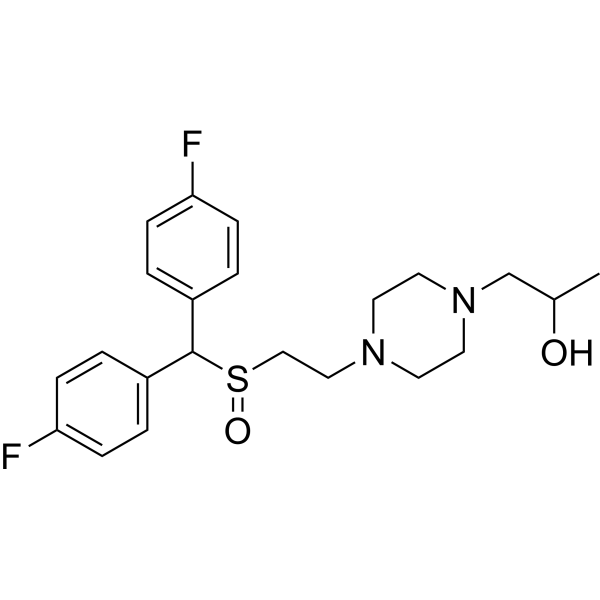 0 ImagesCat. No.: HY-163154CAS No.: 1627576-76-4JJC8-091 is a potent dopamine transporter (DAT) inhibitor with Ki values of 230, 97800 nM for DAT, SERT, respectively. JJC8-091 has the potential for the research of psychostimulant use disorders (PSUD).
-
DAM-001
 0 ImagesCat. No.: HY-179714CAS No.: 1090396-31-8Synonyms: Z236004662DAM-001 (Z236004662) is a potent, non-competitive allosteric inhibitor for human dopamine transporter (hDAT) with an IC50 of 24.70 μM and 1.026 μM in the absence and presence of orthosteric inhibitor Nomifensine (HY-B1110).
-
Hordenine-d6 hydrochloride
 0 ImagesCat. No.: HY-N0113BSSynonyms: Ordenina-d6 hydrochloride; Peyocactine-d6 hydrochlorideHordenine-d6 hydrochloride (Ordenina-d6 hydrochloride; Peyocactine-d6 hydrochloride) is the deuterated-labeled Hordenine hydrochloride (HY-N0113B). Hordenine hydrochloride (Ordenina hydrochloride; Peyocactine hydrochloride) is a multifunctional alkaloid with oral activity and blood-brain barrier penetration. Hordenine hydrochloride inhibits LPS-induced phosphorylation of p38, JNK, ERK1/2, p65, IκB, and AKT, prevents p65 nuclear translocation, and suppresses inflammatory cytokines and mediators. Hordenine hydrochloride inhibits melanin synthesis in melanocytes and reconstructed epidermis. Hordenine hydrochloride activates the Wnt/β-catenin signaling pathway. Hordenine hydrochloride activates DRD2, acts as a D3R partial agonist, α2A-AR full agonist, and 5-HT2A-R antagonist, and inhibits SERT and DAT. Hordenine hydrochloride inhibits α-synuclein accumulation and ameliorates motor deficits in Parkinson's disease models. Hordenine hydrochloride limits alcohol intake, reduces relapse drinking behavior. Hordenine hydrochloride can be used for research on mastitis, skin pigmentation, acute lung injury, foodborne diseases, hair loss, Parkinson's disease, bacterial infections, and alcohol use disorder.
-
Lobeline sulfate
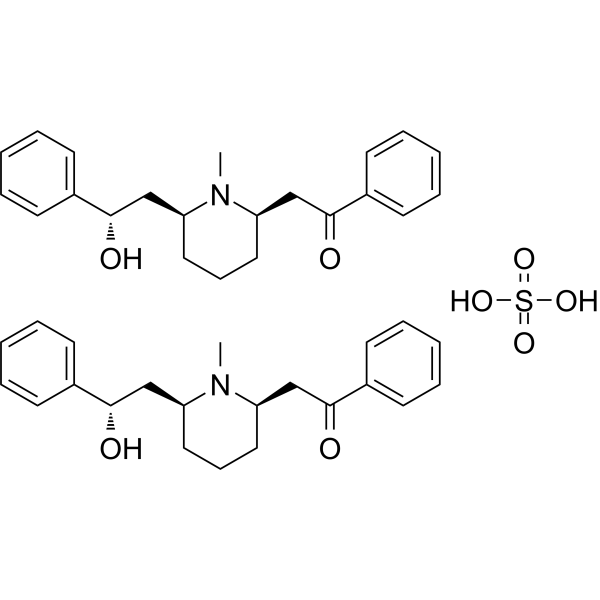 0 ImagesLobeline (α-Lobeline) sulfate is a brain-penetrant nicotinic receptor agonist. Lobeline sulfate increases dopamine (DA) release by inhibiting DA uptake into synaptic vesicles, and altering presynaptic DA storage. Lobeline sulfate is effective in smoking cessation.
-
Rimcazole
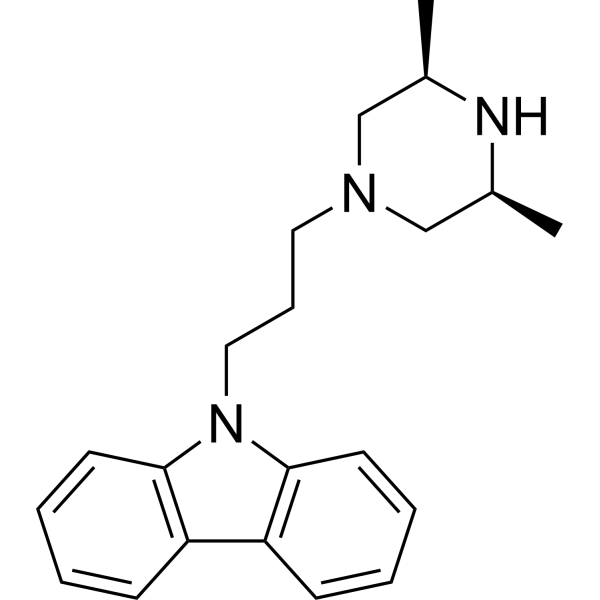 0 ImagesCat. No.: HY-121813CAS No.: 75859-04-0Synonyms: BW 234URimcazole (BW 234U) is a potent antipsychotic agent. Rimcazole also is a competitive antagonist of sigma sites. Rimcazole can be used for the research of acute schizophrenic diseases.
-
(R)-Phenylpiracetam
 0 ImagesCat. No.: HY-14840ACAS No.: 949925-07-9Synonyms: (R)-Carphedon; (R)-Fonturacetam; MRZ 9547(R)-Phenylpiracetam (MRZ 9547) is a dopamine transporter (DAT) inhibitor (Ki: 14.8 μM; IC50: 65.5 μM). (R)-Phenylpiracetam can be used for the research of the neurological or neuropsychiatric disorders.
-
EDMA hydrochloride
 0 ImagesCat. No.: HY-172763CAS No.: 2748304-41-6EDMA hydrochloride is a derivative of MDMA. EDMA hydrochloride is a substrate for multiple neurotransmitter transporters, including serotonin transporter (SERT), dopamine transporter (DAT), and norepinephrine transporter (NET). EDMA hydrochloride has 5-HT releasing activity at SERT (EC50 = 117 nM) and MPP+ releasing activity at DAT (EC50 = 597 nM) and NET (EC50 = 325 nM).
-
CM699
 0 ImagesCat. No.: HY-173475CAS No.: 1259949-84-2CM699 is a potent Dopamine Transporter (DAT) and Sigma-receptor (σR) dual inhibitor with IC50s of 311 and 14.1 nM, respectively.
-
JJC8-089
 0 ImagesCat. No.: HY-158014CAS No.: 1627576-64-0JJC8-089 is a dopamine transporter (DAT) inhibitor that may improve motivational dysfunction and increase effortful behavior in goal-directed activities. JJC8-089 significantly reversed the low-effort effects induced by the VMAT-2 inhibitor Tetrabenazine (HY-B0590) in rats and increased the choice of high-effort fixed-ratio 5-bar presses versus food intake. .
-
Tesofensine-13C,d3
 0 ImagesCat. No.: HY-14472S1Synonyms: NS-2330-13C,d3Tesofensine-13C,d3 (NS-2330-13C,d3) is the deuterium and 13C-labeled Tesofensine (HY-14472). Tesofensine (NS-2330) is a triple monoamine reuptake inhibitor inducing a potent inhibition of the re-uptake process in the synaptic cleft of the neurotransmitters dopamine (DA; IC50=6.5 nM), norepinephrine (NE;IC50=1.7 nM), and serotonin (5-HT;IC50=11 nM), and with potentials as an anti-obesity agent. Tesofensine is a CNS acting anti-obesity agent.
-
CYD-1-79
 0 ImagesCat. No.: HY-182091CAS No.: 2220235-94-7CYD-1-79 is a selective positive allosteric modulator of 5-HT2C receptor. CYD-1-79 potentiates 5-HT-evoked intracellular calcium release via a topographically distinct allosteric site. CYD-1-79 shows significant inhibition of binding at dopamine D3 receptor, DAT, and α2A/α2B adrenergic receptors. CYD-1-79 modulates 5-HT2C receptor-mediated spontaneous ambulation in rodents and synergizes with a low dose of a 5-HT2C receptor agonist. CYD-1-79 attenuates relapse vulnerability of psychoactive substance in a rodent self-administration model. CYD-1-79 can be used for the research of neurological disease.



